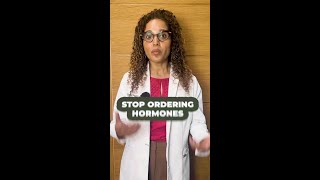
TV interview on Bloom with Dr. Shilpa Sayana about "weight loss resistance." The segment argues that diet and exercise alone often fail because underlying issues—primarily hormonal imbalances (perimenopause/menopause, thyroid, cortisol, sex hormones), gut inflammation/dysfunction, and toxic burden—prevent weight loss. Medications (GLP-1s) may help but are costly, have side effects, and about half of lost weight commonly returns when stopped. Dr. Sayana recommends root-cause evaluation with a functional medicine approach and stresses increasing dietary fiber to roughly 30 g/day (examples and gram counts provided) to improve gut health, hormone balance, and toxin elimination. Closing includes a plug to bloomtampabay.com for more information.
Questions this video answers
One in three Americans.
Less than 10 grams per day.
About 30 grams per day.
About 50%.
Chapters
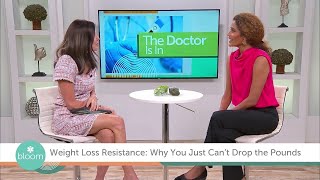
There are many Americans that try everything to lose weight, diet, exercise, but the struggle to drop those pounds is real. Our next guest says there's an underlying reason for that. Joining me now is Dr. Shilpa Sarah, who is a triple board certified in internal obesity medicine and functional medicine. Welcome to Bloom.
Thank you so much. I appreciate being here.
We appreciate you coming because a lot of people do struggle with their weight. In fact, one in three Americans are overweight and weight loss resistant. And you say there's the diet and exercise is not going to work if there's underlying issues.
Absolutely. So what worked in your 20s and 30s just isn't working anymore. And one in three Americans are overweight. And a lot of time, especially now with all these medications that are so available for obesity and being overweight, it just isn't enough. And people are still struggling to move the needle in terms of their pounds.
And if people are using the medications, the GLP1s, those can be very expensive. If you're not prescribed for diabetic reasons or you don't fall under the guidelines, they're very, very expensive. And then once you wean off them, if you still haven't dealt with the underlying issues, the weight's going to come right back.
Absolutely, it does. And about 50% comes back pretty quickly. And then the side effect effects of the medications, I find that this weight loss resistance, where it's the inability to just lose any weight no matter what you're trying, good diet, exercise, good routines, is mainly happens in three different kinds of people. The first group are women in the perimenopause menopause state, where they're going through a natural transition and all these hormonal changes, weight loss just doesn't seem to happen. The second group of people is people who have gut inflammation, which is hardly looked at in regular medicine as much. And the third group of people are people who have a high amount of toxic burden. And these may be people who don't realize it, but either have trouble sleeping or trouble with word finding or trouble with mood. And these three groups of people can have a lot of weight loss resistance. So it's important to look deeper and figure out what is your root cause.
Now, once you look deep into a patient's medical history and their lab, what do you do to treat those three areas?
Yeah. And so the most important thing is to figure out why. As you know, as a regular internist, we're not taught so much about the why. It's like, do you have the disease process and let's treat It And a lot of patients come to me and said, I've gone to my primary care doctor and said, I'm kind of gaining weight or nothing is working. And they're like, exercise harder, eat less. But the question is, why is this happening? And the most common reason that these three groups have is hormonal imbalances. So if your hormones aren't balanced, it is on just your testosterone, estrogen, but things like cortisol, things like your thyroid, if those are not balanced because of toxic burden, your gut can't process stuff, or you're just in this current phase of life where your hormones are naturally transitioning, weight's going to be very stubborn and hard to lose, especially on your belly.
Yeah, I remember the day where I was like seven days a week religiously in the gym. I could not move the needle. But, man, as soon as I got my hormones balanced, found the right thyroid doctor, which was very difficult to do, and got and started to detox. A lot of the things that, you know, different foods, the weight just started dripping off.
That's exactly right. It's about finding the right team and the right doctor to partner with. So having a good functional medicine MD in your local area to partner with and really looking clearly, as you know, if you're doing everything in terms of diet, exercise, supplements, medications, and still nothing's working for you, I think then it's really important to look as to why, what's the root cause? And one simple thing that I tell a lot of patients is eat more fiber. Right.
And to your point, I don't think we know. We know these are fibrous foods, but some have way more fiber than the others completely.
And fiber is so important because it helps balance estrogen, it helps with your gut inflammation, and lastly, it binds all those toxins so you can eliminate them. And people are eating vegetables, which is great. And a lot of my patients are like, I'm eating a ton of vegetables and I eat salads every day, but salads just don't have enough fiber. And just by comparison, I brought these little foods here. So this is like arugula, spinach has less than half a gram of fiber versus broccoli has two. But things like avocado has 10 to 15 grams of fiber. Wow. And this is black beans. And just one little bowl of Black beans has 15 grams of fiber. So if you could just keep black beans in your fridge, keep avocado handy, add it to your salads, add some herbs, add some lemon, make it yummy and exciting, but just add More fiber. Because most Americans eat less than 10 grams of fiber a day.
Really?
And we need 30. Okay.
I was just gonna ask you the ideal amount of fiber. And I also found we keep avocados in the house all the time, but I also found them in the frozen section so you can pop them into your smoothie. There are ways to build up the fiber. And you say we need how much.
A day we need to get? 30 grams. So if you just had one avocado and half a beans of some sort of beans, you would get there. And you know, salads are great and great for many other things. They're just not enough. If it's just leafy greens and just add it to your diet, make it easy. Most of my patients are really busy. Moms in their 40s, 50s, just don't have time. But you keep them frozen, keep them handy, keep them handy so you'll remember and you'll see them.
Yeah, that's really. And fiber is good, obviously, for keeping us regular, which gets rid of a lot of the toxins that are stored in our body. Is it also good for our gut health?
Extremely good for our gut health because it does help with increasing our short chain fatty acids, which helps reduce inflammation. Super important to actually eliminate and be able to reduce all our global inflammation. And a lot of it comes from the gut. And in traditional medicine, we don't check the gut in terms of function as much. And that's why it's really important to partner with the right team so you can look at your gut and see how it's working and how it's processing your hormones and how it's eliminating. Because that's the key to real weight loss resistance.
Thank you so much for joining us on Bloom. It's been such a pleasure to meet you.
Thank you so much. It's been awesome to be here.
All right, we're going to share Dr. Sonia's advice on bloomtampabay.com stick around. We'll be back with more Bloom right after this.