Bloom TV with Gayle Guyardo | How to Prepare the Body for HRT to Prevent Side Effects with Dr Sayana
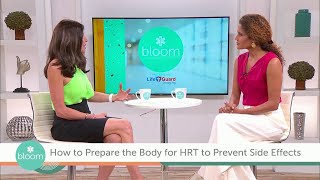
A Bloom TV interview with Dr. Shilpa Sayana about optimizing hormone replacement therapy (HRT) by testing and preparing the body. Key recommendations: baseline hormone testing, gut evaluation (stool test and SIBO breath test), DNA testing for estrogen metabolism, and checking sex hormone binding globulin (SHBG) to personalize dosing and reduce side effects; tailored HRT can markedly improve sleep, muscle, and quality of life.
Chapters
I'm Gail Guiardo. Welcome to Bloom, presented by Lifeguard Imaging. We're helping you optimize your health today, and there is a significant growing trend in this country of hormone replacement therapy. Here to explain how this can boost your health is the founder of Ciana Medical and Wellness Center, Dr. Shilpa Siyana. It is such a pleasure to see you.
Thanks so much for having me.
So the very first thing a woman can do to get her hormones in check is to get tested.
Absolutely. And it's so frustrating that so many women go to their doctors and they're like, can I just check my hormones? And they're like, no. Why do you want hormone replacement? Like, what do you want? Antidepressant? It isn't. You really need to know where are you at your baseline and what is your hormonal framework right now?
Yeah. Because it's not a one size fits all. And, you know, we talk about hormone replacement therapy a lot on this show, and I want to do so responsibly.
Correct.
So the very first message I want to get out to our viewers is to make sure they're working with a provider like yourself, because you go through a lot to make sure that each patient is tailored perfection.
And that one thing we have, every patient who we consider of a hormone replacement is they have to do a gut test, and they have to look at the gut microbiome and look at your gut inflammation. Because if we don't do that step, and I would say 80% of my patients who say, can I just jump to the hormones, we're like, let's do the gut test. And then I don't have symptoms, but they always have gut issues. When you look deeper, you shall find. And it's important to treat those gut symptoms because you want your liver and your gut to be ready for tomorrow's dose of bioidentical hormones.
So you're preparing your body for hormone replacement. There. Now, how do you test the guts?
Yeah. So we either can do a stool test. It's a functional stool test that measures your gut microbiome, your digestive enzymes, measures your levels of your gut lining. Is it intact or is it leaky parasites? Do you have any wrong protozoa in your gut? So we're looking at the gut microbiome or another test or. And another test we use is something called a breath test, and it's small intestinal bacterial overgrowth. Super common. You might be bloated, you might have some gas, you might even not realize it. But if you have sibo Just a small intestinal bacterial overgrowth. You're more likely to have side effects with hormone replacement therapy because you're not processing your estrogen as you should. Like your liver and your gut are the main organs processing these hormones. And it's a super quick fix. You give them a safe antibiotic that just stays in your gut or herbs, and it takes a month and SIBO is treated. And now they'll really respond well to hormones.
That's interesting. I've never heard the link. Like, we've done a lot of gut health segments, but never linked to preparing your body for hormone replacement therapy, which is incredible. I did do a gut check.
Yeah.
And to your point, there were all kinds of things that were wrong with it. And then, you know, through nutraceuticals, I was able to get everything in balance. So that's really, really interesting to hear. You also say that understanding genetics is critical.
Correct. And so we do for all our patients who we consider hormone replacement therapy apart from the gut testing, we do DNA testing and we don't use 23andMe because there's concern that it's maybe publicly available. We use a very private lab and it's just a buccal swab in your mouth and it'll tell us how you process estrogen. Do you process estrogen very quickly and may need higher doses, or do you process estrogen very slowly and have a buildup of dirty estrogens, which. Which can cause fibrocystic breast tissue, can cause ovarian cysts? So it's important to know those genetics. So you can dose the hormones. Precisely.
Yeah. And that is something that my provider did. She did a DNA check and she crafted my treatment protocol based on what she learned from now, which I've had zero issues, zero side effects. It's been smooth sailing because she went the extra mile. But again, not everybody's doing that. And these are questions. You have to be your own patient advocate.
Patient advocate, exactly. Especially if you've had a family history of any kind of blood clots. Definitely check your genetics, because if you have genetics that make you higher risk for clotting and you're getting estrogen, that risk increases. So you may want to start with other hormones first.
Now, this next one is really interesting and I have not heard of it, but I'm interested to see if I was tested for this. It says, keep your sex hormone binding protein normal. What is that?
So the sex hormone binding globulin, it's a common test. You can get it at any commercial lab. But it's a protein. If it's high in your system, it's bound up all your hormone. So we have a lot of patients that come to us already on hormones and they're like, I'm taking it, but my girlfriend feels so much better and I don't. And then we already know that probably they haven't checked the sex hormone binding globulin. And we check it and lo and behold, it's high. And you can reduce that sex hormone binding globulin with minerals, with improving nutrients, with reducing toxic burden. And once you do that, that protein goes down and voila. You don't have to change the dose at all. But now they can feel their hormone.
Which other doctors who are not going through this will just keep upping and.
Upping and upping the dossy.
And they don't need to do that.
No, you don't need to do that. And they're like, I suddenly am on super high doses of estrogen or progesterone and I don't feel anything. And now I can be on normal or low doses and feel really good.
And you're saying this with just minerals, like a vitamin almost.
Correct.
You're solving the problem.
Correct. And it's just, you just need to check and you need to know, to check, you need to advocate for yourself that have checked my sex hormone binding globulin and is it normal?
Okay. Once you follow all of this protocol, which you've added one to the list, and I'm going to double check with my provider to make sure that that's been tested. I will say if it's done correctly and it's done tailored to you, it's a game changer in a woman's life. Talk to me about the changes that your patients experience.
So, I mean, people are like, I finally feel like myself again. Like, I'm sleeping through the night, I'm not going and doing a presentation and soaking through my cloth and sweating. Or I finally am building muscle. Like, I have a lot of people who are in la, they're in fitness, and they're like Pilates teachers. And they're like, I can't make muscle anymore and I haven't changed anything. My diet's the same, my exercise routine is the same. We give them a little bit of testosterone and boom, they're like, I feel clearer, I'm making muscle, I feel stronger. And that's the biggest thing in longevity medicine, is losing muscle. And we want to make sure we preserve muscle. And studies have shown if you give someone testosterone, you really can improve bone health and improve muscle. And we do this a lot in men, but less so in women.
And unfortunately, and you know, I've jumped on the soapbox before with you, men are covered by insurance, and in most cases, women are not, which that's a whole nother episode of Bloom. But I am certainly grateful that you came and explained to our viewers because it is becoming hugely popular.
It is.
But with like, any treatment, you want to make sure you're getting it from the right provider.
Really do. Just don't, you know, a couple of clicks, you can get it online. But be careful and really partner with your doctor. All right.
Thank you so much.
You're so welcome. Thanks for having me.
All right, we're going to share Dr. Siana's advice on bloomtampabay.com.