Building Strength: Why Muscle Matters for Women's Lifelong Vitality | Free Webinar
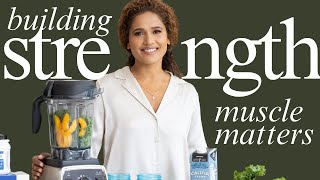
Dr. Shilpa Sayana and physical therapist Allison Cabot explain why women lose muscle as they age and how to stop it. Aim for 1 to 2 grams of protein per kilogram of body weight daily, do resistance training, and test your hormones and inflammation rather than guessing. Muscle loss comes from inactivity, stress, medications, and hormone decline.
Questions this video answers
Less than 27% body fat (some aim for ~20%).
1–2 grams protein per kilogram body weight (example: 150 lb → ~80–130 g/day).
Less than 10 teaspoons/day; approximation: (total carbohydrates − fiber) ÷ 5 = teaspoons of sugar.
About 10–14 (conventional lab reference noted as 4–20).
The DUTCH saliva test (~$400); a single morning cortisol blood test cited as about $8 (draw before 10am, no exercise that morning).
Chapters
Welcome to our webinar on building strength, why Muscle Matters, Women's lifelong vitality. I'm excited to welcome Allison Cafeteria and we are both going to co lead this webinar and then we have a bunch of questions for you that we will ask you. After a brief kind of opening and overview from me, go to the next slide.
Alyssa.
So as people are joining, if you have any questions, we got some great questions ahead of time. If you have any other questions, please drop them in the chat. After we address the questions we got online, we'll address the ones in the chat. Especially if you have questions you could just wait till the end and we can ask either of us, especially Farhar. Or if you have questions that you don't think will fully answer, please ask again. Next slide. Awesome. So I'm going to introduce myself and this will talk about why this is so important to me. I see a lot of women above 35 to their 90s and a lot of them are doing activities to avoid wrinkles and external beauty, which is fine. But really aging gracefully is about preserving your muscle. The muscle is your engine, metabolism, energy and independence. If you want to age with strength, clarity and vitality, don't lose muscle. And that's why we have this really important guest here today. So as most of you should know or who don't, my name is Shilpa Sayana. I'm a board certified internist, functional medicine doctor and certified in obesity medicine and we practice in Shoma Dopes and Alison, can you introduce yourself?
My name is Allison Cabot. I'm the owner of Core Conditioning which is a physical therapy facility. I'm a physical therapist and we also have fitness instructors there as well. And we primarily see women between the age of 30 to 70 is our primary demographics and we utilize different types of equipment that is more I would say, conducive to women so that they can build strength. But it feels good and it's something they enjoy and so they want to continue on with it. And a lot of exercise can be depleting for women and we have found great sources of exercise that women are happy to continue on and to develop strength at any age.
Awesome. And I met Allison through last year I actually had an injury injured my elbow to a fall and she was critical in terms of helping me heal. And I still go to her center and do the Pilates which I feel has been really essential in my own strengthening of muscle. So happy to have her here today. Thanks for having me. Next slide. So I just want to talk about Some conventional medicine causes for muscle loss. Aging is what lots of other lots of doctors say. But what is aging? Muscle cells become less efficient, mainly in producing protein, more prone to breakdown, inactivity, lack of physical activity. This leads to your muscle are shrinking if you're not using it repetitively. Malnutrition, not getting enough protein, or having other essential nutrients that contribute to muscle loss. Chronic diseases such as cancer, diabetes, heart disease, all can cause muscle wasting. And certain medications, specifically corticosteroids, can suppress muscle growth. And then I wanted to talk about some functional reasons for muscle loss. And so taking steroids is one way of increasing your cortisol, but a second way of increasing your cortisol is constantly living in high cortisol states, which all of you who've been patients here know. We check your cortisol all the time, and that could be due to high stress, high anxiety, chronic inflammation, or chronic pain. And make your cortisol go high and do the same thing that you if you were taking a bunch of steroids for another medical condition, high levels of toxins. Again, for those of you who don't know us, functional medicine is medicine where we look at the root cause. We're doing conventional internal medicine and functional medicine looking for the why of why somebody is going through what they're going through at this specific time. A common cause of muscle loss is something called oxidative stress, which is inflammation at a cellular level. And if your cells are that inflamed and common causes can be heavy metals. Things I see the most is mercury due to our high intake of sushi in la. And the second one is mold. And we don't think we have mold in la, but there's actually quite a bit of mold in homes and then persistent organic pollutants. Louisiana was considered the most polluted city before January, before the fires, and especially after. If you are sensitive genetically to toxins and can't detoxify, you may have a toxin issue that's causing oxidative stress and causing you to have muscle loss and then poor gut health. In functional medicine, we're all about the gut. If your gut's inflamed with the wrong bacteria in your gut or your gut lining is not nice and tight and sleeky, this contributes to poor nutrient absorption as you can't absorb all the protein you're taking in or you're taking a bunch of supplements, but you're just making expensive poop because you're not absorbing it. So improving your gut health can really help with having increased muscle mass and then the last thing is lack of estrogen and testosterone. And we treat a lot of women in premenopause per menopause, menopause and beyond. If you don't have these hormones, you will naturally end up being sarcopenic. And sarcopenic is loss of muscle mass. Next slide. Alyssa. So my biggest recommendation to Everybody listening is TAs, don't guess. Obviously, if you feel strong and you are feeling optimal, then you don't need to test. Just, you know, make sure. Just make sure you're testing as you age. Because as you age, your bones get weaker and you might be dumping toxins into your system. Or as you age, you just naturally might be losing muscle. And your goal of body fat ideally should be less than 27% and as much muscle as you can get. Also another thing that's important to test is hormones, inflammation and toxic burden. Next slide. And this is just an example of things you can do to test. This is our BIA machine which measures body fat and measures percent muscle mass. This is one of a friend of mine, her bia. And the goal is to have your said body fat ideally less than 27%. And some people shoot for 20%, which is amazing. My only concern with that is the body fat goes too low if you might impact your hormones and you might impact your nutrition. But that's what our goal is. So test, don't guess, see how much, especially if you're going on a weight loss journey with the new medications, the GLP ones, which I'm a big fan of. But in the right situation, you might lose 30 pounds. But if you've lost 28 pounds of muscle and a couple pounds of fat, or 10 or 15 pounds of muscle, then you haven't done yourself a favor. So it's really important to preserve muscle and test when you're on those kind of injectables. Next slide. So this is our functional medicine kind of iceberg theory. If you think about an iceberg in the ocean, the tip of the iceberg is what you get in conventional medicine, which is more physical and wellness labs or symptom based testing. But you really have to look at root cause testing, like what are your hormones, what's your gut health, what any signs of infection, any signs of toxins, so you understand your whole body, especially if you're thinking of hormone replacement. So you want your liver to really be ready for any prescription medications and you want your body to be able to receive them well. Really make sure as you're exercising or thinking of going to an Exercise program. Make sure your body can tolerate something like that. Next slide. So this is just based on a question I wanted to really answer was what is our diet recommendations? So I have my obesity medicine boards, and in that one, it's really about how much protein are you getting? Are you staying hydrated and having a low sugar diet? And so for the protein, what's recommended is 1 to 2 grams of protein per kilogram. So for about a woman who's 150 pounds, she would really need between 80 and 130 grams of protein. And that number is a big shock for many patients. They're like, I don't think I'm getting that. And they count their protein and they realize they're only getting around 30 to 40 grams a day. So it's super important because protein keeps you full. Protein really helps you create muscle. And so it's such an important nutrient to make sure you're getting enough of. And we have a lot of vegan, vegetarian patients. Even for those patients, you have to really aim for these numbers. Staying hydrated is super critical. And then really low sugar diets, I really want to throw a quick equation out there. Your total teaspoons of sugar in a day, you want to have less than 10 teaspoons. And how I calculate that is your total carbohydrate minus fiber divided by five. And so if you're eating a banana, it could have six teaspoons of sugar, and eating an apple, it could have two. So berries and apples are my go to fruits versus, like tropical foods like mango, banana, hot papaya. All those have high sugar. So try and keep your sugar content to less than 10 teaspoons, mainly because at any one time in our bloodstream, we only have one teaspoon of sugar floating around. And the next slide. And where can you get protein from? I think all you guys know, but can come from things like animal protein, dairy, eggs, lots of legumes and beans have protein. And so why is again, protein so important? So as we get into perimenopause, menopause, your estrogen levels decline and so does your testosterone levels decline. So your muscle loss is much higher. And protein, again makes you fuller. It helps with blood sugar regulation. And so we try and space your protein out throughout the day. A lot of people just try and do try and get as much protein as they can in one sitting. That would be very difficult to feel super full. Next slide. So now we're going to ask, if you have any questions again, throw them in the chat and I will see them here. And then we're going to ask Allison some questions.
Okay?
Okay. Questions people just ask before. And so one of our listeners wanted to know what's the best resistance slash strength exercises for someone who has limited mobility or lives in chronic pain?
So, firstly, I just want to say there's so many different types of exercises out there, right? And so I think what's most important is finding an exercise that you enjoy. Very, very, very important. Otherwise, you're not going to keep doing it. You're going to find every excuse in the book not to go. And you don't want to be depleting your body. You want to feel good. You want to feel like you enjoy going, that it feels good on your body, and it's something that you want to keep doing. So I think that's most important. And there's so many different choices in terms of somebody who has limited mobility or who may have pain. The first thing I recommended is starting with isometric exercise, where you're contracting the muscles, but you're not moving through full ranges of motion, so your joints are staying uncompromised. So, you know, just like doing things against a wall can be very, very beneficial. Like to work your scapula, you can press and do like, almost like a reverse push up against the wall. I mean, there's a tremendous amount of isometric types of exercises out there, but that's a great way to start. Super safe. And usually it does not aggravate your body. So I would recommend starting with isometrics. I am very much about alignment, positioning, having the right muscles perform the exercise. So you want the right muscles at the right time with the right amount of force. So when I work with people, I get them very aware of their postural alignment and make sure they're engaging the right muscle before they do the exercise. And then I allow them to go through the movement pattern. And I really don't want them to go into heavy, weighted types of exercise until they know where they need to be in space and what muscles should be activated. So it's very specific, and I feel like it not only improves their muscle tone, but it improves your posture, it improves your alignment. We work on breath, all of those things.
So somebody like that comes to you, would you work with them to improve them? It sounds like you need expertise and then something they can do at home.
Yeah. So I was saying that what I think is quite beneficial, and it doesn't necessarily need to be me, but finding someone who is very knowledgeable about the body, there's Lots of highly educated fitness trainers out there who know a lot about the body. But you really want to find somebody who's going to look at you and know what you need based on what they see in terms of your body and your symmetry in your body and where the weaknesses and imbalances are and developing a specific program that works for you.
So really personalizing it.
Very personalized. And I was telling Sayona because I'm a physical therapist and I have a practice that has eight other pts there. We do have some people come in and if they get a prescription from their doctor, you know, if you have a shoulder dysfunction or hip dysfunction or chronic pain or scoliosis or any type of diagnosis, sometimes you can just come in for a few sessions and we can treat you, teach you how to utilize your body and put you on a home exercise program or figure out what the best exercise routine is for you.
By insurance, you guys, by insurance.
I personally don't, I'm not paid for or service.
Maybe some people will do it.
Oh yeah, we have, we have like 6pts that do that. So I, I'm really particular and picky in terms of exercise because I think it's so important to be doing the right things and to not get hurt because I treat a lot of people, they get hurt from going to boot camps or to hit, hit workouts and it's like, oh my gosh, there's so many better ways to work on your body and you want to be doing it for the rest of your life. So you want to find the exercise techniques that are most beneficial specifically for you. And you and I are different. So what you mean is different from mine completely.
And we do a lot of epigenetic things, genetic testing here and sometimes we see people's genetics that don't make it the kind of collagen or they respond really quickly to stress and so maybe they won't do well in a very intense exercise type program.
Right. Like someone had a question about ehlers, which is a connective tissue disorder. How I work with someone who has ehlers is very different from an able bodied person. So.
And do you see a lot of people with.
Yeah, definitely. Way more because it's become a much more, I don't want to say common. There's much more awareness about it now and it's very, very difficult to get to that diagnosis. How would it take years and years and years for people to actually get accurately diagnosed and many, many different types of doctors before you actually get to that? So they have a lot of hypermobility. So we want to get stability in their body. They're highly flexible, they're at the end range with all of their joints. So you don't want to work on flexibility with that particular type of person. You want to work on stability. Very different. Yeah, very different. But I like to start with stabilization exercises before I go into high movement exercises because you want to have core stability and then you incorporate more of the global muscles into a routine. You want people to understand how to connect to all of their intrinsic muscles first before you work out into the larger muscle groups.
Would everybody in your practice have expertise with others?
Yeah, I wouldn't say everybody because some of the trainers might. Not necessarily. But the beauty of our practice is we all work in one big space and our trainers are always working with the pts. So they are highly knowledgeable and if they don't know something, they can just.
So much collaboration.
Yeah, a lot of collaboration. That's so great. It's lovely.
That's so nice. We have a nice team approach.
It's very, very much.
And then one patient asked, so one person asked. That's exercise to strengthen bone. Is it a weight bearing?
Weight bearing. So, and I'm really, really, really a huge proponent of your using your own body weight. I mean, it's great to use weights and stuff, but actually using your own body weight. It's called body weight bearing exercises. Like, so something like a push up, a lunge, a squat, where you're using your own body resistance to perform an exercise has a lot more input into your system than using like a weight because you get the agonist, the antagonist and the synergistic muscles all working together at one time versus if you're doing a weight, you just get the concentric.
That's interesting.
Yeah. Oh my gosh. So much better to use full body weight and your own body weight. So there's so much you can do without even. Yeah, equipment. That's great. But I do like equipment. We have lots of good equipment.
You have lots of good equipment. Tell us about some of that equipment. I've seen things like Tang from your seat.
Yeah. So, yes. So that's a system called Red Cord, which is from Norway, and that is all closed kinetic chain or body weight bearing exercise. So it's highly, highly impactful and it works in all different planes of movement. It gets that agonist, antagonist, synergistic muscles all working at the same time. And because I work with a lot of people that are injured, I'm able to offload some of the Weights of their. Either their trunk or their extremity. And I can really just focus on a particular muscle that I need to activate.
Great.
I can buy a muscle. I can't just work one muscle because we don't work like that. We work in chains and muscles. But I can buy a specific muscle groups so that I can get the muscle that's not firing to fire without all the bigger muscles trying to compensate for it.
And you see a lot of change as you work with.
I can see people who've had back pain for like 15 years sometimes I work on them once and it's.
Wow, that's amazing.
It's not about the strength. It's about changing the brain to muscle connection. Because when you have any injury, your body tells your. The brain tells the muscles shut off. I don't want to cause more pain. And until you specifically reboot that computer, that you have to just reconnect the wiring. And so people can go for years and years and years without having that connection. And you can in one session reconnect that.
That's amazing.
That doesn't always happen.
Right.
But I.
That's amazing.
Yeah, yeah, yeah. And so that type of weight bearing exercise in the ropes, because you're suspended and the ropes are dynamic, you get a lot of input into your system. So Red Cord is one thing we do. We have a full Pilates studio, which. Pilates is amazing. I love it as an exercise technique.
I mean. And you have so many options for Pilates that you could come with your three girlfriends and do a class.
You can do classes, you can do duos, you can do privates, you can do mat work. And there's many different types of pieces of Pilates equipment. And then we have something called Coraline, which is. Have you been on the Coraline?
No. What is that? It's th.
Well, we won't go up on that, but I'm sure you've been on it. Thought it was Pilates, but it's. No, it is. It is wood. And it looks.
Yes, I've been on that. Okay. Yeah.
So that's pretty amazing because it's upright strengthening and you can mimic gate patterning, walking and push ups and. Yeah, and then we have gyrotonic. We have tons. Yeah, but it's not your conventional type of exercise. It's more, I would say, full body experience. Not just working your bicep, but working your bicep. But your core is working and your alignment's right and it's full.
That's really what you mean? Supposedly by the time we're 50, we're using 20 of our skeletal muscle. Right. So we begin to start this in like a 30s.
Well, stuff starts in your 20s. You start to get changes after 40. It's is.
Don't say that.
Let's not down it.
I don't think.
I mean, I'm 60 and I work out almost every day, but I.
What do you do? More resistance training?
More I do. Yeah. So I do pilates with a trainer twice a week because I. I'm like everybody else. I want someone to tell me what.
To do and to show up.
I do red cord with the trainer once a week and I spin twice a week. So with women, you want to be doing some sort of strength training at least twice a week. And you want to do cardio at.
Least an hour twice a week.
Yeah, 30 minutes to an hour. I mean, start with 30 and build up. And then with cardio you want to do at least 75 minutes a week. And that, that can be, you know, for some people, they're not going to be able to score span. It's too intense and that's fine. I walk my dog. I get a dog. Get a pet.
Helps. It's only one.
If you get nothing from this, get it. Because you have to go walk them. So I walk my dog with my sister. I always have. I don't. I don't have any workouts except for spinning, which is in a group class. So that's not alone. But I'm always held accountable.
So that's why. Yeah. Being held accountable.
Yes. So I always am working out with somebody. I have to be held accountable.
That's so great. I think there's so much community when it comes each other and that's so important.
Yeah. And the other thing I have to say is that it's. If I don't work out.
Yeah.
That's my de stressor. Like if I don't get. And it's so great for you emotionally too. It's not just the physicality. Yeah, emotionally, it's just, you know, it's a de stressor anti anxiety. The hormones that it releases that you know.
Absolutely.
All of that and take time for yourself. You know, most women are taking care of so many people. Even if you don't have kids or pets, you're working or you're taking care of a home or you have children. Yeah.
It's so true that my first reality is I can't go with anything else because I have to focus. Yes.
It's a moving meditation.
Yeah.
The exercise.
Well said. Amazing. So I have another question, is more specific questions. It's if somebody has Parkinson's or scoliosis, sounds like, I guess, some of the stuff you already said. What could they.
Yeah, but like scoliosis. Very specific. Right. Because you have curvature in the spine. So you want to lengthen the sides that are compressed and tight and as strengthening.
Because.
Because tight also means weak. A lot of people think if it's tight and strong. No. Because the muscle fibers can't glide and slide.
Maybe you need to have more flexible.
You need to be. You need to lengthen, tighten muscles. You just need to strengthen. Tighten muscles. And you wouldn't necessarily always work symmetrically. Like, you might need to do more repetitions in one direction than the other if you tend to not move in that direction.
So you really have to work with.
An expert initially just so you know what to do. Yeah. And also with Parkinson's, a lot of balance work. Yes.
Without having muscle strength, it's hard to have balance.
Yes. You need to really do a lot of balancing work. And also for females, they tend to have more balance issues than men. So a lot of balance work. So we're talking about strengthening, which people usually think of like strengthening as muscle strengthening, which we absolutely need. But you need cardiopulmonary strengthening. That's where the cardio comes in. We need balance training. We need flexibility, we need strengthening. It's not just strength. You need strength, flexibility, balance, cardio, pulmonary.
I think to add to that, you know, a lot of women, when you're closer to 40, definitely after 40, their pelvic girdle is just weaker. You need to go to the bathroom right now. And I think Pilates that way seems to help a lot of women. Specifically on the pelvis.
Yeah. It works on the pelvic floor and the core. And those two areas of musculature are very closely related. If you engage your inner thighs, it causes your pelvic floor to engage, and then your abdominals are facilitated. So that's kind of. The whole core is. The pelvic floor is part of the core.
Yeah. A lot of women are like, what medication should I use? And I was like, well, how much are you exercising in the area? A lot of people are walking. Walking is like their main exercise. So for somebody who's listening, who's just a walker, what would be the first thing you would say? Start. Start to try to do in terms of resistance training?
Yeah, I think what. Starting with isometrics or even, like, resistance bands. Resistance bands are Amazing. Yeah. Yeah. And you can get on. Yeah.
Even though.
Yeah. Just be so careful. You can get them probably at Target too. There you go. So, you know, any like resistance tubing exercises are great. And you can like, especially for travel and stuff to have a thera band or elastic bands, you could do a whole routine. You can do an hour, more than an hour.
How do you stay disciplined? Is it accountability? And you just don't feel good, you don't exercise.
Yeah. And I've just always been a mover. I was very fortunate. It's not like I, I was like, okay, I need to start exercising. Like I played volleyball. I wasn't like a star athlete or anything. And I started moving then and I just never.
You always acted.
I'm very lucky in that I really enjoy it. For me it's.
That's an enjoyable.
Yeah. That's why you need to find exercise that you like.
Makes total sense. You don't want to be dancing, just be out there.
Great.
Yeah.
It doesn't have to be like you're.
Going to a class.
Yeah. You can go dancing. You can go icing K. Maybe not ice skating, especially if you're osteoporotic, but you know, rollerblading. Just anything. Going out on the walk with your friends. Go. I'm a hiker, so that's like a big passion of mine.
Go hike.
Find what you like.
Absolutely. I have a lot of women who take like low dose testosterone hormone replacement and they're like, my muscle's not increasing. But I'm like, you can't. You're not moving your muscle. It's not going to. No matter how much that stock going to give you.
Yeah. You got to leave it. You got to use it or use it.
Exactly.
It's definitely true. And it's not just. Just about the muscle. It's about if you're not moving, you're not getting the brain to muscle connection either. So we want to keep our brains going as well.
Exactly.
Movement helps with that actually.
And movement and stretching just by itself naturally reduces your CRP inflammation. So moving and stretching is so important. But one more patient specific question about how going through something specific mitral valve prolapse. If somebody has specifically any recommendations of how to start.
Yeah. So I'm not sure if everybody knows what mitral valve. So the. On the left side of your heart, you have the atrium up top and the ventricle on the bottom and there's a valve where the blood flows from one to the other. And with someone with the prolapse there's a problem with the valve. So sometimes the blood that flows up instead of going down. And so it's, it's not usually life threatening and sometimes there's operative procedures that take place. But most people can. But first of all, if anyone has any medical conditions you're going to take on some sort of exercise, definitely speak to your physician about it, most importantly and let them know what your thought is. And they probably might have some recommendations. But you don't want to do high impact aerobic activity with that type of diagnosis. So either low or moderate physical activity and cardio. So swimming is great, walking is great, biking, you know, not necessarily spinning because that's more high impact. And then just really monitoring your symptoms, like do you have dizziness, shortness of breath, things of that sort. But low to moderate impact aerobics is great, makes sense.
And then how many times a week should a long distance or half marathon and lift weights, a boot camp classes, good workouts to build strength. Yeah.
So again, when you're doing strength training twice a week, it's great between 30 and 60 minutes, depending on if you're a beginner or more advanced.
Yeah.
I'm not a huge proponent of boot camps.
I have to say I like very.
Much like, make sure you're in proper form and the right muscles are working and you're not like, you know, lifting weights in your upper traps or in your ears and your neck is compromised. So if you're very aware of how your body needs to be in space and what muscles you need to be contracting, then go for it if you can. But if you're just starting.
Yeah, I would recommend either. I think that ties into this next question. It says, how can I do this exercise when my body gets super stressed with exercise? And we see this, a lot of people have high cortisol, like they're stressed or anxious or they inflamed and cortisol is already high. Now you want to add more.
People like to have chronic fatigue or fibromyalgia and stuff. So you want to find types of exercise that are gentler but you're still moving. Like yoga, Tai chi, Pilates is great. Coraline things where you're moving but you don't feel like you're being taxed and compressed and fatigue. And it makes sure you rest too. Rest is very important as well.
Rest is exactly. Rest and recovery for sure. Right. And maybe during exercise thinking about getting enough protein around that exercise time or taking creatine, something to really help.
And your breath, make sure you're breathing. That's very important to breathe.
A lot of us are just holding our buttons.
Yes. It's challenging times right now, so a lot of breath holding. Go in your, your closet and scream for a little while.
Somebody asked, what are your thoughts on a mega megaformer?
Okay. That's a type of reformer. Yeah. So I'm a very traditionalist. Like, I work for balanced bodies. I only work on balanced body reformers. I need more clarity on what that is. Do they use, like, a lot heavier spring tension and they. Are they doing upper body and lower body at the same time?
To ask that is what exactly the mega formula is. But you like the.
I love it. I mean, I.
How about your thoughts on the power plate? Great.
Vibrate the vibration plates. Yeah. Those are great to use. Gives your body a lot of proprioceptive impact input. The muscles get connected. Like doing squats and things on a power plate are great.
How about things like Osteo strong?
Great. Yes. Now it's really, really good. And I've had, I have clients that go there.
Have you seen improvement?
Yeah, well, they have in their bone scans. They feel like they're not doing anything. They don't feel, they don't feel like.
It'S exercise because it's like a little bit of weight.
Yeah. So it's great for bones, not for muscle.
Yeah. And that makes sense. And so much of the data as I was researching for today's talk is all about bone.
Yeah.
And very little about muscle. And if it's above muscle, it's all in men and men and testosterone.
And you need. Actually the pull of the muscle makes the bone stronger. So if you can find exercises that get the muscle in.
Yeah. Then that's win. Win.
Yeah.
And it becomes.
I, I, I like Osteo strong for the bone thing, but it doesn't feel like exercise. If you want to exercise and feel it, it's not going to.
A lot of people have felt that way.
Yeah.
Because I think it's really.
It is, but it's good. I'm not, I'm not saying it's not good. It's great for osteoporosis. Yeah, that's, that's great.
And then another question. Perimenopausal, menopausal women, I encourage you. The heavy weights, how heavy without injury is straining my back. I think you kind of answered.
I don't think it has to be heavy. Like what I said about using your own body weights.
Yeah.
You're going to get the most bang for your butt. With the most muscles activated, which is then going to help with the bone. Yeah.
And then another big thing we see in the whole perimenopause, menopause. Age is really a frozen shoulder and the lack of estrogen, so lack of lubrication. So just be careful before starting an exercise program that you are evaluated fully and are ready to begin. Something like that. Perfect. Any other questions? If there's any other questions, please drop them in the chat. I just want to make sure I answered all these questions. Will you answer all these questions?
I may or may not have. I'm not sure.
I think you have. That's great. And then have you seen women who are fit and active well into the 80s and 90s?
Oh, yeah. Amazing. Staying active. They stay active and mobile. Yeah.
It's like we're losing muscle anyway.
So much.
So many of us are just sitting.
Well, think about things that change with the computer. I mean, I'm so happy I don't.
Have to sit on.
My job is very active. I work on like six or seven people a day. Working on the equipment, working on their bodies. I don't sit at a desk. I never sit at a desk.
That's your lucky. So many of my patients at a desk like eight hours, nine hours a day.
Most of my patients come in with postural dysfunction or it's because they're sedentary that they're having issues.
What do you think of those? It's like a brace that pushes.
That's very good.
I do.
But you can't just wear that. You have to wear that and do specific exercises too. It's more of a feedback so you're aware. But then you need to strengthen your own muscles so you don't need the vest anymore.
That should be goal not to just hang out. Correct.
But better to have the best than no vest at all.
Okay.
Yeah. Because it is very, very appropriately. Makes you aware of how you are sitting or standing or walking.
So. And then what do you think of those? Like ankle weights and weights in general?
I have a bit proponent of wearing extra weights.
Yeah.
It just pulls on your joints because.
It'S kind of painful.
Yeah, I. I'm not a proponent of that, but that's just me personally. It's not based on anything other than I don't think it's a good idea.
You think your body is hurting you?
Yeah. I mean, if you're gonna want to do strength training, then go do strength training and then do your cardio segment. I mean, it's okay. Like in my spinning Class. We'll sometimes do weight training things, but the whole thing isn't like holding a.
Weight while you're too demanding. That.
Yeah, it's.
It's. I don't know. Makes sense. A lot of people ask that question.
That's my opinion. That's not necessarily based on, like, a research article of what is good and not good, but.
Yeah, I think getting out there, finding something you love to do and doing that just makes the most sense. Yeah. And do things that you like, that.
Feel good, that make you feel good.
I was just telling Austin before about how the biggest rate of suicide in women is between age 45 and 55. And that statistic is really alarming to me. And this is an age demographic that both of us see. Yeah.
The most of our patients are in that range. And we were talking about why we think that might be.
Yeah. So many reasons.
Yeah. You're. You're. If you have children, they're leaving the home. Or if you have parents that are still alive, you're generally having to deal with your aging parents. Or you have a lot of stress at work, and you're. If you did have kids, they leave the home and you're losing your identity or not knowing where you are in the world.
Exactly. So I think. And then.
Sure. So much pressure on women to be a certain way.
And some of my patients, like, I kind of hit the career. My. I hit the peak of my career. Is this it? And I think, what is. What is my purpose? Why did I do this?
So make sure I love my job. And I'm sure you love. Yeah, I get to help people all day. It's a very. My sister, I have a twin sister, and she's in sales, and she has so much stress. And no one's like, every day people are like, thank you so much.
Like, yeah, they're helping me feel grateful for the kind.
I mean, it's just very rewarding.
And, you know, the new sister, the cortisol spikes. She has less muscle. Right. So it's so important to protect your cortisol.
And the stress of. Yeah, it's just not gratifying. I'm very grateful for my job.
And from 45 to 55, during that age decade, I think exercise is so good, especially if you can go with others or see others. Sense of community. Something that can be really missing.
Yeah. And as people get older, that's really difficult. They start to get depression and they have, you know, they're not interacting with people. And also things start to change with your hearing and Your vision and all of those things and it impacts how you are in the morning. So getting out there, moving, getting to be around people, that's so important.
Super important. Any other questions or. No. There's one more question. You mentioned creatine helping with cortisol. No. Creatine helps with muscle building, so it's a good thing to take creatine monohydrate right after exercise. It can help with muscle repair and muscle building. But things to lower Cortisol would be. My favorite supplement is Cortisol Manager. You can get it anywhere. Integrative therapeutics. It just has a blend of Ashwagandha, cordyceps, phosphatidylserine, things that just naturally bring down your cortisol. But I think just check your cortisol. Sometimes you may not know if you've just been running, running, running because of life all the time. Your cortisol may be actually very low and you need something to gently bring it out. But if you're in stage one or early cortisol spikes or something just happened at work, may have a hard time sleeping and you may be awake between three and five and that's when Cortisol Manager can help. But the question is, if you are in your 40s and 50s, is it a lack of progesterone? So definitely check your hormones. Not only cortisol, thyroid and your sex hormones, you can understand that the relationship between each and how I describe it is like a relationship between family generations. Think of your stress tones, which come from your adrenal glands as the wise grandmother and your thyroid as the supporting mom and your ovaries as the sensitive grandchild. She's going to be very sensitive to generational stress from your adrenals to the thyroid. Check the whole cascade of hormones so you can see where the missing link is and which hormone you should really look at. In my experience, if you can address the wise grandma, which is the cortisol, everything else falls into line. Check and see. And obviously ask your own primary care. But if you find functional medicine, doctors is an easy person to look at, a naturopath and try and when you actually start wanting to be active and moving, make sure your cortisol is balanced, especially if you feel like exercise hurts you, that are you doing the right exercise and meet with an expert so you can get an evaluation, say, this is what I like, this is what I don't. What would you recommend?
And cortisol is a blood test. That's how you determine.
Yeah. So there's a bunch of ways you can do it. So popular ways are the Dutch test, which some of you may have heard of, which is a salary test. You measure your cortisol and your sex hormones. It's a nice test, but it's $400 each time. But the cortisol test request is eight bucks and you can do your cortisol. Just has to be in the morning before 10am and you want to not exercise that morning. And so you could just check your cortisol and see where you are. The range is 4 to 20. Again, that's the difference between conventional medicine and functional medicine. Conventional medicine, if you are 4.2, it's normal, but in functional medicine you want to be optimal. So a good morning Cortisol is between 10 and 14. And again, if you went to me as an internist before functional medicine, I would say that's normal if it's 4.2 or 20. But you really want all these labs to be optimal. And that's really the difference between functional medicine and conventional medicine. Check your hormones, make sure you know who you are before starting an exercise program. And just go slowly like you're saying, oh, what's the weighted vests? Are they safe?
Yeah, I mean, if you have maintained postural integrity and where it. It's safe. But if you're flexed and then putting weight on top of that, that's normal.
So posture, it's all about posture.
Posture and engaging the right muscles and having the right alignment. Yeah.
And then how heavy? I guess really what you can tolerate most. Slow. Yes. Best thing to eat before and after workouts. Do you have a favorite?
I'm not.
That's.
I'm not the expert in that. So I, I don't. Do not know.
So biggest thing is protein. A lot of people skip breakfast and show up for exercise. Make sure you're eating enough protein. Your goal really should be at least 60 grams. And this is my vegetarian. Vegan patients really struggle with that number. You can get it from legumes, eggs if you eat them, cheese if you eat it. Or really sometimes you have to rely a bit of protein powders. But if you're conscious, things like hemp, teaspoons of hemp, or making sure that you are incorporating some sort of bean. The best thing about bean is also a natural detox because it has so much fiber. And if you guys haven't heard of the bean diet, there's something called a bean diet, which is actually a diet for detoxification. If you can tolerate beans and your stomach doesn't mind them. I Would highly recommend that and the benefits of berberine by one last patient. So berberine is a bark and it is used to help drop your insulin. So it'd be really great to help you with controlling your blood sugar. It's also a natural antibiotic and antifungal. So it's a great supplement. We have a lot of patients take it. I would just say start slow. A lot of Companies have a 500 milligram dose available. Start at 250. Make sure you always take it with food. So many patients again are like I didn't eat. I just took my berberine. I felt dizzy. So take it with food. There was a big trend last year on social media saying Bergrade is like the new or is the old GLP one in terms like Ozempic or Tirzepatite or Manjaro. But it works by dropping insulin. It's a very. It works in a very different way than those medications. But it's a safe supplement to take and even take long term. That being said, some people can have side effects, especially if you have a lot of gut inflammation. They have nausea and abdominal pain. I think somebody asked a question about Emzella and M Sculpt. So I'm a huge fan of Emzella. Emzella is that machine. It looks like a toilet. Sit on it. But it's a seat. And it does I think 10,000 kegel exercises in 30 minutes. Oh really?
That's.
I've taken my mom a few times to get it done. It's.
You go to. To a facility.
Facility. So it's not covered by insurance. It's usually like a med spa or I think within our five mile radius we have four places that do can be expensive. I think for about six sessions. It's about $2,000 or eight sessions. It's expensive. But it really does help strengthen your pelvic hurdle if you can't afford that or don't want to be in a public space doing that. There's another machine called Inovo I and Ova it's shorts and you wear it and you hook yourself up to an outlet and it does about 60. Yes, exactly. The problem with the Inovo, a lot of my patients say the customer service sucks.
Are you supposed to contract when this.
But you have to stand. Okay, you have to stand. But I don't think the customer service experience. I'm hesitant about recommending it. Emsculpt Same concept about contracting those muscles and the skeletal muscles. If you are like super fit and you have you Just want to see your abs more. Great idea. But for most of us, we're not super fit and we do have some adipose fatty tissue to deal with. It's not going to be very effective. All of this is only effective if you do it routinely. So if you had an emsculpt machine at home, makes sense, but otherwise it's expensive. I'd rather you have working with an actual expert, a physical therapist or a trainer who's knowledgeable and do stuff consistently.
Yeah. It's very important to activate your own musculature versus an external stimulator, activating your muscle.
That's exactly this concept.
Yes. So it's not going to be long withstanding.
Right.
You have to train your own muscles to engage that way. Now you can use EIM to facilitate your own muscle contraction for those individuals that can't feel it or want to have more input.
But it's not a solution.
No, it's not a solution.
Excellent. Deep squats on the power plate seem good for that, too.
Great. Yes. Good suggestions.
Perfect. Excellent. I just want to give one person either the choice of something to help their cortisol or something or creatine. It's just our usual raffle that we do on these webinars. So, Alyssa, pick. Pick our random participant who stayed with us the entire way. We appreciate the time, we understand it's a. It's an evening and appreciate you for coming by.
Thanks. It was fun.
And then, Alyssa, can you also throw up the slide about how if you wanted to get in touch and either of us, you can work?
Yeah. If anybody has any questions, feel free to email me or chat. I'm happy to answer anything else and.
Then they can contact full condition.
Absolutely. Yeah. If any of you guys want to come and have a session with a therapist and the classes that you have.
On your website, they can just go with people. How many is the maximum number?
We only have like four people in a class. So it's very different from most Pilates studios where they have big groups. Ours is very specific.
Okay, great. That's the information. We'll leave it up there for a minute. If you guys want your QR code. And you guys have two locations?
Yes. We have one on Studio City, Right. On Ventura and Coldwater, and one in Burbank on Magnolia, near Keystone, in the Magnolia park area.
Awesome. Excellent. So if you need to get a hold of, use the QR code, a call text, and there's one more slide you need to get a hold of. Us. I think most of you are already outpatient, so happen so.
No, that's a QR code.
If you have any questions or questions specifically about this webinar, if you want to share the recording with any friend or somebody you think it'll be useful for, you will get an email after this, probably by tomorrow, with the webinar recording in there. Thank you all for showing up.
Thanks, everybody. Get moving.
Get moving. And the lucky winner is. Let's see. Gail Steinberg. Okay, Gail, congratulations. You should do like the lottery now, but we will contact you and we will ship it to you. You can come by and pick it up. Take care, everybody. Be well.
Have a good night.
Bye. Bye.