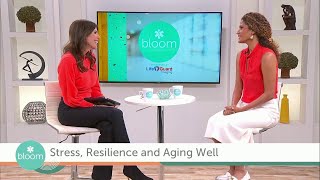
Dr. Shilpa Sayana explains how chronic stress ages you by raising cortisol and depleting DHEA. She tracks resilience through heart rate variability and recommends morning breathwork, less phone time, nature, and community to retrain your nervous system.
Chapters
We are back with functional and internal medicine doctor Dr. Shilpa Sayana, who says chronic stress can accelerate aging. Dr. Shilpa, thanks for sticking around.
Absolutely.
So talk to me about stress and how it impacts our aging.
You know, I ask my patients every day, especially my female patients, like, where do you rate your stress? 0 to 10, 10 being super stress, 0 being none. On average. The answer is 7 to 12.
Wow.
This is daily stress. And what they're not realizing is that's accelerating the aging.
Yeah. You said something before the commercial break about how you were a busy mom running a busy practice, taking care of aging parents. I went through that phase of my life, and it's interesting now that I'm out of it and through this show have learned to manage my stre. People will look at me and they're like, you look so much better. What are you doing? And I'm thinking, not nothing, really. I'm just not living in chronic stress. How do we back away from that, though? Because sometimes life just throws it at us totally.
And stress is inevitable. But your reaction to that stress is something you have control over. How do you process that stress? And our bodies don't know the difference between a physical threat and then just your life. Juggling your kids, juggling your career, being a wife, being a mom, all that st going to impact your stress daily. And what happens is every time you have this cortisol, or adrenaline peak, it drains a very important hormone called dhea. And that's a hormone we check on our patients every quarter or at least every six months. And it's a hormone of resilience. Your DHEA protects your brain. It protects your metabolism. It protects how you age. And if your DHEA is sliding quicker than it should, people generally feel fatigued. They have brain fog. They're gaining weight in unwanted places, and they just don't feel that vitality.
Now, when a patient comes to you and they're like, Dr. Shilpa, I am under extreme stress, and I'm feeling all the symptoms that you just described. How do you treat them?
So the most important thing is to show them that their stress is impacting their health, because all of us almost wear stress as a badge of honor. Like, I'm a CEO, I am this, and I'm so busy, and I'm just so stressed. And that's just what it is. But it's not. It has all these hidden impacts on your life and on your health. So we check numbers, we check their hormones, we check inflammation levels, and we show them this is what it's doing to your body, and it's causing all these things. And then a lot of patients are like, well, what can I do about it? This is my life. And so it's like, how are you responding to your stress? And so a very important thing we teach them is something called heart rate variability.
Okay.
And that's how your body, especially your heart, responds to stress. Because if you're always in a state of fight or flight, your heart rate goes up and it tells your brain, tell your body to make more cortisol. So you're stuck in this fight or flight state. And if you're in chronic stress, you can't uplevel your health.
That's very interesting. So if you get that checked and it's running high, then what happens?
And what's amazing about this is you can retrain your nervous system. And so there's a device. There's a few devices out there. One is called heart mass, where it's a little connector to connect to your ear, and it can tell you as you're going through the day, what is your heart rate variability. The higher the heart rate variability, the better your resilience.
Okay.
And so when you have a low heart rate variability, always stuck in fight or flight, and can't go from stress to calm very quickly, and those who have lower heart rate variability are more prone to disease.
Interesting. So the name of the game is to try to get that heart rate variability up.
Correct.
Are there natural ways to do this?
Yes, absolutely. And the most important way is your phone. Put away your phone, especially in the morning. Don't reach for it right away. Do like five minutes of breathwork, set an intention. This all calms your cortisol. The second thing is try and be in nature. So many studies saying being in nature, taking a walk, all that could be very calming for your body and not like, push yourself to extreme exercises, because that can increase your cortisol, and you could be, like, always at this high state of fight or flight. So starting the day with calm, ending the day with calm, and also measure, test, look for community, laugh, have joy, have fun. So many people are not having enough fun.
That is true. And at this stage of my life, I was just thinking about it as I was walking through the halls, getting ready to do the show. I'm finally at a stage where I have these incredible women in my life, and they're so supportive and they bring me so much joy. And even though we might not be able to get together all the time, just having text messages together the occasional cup of coffee.
It's a game changer completely. And community, a sense of purpose, a sense of belonging, all of that reduces our stress and you just have to lean in and look for it. And also measure if you don't know if you're stressed because I think so many of us live in stress all the time. Measure your dhea, measure your cortisol and you'd be surprised that subconscious stresses are impacting you. And again, stress will always be there. But how do you recover from it? If you can figure out how to recover, then you can really uplevel your health.
That's amazing. And what's the little thing that goes on your ear?
It's a heart rate variability monitor and it's by a company called Heart Mass.