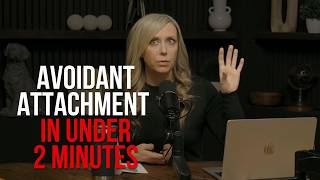
Dr. Tracy Dalgleish explains avoidant attachment as a nervous system response that protects you from feeling overwhelmed, but creates distance over time. Small acts of staying present, even when uncomfortable, teach your nervous system it can handle the feeling and build real connection.
Chapters
If you're the avoidant one in your marriage, this is for you. No matter what your partner comes to you with, a feeling, a concern, a request, it's probably going to feel uncomfortable for you. You'll want to shut it down, distract, defend, go quiet, or deal with it later. And honestly, that makes sense. Avoidance didn't come out of nowhere. It protected you from feeling overwhelmed, from feeling like you were failing, or like whatever you did was never going to be enough anyway. So choosing the easy road, putting it off, minimizing it, stepping back, that's your nervous system trying to help. But here's the hard part. Every time you take that easy road, it slowly creates distance. And over time, that distance can start to feel safer, but it also starts to feel lonelier, like you and your partner are living beside each other instead of with each other. But it's not just hard on them, it's hard on you too, even if you don't always feel it right away. I want you to know that the goal isn't just to suddenly love hard conversations or to become this emotional person. The goal is to risk just a little with your partner. It's not perfect, but you choose to stay. You don't shut down. Instead, you say, "I don't have the words yet, but I'm here." Maybe it's awkward or a bit messy, but remember this: discomfort isn't danger. It just feels like it in your body. And every time you stay when your instinct is to pull away, you're teaching your nervous system something new. You're saying to your body, "I can handle this." And this doesn't have to push us apart. And that's how connection is built, not by getting it right, but by showing up even when it would be easier not to.