Navigating Mother-In-Law Tension with Daughter-In-Law Math
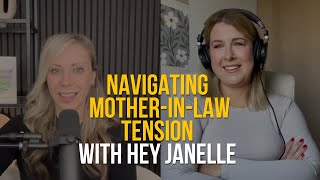
A transcript of a podcast conversation between Dr. Tracy Dalgleish and creator Janelle Marie about mother‑in‑law / daughter‑in‑law dynamics. They discuss Janelle’s viral “Daughter‑in‑Law Math” content, common micro‑aggressions and ‘paper cuts’ (passive aggression, exclusion, gossip), power dynamics, generational/age and role expectations, boundary setting as a couple (holiday strategies, code words), repair work, and where to find Janelle online. The episode also promotes Dr. Dalgleish’s forthcoming book You, Your Husband and His Mother and its Five Step Vault method.
Chapters
Welcome back to dear Dr. Tracy. Today we are in our really special six part series all about boundaries in laws and how to get on the same page as a couple. And this is just in time for the holidays. If you've ever felt caught between your partner and their family, struggled with setting boundaries that actually stick, or wondered how to support each other when extended family dynamics get complicated, I want you to know you're not alone. These conversations are some of the biggest challenges couples face and over the next few podcast episodes episodes we're going to unpack them together. And this series is leading us right into the launch of my new book, you, your husband and his mother. And in the book I share my five Step Vault method. It's a framework to help you and your partner align first, set boundaries with confidence and skills and navigate family dynamics without falling into blame and disrespect. If you've ever felt caught in the middle, this book will give you the roadmap you need. And if you also are someone who says I have a healthy relationship with my mother in law, I want you to know this book is also for you because it is aimed to help you build the strategies now so that when things change, if you hit hard moments, you and your partner are going to be on the same team and you'll have all the skills and tools there for you. So you can pre order now to start getting access to the tools that are going to change the way you handle these experiences. Today I'm sitting with Janelle Marie. She's known on Instagram and TikTok as hey Janelle Marie. And Janelle is a creator and a fierce advocate for Daughters in Law everywhere and through her community and what she calls Daughter in Law Math or Toxic Mother in Law Math. She really sheds a light on the hidden ways women often get blamed in In Law Dynamics. Her work resonates because she names what so many Daughters in Law have felt but haven't had the words for and she helps women feel less alone in the process. I can't wait for you to hear our conversation, so let's dive in. Janelle, thank you so much for joining me here on the podcast. I am thrilled that we get to have this conversation together.
Thanks for having me. I'm so excited that we were finally able to do this. I'm really looking forward to it.
And just before I jumped on I was saying to to Janelle just how many times I'm in her dm saying yes, thank you so much for giving voice to this common struggle that so many Daughters in law have when it comes to dealing with their mother in law. And I really think that this is where we're at right now in our generation and how we're showing up differently, which is we know differently now, we want to do differently, and we're not going to stay silent. So I wanted to even go right into that moment where I came across your viral reel, which was called Daughter in Law Math. And let's start right there because so. So for anyone who doesn't know your work, maybe you could just tell us what's Daughter in Law Math? What, where did that come from? What were you trying to do with that, that reel?
I mean, admittedly I didn't make up the, the video theme or the trend per se. It was, I think it originally started with, it was like girl. I don't know what the original video was, but it was just the idea with Girl Math. Was it? Yeah, it was just like the idea that like how a person is perceiving a situation probably isn't actually how it's adding up in the other person's reality. And so some of my clips from that video are like, I'm a daughter in law. Of course, of course it's my fault that my husband hasn't called his mom back, even though every single time we've gone to her house in the last year is because I've encouraged him that we should make the trip out there. And it was just sort of bringing voice to the fact that a lot of mothers in law, from what I've experienced, I shouldn't say a lot of mothers in law in general, a lot of the mothers in law who have maybe not the best relationship with their adult child or their daughter in law have it in their head that their daughter in law is the reason that this relationship is, isn't in the best place. And when you actually talk to these daughters in law and they're in my DMs, they have the same story as me, which is like, no, I, I wanted to try to create this relationship, but when you have it further exasperated by the fact that then this woman isn't very nice to you, it just makes this so silly. Like, why do you hate me? I was trying to fix this for you. Uh, yeah. So that was Daughter in law Math. That's an example of one of the.
Clips, I think, and you portrayed it so well because it really was kind of doing this play on. These are the things that I'm actually not doing and how it's so easy for people. I'LL say people in general, but also with the mother son dynamic for to find the bad one, like who's the one causing the problems in the relationship. And many women, many people, I want to say I'll, I'll stick with the general. First, many people don't want to look inwards. It's really hard and uncomfortable to say how do I show up in this relationship? And then so they look, well, it can't be my son, then it must be the daughter in law. She's the one causing all the problems.
Yeah, it must be. I think a lot of times again I try really hard to like stay on my line of the sand in terms of I'm not a clinician like yourself. And so when I'm making these assertions or these assumptions, no they're coming completely from an actual placement.
I think a lot of times again from like my own personal lived experience and now just the like hundreds of conversations I've had with women when like I think a lot of times women or people were, were truly unaware at how perhaps like surface level their relationship with their adult child was or maybe not that strong it was and whatever their homeostasis was, whatever their normal was like was working fine for them and they didn't see any issue with it. And then when that's juxtaposed to this like really strong trusting relationship that the daughter in law has with her family and how that family dynamic has looked, which previously kind of both existed in this vacuum, then it becomes, oh well, she must be the reason because everything was fine until she came along. When really it's like such a layered thing. It's like the insecurity of comparing that relationship to the one the daughter in law has with her family. It's the insecurity of what her role looks like as a mother in law or grandma compared to what her friend's roles maybe looks like as a mother in law or grandma. It's the.
Change or shift in communication, observing how her son treats his partner sometimes relative to maybe how her own partner treats her or how her, her partner doesn't, you know, And I think it's so rather than looking inward, sometimes it's, it's more comfortable to say that it must be this outside person. And the really unfortunate part about it is when you talk to what talk to daughters in law for a long time like they didn't want it to be that way. They didn't, they didn't, they didn't want to have this dynamic. But also they don't live Inside their mother in law's head. They don't know exactly how she's feeling about these things. All they can take is, is the interactions they're having with her as how she feels. And if those interactions are plagued with passive aggression and judgment and guilt tripping and worse, then how long is a person supposed to say and continue to try to salvage that relationship? At some point the daughter in law says, you know what? If I'm the problem, I guess I'm the problem.
There's a line in my book that says it's like death by a thousand paper cuts.
Yeah.
These are these like such small moments. Sometimes it's the dismissive remark, it's the criticism of your parenting. It's the, you know, not inviting you or including you on something. And they're such small moments. Often for some people they have the big bangs where mother in law yells at daughter in law. There's those moments too. But for a lot of people it is these small micro moments that add up. And I know for a lot of people it's hard for a lot of those mothers in law, it's hard to tap into that insecurity to say, wow, this is really hard. How do we make sure that we're still connected here? I wonder if we could shift maybe even to when you started to feel this kind of shift or friction point in your life. Because I know, I mean, in all sessions I'm hearing that couples are trying to form their own rhythm in the family. They're trying to really connect and prioritize their bond. But then it's this like stickiness and tension and resistance that shows up. I wonder what that was like for you.
Yeah. If I think back to it.
Prior, prior I guess to there being like specifically issues, my mother in law, there had been like a similar dynamic that I would compare more to like a sister in law type dynamic. My doesn't, my husband doesn't have a sister and I'm very, actually very close with my sister in law, my husband's brother's wife. But my husband had these two, I think they're like second or third cousins that he had been very close with. And then, and then just like through like a couple of like what I would describe as like not the best but like routine interactions that happen when you're in your mid-20s and like maybe people are having a few drinks or whatever and like no one's really at their best. These two girls, women who had been close with my husband in like more of a sister type capacity, had Concluded that like they didn't like me and they, they exhibited like very typical sister in law type behavior. I don't think I've ever shared this actually on social media. And. And so my husband was like the same as he is with his mom, like, like totally on my side, totally dismissive of it. And the other back context is I had just experienced like a really classic bad office intimidator. Me and a co worker of mine had experienced it. And so I really had no bandwidth for like the whole female bullying dynamic. I was like, hey, I'm here apologizing. I didn't want to get off on this foot, like, what is going on here? And that relationship like quickly fell by the wayside and my mother in law had been sort of like one foot in, one foot out in terms of like whose side she was on on that. And so I was feeling pretty optimistic about it overall. And then we got engaged and my mother in law really fell into a lot of the unfortunate, like classic tropes of like mother of the groom isms, where like her only question and focus was like the guest list and those sorts of things. And my husband was really pushing back on that. He didn't like that at all. And so for me, I was caught in this middle place where I had like, had this conflict with like other members of his family that shouldn't have never been a conflict. And I was really keen to resolve. But he wasn't really. He was like over it and then started kind of seeing those same like my way or the highway mean girl tactics from his mom. And I was just like, oh gosh, like here we are again. And so what that felt like for me was just I really, although I was keen to try to resolve things and like help encourage my husband to just like, okay, let's like, she's your mom. You know, all the classic lines, she's your mom, all these things. It was really him who was like being really firm about it. And so that resulted for me in like a lot of anxiety because I felt, I feel uncomfortable in con, as many people do. I felt uncomfortable in conflict. And so I found it. It started to become increasingly more challenging for me to go and see them and spend time with them without having like quite literally a physical reaction to having to see them.
And so once I shifted my perspective to seeing that like he wasn't trying to make things more difficult with his parents, he was just standing firm on what his boundaries were, which I've learned a lot of men don't do. He was just saying like, this isn't. This is my wedding. This is a wedding we're paying for. This is what we want to do.
Yeah, I guess that's like probably more than you bargained for with that question. But that's like the origin story of like how it started to feel and how we got there.
Something so important there, Janelle. Which is a struggle I hear from many couples and both men and women who show up individually in my therapy room, which is that men don't assert their boundaries to their mother. And it's more the. That's kind of more of the typical scenario that shows up where then wife and husband are getting into disagreements because he doesn't know how to set the boundary, he doesn't want to stand up, he doesn't see the issue. But in some ways it's almost like you're saying, actually no, he saw it right away. Away he had his own set of boundaries. And instead of this, I'm. I mean, I don't know the scenario completely, but it almost sounds like his mom couldn't see her son having his own autonomy and his own wishes of how he wants to be treated and instead put that on you. Like is that, is that kind of.
Where like perhaps this, like maybe, maybe. I think, I think a lot of.
Like the other.
I feel like relevant context that again, I don't share a ton, but my husband's totally comfortable with me sharing is like prior to him and I's relationship, he had really only kind of had one quasi serious girlfriend and we started dating when he was 29, 30, something like that. I think. So. Yeah. We've been together for 10 years now. So he was 29. So like not a, not a spring chicken, you know, like he was at an age where, I mean, I'm five years younger than him. But like when I started dating my husband, I had already had as many women, I think had. I already had like three like quasi serious relationships at like two years ish apiece. And those all ended on their own terms or whatever. But my parents were very used to the role of like in law in terms of like where what they were. They had, they had formed three different independent relationships with the three people that I had spent time with for and had spent time with our family and all those things. So perhaps, and I did chalk it up a long time to. Perhaps it was just like a lack of practice or like, you know, not really knowing what that looked like. And comparing that to my brother and sister in law, my husband's Brother, his younger brother, and my sister in law who had been together since she was, she's the same age as me. He had been together for. When my husband and I started dating, they had been together, they had just had their third child. Like they had been together for years, like over a decade. And so again, I'm making assumptions, but I think, I think sometimes there is like maybe an expectancy that the communication and the relationship is going to form carbon copy to maybe the one you've already had with a child in law. And like my sister in law and I are very similar, but we're also very different in, in a whole bunch of different ways, you know, and so I, I tried for a long time to just be empathetic to that. That like, that's a challenging thing to do to like get to know a person and different people are better at it than others and different people have their own lenses. Not that I'm like the savior here, like we all make mistakes, right? But I, I really tried as many different ways as I could. Like give benefit of the doubt. Whereas my husband I think felt very much like entitled I guess is the word I would use. He felt entitled to just support. He felt entitled to unconditional support. He felt, and he's, he's vocalized that with me. He's like, I felt like I'm a 29 year old person who's now in a relationship I'm very serious about. Like, it doesn't matter what you think about it, it doesn't matter what you want. Like this is like I'm, I, I moved out at 19, I've been doing my own, like I'm, have a career. Like I'm, I deserve this from my parents and everyone else could get it from their parents, so why can't I have. That.
Is honestly the most blunt way I can put it, but like pretty accurate in terms of if you had a fly on the wall in our conversations. And so in terms of being a source of conflict in our relationship, which you said is something that clients struggle with, that was definitely the truth for us too, because my husband was caught between this rock and a hard place where he was like, I am supporting this woman that I love. I'm wanting to have a relationship with my parents, but I'm unwilling to give up things that are important to me or to settle in terms of what I'm accepting in terms of treatment or respect from my parents. Our relationship in particular, in terms of. If you talk about the paper cuts, I feel like there's really common paper cuts that people struggle with in terms of these dynamics. Listing them off like rapid fire would be passive aggression, like I said, guilt trips, gossip.
And those are again, anecdotal. But these are the things that people talk about. Right? Exclusion. And those, all those things independently, if you were to share them. And that's why I hesitated for a long time to share my story, is because I felt like I was going to get a lot of backlash of people being like, that's not that big of a deal. But when you layer them on, it's like it is a big deal. Ours would be gossip. It was really hard to hear the things that we heard from reliable, reliable source that my mother in law was saying about me or about our relationship. And my husband just had no appetite for that. He was like, absolutely not. And so as I'm sure you know, like confronting someone about what they're saying about you behind your back, like, isn't always the most productive endeavor. And honestly, sometimes when you hear it, it's like too little too late. Like there's not much you can do to unsay the things or unhear the things you've heard.
Yeah. So it's that, it's that damage and then it's not only the damage, it's then also how are we actually going to repair. And not everybody has the skills or tools or even emotional awareness to be able to do that. Right. And it's, it's hard. But I think I hear, I hear that triangle and I talk a lot about that, which is the essence of my book called being called you, your husband and his mother. Because it's the relationship in all of these different ways. And him standing up to his mom impacted the relationship you had with her as well. And that's challenging. Right. You mentioned a few of those common themes. So I'm curious, knowing you have hundreds of thousands of people in your community, your reels are seen by so many, by millions of people. I'm curious, what are the common themes and messages that show up or, or comments and messages like what are the themes that show up in there for you? Because I, I know listeners will really feel validated by hearing those.
Yeah, I would say like a huge one is anything that starts with how do I get my husband to like. So often it's related to passive aggressive comments or overstepping boundaries. A lot to do with like parenting. A lot of them to do with like parenting and when people have young children. But it's a lot of like how it's also Just that. So it's not so much the thousand cuts, I guess they all kind of, they, they all roll it like the thousand cuts of the behaviors of the mother in law. They all roll into just like the husband.
Not wanting to address it and not feeling like it's a big deal and them struggling with it. And so a lot of my comments or my DMs go to like, am I crazy? Or how do I, or am I crazy? Some sort of long message that results in like am I crazy? Or.
How do I get my husband to see that like this is something that is important for our relationship.
Yeah, I would say in terms of a thousand paper cuts, like they're all pretty equal. Like passive aggression's a big one.
Exclusion's a big one. Disparity between how say the daughter is treated like the would be the sister in law, like the mother in law. A different dynamic than mine, but they have a sister in law. Lots of like disparity in how the grandchild grandchildren are treated or how the sister in law is treated versus how the son and his wife are treated.
And that's it, that's a big one. Because I often ask, I sit in this question a lot is if you treat your daughter in law this way, would you treat your own daughter? And it's kind of this position of a mother wants her daughter to go and succeed, to be successful in the workplace, to whatever the goals and wishes are. But then I hear the stories of then the mother in law. Well, so then that mother in law goes to her, the mother goes to her daughter in law. Let's keep the framing correct there. The mother goes to the daughter in law and says, are you, are you caring for my son? Are you making healthy meals? Did you make sure he took his vitamin? I mean I sat in that session of a woman telling me my mother in law texts me asking if my husband has taken his vitamins. That's why, why is she asking me that and is she texting her daughter that and it's this double standard towards women, towards them totally.
I do feel like, and I talk about it a lot, I mean I've never personally experienced the like mother, son, mother, daughter, all in one family unit dynamic. I only have a sister, my husband only has a brother. But I've, I've talked about, and again from an anecdotal perspective and speculation, if we use that type of questioning that like the mother questioning the daughter on something that.
Perhaps like isn't her business to be questioning, I can compare that to say like, early on in my parenting journey, when I first had my daughter and my mom, it was my mom's first grandchild. My mom, to all her credit, was, like, very involved, very respectful of everything. I wanted to do all these things. But we definitely developed a norm where she was. So I think out of her excitement and her enjoyment of being a grandma, I would get a lot of texts, like, in the, say, the first few months of. Of having kids, and I still get them now of like, how did Cameron sleep last night? How are the kids? Did you get. How did Cameron. This, this. And. And so that's why I talk about, like, people are people. Like, I'm. She means that in just a genuine, like, caring way. But as her daughter, I may looking at it as like, I know how to feed my own kid, Mom. Okay, maybe I didn't reiterate my mom's questions correctly. I would get questions sometimes of like, did you pack? It's going to be cold today. Like, if we were. If she knew we were going on an outing or something, she would send me a text and be like, it's cold today. Make sure you pack a jacket for Cameron or something. And I'd be like, mom, like, I know I have an Internet connection and I have lived on this Earth for 30 years, and I'm her mother. I know what to pack for my kid. And if I don't, then I'm going to figure it out. And it could feel very like she knows better for my kid than I do. But I've been calling my mom on stuff she says that make me feel a certain way since 1991. That's the year I was born. So, like.
It'S not uncommon for us. We know how to weather the storm. Of how that conversation and that conflict goes again, I should also preface with, like, my mom and I are both like, communicative people. We're not. The idea of a tricky convo isn't foreign to us. But really, my mom is the one who established that normalcy in our communication where when I vocalize something to her that she's done that I don't like, her first reaction isn't to say, oh, but this. Oh, but her first reaction is to say, okay, you know, But I think that also comes with so many data points of me saying, I don't like that. I don't like when you tell. I don't like when you do that. And her sometimes saying, okay, well, I'm the mom and you're the child. Like, when that was relevant and having to establish boundaries for our household, but also getting used to me vocalizing disapproval for something she had done.
Whereas I think in that dynamic you've laid out, if, if there were a conversation that happens when, when the mother in law is saying to the daughter in law, are you making sure he's, Never mind the fact that that's just like an out of pocket thing to ask in 2025. But like there's no basis there for it seems like because she's not used to having that line of communication with her son in general, I'm saying like generally spe observed is that men just kind of take it on the chin and mow. My mom's just, that's just how she is and whatever. And there isn't. That woman's not used to her son saying, I don't like that you did that. And her having to like move through what that looks like after that statement has been made.
Yes. Oh, you've called this dynamic out so well. So in, in my years of clinical work, I've noticed that women have been setting boundaries since they were six. You know, I think of, I think of my daughter so much earlier on, she's my second. So much earlier on, slamming the door, screaming, I hate you. Yep. Okay, we're here already. Right? I, I, I bought her a congratulations on your first fu cake. Because it was the first one that. Right. It's just this, it's this norm in our society that the moody teenage girls, they get angry, they yell at their mothers, they say, mom, that's not how it is. They assert themselves. Then when we look at boys, what we tend to see happen though is they stuff the emotions down partly because of societal's messaging that don't feel, don't express needs. And so they just internalize it. And then most men who show up in my therapy room around this are usually after, maybe after the wedding. Most often after a child though, because it's now the first time when they're texting mom, saying, mom, we don't need your parenting advice. Mom, that's not helpful. Mom, don't text my wife every day asking for pictures. Like it's just this new foreign experience that then his mother is like, what? What just happened?
Yeah. And honestly, like, this is why I'm so passionate about talking about this now in the sense that like, I mean, obviously every single day there's people who are becoming mothers in law for the first time for sure. But I feel like.
Like the people that are my age watching my content and experiencing my content like, yes, of course it's incredibly cathartic to see the things that you've experienced portrayed in skip form or in these like comedic ways. And you're like, we're all living the same life. But underneath that, as a non clinician, I'm, I feel like I'm, I'm just sitting here going like, okay, what the f are we doing here? Like, let's not do this again. Yeah, and we're gonna do it again unless we have, if we look inward and at the end of the day, like, it doesn't, it doesn't matter if you think you were correct in saying whatever you said to your daughter in law or your son's girlfriend. I, I've compared and I've never made this like comparison on social media before, but I've talked about it with my husband in my friend groups where if you've ever seen the first Saw movie, which I'm not a horror film girl myself, but if you watch the first Saw movie and this is spoilers if anyone's ever seen Saw, but it's like 20 years old, so I feel like I'm okay and I'm not, I'm not. Haven't watched it recently, but it's like something to do with like the way the guy needed to get out of the room was like a key on his toe and when he like woke himself awake, the key fell down the drain of the bathtub that he's like trapped in or something. And it's like he never stood a chance to get himself out because he didn't know in his like, like kind of scattered state that, that he had thrown his like, get out of the jail, his key down the drain. And that's an extreme example, but that's how I feel. A lot of these mother in law relationships are, is so many women don't realize that by the time they realize, oh, I actually care about this relationship, I need something from this woman. People hate when we talk about the power dynamic, but at the end of the day, this woman is going to be the mother of your grandchildren. And like, you need this woman to like you. If you stand a chance of having a really good fortified relationship with your grandchildren and your son. Quite honestly, you need to anticipate these things before it's too late. Because if you realize that you were a jerk and you were maybe out of line, but you've said things you can't unsay, the key is gone. The key is down the drain. And it's so hard and that's not women holding grudges. That's just like, it really hurts to feel hurt in a relationship. You wanted to go, well.
And there's only so many paper cuts that a person can take. And if you make all those paper cuts while they're still dating or while they're engaged or, you know, before they have kids, like, there's not much you can do to actually rebuild a strong, trusting relationship. And so that's why I'm just gonna keep shouting from the rooftops and standing on the soapbox, because are we gonna be perfect? No. But as long as we get like really honest with ourselves about the things that A, are gonna make us less likely to fall into, these, like, character traits, these like loops, and B, like, stand in front of the mirror anytime you're having that feeling, like, stand in front of the mirror first, I want you to find 10 reasons that it might have been you that might make you like. And if you get through all 10, maybe it warrants a conversation. I'm not saying daughters in law are faultless here for sure, but like, we need to make sure we're doing what we can ahead of time, both in our relationship with our children and our relationship with ourselves and our marriage, if we have one before our kids get to this point so our key doesn't fall down the drain like, and we can't get it back. It's gone.
It's what an analogy. And just in the sense of how those small things really add up. And for anyone who's listening in that mother in law season, let's also acknowledge the repair and the taking work piece and the what it means to go to somebody not denying, not minimizing, not deflecting, but to go to your daughter in law if, if you think there's something that has happened or if there's this situation or event in the family that was really hard and messy, instead of telling your story from your side over and over again, rotate the room a little. What was it like to be heard? And can you own a small piece of that? But then also recognize that you can't then just jump back into this relationship? It's stepping stones, it's building, it's repairing a foundation to a house. Before you can build a second story like it, it just requires that willingness to do that hard work. And I think where a lot of mothers in law, where I see they get stuck, is wanting to deny and minimize things that actually happened. And that will just. I, I want. I didn't even finish my sentence there, but because my Brain immediately went to let's. I do that a lot. It's like I just hope people like finish the sentence in their head for me. But it's. Talk to me about the power dynamic. I'm curious.
Because you had said we don't want to say this is a power dynamic, but there is power in here and power is. It's not in a gross way. Whenever I talk about power, I talk about how important it is for people to have power. It's not controlling, but it's the ability to stand in your own two feet and to say I am, I want, I need, I desire. So what is that here in all of this dynamics?
Yeah, I guess before I answer that I should first say I realized that what I, what I just said with my like horror movie analogy. I don't want the mothers in law who are potentially listening to your podcast think that like there's no hope. There, there's absolutely, there is absolutely hope. It just will require a lot of like complete selflessness and like radical acceptance in my opinion, of course.
And, and also like self permission. We all make mistakes. Totally all do.
Nobody's perfect telling your daughter in law that that's how she should feel about your mistakes. Probably not the move.
But you know, also I don't do horror movies. So that movie like. Well, definitely not the one.
No either. Full disclosure. In first year chem, when I was in my first year of engineering, first year chemistry, the guy who sat in front of me watched all of the saw movies in succession. So I didn't have audio. But like I.
I didn't do well in first year camp. I was very distracted. Anyway.
Yeah, okay, the power dynamic. So I mean, I think again I try to be very transparent when I'm talking about it and that's a huge reason why I hesitated to share. I've started sharing more of my personal situation both for my subscribers on Instagram. I turned on my subscriber feature just so I wasn't like broadcasting my personal stuff to 200,000 people. I only charge 99 cents a month but like if you want my personal stories, they're in the highlights there. But I also started sharing longer form content on YouTube because I did feel like. And people have been really responsive to it. But the reason why I hesitated to do it was because I didn't want people comparing how I've perceived my situation to how they should perceive their situation or how I've like. I think the comparison game in any aspect of life is really, really bad for your mental health.
For sure.
And I'm not perfect by any means, but I'm definitely a confident, strong person and my husband knew what he was signing up for in that sense. And that's not to say I'm this like absolutely ruthless bitch who's just like wielding my like torch and pitchfork everywhere. I'm not, I'm like kind to a fault, but I'm also, and I'm a recovering people pleaser. But I, I do feel like it's not shocking to anybody that I've decided to start to advocate for people who have experienced what I experience. And so I feel like that was maybe just the like poor risk calculation on my mother in law's part in terms of that game of chicken, of who was gonna.
Prevail in that power dynamic. But all that to say, yeah, I think it's about people knowing. I think if you wait to assert your power in your role in your relationship or your self confidence until there's an issue, then that's when people really struggle is like, they feel like it's like greeted with. And that's not to say you should like be really.
Dominant, aggressive.
Yeah, any of those adjectives from this jump. But like, I think conversation is really important and I think having conversations with your partner about what you want your motherhood journey to look like and.
Understanding that you both are going to have maybe a different idea of what that's going to look like. And that can include what type of involvement you're going to have from say your husband's mother or your own mother. And so the power dynamic I'm often referring to is just women coming to the realization in one way or another that like, these are their children, this is their marriage, this is their home, this is their life. And I'm an adult, you don't get to tell me what I'm going to do. So I feel like when we talk about the power dynamic, it's important to like and it's a generalization for sure. But my personal anecdotal feeling about it is, although this has been an issue, Taylor's oldest time.
Historically, generally speaking, women had a different role in the workforce in terms of whether they were in it or not. And I think with existing in a, in a workforce or like in a professional capacity, earning your own money, it does undoubtedly shift the power dynamic within a marriage for sure.
And the age piece, I think historically women were getting married and meeting their life partner much younger, generally speaking, than they do now. And so again, if I compare and contrast my own personal situation to that idea, it definitely rings true. My sister in law met my mother in law as a 15 year old and so she was perhaps more comfortable with that sort of parent child communication dynamic in almost every sense of it. If my mother in law is unhappy with something, her first line of action is to scold. And so when you're scolding a teenager who you caught making out in the basement, like, you know, you're probably gonna have some success with that in terms of correcting the behavior. But if you're scolding a grown woman on how she's planning the wedding that she's paying for herself, if you don't realize that's probably not gonna go the same way.
You know what I mean? And so I think that power piece, I think that those, those generalizations, yes, but those trends that are definitely more common are a big factor in something I talk about a lot in my comment or my content, which is anticipating that you're going to meet your daughter, future daughter in law when she's like established in her career, she's established in her relationship, she's more established in her sense of self. And that's not to say that women shouldn't be established, like shouldn't have self confidence at 18 years old or 17 years old. No, but it's different. It's different.
Yeah. It's developmentally appropriate. Our brains aren't.
You had like I met my husband with a fully developed frontal lobe like I had. I'm 26 years old, you know, like was I perfect? Had I had all my lived experiences? No, but it's definitely different. And you're definitely feeling.
Probably more confident to assert your, your boundaries or what you feel comfortable with and really own and step into that power. That said, I've seen both. I've seen in terms of seeing, I mean like I've heard in my DMs or what people have talked to me about, where maybe they did meet their mother in law as a teenager. Like they've been with their husband since high school and the mother in law just hasn't been able to shift into understanding that, that her once 15 year old son's girlfriend is now a grown woman. Whether she works in a professional outside of the home capacity or not is honestly irrelevant. She's a grown woman with her own children and her own household and this is her life and this is her marriage and the mother in law has struggled to transition into that. Which empathy is important but like to what point a person also just needs to feel comfortable in their own space and wants to parent the way that they want to parent. And then the flip of that, where the mother in law is meeting, is meeting her son's future wife or girlfriend as a, as a grown woman who's either in the workforce or whatever that looks like she's like a 20 some or 30 some year old person and is expecting that their dynamic is going to be like he's with his 15 year old girlfriend making out in the basement. Like that's probably, probably not gonna work either in terms of establishing the foundation of a really strong relationship.
You're connecting here. Oh, go ahead.
No, no, that's my thoughts on the power dynamic. We were kind of all over the place there.
Sorry, you're touching on. One of the pieces in the book is around identifying 10 toxic dynamics that show shows up in families. And one of them is about control. And when we think about enmeshment and codependency and how parents control try to control their kids or their child in law, it really is this.
The way I like to think of it is it's almost like this appendage. Like my child is my appendage and the adult child has to sever that appendage because there's like, no, actually you are an autonomous separate being. This is, you are not an extension of your parent. And that means in a healthy family system you can say hey mom. Well, your husband said it right. But in the way of saying hey mom, we're going to choose our guest list. It's our wedding. And I know that might be upsetting for you. And then as an adult child I deal with those feelings that my mom is upset and it doesn't mean anything about us. But we can work through it and have a conversation about it and then we move forward. But it really requires both parties to see separateness and independence. Whether you're 15 or 29 or 39. And you know, I think about that 15 year old and also our generational differences of what's going to happen in the next 10, 20 years. We grew up with a lot more controlling as the norm of parenting recommendations. It was very shame based. It was very be the good girl. I often talk about this book on my podcast. I don't know if you had it. It was a popular series in 1983 and it was like a series of like how to and I love the pictures in it. But when I went back to it recently, the message in it was the kid running to mom crying, saying they're not playing with me. And the Mother says, well, I told you if you didn't share your toy, they wouldn't play with you. And it's very different from how we're raising our children. Or you touch the stove. I told you not to touch the stove. Yes, you burnt your hand. So it's just kind of, it's just so interesting to even think of like, you know, a 15 year old. For us today with our 15 year olds, we would probably say, oh yeah, love making out. You know, we're going to keep the door open. You can make out in your bedroom. Keep the door open. I'll give you that privacy. And you know that that's just different than control. Than control. You can't do that in my house.
Totally. Okay, but, and, and to that point though, I feel like that rolls right into something I've talked about a ton in my content, which I did touch on a little bit sort of earlier, which is the idea of parenting in a vacuum, which I mean in the age of the Internet and social media, people aren't parenting in vacuums anymore. Not the way they were in the 90s and not the way they were in the 80s, but still in the sense of like, I'm not saying when I share any of this content, I'm not saying that you need to like kiss your daughter in law's shoes or you need to let your son and his girlfriend do whatever you want or you're never gonna have a relationship. No, I'm not saying that. That. I am saying that it's a natural way for a person to feel. If they have a more positive experience in one environment than they do in another environment, they're going to gravitate towards the other environment. And, and that's honestly probably all I need to say about it. But to kind of elaborate on what I mean by that, for anyone who's listening, it's things like exactly what you're saying. If the rule in your house is that you're not going to make out in the basement, then I mean in the. Make out in the basement isn't maybe the best analogy. But let's go, let's go the grandparenting route. Maybe, maybe I was actually going to.
Go, let's do the. You are an adult and you go to your future in law's house and they say you can't sleep in the same room. I mean we can take like that's, that's perfect. Well, we'll just take out religion and culture for the conversation. But let's just use that as an example Two adults, you already live together, but you go to your future in law's house and they say you can't sleep in the same room, right?
So what I would tell people when they say what do I do? Because they'll send me that DM and say we're supposed to like, holidays are coming, those dms are going to start rolling in, what do I do? I would say, well, if you're an adult and you have the money and you still want to go to that holiday gathering, or your husband wants to stay at a hotel, like book a hotel, stay at a hotel. Well, mother in law doesn't like that either. It's rude. If you stay at a hotel and it's rude. You're not, you're not going to sleep in the same bed because you're unmarried, you're not going to sleep in the same bed under my roof. How do you earnestly expect grown adults who live together to continue to want to spend their disposable income and their PTO vacation days, if we're in Canada, to come to that gathering when, when especially exasperated, bold underlined. When they go to the daughter in law's house, the girlfriend's parents house, they're treated like adults who are, who are living together and they're given their own space and a bit of privacy. Let's be honest, people aren't, generally speaking, do like being gross, okay? They're just like adults who are spending time together who care about one another and want to experience the holidays. Like the grown adults that, you know, share a utility bill and a living space and my pet, you know, like, yeah, that's, that's so such a good example. You can have that boundary if you want. Your boundaries are. If your rule in your house is people who are unmarried aren't going to stay in the same bed, that's fine. But how your adult child and his partner respond to that boundary is out of your control. Like it may feel a certain way, it may feel painful if then they don't come as often to your family gatherings and it seems like they're still going all the time traveling to the daughter in law's house. But it's in those micro little things. It could also be like, that's a perfect example. But it's also everything related to like what? The expectancy, the expected norms. I parlay the in law dynamic with a workplace all of the time, which is like, you know, storming and norming and like the things that happen at work. Like you've got your established Cultures and norms in your household. And that's great. I'm not saying you need to change them for your daughter in law, but you need to understand that she may not have had the same ones. And it's on both parties to meet in the middle. And what's happening so often that, that mothers in law are unaware of is that the daughter in law actually did try. Like she, like people aren't getting out in front of that and saying, okay, what's gonna work for you? So I don't know, like another one is like expecting that, that she's gonna be in the kitchen the whole time and she's gonna do all these things in the kitchen where like maybe. But like if her being in the kitchen with you is like you and your two daughters and your niece like snickering the whole time and she's like, feels totally excluded. Meanwhile her son is like going and like watching the college football and there's no girl sitting in the living room. Like, where does she land there? Like, and then sometimes it's just like her and her baby and she's got to just like care for her baby alone. But then, but then someone's done what they're doing, snickering in the kitchen and they want to grab baby and interact with. And she's just like this incubator who was brought to this holiday gathering with no care interest to get to know her or meet her where she's at.
The care and the interest in meeting her where she's at. It's the. I'd said this recently. It's not the centering yourself in your story, it's centering her in hers. And that, that's how you build that relationship with your daughter in law so that you can also have a relationship with the whole family. There's such a myth of equal, of equalness in here that a lot of families get trapped in this idea that, well, if you see them, then you should see the other one instead of saying, hey, you know what? Actually they're not even being treated equally, so why would it be equal? They don't have the same standards. Like, it's like that workplace analogy. If it feels good over here, then why would I go over. Right? It's.
Or like I. Or like I said at the beginning, the juxtaposed. Right. Some families like previously. I mean, I think it's two things that are worth noting. Number one, there's so, there's so many, unfortunately, there's so many in law dynamics. This can happen with men or women or any dynamic really where not anticipating that there's going to be a shift. Shift in how often and how long your child shows up for. For a family gathering when they get into a serious relationship is just like you're doing yourself a disservice. Like, like expect they're not gonna come at all. And then when they. I'm not saying that, but you know what I mean? Like, I think we need to anticipate there's gonna be a shift. But that aside, it's that not realizing sometimes what was working before, which is your son, when he was single, let's say your son would like roll in. He would roll in for the meal or he would roll in on an afternoon and stay for the meal and chit chat with you. Like. And you didn't even realize that that worked for you. You didn't realize that maybe he wasn't there for as long as girls are spending with their. Or whatever. Who knows what's going on. But where I'm going with this is.
So many families, it's only an issue how long or how unequal they're spending with one family when really that's like how often he was always spending with his family. But she spent.
There was no comparison.
Yeah, there was no comparison. That vacuum, right? There was no comparison on. Well, she has like cookie decorating tradition that she does with her family or she does this and she does. You know, just because she decorates cookies with, with her kids and her mom, which is something she always did as a kid, doesn't mean like your, your son's now gonna like invent a cookie decorating like tradition or, or whatever. Maybe, maybe it is, but it's. Yeah, I think that was really hard for my husband in particular was just him sitting there being like, why is this an issue? I'm talking to you on the phone just as much as I always talk to you on the phone. But all of a sudden I'm not seeing you as much and I'm not seeing you as often and that's a problem for you. I'm not seeing you as often as you'd like and that's a problem for you. But I'm seeing you just as often as I saw you before. We do see Janelle's family the same.
As it always was.
Right? We see Janelle's family all of the time. Again, geography is a huge factor. My parents live a mile down the road from us. We chose to buy a home. And my brother and sister in law live down the street too. And they're not even from our city, but, like, we see them all the time because they're very close to us. You know, like, it's, it's. That's a factor too. And that just, like, is what it is.
Right. I am thinking about those listening as we go into the holiday season. So knowing all the stories from your community, knowing all the comments and the DMs, if people listening could focus on setting one boundary or doing one thing to get on the same team for this holiday, what do you think would be the one that's going to give them the biggest payoff in terms of feeling at peace, feeling connected?
Like, yeah, as a couple. You mean like as a. As a couple.
So one that I've, like, really I've had people have success with when I recommended it to people is it's more so because it's the paper cuts, right? It's like the. So you know your own family dynamic. So I don't want to sit here and say like, oh, set a boundary about the kids or set a boundary about who's going to say what, or set a boundary. No, like, you know, your own family dynamics. I think for alignment and connection in the holiday season, if you and your partner and I, maybe he doesn't want to have the convo. So, like, set a timer, say we're going to talk about this for 30 minutes and get really honest about what, you know, his mom or dad or whoever is the, like, sticky point mom, let's say, is likely to do. And if you're both on the same page, that that's not working, then I, I love, like, a code word. I love, like. And that's not so much a boundary. It is and it isn't but a code word where, like, either of you can text it to each other. Like, you have your phone in your pocket, you can text each other if you're not in the same. Even if you're across the table, whatever. And that code word lets either of you know we need to, like, reconnect and you, like, make you go make an excuse or whatever. And the code, or the code word could be to leave. But I think getting on the same page about when one person's ready to go, we're both ready to go, or when one person's uncomfortable, we're both uncomfortable and we're gonna, like, we're gonna see that for what it is. And creating a system, not waiting for things to all fall. Like, put a system in place so that you guys can, can stand a chance at Connecting, I think is like a great place to start if that's something that they've struggled with at family gatherings.
Yeah, it's really like saying to your partner, I see you, I see this moment. I'm connected and online to what's happening. It's like, you know, mom makes a passive aggressive comment, you look across the room, you, you know, rub their shoulder. Something to say, I've got you. We're in this together. And then, and I always say to couples too, families are predictable and consistent. Totally ahead of this. You know what's going to happen. You know, mom's going to bring all the girls into the kitchen and they're all going to watch football or whatever it is, you know, get ahead of it and decide what you want to do in advance. Because families show up consistently. I'm, I'm mindful of our time, I think. I mean, I covered half the things I wrote down here, but I just. So there's no story. There's this kind of just this flow of conversation and talking and connecting and having this chance to give voice to this really common struggle. So, Janelle, tell people where they can find you, where they can connect with you and say hi to you.
Yeah. So my handle is hey Janelle Marie. I'm sure Tracy will put it in the show notes, but hey Janelle Marie. On all platforms. I share kind of consistently consistent content across TikTok, Instagram and YouTube, but definitely, as I mentioned, like different types of content. So it's, it's worth.
Checking out all three depending on what you're in for. Yeah. So they can check me out on my socials. I don't yet have. My podcast hasn't launch, so I won't share about that just yet.
But it's coming soon, so people will have to keep their eye out for it.
I would love to have you in my community if this is something that you've struggled with or if it's just something that's what I say to. I said before, like, my community isn't just like, I'm not, I'm not mother in law bashing. I'm definitely poking fun at sometimes, like.
Common mother in law, toxic mother in law type behaviors, for sure.
Bring human. You bring human. Sorry, you bring humor to the very human experience that people are having. And, and that helps to alleviate the. How do we call it out so that it's not so heavy and then that healing piece comes within the nuances that we have to find for ourselves.
And totally my aim also in the skits though, is for people to see it and either show their husband or see it themselves and say, oh, this is how ridiculous I see when I do this thing. And so we don't repeat it. But anyway, my community is not just for people who particularly have a bad relationship with their in laws. It can also be a place if you've got kids and you want to, you know, listen and learn to. Maybe you have an amazing mother in law. So many followers have amazing mothers in law, which is great and I love that. I have tons of mothers in law who have amazing relationships, relationships with their daughter in law. But it's helpful for them to.
To, to see what, what we're all talking about so that they don't experience it. Actually, I know we're out of time, but just a quick story that I also haven't shared on my social media. I was at a running store in Winnipeg where I live, and there was like a street sale. It was like, just, I'm trying to paint the picture. It was so random. I just pull over, I'm like, I need new shoes. They're having a sidewalk sale. I go. And I'm like, had no makeup on. Like, I'm just after work, stopping in at the sale. And the sales associate who helped me, she was a woman probably in her 60s. And she looks at me, she's like, I know you. She's like, you're. She's like, you share the videos about the mother mothers in law. And I was like, yeah. And again, like, based on the demographic of this woman, I was. I have never had a negative follower experience in real life, but I was ready for my first one. I was like, oh, this is a boy mom who's gonna be not. What happened? She said, she's like, I've. She's like, I follow your content. She's like, my daughter sends me your videos because she has a friend who has a really bad mother in law. She's like, I have a friend that I'm not friends with anymore because of your videos. Because I was. She kept complaining about her son's wife. And I was trying to tell her that this isn't, this isn't fair. This isn't. You're not being fair to this person. What do you actually want? You want to have her? She's like. And I, she couldn't, she couldn't, she didn't want the feedback. She wanted to just complain. And I told her, I'm not going to listen to you complain about this girl unless we're going to talk about how you might be having a be a factor in this. She's like, and so I'm not friends with her anymore.
You're impacting people though. And that, that's the point is when we're open to hearing it, then we can be reflective and say, hey, how's this work? And, and also too like such a powerful position to say, like, hey, I'm your friend but I'm not going to facilitate in badmouthing this other woman. And there are some things we, you know, take a look at this. But oh, Janelle, thank you so much for sharing with me today, for sitting with me and for being part of this work. Thank you.
So good. I hope people listen. They're getting a lot of nuggets I've never shared before, so I love it.
Thank you.
Yay. My pleasure.
This was such a good conversation with Janelle. And if today struck a chord for you, my upcoming book, you, your husband and his mother, goes even deeper into my vault method. This is my five step approach so couples can align first and then navigate extended extended family challenges with less blame and more respect. The ultimate goal is to help you and your partner get on the same team. You'll find all the pre order details right in the show notes or go to my website, drtracyd.com that's one of the best ways you can support me is by pre ordering this book. Now. I am so excited to get this to you and I've heard from so many of you, you are so excited for this. And of course, course I have bonuses that come when you pre order the book. And the first one is I'm not going to make you wait until November 4th that I will give you my questions from step two to help you and your partner prepare for any event that's coming up, including the holidays. And also make sure you Pre order before October 30th. I'm having my live coaching event. You get to come in, hear the stories that others are struggling or send me your question and I get to to coach you live. It's going to be a great session. I cannot wait to do this one live with people who are struggling with getting on the same team and navigating their mother in law. Before we go, I want to circle back to this one piece and that is around you and your partner aligning before the holidays. If you're struggling to feel connected, if you're struggling to get on the same page, carve out that time together so you can talk about what's, what's most important to us. So of course, you and your partner likely align on the value of family. That's so important. But now talk about what's really important about getting through the holidays. Is it about the kids connecting with grandparents? Is it about you feeling safe and seen? What is that about? And communicate from that perspective. All right, if anything stood out for you from today, I would love to hear from you. And please support the podcast by clicking, clicking subscribe or hit the stars and leave me a review. It means everything to me and I read all of them. So I want to just remind you, you're not selfish for protecting your family's rhythm. You are leading the way and prioritizing what matters most to you. And so I want you to remember this. Two truths can live together. Someone can love their mom and choose their partner. And that's really where healthy families begin. All right, thanks for tuning in. Remember, you are right where you need to be. I have to remind you at the end of every podcast episode that this information is for educational purposes only and does not substitute for the care from a licensed mental health care provider.










