Sex Isn't A Dessert with Dr. McNichols
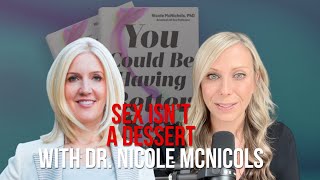
Dr. Nicole McNichols, author of You Could Be Having Better Sex, explains why desire fades in long-term relationships and parenthood. She breaks down the pleasure cycle into three stages: wanting, liking, and afterglow. Planning sex, reducing mental load, and daily pleasure practices can help restore desire.
Chapters
Today's conversation is one I've been genuinely excited to bring to you. If you've ever found yourself wondering why desire feels harder to access, why pleasure can feel like one more thing on an already overflowing mental to do list, or why the advice we're given about sex so often misses the realities of long term relationships and parenthood. This episode is for you. I'm joined by Dr. Nicole McNichols, an internationally renowned human human sexuality professor, author and speaker whose work has shaped how thousands of people understand sex, desire and pleasure. Her course, the Diversity of Human Sexuality, is the most popular in the history of the University of Washington, enrolling over 4, 000 students every year, which tells you something about how deeply her work resonates. Dr. Nicole writes for the Seattle Times, the Conversation and Psychology Today, is the co author of the textbook Human Sexuality in a Diverse Society and gave the powerful TEDx talk Students on Top A Vision for 21st Century Sex Education. But what I love most about her is not just her academic brilliance. It's the way she translates complex research into language that actually meets people where they are. In this episode we talk about the pleasure cycle, the invisible role of mental load in desire, and why so many people feel broken when sex does. It doesn't come easily anymore. We unpack how desire actually works in real life, especially in long term partnerships, busy seasons, and bodies that are tired, touched out and carry a lot. This is not a conversation about trying harder or fixing yourself. It's about understanding what's really going on beneath the surface and offering yourself more compassion, context and choice. Dr. Nicole brings such clarity, warmth and depth to this topic and I know this conversation is going to land for so many of you. Let's get into it. Dr. Nicole, thank you so much for joining me here here on the podcast.
It is so wonderful to be here. Tracy, thank you.
You have just released your new book, you Could Be Having Better Sex, the definitive guide to a happier, healthier and hotter sex life. And reading through it, I knew it was a manual that so many of my clients and my friends are going to need. So let's get started and maybe you can tell us a little bit about how you started this work, what led you to write the book, and what I know you spend so much time doing, which is really about teaching.
Yeah. So I'm a human sexuality professor at the University of Washington and I teach this very large class to 4,000 undergraduates a year about sex. And it's really about understanding that culturally we have been taught to think of sex as something that is dessert, that we have to save room so that we get lucky later. And what I've really realized, teaching my students, is just how central it is to be able to feel a sense of empowerment about your sexuality, to understand your body, your desires, healthy relationships, the types of sexual experiences that are going to bring you the most pleasure and joy in life. And when I've, you know, taught this course to my students for years now, I've just really realized that this is information that I need to bring to the larger world so that all of us can be having better sex.
Teaching and talking about sex is one of the most important things for us because, of course, we have all these scripts and these beliefs that we often don't even have words to, and yet there's always this layer of shame around bringing forward these conversations. So I love that you're teaching it at the university level. I worked with Dr. Peggy Klein Platz through her sex research team here in Ottawa, and she has. I don't know if she's still teaching at the University of Ottawa, but she had started the teaching that course the same year I was born. And so it's this. You know, everybody in the city takes that class. Every student wants to get into that class. And it' work you do is so foundational in helping people really understand not just sex. Because that. That is like. And the way you describe it in your book is it's. We're taught to think of sex as the dessert, and it's really the dinner. It's the main course. But there's so much that goes into it that it's not just orgasms. It's not just this relief and outcome. There's so much more in it.
Exactly. And we've been taught yet that sex exists in this independent realm within our lives that we don't ever talk about. That's why we tend to feel so ashamed about it and nervous to speak about it. And yet it is core to who we are. It's core to our happiness. It's core to our ability to connect with our bodies, ourselves, our desires, to communicate our needs and know that it's okay to want in general. You know, Tracy, when I first started teaching this course, you know, when I. When I first came out of grad school, I had a PhD in psychology, I really felt like my mission was to help people who were struggling with loneliness. I just saw a culture of disconnection and people who felt like. Like, you know, have the relationships that they wanted, either with other people or themselves. And I felt like if I could help people to cope with these feelings of isolation, I could really make a difference. And it was really just by chance when I started teaching this course, the instructor for the previous 30 years before me fell and broke her leg and SOS went out in the department I was stupid enough to offer myself as tribute, Katniss Everdeen style. And I started teaching it and I just quickly realized, oh my gosh, this is a topic that's so many of us feel so much shame about and there is so much misinformation, just about every aspect of it, and yet we have so much incredible research out there, so much amazing just data and, you know, just information that I just am dying to share with people that they don't even understand exists. And so, I mean, I just really, I'm hoping to see the same transformation in people's lives that I've seen in my students lives when they've been able to have access to this information and suddenly empowered and less ashamed, less afraid, and be able to prioritize. A part of their lives maybe has been running according to whatever cultural scripts they've been seeing in the movies or in porn. And for the first time, really step forward and think, okay, this is what I want. This is what makes me feel good. These are the things that I want to have characterized my sexual experiences, my relationships, and I'm going to freely choose them. It's. I almost feel like I'm trying to afford people a sense of freedom and autonomy because that is really at the heart of what makes a really pleasurable, amazing sexual experience.
Oh, I just love that you said that. And I need to just open that up a bit more because I hear, when I think about who listens to this podcast, a lot of people are parents, a lot of mothers, and there's this peace within ourselves that we lose in motherhood, in parenthood in general. And that is that sense of autonomy and the freedom and the play, it shows up in other ways. And, you know, the sense of sitting on the floor and playing with blocks with our kids, but we lose that sense, sense of what fills me up. And if I don't know what excites me, either cognitively so in my brain or even in my body, because that's a key piece too, then how do I bring that to my partner? And so when, when mothers say to me in, in therapy, I don't have time for myself and I also have no desire, of course, they go hand in hand.
Exactly. And I mean, Tracy, that is Something that I can relate to so closely. I have three children, two teenagers, one, one tween. And I mean, as mothers, you know, we would anything for our kids. We would throw ourselves in front of a train for our children. Right? It is not rational, but we would do it because of all of the love that we have. That is a wonderful, beautiful thing. But what we're not taught as mothers is how critical it is to fill your own bucket first, right? To be able to have a sense of joy, of pleasure in your life that goes beyond just your role as a mother. And it's really interesting because there's so much research coming out right now as we begin to look at this, really, this, this, you know, widespread issue that so many women struggle with, with low sexual desire. And, you know, for so long, women have felt like, oh, well, I just must be broken, and I just have no desire for that anymore. And it's just something I don't even want to have part of my life. You know, there's been movement on, you know, on the one hand, you know, for example, as I'm sure you're aware, with the black bottle warnings coming off of HRT for women who are going through menopause and perimenopause, enormous, huge, incredibly, woman's desire. But what's not spoken about are all of these sociological factors that are happening with the fact that women, especially with kids, are exhausted, right? Whether it is managing the household, remembering to schedule the parent teacher conference, taking the dog to the vet because they just got, you know, ate something they shouldn't have, the Legos overnight, remembering the dry cleaning. The reality is that on the one hand, women are in this, this wonderful spot where we are more able to focus on our careers, we're more empowered, we're advancing at very fast rates. And, you know, this is incredible when you dig into the research, what we also find is that when you look at relationships where women are out earning their husbands, this is in the context of straight relationships. Women are actually doing a greater share of the emotional labor, a greater share of the household management than women who are not out earning their husbands. And so why is this, you know, hey, we could launch into a whole conversation about protecting the male ego, but without even needing to go there, the only thing that matters for the purposes of this conversation is that we're exhausted and we're tapped out and we're not understanding just how great a role that is playing in our desire, and we're not remembering that we are entitled to sexual pleasure. Right? We really Forget that piece of entitlement which we think, oh, that's selfish. You know, women are socialized to think we should take care of others, that we are meant to be nurturing our children, our spouses, our partners, the people that we work with. But the reality is that we need to take a step back and understand. It's okay to nurture yourself, to understand what brings you pleasure. Pleasure is not a treat. It is something that is core to our psychological well being.
This is something I've been talking about with so many people recently, just. Just in the clinical work I'm doing, my clients, which is, where do you play? How do you find that sense of freedom and creativity and pleasure? Not the I'm focused on having the orgasm or I'm focused on getting to the yes to intercourse, but just the you and your partner laughing and enjoying and just being right and that. That idea of pleasure. So we're not talking about sexual sex specifically as penis and vagina. We're talking about feeling that glow in your belly where you look over at your partner and you say, this is so cool that we're doing this together. And it just lights you up and that excites you. And that is how you get to the yes. But I think we really have to hit on this point here. Is that when my brain is so overloaded with all of these things, I can't even allow myself to feel that because, oh, I forgot the doctor's appointment. Oh, hang on. The laundry is. I always love this analogy. Is it's like you enter into your bedroom and you're kind of like thinking, well, maybe tonight. You know, we said Wednesday is the night, and it's Wednesday. And so here we are, and you walk into the bedroom and the basket of laundry.
The worst.
It's like just like the blood just drains out of your face and it's like, well, not tonight. Right.
Like it. Yeah.
And instead it's like that choice, the choice of, well, I mean, I could do laundry or I could put my body beside my partner and just be.
There for a while, see what happens.
Yeah. And be out of my mind. And I think what we're tapping into here is the different types of desire. The spontaneous and responsive.
Exactly. And I mean, there's so many important points that. That you just brought up, Tracy and I really want to hit on all of them. Yes. I mean, just this idea that enter into our bedroom and we've thought, okay, well, I've been told to plan sex, and it's Wednesday night, but there are all My responsibilities. Yeah, that's gonna be a huge crush to your sex drive, seeing all of this. And you know, what's, what's the solution to that? Well, you know, I talk about in my book this idea of leveraging your pleasure cycle, which is understanding that we can't just expect our bodies to instantly turn on and be, you know, ready to enjoy sex simply because we told ourselves that at some particular time it's meant to happen. Right. The reality is that there's sort of a before, during and after when it comes to pleasure. There's that wanting stage, there's that liking stage that's happening during the actual receiving of the pleasure, and then there's that sort of afterglow or learning phase that comes after you experience the pleasure where you reflect on everything that felt amazing and that was incredible and that worked well. But, but if we're not thinking about pleasure as a cycle and we're simply thinking that our bodies are going to instantly turn on the second we tell ourselves it's time for sex, it's on the schedule, we're really doing ourselves a huge disservice that links into, you know, your point about understanding and appreciating that we have different types of desire. Right. And so, yes, in the beginning of a relationship, it's very common for people to have spontaneous desire where they are, you know, turned on, can't stop, stop thinking about each other. The second your partner comes in the door, you can't wait to tear their clothes off. But the reality is that in a long term relationship, desire doesn't often happen that way. Right? For some people it will. But especially when we have all of these different responsibilities happening in our lives, we really need to prepare for responsive desire. Which means that we need to understand, you know, with the debate, not, not the debate, but with the MeToo movement and with this sort of growing awareness of just the massive amount of sexual violence and sexual assault committed against women, sexual consent has come to the forefront, which is absolutely critical. But one of the things that I think gets lost when that conversation gets translated to the context of a long term relationship is this idea that we shouldn't expect ourselves to automatically know right away, am I a yes or am I a no? Sometimes we just need to have a little bit of patience with our bodies because sometimes that feeling of subjectively, subjectively feeling turned on is only going to come after your body is snuggled up against your partners. You're cuddling, you know, you're talking, you're connecting, your nervous systems are having time to sync. And then all of a sudden, your body starts to think, okay, this, I remember this. This feels good. I feel safe. I'm connected. And that's when I think you transition from Tracy, what you were talking about with going from kind of work productivity mode into play mode. Because you're right. You know, we play all the time as children, but as adults, especially in Western culture, we're taught that we're supposed to be productive all the time and get as many things crossed off our to do list as we can. But with great sex, we have to give ourselves space to not necessarily know and plan exactly what's coming next and to allow things to unfold and to say to our partner, let's try cuddling, right? Let's see how we feel when our bodies are next to each other and giving them a chance to sync up and to respond. Because a lot of times that's a pathway into incredible sex and orgasms. There's research that came out, even lots of research on this topic. But two studies in particular I want to talk about. One, couples in long term relationships were asked at the beginning of the study, which do you think is better, right? Planned sex or spontaneous sex? And. And everyone, almost everyone said, well, duh, right? The sex that happens spontaneously, that's going to be hotter. But what they found when they followed, when they followed couples longitudinally and had them record when they had sex and how pleasurable the sex was, and was it something that they had talked about and planned ahead of time, or did it happen spontaneously? People reported that the sex that they had planned was just as exciting, just as orgasmic, led to just as much pleasure as sex that wasn't planned. And then there's another recent study showing that this not only increases the chance that you're going to have sex, but for young couples with children particularly, this is coming out of research from Dr. Amy Muse's lab showing that you will increase your level of desire simply by planning it. But I think the mistake people make with this idea of planning intimacy is again, comes back to this idea of like, okay, we just put in our calendar, it's going to be Wednesday. And then you walk in and there's the laundry basket back up, take hold of your pleasure cycle. Understand that you don't need to be making a contractual date with your partner where you're saying, I'm going to just midway through unloading the dishwasher, go have sex. You need to set your pleasure cycle in motion. You need to not have that laundry basket, get on your bed. Right. It might even mean that for you, you might know yourself better. It might mean that, you know that you need to clean up your room a little bit. Right. Going into that evening, maybe it means reconnecting to yourself by. By, you know, having. Taking a bath or by, you know, going for a walk or closing your laptop an hour early or just saying to yourself, consciously, intentionally, these are not my responsibilities for tonight. Tonight I play. Tonight I prioritize pleasure. Tonight I prioritize time to connect, to sync my nervous system with my partners. And just to see what happens doesn't need to be an obligation. It just needs to be time. That you are setting apart from that work productivity set that you operate in day to day.
I remember when you mentioned the environment piece. I remember the key informants in our qualitative study with Dr. Klein, Plan Platts and the optimal sex group that, that she was running in the sense that most participants at some point in their interviews talked about optimal environments. And that was. Some people would talk about having the sample platter of food in case they got hungry or the specific types of food. Other people would talk about how they would set their room in a certain scene so that it was ready for them. It's not effort, it's the planning. An entry in. Yes, and I really go back to what you had said a moment ago, which is, if you feel entitled to have that pleasure, then you will free up that space of, oh, I can't because the kids and then the laundry and this. No, no, you're entitled and you need this. This is just as important as you.
Exactly.
And I love that it is.
Exactly. I mean, and that's exactly right. Right. And we can look at research showing that when we invest in pleasure for ourselves, when we engage in pleasurable experiences, it leads to ego resilience. It leads to building psychological capital. It enables us to think more creatively. It enables us to seek outwards and form sources of social support. All of these things actually help us get to our goals, ironically, faster than if we're just denying ourselves a pleasure and just on the treadmill all the time.
So.
So it is. You're right. I mean, that critical first step is understanding. You are entitled to this. You are entitled to feeling good when you think about when people are like, oh, well, if I plan it, it just takes all the magic away. Yeah. If you plan it without any kind of checklist, the way you're talking about in terms of knowing what your optimal environment is, yeah. That's going to lead to a pretty unsexy experience. But if planning means curating a time where, you know, maybe you've taken the time to turn the laptop off earlier that night, maybe it's that you've been able to do all the grooming that helps you to feel your sexiest, or, you know, the lingerie or whatever it is, the perfume. Charge your basket from the room.
No laundry in the bed.
Get rid of that basket, put it in the closet, and shut the door. Exactly. That's gonna really, you know, and especially for this person who has more responsive desire, where you need more of that transitional time, you go from work productivity into play mode, into sensuality mode, into connecting and, you know, really leveraging that pathway into your pleasure cycle where you sync up with your partner, that planning of that optimal time, that optimal environment for you to be able to have that incredibly important aspect of yourself come forth, that's critical. And as we keep saying, you are entitled to that.
I want to highlight. So you're talking about the three phases of pleasure in your book, which is so important and so good. And I want us to talk a little bit more about the first stage, the wanting stage. I first think about how viral with millennial women. The Summer I Turned Pretty Wind, and.
I was obsessed with that show.
Oh, and that right there is the yearning. And it was funny because the conversation online was very much so, like, the millennial yearning. Right. We know what it's like. We watched. What shows did we watch? We watched the OC we watched Melrose Place.
Melrose Place, Yes.
Right.
As well.
Like, we know what it means to yearn. And then, yes, I think we lose it. But it was so interesting to see how that show was there and then to hear you talk about wanting. So I really wanted listeners to hear you talk about that wanting phase and.
How important it is in the cycle. Yes, I first of all watched the Summer I Turned Pretty. I absolutely loved it. And, you know, I think that what really resonated with so many people was the optimism within this idea of love and sex and wanting and pleasure and play. Right. I mean, those characters are really at a stage in their lives where they're not bridled by all of these massive responsibilities of. I mean, they have some. They're entering into the work world. They have school, they have their jobs, but they don't have massive families. They don't have mortgage payments to make. And so they're really able to be kind of honest and idealistic. And, yeah, we get to see them want each other. We get to see them really crave Each other. And I think that we're all yearning for that, right? And I think another show where we really get a hint of just how badly we all want to want is Heated Rivalry, which is the number one HBO show on HBO Max right now. Now, this show. Oh, well, it's. I recommend it.
Okay, we'll add it to the list.
It is, yes. And it is about. It's. It'll be. It's surprising what it's about. It's about two gay male hockey players. This show has been a viral sensation, and yet, even though it is showing very graphic depictions of sex between two men, the primary audience is millennial women. And again, it comes back to, you know, why is this? It's because we love to see that wanting, right? The two characters have so much desire for each other. But another really interesting layer, I think, to the popularity of that show is that because you're seeing it between two men, there's not the same type of power differential that we in straight, heteronormative relationships. Right. In other words, both the characters are good looking, they're both rich, they're both successful, they're both star hockey players. There's not really this sense that one has more power over the other. The way maybe, you know, when we saw, for example, in 50 shades of gray, where the main character has so much more power. So a lot of, you know, a lot of being able to want. And the, you know, the key maybe to unlocking that fantasy is to understand, you know, are there inequities maybe in your relationship that could be detracting from the level of desire that you feel like you're able to experience? Because one of the, you know, I think biggest threats to desire in long term relationships are these resentments that can really start to build if you feel like one person's needs, wants are being prioritized way ahead of your own, right. If you feel like you're exposed, expected to do the majority of division of household labor, and your partner begins to feel like just another child that you're taking care of. Right. That can be, you know, just as much a detractor to female desire as menopause. Right. As declining levels of hormones. Yet we just don't talk about it nearly enough. So, you know, yes, wanting and desire, we need to put those back into the picture. But we also need to understand that wanting and desire don't just happen from being skinny and looking a certain way and fitting a certain mold. It comes when you have access to that part of your brain that wants to play, which really requires a level of autonomy and freedom that means. Yeah, having your partner lean in. Right. And, you know, I can tell you about studies where men who vacuum actually have more sex in their relationships, which is a very cool.
We know that it does lead to. And I, I'm thinking of Rosemary Besson's research around how women are sexually neutral. And it's not until after the positive sexual experience that leads to the. Yes, but what's part of the. Going into the sexual experience is the emotional connection, physical connection. And I've added in that. That's the mental load stuff in there as well.
Exactly. That mental load piece. And then. And the other thing that needs to really get in, you know, introduced there too, is just again, coming back to this focus on pleasure and sexual pleasure specifically, because, yes, the. One of the biggest predictors of desire is going to be how pleasurable that last sexual experience you just had was. Right. And so in other words, if you plug all these variables into models, we see that orgasm frequency is going to predict. Right. How likely you are to say, gosh, I want to have that experience again, if you're having types of sex with your partner that just aren't really doing it for you, aren't really that pleasurable, that's not going to lead you to want more sex. Right. I think a lot of times when.
We hear women, broccoli sex, it's the.
It's the broccoli.
Yeah. Nobody wants broccoli every night for dinner. And it's so interesting because when I'm with my clients in therapy and I ask them, describe what sex looks like for you, they will still share the. The. I don't want to use the word rhythm script. They'll share the script. The. It's, it's. We do one minute of this, two to four minutes of that, and then there's three minutes of intercourse and then it's done. And it's exactly wash, rinse, repeat, and they do it every single time. And so my question is, and how pleasurable is that sex?
Right, exactly. And. And that's what happens is you just. If you're, you know, sure. You know, if this is. If it's a type of sex that's giving you wild orgasms every night, fantastic. But I think for a lot of women, we're sort of trapped in these scripts of, you know. Yeah, we make, you know, we start kissing, maybe there's a little bit of oral, but it goes pretty quickly to penetrative sex. Only 18% of women can have an Orgasm from penetrative sex alone. The rest need some kind of clitoral stimulation, right? And so, you know, whether it's, you know, experimenting with different techniques and, you know, I give lots of different suggestions for different techniques. Believe it or not, there is really robust research showing the exact types of touch and sensation and rhythm that are the most likely to lead to orgasm for women. So it's, you know, important to really, you know, kind of explore your body and again, go back into this stage of play and creativity, you know, which is why when. When I tell people, you know, when people ask, okay, well, if I could do one thing tonight, that was gonna really set my sex life on fire, that was gonna change things the most. The most bang for my buck. What should I do? And I know most people think, oh, plan sex, right? I think instead it's about having a conversation with your partner and asking each other, what's the most amazing sex that we've ever had, right? What were the exact activities? What was the environment? What was it that felt really good? What was it that surprised us in the best possible way? And use that as a launch pad to come up with other ideas of things to try that are building on the things that have felt really good for you in the past. Because it can be overwhelming to think, okay, I guess we should go to a sex toy shop and buy all these crazy accoutrements, right? I mean, that might feel really appealing to some people, but it can also feel like a really not fun thing to do for others. And so I always recommend, you know, again, to get into this play creativity stage. You know, think about what it was like when you were on a playground with kids, right? You talked about, oh, let's have. That'll be the dragon house, and you'll be the wizard, and I'll ride in on my dragon. And you sort of have a new game every day. It was a new game every day, right? And it's like, oh, last time when we did the drag, yeah, you did it this way. But let's try. Let's try having it run around this way this time. And so we need to kind of do that same thing with our sex lives where we're thinking about what felt great, what worked really well, and how can we think of new variations that take it even maybe a small step further, right? Maybe it's that you kind of loved a little bit of the. The power play. And so maybe it's about introducing some dirty talk, or maybe it's about a little bit of light spanking. Or maybe it's about a light blindfold. Right. These don't have to be major things. We don't need to be tying each other up in chains and whips to be having incredible sex. But we do need creativity and intentionality and thoughtfulness because that's how our, the creative aspects of our brains really kind of do what they do best best and lead to the most pleasure.
In your book, you said the most critical ingredient for great sex in any long term relationship is novelty.
Yes.
And I, I agree. I think that's so important and it's. Even when I talk about general relational skills people need or tools to hang on to, it's the what are you and your partner doing for experiences? You don't have to go on these grand trip adventures. But if you're baking pasta and broccoli every night for dinner, let's try a new recipe and make it together and then put on that 90s playlist that you haven't listened to a while and. Right. It's this idea of new experiences that continuously bring us together. And I, I really like what you're saying here is it's not, you don't have to go and define yourself into kink. You can find all these other layers. It's not this all or nothing we can find.
Exactly.
But I think what you're connecting this to as well. If you could do one thing. Tonight, you're talking about communication and.
Exactly.
Couples need to communicate.
They do. And we hear all the time. Oh, communicate, communicate. But there's not really a lot of helpful information about what that looks like. Right. Or what communication really entails. And you know, again, I think it's important to think of it as having sort of a before, during and after phase where you're thinking about what can we try tonight, what will be exciting. But then also normalize using phrases during the act, whether it's verbal, non verbal, behavioral shifts in position, initiating something new you want to try. Right. And then communicating afterwards. So no, communication is absolutely critical through all of this, for sure.
For people who are listening. I'm talking with Dr. Nicole. We're talking about her new book, you could be Having Better Sex, the definitive guide to a happier, healthier and hotter Sex life. You have to get this book, you have to go through it with your partner. We are scratching the surface and I have two things I really want to ask you before we end.
Fabulous. Hit me.
So first, people are going to grab the book because you break through some of the myths in the book. And I debated about what myth I wanted to ask you about here for the podcast. So I'm going to do this myth around female pleasure. It's your myth number three. Female ejaculation isn't real.
Oh, yes. Okay. So we have to consider that the, you know, as we know, 18% of women orgasm from penetrative sex. The rest require clitoral stimulation. But here's the thing, right? Is that vaginal penetration can still feel absolutely incredible. Right. And it's absolutely a worthwhile goal if you want to try having an orgasm from penetrative sex, for sure. But it also helps to understand how that pleasure works. And so, essentially, we have to think about the G spot, which is really the most pleasurable part internally of the vagina that leads to. Is the most likely to lead to orgasm. But the G spot, it's not just this magic button on the inside of the vagina. It's actually a general area about 2 to 3 inches on the upper wall. It kind of has a texture that feels a little bit like a walnut. Right. So the idea is that by stimulating the G spot, you are also stimulating the internal structures of the clitoris, namely the crura and the vestibular bulbs. And by stimulating these internal portions of the clitoris, you enable orgasm. And. And oftentimes what will happen is there is a fluid in something called the Skene's gland, which is in that. What we call the clitorethral complex, which. The clitorethral vaginal complex, which is that area between the G spot, the clitoris, and those two to three inches inside the vagina. And so, yes, during orgasm, when that clitorethral vaginal complex is stimulated, sometimes during orgasm, a fluid will be pushed out of the Skene's gland and then. Then ejaculated through the urethra. It is not urine. Right. Scientists have looked at this. We've actually known about it for a very long time. It just was put on the back burner when we. With actually, with the invention of the microscope and scientists realized it had no role in reproduction and just decided that it was therefore not important, because pleasure for women, who cares about that, right? Um, but yeah, it is a very special, magical fluid. It is actually more similar in composition to prostate fluid. It's, you know, which is oftentimes why it's called the female prostate. But that can be very pleasurable. But at the same time, don't think that you need to ejaculate or squirt during an orgasm to experience the holy grail of orgasms. Right There is no holy grail. It's just about pleasure. It's something some women do when that area is stimulated. If that happens to you, that is wonderful. But you're not missing out if it doesn't. But yeah, it's not urine. It's. It's magical.
You teach us so much in this book. And I knew I had to ask one of these myths just because, yeah, I think people are afraid to ask these questions or I know with the uptick of porn or AI and there's just not helpful places. And I think that's why exactly, a book like yours from you is so important for us to have. Not just for us, I mean, a lot for ourselves, but also to sit down with our partners and to go through. Through it, because they. That will stimulate conversation. It will remove the shame. Someone's guiding you through it. And I think that that alone is so powerful in a relationship. So my other question, I'm on a bit of a mission around teaching this with people because every year, every few months, some site posts the average number of sex people are having each week, each month. So I would love for you to talk to us about that piece of information. Should we be looking at how much sex we are having each week?
So that is actually a more nuanced. There's a nuanced answer to that. Right.
Which is why I never like those blog posts or media heads that are saying couples on average are having sex three times a week and you should be having this amount of sex. That's the part that always just grates me.
So, first of all, people are having a lot of. Lot less sex than you probably think. And I would not trust those surveys because think about, if you send out an Internet survey asking people about the frequency with which they have sex, think about the people that are going to opt into answering that. It's going to be people who are having a ton of sex and are really proud of it and really excited to share that on a survey. The people who are not having a lot of sex, they're probably not going to want to really fill out that survey.
So that survey might not even land in their algorithm.
Yeah, exactly. Like, it's just not. It's not something that they're really interested in filling out. So forget this idea. Right? If anything, we're in the midst of a sex recession, especially among Gen Z and millennials, where we're having less sex than we were 20, 30 years ago. And so it's, you know, simply not true that, you know, everybody around you is Having sex multiple times a week. Ignore that. At the same time, there is research showing that, that on average, couples who have sex about once a week do report greater levels of relationship satisfaction than couples who don't have sex less than that. But a couple of important things to note there. First of all, that is an average. Right? That is a mean. What can we take from that? Yeah, sex is important, Right? Again, it just goes back to the message we had in the beginning of this podcast where it was about not putting it on. On the dessert tray and just thinking, oh, that's something I need to earn. Right? Yeah, intimacy is important. What I think was the most fascinating part of studies showing that frequency isn't that once a week number, which is really just an average. But the fact that couples who have sex more than that don't report any greater level of relationship satisfaction, and in fact, it can backfire. Meaning that, you know, you read these articles about, oh, you know, in the New York Times, there's this viral article about a couple that wanted to kickstart their marriage by pledging to have a sex every day for the first year. That is a great way to make yourself hate sex. Oh, my gosh.
There's nothing like pressure. I should always use the analogy of a bag of bricks. As soon as you put pressure on you and your relationship to have sex.
Yes.
That's the moment that desire goes away.
Desire will go away. Exactly. I mean, so, I mean, I just think it's. It's helpful to just kind of look at that figure, though, and think, what does that mean? It means that, yeah, I should be planning time for connection and intimacy once a week so that I can invite perhaps sex into my relationship at that time. Or if we both feel like we're sick and we're not up for it, which happens, that's absolutely, completely fine as well. Right? So, yes, it means that you should be planning time to connect again for your nervous systems to have a time to get on the same page and to be, you know, connected and feel like your body has that chance to turn on via responsive desire. But you should not be forcing yourself to have a lot of sex that you don't want. And, you know, just on a personal note, I will say there are some weeks where my husband and I both have a lot of energy and we might have sex twice a week. Right. And then we'll go through phases where maybe one of us is traveling or we're sick or we're really stressed out about something, or we're, you know, know, it's we're both traveling where we won't have sex at all that week and we don't worry about it. Right. The idea is you don't need to worry about that particular number. Yes. It should be prioritized in your life. Yes, somewhat, frequently. But it doesn't need to be happening multiple times a week. And if you introduce that pressure, it will likely backfire.
Oh, I love that. Nicole, thank you so much. Because I know that is a question that shows up for my clients and for listeners all the time. Okay, my last question for you, I ask all my guests, what is one thing that you do every single day that helps you to live a meaningful life?
Well, I learned this, I think, in grad school, where you need to look at, okay, what does my day look like? And is it reflecting me spending the most time doing things that are most important to me? And so I just really, you know, when I think about those things, it's so easy to think about my to do list as all the things that I need to get done. But I value pleasure. Right. And I understand that pleasure is important for my happiness, my well being, and also for my resiliency and ability to enjoy other things in my life and accomplish other things in my life that I want to accomplish. And so I would say the one thing I do every day is I introduce some form of pleasure. Pleasure. It doesn't have to be sexual pleasure. It might be something else that just makes me feel good. Maybe it's connecting with a friend over a drink or a cup of coffee. Right. Maybe it's going and getting a massage. You know, it could be a whole host of different things, but by getting into the habit of having what I call a pleasure practice, we invite more pleasure into our lives overall. And yes, that will include sexual pleasure. So I think it's really, yeah, practicing, have, have a pleasure practice, I would say is, is my, my tip to having a more meaningful, connected life.
Oh, my goodness, I love that. Dr. Nicole, thank you so much for being here. I want listeners to go grab your book. It's out now. I have the links in my show notes so you can go and order it. It's one of the best ways to support people and you are going to learn so much from this book. We just scratched the surface here. We didn't even Talk about the McNichols hierarchy of sexual needs, which is so good. So people are going to get that in the book. They're going to see all the myths, they're going to learn so much and bring more pleasure into their life this year. So thank you so much for being here, for writing this book, and for helping so many young people build healthy sexual lives and build connection out of loneliness because it's so needed.
Thank you, Tracy. This was such an absolute pleasure to join you. Thank you, thank you.
Thank you for joining me for today's conversation. I'm so glad you clicked Play and tuned in. If anything resonated from today's conversation, one of the best ways to support the podcast is to share it with someone you love, especially with your partner, to spark some more conversations around desire and intimacy. Don't forget to subscribe so you'll be notified of when the next episode comes out. I didn't know this before, but when you subscribe, when you leave reviews, it actually helps other people to find the podcast. So I'd be so grateful for your time. All right, thank you for tuning in. I will see you next time. And remember, you are right where you need to be. This podcast is for I have to remind you at the end of every podcast episode that this is for informational purposes only and does not substitute for the care from a licensed mental health care provider. Take care of you.










