The Unspoken Beliefs That Change a Relationship
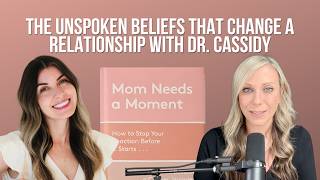
Dr. Tracy Dalgleish and Dr. Cassidy, author of Mom Needs a Minute, discuss silent beliefs that damage couples after having a baby: "if he loved me he would notice," "I'm failing," "there's no room for me." They trace how unspoken resentment, mental load, and unrecognized postpartum depression in partners fuel conflict and shame.
Chapters
Today's episode is one I think so many mothers and honestly so many couples desperately need because when we talk about postpartum, we spend so much time preparing for the baby and almost no time preparing for what actually happens to the relationship, the resentment, loneliness, identity shifts, the invisible labor, and the silent stories that couples start telling themselves about each other. So today I'm sitting with Dr. Tracy Dalgleish. She's a licensed family therapist, host of the Holding Space podcast, and she contributes to Dr. Becky's Good Inside membership. And she's the author of the brand new book, Mom Needs a Minute, which comes out June 16th. So if our conversation today resonates with you, I've got the link for you to preorder it in the show notes. But more than that, Dr. Cassidy is someone who deeply understands the emotional world that mothers and couples are navigating after having a baby. And instead of just giving you another checklist episode or downloading more details for you. We wanted to talk about the thoughts that people don't say out loud after having a baby. These are the quiet beliefs that slowly shape a relationship if they go unnamed. Things like, if he loved me, he would notice, or she's always disappointed in me. This conversation felt honest, validating, and also very real. One that I wish I had in my earlier postpartum Stardom Days. All right, I think a lot of you are going to hear yourselves in this one. Let's go into today's conversation. Dr. Cassidy, thank you for being here with me, and where we get to turn the tables and we're celebrating your book coming out. And I am honored that we get to do this, that I sat on your podcast to talk about my book, and then here we are talking about yours, and it's just such an honor and a privilege to be connected in this way and to also then just see another fellow therapist doing such work that we need in our field. So I just wanna start there by thanking you for all the work you've been doing to advocate for not just moms, but I also know you work with couples, and that I think is where I wanna parachute in when I start my first question with you.
Can I just also pop in and say thank you? And how grateful I am to get a chance to be in conversation with you again. It is always a gift. I'm so incredibly grateful for your work, to be honest. Like, all of your, like, back and forth voice notes, like, throughout this process, like, from the beginning, Tracy, truly. Like, I was like, okay, I, I think I'm gonna write a book, and you would send me a voice note about all the things because you were ahead on the path, right, of doing this. Okay, I got an agent. Okay, I, I got a book deal. Um, or like, this is where the processes of the book deal. Now I'm actually like, where, where is the space going to be for writing this book? You have been just such a huge support throughout the whole process. The people who get to work with you as a therapist are so, so lucky, and I'm lucky to be your friend and to be able to have you on speed dial.
So thank you. That is just so beautiful. Okay, so now I have to do the whole thing because I need listeners to understand how long our connection has been here. This is my thing. But when I was preparing, like, when I was just putting on my hat of, okay, I'm hanging out with Cassidy this afternoon, and I remember postpartum— so I was not even a year postpartum— and I started listening to some therapist podcast called Holding Space because I thought, well, maybe I will release a podcast. Oh, well, who's this really cool therapist? And oh my gosh, her voice and her stories. And it was just this really grounding moment in my own experience and entry into motherhood to know that I wasn't alone. And That, I think, is just the gift that you two have given all of us. And I'm grateful that I get to connect with you from that, you know, mom postpartum with two kids walking home from the office and hearing your voice and your stories. So I think this is a really beautiful transition into just talking about how your book, Mom Needs a Moment, it starts with a scene, and I think, yeah, so many of us can connect with this. But maybe you can tell us about this scene and what was going on inside of you at that moment.
It's so interesting because I can take myself right back to that scene, and if I could go back and tell myself in that moment, in the scene that I'll paint the picture of in a moment, that one day there is a therapist that you are going to get to know and really admire, and she's going to hear your story and your words and reflect back to you how meaningful that was to her, that would have blown my mind. Because I could not have pictured it then. But this, this moment, with all many, many, many other micro moments in my early motherhood, became the muse for all the work that I do today. And let's paint, let's paint the picture, Tracy. I had— I went into motherhood with parts of me, protective parts of me, that had been operating for a really long time. There was a little perfectionist part. There was, you know, which is really just my anxious part, but you know, let me just hold it all together and don't let anyone close. Don't look too close. I've got it. I am fine.
I don't need any help.
I will do this perfectly. I will achieve and then I will be safe. I will belong. I will be worthy.
I will be lovable, right?
And that part came into motherhood with me. Also a little fiery, like ragey part, but like she, she kept her cool most of the time because she had margins. She had space to recoup, regulate, and then come back into my relationships. Um, but also had that part, um, you know, my kind of like fight response was, uh, easily, easily triggered. Makes sense, right? You hold it together, everything's perfect, you hold it together, and then at some point there was an explosion of unmet needs and feelings that would just bubble out of me. Um, but I would take space to then, oh, like, and then, you know, come back in. And then I took these parts into motherhood. I had a very rigid birth plan. I was gonna have— this is my first job as a mom. I'm gonna perfect this. This is my first role as a mom. I've wanted to be a mom for as long as I can remember. And when things didn't go as planned and it was a really intense and traumatic experience, I felt so much shame. I felt like I had— my body was broken, that I had failed my daughter. You know, when they finally pulled her out in the, you know, belly birth C-section, I couldn't even look at her. And yes, it was exhaustion. Yes, it was medication, but it was also shame. I couldn't look at her. And I remember my husband being like, "Babe, Cassidy, she's here. Look, look." I turned away in that moment when he said that with my eyes closed. And that moment, that haunted me, but no time to be haunted because now I am a new mom. Failed that one. No space to process that. It's now I will be constantly awake and watching her, right? I will be constantly engaged in like FaceTime with her, right? Like I will breastfeed exclusively. You know, it was just onto the next, onto the next thing that I could achieve with this new project. Right? Turns out the newborn baby is not a project you can achieve, right? And when you are sleep deprived, when you are healing, when you are at risk for things like postpartum anxiety, which I did have, um, but was not assessed for, and just, I was so deep in my protective parts that I couldn't see it. And I was a very young, early on in my career therapist at the time, right? But I was really thinking about like postpartum depression, like the scary intrusive thoughts I was having. I was like, No, no, no, these are, this is my edge. These are the ways in which I like am really on top of it. I might not feel like I can leave my second story like apartment and like, because I'm having images of dropping her that are graphic and really distressing, but this is my edge of how I like stay awake and stay like really hypervigilant. And my husband was struggling too. And at the time, this is back in 2011, there was not a ton of research on postpartum depression in the non-birthing partner and this down— went on to become my dissertation research, because I was like, wait, hold on, there was something else going on that we did not have a name for or really even know could exist. He was struggling with postpartum depression, and a lot of reasons why, you know, non-birthing partners can be at risk for this too. And so he was sleeping a lot and moving really slowly through everything, and I was very anxious, very hypervigilant, very um, on edge, like wiry, you know, scratchy. Everything was just like that. That's the best way I could like describe like how my brain felt at the time. So one night I didn't sleep when she slept. What I understood at the time is that when she woke up, it was like, oh, you're awake now, so now I'm awake with you, turning on all the lights, right? Like we're just— I'm like, now it's time. You— I need to be like face to face with you. I felt like she was a little alien that I wanted to keep alive. I didn't feel that deep connection, and I just hoped by having constant engagement with her that I would find that bond and connection. So it's the middle of the night, I'm up with her, and she has— I didn't know that poop, newborn poop, could fly. I did not know about explosive newborn poop.
Like, it's nobody—
this is not in all the, like, prepping for, like, baby showers.
No.
And this wasn't in the books, and no one told me. And so when, you know, I think it's a combination, right, of just like the way you're holding their legs, the like air, the like velocity, the texture, who knows. She, middle of the night, projectile newborn poop all over the like nursery that I had been primarily focused on in preparation, right? Like the beautiful white, like Pottery Barn, like curtains just covered in that mustardy seedy newborn poop. My husband comes trudging in, like, you know, he's been asleep. He's like, you know, he's, we don't have words for it, but he's been, he's been struggling. He's been in a dark place. He comes trudging in and he's just like, "What the hell?" You know, and how I interpreted it was like, "What did you do to her?" Right? Like, "What is wrong with you?" Like, "What is wrong with like this, all of this?" And I felt I was super mad at him and also felt like how horrible of a mom I am, like that I just don't know what I'm doing, is just on center stage. Oh yeah, yeah, 1000%. It was like shit hit the curtains, you know? Like, we were in a really, really, really hard, dark place. And it, Tracy, it took time. It took me— the shame was loud, and the shame whispers like, don't let anyone see, you know? Don't let them close, don't let them see, don't let— you know, people would text me like, how's it going? And I would be like sitting on my porcelain throne of bullshit, just like great, like sending all the photos, like all the cute outfits. And I was not great. Uh, and it wasn't until I finally opened up to someone and was just like, I'm feeling like maybe I wasn't cut out for this. I daydream about escaping to like a hotel. And this person, thank goodness, looked at me. It was like, because they were in a similar stage of life, and they were like, oh my gosh, Sane. And those words could not have been the sweeter words that I could have heard. Like, it was, uh, it was a balm. It was exact— a balm to my soul. It was like the exact thing I needed to hear to recognize that maybe other people might be feeling this thing too. And then I took a step to get support, and it required my husband to get support, couples therapy, some EMDR to process the traumatic birth, and The through line of this experience and what I hear from so many moms that come in now, because that experience, once I healed, became the muse for this being my, my niche and specialty and the kind of work I wanted to do with moms. The through line that I was desperate for was margins and space to just like feel like myself again, to figure out like what was happening, what was like what I was experiencing. Yes, also a little bit of space between the things that were triggering me and my response and reaction to because I talk about mom rage all the time, not just because I think it's a trendy good topic to talk about, because I have a very close intimate relationship with maternal rage and postpartum rage. And every woman that comes into my practice is somewhere at some point saying something along the lines of like, if I could just get a moment, if I could just get some space. We're desperate for it. And in our digital age, in this intensive parenting era, it is so hard so easy for every margin to be hijacked and swallowed by something else. And 100%, that's where the book came from. And I, I'm clearly obsessed with space. My podcast is Holding Space.
My podcast, I love it.
My Substack is A Little Space Please. I'm, I'm into space. And now I think Mom Needs a Moment too.
You and I can go back to the very early roots of psychotherapy and Viktor Frankl's quote that we can famously use, which is the— what is it? Between a stimulus and a response, there's space.
There's a space, and in that space we have a choice, and in that choice we can find meaning.
And it's not just the space within yourself, but it's also then space between you and another person, whether it's between you and your child. But the space that I'm even thinking of, especially in those newborn days is the space between you and your partner. And even I want to reflect that piece there that you had shared where he came in and his experience and you were in your experience and then they just all went and fused together as they do, right? I have so many similar experiences, Cassie, in that same way, in the sense of just feeling like there was so much shame. It was only me. Nobody was talking about it. And especially too, when we first became parents, I know I was a few years later, but social media was not talking about— we did not have this space. Your podcast did not exist at that time, right?
No, it did— it— yeah, if I could go back and just hug myself, I would. There's so many things that I would have said that now I'm trying to say on my podcast, on spaces like this, on social media. And you're absolutely right, it was a different time in the sense that there were not therapists like on Instagram share— like bringing the research and all of this to the real stakeholders, parents. I remember like you and I very cautiously, kind of scared, stepping into the arena and doing that. And it was not something that was being done right. And so I knew certain things and, and also I was assessed for certain things like postpartum depression, but I was not asked about intrusive scary thoughts. My husband was definitely not assessed for postpartum depression. And, but what I want to say about like the, the day we're in now is that we do have so much more information. But there's also this, I think, information overload and this intensive sort of parenting expectation on both partners that is also taking up a lot of our margins and space. And sometimes I think also contributing to us feeling further apart because my algorithm is not the same as my husband's in terms of what I'm consuming, right? And what I'm getting, or what the— what a mom is getting educated on and receiving information about. And so back then there was a lot of just like, we didn't know what we were experiencing. We didn't have language for it and operating in a feeling of a lot of distance and a lot of resentment and like just really feeling misunderstood and alone. And I think people are feeling that today too, in part for some different reasons too.
If you go back to maybe some of the sticking points between you and your husband, what do you wish the two of you had known in your relationship that maybe you know now but you didn't fully understand then?
I really wish that we had really seen that ultimately we wanted very similar things and that we were on the same team. I really wish that we had slowed down enough to check in on that because I think— I really believe that we would have discovered, oh yeah, actually I want that too, right? In terms of connection, presence, to feel less alone, to have time to myself, right? To feel like I can connect with parts of myself again, to feel close to you. I think that ultimately we both really did want the same things, and I wish that we could have had the experience of shifting from like looking at each other as just like so misunderstood and the resentment and the distance to— and the exhaustion to shifting to this feeling of like we're shoulder to shoulder and like looking out at this huge big thing that just happened to us that, you know, we were the first of our friends to go through, that we didn't have a lot of support or information around at that point, right? And I think that him and I are so— we're so capable of doing that. I, I, I look at him then and me now, I'm like, well, we had the capability to. We were just so stuck in our pain and in our shame and in our need to be heard that we couldn't get on the same page to see that, hear each other and actually realize, oh my gosh, we're on the same page here.
I think of so many of the couples I've worked with and oftentimes I'm sitting in front of them saying, you both want the same thing and you can't see it. And I know that with my husband as well, with Greg, that oftentimes we're just coming at it from different perspectives. From different ways of trying to get there. And then because we get lost in the details or who's said what or actually did what, we completely lose each other.
And it goes both ways now. Like my, like my husband, he does the laundry and I fold the laundry. And I sometimes don't fold the laundry as so, so quickly and things get wrinkled, you know. And he also can come to me and share like, Hey, like, I, like, if you— and I think the way that he approached it was like, you know, if you need me to take this. And I'm like, no, actually, I, I can take this one. I actually— folding laundry is how I have supported my youngest in independent play. It's like the task I can do that she can see me doing a task where I'm like, I can't play with you right now because I'm doing this thing that's like kind of near where you play. So I'm like, actually, I— let me, let me keep this one, and I hear you, and I'm not perfect too, so sometimes they'll still be wrinkled. But it's like we can, we can come to each other with these things too, you know? And that took work. That took couples therapy. That took individual work. That took me doing EMDR, right? Like him doing similar work where we could figure out why certain things trigger us and why it feels more like, you know, something bigger and why we have these bigger reactions in these moments.
I really appreciate, it's something that I've always appreciated about what you share is that you go and do this work, that you need someone, you know, I can't change the oil in my car, so I'm going to go and have someone do that. And we are not meant to fix this on our own, so we can go see other people to help us, support us through this. It is, it's a lot of heavy work to have to untangle our protective parts, to understand and soothe our nervous systems, and then to come to the skills and tools together to actually communicate about this. So this is a great kind of segue into what I wanted to do today, which is to say out loud— it's almost like a rapid fire, but not quite. Okay, like we won't rapid fire through it, but I thought let's bring to light some of the most unspoken common beliefs that quietly change a relationship after having a baby. So we'll go through them, and I'll say, I'll say the belief, and then you tell me what you think of first right away.
Great.
Okay.
Yeah. Okay. I'll do it first thing that comes to mind. Yeah.
So here's the first belief that people will commonly say: if he loved me, he would notice.
I have thought that. That's my first thought as I'm like, oh, familiar actually. And oh my gosh, in so much of this, it is really this wish to be seen. And like, in that being seen is like, I really want you to like read my mind, so to speak. And then that's how I would feel loved by you. When ultimately it requires me to be vulnerable and show what's inside of me. And that vulnerability, right, in the being witnessed in that vulnerability, that the love that you feel in that moment, in those connections, that actually outwins him reading my mind. Although that'd be great too. Honestly, I would take it. I would take reading my mind too, but I know that that might rob me from the opportunity to be vulnerable and be fully seen in my vulnerability, which I think is actually more important.
That one is so good. And it's so— it's interesting because then as a cycle, she experiences an absence of love and he experiences confusion because he doesn't know. And that true love and connection is in the space of vulnerability, and vulnerability is what's inside of me and how do I communicate it with you. I know that one too. I know I have gotten stuck in that belief of like, if you love me, he would, or he would just know.
And our partners don't know.
And I always, I like to think of it even as like that one time that your partner said, hey babe, can I rub your feet? And you say, no, absolutely not. And then you live your whole life wondering why he won't rub your feet anymore. I mean, ask.
Yeah.
Okay. Next one. She's always disappointed in me.
I feel like this is part of the cycle. Like, this is like, like we're, we're like, we're like painting out the cycle in this, right? Because I know that my husband feels that, has felt that before, and that so many of the couples I work with when you, when you get, when you actually push to like what's underneath, right? Whatever the response or reactive response was, I think we can find this feeling of belief or worry that I am a disappointment. I am disappointing her. I see it on her face. Maybe she's not even saying it, but I feel it, right? And it's probably because she's holding the mental load and wishing that you would see it. And so the beautiful thing about either one of us in this cycle, putting down our armor and embracing some vulnerability and maybe, gosh, saying something like, "I'm feeling really alone or overwhelmed," or, "I'm feeling like I'm a disappointment." If we open that up, the light— and it's a risk because what if they don't meet us there? But it's a meaningful risk. It's a meaningful one. And that's what we have to let our anxiety know when our anxiety is like, "It's too risky." It's a meaningful risk in a relationship where we do feel emotionally, physically safe enough to do so, to let someone in in these ways. And so that's what my response would be. It's another call opportunity for vulnerability to break the cycle.
And to actually have to step towards your partner and to share, I go to these moments where I'm a disappointment. And, and then for your partner to meet you there. There's a catch in here is that when she comes to you and says, I'm so overwhelmed, I'm I'm so tired, I just need help. That is not the moment to then go into, I'm such a disappointment, because that's the shame, right? And right, something that even Greg and I differentiated, and I do this with my little ones too, I just love it because it's so powerful, is I'll say, I'm upset at the situation, I'm not upset at you, because the situation is the things aren't done, or there's so much to do. It's not you personally and your work.
It's the cycle. It's, it's, it's the context, right? And that is a— it's a beautiful thing to externalize.
Okay, the next one: I'm failing.
Oh, immediately you say that and I'm just like— I like, I know where that belief like lives in my body. Just when we go full circle to that scene that we painted in my early postpartum, that was the guide, the leading belief is that I am failing. What kind of goes hand in hand with that is shame, and what comes with shame is isolation and like absolutely not being vulnerable and letting anyone else in. And what that gets in the way of is getting support and healing. And, you know, so to that I would say, my gosh, if I— I actually just want to say it to myself. If I could go back and to early postpartum me who feeling that sense of failure, I would just want to give her a hug. I'd want to let her know, you are so not alone in those feelings. Actually, this feels so hard because, oh my gosh, it is. And you are so deserving of support. And I think I'd also want to tell her, like, you're a great mom, you know? Like, all of the time and energy you're putting into this 'I'm failing' belief, you know, is this part of you that really just wants to do right by your kiddo and by your family, and it's taking on this extreme role and communicating this in a way that is not helping and not serving you. In this part's preferred role, it just really wants to do right by your kids, and you're putting so much time and energy into it. And let's just— let's get some support so that this time and energy that you're putting into this actually supports you too and makes it sustainable.
I love that. One of the things I've learned to shift with fail— failure, that feeling, because I know it deeply as well, is instead of letting it keep me locked in and closed in that dark room of shame, to instead reach out to others and to lean into— because it's just a feeling, it's not a truth.
Yeah, exactly.
But then to continue to do what matters to me, and that's often about connection. Okay, the next one: I'm carrying everything.
So my book, Mom Needs a Moment, is available June 16th. But for a pre-order gift for anyone who decides to do that, I have, um, it's called the Parenting Pause Library. It's like these little short 4 to 8 minute videos— audios, sorry. It's like almost like how to have like a therapist in your ear, you know? And one of them is called When You Feel Like You're Carrying It All. So, oh my goodness, I would, um, there's also one that's like You Just Doomscrolled. Let's, let's, let me, let me be in your ear for 4 minutes, 5 minutes after you just doom scrolled. Like, let's just take a moment for that. You just lost it. You just snapped, right? So, um, if you are listening to this before June 16th, um, you can access those and all the beautiful stuff that is covered in there is covered in the book as well. So if you listen to this afterwards, you will get it covered in the book as well. I promise. Uh, this is just like the little short audios, you know, um, for in those moments. Okay. You, I am carrying it all. You know what I want to say? I'm not going to gaslight you, girl. You are probably carrying a lot. And you know what? Um, the air that we breathe in, how we've all been socialized is to carry it all. So you know what? Let's name it. You are carrying a heavy, oftentimes invisible mental load for those that you love, for your family. And you do not need to be carrying this alone. And there are real ways to activate support so that you are not carrying it alone and we talk about that, um, in Mom Needs a Moment.
I love that.
But I like the first— my like first thing in my mind is like, yeah, you are, you know, like let's not gaslight you.
And we already, we already talked about the over-functioning piece too, right? That, that's really what that is in there. And gosh, I can just remember so many times saying to myself, I, I'm the only one that can do it. And that's just That's not true. It's not. And you know, will my husband do it to the same way I will? No, our towels are never folded the way I like to fold towels. It's a thing in our family of how we fold towels, but they're done. Okay, next one. There's no room for me anymore.
Yeah, I hear that. I feel that. And what I want to say is like, you deserve to take up space. And also, if we could have a magical calendar to populate everything that you do in a day, and I'm not just talking like the events, the appointments, the, you know, the activities, but all like every margin, all the, you know, parenting moments or the moments of scrolling on your phone or responding to emails or filling out paperwork or yeah, answering obscure questions of life or death from your kid on the drive home from pickup, you know, is there any space there? Are there any margins? Is there any empty space for you to just take a beat and let your brain even process process everything you've taken in from that day, or identify what you're needing or what you might want to do with space that you could protect and ask for, right? And so yeah, I am guessing in this intensive parenting era, in this digital age, in this season of raising kids, there does not feel like there's any space for you. You deserve to take up space. That's going to be counterculture to what you have been socialized to believe, is something that you're allowed to do. But if we want for our kids to one day grow up and feel like they can have space for themselves and take up space and have a voice and not stay so small or minimize their needs or feelings, we got to figure it out first for ourselves. Our kids don't need a selfless parent. That's actually terrifying, I think. Yes, being parented by someone who doesn't connect with self and, and, and care for self. And so let's actually first look at your calendar and protect a margin of space for yourself as if it is your kid's doctor's appointment that is a really important one. Because you can't have— protecting moments for yourself and space are just as important as your child's healthcare. Because a parent that's regulated and cared for and resourced is going to help a child's development and health and mental health and all the future relationships and things. I believe that wholeheartedly. So, oh yeah, let's do that.
It's interesting, I was thinking about how micro ways I create space today, which is sometimes it's sitting in the car going for the drive to get the thing from the grocery store, but with no music on, no podcast, nothing.
No podcast, nothing.
And I, it's just hanging out with my thoughts. Oh, that's an interesting thought. Oh, well, that's interesting. Why am I thinking about that? Oh, I'm just gonna observe and notice. And oh, look at the traffic and look at this. And it's really Okay, I'll do one last one.
Protecting your margins. Protecting your margins. And like, you know, I— we talk about this in the book of, you know, why, why is it that when we're in the shower, like, we can always have like our best ideas? There's actual reasons and science behind that. And there's other ways that we can activate that in like, you know, being able to take all the parenting content and then bring it to those moments with our kids, right? Like, there's, there's something that we can be doing.
I always—
and it's, it's taking, it's, it's taking a moment. It's protecting Yes.
And I ask my, I ask my moms, when are you ever in the shower, actually in the shower, whole body, noticing—
door locked.
Yeah. But noticing the smell of the soap and how does the water feel on you? And, you know, what does it actually feel like to use the sponge and not having all of the problem-solving moments? And I know your book addresses that. Okay. Last one, because it's very couple related and I think you'll appreciate this one. You think you're tired? I'm more tired.
But Tracy, I am more tired.
No, okay. The scorekeeping between partners, that shows up.
There is a scene I talk about in the book where I am— where my husband and I are in couples therapy and he's talking about a thing and I just bulldoze him with like all the things that make— that I, I am— I would be— make this a winning argument about this. I come from a family of lawyers. My parents are both lawyers. I was I won the argument. Ding-a-ling! Score one for Cassidy. And it's just like I could like see it. And all that's happening for him is just he's shutting down and like I am losing access and connection to him. Right.
And so I can totally see the scene. It's like, okay, wait, one more, one more, one more.
I could outtalk him. I could bulldoze him.
Right.
In these moments. And I do it in our therapy session. And anyway, we— I talk about that in the book. I do get vulnerable about my own stuff in the book, um, and then how we worked through it, right, to get to the other side. Okay, ultimately, as parents, we need restorative rest. We both do. And I know I need it, and yeah, he needs it too. And scorekeeping is just not going to get us there. And so let's find a way to protect margins for each other, you know. And so when my husband and I have our, like, state of the union moment conversations with each other. It's not just, right, like all the logistics of the week or, you know, how are we sharing the load this week? It's also what, how can we protect margins so that we can both get restorative rest?
So important. Okay. Your book is so needed. It is one I've been incredibly excited to get because also too, I think something I always appreciate about your work, Cassidy, is that you're human with us. You share your stories. and it just helps us to feel seen as well. Where can we find you and the book?
Yep. So drcassidymft.com is my practice. If you're based in California, I can work with you or other therapists in my group, couples, individual, EMDR. We also have therapists licensed in New York and Nevada. The book is drcassidymft.com/book. We can find it anywhere books are sold. If you buy before June 16th, we have some, as I shared, some great preorder gifts for you for just showing that early support. And, uh, I'm so thrilled to be in conversation with you again and to get this book out in the world. Thank you so much for having me.
And for listeners, just to know that getting a book is one of the best ways to support people, and especially our therapists who give so much time and support and resources for people, that this one— yeah, the preorder means everything. I did not know that until I became an owner.
Me neither. I did not know.
That pre-order, what it does is it just tells other book places to buy it, buy more books and to have it in stock. And that's, that's really what it is. I also love it because sometimes it comes early, a few days before the release day. So that's a nice bonus. Yeah.
And then you get it. Yeah. Thank you. And I don't have any courses or anything else besides the work that I do with my clients. And, you know, so it's all in the book.
It's all in the book.
Everything I want you to know. I love it.
All right, Cassie, thank you so much for hanging out with me here today. I'm so grateful to have you. Thank you so much.
Thanks for having me.










