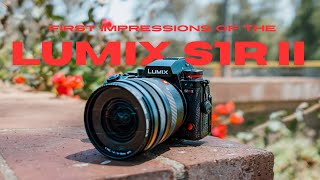
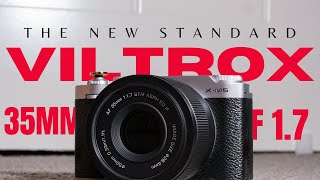
In this concise YouTube review, a Fujifilm‑affiliated photographer shares his first‑hand experience with the Panasonic Lumix S1RII, focusing on its suitability for a photographer who also does occasional video (≈80% stills, 20% video). He explains why he created the video—there were few deep‑dive photography reviews despite the camera’s high‑resolution sensor. He evaluates the S1RII across several dimensions: the 40‑megapixel APS‑C sensor as a practical alternative to medium‑format (GFX100 II) resolution; a fast Venus‑engine processor that makes menus and file saving noticeably quicker than Panasonic’s S5 II X and S9; ergonomics such as a stronger grip, well‑placed dials, and a dedicated photo/video switch; the flip‑out/tilt LCD that enables vertical shooting and improves hybrid workflow; autofocus performance and the breadth of Panasonic’s lens lineup; real‑world burst and overheating behavior (high burst rates are limited by heat, but the camera is reliable for typical still shooting); and overall positioning as a midpoint between medium‑format and flagship APS‑C cameras. He concludes by recommending the S1RII to photographers (including Fujifilm, Nikon, and Canon users) who value high resolution, fast processing, strong AF, and a versatile lens system, acknowledging the high price but emphasizing the value it delivers.
Chapters
So I've been kind of going around YouTube looking for photography reviews of the Lumix S1 R2. It's a high resolution camera. I kind of maybe anticipated that there'd be a ton of them. I've seen a lot of photos with it and they've been great. And when I was thinking about buying the camera, as someone who does primarily photography and wants to obviously always do more video, probably about 80% photography, 20% video, I was a little bit bummed out. There wasn't a ton of reviews on it, there wasn't a lot of people talking about it from a very deep photography level. And even then, some of the ones that I did see obviously focused on video. And that's probably because, you know, the YouTube algorithms favor when people talk about, you know, video hybrid cameras more. So. So for me, I kind of wanted to put together a quick video, not go super in depth. Maybe someone else would do that. But I want to tell you a little bit about my experience as a, I don't know, semi pro photographer, someone with a day job who also wants to take videos of his kid, but also wants cool, high resolution photography in a really compact, great autofocus system. And I think that kind of sums it up. The Lumix S1 R2 is a very high resolution camera, very good processor inside, amazing menus comparatively to Fujifilm. And the video quality is awesome. You're actually watching it right now. So let's dive in. Let's talk a little bit about the Lumix S1 R2 for photography. So when I think about this camera for photography, the first thing I think about is obviously the resolution. And I think, you know, in that mid 40 megapixel range, there's obviously a ton of options. And I think probably 50, 60 megapixels is really going to be that range where people really see that high resolution boost. You know, I do own the GFX100 Mark II for the professional work that I do. And it's been really challenging to find something that lives up to that. Of course it's medium format, right? Super high resolution, amazing glass. But I think in my mind there was something else out there had to be other than Sony, other than what Nikon and Canon are doing, which is fine, but that was decently affordable, but also was like a flagship camera that kind of did it all. And so when the S1 R2 came out, all I saw was video reviews, you know, rolling shutter and this and that. And I kind of thought to myself, I said, isn't like this, a photography focused camera. And ostensibly it must be because they came out with the S1 Mark 2, which obviously the very focused video camera. But ultimately, yes, these are all hybrid mirrorless cameras and they can kind of do everything but that high resolution sensor. I don't know many people in my personal life, professional life, or even people on here that talk about, oh, the 8k is just so, so incredible. You need to be shooting in 8K. You hear a lot of people talking about open gate. A lot of people that, you know, do this professionally and want to do vertical video for, you know, client work, et cetera. But I really thought about like, where's the photography love? So there's been a couple videos, like I said on here that have talked about that and they've talked about the camera being really strong for photography. And so as somebody who previously owned the S5 II X, I want to talk about this camera compared to that one and then compared to some of my Fujifilm cameras as well. So number one, I think this camera is much faster than the S5 2X. And when I say faster, I don't mean that burst rate, which is a whole nother story on here. But I'm talking more about the responsiveness of the camera. You know, when you would turn on the S5 2X or even the S9 from a cold start, it takes a while, right? I think for this camera, it's much quicker when you click record on this camera as well. It does have a little bit of a lag, but much less lag than what the S9 and S5.2X have. So processor speed is much better. The menus on here definitely feel, you know, negligibly more responsive, if that makes sense. So there is a little bit of boost there. But ultimately I really feel like this camera really shines when it comes to just being able to save files, being able to move forward very quickly. Of course, the CFExpress Type B card helps with that. I know there's a ton of drama about overheating and about the burst rate. You could shoot, you know, 40 frames a second or whatever and then it fills up and then you can't do anything. Obviously it's not a sports action camera nor, nor does it claim to be, but I think there's a lot to be said when you're just taking photos and it just works. And you've got great, obviously ergonomics on this camera. You got a lot of cool stuff. But ultimately for me as a photographer, when I go out, I now have kind of a dilemma, you know, if I want to go take photos of my family or, you know, things that I enjoy, I can either take this S1 R2 or I can take like a Fuji X100 because, you know, this is tiny, right? This is like a small camera that people love and it takes great photos and you can do recipes and all that fun stuff that Fujifilm is known for now. But there's a couple things missing from, you know, that experience that makes you want to take this bigger camera with the lenses. So number one, yes, interchangeable lenses is great, but number two, this screen is awesome. You've heard it from a million people. I don't know if Sony's A7R V was the very first camera to have the flip out plus tilt screen, but this camera has it. The S1 2 has it. Probably all future Lumix flagship cameras are going to have it, you know, but you really notice it it on this camera after you shoot with like a real mirrorless, you know, fat grip body and then you move to this and you just have, you know, that tilt screen, you know, you, you definitely notice not having that flip out or even being able to shoot vertically. So although I love this screen on this camera because it is flush, the S1 R2 and the S1 2 have awesome screen. So screen is a big plus. I think also for this camera. The ergonomics are great, right? The dials are a huge, you know, a different direction than what Fujifilm's doing, right? Even with some of their PSAM cameras, this camera is just much better, right? With the custom settings and now finally having a dedicated video and photo switch. I think for me that was key coming from that S5IIX. So having the new ergonomics on here is, is awesome. And I, I do want to say I think the grip here is, is much stronger. I think some of the body material, that kind of faux leather that we're used to on mirrorless cameras is definitely a little bit better. But I think ultimately these minor things, right? I know some people can put the S52X or S5 2 case or cage, excuse me, on these cameras, which probably still is the case, but I think ultimately it's just a better shooting experience. The, the back dial certainly is a little bit easier to turn and in a better spot where you're not going to mess it up. So been very happy with this camera so far. And thirdly, I, you know, I think about when we go take photos and I go out, yes, it is a big camera. Yes, the lenses are much bigger, much better quality. But it's that moment where you realize, you know, These are great 40 megapixel images, but they're APS C and you can feel it. And I know there's a lot of talk, and I've even said this before on this channel, like it's not that big of a deal. True. But this camera is something else. This is definitely that midway point, as it should be, between like a medium format GFX 100 and an APS C flagship camera as well. So I want to spend the rest of the video sharing some photos. Just kind of over the past few weeks. I'll even put in a couple video clips here and there. But I've been super happy with this camera. It kind of has changed the way that I'm approaching photography. I'm not, you know, this incredible, you know, photographer by any stretch of the imagination, but it's helping me be a little bit stronger when I think about how I approach photography. So with that, thanks for watching. Hopefully you enjoy the photos and I'm happy to have a discussion in the comments. But yeah, the S1 R2, I highly recommend it. Fujifilm shooters, Nikon shooters, anybody who's looking for incredible autofocus, fast processing speed, a great lens lineup. I mean, I can't recommend this camera enough. It's pricey, but you get a lot for it. So with that, thanks for watching, see you next time.