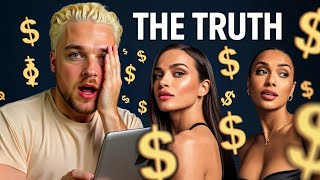
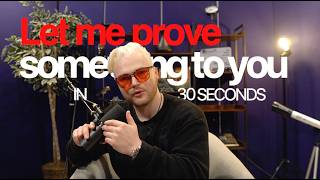
Dylan Van Ness breaks down how influencers actually make money. Ad revenue is the smallest piece. Brand deals and selling your own products (courses, merch, subscriptions) pay way more. Most creators should aim for $3,000 to $5,000 a month from all sources before quitting their job.
Questions this video answers
At least 1,000 subscribers and 4,000 hours of watch time in the last 12 months.
At least 10,000 followers and age 18 or older.
At least 10,000 followers, age 18 or older, and over 100,000 views in the last month.
Approximately $3,000–$5,000 per month.
Chapters
What's up? My name is Dylan Van Ness, and today we're going to talk about how influencers make money. Now, the big way, and the one that most people think about and talk about is ad revenue. The platforms that creators post on share a portion of the advertising dollars with that creator. What people don't realize is the more lucrative way that creators make money is from brand deals and selling their own products. We're going to get more into this later, but first, if you like this video, make sure to hit that like button and you if and subscribe. Because on this channel, I talk about being a creator and making money online. Now, a lot of times people wonder, hey, when can I start making money as an influencer? And I laugh because it's almost like they think there's this magical follower account that brands start reaching out to you and you can actually start selling products. In fact, that's not true. You can start making money at any point in your influencer journey. I know several people that only have a few thousand followers and are doing sponsorships. In fact, you don't need any followers to do brand deals because there are companies out there that will pay you simply for the content, reviews, unboxings, and stuff like that. So the answer to the question of, hey, Dylan, when can I start making money online as an influencer? Is immediately. Having said that, there are levels to the game, and I'm going to break them down right here, starting with ad revenue. Now, each platform has different requirements, so on YouTube, in order to be monetized, you have to have at least 1,000 subscribers and 4,000 hours of watch time in the last 12 months. Once that happens, you can apply for what's called channel monetization and you can actually start making money. On Instagram, you have to have at least 10,000 followers and be over the age of 18. And on TikTok, it's similar. You got to have over 10,000 followers, be over the age of 18, and have over 100,000 views in the last month. If you don't qualify for ad revenue just yet, don't be discouraged. You can still make money as an influencer still, starting with brand sponsorships, you can negotiate deals with brands either in exchange for money, or if you're a smaller creator, they might even give you free stuff. Okay, so how do you find companies willing to pay you or give you free product in exchange for content? A really simple way for you to do it is find what companies are paying other creators and just reach out to them yourself so you can go into YouTube and you can search unboxing video or paid video, paid sponsorship, review or testimonial stuff like that. And, and you'll see what companies are paying other small creators to actually make those videos. A company that did a big campaign a while back was called Shein. They had a whole bunch of creators that were making content in exchange for discount codes and free stuff. And had he been doing this back when that campaign happened, you could have reached out to them and likely gotten some free product. Another way to find brands willing to pay you for content is by using a site called fiverr.com you can actually make a post and tell the world that you're willing to make videos for brands in exchange for money. And you can make content doing things like unboxings, anything like that. You don't have to recreate the wheel. I say just model what's working and make it a little bit better. Do a little R and D, or as I like to say, Robin, duplicate. And then do something that's the same, that's working, but improve upon it. Your goal here is to create conversations with brands and build relationships that can make you money. Now, when you're growing your brand, you have to consider what what kind of content would appeal to the brands that you'd like to sponsor you and vice versa. What kind of brands would like to sponsor you based on the content you're creating? For example, if you're making content about finance, you'd want to make sure you're appealing to finance brands, meaning not swearing, not cussing, not having immature content. But on the other hand, if you're focused on like vlogs and pranks and stuff like that, you might end up appealing to a different kind of audience that like alcohol brands, Roman swipes, or maybe even prime. Brands typically sponsor creators for two reasons. The first is to get exposure to that audience, and the second is to be able to have content that they can repurpose to advertise and put on their website. If you make high quality content, the likelihood that brands will pay you for both the quality of the content and being able to repurpose that and the exposure from your channel goes up, it gives brands the ability to take that content and license it, and, and gives you the ability to get licensing rights and royalties in the future from that one clip of content. When brands pay you for a brand deal, part of what they're buying is access to your followers. The more dedicated your audience is, the more likely that brand will have a profitable campaign with you and want to do more campaigns in the future. The same goes for selling your own stuff. If you have a dedicated following, you could be making money with even a small amount of followers. Foster community. Create things like a discord community or Facebook community. That gives your people, your audience, an ability to connect and you can strengthen the quality of your brand. There's three ways that creators and influencers make money online. The first is ad revenue. Ad revenue, as we discussed earlier, is the most commonly known way that creators make money. Imagine the first time you get a check in the mail for a few hundred dollars. It's pretty exciting. With YouTube being the platform where people generally make the most amount of money over a consistent period of time. You, YouTube has become known as like the ad revenue king with evergreen content, meaning your videos can be found for years and years and years. Having a YouTube channel gives you the opportunity to make passive income for years, possibly decades. This takes us to the second way that creators make money online, which is from brand deals. The way brand deals work is brands pay a creator like myself money to do a video or a sponsorship. The amount brands pay for sponsorships might surprise you. In some cases, they pay hundreds of thousands of dollars for a short ad like a one minute video, also called an integration. Typically, people think brand deals are reserved for really large creators, but that's not true. Creators of all sizes can do brand deals. And the third way that creators make money online is by selling their own stuff. When people think about creators selling stuff, they usually think about T shirts, clothing. And while there is a lot of money to be made in merch, many creators are looking for other products such as digital products, courses, education products, subscriptions and NFTs. Moving forward, your goal shouldn't just be about the channel you're growing or the following you're trying to build on social media. It should be about the brand. The true people who turn their following and their influence into a brand are the ones who make the most amount of money. One group who's done a really good job of this is the Nelk Boys. And Nelk boys are a YouTube channel that created that was originated in Canada. And they launched a brand called Full Send. Full Send has now expanded into having a podcast. They launched their own NFT project. They even had Happy dad that sold in stores all across the country. When you have a brand, you're able to have massive exposure that lives just beyond you. But most creators get so caught up in just the day to day that they don't even think about that. By building a brand, you have the ability to make a lot more money over a long period of time and be able to outlive the lifespan of your channel. For most new creators, the goal is to start making a full time income making content and doing what they love. The problem is they don't really know how to get there. I'm here to show you guys and tell you today that with a combination of ad revenue, a few brand deals, and creating some of your own products, you can actually get there a lot sooner than you think. Simply, three to $5,000 a month is most people's target. And with just one or two brand deals and some OK ad revenue, you can get there. Once you hit your goal of actually making a full time income creating content, make the switch, jump full time into this and put everything you have into creating content and being an influencer. The reason why is I've seen friends of mine, I've seen creators out there start making, you know, reasonable money online, but getting too scared about, you know, jumping into it full time. And it's actually cost them in some cases their channel, but also a lot of time. As soon as you reach that goal and as soon as you realize that you could do this full time, make that switch, put all your energy into it. It's proof of concept and it's a good sign. That's all I have for you guys today. Again, my name is Dylan Van Ness. I make content about making money online, being a creator. If you enjoyed this video, hit that like button, hit that subscribe button and I'll see you in the next video. Subscribe button, subscribe button, subscribe button. Hit that and I'll see you in the next video. Thanks so much.