Time Proven Secrets on How to Create a Viral Marketing Campaign
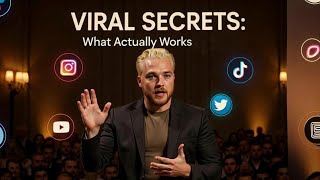
Dylan Vanas breaks down virality as a repeatable formula from analyzing 10,000 videos. Four factors matter: relevance, timing, emotional appeal, and shareability. Hook viewers in the first 3-5 seconds, partner with influencers, and make content easy to share.
In 2014, there was a viral marketing.
Campaign that blew up and pretty much broke every Internet record anyone had seen before. It reached over a billion people, generated over a hundred million dollars, and led to new medical treatments being released all organically.
Gary Vee actually pointed out that it.
Took 38 years for 50 million people to have radios, and then it took 13 years for 50 million people to have TVs, but it only took about a year and a half for 50 million people to get on Instagram.
And what I realized with that is how quickly things can change in this.
Digital age if you do a few good things in the right way. And so in the video I'm about.
To show you, this was a keynote I did and they asked me to.
Talk about viral marketing, basically meaning the ability to get eyeballs organically.
So I had a lot of fun with this.
It was a cool talk to do. So I hope you guys enjoy.
And oh by the way, those of you that don't know me, my name.
Is Dylan Van Ness. I run an eight figure marketing agency.
And the purpose of this content is.
I've seen a lot of businesses and people suffer over the last few years with all the crazy stuff happening. And so hopefully you can leverage the Internet and marketing so that you don't.
Become one of those. Alright guys, enjoy. Welcome to my home, Las Vegas. I am originally from Canada, but I live here now and we're talking about how to go viral in 2023. So yeah, how personalities and brands are using the simple formula to go viral with content that can scale your business. Now my voice might sound a little bit dry. It's been three weeks since I lost my voice and it's still a little bit raspy. So yeah, I said I'd be here like months ago, so I'm here. But that said, if you guys can't hear me for any reason, just go ahead and wave your hands and jump up and down and I'll go ahead and try to speak louder. And I also have this cup of water to help. All right, so going viral. Have you guys ever seen this? These videos that get shared, you know, impactfully by people and like every single friend you know is talking about it. On the left side here we have Baby Shark. It's actually the most viral video of all time. 11 billion views. You guys might be thinking, okay, how do you get 11 billion views on a video? Well, when there's only 8 billion people on the planet, I don't know. But that's the most viral video. Show of hands, the Video on the right. Does anyone know what that one is? There's a couple more people. You guys know what that video is? That was the first, first viral video that really ever took off on YouTube. It's called the evolution of dance. The guy does. He does like, I think it was 80 or 100 different songs and dances. I'm just gonna stop there. Songs and dances in a period of like eight minutes. And it was incredible. That was the first video I ever saw on YouTube, but Charlie bit my finger. That's another one. Got 900 million views. And then we move into the modern, like current times, last couple years, where we have videos on this platform called TikTok, you know, 3 billion views, 650 million views, you know, 400 million views. And it goes on and on and on. And so looking at this, right, I wondered, okay, is there some system where we can actually reverse engineer virality and create it? Right? Is there some kind of formula that we can just model after? I believe that success leaves clues, and if we copy it, we can get there too. And so there's a reason that these videos have captured billions of eyeballs, and there's something that we can all do to replicate it. So if you guys want to actually have me talk about the viral formula and how you guys can create a winning system for your business, personal brand, or brand, can you guys just go ahead and say yes? All right, so here's what we're going to cover. Number one, the winning formula for viral success. So I actually took a look at over 10,000 videos over the last two months, looked at the ones that were in the top 1%, middle 98%, and the bottom 1% to understand what makes a winning video, what makes a middle video, and what makes a losing video. And we're gonna talk about that today. Number two, or, sorry, the second one, I guess because the formatting messed up here. One, two, how to monetize virality, right? The goal of going viral isn't just to be able to show your friends, hey, look how cool I am. The goal of going viral is to be able to attract more customers for our brand, be able to scale our company. So 1, 2 is how to monetize. And then the third point there is the step by step blueprint for brands and personalities to create viral marketing campaigns. That sound good? Yes. Yes. All right, so virality is the future of marketing. I believe that we can run paid ads, we can buy campaigns, we can go on a billboard, but the future of marketing is virality. I don't Just know this based on theory, I know this based on experience. I'll show you guys a couple things here, actually. Earlier this year I hosted an event here in Vegas. Over 3000 people. We had 1500 people in the room and 1500 people virtual. And Gary Vaynerchuk was the keynote speaker. We had Patrick, Bet, David and dozens of other marketers and influencers with millions and tens of millions of followers. And so we talked about how viral marketing is not an accident, it's a formula. And so we're going to talk about that. So this is a TV show. A& E actually hired me to come and help with the premier launch. So there's a TV show called Triple Digit Flip. It's about real estate. Pace and Jamil, if you guys are in the real estate industry, can I show hands? Anyone in the real estate industry here? Okay, cool. I see a couple of them. Leave your hand up if you know who these guys are. Pace and Jamil, both of you guys do. Okay, so Pace and Jamil, they brought us in to actually work with this show called Triple Digit Flip. And we did a campaign that got 100 million impressions on launch day, propelled this show to the number one TV show on A and E network and they got picked up for three more seasons. Is that cool? Yes. So yeah, promos on over 200 influencer pages reached over 100 million people. And now this is one of the top shows on the. It is the top show on the. On the network. What about social media? Okay, well, I have over 3 million followers between my personal and business pages. You can see there. You can't really see because it's small. I'll tell my guy to make those a little bigger for the next. Next one I do. But just take my word for it, there's over 3 million people on those pages. So what do I do? Well, you might be wondering who's this 14 year old boy standing in a suit on stage telling me how to go viral. For those of you that, you know, think that I had to grow the beard out to help. But I'm not 14, I'm 28. And I run an agency called Mindful Agency. Our sole focus is helping personalities and brands capture the attention they deserve and share with the world. So here's the definition of going viral. The nature caused by relating to a vi. No, that's not it. Okay, there's that right one. So basically when an image, a meme, some piece of information is circulated widely and, and typically it's organic. Now what organic means is organic. Is something you're not actually paying for, right? You're not buying ads. Organic is something that is shared naturally through people. So here's the core factors of going viral. We've got. When I studied those 10,000 videos, again, we took it 10,000 videos. I looked at the top 1%, the middle 98% and the bottom 1% to understand the four things that make content go viral. And number one is relevance. Number two is timing. Number three is the emotional appeal that it generates. And number four is the shareability. So how likely are people to actually share it? So because viral marketing, it's a totally different strategy than what a lot of people saw some of the speakers earlier on talking about. And yeah, social media is important, right? What we're working on. But if I can give you guys a formula, a simple step by step blueprint, by the end of this talk in 20 minutes or so here, don't worry, I won't take too much time. If by the end of this talk I can give you the formula where you can actually turn it on and it's like a floodgate coming in, right? But wait, there's more. No, it's not an infomercial. But seriously, it's a really simple formula that I've shown to dozens and dozens of clients we work with and amazing results. So don't think of it like paid media. You can't just buy this. You have to be strategic in your efforts and your campaign. All right, who here has any idea what this is? Go ahead and raise your hands. Anyone that was alive in 2004 should have your hand up. There we go. What is it? Yeah, the Ice Bucket Challenge. Als. Ice Bucket Challenge. This is the most prolific, we'll talk about it, you know, today, but the most prolific viral campaign ever. I bet there was a show of hands, those people who knew who actually did this and took out a bucket of ice and dumped it on their head. I did. I remember I was, I was in. Was this 2000, I think I was in ninth grade at the time. Sorry if that ages some of you guys, but I was in ninth grade and I was outside my parents house and my sister and her friend took a bucket of ice and dumped it on me. So I remember the exact time, the exact location, the exact place, who was with me and what we did to actually do this viral campaign. And there's been nothing ever that speaks to that same level of impact. It led to over $115 million being raised for ALS Association. And even now there's a new Treatment that was actually released because of it. That's pretty cool. Yes, yes. All right, thank you. So in other words, virality works, right? Going viral. If you can become one of those 1%, it works. So just kind of pivoting, switching gears here a little bit. What do you guys think the most valuable currency is in today's age? Content. Time. Time. That's a good one. So I got a couple options here. Bitcoin. For those of you invested in bitcoin, don't yell at me. I know we all took a big loss here. I'm one of them. USD or followers. More followers. Now, some of you that are like, you know where this talk is going. You're like, ah, followers. Like, that's what he wants. Reality. It's attention, right? The most valuable currency in today's age is attention. Why you can do anything with it. Doesn't matter how many bitcoins you have or how many, you know, how much actual cash you have, if you have attention at people's eyeballs, you can do anything you want with it. So again, breaking down the 10,000 videos with the 1% that are absolutely successful, 98% that don't really do much, and the 1% that were absolutely terrible. The four things, relevance, emotional appeal, timing, and shareability. So starting with relevance now, I actually changed the slide up and put this guy on here last night. And the reason why is because he's in the media all the time right now. Liberals hate him. Republicans aren't sure if they like him or hate him. And if you're from Canada, you don't know what each one of those is. You think like liberals and conservatives, but yeah, Elon Musk, what a character. If I was making the time person of the year, this is who I'd put up there because he is in the media incessantly right now. So he's current, right? So viral videos right now. A lot of people are talking about this guy and there's this strategy. This wasn't in the talk today, but there's a strategy we use called piggybacking, which is basically what you can do is just piggyback off someone else's success. Elon Musk is a jerk. And then you can just like piggyback off it or Elon Musk is amazing, right? You can piggyback off other people. And that's one really great tip I'll just give you guys to actually create content. Now. Second thing with relevance is trending, right? So what is actually trending right now? Now I don't think there's anyone in this room that's gonna go ahead and do one of these TikTok dances. No one's actually gonna do that, and neither should I. But here's the thing is what's trending, it doesn't have to be a dance or it's a topic that's highly important to your audience. So that's relevance. Then we looked at timing. We saw that the videos that popped off were all videos that had really good timing. And so if you take a look at this. Is there a laser on here? Cool. So this screen to my left, to your guys, right over here, you can see the little circle. Now what this was is we saw that videos that actually popped off and went viral, lived or went off right, as a trend or a timing was. Timing was happening in some trend and something that was relevant. And this can be a matter for some things, it can be a matter of weeks, right? If we were talking about, let's say, when Russia invaded Ukraine, that's something that was living in the media sphere for weeks. Or let's talk about COVID right? I'm sorry, it's a curse word now, but Covid lasted for years, right? So you can make content about it, but the sweet spot is finding content that has a peak in about a couple day period. And you want to be able to capitalize it early on. Now here's the thing. If you don't have a team, I'm fortunate enough at this point where I actually have a team of people that make content, a team of people that edit content, a team of people that research my content, and then a team of people that just tell me, hey, Dylan, that was bad content, ok? And so the thing is, if you don't have that, you can use tools to actually find out what's trending and when it's trending. And so what we're looking at right here, this is Google Trends. So Google Trends, you guys can write that one down. If you don't know, you should know. Everyone in the marketing room is you just type in a keyword and it shows you how it's been trending over a period of time. So what that basically means if I typed in Covid right now, Covid, it's gonna be decreasing, right? Because it's being talked about less. There may have been a spike relative to the summer over the last month or so because it's being more talked about, but that's the reality, right? So that's the next element. We saw these videos that popped off had really critical timing. All right? And then the fourth point here is emotional appeal. So if you just sit back and think for a second, what is the content you either shared, reposted, sent to a friend over the last seven, 15 days? It's stuff that triggered you. Triggered you in a happy way. Triggered you in an angry way. You saw Elon Musk's face and it went, oh. So that's the thing is like emotional appeal. Now, the more emotion and the strength of the emotions that you're actually hitting on, the greater the videos, the more the videos went viral. Videos that piss you off, pop off. Videos that make you happy, pop off. Now, here's the unfortunate fact about this, is that the Internet feels feeds on negativity. So the more unfortunately negative something is, the more attention it would tend to get. People get triggered. Think about the last place you left a review on Yelp. It was a place that you had a crappy experience, Not a good experience for the most part. That's the unfortunate thing about emotional. But when we're creating content. When I studied these 10,000 videos, we saw that the emotional appeal was really high in these videos. Oh, and the fourth thing here, I thought I was on 4 already. Must be the formatting. There's probably one person in the audience that got that joke. So shareability, how easy is this content to share? This says Arizona rocks. There's maybe one or two people that are going to get the pun in a second here and share if you agree. Right now, people, this guy's laughing. He's like, I just got it. So share if you agree. Now, it might sound stupid to literally say share if you agree, but here's the thing is when people are scrolling social media, social media platforms have created their entire platform to put you into a trance. They spend billions of dollars researching the consumer psychology. In fact, if you think about it, we scroll and then there's a little notification. We get a reward. We scroll. Little dopamine, we get a reward. What does that remind us of? We're in Vegas. Cha ching, ch, ch, ch, ching, right? So social media platforms have actually created a, you know, a way for you to become addicted to them. And a lot of people in this room, you know, you are on your phone, right? Actually, you guys are pretty good. But there's a couple of you that are scrolling Instagram right now. I can see it. And she just put it away. I saw it. It's addicting. I'm like, I'm the same way. Like, first thing when I wake up, my first instinct is let me grab my phone and see. And then like, I check my Instagram, I check my WhatsApp, I check my TikTok. I don't do this anymore, but in the past I did. So my point in saying that is when we're on social, we're in a trance. And so the goal is like, let's just communicate to people what we want them to do. They're already in a trance. They'll just take action on it. Share if you agree. It's literally as simple as that. These viral videos, the ones that popped off the most, sorry that this, by the way, sorry this keeps happening. I'll just try not to touch my shirt or move my arms. So they all had some kind of call to action that encouraged people to actually share the content. So those are the four things. Now how this actually relates to you guys, like, how did you take this and utilize this to some capacity? You need to understand your audience. Now, every single platform, social media network, email aggregator where you keep your data, they have a way for you to actually see what that looks like. You can check your insights and understand your audience. And if you haven't done that yet, you need to figure out how to do that and start doing it right away. Because if you're posting videos about, you know, hey, now that you're getting old, your body's hurting, like, you know, here's the solution. But your audience is all kids. Like, you're definitely missing the mark. And so understand your audience and then how you can tie those four things into it. So again, relevance, emotions, timing and shareability. Now when we take that, say, okay, cool, Dylan, great. I don't really care about these 10,000 videos out. I only care about myself. What do I do? Here's your 1, 2, 3. This is your 1, 2, 3 or your 1, 1, 1, I guess again on how you can actually take this and apply it. Do you guys want me to give you the 1, 2, 3 on how you can actually go ahead or the 111 on how you can actually start applying this today? Go ahead and say yes. Yes. All right, cool. That girl in the back was like, yeah, give me it. I love her. All right, so number one, grab attention. Now this infographic that you guys, if you guys can see it, is really sad. On the left hand side, you'll see that in 2000, human attention span was 13 seconds, which seems pretty bad, but that was 2000 at the time. In 2000, goldfish had only a 9 second attention span. Times had changed a lot it's been 20 over 20 years since then. And guess what? Goldfish attention span is now still nine seconds. But humans, it's gone down to eight. And 2015, they did a study. There isn't an updated one, unfortunately, but 2015 is the latest we have. The data for attention span of A human is 8 seconds. That means we have lower attention span than a thing you get at the carnival and carry in a bag. And so the fourth thing though, if you guys, I don't think you can read it over here, but what it says is it says the average attention span of an Internet user, three to five seconds. So what that means is you have about three to five seconds to capture your audience attention and keep it. Yeah, I'm sorry for those of you that spend all this time making these epic videos, it doesn't work right now. And as much as I would love for your guys content to get the attention it deserves, it doesn't matter. The first three seconds is really all that matters. So that was number one, right? Of the 1, 2, 3, you gotta figure out how to grab attention in that first three to five seconds. Number two, partner with influencers. Now, I know what you might be saying. It's like, all right, these guys are like billionaires. Like, how am I gonna partner with them? You don't have to. These three, this is Mr. Beast, Mariana, and then Logan, right, with Prime. And these are massive influencers that have gone and created brands around themselves. And I believe the biggest opportunity in 2023 is gonna be aligning yourselves and your content with these types of people. Now, if you can't hire them, you know, you can't afford to pay them. Partner with them. You know, equity carries a lot of weight, especially for influencers that don't have an interest in starting a company. You know, you can just give them the company and they can use it. And so it's pretty simple. So now if you're like, okay, well, why would Mr. Beast want, you know, 5% of my company? Okay, don't worry about Mr. Beast. You can go tear down. But the thing is, is the brands that are. That are growing right now and the brands that are kind of staying stagnant, a lot of these brands growing, have influencers aligned with them. And if you guys want to understand why, I'll explain the psychology real quick. Think about Tesla. How many people follow Tesla on Twitter? I think it's like 14 million. How many people follow Elon Musk on Twitter? It's about 122 million. How many people follow Jeff Bezos, right, on Instagram. Well, what about Amazon? Right. People are much more sticky. Bill Gates or Microsoft? I bet there's not a single person in this room following Microsoft. And if you are, I praise you. But there's a lot of people probably following Bill Gates. Love him or hate him, think he's a reptilian, I don't know. But yeah, that's. Find ways to align yourself with an influencer and if you can't do that again, you're like, I can't pay that, it's too expensive, blah blah, blah. Okay, find a spokesperson inside your company and have them be the person where the content's being created around. So that was number two, right you guys? One, two, three, we got grab attention. Number one, partner with influencers, number two. And number three is create shareable content. Again, remember, people are in a trance state on social media. The best thing to do is go ahead and give a call to action, even if it's as simple as hey, leave a comment. But what you really want to do to create that viral content is encourage people to organically share with other people and gamify the system. You know, give people a reward, enter them into contests, you know, make it fun. Oh, and by the way, everything online is not rigid. Those of you that are like, hey, let me go build this, you know, this CRM, we're going to go ahead and automate the process of getting content. It's going to spin into our system and tell us what's trending and then my 17 engineers are going to review it and it's going to come out with the ideal content framework. I actually know people who've gone to the length to create really complex content systems before ever posting any content. The social media, the Internet virality is about testing and then iterating and trying it again. So yeah, try new things, right? You can do a dance, you can do a trend, you can do a talking video, but just try different methods. See what sticks with your audience. See what sticks. If you don't have an audience, see what sticks. Like right now TikTok and YouTube shorts are really pushing for short form vertical content. If you guys, whatever company you are, I don't care if you're like the most corporate companies, you're selling like B2B IT solutions or like there's opportunity on TikTok and YouTube shorts and to the point where you can grow an audience and you know, and have it organic. So that's your 1, 2, 3, here's your best practices. I'm Going to give you guys best practices and then we're going to do a quick little case study here. But best practices needs to be fast paced, focused, use a strong hook, and have an adaptive style. So there's software out there that you can actually plug into content and it'll automatically remove anytime you say, anytime you go. Uh, just you can actually have that removed. And those are some of the things that a lot of people. It's going to limit your content. And so one of the software is called Descript D, E, S, C, R I, P T descript I use it and it'll cut out pauses and anything that slows your content down automatically and you just upload it and it's done. Overlay music, create dynamic visuals. You can start a piece of content with a quick, like a little transition and anything that really elevates the. Makes it more dynamic and engaging. Focus, right? We gotta keep the message narrow. The message that you guys are talking about in your campaign, whether you're creating one piece of content or a series of campaigns, partnering up with influencers, whatever it is, it has to be focused on one thing. If your concept is giving people too many messages, it's going to create confusion and they're not going to know what to do to take action. And then a strong hook. Anyone know what I mean when I say hook? So a hook is what you use to get your audience attention in the first three seconds. Could be a question, could be a statement, could be something controversial. We know that first impressions matter here, right? You know, some of you are dressed real nice, some of you are dressed casually. Whatever it is, we understand that first impressions matter in the real world, and it's even more important in this viral content. And then it's got to be adaptive. Like if you're trying to take a video where you're sitting on a chair and you're talking for 25 minutes, that's not going to work. It has to be adaptive. In fact, everything. There should be something happening and changing every three seconds. Again, the average Internet user's attention span is only 3 seconds. So let's have something happening every 3 seconds that keeps their attention. So, okay, so there's one misconception, kind of what I'm talking about right now. As I mentioned, social media a lot. So it's like, hey, Dylan, is social media the only way to reach an audience and go viral? The short answer is no, actually. Run. You know, you guys saw earlier Mindful Agency. My head office is out here in Vegas in Henderson about 20 minutes from here. And there's a lot of ways for you to actually reach people. One of the ways we do it is, you know, we have solutions like our SEO Blitz, who will go ahead and get you featured in some of the, you know, the biggest publications in the world. You know, think about the household names that, you know, you know, and love. And you read business, you know, top business publications, top industry publications. We'll get you, you know, featured there, and then we'll get, you know, another 20 to 30 publications with your name in the title. And so what that does is people actually, when they search you on Google, you own the first three to four pages. Search engine algorithms will either put something there or they'll put what you tell it to put there. I would rather tell the social media algorithm. Search engine algorithm. Google is really it. Google being, you know, but people really only use Google here in the US I want to tell Google, here's what you want to put on the first three pages. And I'm telling my story. I'm articulating what I want the world to see. And so there's ways for you to actually go ahead and do that. When someone searches you, it just creates that omnipresence. All right, so social media is not the only. There's a lot of other ways to reach people. You can do it like SEO Blitz. You can get featured in major media, by the way, that doesn't just create omnipresence. It also creates authority. There's a reason I'm here today. It's because I haven't just been featured in, you know, publications like entrepreneur.com I actually contribute for these publications. And so when you create and establish this authority for yourself, you now get new opportunities that come to you. There's a reason that I have over 3 million followers on my brand. Like, I didn't just, you know, wake up to that. Like, I created that. And so we drive traffic to my pages to grow them. And so, by the way, if you guys want to learn or talk about any of that stuff, I got a booth just past where lunch was today out the hallway. It's called Mindful Agency. I'll be there for the rest of the day, and then my team will be there the rest of the week. But you can come talk to us about all that stuff. All right, here's one more misconception. People think the social media algorithm is always changing. If I go into some of your search history right now, I bet I'll find something about, hey, what's the newest update on the Algorithm something where you're searching for. Has anyone ever wondered if the algorithm is changing? Oh, there's some new thing. Go ahead and raise your hand. Is there some changes to the algorithm? The short answer, just to appease you guys is yes, there's algorithm changes happening constantly. Okay? The thing is, I do this for a living and I don't even know what the heck is happening in the algorithms. So the reality for you guys is if you try to pay attention to it and you Google something saying, hey, has the TikTok algorithm changed? Guess what you're gonna find? You're gonna find a blog written by an intern who doesn't even do this stuff, that's paid $8 an hour, or they're out of college and they're doing this for free. Like, if you guys go Google this stuff, and sorry to the interns in the room, but if you Google this stuff, you're gonna find out a whole bunch of BS answers that just aren't true. And I'm not saying that to be like, hey, come work with me, because obviously, look, I'm. Yeah, I'd love to work with some of you guys in the room and help you scale up. I'm just saying it because of the fact, because even if you Google like, oh, my boyfriend's leaving me, what do I do? You're gonna find a Wickaha article from someone that wrote it. It's not from like a psychologist or a therapist or someone who does this stuff professionally. So if you wanna know what's working, just your best way to figure out what's working. Okay, number one, don't focus on algorithms, focus on content. Just make high quality content consistently over time and eventually it's going to work. That's number one. And number two, if you want to know what's working, just look at what's working. Go and look at the viral videos. I showed you guys a bunch early on. Figure out what's happening. If you want to find someone in your niche, in your industry, go look at the top two or three people, what they're doing, and just do it. It's as simple as that. All right, so we talked about the viral formula. So really, what is the viral formula? Well, we Talked about the 10,000 videos that I looked at and the, the 1% that did well, the 98% that kind of were in the middle, and the 1% that flopped. We talked about relevance, motion, timing, shareability. I gave you guys the 1, 2, 3, the 1, 1, 1. Grab attention, partner with influencers, and create Shareable content. And then we talked about best practices, right? Fast paced. It has to be constantly changing. Keeping people's attention has to be focused. You need a strong hook and it has to be adaptive. Let's put it together. Anyone in this room know what this is? Dylan, you said that at the start. Who here knows what this is? Again, we all agreed. Everyone's hand comes. What is this? Thank you. Thank you. You rock. All right, so we got relevance, emotions, timing, and shareability. This was so relevant. Everyone was doing it. The motion appeal was there, the timing was perfect. And this was the best shareable piece of content in viral history. Why? It's a pyramid scheme. I did it and then I nominated two people. And then those two people got two people and they got two people and then I got a little, you know, a little commission on. No, I'm just joking. But it was a pyramid scheme. And so they created the most shareable piece of content in history. You had a man who may or may not wear toupee getting ice dumped on his head. Celebrities, influencers, right? Maximum shareability, fast paced focus, strong hook, adaptive style. Again, this is the most prolific marketing campaign ever that raised hundreds of millions of dollars and led to new treatments being released. So it's your guys turn. Think to yourself, you guys are here, we're here learning, right? We're here to learn, connect, network, maybe get some deals, maybe grow our brand. And by the way, you guys can come again. Talk to me in my booth if you guys want to learn about building a personal brand or growing your brand again, just past the lunch hallway down the side there. I'd love to help you guys. And I can create viral campaigns for you. We can do the same thing I've done for myself. The millions of followers we have, the top publications I've been in, or you guys can go out and do it yourself, build that campaign and then shoot me a message this time next year when you're like, hey, Dylan, I got, you know, we had a video get 2 million views. That's the best part about doing stuff like this is when it actually sees you guys success again. That event I hosted with Gary Vaynerchuk was incredible earlier this year. And he said, Dylan, the best marketing doesn't feel like marketing. That really should be the focus. Create organic content, make stuff that goes viral, and at the end of it, have fun with it. So thank you guys so much. I would love to talk with you guys again. I'm here all day today and if you guys have questions about any of this stuff. Come chat with us and make some good content. Cool.
More from Dylan
Why One Conversion Path Won’t Convert Everyone - Choose the Right Funnel #Marketing #Sales
Why Your Business Is Losing Customers Before They Even Get a Chance to Buy (It's Not What You Think)