How this 20 year old sales manager travels the world while earning well
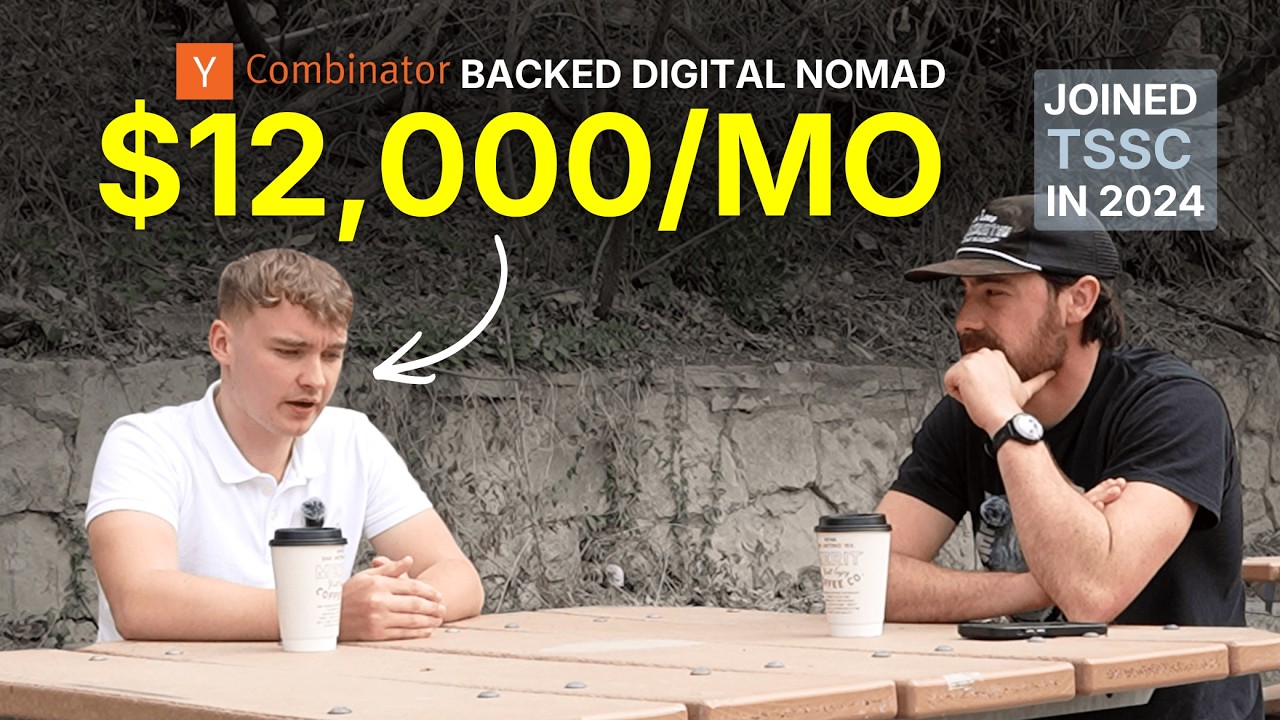
Joe, a 20-year-old Welsh sales manager, built a remote career managing XDRs at a Y Combinator company while traveling Latin America and the US. He earned in USD while living in cheaper countries, hired by spotting clean résumés and polished Loom videos, and credits networking and referrals for his rapid rise from selling wine-software to managing a team.
Chapters
Little intro. Joe, 20 years old, from Wales, travels the world, in Austin for a week, gonna go travel the world again after this. Joe's result is not normal, not typical. Little disclaimer here. Not normal, not typical. Your average 20-year-old is not managing a YC sales team. But this is Joe's result and it's the one that we brought to you guys. So you guys, we're here with Joe in Austin, Texas. He's a long ways from home. Uh, you've been here for what, like a week now?
Yeah, a week. This is my second week. Coming up to my second week here.
Yeah, one marathon deep. Uh, still recovering a little bit, but you guys may have seen in a recent video we did a little impromptu couple questions with Joe, just catching up. But thought since he was here in Austin, let's take the time to really catch up and see what's transpired over the last 2, 3 years of you being in the space, being in the community. Right now you're a sales manager. You've broken what you said, like $10,000, $12,000?
$10,000, $12,000, yeah.
Cool. And not long ago you were an 18-year-old with a little bit of sales experience. You were selling like wine?
Yeah, wine software.
Wine software, you guys.
Really niche. Yeah.
Yeah. And so no longer selling wine software, but we are selling for a YC-backed company hiring people, managing people. So we're just going to talk about that today. Yo guys, before we get any further, I want you to go down to the second link in the description and grab our TSSC Success Query Bot. All these interviews that we film, we put them into a database that you can talk to and learn more than what most courses are going to teach you. We're sitting on about 45 $10K per month or more interviews in that playlist coming up on 60 total interviews as of recording this. And my goal is to get to 100 $10K per month interviews. And that's a completely free resource. And we're going to keep updating it with all the latest people. But go down below, second link in the description, grab it, use it on your phone, use it on your laptop, ask it questions, ask it to show you people like you, ask it for a roadmap on how to break into the space, ask it whatever you want. It's free. Go use it. Now back to the video with Joe. So Joe, how did you even end up in wine software sales?
So I was 18. I didn't really know what I wanted to do after I left like high school. I knew I didn't want to go to uni. Um, and I was actually doing an agency at the time, and one of the closers for that agency, he was obviously in sales, and he said like, you know, you should get into sales, try to do something remote. Um, so then he was like, you know, apply for jobs, see what you get. And then I think I reached out on like LinkedIn with me and my best mate, and we both landed these jobs in Mindsofta.
And when you got into that, did you, did you see some potential? Were you stoked to like work hard in this role, or was it kind of iffy?
Yeah, I was pretty— it was kind of iffy, but like, because I was so young, I was just like, I'm just gonna work like a dog and just work, work, work, work, work. But like, after like a month and a half, 2 months, I was kind of like, I don't know, like, I don't really know what I'm doing with this.
Yeah. So what— I mean, it was pretty much like you went from wine sales to high ticket. You joined our community. What was it that attracted you to that type of sales versus, let's say, you know, tech or insurance or some other type of sale? So from high ticket to tech, or I'm sorry, from the wine sales to joining like our community and going in the high ticket space.
Yeah. So for me it was, I wanted to go traveling. Like me and my best mate wanted to go to Medellín, Colombia. That was like a big, really big goal of ours. And like, I don't know, everyone around us was sort of telling us like, you know, that's ridiculous. Like, what are you guys doing? You know? And the same guy that told me to get into sales actually referred me. He's in the community, referred me To you. And he was like, man, you got to get a proper sales job. Um, so, you know, joined the community. Um, you know, it seemed a lot more possible. And yeah, it was just more the fact that job didn't allow me to do the traveling, give me the freedom. The hours weren't there that I wanted. Like, it was loads of hours, no traveling. So I wasn't really getting any closer where I wanted to go. And then I was like, you know what, let's just see what this is about. Let's get a, let's get a proper job.
Yeah. Over the last couple years, like, what kind of spots have you traveled to?
So quite a few. So I've done Medellín, Colombia, uh, I've done Rio de Janeiro, Florianópolis in Brazil, I've done Buenos Aires, Argentina, I've done Morocco, um, I've done DC, I've done Austin, um, I did Panama. So yeah, like quite a few. Um, yeah.
So the wish came true.
Yeah, man.
And you're, you know, moving up in your, in your sales career and You know, setting up a good foundation on that front too. So that's cool. When you travel, are you— do you find yourself being able to save money, like earning in US and like spending in Latin America?
I think, yeah, obviously depends where, where I'm at, but like on the whole, yeah, yeah, you know, I can travel because everything's so, so much cheaper out there. It's a better life, like I can live a better quality. Um, yeah.
So you got into the space, man, and you— how did you— what was your first role, do you remember?
Yeah, it was as a setter for a real estate, uh, like info course, um, and I was setting for them. It was like an agency. Someone from the community, it was my first job, got me, got me in there.
Yeah, and we had talked February '23 was when you joined, right?
I think it was something like that.
February. So I mean, if that is the date, it is 3 years ago now. Are you about to be 21?
So I'm 21 this year, July 30th. So maybe 24, actually. Maybe. Yeah, maybe 24, 23.
Maybe it was February 24th.
Yeah.
It's been at least 2 years, so.
Yeah, good amount of time.
A lot of time has gone by. If you never got into this space and never joined our community, let's say you never even knew about it, what do you think you would be doing right now?
That's a, that's a crazy question. Um, I honestly think like for me, I probably just would have gone into like the corporate, like world. Like, growing up, like, a lot of, like, my family went to, you know, they've all gone to uni or they're in London getting corporate jobs, 9-to-5s. Like, that's probably what I would have been doing, you know, either would have gone to uni or I would just be in a corporate job where, like, you're working ridiculous hours, you're kind of competing against everybody else for, like, a position that's not really that desirable. Yeah, but it's like, it's, it's all you really know.
Yeah, we were talking about that, like, some of these big cities where that's all they know, right? And But now, dude, I mean, you're connected to all sorts of people. You're going to San Francisco, traveling with friends. And I mean, that stuff doesn't just happen if you're stuck in that same corporate grind and you're not really broadening your connections. I mean, even just this week, you've been staying in a house with a bunch of entrepreneurs and stuff here in Austin. So you get into setting real estate offer. Did you go through the, you know, kind of sometimes common gauntlet of like okay offers before you found one that was worth staying with, or how did that work out for you?
Yeah, big time. Um, yeah, it was a lot of that. It was like figuring out, like understanding like how to evaluate an offer is pretty difficult because like you'll typically find that like— and I don't think they're doing this maliciously, the managers— but like they'll sort of tell you like, you know, it's their job to tell you like, you know, you'll be promoted, you know, you can book more clothes or this and that, but A lot of offers. I feel like you've got to know the right people. You've got to sort of understand like where is this realistically gonna head in like the next two three months, even if you do do well. So like I went through the real estate one. I then went through like another biz op. Once again, neither of them were really hitting for me. Then I did a bit of appointment setting for like a good company, but the promotion route for me just wasn't quite there. And then and then I sort of wound up. With the guys I'm with now.
Yeah. So you're in SDR/BDR management, right? And so it sounds like you never— like you haven't closed yet, right?
No, technically no.
Yeah.
Yeah, no, I haven't closed. Yeah.
We have some people that, you know, you know, um, Hess. I mean, I think he maybe closed a bit, but dude, he crushes it in management and that's like his bread and butter. So, you know, oftentimes the best managers aren't the best closers and vice versa. So Different skill sets. And I think, you know, I ended up in management after closing and you get more leverage from it. It's not a bad route.
Yeah, for sure.
What was your experience being a setter while traveling or working on, you know, these high-ticket teams while traveling around, managing time zones and that kind of stuff?
Honestly, like, so obviously because I was in the UK, the time zone was pretty criminal. Trying to work those hours, like I go to bed at like you know 12, 12 p.m. and like going to bed and then like sorry working and then just going straight to bed like that that takes a toll on you. But then like moving to Latin America, like Buenos Aires that's two hours ahead. Brazil's like the same time as Eastern, so that was really great. And like what I liked about appointment setting is like I wasn't working like you know eight ten hour days. I was working like you know three to six you know max six hours on the high end. But some days it'd be like 3, 4, and then, you know, the rest of the day you're, you're out, you're going for meals with, with the boys, with the friends, and like, yeah.
Yeah, yeah, dude. Did you do DM setting at all?
I did for a little bit.
I know for a bit you worked, uh, I don't know the exact role, but you were like in a high-ticket company that some people that we know are, are in, but you were working more on like backend operations kind of stuff. What kind of role was that?
So that was like Yeah, I guess it was more like CSM. It was kind of the same skills as appointment setting that was needed for it. It was good. Like, that was a really, you know, really great company, really great managers. Yeah, just more the promotion route wasn't really there for me. And I didn't know if I wanted to, like, I didn't get into the space initially to sort of be in the backend, like, operations side. Like, I think I wanted to do sales.
So the promotion route that you were shooting for, was it to management specifically, or did you ever want to go into closing?
So initially, and you could probably recall this, I, I definitely wanted to do closing. Like, that was a big, big thing for me. But sort of, I think the more I learn about myself and what I wanted to do, and like, you know, when you're doing sales like for 2, 3 years, like, you know, you kind of change your motivations, change what you want to do. And I feel like for me, management, at least from speaking to managers I worked with, that aligned with me a lot more. Like, I like training people. That was sort of my, my thing that I enjoyed the most. And the closing was like a whole different skill to learn altogether. I don't know if it's like what I wanted to do at that time because like, you know, there's some killers out there, but like a lot of closers are working sort of these 10, 12-hour days and it's draining. Um, I don't know if that was for me.
Yeah, I mean, if you— I assume that if your goal is to travel and kind of have the flexibility to do that kind of thing, closing is not always synonymous. But I do know people that close and do that, so like, yeah. You know, pick and choose your battles. How did you even get like qualified to be a sales manager without sales management experience?
It was honestly more the referral game. And like, I did do a little bit of selling for the guys I'm at now, you know, and I— we obviously did very well there. This is before we got into Y Combinator as a company. So like, we had good results there, but also like I was almost like referred there as a management. I was sort of going for those positions. I was interviewing.
And now you have a team of how many people?
There's 3 XDRs, so that's between BDRs and SDRs.
Okay.
And then we've got 2 AEs, but I'm just managing the XDRs.
What's the least expected thing that has happened to you since being in management? Meaning, hey, I was not expecting this to be this hard or to be this challenging or something like that?
Probably like, so like when I, when I was doing appointment setting, I was a really big believer, and I think it's something I got from Hormozi, it was like just outwork your competition. Like, so I was on an offer where like, you know, the expectation was 200 dials and I was doing like 500 a day, you know. And I think not everyone has that same sort of thing, like motivation to, to work that hard. And I think accommodating for people that maybe don't share the same work ethic or motivations as you. I think that definitely took me by surprise. Like, trying to motivate someone who thinks differently to you can be quite tricky. And I'd say initially I wasn't quite ready, or I didn't quite fully understand that.
Dude, I remember, uh, exactly what you just said. We— when I started managing people and we had our sales agency, we would hire in people and their number one motivation wasn't money. I was like, I don't understand why, why are you here trying to make $20 grand a month, but your motivation isn't money. I kind of get it a little bit more now. But yeah, there's like different ways to motivate different people. And just because maybe their priority number one is not the money, it doesn't mean it's not still important, right? Like they want to— they're in sales for a reason, right?
Yeah.
Management-wise, I just asked you what is— what was more challenging, what maybe took you by surprise. But what about like the work that you've done before? The setting, a little bit of DM stuff, a little bit of client success. What parts of that do you think set you up to be good at the management thing?
I'd probably say just learning from— like, I, I think I was very blessed. Like, I had a— I'd say all my managers are very good, like, very good people, really good to learn from. I'd honestly say just like, yeah, just learning from them, putting in the extra bit of effort for them, and like, just, just, yeah, speaking to them about things like what does it take to be a manager, like, what are You know, how do you run a team? Like, I was very curious. Like, I think one thing my managers will always say is like, I was always asking questions, you know? Like, even if it wasn't to do with like what I was doing, like whether it was to do with the closers or I don't know, the CSM work when I was setting, like I was always asking questions. And I think that was probably the biggest thing. And probably another thing is just like, I worked in a pretty big sales agency and like, I think seeing, I think we had like 50 setters at the time, just seeing how that whole operation runs, like you learn so, so much from that, just being in the teams.
Yeah.
And like, if you've got your wits about it and you're aware, you can seriously learn a lot and like skip a lot of steps.
Yeah, yeah, 100%. I agree with that. I should have asked you this when you mentioned it, but you mentioned you got into the current role through kind of like a network referral. I feel like that's a common theme for a lot of successful people in this space is meeting the right people. You came to our event in February— or I'm sorry, in 2024, September, came to Austin. You met guys like Jacob and Uh, some others in person that I know you mentioned, like, have helped you in certain ways. But how big— like, if you're talking to someone who's not in this space right now and they're watching this and they're like, dude, I want to be like Joe, I want to go to Brazil and Colombia and all this— how big is the network? How important is it to the sustainability in this space?
It's kind of— I mean, at least the route I've taken, it is kind of literally everything. Um, Like, all the roles I've gotten have always been like referrals or like they know someone in the sales team who's put in a big word— sorry, a word for me. Yeah, like it's just everything. Like, get, you know, go to events, like, you know, hop on like masterminds, get on calls. And like, if you're on a call with someone, like, message them after and be like, you know, just hop on a quick call. Like, even if there's not really much to speak about, just, you know, you'll be surprised at what you can get at. Like, even just from people liking you. Like, I really came in, like, obviously I did the wine, but like it was pretty irrelevant experience. Yeah. Like one of my first managers honestly said, like, you know, that experience I had almost was doing me a disservice because it was just the opposite of how we sell. So, you know, you almost have to rip what I learned out and then start teaching me. Yeah. So I'd honestly say, like, you can go a long way with someone with, like, no experience just from, like, sitting on calls and getting people to like you. You know, I think that's a big thing. So yeah, that would probably be the biggest thing. Yeah, 100%.
For you coming to our event in September of '24, man, did you come from the UK or were you already in Latin America.
So I was in Medellín, Colombia, and then I came to the event. Yeah.
So you had to obviously book a flight, book a place to stay. You're spending money. Would you say that the investment in making it to the event and also an event ticket, right, and everything included, was all like the money spent towards making it to an event, hopping across continents, like, was it well spent?
100%. Yeah. I mean, that's why I'm back again, honestly. Yeah. Like every day.
Yeah, well, we're gonna have to have another one in our event in September. Gotta get you back over here, man. I know you like Austin now.
Big fan of Austin. Yeah, may have— we'll see. Maybe, maybe I might move here if I can sort the visas out. We'll see, dude.
It's a, it's a theme, man. If people spend enough time here— if they come for like 2, 3 days, they might not get it. But if they spend like a week and the weather's decent, yeah, they're like, all right, man, I kind of see this, you know. Central time zone too, you can't really beat it. So you came into the community when it looked a lot different than it does now. But one thing that we still emphasize like we used to, uh, is the proximity to jobs and people who are hiring. And it's always kind of been our angle. You know, a lot of people, they, they do like sales training and, you know, do this certification and then you're gonna get all these jobs, you're gonna make $10K a month. Ours is like, uh, yeah, that's important, we've got it here if you need it, but what's more important is fast access to these jobs when they're hiring. Being connected to like managers and just like kind of playing that game a little differently. You just mentioned that referrals and network are like almost everything, but I'm curious, man, like how do you think— let's say you decided to do high-ticket sales, you wanted to be a setter to start, and you never had any sort of like community element. You were just, you know, Facebook group, sending cold DMs. How do you— how much harder do you think that would have been?
I mean, I don't even know where to start with that. Yeah, like even just the idea of like— it sounds so silly, but like just recording a Loom. Like, I came from the space I came from, like recording a Loom was like unheard of. Like, I remember my first few Looms, it took me like 30 attempts just to get the first one done.
Yeah.
Like, just something as simple as that. Like, and like, I remember, I mean, I always talk about this, but like the, the resume that I built with you was the same one I used to apply for the company that I'm in now. And like just something as simple as like the way it was structured, like fitting everything on one page, putting the most relevant stuff. Like it's just the really simple things. Um, and like I've helped other people who, you know, maybe didn't join a community and like it's just a different— like they're just, they just, you don't know what you don't know. It's really that.
Well, the average person, now that you're hiring people, you probably see this, man. The average Loom video is bad. The average resume is bad. The average work ethic is bad, right? And so if you can just— we always break this down into a funnel. This is something I came up with after you joined us. Like I said, a lot's changed. But dude, if you can be one of the first applicants, the very next thing that's going to get you considered is the quality of your application, meaning resume, Loom video, and any written submission. So if you're one of the first, meaning you're being seen basically every time, and you have the quality is there— we're not even talking about sales We're talking about, does your resume look good? Do you have it ready to go? And is it updated? Because most people got one from like 3 years ago. Loom video, is there a decent structure to it? And are you not half-assing the questions? And if you are fast and you do that, dude, you're immediately top 70% consideration regardless of your sales experience, especially for setting roles. Like, especially. So that's—
100%.
That's something that we focus on a ton. I want you to think about Your team that you manage, your top guy, is it SDR or BDR?
Yeah.
Why are they the top guy?
So the way I sort of think about it is like, we have like, you have like a superstar in your team. So these are the guys that might, I don't know, hit 120% out of their, you know, their quota. And then you have your rock stars, and these are the guys that hit like 80 to 90% consistently. And like, my top, the top guy in my opinion is the rock star because like, it's just consistency and like, I'd rather have a team of like all rock stars hitting 80% quota versus like, or like, you know, occasionally 100% quota versus like, you know, one guy who gets 120% and then he goes down to like 50%, but then it's like kind of tricky and like, do I fire this guy? Or like, I don't know, what do I do with them? You know, it's tricky to manage. So like, I'd probably just say consistently like putting in the same level of work makes it so much easier to, to manage versus someone who's like up and down, up and down.
Yeah, even if it is 80%, man, that predictability allows other parts of the business to forecast, you know, marketing, client success, fulfillment, whatever it might be. When you're hiring these people, so now, you know, you're working in a Y Combinator-backed company. It's a little bit different than the traditional high-ticket space, but, you know, you're kind of there because of what you learned and did in this space. But when you're hiring people or evaluating applicants, What's one thing that you'll see in applications that like really makes someone stand out as an SDR or BDR?
Stand out, it kind of goes back to what you said. And like, I remember the manager at the last company I worked for was very bullish on this, but like just someone who can just like sit at a desk, they can, you know, have the right title for the Loom, their punctuation's there, just like it's so such simple stuff, but it's like really hard to find that. And honestly, like, to me, that just stands out the most. Like, it really does. Like, just the simple stuff. Like, I truly believe it's so easy to, like, like, it's— you can land a role just from, as you said, like, just having a decent loom, showing up, speaking well, wearing something nice, you know, just labeling the loom right. Like, it's just such simple stuff. But, like, people, I don't know, either, in my opinion, get, like, too awkward about it. Like, they're either too, like, to themselves, or they're just doing way too much. And it's like, Well, like, just keep it simple.
Yeah. I mean, what you just said about the rock star, man, it's like I'd rather just have someone consistent that I can count on to do the job and do it well than someone who's going to try to do something crazy one month and next month it's nonexistent, right?
Like, you want your fundamentals of your team, you want rock stars. Like, you want at least 50% of your team to be rock stars. And then maybe, you know, you can sort of have a bit of wiggle room there with Superstar stuff like that. But having those rocks, those rock stars, is so important, especially at the start.
Yeah. What's been your experience? So you've been in Austin, uh, we had an event last weekend, you ran a marathon, you've been hanging out with some of the guys local here. But managing your manager role while, you know, just over the course of the last week you've been busy with stuff, what's that like? Like, how is it? Is it difficult? Is it pretty Easy? Like, what's it been like?
Management's interesting because like when people ask me how many hours do you work, it's kind of a bit of a tricky one because it's like, I don't know, you'll have like team meetings here, then you'll have like a one-on-one maybe, and then it's kind of like, what are you doing for those hours? But it's like, I don't know, like something could just happen at 4 PM and then, you know, next thing you're working until like 7 and 8 PM.
Yeah.
But then you also might have a day where like, I don't know, something might happen at 11 and then you'll— nothing happens for the rest of the day then. You know, so it's kind of like, it's honestly been pretty chill, um, like dealing with it. But I'd say it's, it's kind of like always in the back of your mind, like if something happens, you kind of just got to be there to put the fire out, whether it's 9 PM, 10 PM, 8 PM, like you've just got to be there to put that fire out. But like in terms of like actual hours, like tangible hours, like it's kind of like probably 3, 4 hours of like actual, right, you know, meetings and stuff like that.
Similar to a lot of sales roles, man, it's just about being available. Like, you are paid a premium to be available when you need to be available. You know, what client hits you up late at night, like 7 PM, you got to get the agreement out, right? Or something like that. So I know exactly what you're talking about. Guys, we made a mistake. We recorded for too long and the audio dropped out, so we popped on the other mic. We're gonna catch you guys up. All right, so as you can tell, audio went out. Sucks. We had an interview that was like basically twice as long. I'm gonna recap you on some of my favorite things that Joe said that were not captured in the audio. One of them being, I asked him, what's like the most selfish splurge that you've made so far? Like, what are you spending your money on? You're making money, you're saving, you're in Latin America. What are you spending? He says, a DJ board. I think that's what he called it, like to make music and stuff. And I was like, that's cool. I think it was like 2, 3 grand. And he was like, I was just able to buy that and that was cool. I enjoy it, it's fun. Brings people together. So that was cool. Another thing that he kept emphasizing towards the end is just like how much further ahead he thinks he is because he started working with the right people and getting the right people in his corner and taking bets on himself. I mean, again, you guys, like, he's almost 21 years old. He's not even 21 years old. And he's in this position, sales manager, just crushing it. He took a bet on himself young, moved across the world, got connected to the right people. And dude, if I was half as far as Joe was when I was 20, I don't even know where I'd be now. So I'm stoked to see where he kind of takes this as time goes by. We did get pretty deep into like management talk and strategy, which is not going to be all that relevant for you guys. But I just want to highlight the point. This dude is further than most people his age times 2 in a different country while traveling, while making the money, while saving up, while meeting people. And it's just all possible, but you have to take the first step. And Joe would tell you the same thing. You guys caught a lot of the Juicy standard high-ticket stuff. But one thing we did want to add in here about how you landed the role that you're in, the YC role.
Yeah, so essentially it was someone in the community who— it was like an Instagram story they saw, and they basically referred me to them saying, hey, this guy's a killer, you should interview him. I then interviewed for that role, and initially it wasn't like, you know, your typical YC sort of company. It was just like, I think we were doing like marketing for, for businesses. And then eventually, like, we introduced this sort of AI stuff, and then it went from there. But initially it was just a, you know, regular sort of like marketing company who was, you know, these were info guys initially. Um, and then it just sort of spiraled out into what it is today. But I think it just goes to show, like, you know, number one, the network, like what people can connect you with, it's crazy. And then like the opportunities if you're with good people, and it kind of goes back to valuing the feel good with, with good managers, founders, like it can really turn into anything. Like when I joined, I honestly didn't think it— I never thought it would turn into what it is today.
Yeah. And that's just, you got there through proximity, dude. You were there, you were the right person, right time, right place. And that's how, I mean, a lot of people end up in scenarios like that in terms of like creating businesses. I mean, that's serendipitous, man. Like you can't predict it, but you were You position yourself to get lucky, right? Which is the important part. Your stuff is going to be down below if you want to reach out to Joe. He's a busy guy. He has no obligation to respond to you, but you can reach out to his Instagram down below if you'd like.
Yeah, dude.
And, uh, just— you gotta meet guys like Joe, man. I wish, I wish we had the rest of the thing recorded, but, um, hopefully we can make do with what we got. So thank you guys for tuning in.
Yeah, cheers, Bob.
Boom.









