I spoke to this community about remote sales jobs and online businesses
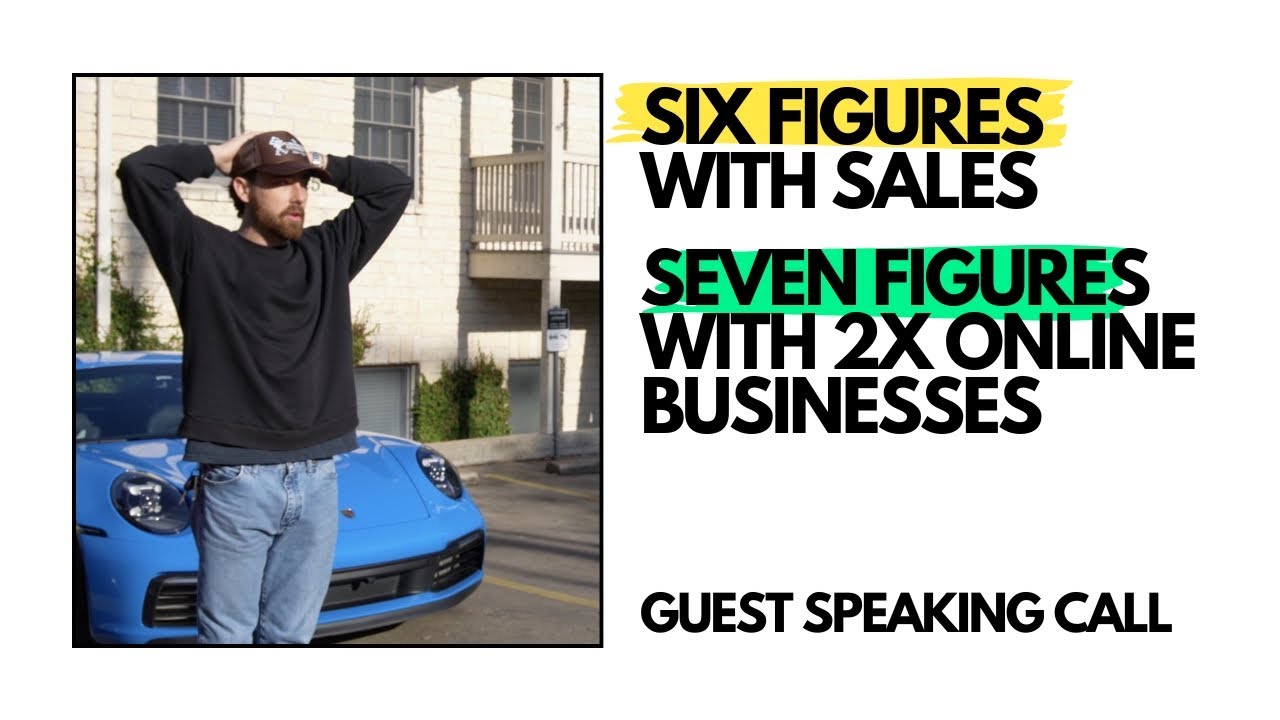
Dylan Vergara went from roofing door-to-door sales to remote high-ticket closing in 2022. He built a Slack community starting at $9/month, raised prices to $4,000, and launched a sales agency with a partner. His advice: get into sales early, work harder than peers, and prioritize family and optionality.
Chapters
Ladies and gentlemen, welcome to the new episode of our podcast. Today we have a special guest, Mr. Dylan Vergara, aka Cereal Sales. Boom! Dylan, welcome.
Boom, thanks.
Where are you calling from today?
I'm in, uh, beautiful sunny Austin, Texas. Check this out.
Oh, that's a nice view.
Yeah, not too hot yet.
Oh, nice, nice. Yeah, do you stay the whole summer in Austin or do you go somewhere?
Yeah, man, I'm a Texas guy. Like, I'm not a huge traveling— like, I'll take a weekend, but I like the heat.
Uh, all the heat, so all the smoke. Uh, yeah, yeah, a lot of people from remote high-ticket industry, they like that nomadic stuff. How come you, you know, that's not your jam?
Because I was, I was born pretty much in a place that people go to. Like, a lot of people move from the US or like other parts of the US south to Texas or Florida, and I was, I was just born here. And I've visited other places, and I don't know, my family's all here. Um, I, I now have a fiancée and a dog, so like I'm not just a young You know, solo guy that can get up and leave whenever I need to. But yeah, man, um, it's a good place to be.
Definitely. Tell me, first of all, how did you know that sales was your thing? Like, when did that happen?
Um, when I was forced to go to college. I say forced, but when I was going to college, my dad's military, so I had, um, you know, some tuition covered from that. It wasn't really an option if I was gonna go. And I was like, how do I make as much money as possible without going into debt or without being in school for 8 years? Like, what, what can I do that's in demand? And I ended up getting into construction science, which led me into roofing sales. I took estimating courses and estimating was how you sell roofs. But yeah, I was, I was like, dude, I could be a doctor, I could be a lawyer, I could be an engineer. I could, I don't know, climb the corporate ladder for 15 years to maybe make $150,000, $200,000 a year, or just sell stuff. And I'm not a natural salesperson, so I really like saw that as the path and had to get out of the comfort zone for sure.
And how did you get good at sales aside from obviously experience door knocking?
Ooh, you know what happened is when I was in my first door, I was door-to-door, uh, roofing sales job. I was shadowing the top sales rep of the company and we went in somebody's house one time with a roofing sales estimate. We're the most reputable company in this, like there's no reason this should have been happening. We're the most reputable company in the city and he's at their dinner table like shaking, like nervous presenting this. And I knew this guy was making $100,000 per year and I was like, dude, if he can make $100,000 per year and be nervous as shit at these, this person's dinner table, Like, I could at least make $80, you know. Um, so that gave me the confidence to just do it even though it wasn't going to be perfect. And eventually I caught, I caught my, my groove a little bit, and then the first, the commission checks started rolling in. I just got addicted, to be honest.
Nice. Any mentors, any books that shaped your style?
Um, In the roofing sales job, it was just the owner of the company. Guy was like college dropout, definition of got it out of the mud, built this multimillion dollar company just by, just with grit, man. Like not a salesperson, he's blue collar. And so that really, you know, helped shape the foundation. And then when I got into the online space, I took a lot of sales trainings. I paid for a lot. I got some others through like sales teams that I was on. But man, I fall back to at a fundamental level, like a lot of what Hormozi says, just like a pretty logical sale. And then I do like Cole Gordon stuff a lot, but I'm not— some of the Cole Gordon stuff in my opinion pushes a little in a way that I don't like. I'm not quite NEPQ. styled. I'm not quite like emotional like that, but more on the logical and then striking that emotional when needed.
B2B, huh?
A good amount, yeah. Or like selling to more like sophisticated people versus entry level.
Yeah, the bigger ticket, the more sophisticated they are. And tell me, like, uh, you working, uh, in door-to-door, how did that remote jump happen?
Door to door. Oh, I was, I was making great money, but there's two things that I didn't like about it. One, I was, it was South Texas, super hot. So it was just like labor intensive. I was driving around. I was, I'm from San Antonio, which is, I don't know. I don't know if it's a top ten largest city in the U.S. If I think it's number 9. It's a big city. There's like nearly 1.5 million people that live here. And I'm driving all around town, so much of my day being eaten up just by driving to these appointments. I was like, if I can do this with this number of appointments, like what could I do if I'm just like Zoom calls? You know? So that was one thing is just like, it was labor intensive. And I knew it could be more efficient. And then the other thing was, it was, oh, it was dangerous. So in order for me to like create estimates for these roofs, like I would have to get on 20, 30-year-old roofs. I had fallen through one, one time, stepped through, and luckily I didn't go all the way through, but like whole leg went through, landed on my ass on the on the roof, and I had slid down some, like some really close calls. And I was like, man, I gotta, I gotta get out sooner before— or sooner rather than later. So those are the 2 things.
Yeah, we said not safe. I thought, you know, I know everybody's armed in Texas, you know, maybe you didn't saw some no trespassing sign, and maybe that was the scenario. But yeah, yeah, nice, nice to see that you're alive. Great. And what was your ticket to the remote world? Like, how did you know that This was a thing?
Money Twitter. Uh, I was on Money Twitter in 2017 trying e-com and copywriting. Couldn't do it. It works. I just, I didn't know enough or I was too broke or I didn't have the time, like a combination of those things. But at that time, uh, I saw these guys talking about high-ticket sales and I kind of brushed it off because I wasn't a salesperson. But fast forward, uh, I stayed on Money Twitter If, if I don't know if you guys are over there, it's not what it used to be, but it's, it's a corner of Twitter where all these online business owners are talking about Wi-Fi money and stuff like that. Um, but after I got this skill in roofing sales, we got the proof that I can make 6 figures a year. I was seeing these guys talk about remote closing and stuff on Twitter, and I was like, look, this is, uh, this is a no-brainer horizontal move here. I already know the skill, just gotta commit. And so it was through Twitter.
Nice, nice. How long are you in the industry right now? How long?
Uh, I got in in 2022 early, uh, like, look, like working at it late 2021, and I jumped in April '22.
And when was the point when you decided that you want to make your own community?
Uh, it was later in 2022. We start— it was just a group chat, like started in a Slack group, $9 per month, because people kept— I, I was posting on social media a lot, like even in roofing sales I was documenting on Twitter. So people started following me and I showed them like how I left this high-paying job to, to go remote, and they started asking me questions. I was like, look, I'm saying the same thing 10 times a day, like let me just make this group chat and charge. $9 a month. So there's some sort of buffer between people who are like actually serious and not, you know.
Nice. When did you decide to really increase the price?
Yeah, so we charge high ticket now. I mean, I don't hide it. We charge $4K to start. But man, like we did the low ticket subscription for a year and a half. We did $9 a month, then we went to 19, 27, 36, 47. We started charging one time for it. The product has gotten better and better and better, but we did $500 lifetime. Then we went to like more of a hybrid, like instead of a community to like more of a service with me. We started doing like $1,500, $2,000, and then we just like brought all of it together and just went high ticket with it. And when we went high ticket was mid, it was like end of 2023. So it was like a year of low ticket.
And I'm part of a lot of communities and masterminds. Like how come that you have so successful community? Like what's your secret?
Good product. Like all the marketing, Is like 99% of the marketing is what is happening inside the community. So it's a— I'm actually fighting that right now because I, I'm trying to make it better, and I don't think Skool is very conducive for, um, high engagement community. I'm looking at other platforms right now. Um, but yeah, man, I mean, just like Getting to know the people. I'll say that's one thing that every single person in there, um, I mean, as long as they keep us posted, like, I know them, I know where they're coming from, I know what they're looking for, I know what they're up to, um, and I, I have communication with like every single person in there.
Nice. Let's say you were to go back in time to start remote closing, you know, from scratch. What would be your Game plan to really be successful?
Remote closing from scratch. I'm like, I, I say this all the time. I'm not trying to sell a community, but like getting around the right people, like being in your group, being in all the groups that you can be in that are, you know, high quality is the number one thing. I, I was just talking about this on a podcast, but like, if you look at what it takes to get hired in a remote sales role, setter or closer, The very first thing at this application funnel, like literally think of it as a funnel. The very first thing is how fast are you to apply? Are you the first person or are you the last person? Because the first person gets considered 100 times more than the last person. And if you don't get in front of these jobs before everybody else, none of the other stuff matters. Your resume— I mean, I say none of it matters, it hardly matters. Your resume, your interview, all that stuff. Timing is the big thing. So community, like group chats, whether it's paid or free, I personally just stand behind the paid stuff because look, the more it costs, the more serious the people are in there, you know?
100%. Great stuff. Any books, any habits, any tips or tricks that you wanna share that, that, that you think really, really helped you along the way?
Um, trying to get that core group of guys. So instead of like, I just talked about bigger community, like, man, get on a first name basis. I, I call this the 2 circles. You want to get on a first name basis with 2 groups of people, ideally 5 in each group. A group of guys who you're on a first name basis with that are, that are right there with you pushing through the mud, looking for their first job, sending out applications. Get on a first name basis with 5 guys like that. Because you never know when this guy sends out 100 applications, he accepts a job, but has all these leftover openings. He's gonna toss 'em to you cuz you, you know, y'all are boys. So that's the first thing. First circle, get the, get the group around you that's with you. And then the next thing is like, get a group of guys that are ahead of you. And the value that you bring to that group is gonna be different because you don't have the experience yet. But again, first name basis, get that group that's already doing this. That's where you want to be. And, and that's, you know, the, that's what I did. Social media helps a lot with it. Besides that, man, posting on social media, like that, I'll go into that. My whole thing before I ever considered quitting my job is I started posting on social media because I knew that by having an audience or even 100, 200 people in this niche and I was posting content, I would drive opportunity to me and I would drive connections to me. It's like a magnet for the people that you want around you if you actually know what you're talking about. So tight network, not the big community network, but like tight network, social media. And I talk about this a lot. This is the last thing. I'll make this short. Not, not sales training, man. Like sales training, if your job is to get, or if your goal is to get a job, I don't care if you went through 10 hours of role play or 100 hours of role play, it equates to zero. Like, are you the best candidate or no? So like the focus should be on being the best candidate, being the fastest one, the best one. Now it helps if you have sales training, but there's too many people that lead with, hey, I went through this course, this course, and this course, hire me as your closer. It's like, I really don't care what, what have you done or what, what can you do? You know?
Got inspired. Absolutely. Everybody lives in kind of, it's just skills, it's just this, it's just that, like everything else doesn't matter. Like it's fascinating to me in 2025, everybody has the same mindset.
Well, I, the only ones who I know that, um, I think they shut down recently that I know that preach that as well is the Undeniable Closers. Um, now obviously I'm not saying sales training is not important, but I've seen so many guys pay $5,000, $10,000, $15,000 for remote sales training and placement, and they don't get placement or they get a bad offer and it's because they weren't good enough. Like they go, you know, go practice more role plays, go do more objection handling, McDonald's drive-through, whatever you want to do. Uh, you're not making $30K a month yet because you're not good enough. No, it's because like they don't have proximity to good jobs.
Yeah, I also saw so many closers, they're average, just because they have group world-class offer, they made insane amount of money. So it's—
yeah. I mean, look, dude, I know there's some, some people that are just naturally salespeople, you know, that's, that's not me. Everything I've had to learn was, was unnatural, but I've seen those people like not do that. I've seen 'em do well and I've seen 'em not do that well. And like, there's two, there's two things that, two common traits of, of the best people, the most successful in this space with the longest lasting success is one, They're at least decent at the skill. 2, they have a strong network and that the strong network will carry you if you're not A+ at the skill. You could be B+, A- and get what the A+ guy with no network gets. So like you can, you can manufacture that.
That's definitely, uh, what led you to start your own agency? Now you're a business owner.
Yeah, yeah. It was just a natural progression. I had been doing like one-off B2B recruiting, consulting and stuff like that for a while. But in 2023, I partnered up with my guy Cole on this business. So I got the two-sided cup and we just did done-for-you sales management and, and we were really just looking for more leverage with a skill that we had Built and, and went from there.
How did your mindset, you know, shift thinking as a closer, as a sales rep, and now as a business owner, if anything at all?
Oh, uh, closer, sales rep, business owner.
What's different?
I mean, I, uh, I, I've, I remember hearing people say this, that used to be sales reps. And I was like, that's bullshit. It's not true. But when people say like, hey man, closing's a good gig, you know, $10K, $20K per month, 100% profit, clock out at the end of the night, like don't take it for granted. It's true, man, because business has complexities. I just posted on my Instagram like an hour or 2 ago. My community like lost money this month. Like we did. pretty significant revenue, not pretty significant. We did like okay revenue. We had a down month, but like I actually lost money. And that's just the way that it goes, you know? So like, I think right now it's more about systems, processes, teams, and like helping people around me. It's business ownership is more in line with sales management. Like you gotta make the people around you better and you gotta be obsessive over data and tracking and getting better. Closing, you can just be a loose cannon, be a workhorse, and will your way to $10K, $20K per month.
And how different is your life now compared before you got into sales?
Night and day, man. I used to deliver packages for Amazon when I was in college. This was like 4 and a half years ago. I mean, yeah, dude, my, my entire life is because I made the decision to get into sales and not quit. Like I've, I've been able to like move to a new city, buy nice things, give my, like my fiancée hasn't worked. She actually just started working cuz she got bored, but like she didn't work for 2 years and like she had the luxury to do that because I, I Got into sales and figured it out, you know.
Nice. And if you could, if you could go back in time, what would you tell that 23-year-old Dylan?
Get into sales sooner. Uh, I just wrote about this as well. Get into sales sooner and like, uh, don't doubt that. Don't doubt if this is the path or not because it is. And it doesn't matter what your personality is like. Um, you know, the best salespeople just ultimately have conviction in themselves and their product. Doesn't matter if you're an introvert, extrovert, any of that. Um, can— do you have conviction and can you articulate that to someone who is interested?
Interesting. And what are the core habits that have helped you succeed in this industry?
What would you say?
As a closer?
Yeah, generally.
Yeah. Dude, I mean, it's a little bit different today because I have a little bit more leverage over my time, but man, over the last 2 and a half years, I know for a fact I worked harder than 99% of people in the space. Like, I spent more hours doing work. And that isn't always sales calls. It's not always content. It's not always, you know, one thing or the other. It's just a combination of everything. Like I've spent a lot of focused attention drive, like pushing this forward. That's really it. Like I'm, I'm, I say, I would say I'm better at certain things than others and the things that I'm not that great at that, I, that I recognize, I just compensate with working harder, really.
What is driving you to do that extra work? What's your big why?
Um, I just wanna be, uh, I wanna be present. It, it comes down to like having kids and family, but I just wanna be present for everything while simultaneously providing at a very high level. So I want to go to all the sports games and the practices. And I also don't want to have to sweat, you know, putting my kids through school, you know, if they decide to go through like college or, I mean, if private school, I haven't even thought that far really, but I want optionality. I want to not be able to work. I want to be able to spend the time with my friends and family if I want to.
Either cool. Uh, yeah, I mean, that's the goal for everyone, I think. And what does a typical day in your life look like compared, you know, a few years ago?
Uh, right now I'm not taking as many calls on the calendar. A few years ago it was all calls. Like, all I— my, my most value— the most valuable thing that I could offer was my time speaking with people directly. Um, And now, like, one of the most valuable things that I could offer was, you know, this agency that I sold or the community and the operation that is the community. But now it's less about one-on-one talking to people. It's more about creating, like, running a business, like tracking everything in the business, growing the business, and then showing people You know, showing the people that need to see whether they're sales agency clients or potential like sales reps who are looking for a community, showing them just how well we're running that business.
And tell me, do you prefer to work in your home setting, home office or coworking?
No, dude, I hardly work from home because I have a, I'm in a 1-bedroom apartment now. We're look, I'm going to tour a 2-bedroom after this, but I have a, I have a crazy Doberman puppy and dude, the neediest dogs. If any of you guys work from home, just get a, get a little weenie dog or something. I don't know, like don't get a, don't get a big Doberman that needs to go outside all the time.
That's why. But so if you didn't have a big dog, it would work from home or?
Yeah, it is, it is a little bit distracting. I don't know if any of you guys can relate here. But if there's other people there, it can be distracting. But waking up and walking 10 feet to where you're gonna spend your whole day and then clocking out, or like going to walking 5 feet to eat like twice, and then like just staying in that little radius all day long, day after day, is pretty boring. And it's pretty like, it can get pretty Not depressing, I don't think that's the right word, but monotonous maybe. So I, I definitely switch it up and go to coworking spaces, coffee shops, that kind of thing.
And tell me, like, today we have so many distractions, like, what do you do to avoid them? I mean, obviously to be on a level that you are right now, you need to work relentlessly and also to have tunnel vision focus.
Yeah. I moved cities. I moved away from my old friends and family. That helped a lot. So I'm, I'm about an hour and a half drive away, which is enough to go back when I need to, no questions asked, but also enough to not have me going there for no reason. So I moved to this new city intentionally to like make better connections. Also underrated hack here is like, if you guys are girlfriend, you have partner, spouse, it really helps take that distraction off because I know like if I was a single guy, if I had been single this entire time, it would, it would, I foresee it being harder to do the things that I've done. Because your mind is like chasing all these other things, like going out, meeting new people, trying to build these relationships. Like having one person in your corner, uh, for years is, is really, um, it's been beneficial to me.
Nice. Uh, guys, if you have any questions, you can raise your hand or drop it in the chat. Um, tell me, like, Dylan, Uh, are you organizing the best, if not the best, in-person sales event again this August or September?
Yeah, end of September, uh, probably Austin, Texas. We had 120 people come out last year. There was actually one that happened on the, the same weekend as ours in Miami with some big names, and we had more people come to ours. Which was really cool. This is gonna be the 3rd year, so it's more of like community focus versus like sit in a hotel conference room and learn how to handle sales objections. We eat good food, go out, get on a boat. We do have some speakers. Like it's more of a business trip write-off. Spend a fun weekend in Austin, meet these guys that are doing what you're doing. And every single year, dude, I mean, every single year, it's been 2 years, but guys walk away with new connections, new roles, best friends. Guys, every single year people move to Austin after, 'cause it's, it's a great place to be.
Definitely. Everybody says it's a big hub. So how can people join? How can they learn more about what you're having?
I haven't posted it yet, but I would just bookmark End of September, last weekend. I'll start posting about it probably in about a month or 2 here. I'll definitely make sure there's a good amount of heads up. We will sell out of tickets too. We sold out last year. I— we sold out. We had 100 originally and we had to open it up. We created another tier, so we'll probably do 100, 150, and We'll have like a general admission tier as well, probably.
That's a good problem to have, to have— you have so many applicants. Yeah. Mr. Justin, you have a question?
Hey, Dylan, how you doing? Uh, good morning or good afternoon depending on— on— I think it's Central Time over there, right?
Yeah, Central.
Um, all right, so yeah, I wanted to say, um, I was actually curious, who is the biggest person who inspires you and, and why?
I was thinking about this the other day, man. I, if I, if I had to say right now, there's, there's not one person, but what I do is I look at certain attributes of people who are like top-notch at what they do. And I like pick and choose what I like about these people and, and try to implement that into myself. So like the person I look at for sales and business is not the person I look at for relationships or health and wellness. So I wish there was a one-size-fits-all answer, but there's not.
I guess, like, who is that person that— doesn't have to be specific, but like, that changed you, like, in a click? Like, who is that one person?
Uh, probably like the one that kind of like set the trajectory of my life in a slightly different direction that ended me up here was probably the The owner of the first company that I worked for out of school, the roofing sales job that I had. Um, because yeah, I mean, there's, there's a lot of reasons, but the boss that I had at the time.
Um, and, um, I guess when it comes to quality of the type of people you like to network with, or the, you know, the, the, the, that made it to the person that you became today. I guess, like, what are the— I know you probably mentioned it with Philip, but I may have missed it, but like, what type of qualities do you kind of want to see in others, um, to become as successful as you? Like, what's, uh, what are the sticking points that you think many people are missing out on this, or they feel they're taking this too lenient or overlooking this?
Yeah, and this could apply as a sales rep or a business owner. There's 2 things that I think I'm decent at, or else I wouldn't be where I'm at. One thing is just like understanding perspective. So like when you have these high highs, these big commission months, and then these low lows, you lose an offer or you lose a client. Perspective really helps you make educated decisions, in my opinion. Now that might not be like super clear. But if you can understand other people's points of view just as well as your own, it helps you. I think it helps me make more rational decisions that are overall net positive for not just myself, but all the people involved in, in what I do, which people like that. So understanding perspective and, and like purposefully going through these experiences that are hard and hitting these big milestones, cuz it provides that. The other thing is just awareness. So many people, man, like especially sales reps, they're, they're just not aware. It could be them not being aware that they're talking too much. It could be them not being aware that they're in a shitty opportunity, them being aware that sales training is not gonna get them the job they want. So like when you combine perspective, like being able to understand points of view and how your decisions alter other people's realities, and the awareness to be cognizant of that, like, dude, that's a super weapon in my opinion. So I, I think those are the 2 things that I would attribute, uh, to a lot of what I've done.
Nice. I think we have 2 more minutes. Mr. Thomas, you have a question. Let's go.
Yeah, great, great value, brother. And, uh, I just wanted to ask, you know, you build a successful community and you still kind of building that and, and scaling, right? So I wanted to ask you, with the community specifically, knowing that, uh, knowing what you know now, right? I know you started the community with like $9 and then, uh, $19 and etc., etc., right? Whatever, you increase the price as the value was, you know, better and better, more people kind of involved with that. So Kind of knowing this now, would you do it the same again, starting the price, meaning starting the low price and kind of scaling from there? Or would you change something, meaning you will bring more value and maybe increase the price from the start to maybe bring better quality people?
Yeah, it depends who you are, because at the time I didn't feel like I had the results to justify charging somebody $4,000 upfront. Maybe I could have sold one, maybe I could have sold 2. But I knew I wanted to play this game long-term, and I knew that $9 a month, even though I'd made literally no money doing that, um, it would allow me the opportunity to work with these people to get the testimonials and the social proof that would then let me charge $4,000. Or like, I didn't know I would charge $4,000, but then let me charge more. So if you have a big social following, if you've been documenting something, if, if you have a reason to charge a lot of money today, now I would do it. But if you don't, like, just slowly build that, like, testimonial snowball, and then eventually you can. Because my thing, and I don't wanna— I know we gotta wrap up here. I've never, like, my whole angle always has been around jobs and getting the best opportunities and being connected. It's never been sales training, and my angle has never been work with me because I can sell better than Jeremy Miner, Cole Gordon, Jordan Belfort, whoever. And so I was good at getting myself jobs, but the intention with the $9 per month group was to get— help other people get jobs. And then that was the— like over the last 3 years, like that's been the angle the whole time. So definitely make sure you have that angle. I don't know if you're looking at sales training or sales program or something else, but Um, like, be aware. Like, I, I was aware that it would be stupid for me to run an ad and say I'm better than Jeremy Miner, don't listen to them, you know? So yeah, that was— I mean, just some of my, my thoughts on that, I guess.
Nice. Great, great stuff, guys. Thank you, Dylan. Thank you for your time. An amazing episode so far. Uh, for everyone that's watching this on YouTube, you can DM me and Dylan if you really want to join the cool guys. That's definitely— I'll drop the links in the, in the bio. And until next time, take care. Happy closing.
Bye-bye.
Bye.









