The truth about employment contracts in high-ticket sales
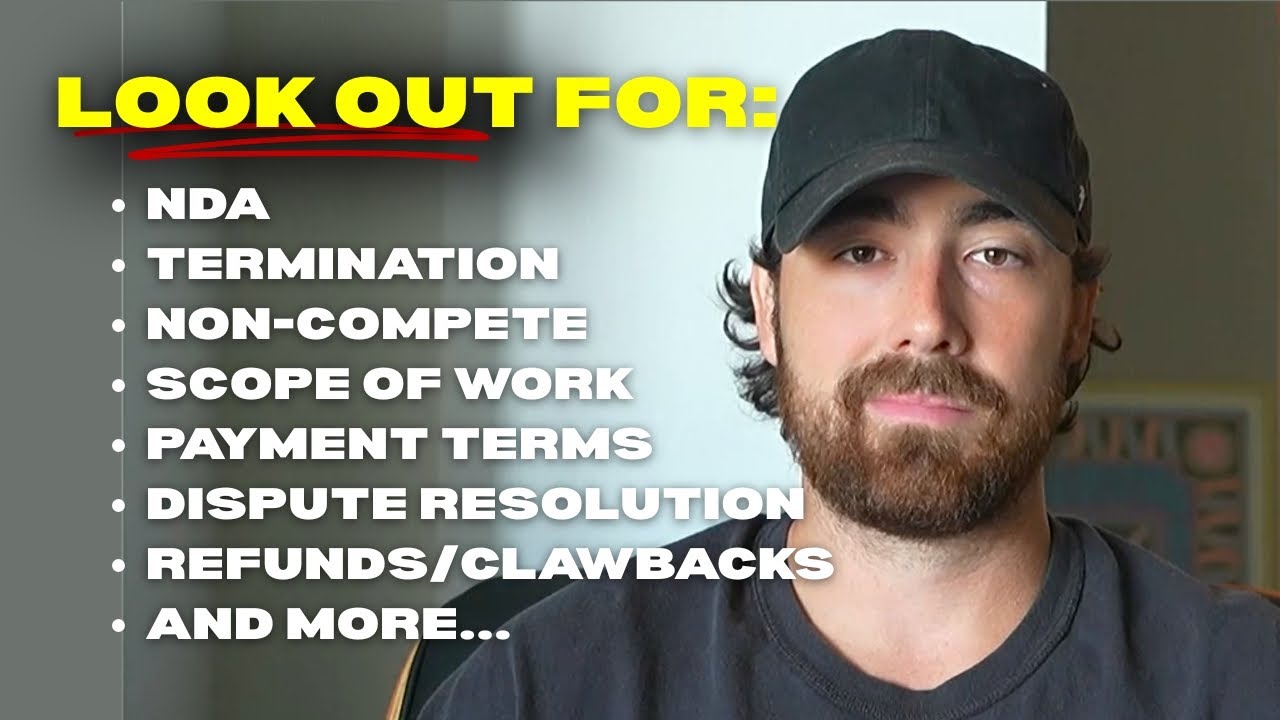
Dylan Vergara breaks down what high-ticket sales contractors actually need to know about NDAs and employment agreements. Non-competes are rarely enforced, especially after the FTC's 2024 guidance, and actual lawsuits against contractors are virtually unheard of. Read your contract carefully, use ChatGPT to spot risky clauses, and watch out for predatory terms as a sign of an unstable company.
Chapters
What's up, you guys? If you clicked on this video, I'm going to assume you're probably a high-ticket closer, high-ticket appointment setter. Maybe you received a contract. Maybe you have someone who's about to send a contract. But in this video, I want to break down overall how contracts are seen in the high-ticket 1099 sales space. So my perspective filming this video is actually coming from both sides. So I've signed them as a sales rep. I've also had sales reps sign them for my agency, even had a lawyer on retainer for $7,500 a month to review contracts before we sent them out and to make sure that it is what we were hoping it was. Again, you watching this, you're probably a sales rep. So let's talk about this. And this was actually brought up to me from someone in a community live call today. And he said, hey, Dylan, I got 2 offers on the table. One of them just didn't even tell me I was accepted, but they sent me a contract. They sent me an NDA and they sent me an employment contract. So let's talk about it. Is that normal? Should people be signing contracts? If so, what should they look like and what things should you look out for when having a contract put in front of you? Now, before we get into this video any further, I am not an attorney. I am not a legal consultant. This is just knowledge from my perspective based on my experiences that has served me well to this point. Do not take anything that I say as 100% truth. So in the high-ticket industry, surprisingly, contracts are not as common as they probably should be. If someone sends you a contract, For employment purposes, that is completely normal in the world of contractors all around, like different industries, salespeople or not. It is normal for a contractor to have an agreement with the business they are doing business with. That being said, I'm not sure why it is not like standard practice for every single company. If a company doesn't send you a contract, that's not necessarily a deal breaker, but usually some of the bigger ones, they will have a contract just to get everything on paper in front of you so you know what you're getting into beforehand. Such as pay structure, when you're paid, what you can and can't do, what your responsibilities are. Like, it's nice to have that on paper before you even get into things. Now let's kind of talk about some different parts of the contract, when they might send them, why they might send them, and what they mean to you as a sales rep. At least for the agency that I was running, we would send NDAs. And so what we would do is we'd have multiple sales teams, we'd have a good candidate, and we would interview the candidate. Once we know that, hey, we actually like this person, let's show them kind of what's on the table and evaluate from there. We would have them sign an NDA because as an agency, you don't really want just your client base floating out there publicly. So an NDA is non-disclosure agreement. It's basically like, hey, what we're about to show you, like, don't go around telling everyone. It's personal private business to us. And, you know, there could be really extensive NDAs, but the general idea is like, don't go, don't go kissing and telling. Okay. Especially in the high-ticket industry, like a lot of this information isn't super, super confidential. Like we're not talking about government-regulated, like top security clearance stuff. Like this is kind of just a common courtesy to not expose people's business and spread stuff that isn't yours to spread. As a contractor, I wouldn't really have any hesitations around signing an NDA. Next up, the employment agreement. Now there, there can be a lot of stuff in this. And some of the main things that you're going to see in here are what I mentioned before, the pay structure, the scope of the role, There can be other things like non-competes, disparagement clauses, and things of that nature. Now, from the perspective of someone who spent a lot of money to have contracts made and reviewed and then signed by salespeople, the main point of this contract from the perspective of the business owner is to just protect the business from you as a contractor doing reckless shit. One thing I'll note here is I've been in this industry for now 3 years. Again, I've signed these. I've had people sign these. I've worked with hundreds and hundreds of people to get into these roles where sometimes they sign these. I have only seen one case out of hundreds of reps, all the reps that I know. I've only seen one case where an employer held this person accountable for what they were to sign. And it really fell flat on its face. What happened is the guy left one company to basically start the same company or a similar company. And they're basically like, hey, stop doing this specific thing. He stopped it and it It died there. So really what this is protecting the company from is if you go rogue and start saying stuff that you shouldn't, making crazy promises, doing all this, like you will be held liable as a contractor. And this would only happen in the event of a bigger party or something else happening to that company because of what you said. That could be governmental bodies. It could be civil class action suits. It can be, you know, it's serious stuff. The one thing I'd like to point out about these contracts for you as a sales rep, most of the sales reps that get these, they come in, they're like, hey man, like it has a non-compete. It says I can't do this for like 2 years. It says I can't do this for a year. If you look up FTC non-compete in 2024, I'm pretty sure that that is not allowed. Companies will still send it to you. It's not enforceable, I should say. Companies will still send them to kind of give you the impression that, hey, I don't want to mess with this company. But sometimes, man, signing these contracts, depending on how predatory they are, is kind of just like, not a show of force, but it's kind of like, hey, don't mess with us. Like, we're gonna work together. Don't mess it up, or else this could happen. But again, I've never seen anyone actually get into any serious repercussions from breaking these contracts or whatever. By the way, that is not me saying you should go and break these contracts. I'm just telling it how it is. And I'll even say this, sometimes Being sent a contract can actually be a red flag because if this is a brand new business, if this is a business with someone who maybe messed up in the past and they have this crazy long contract for a role that's like brand new or a crazy, like an insane contract as a sales rep, that's almost a little bit concerning. It's like, hey man, like you haven't even sold a dollar of this service. What's up with this contract? Like why is all this crazy stuff in here? At the end of the day, it's difficult for these companies to enforce because let's say you break the contract, you go work with someone else and you know about their product and you go work with someone else. What are they going to come sue you? They could hypothetically, they could sue you. But, you know, if this company is making, let's say millions of dollars per year, they have the money to actually sue someone and you're a 1099 sales rep. Like, what are they going to try to get 10 grand out of you? Like the time that that would take, it's just, I've never seen it happen. It's usually better to just cut losses and focus on business growth than for them to stay in the past and go after a 1099 sales rep who might have no money to their name because that's really the only recourse they're going to get is money. So yeah, now as a contractor, man, it's always in your best interest to do as you are instructed. Don't break any rules. Don't bend any corners. Don't take shortcuts. Because if something does happen down the line and you did that and you signed saying you weren't going to do that, You will be held liable, and depending on the severity of that, it's not good. It's not good for you. Protect yourself. So all this being said, if you're in the high ticket space and you get an employment contract, read it. I actually told my guy earlier today ChatGPT is amazing with contracts. The contract in there say, "Hey, I am a 1099 sales rep. What information should I be looking out for to make sure that I'm protected in this agreement with this company? Or is there anything in here that puts unnecessary risk on me as the contractor? Or based on common." 1099 contractor agreements? Like, is there anything in here that appears to be a red flag that I should look deeper into? Ask it a bunch of questions. Obviously still read it through yourself, but ChatGPT is really good at interpreting these things. If you're thinking about having a lawyer review your contract, unless you just have a lawyer in your corner who will do it for super cheap, I mean, not legal advice. I would just put it into ChatGPT and run with it. If you know that this is a big opportunity, there's going to be big money transactions. When I say big, I'm like talking You know, 50K per month plus kind of stuff, then maybe it's worth it if you have the time to wait and the money to do it. But yeah, generally speaking, you guys, it's not that heavy. Just make sure that there's nothing in there that's absolutely out of the ordinary. Sign the contract, be the best contractor that you can from a perspective of following rules and instructions. Document things well, you know, save the contract when you get permission to do this, to say this, whatever, document it. I mean, nobody really does this, but If you ever have any doubts on like, should I be doing this? Is this safe? Whatever, whatever. Just if you get approval, document that. Another thing is like, dude, if you get a contract and you're in my sales community, like run it by us. Because like I said, I've signed them, we've signed them. I've had sales reps sign them. I've paid a lawyer on retainer to look over our contracts. And I've even taken some law classes back in college. So like getting perspective from someone who's more familiar with these than you is infinitely valuable. You are in a group or in our community. I mean, we're happy to help you with that. Again, not legal advice. A couple of last things that you should definitely look for on the agreement, contractor agreement, when signing is details around commissions. Already mentioned that. When they're earned, how they're paid, and how clawbacks work, if it's at all relevant. What happens when some business that you sold reverses, refunds? What happens to your commission? And if something happens to your commission, when does that happen and how does that happen? This should 100% be put on paper if there's going to be an agreement. Also, any bonus structures, incentives should definitely be put on paper or else they don't exist in my mind. Another thing is termination clauses. How can they fire you? What does that mean for your commissions? What does that mean for your pipeline? What does that mean for any renewals or recurring? You definitely want that documented. Another thing you might see is dispute resolution, which again, this is kind of doomsday scenario, but if there's, if there's a dispute, How is it handled? Is it handled via arbitration or through the court system? What jurisdiction is this handled in? Is it in a different country? Is it in a different state? All things to know. You might not have as much say on that, but it's good to know. That's really it. As you get into like higher-tiered businesses and structures, like contracts hold a little bit more weight. At this level, not extremely serious. You should still, you know, act like they're serious, but just know, like, don't sweat it. Okay. Don't let them scare you. And that's pretty much this video. So if you guys are watching this and you're in the high ticket 1099 setting closing space, I run a paid community. Been doing it for 3 years. We posted 262 open roles last month. We have people absolutely crushing it. I think you should join. We work with you to go from wherever you're at now into the ideal high ticket sales role step by step. I work with everyone either one-on-one or small group, have a bunch of open floor live calls every week. But we're pretty good at what we do. You go down to the first link in the description, you'll see a little bit more about that. Also, when this video is over, it's going to recommend you some videos and a playlist. And one of those playlists at the time of recording this, it's 45 one-on-one interviews with people who are a part of that community. Check it out. Besides that, you guys, there's some more links in the description for you. My personal newsletter is in there. It's pretty good, pretty funny. I show some behind the scenes. And if you're new to the channel, you know, these Wednesday videos are more like tactical advice on like high-ticket sales and what you should and shouldn't do. Sunday is more behind the scenes documenting the week of building these businesses and helping people land sales jobs and a little bit more fun and creative. So 2 uploads a week. We don't take this lightly. And our goal is to help more people quit the sales job they hate, get into the one they love, make a lot of money and live their best life. If you're down for that, subscribe, apply to join the community, get on the newsletter, and I'll see you on Sunday.









