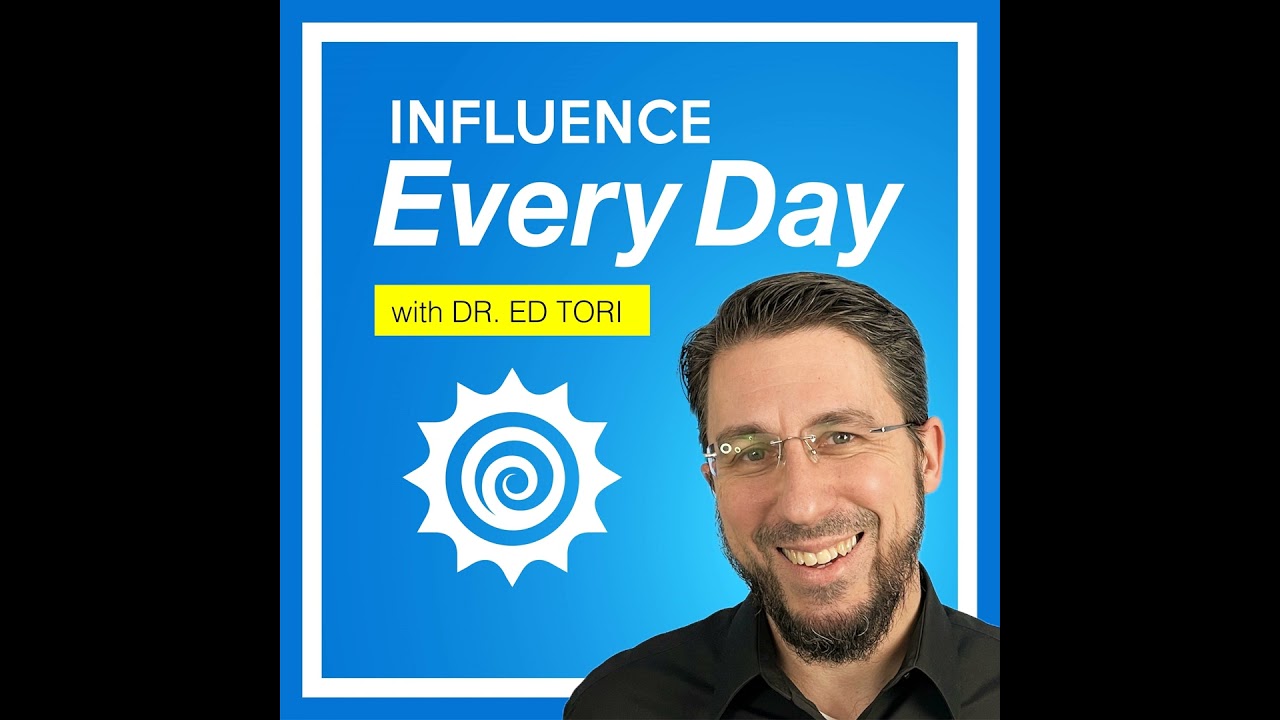
036 The Opposite of Gratitude

Dr. Ed Torrey (Influence Every Day podcast) examines resentment as the opposite of gratitude. He contrasts common gratitude practices with the corrosive, compounding nature of resentment—defined as sustained bitterness, envy, judgment or anger arising from perceived injustices and unmet expectations. Torrey describes how resentment accumulates when attention focuses on a grievance, how meaning-making can magnify slights, and how resentment harms relationships, self-image, and wellbeing. He also notes resentment's positive intent: it can signal values, motivate boundary-setting or difficult conversations, and prompt change. Common triggers include unacknowledged effort, perceived favoritism, unequal emotional labor, interruptions, and poor communication. He urges listeners to self-check for resentment before family or holiday gatherings and to get curious about its root rather than letting it fester.
Chapters
Foreign. This is Dr. Torrey. Welcome to the Influence Every Day show where we make every day better and we influence for good. This is not about gratitude. Now, certainly it's a time of gratitude for a lot of people. We think about it. We think about it around the times of Thanksgiving or other holidays. We think about it maybe as we reevaluate our year in and around the time of New Year's, maybe if we have any particular spiritual occasions, whether it's Christmas or Ramadan or Easter or things like that, where you're experiencing some gratitude around holidays. But we also have a lot of focus and attention on gratitude when it comes to our own personal development and well being. It's certainly on our tongues. It's. There's all these things that about people trying to practice gratitude and how do you build it into your day. I personally have a practice of gratitude where I write down five things every morning before I start my day. Five things that I'm grateful for. Now, there's a lot of stuff out there about that. Many people are being coached on it. People are working through it. They're using journals and all these things. But this post is not about gratitude. It's actually about its opposite. Sometimes we can really learn and understand our own emotions and feelings when we examine their opposites and also when we examine times when they're absent. For example, when gratitude is absent, how does that feel? How does it feel when you've done something or you've contributed something and the on the other end, there is no gratitude, how does that feel? If we examine that emotion, that feeling of when gratitude is absent, it can help us understand gratitude and its power and how we can use it and benefit from it. The other thing that's true, and this one's a harder one, this one is a harder one, especially around all of those settings that I just mentioned. And that is its opposite, the opposite of gratitude. Now, there may be two opposites, actually. One is entitlement, meaning when somebody expects the thing to be done for them. That expectation, that entitlement of the thing that might be an opposite of gratitude. But that's not the one I'm talking about. I'm talking about resentment. Resentment. Resentment is corrosive. Resentment is like this underlying, eroding, festering abscess that can sometimes destroy our relationships. It can destroy our health. It can destroy our careers. If you let resentment fester. Resentment can tear apart families, it can tear apart teams, it can tear apart relationships that were previously close. What is it? When does it occur? Where do we see it. When do we see it? Resentment is essentially intense negative emotions such as bitterness, envy, judgment, anger that we feel when there is a perceived injustice or a perceived unfairness. And it happens over a period of time. So one of the things about resentment, this is also true of gratitude, by the way, is that it accumulates, it compounds, it grows. And there's that saying where attention goes, energy flows. So if we put our attention on something, we keep thinking about it, our body starts to feel it. But there's another statement that one of my hypnosis teachers taught me, and that is where attention goes, energy flows, and that thing grows. That thing grows. That's what resentment is like. Resentment is that when you put your attention on that thing, that perceived injustice, and you start to feel those feelings of bitterness or anger or envy or judgment. When you start to feel those, they fester, they continue to slowly multiply, slowly compound. Over time, they slowly grow and become more corrosive, more invasive, more destructive. And where do they come from? Well, oftentimes resentment is the result of things like unmet expectations. We have an expectation of someone else, they. They didn't quite meet it, and then we start to feel a little bit of resentment. If. If there's a sense of injustice, like something happened that was perceived to be not fair in some way, shape or form, then we might start to feel resentment. Especially if it occurs more than once or we perceive it that way more than once. And then oftentimes it comes from us misapplying, meaning, the kids didn't clean up the room. What does that mean? Does it mean they're disrespectful? Or does it mean they simply forgot? Does it mean their attention was on something else? When we apply meaning to things, we sometimes magnify them or we even change what they actually mean. We start to create our own narratives. And oftentimes these are internal. It's so internal that sometimes we have to work on getting them external. Like, I actually literally have a piece of paper next to me in every meeting that I'm in that says the story I'm telling myself is. And the reason I have that piece of paper next to me is because whenever I have any sort of negative inclination or emotion, I write down what I think that means in the moment. And oftentimes I just look at that meaning that I've applied to it and I reevaluate it. I get to a better place by looking at this little story that I'm telling myself in the moment when the emotion is peak. What Is the story I'm telling myself. Then if I look at that and then just reevaluate it, sometimes it can help me pivot away from where it could go. It could go to this festering abscess of resentment. Now, now it's really important to recognize resentment because it has certain negative effects and it also has like a positive intent. So there's. The negative effects are if we feel resentment, if we feel this bitterness, this festering bitterness that grows because of a perceived injustice, if we feel that, then it affects how we respond to the people that are the objects of that resentment. It affects how we respond to the people that are most important to us, the people that we work with, the people that we live with, our families, our friends, our social circles. If we perceive an injustice and it's boiling underneath the surface, it affects how we show up to our relationships. Not only that, it affects the tone of our conversation, it affects the content of our conversations, it affects our other relationships, not just the ones that we experience resentment around. So it has a negative effect on our relationships. Like it or not, it does another negative thing that it does, and this is one that we kind of know it because our voices in our heads are saying it, but we don't actually get present with it. And that is when we feel resentment, we start to have a negative perception of ourselves. We start to say to ourselves, we beat ourselves up. We say, oh, I shouldn't have felt that way, I should have set this boundary and I didn't, I should have done this. Woulda, shoulda, coulda didn't and this is why I suck. That's a negative self perception that is festering underneath when resentment is there. And then the other thing it can do is it can affect our well being. Like straight up physical, emotional, spiritual well being is impacted by resentment. So it has very real negative impacts on us. But we should recognize that it comes from a positive intent. That positive intent. Sometimes it might be that we feel some resentment because we, we want to protect ourselves. If there's an injustice, we want to protect ourselves. If we see an injustice visited upon someone else, we want to protect them. There's a protective quality to the reason we experience resentment. Another thing that's really positive about the intent behind resentment is that if we just get curious and ask ourselves, why do I feel this feeling right now? If you get curious about it, sometimes it helps uncover your values. It helps uncover your values. In other words, if you find what you hate, what you experience very negatively, then that can tell you what you want that can show you what you value, what's important to you. The other thing about resentment is that sometimes it can motivate us to change. It can motivate us to have the hard conversation. It can motivate us to speak up. It can motivate us to remove ourself from harmful situations. So it's important to recognize that there are positive elements to resentment. But left to its own accord, it's an abscess that must be drained. Now, where does it show up? Resentment can show up in our personal relationships, in our social circles, in our professional relationships, at home, and it can even happen against ourselves. But it can show up in lots of ways. Essentially, if you think about any perceived injustice. And by the way, perceived is a key word here, because it may not have actually been an injustice. It may have actually been something that was perfectly appropriate. But we are missing information or don't understand where that person was coming from at the time. We don't have all the information. And you may remember, I've said this multiple times before, in the absence of information, our brains default to a negative. If we don't have the data, the evidence, the information, we tend to default to a negative. And so that happens in our personal relationships. If we make some effort and we don't see the effort on the other side, that effort may have happened. But if we don't see the effort, if we think it's unreciprocated, we put this energy in, we did this thing, but they didn't. That can lead to resentment. That can be the seed. That can be the start. If you made a contribution and it goes unacknowledged, if other people are getting credit and you're not, if you know, you feel left out for some reason, a bunch of people go somewhere and you weren't notified, maybe you missed the message, maybe someone tried to reach you and they used the wrong number. Maybe there's all these other things, but you feel left out. And that is enough for you to start to feel resentment. If there's, like, unequal emotional labor, somebody is putting in the time to make arrangements and make sure all the details and all the T's are crossed and all the I's are dotted and all these things and it's perceived that someone else is not, that can start. Resentment can start. When that happens. If some. If you're talking to somebody and they interrupt you, that can be the start of resentment. Especially if what you were about to say was important to you. If we ever see perceived favoritism this can be at home, this can be in the workplace. This can be in our. Generally with friends, right at work. Especially like if you perceive an un. An uneven amount of work workload, right, Somebody's pulling all the weight and the other one isn't, we can start to experience resentment there. Oftentimes one of the core things that leads to resentment is poor communication, because it goes back to that in the absence of information, when we default to a negative, our brains default to a negative. So if we're not communicating by definition, we're not exchanging the information. So yeah, you may be working on all the details, but somebody else may be making an event really special by focusing on the moment and what can be done special. Like maybe bringing in somebody that is unexpected from overseas or some celebrity or something. Like make it ultra special for that person. While you're doing the invitations and doing all the other things and all the finer details, someone else is doing something else to level up, up. But you don't necessarily know that's happening because they don't want to get everyone excited or they want you to be surprised too. But resentment starts when you see this like uneven workload. This can happen at work. It can happen with planning things with friends. Another common one is unacknowledged sacrifices. Somebody does something, they stay late, they do the thing, they do an extra, they do a little bit more to over deliver. And then it becomes something that expected, that can bring about the seeds of resentment. So why am I bringing all this up? Why am I bringing up resentment at a time of gratitude? It's because if you look at the family gatherings that many people are having, I'm telling you, when I coach people on influence and communication and consult at different workplaces, most of the time it has to do with resentment. That is the poison that's occurring between people. Families split up because of resentment. And most of the time it's simply a perceived injustice that may not have actually been an injustice at all. There may be one child who was taking care of an elderly parent as they aged and the other children weren't. And so there's this perceived discrepancy. On one side they think that person's taking advantage. On the other side they think, where the heck are they? Why aren't they here? And then it just festers over time because they don't communicate about it. When you're at Thanksgiving dinner, when you're at your Christmas dinner, when you're breaking your fast in Ramadan, when you're reevaluating your new year's and you're thinking about what you're going to do for the year ahead. Look ahead at these events look ahead at these events and ask yourself, am I resentful? Do I have any kind of resentment towards any one of these people that's important to me? If so, it's time to get curious. It's time to look inward. It's time to ask yourself, what's the root? Where is this coming from and what's my role in it? I'm not asking you to tolerate the intolerable. I'm not asking you to accept the unacceptable. I'm simply asking you to re evaluate. Your relationships are too important. I'll see you in the next episode. This is only the end of today's show if you let it be. Who needs to hear what you just heard? Go ahead and share it with them right now. The Influence Every Day podcast is free. We don't sell advertising space, so telling others is the best way to pay us back. But more importantly, it's the best way to pay it forward. If you enjoyed today's podcast, take a moment to rate and review the show. Then check out the additional links and materials that go along with it. They offer more ways to take your influence, your impact, and your relationships to a whole new level. Now go forth and influence for good every day.