How He Built a 6-Figure Amazon Business While Working Full-Time
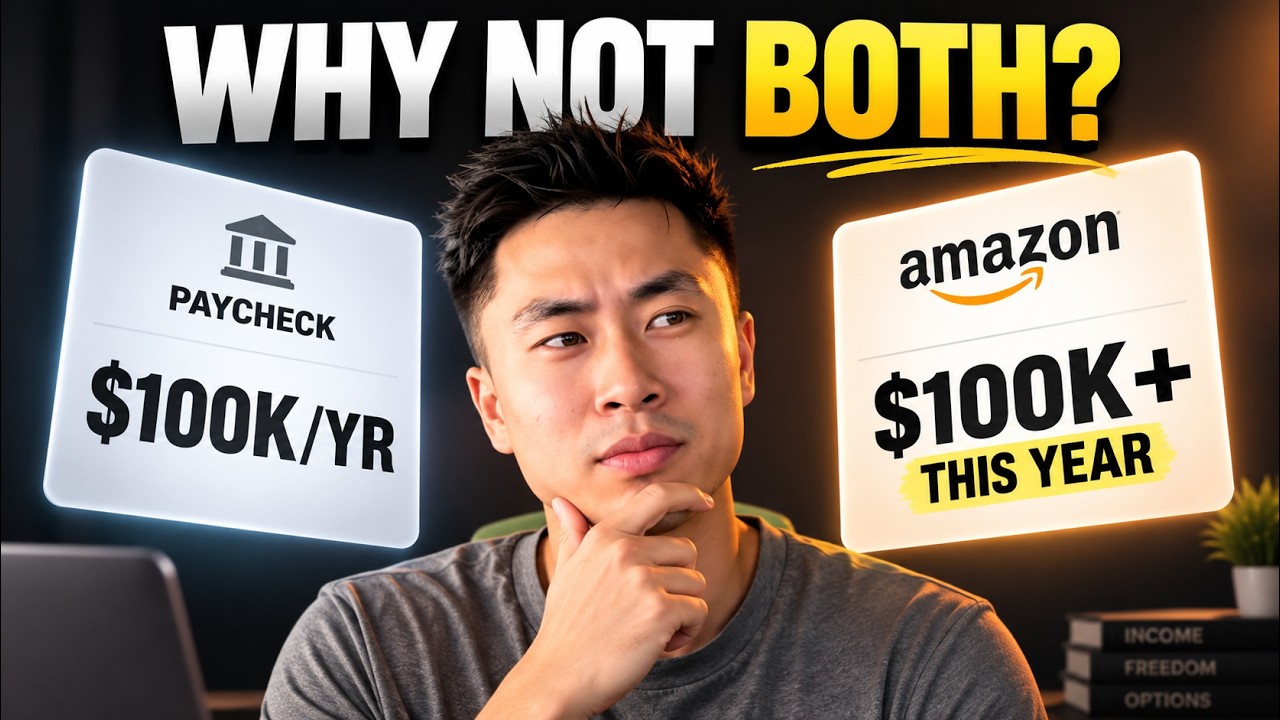
Kevin, a UX designer, built a six-figure Amazon FBA business while keeping his full-time job. He shifted from paid ads to organic sales, hitting ROAS targets that let him scale without spending more on PPC. His advice for beginners: document everything as you go.
Chapters
Kevin actually works a six-figure job, and he bought an Amazon FBA course before he went ahead and met me. He's going to be a six-figure seller this year on Amazon.
When I first started, it's pretty much how do I launch one product by itself? How to go from zero to one. So, Iman, when we met and you taught me a lot of different advanced techniques that aren't in the courses, that aren't just about how to launch a product, how to manage ads, how to actually scale and do a lot of things to look at analytics, and I think that's the thing I was missing when I was absorbing all this information. I just wish I started earlier, honestly, because then now I would be, you know, double, three times as seasoned with ten more products.
Hey, how's it going, guys? This is Eman Los Angeles, and I'm actually really excited for this interview here because it's a fellow social media person on TikTok. Yeah, just like myself. His name is Noob Trader. He also goes by Kevin as his real name. And the reason why I'm really excited about this one is because Kevin actually works a six-figure job, and he bought an Amazon FBA. Course before, he went ahead and met me and he felt a little bit struggling when it came to Amazon FBA when he had his product up and going. And the most exciting thing about this is now he's completely different than when I first met him 6 months to a year ago, because he used to wear his heart on his sleeve and now he's very mellow, knows exactly what he wants. And more importantly, he's going to be a 6-figure seller this year on Amazon. But instead of me telling you all about him, let me go ahead and bring him in here. Kevin, Noob Trader. I'll go ahead and call call you by Kevin here, but if you guys want to follow him, New Trader, I want you to give a brief introduction about yourself, who you are, what you do, instead of just like Amazon FBA in general.
Yeah, man. What's up, guys? So basically, my name's Kevin. I'm a product designer, UX designer by trade, pretty much making 6 figures over the course of 5 to 8 years. And I wanted to escape the 9 to 5. I wanted to find a side hustle that I could scale, learn, own as my own. So I stumbled upon Amazon FBA private label, pretty much took a course. And then now after almost a year later, we're going to hit 6 figures in revenue. Also, I started posting on TikTok shortly after I started Amazon FBA to document my journey and also just learn from others. I wanted to be social, put myself out there and absorb as much knowledge as I could. So that's just a little bit about myself.
Yeah, yeah, definitely. You guys should follow him. Like I'm telling you, he's one of the first people that I follow on TikTok when it comes to Amazon FBA, because it's the real story. Like sometimes you get sucked into Amazon FBA and it's mostly people that are course sellers are going ahead and selling you the dream on Amazon. This guy literally will tell you the real day-to-day, what it's like to be an Amazon seller.
Blood, sweat, and tears.
Exactly. But before we get into like the success story that I obviously want to go ahead and talk about, I want you to like paint the picture for everybody and like, what was life like before we connected? Right. So like when you bought the course and before you even found me in general.
I mean, I was 24/7 on the books, just looking at the course material, watching videos, posting TikToks, me sharing my journey and documenting my process, post questions for other sellers, other students. And I was just learning this every single day. I wanted to launch my first product. I wanted to reach profitability, but I was definitely struggling with reaching, uh, consistent profitability.
Yeah. Yeah. So definitely. So when we first met and you kind of started getting introduced to like, uh, like the mentorship aspect of it, like what was the main difference between what you were already taking when it comes to Amazon FBA and what you really got when we kind of first started talking?
When I first started, it's pretty much how do I launch one product by itself? How to go from 0 to 1. So got my product up there, just started ads and everything's rolling. But the name of the game is really 1 to scaling, to reaching profitability. So Iman, when we met and you taught me a lot of different advanced techniques that aren't in the courses, that aren't just about how to launch a product, how to manage ads, how to actually scale and do a lot of things to look at analytics. And I think that's the thing I was missing when I was absorbing all this information.
Yeah, yeah, definitely. No, it makes sense. It makes a lot of sense. And I kind of want to talk about this, right? Like you launched already, obviously the course that you took, they picked the product for you. You went ahead and launched it. But now looking back, like, would you have launched those same products? And do you think if you launch products now based on all the different types of like coaching and kind of mentorship that you have now, how different would you have taken Amazon FBA?
I think, well, when I first started, I launched 4 products. 2 were from the course and 2 were actually the ones I found myself. I would still possibly launch the ones the coaches gave me, but maybe try a different variation. And then I would try to launch my own shortly after instead of using it as a first product. But I think, you know, when you're first starting out, maybe stick to one product launch and think deeply what the variations are. Don't just launch something that's Too similar to everything.
Yeah, yeah. No, definitely. That's some really good advice there. But let's kind of talk about like real numbers now, right? Like before and after. Like what were your numbers looking like as far as like actual profit? And this is unique with with Kevin is that he basically does all his revenue purely organic now because he he was able to figure out how to rank with PPC, how to rank with his actual listing, knows how to convert now, and most of the sales come. Literally maybe like 90% organic, right? So talk to me about like what the income situation was like or the profit situation was like before and now after as well.
I mean, there's different metrics called like ACOS and ROAS, you know, for the beginners out there. But basically the higher percentage ACOS, the worse. And when I first started, I was looking at 100%, 200%, 300% ACOS. Basically the amount of money I was spending on ads was not returning any profit back. And then afterwards, now our ACOS has been sitting probably around 10%, 15%, maybe 20%. And then we're actually profitable 4 months in a row, a whole quarter. So that's really, you know, night and day difference.
Yeah. And the thing is, like, obviously we know the products that, that Noob goes ahead and sells, but these are not summer products, right? Like, I have very high aspirations for Kevin for Q4, but what is that new normal look like, right? Because I remember when you first got started with me, it's like you didn't even know you were going to quit Amazon FBA altogether now. So I want to know, like, like now what is the new normal looking like for you and what are your actual potential goals? Like, let's say December time.
The new normal is completely different. You know, before it's all about, oh my gosh, what do I do with these ads? How do I fix these campaigns? There's like 50 things I want to do to fix this. Now that everything's consistent, I'm just making sure everything is even keel. My inventory's coming in, the campaigns are looking consistent, and I'm getting ready for, you know, 1 or 2 quarters out at a time and even thinking of launching new variations or products. So my day-to-day is spending less time on Amazon than before, but making way more impact and profit.
Yeah, because you know the exact levers to pull right now. And that's like, I think that's the most important thing when it comes to Amazon FBA is that when you know what the right levers to pull is, the business kind of operates on itself. Like I love to call it the number 1 faceless type of business you can go ahead and do. Because literally you're not dealing with people, you're not in meetings stuck all day. Like you are literally only operating at the highest lever opportunities when it comes to your business. But I want to, I want to like dig a little bit deeper, right? Like when did it click? Like when did you know that Amazon FBA was actually working? Like, was there, was there like a specific moment in time that you knew like, yo, this Amazon FBA stuff is like game-changing?
You know, when, Iman, me and you talked about, uh, launching a substitute campaign a few months ago, and for those of you that don't know, substitute is just a specific campaign type on Amazon. That first week when we launched that campaign, we saw $1,000 in sales in a day. And when I hit that, even though it wasn't fully profitable yet, I saw the light at the end of the tunnel. There's so much potential in scaling in e-commerce that You know, at that point I was thinking, hey, this could really replace my full-time job one day because of that success. Yeah.
Yeah. I feel that, man. And I always tell people this, like, I think Amazon FBA, regardless of whatever e-commerce avenue you want to go to, it's the easiest way to find profitability because even myself now trying to launch outside of Amazon, like, it's great. You're able to go ahead and get a bunch of impressions, a bunch of clicks, but at the same time, you're still testing a bunch of different things because you're trying to create demand. As opposed to Amazon, the demand's already there. It's just your job to try and funnel them into your actual listing. Right. So I think that's the biggest difference that I feel like Amazon FBA is. Right. But let's—
And I'll say, and I'll say one more thing, you know, Iman, when we talked about the sales funnel, how Amazon works, when you're scrolling on your phone or on the website and you see what's the top row, are they sponsored? You know, how do you get impressions and clicks and then conversions? Understanding the way that people purchase, consumer behavior, that has been just as interesting to me as doing this business. You're learning a whole new skill. You're understanding the market. You're understanding different product domains that you might sell. And that to me has been very rewarding regardless of the profit, the money, the revenue. It's learning a new skill, getting experience with a complete different set of knowledge.
Yeah, I agree. I completely agree with that. No. And, and, and I always harp on it and like Anoop knows this, is that you have to know exactly where the funnel is breaking. And if you get into Amazon FBA, if you're inside the community, you'll know that I harp over the funnel every single time. But let's kind of talk more about like personal things, right? Like you got into Amazon FBA, like why? Like, did you feel frustrated with like your 9-to-5 job or like, did you try anything else or was like Amazon FBA the one thing? But before you answer that one, it's like, why even choose Amazon FBA where there's so many different making money online type of routes you could have taken?
Yeah, I mean, you know, the initial intent behind doing any of this is because climbing the corporate ladder, in my opinion, has a pretty low ceiling. You know, there's a select few become senior staff director, whatever it may be, but that takes your whole life, your whole career to get to that point. Plus, you know, my passions lie in creating something myself, not working for someone else's agenda. So that's really where this all started. Now, in terms of Amazon FBA versus other side hustles, I've tried a few other side hustles, not really online, more like doing mobile car washing, things that are physical. Amazon's in an interesting place where you can learn everything online. You can sit in your office, in your home, and be remote and still make money, you know, on the computer. Uh, there's probably other ways as well, but in this one, you own your brand, you own your product, you're actually creating something that you can call yours. And you have full control over it. So I think that is really what attracted me to it. The business model was in line with my expertise. Also, because I'm a designer, product design, I was able to create my own infographics and images and tell a story through that. So part of my skillset already was part of what the Amazon FBA private label business model was. So I thought if I could utilize existing skills, this would be a good avenue for me.
Yeah. And then to add on to that, like I always tell people all the time, it's like once you hit profitability, And you start scaling your business, you have an option, right? You can either consistently get that cash flow every single month, but now you have an asset that you can eventually sell. So you get the best of both worlds as opposed to like something like, you know, day trading where you continuously have to be on a screen, look at the charts, look at the trends. And then basically when you make one trade, that's kind of it. You have to do it all over again as opposed to with Amazon, the more work you put into it, the more you actually get out of it long-term.
And to that point, I did try day trading and although I don't, You know, hate day trading. It is way more stressful and you are kind of uncertain every day where Amazon FBA, you're not trying to wait to hit it, hit a jackpot. You're building it over time and scaling. So it's a little different there and a lot less risky.
Yeah, yeah, definitely. Yeah, no, 1000%. And again, you're building something with Amazon, which again, I don't think it can be said for a lot of other types of business models. Um, but now, you know, looking today, and we're kind of recording this in the end of summer, what is your day-to-day kind of life? How's it changed? Right? Like, what's basically your new routine now when it comes to the Amazon kind of set it and forget it? What I'm trying to say is that, like, what's the biggest change that your friends or family have noticed about you now that everything's clicking? You kind of have a more clear outlook in life. You're that chisel guy inside the cave that finally feels like he found that diamond. So What is the biggest change that your friends and family have seen in you?
Number one, more money in my pocket, obviously. But number two, on a more realistic note, the way that I handle situations. There's so many things in real life that would make me crash out, go crazy, react fast. But when you go through the Amazon FBA journey, you kind of get numb to reacting fast. You understand that business will never be linear. There's so many ups and downs. You always expect the unexpected. After having to deal with that for a year, year and a half, you know, 2 years plus, now in life, whether it's my dog, my relationships, my friends, something else with my family, my reaction's a lot less. I'm able to handle these things. So this is a very different translation from the business side, but it has a direct impact to your personal life as well.
Yeah, I agree with that. And I tell people this, Whenever they ask me about it, but like I've been in Amazon FBA basically my whole adult life, right? I've been in here for eight years now, and I feel like the biggest positive thing that Amazon has done to me is like I understand that nothing is in my control for most of the time. And number two, I have to bake in expenses if I don't want to be in my business. And what I mean by that is like you know Amazon takes all of these different fees, but at the end of the day, I would rather them take those fees because I don't have a warehouse, I don't have employees, I don't have to deal with customers. Right. And I look at that now in any business venture that I do is that I have to have those people in place, even if that means that I only have like a 20% profit margin.
Right. And I'll add one more thing to that. You know, I still track my finances weekly manually on a Google Excel sheet for my Amazon profit. And that translates to budgeting for life, for your monthly expenses. So Amazon kind of forces you to get better at finances, managing the numbers, what goes in and out. Cost of goods, everything. So you're learning a lot of things that translate to everyday life things as well.
Yeah, yeah, no, definitely, definitely. But it's like everybody likes to always think about hindsight, right? Like obviously now hindsight, what you know now, you would have done things a little bit differently. But looking back at the investment you made in yourself when you first got started with Amazon FBA by taking a course, by taking mentorships, by doing all of this, like how do you feel about taking that leap now? After everything's said and done?
I don't regret it. Absolutely amazing. You can invest in stocks, you can invest in different types of things, assets, but I think the best investment is in knowledge, is in yourself. So me joining a course, me having mentorship with Iman, just learning, the ROI is infinite. The ROI keeps going up. So I think looking back, I'm loving the journey and I'm still loving it till, till today.
Yeah, that's awesome, man. That's awesome. But like, let's say someone that is hesitant, right? Like they were in your position back then before you hit that buy button. Um, but what would you tell them as far as like it, like in that situation, like basically talking to yourself back then?
I would say, you know, if you have a desire to learn, to absorb, and you really resonate with this business model, You should dive in. You should dive in and immerse yourself fully. Study all the material, love it, study it, launch a product, get as much knowledge as you can. I would say definitely take the leap if you're on the fence, uh, because this is a journey that will make you better, not only in business, but in life.
Yeah, I totally agree with that as well. Like I took a course when I first got started with Amazon FBA too. And if I think if it wasn't for the course, obviously I would have been able to learn it myself. But at the end of the day, you don't know what you don't know. Right? And it kind of guides you through the entire process of getting to 0 to 1. And then from there, you figure it out yourself. So, Noob, I know that when we first started talking, like, your number one goal is just to have guac and chips in Cabo, right? And like, you did that, right? And just last week you're in Hawaii.
Yeah.
And, you know, like, that's your goal now. And I just feel like the goalpost keeps on going ahead and going back and back, which is okay for entrepreneurs, right? But like, what's next for you? Like, what goals are you setting that you really never thought that was possible? Before, let's say last year?
Man, I mean, the goals right now is just being consistent profitability for a year, 2 years straight, and just scaling that number. That goalpost just keeps going up. But, you know, I try to reflect every few months and I'm really happy about the journey that's happened. I mean, we started at like -200% and now we're positive 4 months in a row. Absolutely amazing. I think besides the monetary part, you know, As long as the business keeps scaling, the product that I'm selling gets better, more reviews, uh, the knowledge gets sharper, I'm satisfied. I'm satisfied with my own, uh, content with, with knowledge less than profit.
Yeah. And I'll tell you this right now, uh, Noob, that November and December, whatever you did January through October, you're going to double that in November and December. And that's just based on like, you know, quadruple that. Yeah. The thing is that like, that's how crazy your product is and you're going into the perfect time that I feel like once we talk again in December at the end of it, you're going to have way crazier goals. And trust me, I'm excited for that moment as well. But for someone who's watching, like they're struggling right now, right? Like maybe they're in your position in corporate America where like they want something more in life or they know that if they want to climb that corporate ladder, it might not be for them. Like what would you tell them?
I mean, basically this is mainly about ownership. You get to control your own destiny by having your own business LLC, creating something from scratch. It's a skill that you can apply to other areas as well. So if you're feeling stuck in the rat race, you don't like your 9 to 5, you want something with more freedom, this is definitely something worth trying. This isn't like Uber, DoorDash, where the ceiling is also quite low. This is something where the ceiling is literally infinite depending on your product, the way you run ads, how much you scale. So if you have, you know, a day job, you're relatively smart, you have good common sense, you can do Amazon FBA. Just pour your heart into it for a year or two, try to scale it and then see what happens.
Yeah. And I love that quote by Jeff Bezos that said, you know, in baseball and grand slam, I think I've said it before, right? It's like the most you can ever hit is 4 batters batted it. Runners batted in, right? When it comes to business, as long as one of your business hits a grand slam, it's not worth 4. It can literally be worth billions of dollars. And it's literally real, right? Especially here in America. But if you go back to yourself, like, and give yourself one piece of advice before you even started the whole journey, right, what would it be? And before you answer that, the reason why I say this is because When I first got started with Amazon FBA, I barely maybe had like $6,000 in my bank account. Right. And I was going ahead and basically praying to see if should I even spend this $2,000 or $2,500 to buy this video course. And knowing what I know now, I would have paid that so many more times because even if my bank account went from $6,000 to zero, the difference of like what my life is now would have been way more worth it to continue spending $6,000 again and again and again and again. If I knew the results now. So again, going back, if you could go back and give yourself one piece of advice before you started this whole entire journey, what would it be?
I just wish I started earlier, honestly. Like if it was like 3 years before or even during COVID there are so many more products as well. There's still a lot of products coming out in Amazon, millions with potential, but I just wish I started earlier because then now I would be You know, double, 3 times as seasoned with 10 more products. It takes time to build up these products. So I just wish I had more time. That, that's really my, my main take. Yeah.
What's the analogy? They say the best, the best time to plant a tree was 10 years ago and the next best time is today.
It's today. Yeah.
Yeah. All right. Perfect. So any, any final words that you want to go ahead and say before we wrap this up, Kevin, as far as like, um, any, any final words whatsoever?
Anyone who's, you know, looking to do Amazon FBA or side hustles or any other journey, you know, that's already a valiant effort. The fact that you you guys have these thoughts is absolutely amazing. If you do start, if you do try something, I would recommend documenting it like I did. Me posting on TikTok was solely for myself. How can I improve? Can I watch this back later and look at the mistakes I've made? That led to so many people commenting, interacting, building a community. It's the sole reason why me and Iman even met, and now we're here today. So if you're looking to do Amazon FBA, launch some products, Document it. Take photos. Take show the evidence because when you put it in the public, you get a lot more help. You crowdsource the knowledge that you're absorbing. So that's my main advice to everyone. Let's get started and start documenting.
Yeah, there it is, man. And again, once you document stuff, it's harder for you to fail because everyone is watching you. You're putting yourself out there and put yourself out there. Exactly. Nope. Nobody wants to see you succeed more than bunch of strangers do. That's the craziest part, right? Because like, you know that, right? Like the people that watch your video, they might think you're cringe and everything like that, but everybody else that is along the same journey—
Big support system.
Exactly. Exactly. But Kevin, I appreciate it, man. Thank you so much for going ahead and doing this interview with us. And for everybody going ahead and watching, I'm going to try and get more and more people to do these interview processes because I've been not doing a good job at that. So if you guys appreciated this, all I ask for in return is a like on this actual video. Subscribe to his YouTube channel and I'll see you guys on the next one.









