How I Bought a $190K Amazon FBA Brand With $0 (And Make $90K/Month)
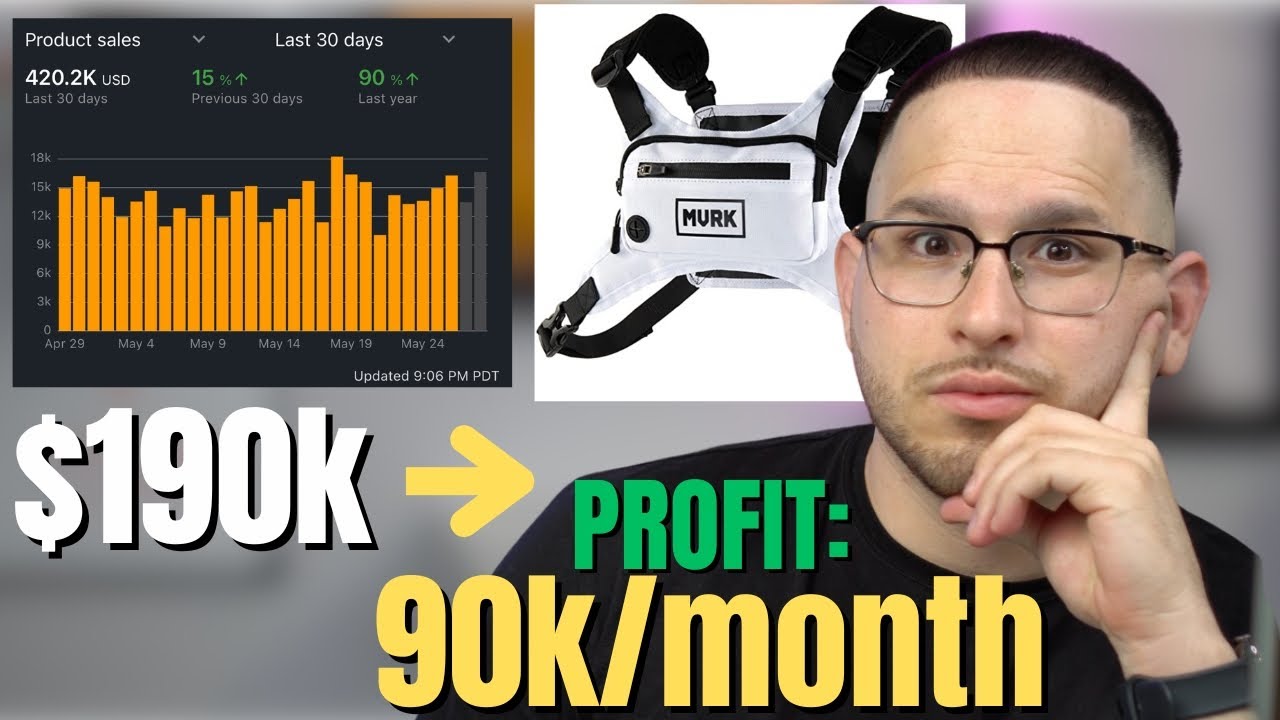
Emanuel Ruiz bought a $190K Amazon FBA brand with no money down using investor funding and seller financing, then scaled it from $6K to $90K monthly profit in three years through supplier renegotiation, better listings, expanded ads, and product extensions.
Chapters
I never thought I'd own an Amazon FBA brand generating over $90,000 per month in profit, especially by spending $0 of my own money. But here I am sharing exactly how I did that. Because in mid-2022, I found an Amazon FBA brand and convinced an investor to fund the entire $190,000 purchase. And now, less than 3 years later, that business brings in over $90,000 per month in profit. And you see, this isn't a fluff story, overnight success tale. It's a real journey with real numbers, hard lessons, and a lot of humble pie along the way, to be honest with you. And if you're an Amazon FBA seller, especially if you're going ahead already doing 5 figures a month in revenue, stick around because I'm going to show you how I turned a small Amazon FBA brand and turned it into a powerhouse and basically what you can learn from those opportunities there. So how did it start? So like every big success story starts with spotting the right opportunity. And in my case, it was going ahead and being on Empire Flippers, which is a marketplace of buying and selling online businesses. And one particular listing caught my eye, and it was an Amazon FBA brand by the name of Maverick that had steady sales, solid reviews, right? It was making $23,000 per month in revenue and netting right around $6,000 in monthly profit. And the asking price was $190,000, and that was a 30x monthly profit multiple, which basically was in line with other Amazon FBA brands in mid-2022. You see, I can see the potential in this business. The niche was promising, which, you know, had products that were room to grow, and the business had been ticking along without any advanced marketing or any scaling strategies for that matter. So in other words, it was a good brand with great bones. It was just under-optimized. And based on my experience, I have been running Amazon FBA brands since 2018. I told myself that I can go ahead and better optimize what was already there by just going ahead and fixing a few things, right? The only problem is that I didn't have $190,000 lying around in cash. If not, I would have bought it myself. So this is where an investor comes in, right? So here's the thing, you know, instead of going ahead and walking away from a great deal due to me not having that money upfront, I leveraged my track record and my experience. So I reached out to an investor in my network, someone who knew I had built and scaled Amazon FBA brands successfully from scratch. And I basically said, there's an Amazon business that I believe in. If you put down the money to buy it right now, I'll run it and we can go ahead and share the profits. And honestly, to my surprise, he was on board with it, right? So we structured a deal where I put $0 down and he funded the entire $190,000 purchase. And in return, he would get 70% equity in the business from day one, and I would get 30% equity for basically working on running and scaling the actual business. I mean, was it really hard going ahead and giving up the majority of the business? Honestly, yeah, it was, you know, but I'm owning 30% of the company, which is better than owning 100% of nothing, right? We already have a track record, profit, and revenue to show for it. And remember, without his cash, I couldn't have bought it at all, right? So keep that in mind. We also included like a performance clause to align like our incentives. So if I could grow the business to $75,000 in profit every single month, I'd earn an additional 10% equity. So that meant that my stake would jump from 30% to 40% once I hit that target. So it was like a win-win. He liked that, you know, I had skin in the game as far as going ahead and scaling these profits. And I love the idea of earning a bigger piece of something that I could go ahead and deliver myself, right? Because $75,000 at that time seemed like a crazy number to reach. So let's kind of break down this whole deal structure, right? So the purchase price was $190,000 for the business and the inventory. So I was funding $0 and the investor was going ahead and funding the entire $190,000. And the equity split from day 1 was 70% for the investor and 30% for myself as the operator. So how we purchased this business was seller financing. So we went ahead and put 50% upfront, which was $95,000. And then the remaining 50%, which is $95,000, was agreed to be paid within 24 months. So this is like an earnout agreement. And then the performance clause, if monthly profit hits $75,000 per month in profit, my equity will go ahead and increase by 10%, going from 30% to 40% and reducing my investor share to 60%. So these terms might sound generous, like to me as an operator, and they really work, right? Like essentially the seller agreed to— and essentially the seller agreed to an earnout phase as well, taking half the payment now and half the payment throughout 24 months. And the investor took the chance on me without putting any capital down, which again sounds crazy. So one thing that people ask me, like why would people do seller financing? And mostly because if somebody is really confident in their actual business to really go ahead and grow and they just don't know how to get it to the next level, they're more than happy to go ahead and give you seller financing. Everybody's in a different boat when they sell their business. So it also go ahead and reduce the cash needed to make this deal happen. And he had no other buyers willing to go ahead and buy this business. So he went ahead and took the deal, right? So we closed the deal in July of 2022. And overnight I went from being an Amazon FBA brand builder from scratch, working on my own projects, right? To a new owner-operator of an acquired brand. And this is kind of a surreal feeling, right? I remember refreshing Seller Central account, the Seller Central account, and basically saying like, okay, now it's time to go ahead and get to work. Because literally I was the sole Amazon FBA operator. It was literally up to me if this business was gonna succeed or not. And from day one, it was kind of like managing all the listings, customer service, advertising campaigns, inventory forecasting. Like you name it, as far as like, you know, day to day, as far as what goes on in Amazon FBA. And like we did have like a transition period with the actual, you know, previous seller. But once that was over, it was literally me steering the ship, right? So my investment partner wasn't going to be involved in day-to-day operations whatsoever. His role is essentially just being an advisor. Plus, he did have one huge value add though, and that was connections to manufacturing and basically coming up with different terms with the supplier because he had experience growing his own brands within China, but just in a different type of niche. But that was quickly our big win, right? So one of the first big moves we made after taking over this business was changing, like, product suppliers. And the brand was sourcing from a manufacturer that quite frankly wasn't giving us the best price or payment terms. So with my investor's help, we identified new suppliers who could produce the product at the same or even better quality. For a significantly lower unit cost. You see, like negotiating supply chain improvements was crucial. Like we were able to go ahead and shave down on costs. We instantly were able to go ahead and bump up profit margins on every single sale right off the bat by just going ahead and implementing this, which made it a lot easier to actually scale, which I'll get to a little bit later. So that was a cool, like tactical early win that we had, right? So if you acquired an Amazon FBA business, don't just accept the existing costs as fixed, right? We improve on the COGS, cost of goods sold, which meant even with the same sale volume, we'd make more money. So for any Amazon FBA seller watching right now, whether you built or bought a brand right now, regularly review your suppliers' options and negotiate every single time. It can literally be night and day as far as a price difference in your profitability. Scaling from $6,000 per month to $75,000 per month. With a better supplier deal in place, I turned my focus to growth. And that was kind of the number one objective to try and hit that $75,000 per month. So remember, I've been selling on Amazon since 2018 and had a deep experience with building brands from scratch. Now I had to go ahead and have a new playground as far as a brand with an existing customer base, an existing product line, and just been waiting to go ahead and get scaled up. So how was my approach? So the first thing I went ahead and did was optimize the listings, right? So I dove into product listings, sharpening key copywriting with better keywords, updating product images, split testing titles and bullet points, main images to try and help with impressions, click-through rate, and ultimately conversion rate, right? The goal was to improve conversion rate, but by going ahead and doing all of that, it helped it. So even small tweaks can boost your sales without spending a bunch of different money on ads primarily, right? But that was the bigger kicker. Number 2 is expanding advertising strategy. You see, the previous owner had been cautious with Amazon FBA PPC. So he would run out of budgets by midday and only focus on auto campaigns specifically. So I saw a bunch of room to grow as far as increasing ad spend wisely. So that's focusing on high-converting keywords that were already going ahead and doing well, refining different campaign structures. And over a few months, we ramped up advertising like crazy. Which boosted up revenue significantly without going ahead and having a spike in ACOS, which basically meant that we had more revenue at a healthy profit margin, which equated to more profit every single month. And then inventory management. This is where people get stunted when it comes to growing on Amazon FBA because we all have cash flow issues. So we made sure that the product in stock that we had were, you know, basically able to go ahead and scale from there. Since we had more capital, thanks to our investor, we could place larger orders with our new suppliers. Which basically went ahead and drove down product cost as well. So nothing kills momentum more than running out of stock. So this was key as far as going ahead and having a war chest of inventory, which we're able to go ahead and have based on this outside investor. The next thing is product line expansion. This is where I made a bunch of mistakes. And I always had the idea that we needed the next home run product. So we launched numerous products and they were all swings and misses. So honestly, technically I could have got to $90,000 in profit per month even quicker, but I'm glad that I went through these growing pains because now I know exactly what to launch. So I started launching products that were already contributing to all of my sales. So same products, but in different colorways, different sizes. And basically this was the ultimate game changer. And this resulted in a higher conversion rate, better placement on Amazon. And ultimately I got like a bestseller badge that literally took my brand to the next level. And that's basically the key there as far as knowing what products to launch next is more important than actually scaling the actual business, right? So lastly, it's like customer experience and reviews, right? People overlook this. So I doubled down on like follow-ups, email sequences to try and get more reviews. And the brand already had really good reviews, but I wanted to go ahead and make them even greater. So I improved on the packaging, added thank you insert cards, and basically refined the product based on the feedback, right? Continuously going ahead and improving on it because a strong reputation meant better organic sales, better conversion rate, more returning customers. And we'll get into like AOV, LTV, and everything like that in the future. But all these changes didn't explode the business overnight, but they really stacked up win over win over win throughout these years, right? So we're seeing basically when we're comparing month to month, we're growing continuously. Obviously, everything wasn't smooth sailing, especially like there was challenges where we had like a hijacker that came in and tried to sabotage all of our best-selling listings. Which again, it's a sad reality to Amazon FBA, which were resolved pretty quickly, right? Like we had to go ahead and purchase this actual item, send it to Amazon, see that this is actually a hijack and it wasn't our product. Everything kind of stayed afloat, right? Like I've been in Amazon FBA for 2018, so I've seen it all, right? So obviously it's not rainbows all the time, but early 2025, we were kind of getting close to that $75 per month profit goal that we'd set, right? And I was really laser-focused on getting there. Not just for the equity bump, but because it basically became a personal challenge for me that I could go ahead and do it, right? I can 10x or more a business that I took over from $6,000 to $75,000 per month in profit. And finally, in May of 2025, it happened. And, you know, we crossed over $75,000 in profit in a single month, which is crazy. So to put it in perspective, that's basically over $300,000 in revenue. that month, given like our profit margin of like 20 to 25%. And that was a huge milestone. Like, I remember seeing that number in May or like this month alone and feeling a mix of like gratitude and like disbelief, right? Like, I was glad— like, as far as me being grateful, right? Like, yeah, I was the main operator, but my investors' support with capital, the supplier connections, was basically invaluable. And like, let's not forget, like, the previous owner as well. Like, he built a solid foundation on this actual company. And I felt disbelief because how far we come from $6,000 a month in profit and starting in 2022 to where we're at right now, right? So like hitting that target also obviously triggered that performance clause. So true to our agreement, now I am 40% owner of Maverick, which is kind of crazy, right? Like it kind of happened overnight, but having now having like 40% of a business making $75,000, which now it's like $90,000 per month in profit, it's like life-changing levels of ownership, right? The business was bought for $190,000 and now worth way more, right, after that. And I want to emphasize something here, like this wasn't literally just me going ahead and doing it. Yeah, I put in all the work day in and day out, but I acknowledge how crucial the deal structure that we initially had was, right? Because the investor's backing and belief in me was basically that springboard that I can go ahead and do this over and over and over again. And I couldn't have done it without him taking that leap of faith and putting basically his money where his mouth is, right? And also it was like the seller willing to go ahead and put down 50% right now and having us pay 50% later on. And because he believed in the business and believed in us, that's crazy as well, right? Like it had to literally be like the stars aligning. And then obviously me, like my prior experience since 2018, including all the mistakes and the lessons that I've learned from actually building brands from scratch. Meant that I can go ahead and step in and hit the ground running. So if I attempted to kind of acquire this business and I was a complete newbie when it comes to Amazon FBA, I might've really fumbled the bag in this situation. So if you're watching this and thinking like, wow, he's so lucky, or he's so special, I want you to know that I'm not special whatsoever. I was just prepared. And you can prepare yourself too by building your skills and knowledge now. So when opportunities like this come along, which again, there will be, It might not be this particular case, right? Just seize the moment with confidence because you are ready. You are prepared for when that opportunity does come, right? So before I continue on, as far as like how we went ahead and, you know, are faring now, I want to do a quick reality check and offer something for those of you that are kind of looking to like level up your Amazon game, right? This story is not typical and it's definitely not a get-rich-quick scheme, as you can go ahead and tell. It took me years of learning and then nearly 3 years of grinding on this acquired business to reach these results. And I'm sharing these wins and struggles to give you a transparent look of what it really takes to get to this level, to scaling at this level. So if you're an Amazon FBA seller already doing, let's say, like $10,000 or more per month, and you're serious about scaling your business, I want to help you achieve similar results. Without all the trial and error that I went through these last 7 years with Amazon FBA. And that's why I launched a mentorship program for current Amazon FBA sellers who are ready to push to the next level. And this program, you get one-on-one coaching calls with me, in-depth accounting audits, right? So I'll go into your account and actually audit your business. You get access to my SOPs, weekly live streams, and also a Discord community with other ambitious current Amazon FBA sellers. Basically, I built this as a support of what I wish I had back in 2018 when I first started figuring out Amazon FBA. And if this sounds interesting to you, check out that link in the description below and let's go ahead and book a free call, right? There's no pressure. I just want to go ahead and get the chance to talk to you about your business and your goals and see if mentorship is even a right fit for any of us, right? So I love connecting with everybody that watches my videos. And if you want to go ahead and fast-track your success, It would be an honor for me to go ahead and, you know, take that call with you. But now that you've heard the story, let's highlight some key takeaways that you can apply to your own Amazon FBA business. You know, whether that's going ahead, if you plan on acquiring a business or simply scale the one that you currently have right now, which number one, you don't need to be rich to buy an Amazon FBA business, right? Or any business for that matter. I started this deal with $0 out of my pocket. Creative deal-making is possible regardless of what industry that you're in. So if you find a solid business and you have the skill set to run it, you can attract the right investors and partners. So focus on building reputation and a network of people that trust you as an operator in any type of industry that you're in. Number 2 is align incentives in the deals. You see, the way we structured our deal gave everyone a reason to kind of push forward. The investor put his money, But he also gave me big stakes as far as being motivated. So I had a performance equity, like a performance bonus, like in this equity. So I was literally hungry to scale this actual business, even though it felt impossible when I first got started. I knew that there was a goal in mind, right? Number 3, optimize early for quick wins, right? When I take— when I'm taking over any business or I'm auditing any business itself, I look for low-hanging fruit. Like for us, it was supplier costs, PPC, listing optimization. You see, these quick charges boosted profit very, very quickly. So every Amazon FBA business has some areas that they can go ahead and improve on fast. Identify them and act decisively because you're going ahead and literally leaving money on the table. Then it's like leveraging experience, right? Or borrow someone else's. My prior Amazon FBA experience saved me a lot from mistakes that I could have went ahead and made. So if you haven't been through the wringer yet, consider getting a mentor and advisor to guide you through the entire process. And just to avoid common pitfalls, because, you know, we have proven strategies to go ahead and scale the business, which brings me on to the last point, right? Scale strategically and not recklessly, right? Growth for the sake of growth can backfire because you can go in the negative very, very quickly. We see a bunch of businesses do this. We reinvest their profits smartly, right? More inventory when we saw that there was demand rising, more ad spend only when it was profitable, new products only after validating that there were actually products that were going to do well. The results were that profit grew and revenue grew in tandem, right? We weren't overspending and being negative each and every single month. So last thing is just kind of stay humble and keep learning. So this journey reinforces that Amazon FBA is always changing. I've seen so many changes along the way. I faced new challenges. I've had that hijacker, but along the way, I've always stayed humble and, you know, being willing to learn and adapt very, very quickly. Like, don't be cocky when things are good and don't be, you know, disheartened when things get bad. Because things are always going ahead and changing when it comes to Amazon FBA. But more importantly, transparency builds trust. I've been very open with the numbers and the details here in a space where people are exaggerating or hiding the truth. Being transparent has always been my secret weapon, and that's probably why you guys follow me. It keeps you honest and attracts the right type of partners, team members, or even customers or viewers like yourself, you know, to go ahead and be on board with me. So whether you're seeking like an investment, hiring help, or looking for mentorship, gravitate towards transparency always. It's a sign of integrity, right? And each of these takeaways is something you can reflect on in your own journey. You might not be buying an Amazon FBA business tomorrow, but maybe you can go ahead and apply creative financing to get capital for more inventory, right? Or perhaps renegotiating with your supplier next week, or maybe simply doubling down on learning from someone who's a few steps ahead of you, right? So the key is to think outside the box and everything you do, because you can go ahead and basically get to these levels more quickly than you actually think. And again, this has been a story of how I turned a $190,000 Amazon acquisition into a $90,000 per month machine. It's a story about spotting an opportunity, structuring a clever deal, and executing with focus. And I hope it showed that, that big leaps are possible in this business. And that sometimes the leap comes when you combine someone else's trust, which is their capital, right? With your hard-earned skills. So if you made it this far, I appreciate it, right? It means that you're serious about your business and growing it. And as a final note, if you're an Amazon seller doing $10,000 or more, and you want to scale it up to the next level, whether that be $50,000, $75,000, or even $100,000 in profit, I invite you to book a call for the mentorship call. And see how I can go ahead and reach that goal, right? In my mentorship, we work together on your business directly. I don't have any prerecorded courses because this is tailored hands-on coaching for you specifically. So here's what you get, right? Personal one-on-one coaching calls with me. We'll tackle your specific challenges, goals in real time. In-depth audits of your actual Amazon FBA business. So we'll uncover hidden opportunities, fix some weaknesses, boost some performances. You'll get SOPs, right? Like step-by-step processes of if anything goes wrong, if you get a hijacker, this is exactly how you go ahead and deal with it. If you're looking to scale a new product, this is exactly how you do it with advertising, stuff like that, right? We also get weekly live trainings and Q&A sessions, right? So you'll learn a lot of different things and you can go ahead and ask questions along the way each and every single week. And more importantly, like you're going to go ahead and be involved in a Discord community where with ambitious Amazon FBA sellers, which are just like you, right? Looking to scale their Amazon FBA businesses. So I know I said a lot here, but basically you'll have a partner who's been there, done that, walking right alongside of you to go ahead and scale your actual business. And again, I built this mentorship to be everything I wished for when I first got started in my Amazon FBA journey back in 2018. So again, click the link below, schedule a call. There's obviously no obligation here. You're not gonna get charged just to go ahead and book a call with me. It's just gonna be a friendly chat to see if we're a good fit, because a lot of the times, you know, I can't accept any sellers that haven't done Amazon FBA yet. But if we do decide to work together, awesome. We'll put our heads together, start scaling your business to new heights. And if not, no worries. That's why I always like to still offer free game on YouTube. So if you have any questions about how I scaled this business or anything in particular, as far as what you want me to go more in depth about, make sure to leave a comment below. But thank you for listening to my story, and I hope it fired you up to go out there and crush it with your own Amazon FBA business. But remember, like, big results are possible in this game, and sometimes it's the opportunity of a lifetime and the ones that you actually create yourself. So stay focused, stay humble, and as always, happy selling, Emanuel.









