How I Built a 7-Figure Amazon FBA Business (Just Copy Me)
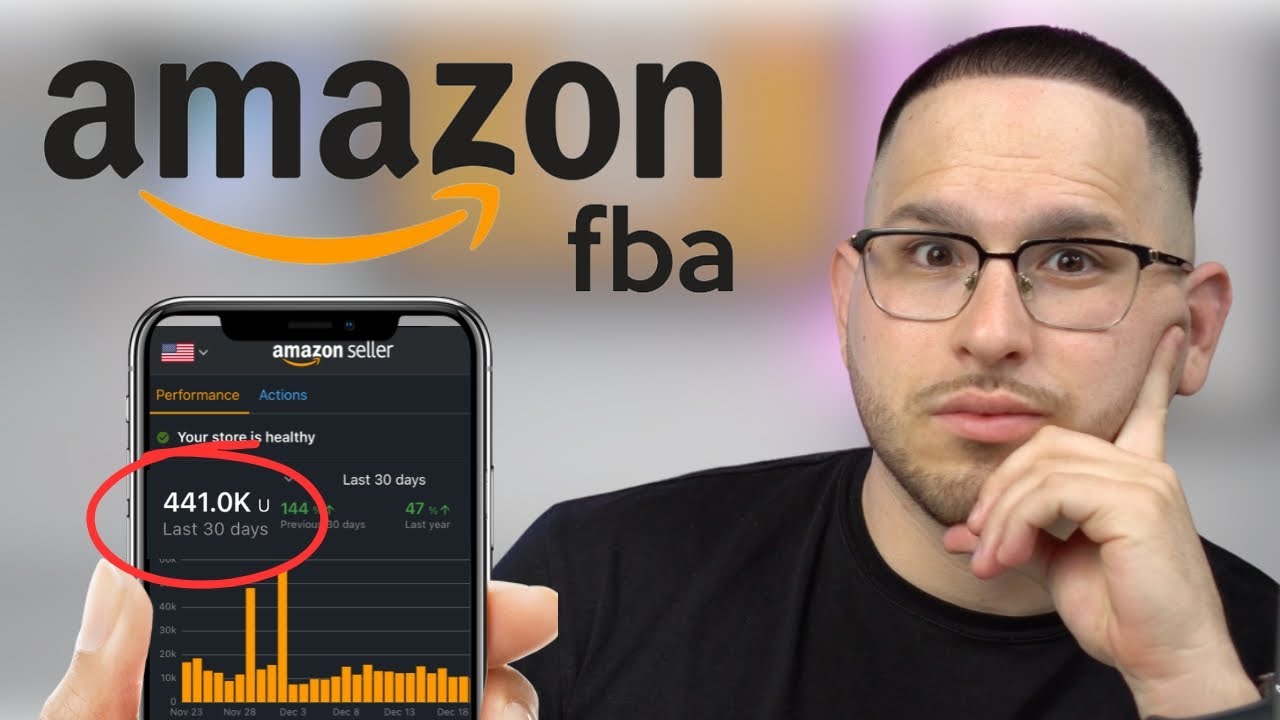
Emanuel Ruiz bought a struggling Amazon FBA brand for $200,000 in 2022 and scaled it to seven figures. He fixed stockouts and wasteful ads, filed a trademark to unlock Brand Registry, and obsessively optimized three metrics: impressions, click-through rate, and conversion rate. His best month hit $360K revenue and $80K profit.
Chapters
The year was 2022, and I had just made what felt like the riskiest decision of my life. And that was to purchase an Amazon FBA brand for over $200,000. And the brand was doing right around $22,000 in revenue and around $6,000 of profit every single month. So on paper, it looked decent, but the deeper I dug, the more issues I found. Running out of stock, killing ranking. PPC campaigns that were bleeding cash and not optimized. And this brand didn't have a trademark, so I couldn't unlock different features like A+ content, sponsored brands, sponsored displays. So the listing itself looked very outdated. But here's the thing, everyone else saw a risky mess and I saw an opportunity because in fact, I am an Amazon FBA seller and I have been since 2018. So in this video, I'm going to walk you through exactly how I took that struggling brand and turned it into a 7-figure powerhouse. And you're going to see all the failures that I did, everything I did to fix it, and every win I had. So you can copy exactly what I did in order to help your own Amazon FBA business. So let's get into it. So when I first took over this business, I felt like I was walking into a storm. The brand basically has only been profitable for the last 12 months, and most serious investors and buyers wouldn't you want to go ahead and touch this business? If a business has only been around and profitable for the last 12 months, is it very intriguing for new buyers? Well, no, maybe this business is a fad, right? Maybe the seller of this business got lucky. Let me tell you about all the inefficiencies that this seller did while having this business. Running out of inventory. Well, you know, we as Amazon FBA sellers know we run out of inventory, we have to go ahead and order more. But investors see lost sales, plummeting rankings. The list goes on and on. And the PPC account, well, basically a total disaster. They were targeting irrelevant keywords, burning through cash, budgets running out by noon, basically not having enough money for the entire day of ads. And like I said, the listings were outdated, uninspiring, and they were doing nothing as far as converting traffic that came into their listing. And that is because they didn't have A+ content and all the different types of tools that Amazon offers you if you have a trademark for that. I remember sitting at my desk and obviously, you know, everybody hates to fail. And I was looking at this and thinking to myself, what did I get into? Right? Because we can go ahead and check off all the boxes, but you really never know what's going to happen. And at the end of the day, my money wasn't even on the line, right? I raised funds from investors and I had seller financing as well. So the clock was ticking as far as going ahead and making these changes so I can go ahead and pay back these investors and the seller as well. What did I do? What are my first steps of what I did with this business? Right. Well, the first thing was to kind of stabilize everything. So here's exactly what I did to stop the bleeding and get this brand back on track. So in order to go ahead and fix a listing, you need to kind of start with the fundamentals. And I can't start with the fundamentals unless I have a trademark. So that's the first thing I did. I filed for a trademark, right? Because without Brand Registry, I couldn't create A+ content. I couldn't run Sponsored Brands. I couldn't run Sponsored Displays. So within weeks of filing this, we were able to go ahead and unlock all those features for Brand Registry. And the results were immediate because we track everything. We had more impressions, we had a higher click-through rate, and we had better conversions as well. But Obviously that's not the only thing we have to go ahead and do. You know, a listing looks great, but everything— there's a, there's basically a funnel that needs to go ahead and take place. So what did I do next? I revamped every single listing and I didn't do it myself. I hired professionals, Fiverr, Upwork, to redo basically all the product images, rewriting the bullet points so we can speak directly to the consumer. And obviously that A+ content as well, right? To look polished and fresh because you see, you have to speak to your direct customer. I speak about this brand a lot. It's a brand called Maverick. And our bestseller is this running chest pack. And who buys this running chest pack? Marathon runners, people that like to go on long distance runners. So the entire listing is catered to that individual from the bullet points to the main image, to the secondary images, to the A+ content. What's the next thing I did? Well, this is what I call PPC surgery. Turning off everything that wasn't working and start going ahead and making campaigns of data that we already have. And also making broad matches, sponsored brands, sponsored display, all the whole nine as far as being an Amazon FBA seller. What did we do after that? Again, we're stabilizing here. Well, this person would run out of stock and when they would run out of stock, they would airship a lot of their inventory. Well, you see, when you airship a lot of your inventory, you can imagine how expensive it's going And when it's very expensive, obviously your profitability takes a hit. So what do we start actually doing? Well, we went ahead and forecasted based on last year's numbers of how much they sold. And we said, look, based on all these changes, we think we can likely double these sales. So what do we do? We actually doubled down and bought double of the inventory. And we sea shipped a lot of these things because obviously this takes time to go ahead and build. Out. But by just going ahead and doing that, we're able to be way more profitable than when we went ahead and purchased this business. But you see, nothing was revolutionary, what I just talked about, right? Nothing's glamorous, but this is the foundation of Amazon FBA. And in fact, you know, we did a lot of different things. So we were actually negative the first 2 months when we took over this business. So you can just kind of see me, you know, trying to take over this business and being negative. And now I have to talk to the investors about this. So I wasn't very happy about this, but luckily after the third month, we were, we were in the black and actually profitable after that. What's the real kind of breakthrough information here, right? So let's actually start getting into the nitty-gritty. Well, the breakthrough actually came when I started shifting my focus, right? So instead of trying to do everything, I decided to double down on what was actually working. And here's what changed, right? And Everything's going to go ahead and make sense when I go ahead and start talking about this. The first thing is variations. What are variations, right? Colors, sizes, different types of bundles, right? So I didn't focus on new products. I stopped chasing random product ideas and I focused on what was already working. What are our best sellers? And from there, creating different colors, different sizes, right? To boost up conversion rate. Because what happens on Amazon when you have a high conversion rate? Well, you get better ranking. And when you get better ranking, you get more organic sales, right? And these were all data-driven decisions. I looked at what the competitors were doing with, you know, apps and services called Helium 10 and Smart Scout. And I identified what searches are going ahead and trending. And based on that, creating broad matches, creating exact campaigns, creating phrase matches to see exactly What keywords are converting for us? You see, this wasn't guesswork that we're going ahead and doing. It was strategy. And I mentioned variations at first because what I did in the very beginning when I took over this business is exactly what I just explained, chasing the new product, right? When I purchased this business, I felt like the seller had a revolutionary idea. They saw a brand being built outside of Amazon. Right. And they took popular products from their actual Shopify store and brought them onto Amazon. So naturally I thought if it worked for them, let's continue doing it. Every single time I tried to come out with a product from that Shopify store, from that brand that they were going ahead and kind of copying in a sense, it failed. Right. So we'd end up losing money on going ahead and purchasing the product, advertising, long-term storage fees. And that's when I realized that Amazon isn't Shopify. And instead of going ahead and chasing the newest products on Shopify's top sellers, right, we turned to Amazon data and we focused on what the platform shoppers were actively searching for and buying. And that's basically that switch that turned on, right? We're talking about hero ASINs and child ASINs. We identified top-performing products, which is our hero ASINs, like that running textbook that I mentioned earlier, right? Now we're able to go ahead and come out with different variations there, but not just that, come out with different forms of that same product in different price points. Because you see, we already have the data of what keywords are converting based on what people like our brand to be. Why not continue to double down on offering different offerings of the same type of product? And these changes just didn't stabilize the business, they gave it momentum. For the first time, I could see the pathway to scaling beyond 6 figures. When we have this segment of scaling, scaling isn't magic, right? It's actually math. And let's dig a little bit deeper into that. So I became obsessed with tracking 3 metrics, which is the lifeline of Amazon, which is impressions, click-through rate, and conversions. So here's how I tackled each one of these type of pillars. So impressions. If no one is seeing your product, you're basically invisible. So what can I go ahead and do to get more impressions? I increase bids on high-performing keywords. I refine our backend search terms so we can go ahead and tell Amazon what product we actually are. So Amazon knows what keywords to actually go ahead and be discoverable on. If I'm a running chest pack, I better have running chest pack in my bullet points, in my title, in the backend search terms, because I want Amazon to know I'm a running chest pad. So let's go on to click-through rate, right? If people aren't clicking, it's your main image, your price, or your reviews. That's it, right? So we tested new main images, we optimized pricing, and we worked hard to go ahead and get our review count out. And that's by going ahead and including inserts in your actual product, your actual product to go ahead and boost those reviews counts. Because if you can go ahead and boost reviews and get more reviews than your competition, people are going to choose you over them. And what's the third thing, right? Conversion rate. If people aren't buying, your listing isn't doing a good job. So again, we focus on improving A+ content, adding, you know, comparison charts, making secondary images, answering customers' questions. Basically, we were obsessed with these 3 metrics. So by mastering these metrics, we turned data into decisions and those decisions drove Growth. And you see, some of this stuff might sound very, very simple, but if you do the simple things right, that's all it really takes. And here's the payoff, right? In December of 2024, we hit $360,000 in revenue with around $80,000 in profit, our best month ever by far. And over the last 6 months, the brand has averaged $250,000 in revenue and $51,000 in profit. Thousand dollars in profit. And what made the difference? The fundamentals. Focusing on the basics: impressions, click-through rates, and conversion. So I hope you see kind of the biggest lessons here and the lessons I learned. Amazon is very simple, but it's not easy. Success comes from mastering the fundamentals and executing them consistently. You can't just do it with one hero ASIN. You have to do it with every single product you go ahead and come out with. And if you remember these standard operations and procedures, you know that not chasing those shiny objects is basically a downfall to a lot of Amazon FBA sellers. You have to focus first on what actually works, right? The second thing is measure everything. Data is your best ally, but if you don't know how to go ahead and measure something, how are you going to go ahead and fix it? The next thing is problems are opportunities in disguise. Just lean into them. You're always going to have to put out a fire with Amazon, whether that be, you know, Amazon yanking your listing, hijackers going ahead and getting into your account. I've dealt with all of this with multiple brands selling on Amazon. So if I could turn this brand around, so can you. And it really all understands with understanding your numbers and taking action. So basically at the end of it, if you're really serious about scaling your Amazon FBA business, This video is a blueprint to it. So if you guys appreciate anything I said on this video, all I ask for in return is consider liking this video, subscribe to go ahead and get more actionable strategies for Amazon FBA, and just drop a comment with your biggest takeaway from this video, because all I want for all of us to go ahead and do is grow 7-figure success stories together.









