My Amazon FBA Business FAILED....
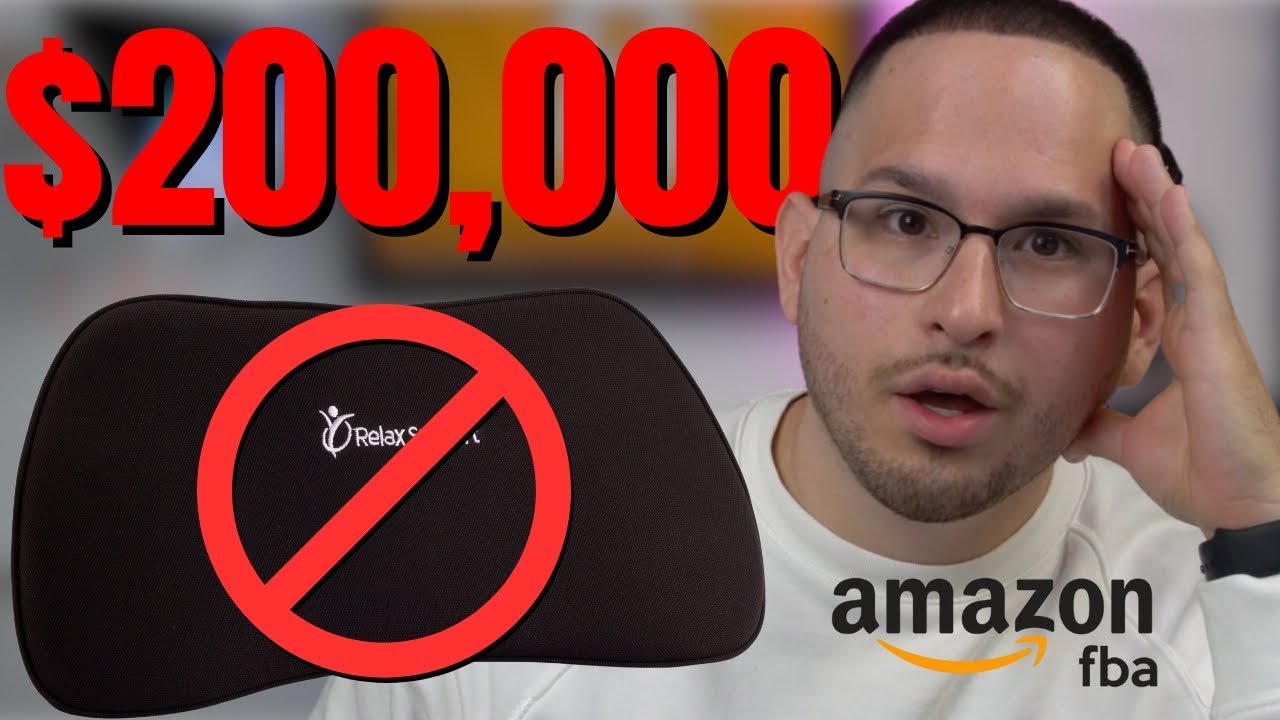
Emanuel Ruiz paid $227,000 for a lumbar-pillow Amazon FBA business listed at $470k, then lost $200k when demand collapsed after people returned to offices in 2023. He breaks down why the 9% profit margin, massive inventory, and 80% of expenses going to Amazon fees were red flags he missed.
Chapters
All right, most people that create content about Amazon FBA, especially on YouTube, TikTok, Instagram, always tell you about the good things about Amazon FBA, which again, it is very true that you can have the time, the location, and the money freedom that you always strive to go ahead and have. And that's all thanks to Amazon FBA. But I think most entrepreneurs, and Amazon FBA is not different, is that you learn more based on your failures. And that's what I want to go over in this actual video here, because I have started Amazon FBA brands from scratch. I have also purchased 3 Amazon FBA businesses. And look, I've already talked about all the successes, right? I went ahead and purchased Maverick for $190,000 at Empire Flippers. And today it is worth over $2.1 million in as little as 2 years. I also went ahead and just purchased the Nudery Labs. You can go ahead and check out on my last video that I went ahead and launched and went over all the purchase details. But there is one business that I went ahead and purchased in 2023 that That was a complete failure. And you guys know that I always like to go ahead and show proof. So as you can see in this actual screen grab here on Empire Flippers, I have purchased 3 businesses. The first one being Maverick, which is for $190,000. The second one being Relax Support for $227,000. And the latest one, me purchasing New Relapse for $185,000. Look, this purchase price was $227,000 and it also included a lot of inventory as well. At the end of all of this, I actually ended up losing $200,000, but we'll get to it why in a second. But here were kind of the payment terms when it came to purchasing, uh, Relax Support. I went ahead and purchased it for $227,000 plus commission plus inventory. And I also only put down $125,000 upfront. That's very important to go ahead and tell right now, because at the end of this video, I'm going to go ahead and show you why I only lost $200,000. But first off, right, this business ended up failing and they ended up failing for multitudes of different reasons. But when I looked it up on Empire Flippers, you can see that this business was actually listed for $470,000. And I really thought I was getting a steal when I went ahead and purchased it for, as you can see, $227,000, especially with seller financing in the very beginning. But It kind of checked all my checklists, right? We had a business here that had COGS, basically the expenses of total revenue being only 33%. And I thought to myself was if I raise prices by just a little bit higher, I can get COGS down to around 30% or lower. And we also had TACOS, which is basically, as you can see there, total advertising cost of sale, which is calculated based on cost of advertising and revenue as well. You can see that that percentage was 8%, which means that there was a lot of room and a lot of meat left on the bone to really scale with advertising. But there was one huge problem here. Even though I checked off every list here as far as COGS is concerned and TACOS is concerned, you can see that this business only had a 9% profit margin, which means one, That means Amazon fees were out of control. We need to go ahead and try and manage Amazon fees itself. And 2, there was a lot of other expenses out there that one, we thought was low-hanging fruit, but also something to go ahead and consider basically expenses off of Amazon. So I just wanted to go ahead and show you exactly what I was looking at when I went ahead and purchased that business. I was very excited to get a business for $227,000 when the list price was technically almost doubled that amount. So how did this business fail? And we're going to go over certain things as far as like why I bought the business. We'll go more in depth into there, the walking red flags that basically I was blinded about just because I was getting a great deal, the deal structure that we finally had, how I ended up walking away from, or why I ended up walking away from this business. And basically the lessons that I learned. And look, if you are getting into Amazon for the very first time when it comes to private label, already have a business or you're looking to acquire a business, you're going to get so many golden nuggets of this actual business. Because again, I feel like anything as far as entrepreneurship that you learn way more from your failures than you actually do from the successes, because you can actually learn from other businesses, other basically past experiences and basically guarantee it will never happen again. So again, take a lot of notes. So again, why did I go ahead and purchase this actual business? And we went over a little bit here, but let me kind of zoom in for you guys on this right here. So number one thing was price tag. Obviously the business was listed at $470,000. I bought it for $228,000. And look, we got a deep discount of inventory. They had $270,000 worth of inventory. And I'm not kidding there. I'll go ahead and log into their actual P&L sheet. And you can see that these people had so much inventory, which again was another red flag that we'll go over later on in this actual video. But you can tell when I scroll all the way to the left, you can see that the inventory that they went ahead and had left over, which let me go ahead and move myself out the way just a bit here, was, uh, there it is, 270,000 So again, I'm just showing you guys this just because I want you guys to know that you're actually getting advice from someone that is showing you, opening up their books and really being honest with you. And again, as I say right now, you're going to learn a lot of different things in this actual video. But so I got a deep discount on the actual inventory as well, not only on the business. So you can see the business had $270,000 worth of inventory and I got it for $100,000. So as you can see, I'm getting huge discounts right and left from this actual business. But there's also a red flag there. Like, why would the seller take such a huge discount? You will always hear this from somebody selling their actual business. And you really have to dig deeper when they say this actual line, I am focused on another business and this is taking too much of my time. Right. And the reason why it's such a red flag is because if something is generating money, right, month over month, and you've already outsourced a lot of the hard work when it comes to Amazon, which again, the hardest part of Amazon FBA is actually validating your product. Once you have validated your product, we're talking about just PPC and basically forecasting inventory so you don't run out of stock. There's other things you can do off of Amazon, but when you're focused 100% on Amazon, the hardest part is actually validating your product to get sales. So when someone says, I am focused on another business and this is taking too much of my time, this is kind of contradicting because as we know as Amazon FBA sellers, once the business is established, it doesn't take that much of your time. So there must be something else going on, right? So TACoS was only at 8%, like I mentioned earlier. This means that there were sales that were coming in organically like crazy. And if I didn't mention it before, this was a lumbar support pillow company. And this is going to go ahead and tie in basically like a bow at the very end, as far as why there was a catastrophic of just a bunch of dominoes falling as far as why this business failed. So again, lumbar support pillow companies, wedge pillows, basically pillows and lumbar. Okay. So perspective, Maverick, the business that's worth $2.1 million, has a TACOS of 21%. So I knew going from 8% to 21%, all by going ahead and leveraging Amazon PPC, I knew there was a lot of meat left on this bone. So I bought this business in January 2023. And another reason why I purchased it was because in 2021 and 2022, there was very high freight costs. If you guys know what was going on in 2020 and 2022, you guys know that freight costs basically 6x, 7x, right? Just like these tariffs that went ahead and happened right there. Um, but this is based on supply and demand. So I thought to myself, like, look, going forward in 2023, I can go ahead and lower freight costs, lowering my cost of goods sold. Right. So I thought these were, there was more room to grow with COGS. Right. And then low-hanging fruit, they had $3,000 worth of employee costs per month and $2,000 in warehousing costs per month. So me being the operator of this actual business, I can definitely save $3,000 a month. So I can go ahead and increase my profit margin right off the bat, right there, starting in day one. And I thought to myself, because I'm doing Amazon PPC, I can get rid of all of this excess inventory, which again, when you have over $200,000 worth of inventory, it is way easier said than done. So what were the red flags that basically I had blinders to, right? I thought I was getting a steal. But the first thing that I really noticed as far as like diving into this P&L statement that I have here listed, as far as, you know, going over all their numbers between the last 2 years, I noticed one thing that was very glaring, but I overlooked just because I was again getting a great deal. So that kind of gives you a perspective that when you're getting such a great deal, pause and say, why are you getting this great deal and why aren't there other buyers interested? Right. So in 2022, this business was generating $1. $4 million in revenue, which was— and they made $180,000 in profit basically, right? So they had a 13% profit margin, which looks really great on paper. But in 2023, revenue was basically flat at $1.44 million, but profit went down substantially, right? We went from $180,000 to $97,000 in profit, and that's just a 7% profit margin. So why was the seller giving away this business? One, low profit margin, right? Profit margin at this level only means that, that this, this basically means that whenever 9% profit margin— again, let me try and reiterate again. I don't really like to edit my videos, but these are thoughts that I went ahead and put down. It's okay to have a 9% profit margin when you're a business that's generating maybe $10 to $20 million in sales, because once you're at that level, you have to go ahead and have different types of operators for every lever of your actual business, whether that be supply chain, customer support, going ahead and trying to build out your Shopify store, going ahead and hiring someone just for Amazon PPC, basically trying to go ahead and take over your day-to-day. That's very important when you're that size of a business. When you're a million dollar in revenue business, this is a solo operator type of business. And by you going ahead and having a 9% profit margin, there is something that is wrong with the actual business. Right. So as I mentioned earlier, I always like to go ahead and look at the percentages. This business had 33% COGS, 9% profit margin, 80% TACOS, right? So where is the other expense coming from? That means 50% of all expenses are going straight to Amazon or outside fees. And this is very hard to lower. Can you imagine you trying to go to Amazon and saying, look, Amazon, you're charging me X amount of money. I need you to go ahead and lower it as much as you can. Obviously we can't do that. The only way you can go ahead and lower fees on actual Amazon or lower your actual percentage of expenses is to one, raise prices high enough where the actual expenses actually lower for the FBA cost, or go ahead and shrink your item as much as you can. So you can go ahead and get in a different tier when it comes to going ahead and getting the FBA fee waived or getting, getting that lowered. Right. So it's very hard to actually do. So that's a glaring red flag right there. Another red flag, inventory, close to $300,000 worth of inventory. And when I asked them why they went ahead and had this much inventory, which again, this person wasn't a US seller, they were from a different country. So cash flow was really a big deal, right? So how did they go ahead and get this much money to be able to go ahead and afford this much inventory? Well, they had this much inventory because an Amazon PPC agency promised them that they'll go ahead and scale out their business. And this is again, one thing that I've got taken advantage of, and a lot of you guys can get taken advantage of is that most Amazon PPC agencies, any agency at all is a waste of money, right? And I don't like to go ahead and cast a net on them. So I put here 9 out of 10 PPC agencies suck. And trust me, learn the ins and outs of your business. And if you hire an Amazon PPC company or any type of agency for that matter, trust me, they do the bare minimum and try and take as much money as possible. Look, this is their line of business, right? They have to make money. They have to make sure that you don't churn right away. So they're going to say anything under the sun to make them think that they're going to go ahead and turn your business 9 out of 10 times, if not 95% of the time, they're going to go ahead and fail. So even though freight was coming down as well, storage costs were skyrocketing because of this inventory. And that might be the biggest reason why we went ahead and failed in this business. But again, we'll talk about it a little bit later on as far as why I ended up walking away from this actual business. And 3PL, right? They are good if you use them strategically, but you should never have to use one at all. Unless you're using this as a intermediary, intermediary, as far as like going ahead and getting it shipped into Amazon. What I mean by this is that they had a 3PL to handle the majority of their inventory storage, right? And you can, you should only be using a 3PL if it's Q4 and you just need some carryover inventory just in case you run out of stock. Because with Amazon, you know, during Q4, it is very expensive to go ahead and store your inventory at Amazon. And last but not least, long-term storage fees. Like this brought our, basically our profit margin from 9% to zero, because again, we had so much inventory. I thought that I could go ahead and just pump out as much PPC as possible, get rid of this inventory. But I didn't know as far as how this magnitude of inventory was. And when long-term storage fees came, especially for pillows, I am telling you, this is like, Having toilet paper, it's a hard problem to have because even though it is light type of type of product, the pillow industry is so that the actual pillows are so big that you get into that tier of oversized very very easily. Right? So once the long-term storage fees came, my profit margin was basically at zero. But how was the fee structure kind of dealt with? Right? So the list price was right around $470,000 with 270 inventory. So basically all in. What the seller was actually asking for was $740,000, right? Which again, I didn't pay that much money. The other— so what I actually paid was a purchase agreement of $227,000 with $100,000 worth of inventory. So as you can see, I went from $740,000 down to $327,000. And again, 50% upfront, 50% seller finance starting on month 3. And that's very important here that I started month 13, because the whole idea of me purchasing an Amazon FBA business and getting seller financing is so that first year I can do all the tweaks that I can go ahead and do into the business, get a war chest of money there for more inventory, and to be able to go ahead and pay the seller back. But I already knew right off the bat, maybe month 6 to 7, that this was a sinking ship that I could not afford to go ahead and have anymore. And this is one of the most valuable lessons here. You can't continue to throw good money at bad money, right? If you know there is no light at the end of the tunnel, you need to cut your losses. And let me go ahead and just give you a scenario of what was actually going on. I would, I would sell through this inventory. I would see that Amazon's going ahead and taking the majority of this actual money that's coming out of my actual account. I'm seeing that I'm going ahead and doubling down on advertising. So I'm spending more on advertising. And I have to reorder inventory on top of that. And I'm basically left with zero in my bank account, right? So this is basically a spiral to go ahead and really not make any money because every money that I'm going ahead and making is just to pay for more cost of goods sold. And I really didn't see a path to profitability. And after month 6, right, I really felt this quote by J. Cole. And if you guys listen to hip-hop or listen to J. Cole, you know exactly which quote I'm talking about. It says, the good news is that you came a long way. The bad news is that you went the wrong way, right? So I was doing all the right things to go ahead and scale this business out to a business that was not scalable whatsoever, right? And not only that, we're going to get into this a little bit later on, but lumbar support pillows were booming 2020, 2021, 2022. And you guys might know why lumbar pillows were booming, and that's because People were working from home. They had their own office chairs. Businesses were going ahead and paying for anything that these employees wanted. And what happened in 2023? People went back to work and they didn't need that home office anymore, right? They didn't need that personal lumbar support pillow, right? So a lot of search volume went down across the board because what I was noticing was I was still continuing to be at the very top of these categories. But I would not be making the same amount of sales as years previously. And that's always good trends to go ahead and see when it comes to Amazon FBA. So how I ended up walking away from this actual business, because again, I ended up only paying $200,000 total. So how can that actually be? Right. So after 1 year of owning this actual business, I knew that they would be, that we would not be continuing on. And it made it clear. I made it clear to the seller that we needed to renegotiate our terms. And again, we had letter of intents, we had purchase agreements, we had money that we owed, right? And this is a very valuable lesson that regardless if you're buying a business, selling a business, having terms with your suppliers, a lot of this information or these contracts don't matter unless you can enforce them, right? Very important lesson there. Basically, I gave the seller a few options, right? You either take back the business right now and you just pay me for the inventory. Right? Like, I couldn't go ahead and spend another dime on this actual business anymore. So I told him, hey, I'll go ahead and just give you this business back and you just pay for the inventory that we currently still have so I can go ahead and recover as much of my losses as possible as well. He said no, right? The other option I gave him was we pay you $40,000 right now, which is basically the rest that we went ahead and owed you, or a portion of what we owed you, and we shut down the business completely. We won't go ahead and sell this actual product anymore. You can go ahead and have your trademark back. Go ahead and you know whatever you went ahead and gave us, we're going to shut down whatever you gave us, right? And last but not least, if you say no to both of these actual these options, we will declare bankruptcy and you can talk to our attorneys about collecting the basically what you what you can go ahead and collect. So we gave them three options, and again, this is cutthroat business. And am I happy with you know going ahead and giving this business seller this ultimatum? Absolutely not, right? But At the end of the day, you have to look out for yourself and the people that you invested with, right? And the only way you can go ahead and do this is by doing something like this. Am I happy that I go ahead and did this? Again, absolutely not, but it needed to be done, right? I couldn't go ahead and manage the actual business knowing that it was going to be a money pit. I'd rather cut my losses and try and collect or save as much money as I can. So lesson learned here in the world of merger and acquisition, right? It's very, very cutthroat. Even if you have everything in writing, be prepared to spend a bunch of money if things go sideways, just like this one right here. So always protect— you always have a protection in place, right? If you're a buyer, always try and negotiate for seller financing and put as little money down as possible. But if you're on the flip side, me selling my actual business, I'm trying to get at least 90% upfront. I am not going to go ahead and do seller financing, which again, this is basically who, how motivated you really are to sell. What is your incentive to actually sell your actual business? Is it a sinking ship and you'll just let it go for whatever price? Or do you have a sustainable actual business model that you're willing to wait for the right buyer? This is all based on motivation. It's like you selling a house, right? Like, are you getting a divorce? Are you going ahead and have somebody that died in the actual house and you need to sell? That's your motivation. You're able to go ahead and walk away with terms that might not be favorable for yourself. But if you're not looking to go ahead and sell your actual business and you're just putting it out there, you can go ahead and wait for the right buyer. So again, always protect yourself that way and always track expenses. If Amazon fees are 50% of your expenses, find a way to minimize it, you know, make it smaller, lightweight, or raise prices to go ahead and offset these Amazon fees, right? Because you can go ahead and do this by the FBA fee and going ahead and increasing the price so that lowers the overall Amazon actual fees. So Amazon fees should be below 40%, and I did put no exceptions here, but then I thought to myself, unless you are competing on being the cheapest and only doing 0 to 5% TACoS, right? Meaning you're doing basically no advertising on Amazon and your moat on Amazon is price. But when you're going ahead and just competing on price, eventually someone can go ahead and source it for cheaper and sell it for cheaper. And that's always a losing battle. But again, I'm being transparent and honest with you guys as far as my losses on Amazon FBA. Money that I've actually went ahead and lost in this actual business. But again, you learn from your mistakes more than you learn from your successes. So I hope that you went ahead and took a lot of notes. Make sure as far as like the expenses, how to track them, be aware of different types of things when it comes to Amazon FBA expenses, long-term storage fees, removal fees that I didn't go ahead and go into, liquidation fees as well. There's so many different things that went on into this actual business. that basically forced me to just quit on it. Right. But again, this is why my business like Maverick is going ahead and scaling the way it is because I learned from those relaxed support mistakes. Right. This is why I bought Nudery Lab. This is why I'm still continuing to go ahead and grow out the businesses that I started from day one, like Factory Lace. So if you want to grow a sustainable, profitable Amazon FBA business and you're getting started or you're looking to scale, go ahead and click that link below or just DM me on Instagram. My Instagram is always going to be @emmanlosangeles. So go ahead and send me a DM there. interact with me because I love going ahead and talking to you guys. But until next time, guys, peace.









