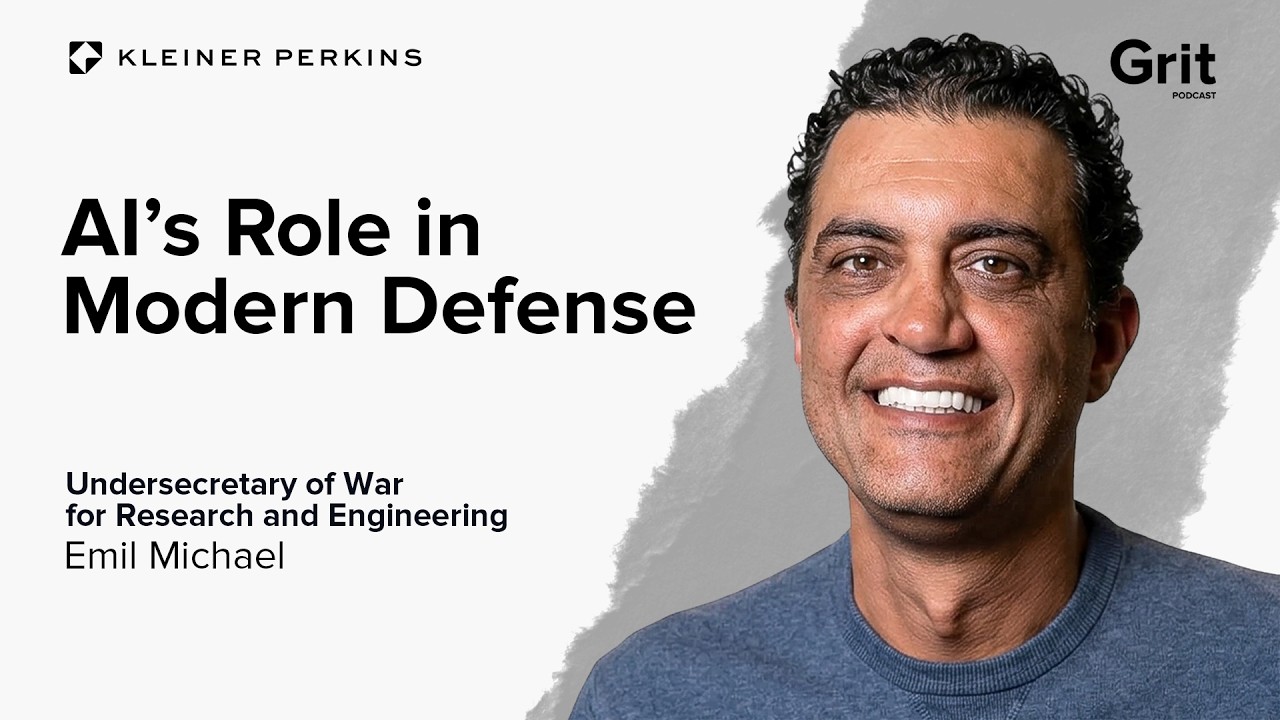
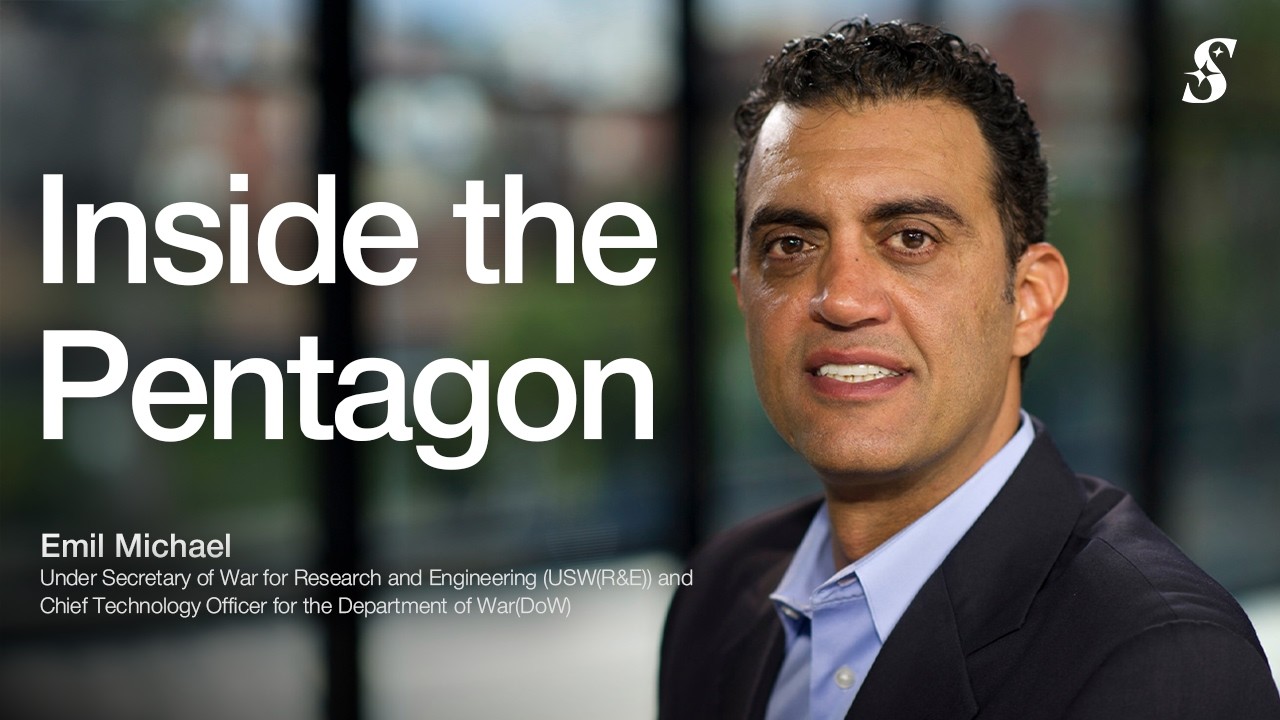
In this Defense Talks executive interview, Undersecretary for Research and Engineering and Department of War CTO Emil Michael explains how rapid advances in emerging technologies are forcing a fundamental transformation of the U.S. defense establishment. He contrasts the legacy Cold‑War and Global War on Terror systems—designed for mutually assured destruction and low‑tech insurgent threats—with today’s near‑peer challenge posed by a rapidly modernizing China. Michael outlines the need to modernize legacy platforms at unprecedented speed, highlighting AI, quantum computing, hypersonic weapons, and directed‑energy systems as critical new capabilities. He then shifts to the data problem, describing the massive, siloed sensor and satellite streams the department now collects and how AI and cloud computing can break down those silos, synthesize information, and give warfighters and commanders a decisive decision advantage. Throughout, he emphasizes urgency, the importance of breaking data barriers, and the strategic imperative of staying ahead of near‑peer adversaries.
Chapters
Welcome to our Executive Interview Series at Defense Talks presented by Defense Scoop. I'm Wyatt Kash, and we're here with Emil Michael, Undersecretary for Research and Engineering and Chief Technology Officer for the Department of War. Emil, thank you very much for joining us.
Good to be here, Wyatt.
I'd like to start by asking, how do you see the rapid advances in technologies and systems reshaping the Department of War over the next 2, 3 to 5 years?
It's a critical question, and here's why. For the last couple of decades, we've been fighting with the systems and technologies that were really designed in the '80s. And they were designed for 2 things. One was the Cold War, was to show sort of that we had the ability to ensure mutually assured destruction against Soviet Union. The second was that we built systems and weaponry for the Global War on Terror. And if you recall, the adversary there was really an irregular army that was doing kind of simple things like roadside improvised explosive devices. Today, what we face is a much different environment. We face a rising China that has invested more in their military capability in the last 10 years than any country in history. Sophisticated weapons, sophisticated sensing, satellites, space, you name it. And now we have a near— what we call a near-peer adversary. So what we have to do is take what we had built and really transform it for the modern technological age. And so many things have changed in technology since then. The rise of AI, the rise of quantum, hypersonic weapons, directed energy. All these things are new technologies that were not relevant in the previous 2 eras that are relevant today. So today in the War Department, we're pushing every single day to modernize what we do, how we do it, the speed at which we do it to ensure that we have the right systems for, for the time ahead.
And then moving from systems to data, talk to us a little about how the Department of War can really effectively manage and leveraging this vast amount of data that it's collecting every minute practically. And, and how, how do you envision improving the decision-making and operational efficiency at the same time?
There is more data than we could possibly ever imagine at the Department of War because we collect so much. I'm not just talking satellite imagery. I'm talking about every sensor we have in the world. Every radar collects some form of data. Up until now, that data makes it hard to process except through humans. With the invention of AI and cloud computing, you can now process enormous amounts of data and get real leverage from that data. So what we're doing at the department is trying to break down the data barriers because this data is kind of all over the place in different silos. Break down the silos, bring in the data, use it to train artificial intelligence models that can summarize, train, and those models so that it can be used by humans to make better decisions. The more data you have, the that's more synthesized, the better decision the warfighter can make and the commander can make. And that's the primary effort that I have going on as the department CTO is to ensure that we have a decision advantage using technology based on data that we already have and will continue to have from the systems we've deployed over the years.
Well, Emil Michael, thank you so much for taking a few minutes here at Defense Talks and sharing some of your observations with our viewers. So thank you so much.