Glassix Spotlight Podcast - Emilia D'Anzica on Fueling Revenue Growth Through CX Excellence
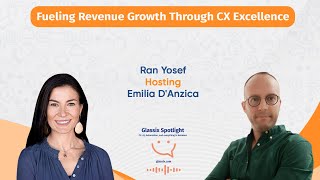
This is a transcript of a Glassix Spotlight podcast episode (recorded Dec 10, 2023) featuring Emilia D'Anzica, Founder and Managing Partner of Growth Molecules, discussing how customer experience (CX) drives revenue growth in SaaS and other industries. Emilia emphasizes measuring advocacy and satisfaction (NPS/CSAT), tracking health and retention (net/gross/logo retention), and using customer feedback, advisory boards, AI-driven analysis, and review programs (G2) to scale CX. She also discusses organizational alignment between customer-facing teams and the role of compensation in retaining CX talent.
Questions this video answers
December 10, 2023
Emilia D'Anzica — Founder and Managing Partner of Growth Molecules; ~20+ years in customer success.
WalkMe and Cooper.
Chapters
Welcome to Glossiq Spotlight. Today we're joined by Emilia Dianzica, Founder and Managing Partner of Growth Moleculus. Emilia is a star in customer success with over 20 years of experience. She's helped companies grow their revenue with innovative customer success programs and processes. Her work at Growth Molecules is well known for its top notch training workshops and leadership. Amelia's impact goes beyond her firm. She advises, boards, mentors, startups in the tech world and invest in SaaS companies. She's also a speaker at global conferences discussing SaaS and how to grow revenue through customer experiences. Emilia has held key positions at notable companies such as Walkme and Cooper, showcasing her expertise in the industry. She has co authored Pressing on as a Tech mom, highlighting the stories of women in tech and pushing for diversity and inclusion in the world workspace. Emilia, welcome to Glassic Spotlight. We're absolutely thrilled to have you today.
Thank you so much for having me ran. I'm excited to be here and to discuss everything customer experience, support and success today.
Great. So Emilia, before we start today's discussion, could you tell us a little bit about your journey to your current company, your current focus on customer experience, innovation and how you see CX driving revenue growth?
Absolutely. So I've been in customer success, as you mentioned, for over 20 years ago. But after I left WalkMe, I decided I really wanted to go into consulting and really have a significant impact across many different companies globally. So three years ago I started Growth Molecules. It really comes from my passion of watching small steps in the customer experience make significant impact if you continuously improve them day after day by listening to clients. And ever since then we've continued to diversify our offerings. So not only do we have an academy, but we build playbooks, we do leadership training and we go in as fractional leaders to really put together customer journey maps, assessments of organizations and look at how can data, how can customers really tell you the future of your company? And it really starts with putting yourself in the customer's shoes. So that's really what our organization aims to do, is really help companies protect and grow revenue through the voice of the customer.
Wow, that's so interesting. I always had this thought about what happens if you actually, you know, not doing this stuff in house. And it's really interesting.
Wow. Well, too often people really get into the weeds and stop taking a step outside of their own roles and they stop really understanding the client and that's when third parties like ours can come in and really give a non bias fresh perspective on the customer experience. Experience.
Great. So for our Listeners who curious about today's episode called Scaling Success, Emilia Tiancica on fueling revenue growth through CX Excellence. And Emilia, I want to start off today with the first question is in your view, how does a strong customer experience foundation contribute to a company's revenue growth? Could you share like an example where CX was a key driver of growth?
Yeah, absolutely. Well, if you look at our current airline industry and how competitive it continues to become with more and more discounted cheap airlines out there that just put you on a flight and get you from destination A to, to destination B. But at the same time, very large airline organizations are posting record profit and it's not from the cheap seats that they sell, but rather the first class, the economy plus seats that they're selling at exorbitant prices. So why are customers willing to pay that extra fee for that extra leg room, that extra glass of champagne, that experience that is unique? Well, because of the customer experience, how it makes you feel. And we as humans always buy with our emotions. First. We want to have that experience that makes us feel special, like we're investing in our, in our personal satisfaction. And then later when we get that credit card bill, we're able to remember, oh, yes, this did cost me a lot. But it's all right because I had amazing experience and it was memorable. And because of that human nature for us to want to experience luxury, the airlines are, even though there's continuous cheap airline prices out there, they're still able to book their seats solid and have that amazing experience. So much so that people go on Twitter, they go on their social media and they rave about the experience when they go that extra step to feel that specialty. And that's just one of many experiences. Obviously in software you're seeing companies post record profits and when they ask, well, what is one of the main reasons, it's that customer that keeps coming back, that renewable client who wouldn't even think about going to a competitor when there's so much competition for every software platform that's out there.
I couldn't agree more with you. Not actually on the first one. I'm still a light traveler, if you know what I mean, but definitely on the SaaS side of things. Things. Listen, I'm doing marketing for over 12 years now and every place I go, I just take HubSpot with me and, and, and be it CRM or just a marketing automation platform or, you know, HubSpot have it all after all. Right. But I mean, I just, I am a brand advocate. I am, I'm not just, you know, implementing HubSpot and everywhere I go, but I also recommend it to others and I bring in more clients to them. And the reason is very simple. Putting aside is a great product. The experience I get in every single touch point, every single interactions that I have with a brand is just outstanding.
I would agree. We are HubSpot clients and we invest heavily in optimizing how we use it because it is such a powerful platform. And if you look at their CEO, she started out in customer success. She was the chief customer officer, moved into the executive officer role and ever since then they continue to take more and more of the CRM market space. And there's a reason it's the customer experience.
Yeah. So Emilia, when it comes to measuring the impacts of CX on revenue growth, which metrics do you believe are most crucial? How should companies approach these metrics to ensure effective growth strategies?
Yes, I'll start with the one that is often most neglected and that is customer advocacy. So not enough companies out there asking how did you hear about us? And you would be surprised how many people just like you, you just shared that you're a seller essentially of HubSpot. It's because you've had such an amazing experience with them. And when you first set up HubSpot, whether as a free user or a paid one, they do, they do track a lot about you. What roles are you in? What is most important to you? How did you hear about the platform? Those kind of things should be measured, right? So what, what are people saying about you when you're not in the room and ran, that is one of the most neglected metrics that companies need to start measuring and that is customer advocacy. What are people saying when you're not in the room? Secondly, even though net promoter scores were created for the business to clients, so think of like a nail salon, a dentist, B2C. I do believe that understanding whether it's a customer satisfaction score, a net promoter score, is incredibly important because you can follow up by saying why did you give us this score? And then on top of that, what is your company going to do about it? If someone gives you a zero because they're having a bad day and they just can't figure out how to use your product, they're just having a bad day, that's an outlier. But is that really how they feel about your product? What matters is on an average, what are company, what are businesses thinking about your product when they think about what a success look like now, in a year from now, am I going to renew because I guarantee your competitors are knocking on the doors of your clients. And it happens in my industry as well. Companies who I compete with in the consulting space are able to go to my website and proactively go reach out to any client and so can yours. So you should absolutely be looking at customer satisfaction, net promoter score and then when you think about continuous improvement. So your customer success organization should be asking during the onboarding what does success look like from a year from now? And be able to track those metrics, are they continuously receiving a return on investment? Is your health score of that client continuously going up or suddenly do they stop using your product? Those kind of metrics you need to be looking at. And of course the ones that any investor looks at is not only the, the net retention rate, but also gross retention and logo retention. One logo like perhaps you have Amazon or Coca Cola could represent a significant amount of your revenue. So things like logo retention should also be addressed. When you think about customer experience and forecasting, what does your company health look like?
I absolutely love that. And to your last point about logo retention, I think that you know, amidst all the situation in the world today and, and the changes that been through the SaaS space in particular in 2023, I think that a lot of investors, and correct me if I'm wrong here, are also looking at cross sales within your existing customer base.
Yeah, absolutely. So not only. And, and you know that can go into net retention, right? Not only through upsells, but also cross sells like you mentioned. So think of more licenses, more departments, more products. If your company has more than one product, those all go into up, cross sell and upsells. And then of course one that's often neglected as well that, that companies don't look at is what happens when you lose your champion, right? That person who has been championing or maybe brought you in when they joined the organization, if they leave, they might bring you into their next organization as well. But what happens with your current new leader that's going to step in? Will they rebuy your product? So really your customer success team is now reselling and that's really one that your team needs to be prepared to measure. Of the clients where we lose our champion, how many of those clients are we still able to retain by reselling to a new buyer essentially that has stepped into the role.
That's why I always say customer success roles are the hardest because you need to combine customer experience, you need to combine customer support, you need to combine customer service. And on top of that, you also need to be able to sell exactly.
100% and it is becoming more and more sales centric as we speak.
So, Emilia, what are some effective strategies you've seen or implemented for scaling customer experience in a way that directly supports revenue growth?
Yeah, absolutely. So I don't think enough companies have brought the customer advisory boards back. I was recently invited to be part of one in Napa Valley, California, not far from where I live in, with 12 clients of a company we work with. And they brought them together for a couple days to really study how they use the product and really understand their biggest pain points. Me being able to be part of that as someone who presented for two hours was really enlightening for me to realize that you are able, when you make clients feel comfortable, really understand what do they expect out of your product, where are they struggling and where would they like to see your product go? Because they're in it day in and day out. Whereas engineers, your product team, they may be looking at data from their own experience in the past, but they're not in it actually doing the job day to day. So I really think having a customer advisory board that is honest, that is willing to spend time with you over the course of one or two days is an action and investment I believe every company should make as well. Feedback analysis. Again, collecting data from your clients as they're using your product, things like would you recommend it or how did you find this experience is really useless unless you're going to do something with it. And so it's incredibly important to do feedback analysis. Really think about not only the text analytics. So what are customer success teams doing with the information, but also the sentiment? Right? You want to think about the customer feedback, their reviews, the surveys, all of those things. How are, how is sales going to potentially sell the product differently or how is the customer success team going to serve? Maybe they need more hand holding up front and then more regular touch points. Maybe they don't like the touch points, they just want you to send the data in an email so that they can look at it on their cell phones and then reach out to you if they have questions. So really meeting the client where they want to interact with you is becoming increasingly important in customer experience.
I absolutely love that and I will take that to my place in marketing. When I was started at Classics about six months ago, I was doing a lot of website copy, right? So I'm coming from the industry and I know the industry and I know what the ICP are kind of looking for. So I started with this copy and then after three and a half months, almost four months, I started to survey our users. So I surveyed around 5,000 users in different roles. So maybe customer service agents or support specialists or admins of the system them so different levels. And then I asked them three simple questions. Obviously it was incentivized so I can get the most answers. I asked them what is classics for you? And obviously I got a handful of different answers. And then I asked them how does classics help your day to day? How it makes it easier. And then I got even more answers, different answers. And the last one was where do you see Glossix in 2 years time? What advancement would you like to see? And this not just helped me personally professionally to develop a better website content, a better messaging framework, a better blueprint in terms of marketing strategy and content, but also help me to give that feedback to other departments within the company. Me.
Amazing. I, I, I love that. And you know, it's, it would be unjust. Not to mention that artificial intelligence can help you with analysis in new ways that we haven't been able to do in the past. And so re really being able to analyze what are the key words that these clients are giving you, being able to quickly make bubbles showing what are the most common sentiments that these clients have can speak volumes to product for example, because as humans we're very visual and so being able to see where the main pain points are and addressing them by size quickly is incredibly powerful.
True. And you know what our kind of leading sentence in the homepage in the header H1 is?
What's that?
It's one inbox. Countless smiles. Now it might not saying a lot to you, but to them it just means everything apparently.
Yeah, I love that, I love that. The smiles, the emotions, what we started the conversation with.
So Emilia, how do you see the relationship between customer loyalty and long term revenue growth? Can you discuss strategies that like transforming satisfied customers into loyal brand advocates? Just like probably myself with HubSpot, I believe.
Yeah, absolutely. So look right now what's happening with Twitter is very unfortunate and I did get off it myself even though I've, I was one of the early adopters of the platform. But before I did remove myself due to some of the sentiments on the platform, companies were looking at that and very closely what are people saying? So about those experiences and then have whole task teams, right. So you look at poor experience on something like Glass Door, maybe from your employees or G2 for customer sentiment. All of those customer experiences, what people are saying about Your product can really help you grow. So even within our own organization, we have over a hundred reviews on G2. When someone writes something amazing in our surveys, for example, asking them to take that extra step to write A review on G2 means the world to us. And letting them know about it, thanking them for it, those kind of experiences are incredibly important. And for companies, when we do assessments of their loyalty, if they don't have an online presence, whether it's bad or good, they are not taking advantage of the opportunity to really create more of a viral granola approach to loyalty and customer experience. So that is the more viral, the, the more I would say systemic approach is one using artificial intelligence. So be seeing in the background what are the clients doing with the product and where are they getting stuck is incredibly important. Now I have the vantage point. I worked at WalkMe for three years. With products like that, I know it's possible. And with AI it's becoming easier and easier to not even have to talk to a client, but to still be able to see what are they doing and then where are their friction points. I think that's really important as well. And then of course, listening to the clients speak about your products. Right, so, so today with products like Gong zoominfo, Update, AI, being able to capture the keywords that clients are feeling and then really analyze that can really help predict the future of your product. Are there negative tones? Are they showing up for the calls? Those kind of things will help indicate a lot of different things about the future of your clients.
Absolutely. And I want to go back to your point about G2 because obviously it's very much marketing related and kind of also our bread and butter here at Glassic. So we actually took it a step forward. We implemented the review iframe inside our SaaS platform and that is triggered by events. So imagine yourself, you're a support agent and you just closed a successful ticket, right? Ticket resolution and then we pop up this box and say, hey, you're a superstar. You just closed this ticket in no time. Kudos to you. You love Glassix. Review us on G2 and that shows in their platform. In classic platform, they one click they have three steps they have to go and the reviews there and we've seen traffic. Tremendous success by doing that. Just a life hack.
Amazing. Exactly. Those are the things that not enough companies are doing.
Right. So Emilia, what are some common challenges businesses face when aligning CX initiative with revenue growth objectives? I mean, how can these challenges be effectively addressed?
Yeah, absolutely. Well, one, I think it's starts with this common myth that you need to just focus really on revenue first. Revenue will naturally come and occur if you start with the customer experience. So being in the day in the life of a client, asking your executives to spend some time with the support team, really understanding what are the most common challenges is really important. And really one company that I really respect and is really about the customer experience is Drift. So they require anyone who is starting to start in support. And if you start in support and you look at the common support tickets that members are handling one you have so much more support and respect for support and they're very difficult job. But also you start understanding not only the ideal customer profile but what are the main challenges so that when you go to your engineering job, when you go to your product job, when you go to your chief revenue job, whatever it is title you hold in an organization, you have a very different perspective of the client. And I'll never forget this story that I heard at Dreamforce here in San Francisco is the one of the first chief customer officers at Salesforce said my very first day working for the company, I went to my desk, I was sitting down and Mark Benioff walked in and said what are you doing here? He's like mark, you hired me, I'm working. It's my first day. He said no. If you're leading customer success, customer experience, you need to be talking to customers. How do you know how to do your job if you don't talk to customers? So really making sure you understand the customer experience and then building your key performance indicators, your North Star for the company, all of the things that go into, into revenue and, and not only retaining, protecting it, but also growing it is incredibly important. So it really starts putting yourself in the customer experience.
That is so true. I mean nowadays especially in the ever changing landscape of what we're existing, I mean CEOs and every C level should have regular conversations with customers. And not just the big customers, I mean almost every customer.
Right. I do believe that it should be part of the job description for CEOs. I just think of companies like Gainsight where the CEO is continuously meeting and he's on a mission. Nick Meta to constantly be meeting with clients partners. We are official partners of Gainsight. And knowing that he cares enough to continuously meet with me on a regular cadence to really understand what are our shared partners, what what are their challenges of of course. And then what am I seeing and hearing from companies who are coming to us not only for training needs but for helping Them really assess the landscape of the customer experience and how can we continuously improve it?
Right. So Emilia, I mean before we wrap up, I have to get your brain around this. So from your perspective, from your experience in the SaaS world, how should the relationship between customer experience and support teams and revenue operations be structured for optimal growth? I mean what best practices, if any you can think of, can you recommend for fostering collaboration and alignment between these key areas?
Yeah, so I have, I have been in a chief customer officer role where customer marketing rolled into my, my team. Same with community. And I've also been in teams where it's it the, the roles, the more customer marketing and experience roles were part of the marketing team, not customer success. What I will say is it really doesn't matter where the role reports into. What matters is how are they communicating and understanding the customer and how are they bringing that information back to the rest of the organization. It's critical that sales, marketing, customer success, support, community operations, all the different teams that touch the go to market really understand and have an aligned customer journey. Customer journeys not only help you analyze all the different touch points through a customer's life cycle with your product, but also what are the key data driven decisions that are made throughout those opportunities. You may find that there's a huge opportunity to sell more during onboarding because it's the honeymoon period. They're really excited about what the potential is and where they're seeing that they can apply the product. Why don't, why, why not ask, are there other departments in your organization that can also benefit from our product? Right. So really making sure that the whole go to market strategy understands what is the customer journey, what is the voice of the customer and what is my role that I can impact it to make it better. I believe that every person, whether you're in engineering or, or you are in support, being able to really understand the voice of the customer, hearing those customer calls can really have a significant shift on the mindset of how you're building a product and predicting what the client's pain points will be so you can alleviate them in advance of them actually occurring.
Yes. So let me get this one straight. We're talking about goal oriented feedback loops, we're talking about cross departmental efforts and one thing that I think that is always get neglected in this type of structures and conversations and strategies is the compensation. And I am and I would love to hear your thoughts on this one.
And when you say compensation, you mean compensation of all the different roles, is that right?
Exactly.
Yes, absolutely. Well Right now, given so many layoffs, the wars, the uncertainty of the economy, I feel like the stock market, like least in the United States, is just on a roller coaster and has been for a while now, is driving the compensation. So in the past, I remember working with, with the Chief Finance Officer, which customer success and experience should absolutely become best friends with for budgeting purposes so they understand the power of the customer experience. But just even looking at things like how much are you spending on meals for employees every day? What is that cost long term in terms of employee happiness, is that $10 meal that they get on a regular cadence, bringing people together to communicate, to better, to foster better conversations, those kind of things should be incorporated in the compensation. I believe that having people work from home full time is actually doing a massive disservice not only to understanding the customer experience, but the mental well being of the newer generations of professionals. They may not have a network, they may not have friends per se, they may have just finished university and now they're in a new environment. Working and being online full time just doesn't give you the same experiences and conversations that you have when, when you're in person. And so incorporating all of those different things are important. I will also say that the newer generation of employees are not afraid to share their salaries. So as Chief Finance officers think about what are the different compensation models be prepared to address why, for example, sales is being paid more than customer success, so that those kind of conversations are changing what people are being paid. Also that it's very stressful to be in support. And so companies are taking that into consideration because when someone leaves a support role, they're taking a lot of IP intellectual property with them that maybe others didn't document and that they have no idea how to handle the issue. So those kind of things are driving compensation. There has to be a balance. One, a lot of people are out of work. But two, also, do you want to be a revolving door where you're constantly hiring new people because you can't retain the best talent with competitive wages?
Right. So Emilia, I think I'll speak to myself and on behalf of our audience and listeners and I would like to thank you very, very much for coming in today. It was a great conversation and to our listeners, if you want to follow Emelia, so do that on our LinkedIn. She's very active there for anything, growth, customer success and customer experience. Emilia, thank you very much for joining us today.
Ran, thank you for having me. I enjoyed our conversation.
Thanks.
More from Emilia
Why Measuring Perception of Value is Key to Keeping your Customers with Emilia D'anzica