Why Measuring Perception of Value is Key to Keeping your Customers with Emilia D'anzica
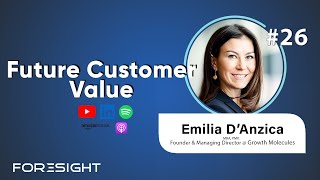
Transcript of a Future Customer Value interview (YouTube) featuring Emilia D'Anzica and host Sagar. Emilia discusses her background in customer success, founding Growth Molecules, lessons from losing and winning customers (importance of sales→CS handoffs and onboarding), emotional intelligence and leadership, specialization in CSM roles, and practical frameworks for identifying customer value moments. The conversation includes rapid-fire opinions on CS metrics, communities, and the future of customer success.
Chapters
Welcome to Future Customer Value, where global thought leaders share their career defining moments. Welcome back to the show. Future Customer Value is back with Amelia Danca. Thanks so much for coming on today.
Hi Sagar, great to see you.
Great to see you as well. And for you who is listening, I want to tell you a quick story of how Amelia and I met because it was a very serendipitous digital meeting. As many of you know, we've had a lot of guests from CS angel, which is a fantastic organization in post sales on the show. And Gemma, who runs the organization, hosted a webinar called Mothers in Tech, a paid forward event. And Amelia has actually written a book on this topic with her co founder at Growth Molecules, Sabina. And we met through that event. Foresight was sponsoring it. We had an awesome but brief conversation. So I'm really excited to bring Amelia back on the show and talk more about your background and your story and have everyone listen to it. So thanks so much.
Thank you. It was so wonderful to have your mom on the show as well.
Yes. Oh my gosh. Speaking of Mothers in Tech, for as long as I can remember, my mom works at Wells Fargo and she's been in the IT world databases, so not so much the SAS enterprise software industry, but definitely in a lot of tech and working with engineers. And she could have, I told her after she came on the webinar that she needed to read your book and she's like, my goodness, I definitely did. I wish I had that and could have shared it around. So I'm so glad that you have taken that initiative and I know we have a mother on our team and she's very appreciative. So it's a great research for so many folks in our industry and we're happy to and proud to be a supporter of that as well.
That's great. Thank you.
Absolutely. Well, before we kick off, Emilia has a very storied and illustrious career across the software industry. She actually started off her world in the space in customer marketing at Guru, before Customer Success even had a name right way back in the day. And it's evolved a lot since then. But for those of you who may not know, Amelia is the founder and Managing director of Growth Molecules, a management consulting firm focused on protecting and growing revenue. So if you are a startup or scale up PE backed or VC backed company who needs to uplevel and mature in your own way of engaging customers, Growth Molecules is a great partner for you. Emilia's worked at several successful companies as an early employee in multiple time vp, including being a Chief Customer Officer. And you've also are a part time adjunct MBA professor at the St. Mary's College of California. That's awesome too. I've not really seen a lot of operators and leaders also dip their toes academia. So I'm sure all of that will come come through in the in the discussion today.
Yes, I'm excited to talk about all of it especially focused on cs.
Fantastic. And last thing I will say before we go into the discussion is Amelie has written a book called Pressing on as a Tech How Tech Industry Mothers Set Goals, Define Boundaries and Raise the Bar for Success. So we'll be including that in the show notes. And that's also the book that spawned the event with CS Angels. So a lot of great stuff to dive into here. Amelia this podcast is brought to you by Foresight, a full service value realization platform designed to help you with unlock growth in every single account. For more information on Foresight, please email them at infoainforesight.co. that is inforin F O R E S I G H T Co and they'll be in touch. And where I want to start is taking you down memory lane to a moment early on in your career where you are VP of customer success at a very large scale up and on the show we love talking about customer value. Right. And in order to keep your customers you have to maintain and realize value and if you don't do that, that's going to cause issues. So talk to us about a moment where that wasn't the case where you lost a customer because of that and unpack that for us a bit.
Absolutely. So early in my leadership career I was leading onboarding and had a brand new team writing my 90 day plan for the board and leadership and I was so focused at a high level and trying to gain trust from the CSMs that I failed to do something really important. And that was working with some of our top customers, going through the onboarding program and really making sure that the handoff from sales to CS was solid. And so in this particular case, when we lost the customer, one of the very first people hired in CS that was now reporting to me told me, look, I've got it. I know what we need to do for this client. I'm going to onboard them because they're strategic and they signed a two year partnership with us. We'll fast forward to the Executive Business Review which I wanted to attend all of them, especially early on learning the product and again gaining trust of the customers and the team. The executive who purchased the product. So the champion and executive sponsor joined the meeting and said, I've never been invited throughout this process to share with you what I was expecting and what you delivered and what the program manager who I've assigned to work on this delivered is not what I wanted. Clearly it was lost through this, through this transition. And if we would have had a proper transition where sales CS was there with us, you would know what I was expecting. And so fast forward, we ended up losing the client. They never even launched with the product and that two year agreement we settled on them paying for one year and it was really a terrible way to start. Right. Learn very quickly that one, you need a proper handoff from sales to cs and if you're a digital platform, a low touch type of engagement that you offer, at least collect the information up front early. I just think of HubSpot, right. It's a great product for small and large companies, but no matter what size, you have to provide information up front before they'll let you try the product for free. And that's just really a lesson that you need to measure perception of value for multiple Personas. So.
Absolutely right.
What the buyer wanted is very different than what was delivered by the day to day person who was managing the product. And so we should have had both of those people on the kickoff and we should have understood the business better. That's, that's my very first bad memory but a really important lesson in my career.
It's, it's such a growth moment I think many of us in post sales have experienced where perception of value, I'm glad you said that term, that's so key and understanding that from the executive buyer's lens, from who you're ultimately serving and being able to, to quantify that, track that and ensure that anyone who's engaging the customer, whether they're an implementation onboarding CSAM has that knowledge so it can build on itself. Right. It doesn't feel like you're touching a discrete part of the organization. Sure we've got silos internally, but we can't operate with silos when we're engaging a customer. It needs to be continuous experience. So I would love to unpack that a little bit more. And that onboarding piece, it's such a critical. You said handoff. What do you think creates a successful handoff? And what I mean by that is I've seen a lot of organizations focus on the handoff being checklist management. They've got a series of tasks need to check off. But that's not necessarily what organizations and executives on they need change management. Right. So curious to hear your perspective on what is a successful launching point that engages multiple Personas, including executives. What does that look like and feel like for a company?
Yeah. So I truly believe that if, if you have a proper handoff internally first, whether for again the low touch customers, it may be on paper where they're filling in the form themselves, especially if you're paying with credit card or if it's low touch and sales sold it. But they're selling so many deals at a time that they're not talking to every csm. At least fill in a form so that when the CSM goes to onboard the customer, they're not asking the exact same question that they've been answering for months in a more enterprise deal. Right. So when they have that kickoff one, you have the executive buyer on the call as well as the project manager, your technical person. Don't make the meetings long. I always say start with a mini pre kickoff. Right. To make sure you're going to have the right people, you know, who should be involved. And we typically use the scored framework. It's a methodology that we've developed and have been using across all our clients. Several of our clients in fact have put it right in their customer success platform or their CRM. And what we teach them in this takeoff or proper handoff is you really want to understand the situation. So why are they here today? What brought them here? What does their company do? How big are they? Just fundamental information. And as someone said recently at an event I was at, make sure you have a little MBA on your customer so that you're confirming, reaffirming what situation they're in. And that means what challenges are they currently experiencing the that your product is going to help solve. Right. What are the opportunities where you come in and help them?
Absolutely. And the revalidating, reverifying those outcomes and how that executive feels, what their needs are not only in onboarding, but three months post onboarding, six months post onboarding, three months before renewal. Because businesses are changing. No organization is static. We're experiencing this today. You have rifts, you've got boards coming in with new priorities and the executives are shifting around, the tech stacks are shifting around. So we have to be tuned into that and reassess as time goes on. And I think companies who are able to do that successfully are really going to shine through and be at the top of the priority list for investment. Right. Because there's too many companies that are vying for the same budget and your experience and how you engage with the customer has to be part of the the overall engagement, not just the product itself. So I love those thoughts and I want to take this into another direction here and let's focus on another point of your career where things are going well. Right. You implemented and onboarded a customer. That was one of the best revenue outcomes for the company at the time. And things are going really well for the internal team and for the customer. But then, you know, something hit the fan. Right. And things changed. So talk to us about now how that internal value for yourself at a company became a consideration, became a learning moment for you.
Yeah. So as you move up your career, up the corporate ladder, something that I knew I definitely wanted to do, especially having been in Silicon Valley for the majority of my career, I had another key moment and that was getting fired. Right. So a lot of people right now are being transitioned out of their company. Maybe that's the nice way to say it, but at the end of the day, the higher up you go in your career, the more likelihood that you're probably going to go through an experience of being fired. And what that experience for me at the time, while it was incredibly hard, I had achieved incredible results for this company in a very short period. The board had given me additional stock options in the company because of the results that it was producing. And after a certain amount of time, the company was going in a new direction in another phase of growth. And I've truly believed that through that experience, I learned that everyone's good at something and that they should be focusing on nailing key skills that they're passionate about and at a certain maturity of a company. So for me, my expertise is really launching people process and systems and really getting them to the next level. And once that foundation is completed and things are moving, systems are in place, that's when it's a good time for me to step out and let people run the more day to day. That's not what interests me. I'm more of a builder, hence my entrepreneur. So that was a key moment for me in my career is just thinking about what am I really good at and where and when should I know that it's time for me to go in a different direction?
You and I are very similar there, Amelia. We're. It seems like you're not a maintenance mode type of person. Once something is out there and it's launched and it's driving value, somebody has to take care of that long term. And if that's not you. You gotta recognize that that's the same way for me. I am on the entrepreneur path for exactly that reason. So to double click in there, what advice would you give to leaders, VPs who are in revenue roles, customer success, account management, et cetera, on self awareness, to know when you might be out of your depth or how to know what to focus on in terms of your strengths. What were some of the learnings that you had going through those experiences that, that helped heighten your, your sense of self awareness?
Yeah. So. And we now through our academy at Growth Molecules, we have entire courses on this. So it's very near and dear to my heart and that's emotional intell. Studies show that you can have really high iq, be really smart, but if you're not aware of yourself and your actions and how they impact influence people around you, you may not be a successful leader. Leadership may not be the right path for you. So being aware of what's going on around you, how your words and actions are impacting the audience is incredibly important in leadership. And, and being aware is the first step to success. Secondly, if I was to do it again, I would have been more outspoken. I think I held back more. It was earlier in my career, I wasn't asking for the things I knew I really needed. And while I pushed some levers to get things like tech in place, get some at least key hires in place, that wasn't enough. If I was to do it again, I would have really put my foot down and said no, I want to go in that boardroom and approach it very differently. I also believe now in the era of AI, you have data that you can bring to the board and say, look, if we don't do this, we risk an X amount of churn. And I think people today in leadership have a lot more tools and it will continue to increase. Even products like yours, you're able to measure where is the value. I think that's power that leaders have. And my advice is don't be afraid. If you truly believe, especially from experience, that you need something in place, like whether it's a data scientist, an aggregation tool, whatever, to speak up for it and then show the value.
And that's a big piece of upskilling and maturity, I feel like a lot of leaders have to go through. I know I've, in my career, I've had to hire coaches to help me with this and strengthen that intuition, that gut feeling of what you think needs to happen, but then being able to execute, address it, articulate it in spaces where you may not have a seat at the table, you might not be in that boardroom, you may not be in that executive room just yet. So being able to hone that and produce that reality that you see inside is, is such a, such a powerful trait. And it's cool to hear you talk about the emotional intelligence aspect, and I'd love to learn more about that in the courses that you have, but I think it's so, so powerful and very needed. So let's. You. You mentioned the, the academy, you've mentioned some of the work molecules. Let's shift to your current state now, Growth Molecules. And before we dive into the story, I'd love to learn about what led you as a fellow entrepreneur and founder. I'm always curious, right? What led you to starting Growth Molecules? When you did what was. Was there a particular moment where you're like, I, I have to do this, or was it building over time and, and when did that all crystallize for you?
Yeah, I, I've grown up in a very entrepreneurial family. My father had grade three education. My. My parents moved from Italy to New York, back to Italy, then to Canada, where they finally retired, but always starting pizzerias. And they had six children. We all worked in, in the restaurant. And even though my parents could barely write a check, we always did all the writing for them. We attended the, the legal meetings and translated everything into Italian. They. They became very successful until the day my dad died. He was an entrepreneur at heart and kept buying and selling and doing things up until almost 86 years old. And so that entrepreneurial spirit, I believe, lives in all of us. And six and a half years ago, I decided, you know what? I have my mba. I loved consulting with the clients that we worked with in, in, in university, at MBA school. I want to keep doing this. And some of my first clients were large companies like Square, Cisco. And I thought, wow, this is incredible. The information I'm being exposed to. Also worked for a few consulting companies doing work behind the scenes. And four years ago this August, so in the middle of COVID or the launch of it, I should say, I just decided, you know what? I really want to start my own company. And I live in Sonoma County. I have lots of dirt in the back of my house, and I grow a lot of. I grow a lot of seeds. Those seeds started growing into incredibly beautiful and nutritious food. And that's essentially how Growth Molecules was born. I thought, wow, I'm watching exponential growth. Every morning I go out there and what was once a seed I dropped in dirt is now producing so much goodness. And I believe that through practice, which is what we teach through practice every day, small, small things, you can experience exponential growth. And that's what growth molecules does. And how I started the company, I.
Love that so much. And as you're talking, I am realizing how much we have in common. So my family has always been entrepreneurial as well. My dad was in. He was a writer, and he started a magazine for the South Asian population in Charlotte and the Carolinas with my uncle, who is more of the sales guy. And it's funny, my parents, my mom, you, I guess, briefly met her on the webinar. But her dream for her entire life was to buy a piece of land. So my folks, they bought some land, 20 acres south of Charlotte. So we're growing a lot of vegetables and growing a lot of produce there. So it's nice working in the software space, working in the consulting world, where you can go put your feet in the dirt, get grounded to the earth. Right. And actually grow something. I think it really helps the entrepreneur and founder mindset, even if you're an operator of a company, to think about what it takes to really grow something. You have to understand the soil, the water content, the temperature, the heat. And I think that relates so nicely to, you know, go to market. Right. There's like so many components where you have to understand the variables at play and, you know, growth molecules. You had told me a story which really resonated about if you're not able to understand all the connection points between sales, marketing, sales onboarding, customer success, account management, and create that continuous structure for a company. Right. Just like you may not understand all the components that go into growing that tomato or growing that piece of fruit, there'll be disconnects and ultimately the end product won't be nearly as good as what the intention was. So talk to me about an example of a company that you've worked with or something that you've seen where there were massive disconnects between each of these key functions. Right. And it led to misalignment and it ultimately reduce the value potential that the customer could have been realizing from the company in the first place.
Yes. So I will be honest. Whether we're working with a small sub $10 million startup that's growing, maybe a VC or PE firm has brought us in, they know they're moving along, but they're seeing or forecasting churn, but they can't quite put the pin on what's Causing it. We take them through what we call the score methodology and it's a framework that we use across all our clients. We've done this with large public companies, mid Enterprise and SMB. So it is truly agnostic. And what we have found is that often companies, even today with all the tech out there, there is a disconnect around the jobs to be done in the customer journey. And what are those value moments that lead to success? So we were recently working with the company and I asked the founder was on the call, the head of cs, you know, we were trying to uncover as we were kicking off what are the key moments in onboarding in your best in class clients by cohort that have led to repeated business, that have led to referenceable customers, to companies that buy more seats, expansion make will make an introduction or talk about you in a positive way when you're not in the room and there was silence, they didn't know. And this company wasn't a super young company they had been around for while they've been around for 10 years. So being able to identify what are the key moments in a customer's journey that your best in class clients, the ones that keep repeating business with you, you need to know those and then you need to share them across product engineering, sales, marketing and have a true go to market strategy around that. So when I talk about key moments, I mean is it an executive logging in X times a week, Is it downloading an extension, Is it looking at X reports, is it onboarding within 25 days? Whatever it is that shows value is incredibly important. So when we do these assessments with our clients, we really look at where's the value coming from because that will feed into strategy and then you can also better communicate with your customers. You're just talking about your product during onboarding and you're not understanding their pain points. How are you communicating value to the customers? And what I have found is this problem is alive and well not only in early stage companies where they don't even have a customer journey, but in large companies where there's a lot of change, massive transformation silos have been built as a result and there's lack of consistent customer journey with value moments throughout. So that's what we really focus on with customers. That's our starting point when we're working with clients today.
Got it. And it's the point about no matter what scale of maturity or size you are on, it continues to compound these problems. And I was talking to a private equity backed company this past week and the Way that they were talking about their issues was very relatable to some things that we're going through that companies that are much earlier on are going through. They said we have problems with our product. Right? Product needs to be better. We need to better understand our customer. We need to communicate better across our internal teams. You know, we have a big churn problem. This is a $600 million plus AR company. So it's always back to the basics of how do you focus on why you exist in the market, why are people buying you, and then amplify those moments, create more of those moments, ideally through a structure, through a process, through a paradigm, and make sure that you can increase the likelihood that every customer has those moments more and more frequently so that they get more value. Right? When they get more value, they're going to buy more, they're going to stay longer. All the things nrr, all the metrics will come in. So it's, it's really, it's really a powerful point. And I want to share a quick anecdote there because something you said has, has. Has very much happened to me. So, you know, in my prior life, I was with a company that had gotten acquired, which was on the way to going public. So we were in the 50 to $100 million ARR range. And at the time, I was running pre sales, but working closely with our implementation onboarding team. We were in the boardroom of a big customer, enterprise customer. And, and we'd put together this QBR deck with all the usage and the engagement and the meetings and the feedback, right. And from, from our team and what we. The product roadmap and all this stuff. And we were in the middle of that room and you know, we thought we had the value moments, to your point, but the executives came in 20 minutes in. They were, they came in a couple minutes late. They said, hey, hey, guys, stop, stop. This is. We've heard this story so many times, seen this movie with multiple other vendors. We don't care about this stuff. All we care about is what are the best practices that other customers of yours are leveraging that we're not leveraging, Right? What are those moments for them that we need to be thinking about? So to your point, it does absolutely come down to understanding those moments from your customer's lens, being able to isolate those and produce more of them. So really powerful point. And another question I had for you, there is, where do you see any trends of moments that are consistent? Like, is there a moment that from all your engagements, all the Diagnostic assessments that you've done that continues to rear its head that says if you focus and crack this one thing or this series of things, you will be able to generate more value for customers. Is there something like that or does it really depend on the company?
I really believe it starts with onboarding. So really having a powerful sales to CS handoff and then an onboarding that shows impact where the client has pain is important. If you can't get that right, how do you plan to drive adoption referrals, expansion and renewals? And so I really believe onboarding. And the second thing is if you lose your champion, you better be ready to onboard again and show the value to the new economic buyer. And too many people. I mean as soon as someone contacts me, I am connecting with them on LinkedIn even if we haven't had an introduction call so that I can follow them throughout their own career journey. Because if someone leaves their company, I know right away I need to build a relationship with the new economic buyer and start onboarding again. Educating.
Yes.
So I really believe the the secret is have a really strong onboarding. I think that's why products like Superhuman for email, they require onboarding. You can't unless you onboard. There's a reason, right?
Totally, totally. And you know those the moments of onboarding and then yes, stakeholder change. Something that we, we are seeing, we think about a lot is whenever that happens, that's a moment to engage and assess, bring folks in from into a value conversation. I think a lot of folks are industry have. It's easy to default to building the relationship which is important. Right. Take them out for dinner, send them a nice gift. But how many times does that lead to a renewal? When tech is on the chopping block, it's rare. But if you take that opportunity when you meet a new champion to ask them what are your outcomes? Amelia, what are you trying to achieve this year? What brought you into the organization? Why did you get hired as a vp? Right. That really opens up another dimension of vulnerability and I think trust with customers that also helps the post sales team serve them better. So those are the two really powerful ones and I love that. And onboarding is a lot of companies that are product led growth I feel overlook it and they get so focused on the product being this is it, this is the product. It's so easy to use. But the Superhuman example is great. And for those of you who don't know, I I have used Superhuman in the past. They require a 30 minute session where you have to talk to a Human being. They've got hundreds of thousands, probably millions of users at this point. I don't know. But you have to talk to somebody to learn about it. And what I think is they really try to do is they create a workflow. Right. They had me go back and delete all these archived emails that were sitting around in my inbox. They said, you gotta start fre. Here's how we recommend you do things. They're introducing change management into the conversation. Love early on, right? It's about the change management, not just about assuming someone will get value out of your product. Point blank. You need to inculcate the change management component so that I can be thinking about your product in the context of what I need to do for my day job or whatever. It needs to be a process. And your systems mind is. Probably has a lot of great thoughts there. So, uh, really, really good points there, Amelia. I love those stories and you know, anything else you want to, to talk about there before we transition to the next audience favorite of our episode here.
Let'S, let's go to the next one. It sounds exciting.
All right, well, we're now hitting our rapid fire question section. So there's a couple rules here. I'm going to ask you eight questions and I want you to say the first thought that comes to your mind, right? Three words max. So it's called rapid fire for a reason. We're going to get right into it. So Amelia, in your perspective, what is the best metric of success for customer success?
I have to say grr, because NRR encompasses a lot more. So if you really want to build a strong customer success team, has to be gross revenue retention.
Love it. What about the worst metric of success for cs?
NPS Net Promoter score. It is simply too broad. It was built for business to direct consumer, not business to business. And suddenly all SAS companies use it. They brag about it and most often it's manipulated.
Could not agree more. What is the most underrated part of cs?
Relationship building. And it will continue to be even more important with artificial intelligence. Humans crave human interaction.
Yes. The flip side of that, what's the most overrated part of cs?
The administration that goes with that. That is often not necessary. If people just invest in technology.
People process technology systems. All right, if you could describe in three words or less the current state of cs, what would it be?
Flux or identity crisis?
It's come up more frequently than I would have guessed. A lot of people think that. What about the future of cs?
More streamlined in the go to Market strategy.
Absolutely. Alrighty, last two questions here. You're doing great. What is the best CS book or podcast that you've listened to?
This one?
Yes.
The future customer value. No, I think that's just really important and I like the people that you've been inviting. Lots of different perspectives.
I love it. Thank you for the support and it's great to have you on as part of the, the alumni of the show. Now, what's the best community for CS leaders?
You know, I, I don't know if there is one single one. I will say I'm part of Pavilion. I think it's pretty good, but it is still more sales centric than CS Leaders specifically. I know Maria has started one for women in CS out of Europe. And then there's also gain, grow, retained, where there's some great content there as well. And CS leaders engaged. I think regardless of what community you're in, what you put into it is what you're going to get out. So if you're just expecting to get things but you're never contributing, you're just not going to get the most out of it. I find whenever I contribute or I mentor sponsor someone, I'm getting just as much, if not more than just taking. So I think that's what's really important about communities.
I could not agree more. I'm a part of Pavilion as well and you have to carve out time and have an intention to share. And I love Pavilion's approach, which is give to get and sharing first before expecting or not expecting anything in return. Right. And letting pay it forward. So that's great advice. So nearing the end here, I have one more question for you. Before we close out here. Amelia and I want to dive deeper into the future of CS questions. So you, you mentioned, you know, it's got a bunch of alignment, go to market, you mentioned AI. That's, that's obviously a very top of mind topic for folks. If you could make one prediction about where the future of our industry is heading. Post sales, customer success, even software, what are you seeing? What are you feeling and where do you think we're going?
I believe customer success managers are going to push back and become more specialized. So asking a CSM to suddenly do renewals and expansion and onboard and drive adoption and have huge books of business is only going to burn people out. But I believe that companies, at least in our experience, are realizing they need to specialize. I mean, we are talking to very large banks, very large organizations for enablement right now because they're realizing, wait a minute, we're just throwing more things at our CSMs and they don't know how to do it. They're raising their hand and saying, wait, you're setting us up for failure. And so I believe the future is more specialization with data with platforms that will enable them to have more relevant conversations than just a check in with with their customer to check off a box in their customer success platform because some person told them they had to do that. So I'm really excited about the future of cs. It's becoming a specialized profession and it's.
Awesome to see the contributions of growth molecules to that ecosystem too. You mentioned the Academy, which sounds amazing and I've seen some of your work now through these webinars we've been a part of, but helping to really hone in on what are those moments that individuals can focus on within their careers and their jobs to elevate the customer, to elevate the company. And I think that level of discipline and diligence, to be self reflective, be aware of ourselves, understand what are our strengths and weaknesses as an individual, as a company. That's what it takes to drive industries forward and drive change. And it's really awesome to have folks like yourself being a steward of that change. And it's a pleasure to have you on the show. So thank you so much, Amelia for being on the show. I've really enjoyed the conversation. I'm sure our listener has as well. And before we leave here, is there anything you'd like to plug with our audience?
Definitely. If you want to receive our newsletters, just go to our website, growth molecules.com you can sign up. We share a lot of free content, downloadable guides, events happening in customer success. And if you want to get a hold of me, please connect with me on LinkedIn. Shoot me a note and let me know you listen to our conversation today. Or you can always email me@growth molecules.com love it.
Well, I'm sure we'll have folks reaching out to do that and we'll be including all the information in the show notes as well. So once again, Emilia, thank you so much. This is awesome. Great Friday afternoon conversation and looking forward to round two. We got to do it again soon.
All right, Sagar, thanks so much for having me.
Once again, thank you for listening. This episode is brought to you by Foresight. If you're interested in learning more, please email them at infoainforesight.co. that is info f o r E S I G H T co. Thank you.
More from Emilia
Glassix Spotlight Podcast - Emilia D'Anzica on Fueling Revenue Growth Through CX Excellence