Most Founders Think Of AI Incorrectly, The Correct Mindset Of Agency Owners, AI Makes Crap Alone
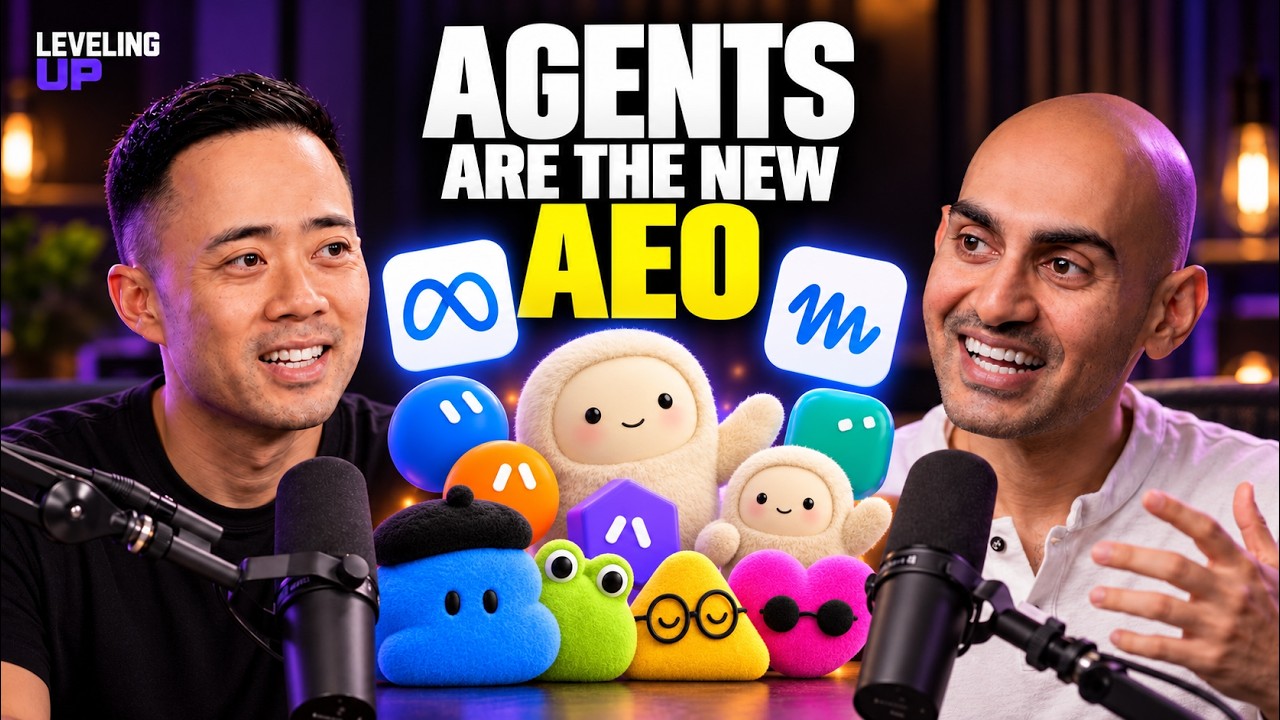
In this Marketing School‑style conversation, Eric Siu and Neil Patel dissect how founders and agency owners are misreading AI’s role in business. They argue that AI won’t replace entire teams but will augment human judgment, especially in marketing and sales. The dialogue covers the rapid rollout of AI marketplaces and plugins (e.g., Grokbot, ChatGPT, Claude, Muse), urging agencies to claim early slots. They examine the massive capex surge for data‑center compute, comparing it to historic infrastructure booms (railroads, electrification) and debating how much compute will be needed for future AI‑enabled devices (smart fridges, AI‑toilets, robots). Marc Andreessen’s commentary on the widening gap between AI‑native startups and incumbents is highlighted, underscoring a looming talent war for AI‑savvy employees. The hosts discuss hiring strategies—prioritizing sales skill over pure AI expertise—and the importance of human assistants for logistics that AI can’t yet reliably handle. Real‑world anecdotes illustrate AI‑driven procurement (flowers, funeral arrangements) and cost‑optimization (token spend). Throughout, they stress that the primary ROI for most marketers today is AI‑driven product recommendation, not wholesale automation, and they warn against over‑optimistic timelines while acknowledging a slow but steady diffusion of AI capabilities across the enterprise.
Chapters
All
right guys, we're live this time from Marketing School. And Neil, the first thing I want to talk about is I was watching a well-known, let's just say a well-known internet marketer. Sorry guys, we had Noah just fall over there. You okay, Noah? So Noah looks like he's okay. But I was just watching a well-known internet marketer, okay? And he was talking about how he cut from hundreds of employees down to less than 100 right now. Right. And what is the reason for that, you think, Neil?
He put on Instagram that he's at 300—
I'm just calling on Neil because I know he's not paying attention right now.
I'm not paying attention.
So I'm calling on Neil because this internet marketer had a couple hundred employees cut down to less than 100 and says that AI is doing everything for him right now. Okay. That AI is doing like 20 to 30 times more. And don't get me wrong, I'm the biggest proponent of AI. And Neil, you'll like this. So this guy was saying like, look, OpenClaw. So he's talking about OpenClaw right now. He's like, OpenClaw is doing the work of a bunch of other people right now and it's better than him at copywriting. Okay. I have a lot of problems with what's being said. So I respect this internet marketer. Again, you know this internet marketer. In fact, you've spoken at this person's events before. So let me just ask you, does it make you look good or bad as an entrepreneur when you talk about cutting hundreds of employees? and talking about how AI is making you much more efficient.
Good or bad. Makes you look bad.
It doesn't make you look good and you shouldn't do it. As much as I love talking about AI, I don't like talking about having to cut people. In fact, I think that AI is not about eliminating jobs, it's about elevating capabilities. And so you look at this person, okay?
Or being way more efficient and getting more done for the same amount.
Yeah, which is elevating capabilities, is it not? And so if AI is about elevating capabilities, it doesn't help you with recruiting when you say, Hey, we've cut this many people and then we're looking at cutting even more people and we can do this and that. But I also think this person's credibility was hurt too when they say right now, this interview only happened recently, when they say they're using OpenClaw and it's replacing employees. It's like, bro, first of all, OpenClaw sucks and it's unreliable, okay? Number one, that shows that you don't really know that much about AI.
And there could be some security issues that you have to worry about.
And there's even more security issues as of this Black October, right? Which is, which we can talk about in a moment.
So more security issues came out?
Oh, major security issues in internet. I'll update you in a moment. I hope you probably have someone on this already, but no, no, I
don't use it myself, so I don't have to worry.
I'll tell you in a second. So anyway, all that to say is he's talking about he's talking about how he uses AI so much he's cutting employees. That doesn't make him look good. He's talking about how Open Claw is doing the work. Open Claw sucks now, so that that ruins credibility too, right? And then the other thing is the he's talking about how it's better than him at copywriting. Okay, so
that's not
good either because I don't think you can say that. Okay, so like AI is really good.
Wait, why can't you say that? You suck at copywriting. It's probably better.
This guy's good at copywriting. This guy can't be that good at copywriting if he says OpenClaw is better than him. You know this guy. He's a good copywriter. In fact, he's well known in the industry for solid copywriting.
Do I know him well?
Well, you know him decently well. Yeah, but I'm not going to name names right now.
He can't be that good of a copywriter then.
He's a good copywriter.
You're telling me OpenClaw is better than most?
He said that, but he's exaggerating. But that ruins credibility with someone that knows AI. I'm not going to say I'm amazing, right? But I know that one, OpenClaw sucks, and I know I know that he's good at copywriting and I know that if he says the Open Claw is better to him at copywriting or AI is better to him at copywriting, that he's full of it, that he cannot say that right now. And he's also full of it when he's kind of talking about cutting employees. Even if you are, you don't say that openly. So I have a lot of problems with this because I think internet marketers coming into the AI space right now, AI is trending, right? You see all these people selling courses and nothing, no problems with courses, right? But this is what makes internet marketers look bad. When you start to talk about shit that you don't understand and it just makes all internet marketers look bad.
Yes, I went through the same thing this morning at my 10:30 call and I was just like, are you serious?
Tell us about the 10:30 call.
So my 10:30 call, there was an agency in Europe that one of my team members found that said we should look at this company to potentially acquire them. When my team member says we should look at this company, it doesn't mean we should buy them. What someone may tell them in that organization versus what I find or someone else may find as we continually do more diligence. We may end up finding out things we don't like and then you just back away. So today, we definitely backed away. So this agency has been around for a little bit less than 10 years. They focus on e-com. Thank you for the waters. Good
service here, you know.
You do provide good service for this building. And I was making a joke there because sometimes some of the people inside the building don't provide the best service.
True.
So, I was talking to them about their agency. They have— they had 30-something plus people. They recently did a round of layoffs. They're in the low 20s. And their goal within next year is to be at 8 to 10. I said, how is this possible? They said they have low churn. And they said—
8 to 10 in revenue?
8 to 10 people. So next year their goal is to have 8 to 10 people. So they went from 30, they're already into the low 20s.
I see.
So next year, if we buy this company, by the time we take it over and we're running it, by the end of next year, let's say it takes 6 months to buy, but by the end of next year, they would have cut down the employees even more to 8 to 10. And I said, how is this even possible? Do you guys have high churn? They said, no, we have really low churn, which is false because they lost quite a bit of revenue. So if you look at it from a revenue standpoint, no, they actually have quite a bit of churn, but they're figuring things out and they're just like, we have this technology and we figured out how to use AI. They specialize in e-com marketing. They're just like, we don't need all the people. We can scale up to infinite amount of ad spend with just 2 people. I'm like, this is impossible. They're like, yeah, technology, AI, everything can do it for us. We don't need tons of headcount. And I was like, and I asked this guy more detailed questions. I was like, so what if it was like half a billion dollars in ad spend a year or a billion? Like, yeah, we're pretty sure we can do it with 2 people, maybe 3. Pretty sure. Right? And I was like, how so? Because we manage a lot in ad spend and they're just like, and we definitely don't have 2 people or even 10 people on ad spend management. We have way more. I don't know what the number is, but we have a lot in just paid ads. And they're just like, you know, the technology's really good. You barely need any people. I'm like, well, that means you're just letting the technology do everything and the humans are just checking to make sure it doesn't screw up. So I was just like, then why does someone need to pay agency for that? This is why your agency isn't growing as fast. You're providing mediocre results and this is why you're losing clients. This is my opinion at least. I didn't tell 'em all of this, but this is my opinion. I'm like, this is why you're losing clients. This is why you lost 3 of your 4 biggest clients in the last year. Hence, when they said they have barely any churn, I'm like, well, you lost 3 of your 4 biggest clients. To me, that's not very little churn. I don't need a spreadsheet to figure that out. But I took it as you're just using AI to do the work and optimize for your profitability. You're not optimizing for the client's results. If you were, you wouldn't just focus on gutting everyone in your company and only have 2 people and just be like, yeah, I can streamline it all. Well, if everyone's doing the same thing through technology, Why will your campaign perform better than all the other people's? It won't. You need to do something outside the box. I'm not saying every person can do that. I'm not saying technology can or can't do that. I'm just saying if everyone's using the same tech to manage everything, you're not going to get great results. You're going to get mediocre results because you're doing what everyone else is doing. And we know this in marketing. You have to do something special. You know, the guy wanted to sell to us and I was like, yeah, I'm not buying this company. I told my guy right away, I'm like, this is just a waste. He's just trying to use AI to cut all his employees. And he's like, yeah, from the last few years our profit was decent, it's gone down, but now next year our profit's going to be amazing. And when I asked him what your business, what the biggest struggle in your business was, he's like, closing new business. And I'm like, yeah, no crap, because you have a terrible reputation. You're not going to get the referrals, you're not going to get tons of RFPs, Because all you're doing is just trying to streamline work, maximize your profit. He's like, human cost is my highest cost, and then just pocket all the money. I'm like, this is not a business I want to buy.
That's the worst way to look at it. When people say, oh, I just want to cut more humans, cut more humans. No, like you want to hire. Again, AI is not about eliminating jobs, it's about elevating capabilities, right? Which means people go up or out. That's how I view it at my company. You're either up or you're out. And people, a lot of people are meeting the challenge. But when you, By the way, guys, when you're trying to sell a company, people can see that you reek of desperation, right? So you can smell it immediately on the call that he's just trying to offload and trying to go for an exit. And usually, by the way, if you're trying to just sell for an exit, it doesn't end up that well. If you try to build for long-term, it usually ends up better. Yes. And then all the people end up courting you. You might want to put it in front of you a little more. Yeah. There you go. So that brings me to another point, Neil. So I don't believe that AI can handle marketing work alone. I'm going to give you a few examples and I'm curious to hear a few examples on your side, okay? Even for my YouTube channel, okay? So my YouTube channel, when I let the skill just do its work without me implementing my taste for five to ten minutes or so, it's really bad. Like I posted a few videos recently where I just let the skill do its thing, and I I thought it learned from my recent videos. It didn't learn right now. Same thing with our our ad creative that we do for clients. We can't just let the AI do its thing. Same thing for our AEO SEO content. We just can't. We still need to have an editor in the loop, right? Same thing with our X content. So Max, who's actually on this call right now, he manages my my X account from time to time. Or a good chunk of the time. When he was just using the X skill that he forked off of mine, he can see that the reach was going down, but he starts writing again in his voice this week, boom, the reach goes back up. And then same thing with my videos that I cross-posted from YouTube. The moment I start writing again, instead of, I don't know, 1,000 views, it's like 15,000, 20,000 views, which is pretty decent for a video on YouTube, especially for B2B. So all that to say is you still need the human in the loop. And for anybody that goes to you right now and says, oh, AI's already figured it all out, you should probably run in a different direction. Because as much as I like it right now and as much as I want it to be like that, it's not that right now.
Yes. And I, you know, take my hats off to Eric on this one because Eric was in a very different camp a year ago in which when AI technology came out, he saw a lot of opportunities and he believed that it can disrupt in many ways. And he still believes that, but Eric isn't stubborn in which just because everyone's talking about something like AI and marketing, what it can do, he won't just blindly say, yeah, this is what's going to happen. Here's the end of all humans. You won't need as many of them. He'll adapt with whatever he learns or time. And Eric was, I would say, more extreme AI a year ago, in my personal opinion, than you are now. It doesn't mean he's using the technology any less. He's quickly used it and adapted and figured out where it's weak and where it's strong. And that's the key. I know Eric's not employed, but that is the key when you're hiring marketing employees in AI. You don't want them to drink the Kool-Aid. You want them to adapt to whatever is best for the strategy, for the clients, for the results, instead of just having tunnel vision and just being like, this is how it's going to be. And it doesn't mean that AI in a year from now won't be better and be able to do a lot more stuff. And Eric may go back to saying like, oh wow, you don't need X, Y, and Z for this. You can just use AI. Because as technology changes, so should how you interact or do your strategy or do your marketing. The interesting thing that I see with AI is it creates a lot of bias. And I'll give you a real-life example of this. Eric was talking about my Instagram profile on how I'm doing like clone-type videos where there'll be like 2 or 3 of me. And he's like, oh, they're getting pretty good views. And he was looking at my stats and Eric was right.
I don't look at my stats on Instagram that often. I thought I got like, you know, 100,000 or 500,000 views a month. And Eric's like, no, you get a decent amount of views. And I looked at my Instagram analytics and I think I sent you a screenshot of it. I think I was getting like 11 million views or something like that in 30 days. I was like, oh, actually people view my stuff on Instagram. And some of the guys I work with, were like, we need to do more clone videos.
I'm like, why do we even need to do more clone videos? Keep in mind, they also take longer to create. Yep. I don't have an issue of putting in time, but they were using AI and AI gives you feedback on what's working and what's not. And AI was pushing them to do more clone videos like this is a good CMO versus a bad CMO versus mediocre CMO. Yep. good entrepreneur versus a mediocre entrepreneur versus a bad entrepreneur? And Eric knows this. How much revenue am I going to generate from those videos? Zero. Exactly. So do I care if I get a million views or zero views? No. Exactly. Yeah. So I was like, AI is just telling these guys to tell me to create content on shit, excuse my language, that won't make me a dollar in revenue and is not targeted towards my ideal customer. So why the heck am I going to record this content? And I remember I had to create 30 videos that day because of my travel schedule. And it ended up being that I ended the day with 27 videos because I refused to create videos on stuff that is useless.
And it also pisses you off when you— it's like, at least for me, I shouldn't speak for you, but if I see it on my list when people used to generate the topic ideas, I just get more and more pissed off as I see more and more of it. And then I just don't want to record anymore. So yes.
Yeah. Yes. And I got so pissed off that I had a talk with them. And Eric knows me really well now, and I know that you know
this
person really well too. When I get mad, I usually don't get mad, but like when people are wasting my time and it just keeps being a recurring thing, I just, I just go off. And I don't have a temper, but I'm very direct.
Oh, you just don't let up. Yeah, I don't let up. You don't yell, but you don't let up.
And I was just like, why do— why should I ask him? Like, why should I keep paying I was just very direct. And then, I was like, I pay X dollars a month. This is what I'm getting.
And I'm like, I don't see the value. And then, it went into, you don't see the value in our work. You're belittling us. And I'm like, no, no, no. I'm just telling you very direct that I pay X dollars. I expect Y. If I can't get Y, I'm going to look for other solutions.
Mm-hmm.
I'm not saying your time is not more valuable or less valuable. That is Your decision. I'm just telling you as a consumer paying you X dollars, I'm expecting Y. If I can't get Y, I'm going to look for other solutions.
Yeah. So why should I? And it went down a track of, hey, you're a client of mine. And this is a lesson for anyone who's a consultant or agency owner. There's like, you're a client of mine. You don't understand all the value we create and how good we make you look and all this. That is the perception of the person providing the service. As a person paying for the service, I'm paying for X. If I can't see X and someone else is providing me Y, but I don't care for Y, but they think I should care for Y, that means there's a disconnect. And that means usually they're not going to continually get paid. And I'm going to go find someone who can get me X. Now, their whole philosophy on creating social content for me is, you look good. This builds your brand. You know, look at what your brand can do for you. And my response, and Eric knows this, is I don't care how my brand looks. Of course, I don't want it to look bad. But from a perspective of I don't care how big my brand gets. My goal is not to be a Tony Robbins or LeBron James. And those are big examples. But bigger examples in my space would be a Gary Vaynerchuk or Alex Hormozi or Cody. She has a big brand as well, Cody Sanchez. I'm not trying to optimize for my brand. I'm trying to optimize for revenue. I'm not saying the Gary Vaynerchuk approach does not drive revenue. I'm saying for my business, that approach doesn't work for me. It doesn't mean it can't work for Gary or someone else. I'm just saying for my business and what I'm trying to do, it doesn't fit in my playbook and it doesn't work for me. So I'd rather stick to what I know that works for me and double down on that and ignore the rest. Because as you guys all have heard Eric and I say on this podcast, There's no wrong or right way to do marketing. You have to figure out what works for you.
So there's 2 ways to win as a consultant or actually 2 approaches to being a consultant, okay? So we have this one consultant right now, helps us with LinkedIn. 1,000 comments, 1,500 comments, 2,000 comments. Amazing, right? A lot of engagement. He's good. He's very young too. He's 18 years old. But whenever I give him feedback, it's very direct. I was like, hey man, I don't know if this is going to work because you're getting all the engagement in the world, but it's not driving us any booked meetings right now. Right? And we're going to have to end the engagement. So this is also one way to handle the engagement early, right? Like you just start to nip it in the bud. But every single week he's like, hey man, thanks for the learnings. I'm trying to get better. I'm trying to get better. Like he is getting better. He's trying, right? But there's no, look at all the effort that I'm putting in. You don't understand the value of this. If you have to fight like that, it's just not going to work right now. We do have another consultant that we worked with for a while and he's probably going to listen to this, right? Hello. So what happens with that one is like he's asking for more money. But at the same time, the results aren't getting better. In fact, the results are getting worse. And then if you look at them, if you look at the thumbnails that are being posted, they're more and more AI generated and there's not a lot of thought that are going into them, right? So you have 2 different camps here. You have the 18-year-old who's like, I'm going to get better and I understand if I'm going to be fired. Okay. Which is the right attitude. Right attitude. Yeah. Right attitude. And I trust he's going to figure it out in life no matter what. Then you have the other attitude where it's like, you just don't understand. You know, we're not getting—
Wait, wait, wait. Can we go back a bit? Yeah. Eric just said, He believes he's going to figure out what— he's going to figure out things in life. I know what you mean by that, but for everyone listening, why is that the right attitude and what do you mean by that?
Yep. So when you get feedback, you should look at it as a gift. 99% of people do not look at feedback as a gift. He sees it as a gift. And you can see genuinely, he's like, oh yeah, that's good, right? There's no like, he's not getting defensive about it, right? So he has a curious and adaptable mindset. And that's exactly what you need to win as an entrepreneur.
Yes. And when Eric says he'll win in life, he's not necessarily saying he's going to win in Eric's organization. He's just saying generally in life, this person has the right attitude to do well.
Exactly. Now, the other attitude is like the example that you gave me from, you know, someone that we know, right? And it's defensive. When you're defensive like that, you're not in the headspace to want to get better. And if you don't want to get better, then no matter how good your coaching is or how good my coaching is, You can't get better, and you're always going to be adversarial. And if it's an adversarial relationship, we might as well just not work together.
Yeah. You want to hear another interesting one? So one of the guys that helps us out, we pay him seventeen thousand dollars a month. So call it two hundred-ish thousand dollars here.
Yeah.
We've been paying them for so many years. Okay. All right. So and they help us with content and stuff like that. All right. And this is for me personally, right? But it's through the company. They're helping the company, but. You know, they're they're working with me. They're coming to my house and all this kind of stuff, which makes life somewhat easy, which is why I haven't changed as much. But seventeen thousand dollars a month is a good amount of money.
So I try to get more stuff done out of them for giving them more money. All right. So I was like, I need more videos. I want these kind of pieces of content. They're like, okay. And we I met the guy for breakfast. And then the guy's like, all right, this will be another 10 grand a month. I said, okay, sounds good. Let me just run it by a few other people in my organization. I ran it through them right then and there.
I was texting them.
This was on a Saturday, but I can get ahold of my co-founder anytime or the CEO. I'm like, yeah, what do you guys think about this? Because I was not 100% sure. So I just want to run it by people before I commit to anything. They're like, yeah, why not? So they agreed upon it.
Fast forward an hour. They're like, "I thought about it. I don't know if I want to do it for that amount. I think it's way too much work. I want more money. I'm providing so much." I'm like, "I didn't come up with a price. You came up with the price. You're changing on me." So that a pisses me off, right?
An hour later, dude.
Yeah. And this is like, come on, dude. And then it goes into arguing about, "Hey, you need to be more grateful. Look at what we're doing. Look how make me look like." You need to realize. And I'm like, I just asked you, don't give me a speech on why I should pay you more.
Or why you should be grateful.
Yes. I really hate that. And I always try to tell people, you should charge whatever you want to charge. I will pay whatever makes sense for my business. If it doesn't align, that's okay. I have to do what's best for my business and you have to do what's best for your business. And keep in mind, not everything works out for everyone and we should just be understanding it. That's the way the business world works. I wish I could charge people $10 million.
Yeah.
You know, all day long for contracts and just make more profit. Won't work like that. Procurement comes in and be like, no, your margins are too high. This is what you need to charge. And technically, I don't even get to quote $10 million for all these campaigns. They beat you down well in advance and, you know, get you down and down and pitch you against 7 other companies. But as we're going through this, at one time I was just at my place and we were creating content. And we were going over this thing that was $10,000, and they negotiated for them. And I'm like, look, dude, if you're telling me you want 12 or 14, I can't tell you yet because I don't know what it looks like. So we settled on the first month, they'll do it for additional 10. And I remember sitting in my place as we were recording it. They did one, they came back a week later to do 3 more, and they started discussing how You know, it's a lot of work. I need to see the value, and I don't. I don't appreciate what they're doing. Like this is just a business relationship. I pay X, I get Y. I like the people, but I pay X, I get Y. And if it doesn't work out for me, it doesn't work out for me. If it doesn't work out for you, don't do it for me. It's it's that simple. So I had a clear talk with them. I said, "You guys have been doing business, right?" Like yeah. Like how long? And they were just like. We've been in marketing, running our own marketing company for I think it's almost 10 years at this point. And I said, okay, what's your take-home? So, they're all sitting there. They're like, $5,000 a month each. We do over a million in revenue. So, I was like, you're telling me you do all this work and you only make $5,000 a month, sometimes $7,000 a month? They're like, yeah, but look at what we've built. This is amazing.
Why not just get a job?
Yeah, you nailed it. That's what I just said. So I said to them, I'm like, why don't you just guys go get a job? You've been doing this for a long time. You've been making roughly all this money. And they're like, you don't get it, dude. We put all these systems and processes within our organization. We're ready to scale now. I was like, well, if you didn't have the systems and processes, that means you were doing the work mainly yourself, right? They're like, yes. So I was like, though, so in theory, your profit margin should have been higher because you were doing the work without the systems and processes and giving to other people. Yeah. Which would have cost you more money. And they're just like, my— I had a DEXA scan that day and I was joking with them because, you know, when they measure your head—
They're going to bring your blood sugar up.
No, no. You know, when they measure your body, it tells you like your bone density and stuff. It doesn't actually tell you like how powerful your brain is or anything like that. But I was making a joke because the density for my head is extremely high. Like I'm in like the 98th or 99th percentile.
So you can fit more brain in it? Is that what you're saying?
No, no, no. It just means it's more like, Tough, I think.
Yeah, yeah,
yeah. But doesn't mean my brain's better.
I get what you're saying.
Yeah, right. But I was just joking with him. I'm like, dude, am I in the one percentile with my head?
Yeah.
And I was just messing around. Yeah, yeah, right. Yeah. And then they were joking around. They're like, does this mean you're in the you're not in the one percentile with the rest of your body? Like they're just joking around with me. Like my muscles. Yeah. I'm like, yeah, I am weak. No one knows this. The first thing I asked you, I'm like, do I look skinnier? Because I'm trying to gain weight right now. And they're just like, "Look, dude, we're not as smart as you." I'm like, "Dude, first off, I'm not that smart." But they're like, "We're not as smart as you. We don't know how to just optimize business." I'm like, "This is simple. If you collect a million in revenue, you're telling me you have three main partners, which are the three guys who run the company. The rest are outsourced employees." I'm like, "How the heck are you not making money? Why don't you guys just go get a job? You can easily get a job for ten grand a month." And then they got. Oh, the main guy got pissed at me. He's like, dude, I'm worth way more than 10 grand a month. I'm like, okay, 15 grand a month. I'm just making up a number here. And he's just like, I'm worth way more than 15 grand a month. You're belittling my marketing experience. I'm like, you're taking this the wrong way. I'm telling you, if you're making $5,000 a month and this is what you've been making for a long time, call it 7 max, and you times it by 12, this is less than $100,000 a year.
That's below poverty.
In LA? Yeah. It is hard to live off of that.
No, you're below poverty line in LA.
I did not know that.
Yeah.
So I'm like, if you're making that for many years, and when I say many years, this is the max I've been making for like 5, 6 years. I'm like, why are you continually doing this? You're better off taking a job. They're like, I'm worth way more. Well, a business making $1 million in revenue that makes no profit is useless. At that point, move along and get a job.
Yep. By the way, okay, so I'll give you the numbers here. So low-income housing, okay, low-income housing limits, uh, $70,000. So you can qualify if you're like a $70,000 income, you can qualify for low-income housing. So not poverty line exactly, but, um, poverty line would be actually like one-person household, $16,000 a year. It's a little different. That's federal poverty line. But yeah, to qualify for low-income housing. But going back to your point though, at a certain point, look, I get it. Like you and I both support entrepreneurship, right? Like go for it. Absolutely. But if you're going for 10 years and you're still ready to scale, And it still hasn't quite happening. The traction quite isn't there. There's no shame in getting a job. There's plenty of places that would love to hire you where you can make fifteen, twenty grand a month or so if you got the experience, and then you get insurance and all this other stuff, and don't have to worry about all this other stuff.
Dude, not just that. You know, there's a lot of talented marketers. There's even a lot of marketing companies. I was I was talking to someone who is interested in joining the workforce, and they were entrepreneur. And I said, you should go work for a company like HighLevel because they're blowing up in the marketing space. They're like, why? I'm like, okay, other than the company is growing really fast, good product, doing well. I'm like, what people don't realize is if you work really hard for a company like that or Uber or Airbnb, OpenAI, et cetera, one, you can make money by rising. 2, that helps you with whatever you want to do in the future. 3, these companies' shares are worth money. If they 10x, 20x in size and decide to sell or go public or whatever outcome they do, or they do, they can stay private like Stripe and still buy out employees, right? Yeah. From their stock options or however that works. You can become a millionaire even as an entry job or middle job without even climbing the ranks. And people tend to forget that. And it's just like, if you're really skilled at what you do, like the guys who I was giving the feedback on, They're really good at editing, and it's just like, wait, this is a great skill set. People will pay you for this. Why don't you just go get a job and make money in other ways?
Imagine if they a company like an OpenAI absorbed their editing capabilities, right? OpenAI is probably different. They already have that, right? But they would get paid a good amount. They get stock options.
Like A16Z. Yeah. A16Z has their own production.
They acquired Eric Thornberg's media company.
I did not know that. Yeah, and that's why they're doing well in media.
Yeah, exactly. So like there's a lot of value in what he's doing. I think he just has to reposition it. I think. Because editing's a dime a dozen. How many people do you see in your DMs? You don't check your DMs much, but I see my DMs, hey brother, hey brother, hey brother, you want me to edit for you? Hey brother, hey brother, you're looking for an editor, right? It's all the same people over and over. Yeah. But anyway, that actually brings me to another point because yesterday I sent you a text message. You're like, no clue, right? But this actually ties in with it because you know of an agency that's been around for 30, 40 years or so. And you said they've always done good work. They haven't done like a lot of acquisitions, right? Do you know who I'm talking about now?
I know who you're talking about. Yes, but the number you are telling me wasn't it? That's not revenue; that's profit.
Oh yeah, I'm sorry. So my my mistake on that one.
Yeah, let's not. Let's not.
Now you can't reveal it to me, so you have to text me afterwards. So yeah, because I was I was talking about US space. Yeah, but
you should talk about a ton of people in India.
But you should talk about that company because that is an example of a person that just kept going, kept going, kept going. And that's a good— by the way, that's another contrast where it's like you've done acquisitions. Gary Vee does things a certain way. This person, this entrepreneur has just grown it for a very long time. There's an entrepreneur I know in YPO has an agency. I think they do $200 or $300 million a year, but he's just done it for a very long time with his brother.
Yeah. So you're spot on. So there's this agency guy that I ended up learning about because they became a customer and became friends with the owner. They're a different kind of agency. They're not a marketing agency, but they also can provide marketing services, but that's not their core capabilities. They pretty much try to do everything. Think of like a mini Accenture. Mm-hmm. Okay. And I was talking with the founder, you know, they're really into Silicon Valley and all that kind of stuff. Think like the West Coast entrepreneur. They've been doing this for, call it 30 years if I had to guess. Something like that, maybe more.
Almost our entire lives.
Almost our entire lives. And they barely did acquisitions. I don't know how many acquisitions they did, but call it less than 5. And when I was talking to the founder, I was just like, how'd you grow? They're like, after 10 years, you start getting more included into more larger pitches, assuming you did good work in the first 10 years. And bigger brands just get to know you more. And then you just keep doing it for a long time. And they do billions in revenue, hundreds and hundreds and hundreds and hundreds of millions of dollars in profit. I don't think they hit a billion yet in profit.
But close.
But close. And I'm not going to reveal the agency name, but people can look them up and get some of this information because you know how like people apply for these awards, like Ernst& Young, you know, Business of the Year or Inc. Magazine or Inc. 5000 or whatever it's called. So a lot of their financials are public. It's not like I'm revealing something someone can't just Google. It may not be up to date, but plus or minus 10, 15, 20%, either way at this point, what's the difference if someone does $2 billion or $2.5 billion or $3 billion or $4 billion? Like, you know, they're a large company.
Yep.
I think it's still independently owned. I haven't checked, but it just spits off a ton of cash.
I'm willing to bet it is independently owned because for such a large organization, very quickly the website's very AI forward. Everything's AI on the website, right? And that takes a founder's mentality to do that. Um, by the way, we should talk about this real quick. So we just earlier, Neil and I talked about how there's no right or wrong way to do business. So you think about this, oh, how did McDonald's get founded? Well, Ray Kroc actually stole From these two people that grew, they started a burger shop in Arcadia, my hometown. I don't know if you know that.
I didn't know it was in Arcadia.
It was a burger shop in Arcadia. It wasn't called McDonald's yet.
No, I know that.
Yeah. But then McDonald's, the spinoff of San Bernardino, and then Ray Kroc found this thing and he makes a real estate play, right? Then you have this guy who started this business. He's been doing it for 40 plus years and sounds like he's mostly bootstrapped and gone along the whole way. Then you have Morris Morris Morris Chang, I think from TSMC. He started that company when he was 55 years old in 1987. So I was 1 year old at that time, right? But there's no right or wrong way to do it. Or you have Jensen who just slogged away at gaming first, couldn't quite make it work, almost bankrupted so many times, but somehow made it work, right? So whether it's business or marketing, there's no right or wrong way to do it, which actually then leads me to want to talk about the Gary Vee piece because I actually pulled up this video, Neil, and I'll share it to you. And then you can talk about what's happening on the video.
When I wrote Crush It! in 2009 or 2000—
So what Gary's saying here is the trend for 2026 is the monetization of random content. And then we can react to this.
Make it online. It was like you can cash in on your passion. So if you're a hardcore Star Trek collector, if you really go crazy for 2 years on your blog at the time and on Twitter and Facebook and YouTube at the time, Eventually you'll get to a place where you can get t-shirts sold, sponsorship, you can go speak at Star Trek Con and all that stuff. What I'm saying here is very different. This is about where we are now in overall marketing and overall communication, which is we're now in the interest graph, not the social graph. We're now in a place where I, Gary, could tomorrow make my first ever piece of content Around surfing ever. And even though all my followers do not follow me for surfing, the way the AI algorithms now work is when I post about surfing and why surfboards are good, why you should buy a surfboard from me, or why this is a good surfboard, or surf chalk, or whatever the hell I learn about surfboards, that content is going to reach people that are in a high propensity interest of surfboards. Why is this important? I believe for everybody who's watching right now, if they started posting content of everything that they are interested in, everything, Not passion, but passions. Posted everything that's random to them. I just took up checkers, and the first video is them learning how to play checkers. So not only their passions, but their curiosities. The rise of curiosity content. You're curious, you're exploring, you're on training wheels, but you're learning. My brother AJ does not know how to ride a bike. I probably said that because I think it's funny, but if he started making content as a 39-year-old man About his journey on learning how to ride a bike. Here is my belief of the world we now live in. For many of you, these random pieces of social content become the first indicator to a massive financial and happiness opportunity. The monetization of random content. You post something funny about sunflower seeds because you spit one out on your friend and you're like, that's funny, let's make another one. And you find yourself 6 months later Getting $5,000 from a sunflower seed brand to do content. It's about a very simple concept, which is why not? Why not post something random all the time that you're genuinely interested in? You're not watching this video and you're just going random for the sake of random because you believe I'm right. Though honestly, that's probably not a bad idea either. But obviously if it's grounded in truth and authenticity, it's going to work better when all of you start putting out more.
What do you think?
I think he's spot on. And the reason that works today is the algorithms of social networks are very different than they were when we first started. first started. When we first started, you had friends. People followed you for a specific reason. You had friends and followers. Technically, when you first started, it was friends, then it became followers, right? Because it would usually be people that you know and they would follow you for something specific, entrepreneur content, marketing content for you and I, self-help, cooking, lifestyle, whatever it may be. Now, the way the algorithms work is if you post content, your followers and your friends don't necessarily see it. They try to figure out how the engagement is and who the video is right for, and they try to show it to more of those people versus just the people that follow you. And that's what I mean when I say he's spot on, in which if you're interested in surfing, the way the algorithms work, even if you don't have any followers who care about surfing, they'll go and find the people that should see it. And if they engage with it and it does well, they'll continue to show it to more people who are interested in surfing. And eventually that can lead you to make money around that topic. I do agree you can make money from it, but if you want to make large sums, call it $5,000, $10,000, and you want the money to be consistent, you can't just— and Gary's not saying this. I don't want to assume he's saying this, but you can't— and he of course knows this really well. You can't just post one surfing video to get those sponsorships, to continually get those contracts around specific things like surfing, you would have to start producing more and more of that content. So then that way you get paid from a surfing company. If you posted one video on surfing and it did really well, but you stopped talking about surfing, it's very rare that you're going to get companies reaching out to you offering you money for surfing-related content. But just post on anything you're interested in, and then from there you'll grow your reach, and then you can figure out what you want to double down on.
So what I would say with Gary Vee saying post random content is it works as long as you're authentic, right? So I had a YouTube consultant reach out to me recently. She's like, oh, all you need to do is just copy what all the other people are doing. Look at all these other— I'm like, but I don't want to. It's not authentic to me. But Neil and I are a little older now, right? So Maybe younger versions of us would post, you know, random Neil's journey to getting bulked, right? Like bulking up, for example. That could be a fun journey, right? And I bet you people would follow, like people would follow along for that. Or me trying on my journey to get better at tennis, right? So these are all interesting things. And it's not to say that I don't like posting about it, but I think if you're younger right now, definitely do it. I think if you're older, you have a business already, you know, maybe you can just focus. If you're a little more established, you can just focus on one niche. But by the way, when you're younger, what do you have? You have a lot of what? Time. You don't have money, but you have time. So you might as well just try everything, right? You don't need to try to figure out how to place yourself in a niche, especially if you're listening to this right now and you're like 20 years old. You don't need to worry about that right now. You kind of need to just test a bunch of things and figure it out. And we said this before, you throw spaghetti against the wall and AI has never been more pro spaghetti against the wall versus anything else that I've seen.
Dude, you're so right. I remember I was going to a conference called Web Summit, and it was in Canada. This was a long time ago. They have different versions of it. Some of them are called Collision, although I think they changed Collision and got rid of that name, and just now they call them all Web Summit. And I remember this was a long time ago, and this is when Gary Vaynerchuk was talking about more about not creating content for the sake of creating content for social. Like consider documenting your life and just living your life
and having someone follow you
around, and it makes it easier. And you did that for a while. I think Noah followed you around.
Noah followed me. And then when he almost got ran over by a car where he almost ran into a car, I'm like, I'm not doing this anymore. Yeah.
Yeah. So my first time was at Web Summit and I did not know my team had sent someone to just record me. Some guy comes up, he's like, hey, what's up? And he just kept recording. I'm like, what the heck is this? And I don't know if it was like a random person and he just kept doing it. And I remember people would come up to me, ask me questions, and he would just try to record it all. And then he was giving me feedback. I'm like, what the heck is this? What's happening here? Like, oh yeah, we're trying this thing that you know Gary V talks about, and I don't think Gary V is actually wrong. I think he's right. That is a more efficient way to do it. But I also believe that works well for Gary V, and it gels with his personality. For my personality, and it doesn't mean Gary's wrong, but for my personality, I personally did not like it. I like my privacy. Eric knows this. I'm I'm an introvert more than an extrovert. You would agree. with that, right? I keep a lot of my life private. I did not like it at all. I told the guy very kindly to stop recording, and he's like, no, I was hired. I'm like, I'm the owner of the company. You'll get paid for the day. You no longer have to record. You'll get paid for whatever they promised you. I'm done recording. And I'm like, I don't want to be rude. I'm just more of a private person. I do not like a camera following me around. It's just me personally. I'm like, but you can go home, chill with your family if you have family, and you'll still get paid. And we recommend you, you're a nice guy. I'm not trying to be rude. This is just not me. You have to figure out the type of content and the type of marketing that resonates with you. And I think a lot of brands get that wrong, especially when they're creating social content. They just try to hop on with whatever the latest trend is. And that's a great way to get views. But that's not a good way to generate revenue.
So let me show you this, Neil. So this is from a— you're talking about being authentic to your brand, right? So what I'm showing on my screen right now, there's this bakery called Astoria Chicago, okay? So what it says, it's a cake, okay? It says, never supporting me, but asking for my resources is crazy, right? Because there's a lot of people like that in life, right? So this one got 130,000 likes. It was posted on October 14th, which is pretty recent, right? 759 comments, but 130,000 likes. You have to imagine this probably got millions of views, but it's like, this is authentic to them. Astoria Cafe and Bakery, right? This is actually creative marketing. Or by the way, if you can't figure out how to be more creative, guys, Groons. There's a little Shrek on this Groon right now, right? These are ogre gummies. So each one is shaped like an ogre, right? So there's creative ways to do it that are authentic to you, but don't just say all of a sudden you're like a water bottle brand that became a skateboard brand. Maybe that's not so authentic.
No, it's not authentic. Reading that reminds me of dating in today's world.
That is exactly a dating thing. But the funny thing is both genders are commenting and saying that they're blaming the other side.
I have a friend, really nice guy, super successful. I don't know how much he's worth, but let's call it $500 million to $1 billion. He's somewhere in that range. He's retired, kids are grown up, wife got sick, passed away. I don't know how many years later, let's call it 5, 6 years later, decides to go on his first date. And he's just looking for a nice, kind person around his age.
How old is he?
I don't know, if I had to guess, late 50s.
Okay.
That he can just take care of. He didn't date for the longest time. His wife was like high school sweethearts. So he never went on a date outside of just dating his wife.
He never really knew how to date.
He never knew how to date other than dating his wife. And, you know, he still wears his wedding ring because he's sad that he lost his soulmate. So he goes on a date for the first time. He doesn't know how dating works. You know, I haven't been in the dating scene forever, so I don't either. And he was just like, did you know— he was talking, he's like, did you know people Google you before they go on a date? I was like, yeah, I could see it. I was like, when I was younger and I was dating, I'm like, people would say stuff about me and I figured out that they Googled me, right, to know about me. And he was just like, he's like, the first date I went on, he's like, the person asked me if I would help them out. And he's just like, help them out?
Wait, but that doesn't sound like if they're around the same age gap that that person would ask for that.
No, they're around the same age. He was dating people around his age.
So he must have Googled and figured out his net worth and—
Yes.
Okay, I see.
He didn't show them their house or anything like that. He took them to like a normal restaurant. He met them on some dating app.
Yeah.
They straight up asked him like, hey, if we keep going on dates, can you help me out and give me money? Rent in Los Angeles is expensive. Keep in mind, even people in their 50s, 60s, 70s, not everyone owns a home in Los Angeles. It's an expensive city to live in. And he got really turned off by that. I would too. It's just like someone's just asking you for money and you barely know them. And he was just telling me, he's just like, is this what Dating has turned into, and I was like, dude, I don't know. I haven't dated in I don't know how many years, ten plus years or something like that. So I text one of my other friends who is single, and there's like they responded with two letters: O F. And I'm like, what is this lingo? So then I Google, you know, like text messaging lingo O F, and I couldn't go to answer. And then I texted him back. I'm like, dude, I can't figure out. What this OF is. I know LOL or TBH, to be honest. They're like, OF means OnlyFans.
Of course.
And they're like, OnlyFans has changed. And I'm like, this is just terrible. But people's expectations from day one is just really crazy.
Well, you're talking about search right now. So this actually is a good segue to our next topic, Neil, on the next AEO. Okay. So Rob Hoffman says Meta Muse now recommending for our client's product as the best option on the market. So you can see the Muse up here, right? Yeah. It's like, hey, I want to start a newsletter. Which platform should I use? Please just choose one for me. And it says Beehive. Done deliberating. It takes 0% of your subscription. Substack takes 10%. Da da da da da. But to get listed number one, I'll tell you what one example. The other day, I was using my Grokbot. I was like, hey, I want to figure this and this out over here. I'm like, what should I use as a connector? It's like, you should use this connector. I went to it, no problem. Oh, it's like, oh, for $100 you get $5 discount, but for $300 you get $30 discount. I instantly put in $300 to get the discount, right? But I'm not really thinking about it. And even today, because there's all this Black October, like all these security issues happening right now. So I ran a Cloudflare security skill and I was like, it's like, oh, it's going to cost you $100 to run this audit on all of your products right now. I'm like, do it, right? So it's just like, it's just doing it now. And I'm just like, Well, how do you get listed for these? You're going to have to do more AEO. You're going to have to do more SEO. It hasn't changed, right? But I think getting recommended because you have Claude Duet just came out this week. MetaMuse, you have Instinct, you have GrokBot, you have OpenAI Dots. This is just the next surface for AEO SEO.
It is, but most businesses don't understand the revenue loss that they're going to get by not optimizing for this. And I'll share Really recent example, my co-founder, who you know, sold his house in Las Vegas and he's renting a house now until he figures out, you know, where he's going to build his next house.
He's going to move here?
No, no, no. He'll stay in Las Vegas, but he got a really good deal. So like, sometimes you just take the money when someone offers you a lot of money for something that you built in 2 years and you lived in it only for a few months. You're like, yeah.
That reminds me of someone else I know.
Yeah. So in his new rental, he has a really good price. The landlord will not pay for stuff like curtains or water softener. In Vegas, because of the weather, water softener is a nice feature. So he calls up a company, a company for water softener. He Googles, quotes him $7,600.
And you said he Googled it?
He Googled it.
Okay.
All right. He used to use Claude a lot more, but now he's been using Grok. Because of the usability, it's just easier for him. Grok bot? Uh-huh.
Okay.
So then he has Grok just find him more companies to schedule appointment, come to his house based on when he's free as well. 3 companies come. He got the cheapest quote of $4,000-something. I think it was $4,800, so less than $5,000. And he's going to go with the company and sign up with them. The problem is, is that company, like most companies never really optimize to be shown in, you know, GEO or, you know, optimizing for these bots. But the ones who are and the ones who are getting pulled and are showing up are generating revenue that you can't really track. Like as a business, you're not really— most businesses, they don't have the tracking. They're not asking questions. They don't really know that They got that appointment because of Grok. And if they optimize more for Grok, they can get more of those appointments and they can win more business or optimize for Claude or ChatGPT or Gemini or whatever it may be. But businesses miss out on that. It's just like the same thing with like the iPhone Duo. People think about, oh, the cost. I got to, you know, if you're optimizing for Grok, oh, this costs me money. Oh, Grok costs money to use. Oh, the iPhone Duo is $2,000, at least in the United States. People forget, yes, there's costs that all these consumers pay to use this, and some of them have free plans. Some of these products cost money, but what's the cost of not actually optimizing your business for these new devices or channels? So if you don't optimize for Grok, even though it costs you money, or Claude or ChatGPT, you're losing a lot of potential revenue. Same with the iPhone Duo. How many businesses are not optimizing their web experience for the Duo? And Eric made a good point. He ordered it. Yeah. he's probably going to cancel it and wait for the next generation to come because a lot of apps aren't compatible for it. But if you don't adapt to these devices, and we already know based on how quickly the Duo sold out, and now the shipping time is, I think, Jan 25th, roughly. Mm-hmm. You are screwed because if it's that popular and more and more people are going to purchase it, and it's an expensive device, that is ideal customer because they have money, at least for a lot of business owners. So if you don't optimize your experience for these devices, Or for these channels, you lose out on a lot of revenue as business owners and marketers.
So I have a couple things here. So by the way, the example Neil just gave, so let's say a water softener or let's just say a plumber for easy example. So you go through GrokBot, GrokBot recommends a plumber. I suspect that GrokBot or any of these other tools, these agents will notify that company that, hey, we got you this customer, would you like more? Would you like us to optimize it for you? You know why? Because yesterday I was sitting on my GrokBot because I've been using that most of the time now. I'm like, hey, because I have a good relationship with the GrokBot team, so they give me all the early releases, all these things, right?
You're saying GrokBot will—
you think they'll eventually notify people? Yeah, because it's not hard. Because yesterday I was using GrokBot. I was like, hey, like, I have a good relationship with the GrokBot, the SpaceX team, right? They hook me up a lot. I would like a good relationship with the OpenAI team, the Claude, the partner, the creator team. And so-and-so, insert large language model here. It's like, okay, these people over here, you should email these people. I've drafted this for you. You should also DM them on X. I've drafted it for you. Do you want me to send it? Yes. That's not hard to do. Similarly, on my GrokBot, I have a competitor ad thing. I've just made this for fun. I was like, hey, whoever engages with Profound's posts on LinkedIn or their ads, I want you to, if they're ICP fit, let me know. Earlier this week, it was like these 4 people engaged X amount of times over here. You should reach out with this angle over here.
So it's not going to be hard for GrokBot or any of these agents to put that together saying, hey, We got you this customer. Do you want us to get you more? Because more and more people are just going to use this more. I think Meta is already reporting that they're making good money from this. Elon is like, GrokBot's the biggest usage I've ever seen with anything. I think they're all just going to grow really fast. I think they're all going to grow really fast. And I think they're going to do a version of what you're saying, but a little bit different. And you could be saying the same thing. When they reach out to people, they'll say, would you like to advertise on GrokBot?
Exactly. Right. Would you like us to do it for you?
Correct. But even if you get someone for free, And someone becomes a customer and there's a way for them to close the loop. They'll be like, hey, by the way, we filled out this form for a customer. If you would like more of these leads, you can actually advertise in our marketplace or which used to be Google
back in the day, right? Google was already doing this. Like, hey, would you like more customers? We're already sending this to you, right? So I think that was already default, like to be expected. But I think the next angle is like usually Google will never offer AEO SEO services to you know for their own system, right? But I think now it's going to be cost effective enough where any of these can offer a version of AEO. GE or whatever you want to call it for the agents.
That's what I— the reason, and I think you'll change your mind on this, the reason I don't think they'll do it is because they don't want—
they want to game their algorithm.
No, no, not just game their algorithm. They want you to know as a user that whatever you're— that they're sending to you is the best option. It's pure. It's pure.
Yeah.
And I know you agree with that, but I do see them doing it with the advertising portion. Google's version of it was when you used to do Google searches back in the day when they had sponsored areas, they would like want your ad to show here, right? They were using some text like that. People would click it, you get into AdWords or Google. Yeah, Google AdWords now is called Google Ads. I still say AdWords even though it's all free. Yes. And then you can sign up and then you go through the flow. But I do believe when they fill out a form, they'll message you like, hey, we sent you 4 leads this month. You can actually get more of them from advertising in our marketplace. They're not saying, hey, we will influence organic results. They're saying, hey, you could just advertise here when people ask questions. So you're probably right on that one. I might disagree right now on that one. I will say though, you're going to see more surfaces. So they're going to attack more surfaces aggressively. So for example, Grokbot or ChatGPT, right? They have, to your point, first mover advantage.
Once they have the marketplace come out, you got to get on it immediately. Once they have the plugins come out, you got to get on it like immediately. You can't wait. The moment you wait, someone else gets ahead of you. So yesterday I was looking at the connectors for Grokbot. It's like, oh, we have these 4 marketing plugins over here. I'm like, that's such a good opportunity for any marketing company to get more of their software in there fast now. Because I've seen some in there where like, I'm like, oh, this is like some YouTube influencer's product over here. Like, why is this product in here? They're just in bed with a lot of these people right now. And if you have a good relationship with them, You're a creator or you're like a notable company. They're happy to partner up with you. So you should do it now. Yes.
Although people are worried now with all these LLMs and their AI spending. You saw Facebook stock tank this week because of their— I thought it went up. No, they beat quarterly earnings, but I'm 110% sure. I'm sure you're right.
I just want to look at it.
It went down this week because they announced quarterly earnings, but Zuck also announced how he's spending more money on AI and infrastructure, and the whole market has been tanking when it comes to like the CoreWeaves and NeoClouds and all of them because people like you guys are overspending.
It's very debt-filled. So actually, here's a good thing. So not a good thing. I listened to this, by the way. I did analysis. I'm going to show you in a moment. But so I've listened to the podcast with Mark Zuckerberg, Alexander Wang, and I think I told you Patrick. John Goddleston from the Stripe. Yes, the beer. Yeah, the cheeky pint. Cheeky pint, right? So what Alexander, I think, hold on, Mark Zuckerberg and Mark Alexander made a good point here. So Alexander from scale.ai, right? And he was like, dude, in this type of situation, you can't actually project this out. You can't forecast this out. So I think I told you.
Forecast what out?
The data center spending, all the heavy spending that they're applying right now. This is like a winner-take-all situation or like a winner-take-most.
Where you can't actually say, "I'm going to wait to see how the numbers pan out." You actually just have to spend on the data, the capex right now for the data centers, right? And so what happened with Alexander Wang is that he, whenever they had executive meetings, the CFO would pull him aside and say, "Hey man, like if this doesn't work, this is going to be really bad for Meta, right?" And kept pulling him aside like, "Hey man, like are you sure this is going to work?" Da da da, right? And then Mark is Mark. The good thing with Mark Zuckerberg, by the way, that is a CFO's job, by the way.
Totally. Yeah. She's She's not wrong for it. They're both doing their job, right?
Yes.
But Mark, this is when it's helpful to have the founder involved. Mark is like, hey, we're gonna do this. We're all in on this right now. Let's go for it. Which is why you see the, the, the CapEx is so high for the data center spending, which they think they still need more at this point.
So, yes. And the, the part that I don't have a grasp on, everyone talks about, so on the All In podcast, you had, uh, Ben Horowitz was on, I think the latest episode.
Yeah.
And he was talking about how he called Andy Jassy. Jassy from Amazon. The CEO. And I think it was something like, oh yeah, we'll get caught up by 2028. And Andy Jassy was just like, no, we won't. There's way more demand. We will not be caught up in 2028. I believe what Andy is saying because AWS is one of the biggest providers. And for him to say that they don't have enough, there's way more demand than what they can handle by 2028. The part that I don't know when it comes to AI and even marketing, we are now marketing on ChatGPT, right? We're now marketing on Claude. We're now marketing to Grokba. We are now marketing to agents slowly like Muse and stuff like that that will go and do tasks for you. What happens when AI gets integrated into— it's already starting with your toilet. I saw some devices on the toilet.
On my toilet? You use my toilet?
Not your toilet. No, no. But there's toilet devices right now that have AI. There's fridges that are coming out that have AI enabled in them. So you can start— there'll be screens. Some fridges already have screens, but you can start ordering groceries on fridges. You can start marketing there. It can start analyzing the ingredients in your fridge and tell you what to cook.
Analyze your stool.
Yeah, that's for the toilets. What happens when you have the robots, right? Uh, just out there like all the humanoids or whatever they end up looking like. How many more, how much more compute are you going to need or data centers? Forget compute, how many more data centers are you going to need to just run all of this stuff, right? And I don't think people actually know if we need a lot more or a little bit more. Yes, we need more than what we have now, but I just think it's a big unknown.
Yeah.
But the flip side on it is I do also think it is going to change the life we market because everything offline and online is going to be purely digital and you're going to have to market to everything. You're going to have to market to that robot That when the robot goes to the grocery store and does your shopping for you, that it should buy your products versus someone else's products, even if yours is 10 cents more?
Well, let me give you my reasoning and then we can— I think this is going to be an open conversation, right? Yeah. So we discussed this before. So Andrej Karpathy, right? So there's only 0.2% in the world, only 20 million people in the world that use AI and they're actually getting productivity. So a lot of people using it for coding, right? verifiable work such as coding or math, for example, right? Um, and only 5,000 are at the frontier. Then you have the rest of the world, right? Now the other thing is, you see this iPhone over here? Why do we need an 18th generation? Or not even 18th, there's like Pro and all this. So this is like 20, 24 generations of this stuff, right? Why do we need so many? Because humans have always wanted more. Humans' needs are never— like, Neil, you look at yourself right now, look, go back 20, 30 years. Do you think you would've ever needed more? But yet today you still want more. Don't you want more? Your demands are higher, right?
Not, not just that, dude. I used to have an iPhone before and it would go for 3, 4 years and I wouldn't get another one. Now I'm like, I need one every single year.
Why? So, cuz we're insatiable with our demand. So our demand's just gonna get higher and higher. And so if only 0.2% of the world's using it like this right now, I believe that we're gonna need more compute. And the, the problem is like if you're Anthropic, for example, because they didn't press hard while OpenAI kept pressing hard on more compute. They got constrained until they did the SpaceX deal. And that would've been catastrophic for them, I think, if they didn't do that deal.
Yes.
Yeah. So that's how I see it at least. And then you're— Gary sat in that seat before and said, Neil's a numbers guy, right? So I think this actually makes a lot of logical sense to you.
Yes.
Yeah.
But I do believe we haven't seen even how much compute or data centers we really need to run them.
I think our kids are gonna think we're idiots in the future.
That for sure, I agree on. Dude, here's something interesting. Ethan sent this to me.
Yeah.
Um, that's, uh, Neil's brother-in-law. Yeah. So check this out. I'm gonna turn it sideways so you can see. Total capital expenditure booms percentage of GDP. Canals, 0.66%. Railroads, 2.24%.
Which is, by the way, railroads are the AI back in the day.
Uh-huh. Yeah. Uh, electrification, 0.5%. Highways, 1.13%. Telecom and fiber, 1.1%. AI buildout till 2032. Keep in mind, we haven't even got there yet. It's saying percentage of GDP only 3.63%. It's not crazy or out of line. It's worth it. Yeah, worth it. Is it going to be 3.63% or 3% or whatever? Maybe it's going to be big, but you need it for running everything.
Think about it. When the internet first came out, you and I never knew how big the internet would be, right? And it became what it became because of Jevons paradox, right? And so And by the way, all this other stuff is becoming possible now. Earlier, I just talked about the concept of autonomous ABM. If your ICP engages with your competitors' ads or the posts over here, you can automatically send them a cold outbound, right? Or if they engage with anything— by the way, I did this with my GrokBot the other day. I'm like, hey, look at all my followers right now. Tell me who are M&A targets. Tell me who are recruit targets. Tell me who are ICP fit. It's like you have 581 people that are ICP fit. They're the CMO of Dosebo, CMO of this company over here, CMO of this company. These agencies over here seem to be like a good size over here. So these are things that I couldn't have done before. And then I was like, oh, do it on Lily Ray's X profile. How much is that going to cost to scan all her 120,000 followers? Well, if you remove less than 100 followers, that will cut it down from $25 to $15. Okay, scan it. And then it started reaching out to people for recruits and they're like, I'm interested, but how did you get my information? But that is the world we're going into. It's going to be a world of more and more abundance, just more. Yes. Yeah. By the way, Neil, did you see that Forrester predicts AI agents will influence 75% of B2B buying?
Yeah, I didn't see that percentage, but I agree with it. And, but I would say the same thing when it comes to Google results and algorithms, it already influences so many purchases because the companies who optimize are the ones who are not chosen, but they're the ones who are included in that process.
Did you buy anything yet through an agent?
I have not bought anything through an agent. Really?
Yes. Interesting.
So not one thing. I've had agents give me feedback on what I should buy.
Yeah.
And then I go and pick, but I've never let the agent go and purchase for me.
So I have a loved one that's having, uh, like a funeral for, you know, one of her, um, family members tomorrow. And, um, I wanted to get flowers. You know, guess what? Amanda Muse handled the whole thing. It's like, well, the funeral is happening near here. So, and I was like, give me the best thing. It's like, well, you get this easel over here. It looks really nice. Right. So remember when you came to my mom's thing, you saw all those easels. That's the first time I'm like, why does everyone have one? And then I had the smallest one. I didn't even know that was a thing. So anyway, you get like a big easel.
I didn't know that was a thing.
Yeah, it's called an easel, right? And so, and then they called me after. I was like, hey, like just want to make sure we're going to deliver by this time. It handled the whole thing. Now I'm doing the YPO Global AI Summit in 2 weeks, right? In Istanbul. We're going to do speakers there. I was like, hey, I don't want to figure this out. You know where I'm staying for my hotel. Can you give me 3 locations that are close by and make sure there's a dining room? Boom, someone responds to me. Yeah, you know, it's going to be $60 a head, cheap, right? And you get the private dining room. I'm like, sounds good, let's just book that one. But I don't have to do the work. It's great. So
it's like an assistant. Do you have an assistant anymore or no? You haven't had one in a long time, right?
You— I was just— I shouldn't say you, uh, me. I haven't had one in a long time because I think it's very difficult to work with my speed. So
yeah,
yeah. But how about you?
I've had one for a long time. I don't know when I haven't had one.
You, but you—
I know a long time ago I haven't had one, but yeah, it's—
There was a period of time where you didn't have one for a while.
Yeah.
Now you've had one for a while.
For a long time. Like it has to have been over like 5 or 6 or 7 or 8 years easily.
Yeah.
Um, the, the reason I choose to have an assistant is, and it doesn't mean AI can't do this. My business operates in, I don't know how many countries, Carl. I think it's around 28. There's just too many people, too many things going around, too many people trying to get on my schedule for different events and stuff like that. It's just easier having an assistant deal with everything versus me using AI and A is not perfect and it screws up and then I have to deal with it. Like I'm going for a conference on Monday and I'll show you an example of this. Okay. I don't tell her to do this. Never did. She just does it. Her name's Marina. I'm going to
oh
yeah Dallas for event called Level Up by High Level, and then I'm going to Milan for event called Intersections.
Yeah.
And she says she gives me a flight time when it's going. Car's already booked. Yeah. Party. She tells me you know what I'm going to do.
She's your event manager.
Yeah. Just everything what I need to do. She also tells me she's like hey you're going to have some time during This event, you're going to have a dead day in Mexico where I'm not doing anything. And she's like, it would be really good if we record X, Y, and Z during that time. This would be super helpful. So can we please record it then?
So what I would say is this, if like Marina is Neil's assistant from, because Neil travels a lot and there's a lot of logistics around that and she's reliable and she's proactive, right? You need someone that's been in that role for a while and is happy in that role. So I was talking to our mutual friend Yaniv about this, right? So you need an assistant that's been there for a long time, knows the ins and outs of being an assistant, and is happy to be an assistant. Yes. Right? You don't want someone who's like maybe well one you don't want someone who's incompetent but two you don't want someone that wants to do something else because that's not going to be helpful.
No, because then you have to switch them out of it. You have to find or not switch them out. You have to find someone else in a year or two. But like she's happy with her job. She gets paid well. She's in a different country, so the currency exchanges even. Better for her, more advantageous. Like, she's chill, I'm happy, I don't disturb her every day. I don't actually really disturb her much at all. Maybe like 2, 3 times a week I'll ask her for something, but usually she just puts stuff in my calendar and pings me when I need to do something.
And that's the thing, this job is different than the demands that you might have on your CEO, for example. And so this one's just like, hey, just make sure you get logistically— just make sure it happens.
That's it. You nailed it. Yeah, most my stuff is logistics related. And I do not, even though AI is amazing, I do not trust, bless you, I don't trust AI with logistics yet. Because if you mess up with that, dude, your day's done. Yeah, your day's done and it just costs so much money. And like, she'll do things like she'll know if I'm going to make my connection on a flight and know if it needs to be changed and she'll figure it out before I land and just be like, here you go, you got a new ticket, go to this counter.
That's the only thing I miss about not having an assistant. It's that piece. It's like the little details.
Yeah.
Because sometimes I'll actually miss it. You know what I mean?
And with logistics is super important because every country in my organization optimizes for their own numbers, their growth. And a lot of times they'll be like, oh yeah, Neil's going to fly in town. We're going to do a whole day full of meetings. So just fly him out at night. And she'll be like, no, I need to know all the meetings and the time. We're not just flying him out at night unless I have them. He's taking the quickest flight out after the speech unless you can actually show me which meetings.
Yeah.
Because sometimes what will happen, people like, oh, I tried booking him, but I couldn't get these because of the time. Waste your time. Yes, wasting my time. And she's like, no, he has a family. He needs to get back home. So you have a month's notice. And if you can't figure it out, and then I'm booking him out the closest flight back after his speech.
See, that's worth it. That's worth it. Yes. Yeah. So different expectations. And I'm not saying EA versus no EA. I'm just saying for me right now, not needed. And I'm not saying like Elon Musk, by the way, Elon doesn't have an EA, but I bet you he does have many Marinas helping him. Guaranteed.
Yeah. 'Cause I would, I agree with you 'cause Marina is not really my EA. No, she does not deal with like, hey, you need laundry or you got this appointment. Your kids are doing something that's like, I have none of that.
Yeah. And I don't see, for me, I don't think I need that. Right.
Me neither.
But if I was traveling a lot and I had a lot of event logistics, if I was back to traveling 200 days a year, I would absolutely Absolutely love to have a marina.
So yeah, mine is more like it's all logistics, all personal stuff. Like you know, like oh, I want to watch Toy Story Five tonight with my kids because they're doing. She helps you with that too? No, no, no. None of that. That's just like I pick my own calendar or like you know you went for physical therapy. Yeah, right. For your tennis elbow. Hopefully it improved.
It did. It did improve. It was really good. Yeah, it was great.
It's painful though, right?
Yeah, I'm like I'm like oh, this is like the hardest massage ever.
But then it feels better after. Yeah. Like when I book physical therapy, I just text the doctor myself and book it myself for things like my gym appointments for trainers or whatever. Like I don't use assistant for any of that.
So yeah, we're on the same page. Like that type of stuff, I'm like, I used to like, yeah, I'll just have my assistant do it. But then you get wait and there's like delays and all that. I'm like, why don't I just do it myself? But a marina type situation with logistics, absolutely. So we have one more thing we can go through here. This is from my good friend Mark Andreessen on X.
Okay, all right. So, so who lives by here? You know that, right?
He does.
He lives in Malibu.
Oh, I didn't know.
He has like a $200 million compound.
He has many compounds.
He bought more, but I, he, I think he had the record for the most expensive home sale or something like that. I believe it. Here, so watch this.
This is the biggest delta between, I would say, what the early adopters understand is possible now, uh, versus what kind of everybody— can you slow it down please? Yeah, sorry. Um, yeah,
by the way, you know what's funny? He naturally talks at like 2x, kind of like me. Yeah. So anyway, I'm gonna repeat the video here, but this is Marc Andreessen from Andreessen Horowitz with Ben Horowitz as well. Okay. So Marc Andreessen, here we go.
This is the biggest delta between, I would say, what the early adopters understand is possible now versus what kind of everybody, kind of normal people understand. And I think that's true at the individual level, but it's especially true at the company level. And the early, the AI native early stage startups have just a completely different view on what they can do with AI than the, than the, than sort of typical incumbents in almost any industry, almost without exception. And I think that that gap is as wide as I've ever seen in my career. And then that gap seems like it's gapping further and further out, which is AI is just racing ahead in capability, even week by week. And so the leading-edge entrepreneurs and technical people we deal with, like, they're getting— they're just by the week, they're getting sort of steadily more advanced than a typical incumbent. And so it's the biggest delta I've ever seen. And if you kind of extrapolate from that, like, you know, if that's what happens, Then there's just— there are going to be a lot of industries that are really up for grabs in a fundamentally, you know, kind of more profound way than maybe has been the case in the past. And then that's going to be because the founders are going to have a level of superpowers coming from the use of these tools and these technologies that they just simply haven't had in the past. I mean, you know, had I had, you know, Astra and Netscape in 1994, like, oh my God, like, you know, it's like, Ben, like, what would you and I have been able to do? Netscape. We would have built the whole damn internet. The leading-edge entrepreneurs now are going to have capabilities.
Yeah. So, all that, I mean, it's crazy to hear him say that because he just started a new fund, the Frontier Fund, right? So, they're talking about, but like—
No, it's not a new fund.
Sorry. They renamed the crypto. Yeah. You're correct. Thank you for that. So, I do see this happening right now, and that's where my anxiety has been coming from for the last Really since last December. So it hasn't been a year yet, right? The gap is widening every single day. And so even with the new people joining the team now, I'm like, guys, this is why I say we're not trying to eliminate jobs, but we're trying to— this elevates capabilities. And because the gap's getting wider, that means someone who's super enabled, if you're very enabled and I'm not, then you can see it. And that's not a good thing ultimately, right? But that's where I think there's a lot of anxiety that's happening in the job market right now. But dude, there's the ability now where you can take your phone, And you can scan this and you can basically make a physical version of this now. Imagine what your kids can do. Like legit, like what do they call it? CAD modeling?
Yeah. I
forgot.
Yeah. But you don't even have to do the math. You just take a picture of a device and go 360 and just be like, okay, sounds good.
And then you 3D print it, right? Why wouldn't your daughter do it? Why wouldn't your son do it? So our kids, your kids already, I don't have kids yet, but our kids will be way smarter than us, way more capable than us. And we're just going to look like dinosaurs, right? But this is why I also think you cannot— you can't afford not to hire people who are super AI native. So I had today someone from Procter& Gamble answer me all these questions. I posted to Twitter, didn't reveal the name, but I'm like, hey, what percentage of daily tactical work is done by AI today? 10%. How much you spend monthly out of pocket in AI spend? $20. Okay. And then I use this primarily for research. And this person has worked at a large company for 15+ years. Hands-on experience and it just doesn't work. Can't keep up, right?
For what you're looking for specifically.
No. Yeah, exactly.
Can't, right? Because there's probably some roles that are a good fit for that. Exactly. It's just not what you're looking for.
Exactly right. And I think you have to understand what you're looking for. And so what we do in this situation now is like, if you're looking for AI nativeness in your hiring process, you just apologize upfront. So in our thing, we'll apologize saying, hey, I apologize for this. We're looking for a very specific individual. Here's 7 questions for you. And then we'll just evaluate. Yeah.
Yeah. And I think that's a good approach. The caveat here is just know what you're looking for. Like when we interview salespeople, we do not care on how AI savvy they are or they're not. We more so care on how good they are on the phone.
Relationships.
Relationships, yes. But we really care how good they are on the phone from how organized they are, how good they are at pitching and things like that. We believe this is just our philosophy. We can teach 'em the AI stuff. It is for us, it's harder to go get that person who's amazing at AI and teach 'em sales. It's easier to get the person who's good at sales and then give 'em the technology and be like, this part will make your job easier. Here you go. And we'll have people walk 'em through all this stuff, but we don't want to teach 'em sales. We want the people who are already great at sales. Yeah. And then we'll teach 'em what they need in AI. On how to use AI to do their job better. But the reverse for us is we found it to be really hard.
So I agree. So sales is actually a really good example. Sales is such a very soft skill and the way Neil sells is different than me, but I know we're both good at sales in our own respects. But it's a very hard skill to pick up. But I still think you need both. I think you need someone who's into sales and into— because here's the reason. Remember you met a salesperson that we had maybe a year and a half ago, right? And that person was very used to selling deals at like an agency that productized their services, right?
Yeah. Do they still with you?
No, no, it didn't work out. It didn't work because that person was really like a bulldog.
I'm gonna guess East Coast agency, right?
Yeah. Bulldog in terms of like following up, getting on top of state, like pushing the pace, right? Like everything you need from a salesperson. Yeah. Good on the phones as well. Couldn't pick up the AI stuff, therefore wasn't understanding where we're trying to go. The new guy we have now understands kind of both. And it was, it's really soft skills both on the sales side and the AI side. And he's combining everything together, which your deal size end up being a lot bigger. And so I believe it depends on what you're selling too. Like if you're selling flowers, different.
Yes. But for enterprise sales, I think it's still easier to hire someone who's amazing at sales that you can teach AI to, assuming you can actually teach that to them because some people just don't wanna change or learn culturally.
Bingo.
That's not, But if they're good at AI and you have to teach them sales, I think that's a recipe for disaster because it's harder to get someone who's not good at sales to be good at sales versus getting someone who's good at sales. It's easier to find that person who's good at sales and is willing to learn AI and has the right attitude. Like your 18-year-old.
My point is I'd rather go for both and sit through the pain a little longer if needed. Now you can't sit forever with the pain, but I do agree, right? Like I think You can't just hire someone who's good with AI and say, learn sales. That's not gonna work. Yeah. With actually many different roles, not just sales. And last thing we can call out here, I think this is a good place to close. So this guy Thorsten Ball says, don't forget, you're no longer working with humans. And I think you'll like this piece. So this is not saying we're looking to eliminate humans, guys. It says, be unreasonable. You have to constantly remind yourself that you're no longer working with humans. Things that would've seemed unreasonable or over the top or downright rude, well, you can ask for all of that now. So I want you to test this again, end to end. Again, give me irrefutable proof that this now works. You couldn't ask a human to do that before, right? Give me 10 variations of this UI. That's right, 10. Explore different design approaches, different color schemes. Show me how they fix this at Apple, at Google, at Teenage Engineering. What would this designer do? Fix this bug. Find the race condition 8 times at least. Try and break it. So the whole point now to work with this stuff is you have to be unreasonable. And it's okay because these things aren't going to get mad at you, right? Yeah. So last thing I'll call out, Neil, remember earlier in this conversation you were talking about how much I talked about, I think we're talking about Marketing School, right? So in the beginning of Marketing School, it says the early evidence suggests Eric wanted AI to replace substantial amounts of work, but replace all humans was never the case. So I never want to replace humans, guys. I just want to make that clear. Neil never wanted to replace humans, but it was always about judgment, accountability, and retraining before calling it a change.
But you should go rerun the analysis. You're less— you're still more bullish on AI, but you're less— I don't know what the— I'm not even trying to figure out the right way to put it. I'm just trying to figure out how to say it. You're less about How much AI will have an impact on humans compared to before. I believe before, forget replacing humans, I believe this is just, you know, me, us doing the podcast together, that you felt that it would take a higher percentage of the work and do more than what it currently is able to do right now, a year later.
So this scanned in the last 12 months using JEV, guys, using a classifier here. So here's what it said. So I said the honest answer is AI doing most of the work. Yes, I explicitly said that. Fewer humans needed for the same output. Yes, I did say that. AI doing literally everything with no humans. No.
No.
Yeah.
You never believed that. You never believed that you wouldn't need humans at all.
Yeah. So this is good, by the way, because we can always look at what we did say and what we didn't say.
But it doesn't mean that what you said isn't true. I just don't think it's going to happen anytime soon. Maybe 10 years from now or 5 years from now, but—
I still think it's a really big deal though.
It is a big deal, but the difference is when we start talking about AI and marketing, call it a year ago, AI was, if you look at the models, they were evolving so fast and there was big differences from the models. Now when you look at the changes, I know they're improving, but it's not as drastic of improvements per model. I don't know if you would agree with that or disagree with that. If I look at the models that would come out a year ago and a month later, you would have a model and be like, wow, this is so much substantially better. Now you look at a model and they're like, wow, this new model is so much better. But as an end user, for a lot of the stuff that people use AI for, there's no difference in the model.
For day to day, yes. And so last thing I'll say here and then we'll end, but guys, it has actually— so AI had a hard takeoff December 2025. It's still October 2026 right now. So it hasn't been a year yet. But that was a big deal in December and it kind of like was whatever until May and June. And then Astra came out and like these other ones came out and then now it's kind of like waiting for the next big thing to come out. So—
But it's not even the next big thing. I agree that it's going to change leaps and bounds, but what people are using it for, like the majority of people,
the vast majority.
Yeah. Vast majority. And you had this percentage in one of the old episodes. It's already good enough for the 0.01 or whatever percentage was in there. I agree. There's going to be a lot of changes even for the 1%. There's going to be some leaps and bounds, especially for the people who are building, coding, and stuff like that. But most of the usage that we see in marketing is people just using AI to ask questions and help it find products or do research on something. And if you want to make the most money as a marketer, it's not like, oh, you can use AI to do this and just save a lot of hours. It's actually the biggest ROI we see in AI in marketing. Yeah. Right now is just getting AI to recommend your product or service. That beats everything else out more than being like, I optimize this efficiency here and I cut around 12 hours of spend and we save this on labor. It is literally the biggest ROI we see is just get AI recommending your company and products.
For the vast majority of people, for businesses right now, all you should care about is does it make money for you and does it save money? Vast majority of businesses. Yes. Now, that being said, as we advance towards this, this 0.2% of people that work like this will become 1%, 5%, 10%, and then everyone will start to utilize more of this frontier intelligence. But right now most people are good with what we had 6 months ago.
So anyway, guys— Token costs are also going down because people don't need the latest tokens from—
And also when I was doing a webinar last week, one guy was like, oh, I'm spending like $500 a day. I'm like, dude, just buy yourself a ChatGPT Max account. He's like, oh, I didn't know that. I'm like, so there's got to be so many people that are spending this in an unnecessary way because someone else on the webinar was like, yeah, I was spending like $10,000 a month on my own. And then Eric, watching one of your stuff helped me cut it to $3,000. I'm like, How many people are spending like this? So that means deflationary, like the token costs are going to come down, but people are going to know how to spend better too.
Dude, last thing before we go. When I was interviewing marketers around like 6, 7 months ago, and I'll talk to them about their AI usage and spend, you know, when people show me big numbers, I'll be like, oh, this is cool. Show me what you're doing. Because a lot of times they would just waste, but I actually want to see. And some people were doing cool stuff. Now, if someone tells me they're only spending like $20 a month or $50 a month or whatever, I'd be like, cool. That doesn't mean they're not doing a lot because $20 a month these days actually goes a very long way compared to— As long as they can show you. Yes.
Yeah. Anyway, guys, that's it for today, and we'll catch you later. Um,
More from Eric


A 15-year-old just roasted the entire meeting #corporatelife #workhumor #genz


