10 Habits That Make Michael Jackson The King of Pop
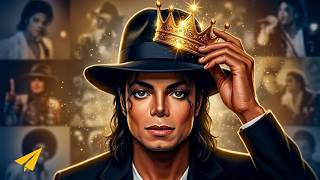
Evan Carmichael breaks down ten habits Michael Jackson used to build his empire, from buying the Beatles catalog for $47.5 million to obsessing over details and rehearsing thousands of times. He then traces the same principles through Elvis Presley and Ed Sheeran, showing how relentless work, ownership, and standing out created billion-dollar careers.
Chapters
Ownership is infinitely more important than fame. I own half of Sony's publishing in— and I'm leaving them, and they're very angry at me because I just did good business, you know. Michael was very canny in the '80s. He's portrayed as sort of a bit elfin and fragile, but actually he was a very— he was quite a ruthless businessman at times. Michael Jackson bought the ATV music catalog for $47.5 million in 1985. Securing the rights to 251 Beatles songs, and that exact investment grew to a total valuation of $1.5 billion. I used to work with him and he'd say, "I'm gonna get your records, you know. I'm gonna get—" No, he used to go, "I'm gonna get your songs. I'm gonna buy your songs." And I'd say, "Love it." You know, I thought it was a joke. Anyway, he ended up doing that. So I mean, I can't sort of blame him, you know, they're on the market. Robert sold him the music catalog that was in the company which we bought. In the UK. It owned the Beatles music. If you only focus on getting attention instead of owning your own intellectual property, you'll always be an employee of the platforms that control your audience. Michael is a creative genius and he's a very astute businessman. In recent years, Jackson has focused a lot of his time on transforming himself from being King of Pop to a captain of industry. In 1981, Michael Jackson was hanging out with Paul McCartney. Paul casually explained how he started buying up publishing rights after losing control of his own Beatles songs in the 1960s. Paul told Michael that publishing, not touring or selling albums, was where the real long-term money lived. Michael didn't interrupt. He just listened and absorbed everything. That conversation planted a seed in his mind. 4 years later, Michael outbid Paul McCartney himself to buy the ATV catalog for $47.5 million. He realized that if you don't own the rights to your art, you don't own your future. But before Michael ever bought the Beatles catalog, he started small., he learned that the publishing rights to some of his favorite artists were up for sale. One of his very first major purchases was buying the rights to the music of Sly and the Family Stone in the early 1980s. Michael recognized that great songs, it's like real estate. They pay you rent every single time they play on the radio or in a movie. He stopped thinking like a pop star and started thinking like a real estate investor building a digital empire. By 1995, Michael Jackson didn't just want to be an artist, he wanted to be a music executive. Sony Music wanted to buy his ATV catalog, but Michael refused to just sell his assets for cash. Instead, he forced a massive corporate merger. He combined his catalog with Sony's publishing division to create Sony ATV Music Publishing. He didn't just get a massive payday of $110 million. He became a 50% owner of the third largest music publisher in the world. He proved that true wealth comes from partnering as an equal, not just selling out. Now, right now you might be thinking that it's a great story, but you don't have $47.5 million sitting in the bank. You might think you need to be rich to start owning your intellectual property, but you don't. You can start building your empire today for free. Every video you record, every newsletter you write, every digital product that you create, that's an asset that you own 100%. You don't need to buy someone else's catalog when you can build your own from scratch. The secret is knowing exactly which daily habits turn your ideas into valuable assets. So today I'm going to show you the exact habits Michael Jackson used to build his empire so you can do the exact same thing in your business too. If you've been here before, drop a hashtag #believe in the comments below so I can feature you here in a future video. And if you're new, welcome to Believe Nation, the only channel that helps you believe in yourself daily, one video at a time. Believe. Habit number 1: obsess over the details. Michael Jackson didn't become the biggest pop star on the planet by accident. He worked harder than anyone else in the room. When he was recording, he showed up 2 hours early just to sing vocal scales. He obsessed over every single note, every single dance step, and every single beat. Most people, they want the massive reward without doing all the boring work. You might look at your favorite creators and think they just got lucky. You don't see the thousands of hours that they spend practicing behind the closed doors. So you have to care about the tiny details of your craft. If you ignore the small things, your customer, they're gonna notice. Excellence is a daily habit of doing the unglamorous work when nobody is watching. You can't just throw things together and hope that it works out for the best. You have to study your industry inside out. You need to review your own performance with a highly critical eye. It's the tiny, small adjustments that separate the good from the great. If you want a million subscriber channel or you want a massive business, you treat your daily tasks with absolute respect. Habit number 2. Put in the reps. So understanding the details is only the start. You have to put in the actual reps. When you are just starting out especially, you will not be perfect. You have to expect to suck at the beginning. Doesn't mean you suck as a person, it's just part of the process. I made 350 public videos on my YouTube channel before I could even watch my own content back without feeling just completely embarrassed by what I made. I hated my early videos, but I kept going. I made 700 videos before I finally made one that inspired me. It's like, I'm starting to get good at this. You have to give yourself permission to be bad so you can eventually get good. Michael Jackson rehearsed his moves until his feet hurt. He put in thousands of repetitions. Don't wait for the perfect time because perfect doesn't exist. Just hit record, write the post, put your ideas out into the world. The more you do it, the better you will get. Action cures fear. Every single time you repeat a task, you build a tiny bit more confidence in your ability to do it the next time. You can't think your way through success. You have to work your way there. Habit number 3: Invest in your own vision. One of the greatest habits Michael Jackson had was betting on himself. When he wanted to make the music video for Thriller, his record label said no. Epic Records thought a 14-minute short film was a massive waste of money. They refused to give him the budget. Most people would have just accepted that rejection, but Michael Jackson did not back down. He decided to fund the project himself. He created a documentary about making the video and sold the broadcasting rights to MTV and Showtime to cover the enormous cost. In your business, you have to be willing to invest in your own ideas too. You need to be able to make big decisions with your heart and the small decisions with your head. Your brain will tell you all the reasons why your idea is going to fail, but your heart knows what you are meant to do. So stop waiting for an investor to discover you. You already have the power to fund your own dreams. When you put your own money and your own time on the line, it forces you to take your vision a lot more seriously. How about number 4? Focus on the story. Michael Jackson hated the term music video. He always called his projects short films. He didn't just want to sing a song. He wanted to tell a story that would capture the imagination of the entire world. He understood that people connect through storytelling. When you're building your business, you can't just sell the facts and the features. You have to sell a story. You have to connect with your audience on a deep emotional level. It's about the quality of your thought, not the quality of your production. So if your message can change one person's life, then it's a message that's worth sharing. Figure out what problem you are uniquely qualified to solve. Tell your story and share why you started this business, why you care so much. People buy from real people who share their values. When you master the habit of storytelling, you turn casual viewers into more loyal fans. You give them a reason to care about your journey. Habit number 5, serve the audience. Your ultimate goal is bigger than just making money, right? Michael Jackson poured his soul into his music because he wanted to bring joy to his fans. He also donated millions of dollars to 39 different charities through his Heal the World Foundation because he understood that true influence comes from serving others. You're built to serve. Every single piece of content that you create should be designed to help someone else. When you focus on who you're serving, you stop worrying so much about yourself. You stop worrying about the pimple on your nose. You stop worrying about how you look on camera, if your lighting is perfect. Focus on the impact you want to make. Make content that leaves the viewer better than they were before they found you. If you only care about getting famous, your audience will feel that selfish energy and they leave. But if you wake up every day trying to solve their problems, helping them, they stick with you forever. Also, if you want to take real action after this video, I made a free worksheet just for you. It covers the top lessons from today, gives you space to write your biggest takeaways, and helps you build a simple action plan. It's 100% free. Just click the link in the description below and go grab it. I'll see you there. Habit number 6: Control your environment. Michael Jackson knew that protecting his creative energy was the only way he could keep producing masterpieces, so he built his own private sanctuary to isolate himself from the endless noise of the media and the public. He understood that your environment dictates your success. So right now, your current environment has been perfectly designed to keep you exactly where you're at. If you want to grow, you have to change what you let into your mind. Most people wake up and they immediately start scrolling through negative news. You cannot build a positive business with a negative mind. So what do we need to do? Shut down the negativity. Fill your environment with things that push you forward. Listen to videos of your favorite entrepreneurs every single morning to hear their voices telling you about what's possible. Guard your focus. If your friends constantly drag you down, you can spend less time with them. Your energy, treat it like it is a highly valuable, nonrenewable resource, and you can't afford to waste it on toxic distractions. Habit number 7: Turn your pain into power. In 1979, Michael Jackson released his Off the Wall album. It was a massive hit. It sold 20 million copies. But when the Grammy Awards were announced, the album only received one nomination. Michael felt completely insulted and devastated. But instead of quitting, he used that massive disappointment to drive his next project. He promised himself his next album would be so big that they couldn't ignore him. The next album was Thriller. He turned that deeper pain into power. So in your life, your purpose comes from your pain. That's what I think. The things that you've struggled with the most are the exact things that you are meant to help other people overcome. If you went through a terrible business failure, your purpose can be to help other entrepreneurs avoid that same mistake. Channel your frustration into your work. Every rejection can push you to work a little bit harder because you're solving it for other people too. Let the sting of being overlooked drive you to create something that forces people to pay attention to you. Habit number 8: Stand out radically. Michael Jackson knew that blending in was the fastest way to be forgotten. He purposely created a visual style that nobody else had. He wore one single white glove. He popularized the moonwalk. He didn't care if people thought that he looked strange. He only cared about being completely unforgettable. So if you want to succeed in a crowded market, you have to be radically different. You can't just copy what everyone else in your industry is doing. If you look the same, you sound the same as your competitors, your customers will have no reason to choose you. Why would they pick you? You look the same. You have to become an impossibility to your younger self. So the version of you from 10 years ago should look at the version of you today and be completely shocked by how bold you've become, right? Stop playing it safe. Safe is boring and safe doesn't get noticed. Lean into your unique quirks. Let your true personality shine so people can come to you. Habit number 9: Study the greats. Even at the height of his fame, Michael Jackson never stopped being a student. He constantly read books about history and psychology and famous showmen like P.T. Barnum. He wanted to understand exactly how the greatest leaders and entertainers captured human attention. You have to make a daily habit of learning from people who are light years ahead of you. If you only surround yourself with people who are at your current level, you will never stretch your imagination. So read the biographies of billionaires, watch interviews with industry leaders, absorb their mindsets until their way of thinking becomes similar to your way of thinking. When you study the greats, what, what I believe is you borrow their belief. That borrowed belief will carry you through on the days when your own confidence is running a little bit low. So make a habit of researching the legends in your field so you can reverse engineer their success. And habit number 10, commit to the long game. True greatness takes an incredibly long time to build. Michael Jackson started performing with his brothers when he was just 5 years old. He spent decades refining his voice before he ever became a solo superstar. He played the long game. Most entrepreneurs, they quit right before they're about to win. They launch one product, and when they don't become a millionaire in 30 days, right, you give up. You have to be willing to grind for years without seeing massive results. My YouTube channel grew incredibly slowly at the start. It took me 5 years of posting to get to a couple thousand subscribers, but I didn't stop. I focused on building momentum every single day. Momentum is the most important force in your business. Keep pushing your limits until the very end. The only way to guarantee failure is to stop walking, right? Stop taking the path. And I'd like to show you how to lock in this unstoppable mindset forever. Your daily commitment to greatness. You have everything you need inside you right now to build a life of massive impact. So stop waiting for permission and start taking the action you know you need to take. Keep showing up, keep doing the work, and never let anyone talk you out of your vision. And congratulations, you're one video closer to who you're meant to be. Believe. Now let's learn how Elvis Presley went from being a truck driver to selling a billion records. Nobody talks about the time Elvis Presley was a truck driver. He got a job as a truck driver at Crown Electric for a good salary of $40 a week. Unknown, working long days and singing along to the radio while dreaming of something bigger. Elvis Presley grew up poor in Tupelo, Mississippi. His family lived in a small house and money was always tight. Elvis came from a very poor upbringing. When Elvis was 10, he wanted a bicycle for his birthday, but his parents couldn't afford one. Instead, his mother bought him a guitar because it was cheaper. Gladys bought her son his his first guitar at the Tupelo Hardware Store for $7.90 for Elvis's 11th birthday. At first, Elvis was shy, but he started playing every day. He practiced after school and sang quietly to himself. Presley recalled, I took the guitar and I watched people and I learned to play a little bit, but I would never sing in public. I was very shy about it. That guitar became his escape from hard times and helped him believe in a better future. As Elvis got older, music became a part of his everyday life. He listened to gospel music at church, blues on the radio, and country songs at home. When I got old enough, I started to sing in church. I liked all type of music. After high school, Elvis worked as a truck driver in Memphis, delivering supplies and equipment. During long drives, he sang along to the radio and practiced his voice. Even while working, he kept dreaming about becoming a singer. I vocalize every day. I practice if I'm working, uh, or not. In 1953, Elvis walked into Sun Records because he wanted to record a song as a gift for his mother. I made that first record really as a personal thing for my mother. When I was working for Sam Phillips, one of the services we offered was a general recording service. $3 one side, $4 two. One day, a very strange-looking young man with sideburns came in and said he wanted to make a record for his mother. I believe he said for his mother's birthday. He paid $4 and recorded My Happiness and That's When Your Heartaches Begin. He wasn't trying to be famous, he just wanted his mom to hear his voice on a record. The studio owner, Sam Phillips, noticed that Elvis sounded different from anyone else. After listening to his voice, seeing his demeanor, his manner, And what I thought was a very different style, I was highly impressed with, uh, what I thought he could do as an artist. In 1954, Sam Phillips asked Elvis to record "That's All Right." A local radio station played it, and listeners kept calling in asking, "Who is that singer?" Elvis started getting attention around Memphis, but not everyone believed in him. Together with Scotty Moore and Bill Black, they woodshedded for hours and days and months in the studio and finally came up with a record called "That's All Right, Momma." When Dewey Phillips played it on WHBQ here in Memphis on his Red Hot and Blue Show, that was it. People went berserk. That's All Right, Momma was a hit in Memphis, Tennessee overnight. When I got on the road to try to convince the people that we hopefully had something a little different, it was a little different story. Later that year, Elvis performed once at the Grand Ole Opry. After the show, the manager Jimmy Denny told him, 'You ain't going nowhere, son. You ought to go back to driving a truck.' Elvis felt crushed. He was embarrassed and discouraged, but he didn't quit. He went back to work, kept practicing, and kept performing anywhere he could. In 1955, Elvis signed a record deal with RCA Records. In 1956, his song Heartbreak Hotel "Blue Suede Shoes" hit number 1. That was the turning point. Elvis became famous across the country. His voice, his style, energy changed music forever. For more than 2 decades, his magic created excitement wherever he went. Elvis was a simple man whose life became complex. He was the king of rock and roll. He went on to sell over 1 billion records and became known as the king of rock and roll. Elvis once said, "There's a lot of people saying a lot of things, but in the end, You got to listen to yourself. A lot of people saying a lot of things, but in the end, you got to listen to yourself. Believe in your dreams before anyone else does. People will talk. Keep listening to yourself. The truck driver with a dream. Elvis Presley was told to go back to driving a truck. He was a young man with big dreams. He was standing on the most famous stage in country music. He was told he had absolutely no talent. This is a story of how a poor kid from Mississippi built a billion-dollar business empire. It's a story about hard work and massive belief. Most people see the famous singer in the white suit. They do not see the lonely kid practicing in his room. They do not see the teenager working long hours. They do not see the entrepreneur who changed the music industry forever. The guitar that changed everything. Elvis grew up in Tupelo, Mississippi. His family was extremely poor. They lived in a tiny house with only 2 rooms. Money was a constant problem. His father struggled to find steady work. They often had to borrow money just to buy food. When Elvis turned 10 years old, he wanted a bicycle for his birthday. His parents did not have the money for a bike, so his mother bought him a guitar instead. The guitar cost $12.95 at a local hardware store. Now, at first, Elvis didn't even want the guitar. He was a very shy boy. He did not like people looking at him, but he started playing the instrument every single day. He practiced in his small room. He sang quietly to himself. So nobody would hear. That small piece of wooden string became his escape from poverty. It gave him hope for a better life. Now, he didn't have teachers. He taught himself by listening to the radio. He played until his fingers hurt. He built a foundation of skill when nobody was watching. Finding the sound. As he grew up, music was everywhere in his environment. He heard gospel songs at the local church. He heard blues music playing on the radio. He heard country songs being played on the street corners. He paid close attention to all of it. He took all these different sounds and mixed them together in his head. He was doing his market research without even knowing it. He was learning what made people tap their feet. He was learning what made people feel emotion. And after high school, Elvis had to get a job. His family still needed money, so he got a job driving a truck for the Crown Electric Company in Memphis, Tennessee. He made $1.25 an hour. He drove around the city delivering supplies, and it was hard physical work. The days were long and exhausting. But he never stopped singing. He sang loudly in his truck. He practiced controlling his voice while he drove. He used his working hours to get better at his craft. He did not let his regular day job stop his massive dream. The $4 investment. In the summer of 1953, Elvis decided to make a bold move. He walked into the Memphis recording studio. This building later became the famous Sun Records. He had exactly $4 in his pocket. He wanted to record 2 songs on a small plastic record. The songs were called My Happiness and That Is When Your Heartache Begins. He told the person at the desk he wanted to make a record as a gift for his mother. But deep down, he also wanted to be heard by professionals. He wanted someone in the music business to notice his talent. The owner of the studio was Sam Phillips. Sam was not there on that specific day. His assistant, Marion Kiesker, was running the record equipment. She recorded Elvis singing. She heard something very special and different in his voice. She wrote down his name on a piece of paper. She made a note that he was a good singer. She kept his name on file. Elvis took his record home and went back to driving his truck. The first taste of success. A full year passed. Elvis kept working his job. Finally, Sam Phillips called Elvis back to the studio. He wanted to see what the young truck driver could do. Sam paired Elvis with two local musicians. They played music for hours in the small room. Nothing sounded very good. They were all getting tired. They were just about to pack up and go home. Then during a short break, Elvis picked up his guitar. He started playing an old blues song called That Is All Right. He played it very fast. He jumped around the room. He added a completely new rhythm to the song. The other two musicians joined in with him. Sam Phillips heard the energy and immediately hit the record button. Sam took the fresh record to a local radio station. He asked a DJ to play it on the air. The DJ played the song. Immediately the radio station Phone lines lit up. People kept calling the station. They wanted to know the name of the singer. They demanded the DJ play the song again. The DJ played that single song 14 times in one night. Elvis finally had his first small win in the market. The ultimate rejection. But success is never a straight line up, right? It is full of hard drops. Later in 1954, Elvis got a chance to perform at the Grand Ole Opry. The Opry was the absolute biggest and most important country music show in the world. Getting on that stage was a massive opportunity. So Elvis drove to Nashville. He went on the famous stage. He sang his heart out for the audience. The crowd did not like his performance. They thought he was too different. The manager of the Grand Ole Opry was a powerful man named Jimmy Denny. After the show, Jimmy Denny walked right up to Elvis. He looked at the young singer. He said, "You ain't going nowhere, son. You ought to go back to driving a truck." The choice to keep going. Elvis was completely crushed by these words. He cried on the long drive back to Memphis. He felt like a total failure. The most important man in the business told him he was worthless. Elvis had a very serious choice to make. He could listen to the manager and quit the business forever, or he could listen to his own heart and keep working. He chose to keep going forward. He went back to his hometown. He kept practicing his guitar. He kept performing at tiny, dirty clubs for very little money. He simply refused to give up on his vision. He knew his value even when the experts did not see it yet. Building the image. Elvis realized he needed to stand out from the crowd. He could not just be a good singer. He had to become a full entertainer. He started shopping at stores that sold very bright and flashy clothes. He styled his hair tall. He dyed his hair completely black because he thought it looked better on camera and on stage. He started moving his body wildly when he sang. People had never seen anything like this before. Some people loved his energy, some people hated his movements, but absolutely everyone was talking about him. He clearly understood the raw power of human attention. So in any business, attention is the most valuable asset that you can collect. If people do not know you exist, they cannot buy your product. Elvis made sure everyone in the country knew his name. By 1955, his contract was sold to the giant RCA Records company for $35,000. It was the highest price ever paid for a musical artist at that time. Now, RCA had the corporate money and the marketing power to put Elvis on a national stage. He was no longer just a local singer. He was becoming a major corporate brand. The power of television. Elvis and his new management team completely changed how the music business operated. They did not just sell vinyl records to teenagers. They sold an entire lifestyle brand. In 1956, Elvis went on national television. Television was still a very new technology. Many old singers did not trust television. Elvis embraced it fully. He performed on the famous Ed Sullivan Show. Over 60 million people watched his performance that night. That massive number represented over 80% of the entire television viewing audience in America. He reached millions of new customers in a single night. He did not have to drive from town to town to to find them, he used modern technology to deliver his product directly into their living rooms. The Merchandise Empire. After conquering television, they started selling merchandise. They treated the Elvis name like a powerful trademark. They put his face and name on absolutely everything that they could manufacture. They sold Elvis shirts, they sold Elvis lipstick for girls, they sold Elvis record players, they sold Elvis hats and lunchboxes. In the year 1956 alone, official Elvis merchandise sales generated over $22 million. This massive success proved that a musical artist could be a diversified business empire. He wasn't just making money from singing, he was building a global brand that created multiple streams of income for him. He was the product, the marketing team, and the CEO all at the same time. The Hollywood strategy. So next, Elvis expanded his brand into the movie business. He knew that movies reached a completely different global audience. Movies also paid very high salaries, so he signed massive contracts to make multiple Hollywood movies every single year. His manager negotiated incredible business deals where Elvis received a huge percentage of the box office profits. Now, many film critics said the movies were not great art. The plots were very simple, but the movies were absolutely great business. They kept his face in movie theaters all over the entire world. They allowed him to sell millions of soundtrack albums. Every single movie was basically a giant 2-hour commercial for his music. He used one industry to feed another industry. Losing the fire. However, success can sometimes make you comfortable. By the late 1960s, the music market changed dramatically. New rock bands like the Beatles and the Rolling Stones were taking over the radio. Elvis had spent many years trapped in Hollywood making silly movies. He had stopped performing live music for his fans. People started to forget how great he was on a real stage. His record sales started to drop. He was losing his position in the market. He needed to pivot fast. And business, if you do not adapt to your changing market, your business will die. The great pivot. So Elvis realized he had lost control of his own product. He wanted to get back to his roots. He wanted to feel the energy of a live crowd again. He made a very risky business decision. He decided to do a live television special to prove he was still the absolute best in the world. He had to show everyone he was not just a movie actor. The Comeback Special. In 1968, Elvis filmed this television special. It is now called the 1968 Comeback Special. He dressed in a cool black leather suit. He looked dangerous and energetic again. He sat in a small circle with his old bandmates. He played his electric guitar and sang with raw, authentic power. He completely reminded the whole world who he was and why he was famous. The television show was a massive critical and financial hit. It became the highest-rated TV show of the entire year. He successfully saved his own brand. He took back his power by returning to the core product that made him successful in the first place. He stopped trying to be what Hollywood wanted. He went back to being Elvis. Inventing the Las Vegas model. After the massive success of the comeback special, Elvis changed the live music business model again. He was tired of traveling on buses and airplanes. He stopped touring the country. Instead, he made his fans travel to see him. He signed a massive record-breaking deal to perform exclusively at the International Hotel in Las Vegas, Nevada. Before Elvis arrived, Las Vegas was mostly a place for older fading singers. It was considered the place where music careers quietly went to die, Elvis completely changed that perception. He turned that city into a money-making machine for rock music. He performed 2 full shows every single day for weeks at a time. He sold out every single seat for every single show. Over 2.5 million people traveled to Las Vegas just to see him perform. He proved to the entertainment industry that a long residency could be highly profitable. He created a brand new way for artists to make make millions of dollars without traveling. Today, giant music stars like Adele and Lady Gaga use this exact same business model. Elvis invented the modern residency. He saw a massive opportunity in a city where others only saw a dead end. The work ethic behind the King. Now, none of this massive success happened by accident. It happened because Elvis had an incredible work ethic. He worked harder than anyone else in the room. He recorded hundreds of songs. He starred in over 30 feature films. He performed thousands of live concerts. He pushed his body and his voice to the absolute limit. He was constantly studying the entertainment market. He watched other performers. He studied lighting and stage design. He involved himself in the production of his records. He was not just a passive singer reading a script. He was the primary architect of his his own massive success. He understood that natural talent is never enough. You have to combine talent with a relentless, unstoppable level of hard work. You have to show up every single day and deliver value to your audience. The final lesson: Elvis Presley eventually sold over 1 billion records worldwide. He officially became the best-selling solo artist in the entire history of recorded His name is known in every single country on Earth. His face is recognized by billions of people. But you must remember where his story started. He started as a poor kid with a cheap guitar. He started as a tire truck driver making barely over a dollar an hour. He was told by industry experts that he had no talent. He was told to give up and go back to driving a truck. He achieved global greatness because he flatly refused to listen to to the doubters. He trusted his unique vision when nobody else understood it. He put in the hard work in the dark. He continuously adapted his business when the market shifted. He built a brand that easily outlived him. Elvis once said a very powerful quote. He said, "Values are like fingerprints. Nobody's are the same, but you leave them all over everything you do." That is the ultimate lesson of his life. You have to leave your unique fingerprint on the world. You can't just copy somebody else and expect to be a legend. You have to find your own voice. You have to build your own path. You have to believe in your massive dream long before anyone else does. The world will always tell you to go back to driving the truck. The world will always tell you to play it safe. You must block out that noise. Keep pushing forward. Keep building your empire brick by brick and trust your own value. Now let's learn how Ed Sheeran built his dream from no money. Ed Sheeran had no record deal, no money, and no backup plan. He played on the streets, in tiny pubs, even on the subway, and some nights he had nowhere to sleep but a train station. But he refused to quit. Now he's one of the biggest artists in the world. Growing up, Ed was bullied for his stutter, his red hair, and his thick glasses. He didn't fit in. Music became his escape. At 16, he dropped out of school, packed his guitar, and moved to London alone. No money, no record deal, no safety net, just a dream. Every night he played tiny pubs, street corners, and open mics, sometimes to only 3 people in the audience. When the gigs paid nothing, he slept on sofas, on trains, even outside Buckingham Palace. Some nights he played his heart out and still went to bed hungry. Record labels ignored him. People told him to quit. But he kept writing, kept performing, kept believing. Then in 2010, everything changed. He took a one-way ticket to LA, played an open mic, Jamie Foxx saw his talent, inviting him to record in his studio and sleep at his house. That moment led to his big break. His independent music blew up online. Soon he signed a record deal, dropped Plus, and the world finally saw what he always believed— he was meant for this. Now, 100 million records sold, Grammy Awards, stadiums packed worldwide. Ed had no money, no support, no excuses, just belief hustle, and a guitar. What about you? Are you making excuses or making it happen? A rough start. Bullied and different. Ed Sheeran grew up feeling like an outsider. He was a shy, weird kid with thick glasses, bright red hair, and a bad stutter. Classmates picked on him relentlessly for how he talked, how he looked, everything. He once said, I wore big glasses, had hearing problems, had a stutter, and I had ginger hair. Not exactly a recipe for popularity at school. To escape the bullying, young Ed found solace in music. He started singing in the church choir at just 4 years old and learned guitar by 11. In his early teens, music had become his safe space, a place to express himself when words failed. In fact, music literally helped cure Ed's stutter. At age 9, he memorized Eminem's fast rap album, the Marshall Mathers LP, front to back, and rapping along helped him stop stuttering. The very things that made him different—his voice, his creativity, his quirks—would one day become his superpowers. But back then, Edges knew that music was his passion. He wrote songs in high school and performed wherever he could. At 11, he nervously played his first real gig, singing Eric Clapton's Layla at a youth show. That little taste of performing lit a fire inside him. He didn't fit in at school, but on stage with a guitar, Ed felt at home. He dreamed of making it big as a musician, even when almost no one else believed in him. No plan B, all in on a dream. At 16, Ed made a bold decision that shaped his future. He dropped out of school and moved to London alone to pursue music full-time. No college, no day job, just gig after gig in the big city. This is a huge leap of faith for him. He had no record deal, no connections, no safety net to catch him if he fell. But that was exactly how Ed wanted it. He never had a plan B. In his mind, if you have a backup plan, you'll use it when things get tough. So he didn't give himself that option. There's no plan B. This has to work was his mindset. By removing the safety net, Ed forced himself to give 100% to Plan A, making it in music. It was a do or die gamble on himself. Now, London was intimidating for a teenager from a small town, Ed arrived with basically nothing, just his guitar, a few songs, and a head full of dreams. He crashed on couches of any friends or acquaintances who'd have him, and when he ran out of couches, he got creative. He knew which late-night subway lines he could ride to stay warm until morning, and he discovered an archway near Buckingham Palace with a warm air vent where he could curl up for a night. He later admitted he was technically homeless for about 2 and a half years from 2008 through 2010. But Ed tried not to see it that way. He was just home less than I'd like to be, as he wrote in one song. He kept reminding himself that it was all temporary, a part of the journey. Now, during this period, Ed had to grow up fast. By day, he would scribble lyrics in his notebook or record rough demos, and by night, he'd haul his little acoustic guitar to any pub, club, or street corner that would let him play. He often performed multiple gigs a day, hustling across London with his guitar on his back. The audiences were usually pretty tiny, sometimes just a handful of indifferent drinkers in a pub or a few passersby on the street. Once Ed played an open mic where literally only one person was in the crowd, but he played his heart out for that one person as if it was a packed arena. And every single day was an opportunity to get better. Rejection? He faced it constantly. Most record labels and industry people completely ignored him in those early days. Now, many artists would have gotten discouraged, but Ed used that as motivation to improve. He set crazy work goals for himself. So for example, in 2009, he played over 300 live shows. Almost every day of the year he did a gig. He read that singer James Morrison got a record deal after doing 200 shows in a year, so Ed thought, I'll do 300. No was not an acceptable answer. He was determined to outwork everyone. Practice makes progress, and Ed was essentially living the 10,000-hour rule, performing nonstop to his craft. My songs are terrible, but I got it out of me. The more you write, the better they'll get, Ed has said, comparing songwriting to letting dirty water flow from a faucet until it runs clear. Every rough gig and every bad song he wrote was bringing him closer to the hit songs that were inside of him. Playing for peanuts: gigs, grit, and growth. So Ed's life in his late teens was anything but glamorous. He He'd lug his gear to open mics where he might get paid in beer or not paid at all. He slept on floors and sofas of kind strangers or fellow musicians when he could. But when he couldn't, it was the train or the outdoors. He went without regular meals or showers. I didn't have the best personal hygiene at that point, he admitted, because it was basically play, sweat, crash, and repeat each day. Yet through all this, Ed never saw himself as a failure. He truly believed he was paying his dues and that his big break would come if he just kept going. And importantly, Ed kept writing new music constantly. In between gigs, he recorded homemade EPs and sold them independently. He wasn't waiting for a record label to hand him an opportunity, he was creating his own. And in 2010, he released an EP called Loose Change, which featured a song, The A-Team, that he wrote after performing at a homeless shelter. He had been struck by the struggles of a young woman that he met there. Ed would later say that many of his first performances were at homeless shelters, and those experiences inspired some of his most heartfelt songs. Even as he was living through his own hardships, Ed was turning pain into art. Storytelling and empathy became part of his signature songwriting qualities that would set him apart from the pack. Slowly but surely, Ed Sheeran was improving. His vocals got stronger, his guitar skills sharper, and his stage presence a little more confident. He was also developing a unique style, using a loop pedal to layer his voice and guitar live, effectively becoming a one-man band. So crowds of 5 turned into 10, then 50. He built a tiny fan base, listener by listener. These few fans were fiercely supportive, buying his self-made CDs and spreading the word about this red-haired kid who could sing and rap and hold an audience spellbound with just an acoustic guitar. Ed's hustle was beginning to pay off in little ways, but the big breakthrough still felt elusive and far away. By the end of 2010, after years of grinding, he was still an unsigned artist living on scraps. Most people, they would have given up. Ed almost did, but he didn't. The turning point: one shot in LA. So in early 2010, frustrated with his stagnation in England, Ed took a huge risk. He spent basically the last of his savings on a one-way ticket to Los Angeles. Sounds crazy. He had no contacts in LA, no shows booked, nothing. But Ed had heard that open mic nights in LA could lead to big opportunities. So he went entirely alone, sleeping on couches in LA, just like he had in London. Night after night, he lugged his trusty guitar to any club or café that held an open mic, signing up to perform among dozens of other hopefuls. He was just another unknown ginger-haired kid strumming for a distracted crowd until one fateful night. That night, Ed played at a popular open mic event in the city. Little did he know Hollywood actor and music lover Jamie Foxx was in the audience. Jamie Foxx had a keen eye and ear for talent, and Ed's raw musical fire caught his attention immediately. He was this pale British kid pouring his soul into original songs, rapping and singing with incredible skill. After Ed's set, Jamie Foxx approached him. Imagine Ed's shock. Foxx invited Ed to his radio show, The Foxxhole, and had him perform live on air, which introduced Ed to a whole new audience. Even more amazingly, Jamie Foxx was so impressed that he offered Ed the use of his personal recording studio to cut some tracks and let Ed crash at his house during that time. For the first time, someone with industry clout was saying, you've got this, let me help you. Ed's long night of struggle was finally seeing a dawn. Ed returned to London with renewed confidence and a small but crucial foothold in the industry. In January 2011, he independently released one more EP, Number 5 Collaborations Project, featuring guest spots from underground rappers that he admired. To everyone's surprise, that EP blew up online. It reached number 2 on the iTunes chart with no label backing at all, selling thousands of copies in its first week. The music industry took notice. Big notice. Ed had built a following on his own, and now the labels were calling him. And in a poetic twist, after years of rejection, Ed Sheeran suddenly had a bidding war on his hands. He signed a record deal with Atlantic Records in 2011. The scrappy kid who had been ignored by every label finally had the machine behind him to amplify what he'd been doing all along. Ed was ready for the world, and now the world was ready for Ed. Rico's success— the world listens. Ed wasted no time. In September 2011, at age 20, he released his debut studio album, Plus, under a major label. It was an album full of songs reflecting his journey— heartfelt ballads, up-tempo tracks blending pop, folk, and hip-hop influences. The lead single, The A-Team, a gentle song about a homeless girl's struggle, showcased Ed's songwriting and soulful voice. It struck a chord globally. The A-Team became a top 10 hit in many countries and earned his first Grammy nomination for Song of the Year. Not bad for a song he wrote while couch surfing. The Plus album itself shot to number 1 in the UK and broke into the top 5 in the US, eventually selling millions of copies. Songs like Lego House and Gimme Love turned casual listeners into diehard fans. After so many years of playing for tiny crowds, Ed suddenly found thousands of people singing along to his lyrics. He had gone from sleeping outside Buckingham Palace to performing for the Queen of England, literally. In 2012, Ed was invited to perform at the Queen's Diamond Jubilee Concert. And at the 2013 Grammy Awards, Elton John, one of Ed's early heroes, joined him on stage to duet "The A-Team" in front of a worldwide audience. Try to picture that moment from Ed's eyes. Just 2 years prior, he was unknown and unsigned,, and now he's trading lines with Sir Elton John at the Grammys. It was a powerful validation that all those lonely nights and all those gritty days, they'd been worth it. But Ed was just getting started. Instead of resting after his first taste of success, he worked even harder. Uh, in 2012 to 2013, he toured constantly, including getting coveted spots as the opening act for Taylor Swift's Arena Tour. Night after night, Ed walked on stage with just his guitar car in front of massive crowds who mostly didn't know him. And by the end of his set, he had won them over completely. He built his audience the same way he did in pubs, only now on a bigger scale. In 2014, Ed released his second album, Multiply, which exploded even bigger. It featured Thinking Out Loud, the love ballad that earned him 2 Grammy Awards and became a wedding playlist staple worldwide. By the mid-2010s, Ed Sheeran was a bona fide superstar, selling out arenas in stadiums everywhere that he went. Ed's third album, Divide, in 2017 broke streaming records and led to the highest-grossing concert tour of all time. Think about that. The kid who played 300 small gigs in a year ended up staging a single tour that sold over 8 million tickets and earned more money than any tour in history. He was selling out London's Wembley Stadium for 3 nights in a row, the very same city where he once slept on the Circle Line train playing because he had nowhere else to go. Ed had transformed every setback into a stepping stone forward. And as he puts it, I have come out the other end and blossomed. Lessons from Ed Sheeran's journey: grit, heart, and belief. So Ed Sheeran's rise from struggling busker to global icon is more than just a music success. It's a lesson that we can all learn from. He wasn't handed anything on a silver platter. He wasn't an overnight sensation. He was an over-a-decade sensation. His story proves that hard work beats talent when talent doesn't work hard. And research actually shows that what we accomplish depends more on our passion and perseverance than about our innate talent for that thing. Passion and perseverance. Ed had both in abundance. He poured thousands of hours into writing songs, performing nonstop to empty rooms, and improving his craft. And every Every time life said no, Ed's answer was, "Try me tomorrow." So what kept him going? First, love of the craft, right? Ed genuinely loves making music, and that sustained him more than fame or money ever could. Second, it was his belief. Like, he had a belief that he was meant to do this. Even when others doubted him, and many people did, Ed believed in his own vision. He turned insults and rejections into motivation. Remember how he was bullied as a kid? He took that pain and vowed to succeed in his own way. He once— advised, "Embrace your quirks. The moment you stop trying to fit in, things will fit around you." So being yourself is your greatest strength. Ed's weirdness became his uniqueness. The very traits that bullies mocked him for—his voice, his appearance, uh, his emotional openness—became what millions of fans now adore about him. Ed's journey also shows just the power of being resilient. He faced homelessness and hunger and loneliness and industry rejection for years. Any one of those could make people give up, but Ed kept writing another song, kept booking another gig, kept knocking on the next door. Psychologists have a word for this kind of perseverance: grit. And Ed's grit was off the charts. He didn't wait for opportunities, he created them, whether by playing 300 shows in a year or flying to LA on a whim to play open mics. He trusted the process. And most importantly, Ed never made excuses for why he couldn't succeed. He could have blamed the bullies or his lack of money or the record labels that all turned him down. Instead, he focused on what he could control: writing better songs, performing better on stage, and working harder than anyone else. No money? He played on street corners. No stage? He built his own audience online. No support? He leaned on his own drive. Ed once said in an interview that having a Plan B can hold you back because if you have an escape route, you'll take it when things get so he made music his only plan. It was a risky strategy, but that focus helped turn his dream into reality. And look at him now. Ed Sheeran's success isn't just measured in album sales or awards. It's in the millions of lives that he's touched with his music and his story. So he's proof that you can start with nothing but a dream and end up living that dream as long as you're willing to work for it and believe in it. His journey from sleeping in subway stations to performing on the world's biggest stages inspires entrepreneurs, artists, or really anyone with a big goal. So the takeaway: if you want something badly enough, put in the work and never quit. As Ed's story shows, perseverance and passion are a winning combination. Make it happen. Your turn. Ed Sheeran had no money, no privilege, no secret shortcut to success. What he had was his hustle, his heart, and his belief. He made his own opportunities through through just sheer effort and refused to let his circumstances define him. So now what about you? Think of your own dreams while you consider Ed's journey. Are you making excuses? Are you making it happen? And the next time you're feeling discouraged or thinking about giving up, remember Ed Sheeran, busking for coins in the cold, sleeping on a train, hearing no 100 times, and remember how he kept going. That persistence built the foundation of an empire, and your persistence can do the same for your me. To watch the top 10 rules video we did on Michael Jackson, check the video right there next to me. I think you'll love it. Continue to believe, and I'll see you there. He's a singer, songwriter, record producer, dancer, and actor. People call him the King of Pop. His 1982 album Thriller is the best-selling album of all time. He's Michael Jackson.
More from Evan


How the Biggest Mistake in History Created A Trillion-Dollar Empire | Sergey Brin



9 Machiavelli Principles That Force People To Respect You | Machiavellian Philosophy



The First 10 Words That Instantly Ruin A Sales Conversation | Vanessa Van Edwards

The Top 1% Mindset Behind The First $5 Trillion Company | Jensen Huang (Nvidia)

