10 RULES! For Winning at Life Every Day
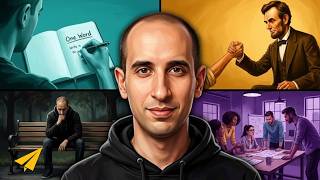
Evan Carmichael shares ten rules for success, from working hard on what you love to treating failure as a learning tool. He lost a $40 million deal to perfectionism, and argues that starting now with imperfect action beats waiting for perfect conditions.
Chapters
The people who win work the hardest because they love what they do. If you just focus on the money, you're never going to get it. This is what so many entrepreneurs do and why so many entrepreneurs fail, is their number one goal is money. Your perfectionism is killing you. It's preventing you from doing amazing things in your life and with the business. Need motivation? Watch Top 10 with Believe Nation. What's up, Believe Nation? It's Evan. I believe in you, and this channel is designed to be a part of your daily success routine. So let's get your motivation to a 10 and get you believing in you. Grab a snack and chew on today's lessons from me. I'm Evan Carmichael, and here's my take on my top 10 rules of success, volume 3. Also, if you want to know what myself and other successful entrepreneurs have to say about building unstoppable confidence, check out my 254 Confidence Series, where every day for the next 254 days, I will send you a morning video for free to help you build your confidence. The link to join is in the description below. If you're doing work that you love, you're more likely to follow through. You're more likely to do it because it doesn't feel like work because you love doing it. Surround yourself with greatness. If you want to be more confident, you need to surround yourself with things that make you feel confident. Okay, let's kick it off with rule number 1: work the hardest. The people who win work the hardest because they love what they do. They put in the hours and the hours and the hours and the hours for days and days and days and weeks and weeks and weeks and months and months and months and years and years and years because they love it, because it's not work for them. The only way you're going to be willing to put in the work that is necessary to win, to be the best in your industry, the only way you're going to put in that amount of work is because you you love what you're doing. And if you don't, you're gonna lose. 'Cause there's gonna be somebody who will love it, who loves it more than you, and will crush you. And you'll be not even a number 2, you'll be mediocre. 'Cause there's lots of people who love what they do. And there's lots of people grinding it and working hard. If you are looking at your calendar, like open up your calendar, look what you're gonna do today, or look what you're doing tomorrow. What's on the schedule? If you're looking at it and you're like, "Ugh, I gotta do all these things." If that's your reaction, you might be in the wrong business. Now, if it's a one-off thing, if it's a one day, you know, you got to deal with the government or something, fine. But if that's daily, if that's consistent, if that's always happening, if you continue to look at your calendar and you're upset and depressed and angry, you're in the wrong business. The work should feel like something exciting to go and do. Where other people might jump into your schedule and say, "That's crazy, I could never do that." That's great, that's why you're not crushing it like I am. Like, go, go crush it in your field, go do your thing. Rule number 2: Create your own path. I think too many people are trying to live someone else's path. You're trying to follow your parents' path, you're trying to be the next Michael Jordan or the next Wayne Gretzky or the next Steve Jobs, you're trying to be the next somebody else. Where if your goal is to be the next somebody else, You're always going to fall short. You can't out-Steve Steve. It's not happening. It's not going to be possible. So you will always fall short if you are trying to follow somebody else's path. The key is to create your own unique path. That's where you're going to stand out, and that's where the magic is going to happen. You already are unique. You already are the first and only version of you that will ever walk this planet. That has already happened, but you're not the best you yet. You're the unique you, you're the first you, but you're not the best you yet. And that's where you can pull from people. You can pull from Jobs, you can pull from Gates, and you can pull from Winfrey, and you can pull from LeBron, you can pull from all these people to make you the best version of you and help you go off on your path. And it starts by understanding what your one word is, living your life on purpose, knowing what your values are, and having the self-awareness to create something that is important. And then by embracing the genius of the end, where the unique talents that you have get mashed up together in a way that nobody else can execute on. And it often comes by, I want to do this, or I want to do this, or I want to do this, and you've got 2 or 3 or 4 things that you don't know which direction to take. And the real answer is to smash all of those things together, because that's the unique thing that only you can do. Anybody can be A banker, anybody can be a salsa dancer, anybody can be a gamer, anybody can be a fill-in-the-blank. But when you start combining those things together and then combine it with your one word, which is your value system, that's something that nobody else can do. It's something nobody else can touch. Now you're off creating your own path and being the best version of you. And that's where your ultimate success, happiness, wealth, and impact will come. Create your own path. Rule number 3: Build self-discipline. The mind is getting in your own way. If you want to lose weight, you know how to do it. You got to eat less, you got to work out more, you will lose weight. Why are you not doing it? Self-discipline. Your mind is getting in your way. But I see self-discipline as a positive. I, I think self-discipline has a really negative connotation a lot of times. I think in a lot of the messages that people are putting out, it comes across as this really negative thing, like you have to force yourself to do all of the stuff that you really hate and it's gonna suck, but but you have to keep going. You gotta do it. You gotta be disciplined. If you're not disciplined, you suck. Everything's terrible. It just comes across as this really negative forcing yourself to do stuff that doesn't resonate with me. I see self-discipline as a really positive thing. I think it's really helpful. I think it's amazing and beautiful and golden. Let's look at weight as an example. I am the lowest weight that I've been all year. I'm on a routine. It's working. The specific strategies that don't really matter: 1, intermittent fasting. So I'll only have water and a coffee until noon, and then after that I'll start eating. I do that 7 days a week. I run for 30 minutes, usually at night while I'm watching a show with my wife, 7 days a week. And then 6 days a week I'll restrict my calories, not really forcing myself not to eat food, just not eating Doritos and not eating junk, right? Eating healthy food 6 days a week, and then Saturdays I get to do what I want. 6 days a week. Those are the strategies that I use. It may seem like torture, but it's not. And the thing that helps me get through it is the mindset, because the positive of all of this is I'm losing weight, I'm feeling great, I'm making progress, I'm super pumped that I'm getting closer to my goal, I feel amazing about myself. So I think self-discipline, usually it seems to focus just on the action that you just have to grind your way through it without enough focus on the mission of what you're trying to accomplish and how beautiful and wonderful that is. And so yes, some of it might suck, right? But you're moving towards something amazing and beautiful. So I think people just focus too much on the negative part of it. And if you force yourself to do something that you hate, you can only do it for so long before you give up. If you can't tie it into the bigger picture of what you're trying to accomplish, then you will give up and you will quit and you will feel terrible. And then I think having other people yell at you about how you need to have self-discipline doesn't actually help. I think it actually makes it worse because you develop the identity for yourself of I don't have any self-discipline. You can build it. It's not that difficult to do. In my perspective, in my view, all you need to do is make sure that you have a really strong why. Make sure that you have an outcome that you are really looking forward to and you love doing. And then the process itself, how do you make the process as enjoyable as possible? How do you make the process just not absolutely suck? Every single day going in, right? If you figure that out, then you win. Rule number 4: don't focus on the money. If you just focus on the money, you're never going to get it. This is what so many entrepreneurs do and why so many entrepreneurs fail, is their number 1 goal is money. Now, money is important if you're running a business. Money is important, you know, even if you're running a charity, money is still important. Money is important, it's just not the number 1 thing. It's number 2 or 3. There has to be something more important than money for you to have success, ultimate success, as an entrepreneur. Sure, you can make a few bucks, but you look at the people who are the top in any field, money was never the number one goal. Look at the people who are self-made millionaires and billionaires and read their biographies and read their story and understand why they started their companies. Watch the top 10 videos on all of them. It's never been about the money. It's always been about making a profound change to the way something is done done in their industry, having a deep passion for their craft that they needed to bring this thing out into creation. You know, when George Lucas created Star Wars, he thought it would be a flop. He thought it would only be for a select few geeks who really loved that genre. He never expected it to be this huge thing that turned him into a billionaire, but he loved making the video and he poured every ounce of creativity he had into making that movie. And that's a story story over and over and over and over and over again. Successful entrepreneurs love their craft. They want to do the work. And as a result of creating something valuable because they put so much love into it, then they start making money. Rule number 5: Start now. There is no perfect first step. There is no perfect plan. There is no perfect time to get started. A lot of people are so held up on finding what the perfect first thing is to do that they do nothing. And that's the ultimate failure. The ultimate failure is doing nothing and just sitting on this idea and never taking any kind of action for it because you're worried about making a misstep. You're worried about making a mistake. You're worried that it's not perfect. Your perfectionism is killing you. It's preventing you from doing amazing things in your life and with a business. You take any step. You have a vision. Here's what I want to accomplish. Here's my goal. I want to write a book. I want to start a company. I want to Whatever it is, whatever first step comes to mind, go out and do that. And then adjust, adjust, adjust, adjust. You can have the best plan in the world, right? And I'm all for business planning. It's not just, I'm just going to throw an idea out there and see what happens, right? You can plan, you can model success, you can look at what has worked for people, but you have to go out and do it. Because the best plan is obsolete as soon as you start executing on it. And this is what almost killed my first business. This is how I learned the lesson because I was that guy. I was the perfectionist. I didn't want to do anything until I had it all figured out. And you only later realize that what you think you figured out, you have no idea what you're talking about because you haven't gone out and done anything yet. I lost a $40 million deal in my first company. I was making $300 a month, sucking in my company, turned it around, started making an income and had an opportunity to sell my business for $40 million, and I lost it to my biggest competitor because I had to have the perfect plan. Because I spent an entire summer working on the perfect plan, and I was too late to the table. I was looking the wrong way. What made great sense on paper wasn't actually what was going to happen in the market, and I lost a $40 million deal because of it. That kills. That sucks. I was 22 years old. It's important to plan what you need to do and don't get so hung up on having the perfect step. Don't worry what the first step is. People write in and say, what's my first? It doesn't matter. Something. Do something and then do something again tomorrow and do something again the next day. And every day you get a little bit better. Start taking massive action. That's how you're gonna get that idea out of your head finally and out into the world so you can start reaping the benefits and having a big impact on this world like you are meant to do. Rule number 6: Find mentors. I'm a big believer in mentorship. One, in terms of, you know, face-to-face people that you can go and learn from, and two, from what I call aspirational mentors— people who've done a lot more than you, who you may never meet, who may have passed on, but you can still learn from their success. It comes from the core understanding that whatever challenge you have in front of you right now, somebody else has already solved it. Whatever big problem you're facing in your life or in your business, somebody has already solved it, and you don't need to come up with every ingenious solution yourself. This is one of the things that saved my first business, one of the two most important lessons that I've ever learned in my life. Was whenever I don't know what to do, whenever I have a big problem, I don't have the answer, I look for somebody who has already solved it and I try to learn from their lessons. In my first business, I had a software company. I was struggling, you know, making $300 a month, barely able to survive, and I was just trying to come up with all these ideas myself, like, okay, how about we do this? How about we do this? How about we do this? And nothing was working. And I told my partner I quit, and it was the worst day of my life. And when I woke up the next The next day I realized I didn't want to quit. I just couldn't keep going the way I was going. And the lightbulb moment was I realized I'm not the first guy to try to sell software before. Maybe our specific kind of software, yes, but in general, other people have figured out how to sell software and make lots of money and target lots of customers. How did they do it? And I looked at Bill Gates and how he got started, and that started the process to me being able to build a real company. And that lesson that I learned at 19 years old has stayed true for the past almost 20 years, where every time I don't know what to do, I look at who can I model. It's why the name of this channel is Modeling the Masters. It's why I try to showcase lots of different successful people from all walks of life, because you can learn from them. I'm learning from them. Rule number 7: Dream big. It can be hard to keep perspective when you hit a rough patch. It can be hard to stay sane and stay motivated and stay optimistic when when you fall on tough times, when something doesn't go right, when the market slows down, when you lose a big customer. And that's part of the game of being an entrepreneur. We're gonna have these highs and lows, but hopefully we're moving forward in a positive direction. And part of winning as an entrepreneur is just sticking with it. It's just staying on the path. It's just every day getting up and being consistent and moving forward. You only really lose if you give up, right? And so you can lose little battles, But if you keep going, you're gonna win the war. I think what really helps you keep consistent and keep motivated and keep on every day getting up and fighting is remembering the why, is remembering your big dream, the big goal, what you're trying to accomplish. And so for me, I think about untapped potential. You know, I think the biggest problem in the world is untapped human potential. I think if we can solve that, we solve all the major problems of the world. And I think the way to help untap people, help to unlock them, help bring out that potential is through the environment, right? You may not have that with your friends and your family, your parents, the people around you, but you can get that from the books and videos and the resources that you watch and consume. And so it's why I created this YouTube channel. What keeps me motivated on a daily basis is thinking about that big problem. The biggest problem the world is facing is untapped human potential. And if I can create content that slowly moves people forward, slowly helps unlock a little bit of potential— if you keep hearing the same message multiple times from different people, slowly it starts to seep in, right? The more time you spend around successful people, the more you want to become successful, the more you adopt their mindset and positivity. And the more you hang around people who are not accomplishing things, who are complaining and who are negative, the more you're going to be like those people. And so my solution is to create that for you, for myself. I want to be around uber successful people and have their mindset seep into me. Rule number 8: Make the most of every opportunity. You need to hustle while you wait. If you can embody this advice and apply it to your business on a day-to-day basis, this will be the biggest momentum shift in your company. This will move will move you so close to your goals at an incredible pace that is unbelievable. Just most people don't do it. Hustle while you wait. Listen, with every goal that you have, it relies on other people. You need other people to be a part of your process, right? If you're selling to customers, you need the customer to say yes. They have to make their decision. There's a bunch of back and forth. If you're waiting on a product to come, you're waiting on your supplier to come forward. There's always things that are outside your control that you're waiting on other people for. And yes, when it comes to you, you want to get it done as soon as possible. If a customer is asking for a quote, you want to get it off your plate ASAP. You should not be the bottleneck in momentum happening in your business. That's a whole other problem. As soon as something comes to you, it's getting taken care of and you're building momentum. But you're still, even at the most peak efficiency, waiting for other people to take action. That's gonna happen. So what do you do in those moments? You hustle. You build new momentum. You build new clients. You build new relationships. You maintain the existing ones and get everything done as soon as possible. And then in the downtime, while you're waiting for a decision, you're not just twiddling your thumbs. You're not just sitting on the couch. You're not watching Netflix. You are off hustling new business. Quick example: I was doing a photo shoot with Richard. This guy's a celebrity photographer, he's done Lady Gaga, done a whole bunch of rappers. He came over and we did a photo shoot together, and in between his shots he's got to set up lights, he's got to get his fog machine going, he's got to get the right angles, he's got to set up the green screen. And so when he needs me, I'm there, I'm ready, I'm posing, I'm in action, I'm ready to go. But there's a lot of setup in between shots. And so what am I doing? I'm pulling out my phone and I'm responding to you guys. I'm making videos, I'm doing responses, I'm getting on Twitter, on Instagram, I'm doing it on Snapchat, I'm sending out video responses to you guys. I'm working! I'm hustling! On my downtime, while I'm waiting for Rich for this project, I am hustling, connecting with you guys. And that's the approach that you need to take. People say, "Well, how do I find the time to respond to people on social media?" I probably have way bigger accounts than you guys do, and I find the time because I make the time in between the other things that I'm doing. This is so critical. People are losing so much time. The answer is not to wake up 2 hours earlier and think that's gonna solve your problem. The answer is you're losing time every single day. You are leaking valuable time from your daily schedule. And so I highly, highly, highly encourage you to take this message home. While you are working, while people are waiting on you for stuff, you are doing your best to deliver as soon as possible so that you are not the bottleneck in your business. But then while you are waiting on other people, you get your hustle on. You continue to build momentum. It is such a hack to get you closer to achieving the goals that you have for yourself. Stop sleeping while you're waiting for other people to get back to you. Hustle while you wait. Rule number 9: Always be positive. I love the idea of reframing a negative situation into a positive one. It can really serve you. It reminds me of what Tony Robbins said, of you look at the worst thing that's ever happened to your life and ask yourself, how can this worst thing ever be the best thing ever? How do you reframe it so that the most negative situation ever in your life becomes your biggest strength? Becomes your mission, helps you follow something that then has a bigger impact. I really think that for people who get through a negative situation, it makes them a lot stronger just as a human being. And quite often the mission that we have in our lives, the things that we want to contribute and give back, is so that other people don't have to face the same consequences, the same suffering that we faced. So for me, I love helping entrepreneurs. I love it. It fuels me. It drives me. What's the big reason for it? Well, it's because I struggled so much as an entrepreneur that I want to make it easier for other people who are like me. And if you're looking for your mission, just go back to previous pain that you've dealt with and how you've gotten through it. Quite often what you want to do is it is then make it easier for people to not have to suffer through the same pain. Figure out what you stand for, figure out what your one word is, figure out what's at the core of you, figure out what your mission is, and And then any negative situation that happens, you can reframe it to one that's empowering for you, the one that serves you, the ones that builds you up and can inspire others around you as well. And rule number 10, the last one before a very special bonus clip, is do not be afraid of failure. If you want to succeed, then you need to adjust how you see failure. Failure is going to happen. If you look at the most successful people in the world, we've studied them, they're in the book, they're all over the channel, they failed the most. The most successful person you look up to, that you're like, wow, that person is so successful, I can't believe it. They have failed way more than you've even tried. Not everything works out. Most of the series that I put out on this channel don't work out. We test constantly and most of them never go anywhere. They just don't get enough traction. It was an experiment, we failed, we move on to the next one. We have failed more than most people even try, and that's why we succeed. And that's a consistent habit around people who are winning. They win because they tried so many other things and a certain percentage make their way through. And most people are so afraid to fail that they don't even try. And that's the biggest failure of all. They're so afraid of it not working out, of it not being the big hit, that they just sit on their idea and then they watch somebody else make tons of money, have a huge impact from it. Get it out there. It may not be the biggest version of what you're trying to do, But start, start small, build momentum, see if you still even like this thing or not. See if you can get some people interested in it or not. And expect to fail. Failure is not the enemy. Failure is normal. Failure is welcomed, right? You're going to learn from it. You're going to build on it. You're going to make it better. If you are not failing, if you're winning every time, think about it. Like, if you're winning every time, everything you touch wins, that means you're playing a tiny game. It means you're racing against 3-year-olds. Great, congratulations, you won every single race because you're running against 3-year-olds. If you want to be the best, you want to have an impact, you want to make your business a success, you want to make money, you want to reach people, you're gonna have to race against people who are a little more skilled and talented. You're gonna have to risk losing. You're not gonna win every race, but the good news is you don't have to. You don't have to win every race as succeed. You just have to win one. You can run 100 races, you just need to win one, and then they call you an overnight success. Now I've got a special bonus clip from me on how to be stubborn on your vision that I think you're really going to enjoy. But before that, it's time for the 3-point landing questions. Time to move from just watching another video to taking action in your life or business. And if you're feeling bold, leave your answers in the comments below. Hello, here we go. Question number 1, what is your big dream? Number 2, what failure are you afraid of that you need to let go of? And number 3, what will you start right now? You need to be insanely stubborn about the mission, insanely stubborn about the why you're doing things, but really flexible about the how. And I think you need to have that stubbornness, especially as an entrepreneur, because when you're getting started, you're gonna get so much pushback, right? What you create, your product, your service, won't be really great at the start, and so it'll be hard to get people to buy from you. You'll have people around you, friends, family, coworkers, you know, people in your community telling you that it's not gonna work out. You're telling yourself that sometimes this is crazy and it's not gonna work out, and so everything around you is saying that this is crazy and that maybe it's not the smartest thing to do, right? Being an entrepreneur is really the smart thing to do. It might be the best thing to do, but what we do is we create a world that does not exist. Like, the best entrepreneurs have a vision for a world that they want to create that doesn't exist yet. So from a practical perspective, it doesn't make sense. Like, we're doing something that has never been done before. You guys need to be doing something that's never been done before, right? Like, you can model some success, but at some point you have to find your own path. And when you go and create your own path, it's not practical, it's not logical, because it doesn't exist yet. You have to go and create it. And so you need to have that stubbornness for the mission, for the vision, for what end objective you're trying to create, because of all of the pushback and negativity and zero the real progress you're going to make at the beginning. If you don't have that stubbornness, if you aren't willing to say, "No, this is going to work out," to yourself and to the people around you who are naysayers, then you're going to quit, which most entrepreneurs end up doing. They, they quit. They don't have enough stubbornness for where they want to go. The flexibility, though, is about how you go and accomplish it. I want to make this world better. Here's how I want it to look like. Here's Here's what I want to change in the industry. But how you go out and do it should be flexible. And this is where I think too many entrepreneurs are too stubborn. It has to be this specific way and this way only. So you spend all this time making this perfect plan, right? The perfectionist. You want to make this perfect plan, and all your time is working on this plan. This is exactly how it's going to play out. No matter how much planning you do, it's never going to go according to that plan. Every successful business, look at how they started. It's not how they started that led them to their ultimate success. Sometimes it's a radical shift in their plan, sometimes it's a minor shift in their plan, but it always has to change. Just look at any company, look at how they started. Look at Starbucks. They started selling just beans. You couldn't get coffee going into a Starbucks. They would only sell you the beans. BMW started selling airplanes. That's why their logo is an airplane propeller. You know, Wrigley's, the gum company, started selling other household products, and gum was just used as a, as a giveaway, that if you buy X packs of this other product, we'll give you some gum. And eventually became the gum company, right? Like, it changes so often, and too many entrepreneurs are stuck on that— has to be this specific way. And if you're not listening to the market, if you're not combining what you love with what the market wants, you're never going to get to the success that you're after. And so that insight insane stubbornness for the vision, but total flexibility for how you accomplish it, that's what's really important as an entrepreneur. If you want more Evan, check out the first Top 10 Rules video that was made on me. The link is right there next to me. I think you'll enjoy it. Continue to believe, and I'll see you there. He's a former venture capitalist, radio host, YouTube personality, and entrepreneur. He sold his first company at 19.
More from Evan


How the Biggest Mistake in History Created A Trillion-Dollar Empire | Sergey Brin



9 Machiavelli Principles That Force People To Respect You | Machiavellian Philosophy



The First 10 Words That Instantly Ruin A Sales Conversation | Vanessa Van Edwards

The Top 1% Mindset Behind The First $5 Trillion Company | Jensen Huang (Nvidia)

