10 Things I did RIGHT and WRONG with my Book Launch - #EvansBook ep. 83
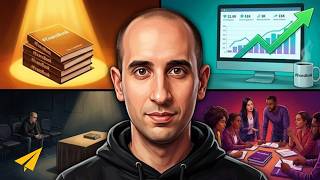
Evan Carmichael breaks down what worked and what didn't in his book launch. He cut his manuscript from 120,000 words to 65,000 using a 30-person test audience, personally wrote and narrated it, but made mistakes like pushing bulk orders instead of smaller bundles and burying his core framework in the campaign.
Questions this video answers
Meet Evan in person in Toronto (or other cities where he’s traveling) and bring a copy; alternatively, join his newsletter list for possible meet‑ups when he’s in your area.
Evan points viewers to the "Your One Word" playlist on his channel, which contains all videos documenting the writing and launch process, and encourages using that as an educational resource.
He advises checking if one word can sit under the other, using the credo framework (passion, confidence, conviction) to see which fits better, and taking time to feel which resonates more consistently.
Subscribe to the channel and click the notification bell, follow his newsletter for major hangouts, and join his secondary live‑hangout channel; also, he streams on Twitch on Friday mornings for Q&A.
Chapters
Today I'm going to talk about the 10 things that I did right and wrong with my book launch. What's up, Believe Nation? I'm excited to be here. The book has been out for a little bit. We've gotten some great reviews, great testimonials. It's been amazing seeing the results people have been getting by going through the book and the audiobook and ebook. It's, it's been an awesome experience. And I've been thinking, I've been thinking over the past couple months what I did right that really helped, that really worked, and what I did wrong so that one, if I ever write a book again, I've learned a little bit. And two, for those of you who are thinking about writing a book, these may be some lessons that you can take to avoid having some of the pitfalls that I went through in launching my first book. So let's start off with what I did right. The first thing was I fought for what I wanted. When I first talked to my agent about this book, he didn't think it was gonna be a book. He thought it was a workbook, like a little tiny worksheet thing. And my literary agent felt the same way, that it wasn't really a full-on book. And I had to fight for it. I had to prove to them that it was a full book, that this is the book, right? Like, I wrote twice this amount, right? This is 65,000 words, something like that, and that's a typical book. I wrote 120,000 words. I wrote 2 books' worth of content. 'cause there was so much in there that you could potentially apply your one word to. And at the beginning they didn't see it, and so I had to show them, and I fought for it. And I think a lot of times at the start, you know, you hear music, there's that quote about you hearing music and so you dance, and the people who can't hear the music think you're crazy, right? You see this person dancing, you can't hear the music, you think they're crazy. It's kind of like, well, it's kind of what entrepreneurs are. It's what I was doing at the start of this book process. I had this vision for what I wanted to do, and people around me thought I was crazy, and so talking about it more wouldn't help. I had to show them. And I was really proud that I fought for what I wanted, because I'm really proud of the book that came out of it. So if you're really convinced that your idea is a good one and it has to be created, fight for it. The second thing is I used a structure that I wanted too. I was really adamant that— I hate reading books that have long, long, long chapters. It really bothers me, right? Most books have these crazy long chapters, and I would find myself reading the same page over and over and over again, and I would find myself forgetting where I left off, and I hate closing a book in the middle of a chapter, 'cause then I forget what happened. I wanna end it at the end of the chapter, end it on a bolded paragraph, something, some clear demarcation so I know where to pick up the next time. And so what I wanted to do was be able to have a book where every page was easy to read, like the language itself was easy to read, but you could pick it up at any point and exit at any point. And so if you look, for those of you who have the book, you know what I'm talking about. See, like, there's the end. I could stop there. I could flip to the next page, right? There's another chapter title at the start, right? Like, whatever page you're on, there's a clear point to stop reading if you want. Like, it flows, but there's a clear point to stop reading. I have quotes at the top of almost every page, and I like that format. And at the start, again, my publisher wasn't a fan of it. And my way around that was just to not tell them and just keep going with it. They wanted longer paragraphs, longer pages, not have so many quotes at the top. And I just kept going basically to the point where we got to deadline and it was going to be too late to change it. And again, I'm so glad that I did that because it's been one of the things that people like most about the book aside from the content, which is amazing, right? People like that it's easy to read, and then you can pick it up at any point, and there's a lot of motivational quotes and things that tie in, a lot of practical examples. And so I'm really happy that I stayed with the structure that I had in my mind as well. And this is generally a good lesson if you're frustrated with something. You know, I was frustrated with a typical reading experience. Let me find an example. You're like, here's an example, here's an example. Somebody gave me this book. Legendary book, said it changed their life. A lot of people talked about this book, Atlas Shrugged. Legendary book. And I load it and it's like, look at this. Look at that. It's just 1,000 pages of intense stuff. And so I need to prepare myself to read this book. And it's only because it became, it came so highly recommended that it's even still sitting on my shelf. Otherwise, it's crazy. And so if you're frustrated with an experience, you're frustrated with reading books like that, you're frustrated with anything that's happening in your life, it creates an opportunity. That's what entrepreneurs do, right? We solve problems. We see a problem, and instead of complaining about it, we find a solution, which is what I tried to do in the book. I was frustrated with the regular book experience, and so I created one that I thought was a better one, and thankfully, a lot of you guys agree. The number 3 thing I did right was I got a test audience. This was another surprising, really interesting thing that is not done in the publishing industry. So I finished my manuscript at 120,000 words, and I said, well, how do we split test the titles, and how do we split test the COVID and how do we split test the content to see, right? Like, in the movie business, they'll make a movie, Then they'll put it in front of a test audience and they'll see what the reaction was. Did people cry when you wanted them to cry? Were they yawning and falling asleep in the movie or not? At what points did they enjoy, not enjoy? When you're looking at creating a new product, you go to a test audience and, "Here's a new chocolate bar I want to make. Okay, let's go sample it and see what people think. Oh, there's too much peanuts. Oh, too much corn syrup." Whatever, right? You test it. You test. You test the product. Great products come when you mix what you love doing with what the market wants, right? This business basics. Yes, you have to love it. Yes, you have to see an opportunity. Yes, you have to create something from your soul. At the same time, the audience has to like it. There has to be a need for it. Otherwise, you're just in a hobby. You're doing something that you love, but nobody cares about it, so you're just off on a hobby. I didn't want this to be a hobby. I wanted this to have an impact. And in the publishing world, there is no sampling, there is no test audience. It's just not done, which was surprising. And so I said, okay, I'm going to make my own test audience. If that's— if this isn't part of the system, this isn't part of the process, I'm going to make it part of the process because that's how you launch a successful product. And so I got 30 people, half of whom were entrepreneurs and half of whom were not entrepreneurs. I felt like it would do well with the entrepreneurs. I wasn't so sure about the non-entrepreneurs, but it's good to get their feedback regardless. And they gave them the 120,000-word manuscript, and they went through it. And they, you know, I got it back after them, and they highlighted. I kept track of who highlighted what, not so much concerned about like this person's individual opinion, but as a whole, these 30 people who reviewed it, what were the most highlighted passages? What were the comments that people liked the most? What were some parts that people found were really confusing? And I took that to take my 120,000-word manuscript down to the 65,000 words that we have today. I cut out the chapters that people didn't resonate with as much. I added chapter highlights from the people, from the quotes that people underlined the most, right? Knowing how people react to your stuff can help you make a better product. And so I'm super glad that I went through that exercise, and also really grateful to the 30 people who reviewed it for me because they gave me a lot of insanely valuable information that could take the book from 120,000 words down to 65. And my agent Wants to take that other, you know, 55,000 words that we cut out and turn that into a book? Like, no, that's not, that's not, that, that's not a book. I'll throw away that book. If I'm going to do another book, it'll be something totally different. And I think that's part of being an entrepreneur too, and being good at what you do, is you create and throw away more than what most people even try to make. So many people just sit there with an idea and do nothing with it, where the successful entrepreneurs, they try. They try, they try, they try, they create, they create, they create, they create, they are prolific with their creations, and not everything is gonna hit, and that's okay. And you take the best and you keep moving forward with it, and the stuff that didn't work, it's great. And I think it's good to get into the practice of creating and throwing away more than most people will even just create. Throw away more than most people even try to create. You will fail your way to success. I'm really glad I have my test audience because they gave me the critical information. Then also when I was going through the back and forth with the editor and the publisher to say, "Hey, keep this, don't keep this," I had data. It's not just my opinion because they had opinions and said, "Oh, we don't like this," or, "We like this." Well, listen, we tested it. Here's what people think, real live people who are entrepreneurs and non-entrepreneurs who are going to read the book. Here's what they think. We were able to use that test data to be able to fight. For the parts that I really wanted to incorporate into the book. So really helpful. The number 4 thing I did right was I did it myself. Getting into this industry, I realized how many books are not actually written by the author. There's ghostwritten with no credit. Their audiobooks are read by somebody else. It's just basically putting their name on the front of a book. And I definitely had a team who helped me, but most of the parts that are in the book and all of the parts that are like opinion pieces, it was me. I wrote it. I wrote it. It may have been edited, it may have been corrected, grammatical issues, but I wrote it. And it was one of the actually the best things from the editors was they were, they went through everything with a fine-tooth comb. And there's actually still a few errors and typos we found in the book, but they went through everything and corrected a lot of the grammar, which is great. I'm super grateful for that. But I wrote it. Like, it's my words, it's my content, it's my meat. And I think as a result, the product is better. I remember I was picking up an audiobook for a book I was really excited to read. I forget what it was. And then I found out that the person wasn't actually the person. It was read by some actor. It's great. It's nothing against the actor. It's just not the person. It's not the guy. I want to hear from the guy. And so when we talked about doing the audiobook, I insisted on doing it. Now, they wanted me, which was good. Most authors don't want to put in the work to do it. Like, of course I'm going to do it. I need to do it. It's my book. It's my voice. I need to get it out there. And so really, I think doing it myself was a super important part of the book's success. And the number 5 thing I did right was I also got a team. As much as point number 4 was I did it myself, I got a team for all the things that I wasn't good at, or I wasn't having a lot of success at, or I just needed help with, right? So I have— I had my 2 agents who made sure that a deal happened and helped me find the right publisher with Penguin Random House, right? We found the publisher who cared, who liked the message, who was on board, who supported the vision. And that was important because I don't know if I would have gotten that on my own, and I didn't want to publish without a publisher. I had people who helped me with some of the research on the book. I think about all of the quotes that are in the book and how many of them Jason helped find for me, uh, and just helped be an amazing filter so I didn't have to go and do all the research. One of my friends, another entrepreneur, Jennifer, helped me with a lot of the interviews that I was doing to The third part of this book is me interviewing people who were also living their one word and also applied it to their business and went from $50,000 full-time income up to $150 million in revenue off of their one word. And so sitting down and interviewing them, and what I find is when I'm doing an interview, I'm either in the present and with that person, or I'm taking notes and have a hard time doing both. And so Jen sat in with me on hours and hours and hours of interview. Each one was 3 to 4 hours at least. She was taking the notes, and she asked a couple of great questions too, and then she compiled the notes and put it together, and it was really helpful. And so if the words weren't my words, right, if the words were Christopher Gavigan from The Honest Company, then she would write those words. And the words that were me, I wrote, which is most of the book. But super helpful that we had that team. The guys who are on the audio side were paying so much attention to the quality and the detail, and the audiobook came out fantastic in a way that I wouldn't be able to do myself. And so I think it's really important to understand where it is that you shine. I want to come up with the strategy, I want to come up with the ideas, I want to write the content that's coming from my voice, my opinions. I want to be the voice when we're doing the audio recording. I want to be the guy on the video, there's video bonuses for people who bought the ebook. I want to, I want to be that because that's the most important use of my time. The other stuff I'm not great at, and we can get it done a lot faster if I have people around me. And so I think that's important to any successful launch of any product— understand what you're really good at and going all in on that, and surround yourself with people who can support you in the other projects. So those are the 5 things I did right. Now let's get to the 5 things that I did wrong. Up first is The bulk orders versus the 1, 2, 5, I really focused on bulk orders because I was told to focus on bulk orders, right? And I think you buy the 1, but then you can also buy 10 and then 25. I forget what the different packages were of books. And one of the bits of advice that came back from one of the guys on my team was you should do a package for 2 and a package for 5. If you buy 2 books, you get this. You buy 5 books, you get this. And the advice came while we're already into the process, and the website was pretty much built with all the offers, and I didn't take it, and I should've. Where I think a lot of people jumping from 1 book to 10 books is a big jump, but some people would buy 2 books, and if you give them an incentive to do it, or buy 5 books, you give them an incentive to do it, they would. And so most of the sales that you end up making are gonna be at the lower end, as opposed to people buying 100 books at a time. And so giving some kind of reward and incentive for somebody to buy 1 extra book or 4 extra books could really make a difference. Number 2 is the lead time on the COVID and on the creative. So this is something I did not anticipate. One of the things that I was really adamant on was I wanted each page to be the end. So as I— let me load up any page, random page. Oh, actually, well, this one works. Okay, so you see how here it's at the top, there's a header, there's a quote, and then there's content. And then if I flip to the next page, it's not, right? It's in the middle. Oh, where am I? Here. It's in the middle, and then there's a quote and content. And then on this side, it's in the middle, quote, content. I wanted it to be at the top. I wanted each page to be at the top. I wanted the headline to be at the top, and then the quote, and then each thing underneath. And, uh, we couldn't make it work. It was either I'm so adamant about that structure that I walk away from the deal because with the timeline set up, we couldn't make it work because I wasn't using the right template. And I'm looking at 65,000 words, having to rewrite and reshift everything around. It wouldn't work for the timelines. And so that was super frustrating. Also, the COVID I'm actually not a huge fan of. The COVID was— the COVID came really late in the process. I, again, not knowing this process, assumed that we'd have time to go back and forth and work with different designers and split test ideas. And it's not. It was basically, here's the idea from our art department, what do you think? And the only room is for a couple minor tweaks and improvements, and then that's basically what you go with. It's like, well, we need an idea, we need a final version in 2 weeks. It's like If you don't have a designer, if you don't have that skill in-house to go out and find somebody and get everything done and get it approved, we just ran out of time. That was on me assuming that we would have enough time. I would assume that the COVID matters, the COVID is important, the COVID we would spend a good amount of time on. Now, my publisher loves the COVID my agent loves the COVID I'm not a big fan of the COVID But again, It's one of those things, do I wanna hold up the launch of this book because of the COVID Like, am I gonna walk away from the deal because of the COVID No, because the content inside is really, really good. And if I did it again, in terms of another book, I'd make sure I have a lot of lead time. I'd start designing the COVID from the beginning to make sure that that art is just as good as the content and the art that's inside the book. I think it's important. The number 4 thing I did wrong was understanding the importance of the credo. The credo has become such an important part of the process as I walk people through it offline. So the credo is the 3 things that make up your one word. So you got your one word, and then the 3 things that add clarity make up the credo. And so I have believe, and under believe there's passion, you know, believe in what you're doing. There's confidence, which is believe in yourself, and there's conviction, which is believe that it's going to work out. So believe, the one word, breaks down into passion, self-confidence, and conviction. And that is an extremely valuable exercise for people to go through. And what I— and it's in the book, but it's in the campaign section of the book where I realized in talking to people and going through the process afterwards that really it should be part of core. Because that understanding is not just about marketing, which is campaign, it's about you. It helps you with your life and you make important decisions and you live a better version of what you want to do. And so it's buried more into the campaign section instead of being more upfront in the credo. So if I had to rewrite the content, that's one thing that I would really focus on, moving the credo earlier and making it more important. It's something that I walk people through when I'm coaching them individually, the people on my team, but it's not nearly important enough in the book. So for those of you who have it, pay extra special attention to the limited pages on the credo because it's really important. Number 5 is underestimating the importance on leadership. I don't really talk about leadership in this book. I never really thought of it as a leadership book. It was more as a self-leadership book, I guess, for you to manage yourself and then be able to build a team and hire the right people, but not how to lead people with their one word and understand them to be better. I've been getting a lot of interviews, a lot of requests, a lot of speaking opportunities around leadership. And it's been so interesting how people are using the book. So we have, you know, CEOs and entrepreneurs reading the book and they think about their team and they realize, huh, my team should go through this. Everybody should find their one word and find their credo. And if I understand what their one word is and I understand what their credo is, then I know how to push them to get the best thing that they want. So as an example, any organization will have goals, right? We want to hit this amount in revenue, right? We all have these common goals that we're shooting towards. But how we go and execute that and how we motivate and push people will be different. So if our goal is to hit $1 million in revenue and I've got somebody under me who they're responsible for driving that project forward, what's their one word? If their one word is grit, then I have to push them around getting the work done and not making excuses and let's go, go, go, go. If their one word is creativity, then I have to push them around coming up with creative ideas. I know that if I'm just telling them exactly what to do, Somebody whose one word is creativity is gonna suffocate, 'cause they need to be creative, right? We still have our goal of what we wanna accomplish, but the path to get there will change based on the people that you have underneath you. And often what you'll find is when you break down the credo, there's one part of that at least that people are falling short of. So if, you know, self-confidence is part of somebody's credo, when you see them not being self-confident, you're given the tools to help push them. I believe a leader's role is to take somebody who you see has a lot of potential, right? They could be up here, they're down here right now. Your job is to help them close the gap. That's your job as a leader, is to see potential and help close the gap. And so by understanding somebody's one word and their credo, they're giving you the tools to help them. Because if you think everybody thinks like you, they don't. If you think everybody has the same values and credo as you, they don't. Understanding that and not just seeing everybody as you and everybody as, "Well, here's how I would solve it." That's not going to help everybody. There's going to be a ton of people who won't be able to solve the problem the exact same way you do. That's where leaders often mess up. That's why a lot of, even you look at in baseball, some of the best baseball hitters make terrible coaches because they just try to teach people how they do it. Where what you need to do is understand them to teach them in a way that makes sense to them. And knowing what their credo and their one word is, it's giving you the tools to say, "This is what I feel is important to me." And so when you see them falling short on those things, you know how to push them. And it's not pushing them for you. Yes, if they do well, it helps the company, but it's pushing them for them. They've told you that this is important to them. They've told you creativity or believe or confidence is important to them. And so when they're not living up to their own expectations, you know how to push them. And so it's been such an important leadership tool, and a lot of that stuff isn't in the book. It almost makes sense as a sequel, although it's not the next book that I want to write. So anyway, I wish that was somewhere in the book, and if I was rewriting it again, I would include that. So those are the 5 things I did right and the 5 things that I did wrong that I would keep in mind for the next time I'm writing a book, and hopefully you guys learn from it as well. Let me jump to some of the questions that came in recently from you guys. Okay, first up is Replicant 70. Bless you, Evan, your excitement is so infectious. I pre-ordered the copy already, so a study group format would really enhance my experience of your work. Also, as someone who is also super keen to write a book of his own, capturing your book publishing journey is mega valuable to me. Could all the relevant videos be bundled up into a book writing toolbox? You so deserve your success for all the value you're giving to so many people around the world. Don't ever leave us, my friend. Lots of love in here, really appreciate it. So we're just finishing— we just finished 7 weeks of the book club. I made the book club, which was a virtual hangout. We hung out once a week for an hour and talked about different chapters, the 7 chapters. So each week was its own hangout, and I did that because I want people to get it. I want people to read the book, not just buy 10 copies and have them sit on your shelf. Like, read it, do the exercises. I want you to get value. It's important to me that you read it and apply it to your life and your business and get results from it and not just buy another book that does nothing for you. So that was a really exciting process that we just finished last week. All of the videos that are around Your One Word, there is a playlist. If you go to the main channel and scroll down, there's one of the playlists, I think it's called Your One Word. All the videos that I've done, that I've documented from the beginning, from the idea to the writing to the, the excitement of launching to the pains of negotiating, all the problems that went through. Every week there's a new video that we, that have been putting up for, I don't know, 2 years. So there's lots to learn. I would encourage you, if you're trying to write your own book, to go through that experience, and hopefully you'll be able to learn what it takes to write a book with a major publisher. That was the intention, to be able to document the series and also have it as an educational tool for everybody else who's writing a book. And in terms of leaving you You know, I do the things that I love doing, and right now I still love YouTube. I still love making videos. It's my favorite platform to connect with people, and as long as I love doing it, as long as you guys are enjoying it, I will still be here. Next up, Luke William: Evan, how can I get a signed copy of your book? I just finished listening on Audible, and I'd love to have a signed copy. #Believe. Best way to get a signed copy is to come to Toronto and let's meet. And bring a copy. There's been people who I've had coffee with and talked about their business. There's been some people who just stopped by, you know, what was that, Toronto Dance South, or doing something else, and just a quick, you know, 5 minutes in the hallway. If you're ever in the city, you want to visit one of the most beautiful cities in the world and potentially meet, but I can't guarantee that we're going to be able to have time to grab a coffee, but at least for 5 minutes just to maybe take a selfie and sign the book, I'd be happy to That's the best way. Otherwise, if I'm on the road, I'm coming to LA and Orlando and Paris. You know, if I'm ever in the city that you're in, the best way there is if you're on my newsletter list, I'll email the people in that city that I'm going to, and we usually find a way to meet up if I have some extra time. Next up is Nora. Thank you, Evan, for the shout-out. I really appreciate it. I'm reading your book, still trying to figure out my one word. I'm between two, explore and create, and it's hard to find a common word connecting them both. Any advice would be greatly appreciated. This actually is common when people have multiple words and they're trying to figure out how do I get it down to one. And I get that there's a, you wanna get it, you want the sense of accomplishment, you wanna rush to it and say, here it is, here's my goal, I got it, you know, I accomplished it. As entrepreneurs, we are go-getters. I really encourage you to take your time to figure it out. This is one of the most important exercises you're ever gonna do in your life, in my opinion, understanding yourself, having that self-awareness, and then building an entire life and business around it. It's important to spend the time to make sure you get it done properly. I know that may be hard to hear for us out and about go-getters, but it's also important to make sure that you have the right one. When going through this exercise, I encourage people to look at two things. The first is see if one fits under the other. You have create and explore. I talked about having the one word and then the credo underneath. The credo is the three things that help define your be your one word? Believe equals passion equals self-confidence equals conviction. That's what it means to me. Does one fit under the other? So you have explore and create. Could explore be your one word and create is under it, and you have two others that are under explore? Or could create be your one word and explore is under it, and you have two more next to explore? Are they equal level of importance, or can one fit under the other? It's a really important question because once you start adding some definition to it, you can often realize that this one helps me define the other one, and the other one is actually the most important. If they are equal importance to you, then I'd be looking at, okay, what is one thing above it, right? I use the example in my book of my father who was going through— he had heart was his one word, but he didn't know it. He ended up with— he started with He loves, he cares about people, massively cares, is just a genuine human being and doesn't like to see suffering. And he loves adventure, motorcycles and ziplining and fun adventure. And so how do those— those seem totally opposite. I mean, at least create and explore are kind of close. His seemed totally opposite. Caring and adventure seemed totally opposite. And what came down to was heart. Heart is both. Heart is caring for people and heart is going off and doing something adventurous. Your heart gets pumping. And so that worked out for him. So that's a little creative way to figure it out. Is there something that can connect, create, and explore? At the surface, it feels more like the first one where one fits under the other, but at the end of the day, this is your one word. This is who you are. This has to be something that you love. And the more you sleep on it and the more you think about it, It'll either become more and more right or more and more wrong. If you doubt it more and more and more and more, then it's wrong. If you like it more and more and more and more, then it's right. And so with time, it'll add more clarity. Last up is Anita. I missed it again. We need some calendar, a notification system. Please think of something. Jay Rise and Mihail put their heads into this too. Go team. I think this was in relation to one of the live book streams that I did. I don't know if I'm doing any more of the book live hangouts. We'll see where it goes. The book series is something to play with now, right? It was easy to talk about what I was doing, and then the book was finished, and so it became, okay, how am I going to market the book? And then that came out, and then the book was launched, and I did the live hangouts. And so now we're into this interesting phase where I'm thinking, what do I do with this book series? I'd love your feedback if you guys want to put something in the comments below. And see how the series continues, or maybe it doesn't and we do some other new series. In terms of notifications for any live session, the easiest way is one, if you subscribe, obviously, it's easy, you get notified by email, and two, if you click that bell. You see a lot of YouTubers now saying like, click the bell, you'll get notifications. We are thinking about some other method, you know, either from our website or newsletter or something, The major ones I'll do on my newsletter if it's a big Hangout on the main channel. I also have another channel just for live Hangouts. And so if you want more live stuff and you want to ask me questions one-on-one, that's a great place to subscribe to. We'll link it up and you can head over there and subscribe. And then also Friday mornings I play League of Legends on Twitch and I answer questions. And so if you have a question you want to hit me up live, every Friday morning at 9:00 AM Eastern you could jump on. With other members of Believe Nation. You could chat, you can watch me play League of Legends and cheer me on, as well as answer your business questions to help you with your one word or whatever else you're facing in your business. So that's it for now, guys. It's a long video, but I wanted to get my thoughts and help answer some questions. I learned a lot in this entire process, and I'm better armed with more information for the next time through. Again, I would love your feedback and thoughts and questions around the book if you have any. Any questions you want to share, put it down in the comments and I'll answer you next week. And also your thoughts on what you want this series to look like and how you want it to continue. Super open to your feedback. Leave it down below. Thank you guys so much. I believe in you. I hope you continue to believe in yourself and whatever your one word is. Much love. I'll see you soon.
More from Evan


How the Biggest Mistake in History Created A Trillion-Dollar Empire | Sergey Brin



9 Machiavelli Principles That Force People To Respect You | Machiavellian Philosophy



The First 10 Words That Instantly Ruin A Sales Conversation | Vanessa Van Edwards

The Top 1% Mindset Behind The First $5 Trillion Company | Jensen Huang (Nvidia)

