12 Ways to WIN at Risk! | Take Charge
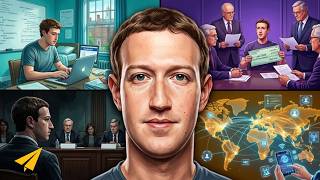
Evan Carmichael, Mark Zuckerberg, Sam Altman, and Taraji P. Henson argue that inaction is the biggest risk. Zuckerberg says staying stagnant in a fast-changing world guarantees failure. Altman warns most people misjudge risk early in their careers and should take calculated bets instead of waiting for perfect plans.
Chapters
In a world that's changing so quickly, the biggest risk you can take is not taking any risk.
You don't have all the answers, and that's okay, and that you're gonna figure it out along the way.
Most people don't take enough risk, especially early in your career.
Rise and shine, it's anspresso time! Good morning, Believe Nation, it's Evan. My one word is believe, and I believe in you. I believe you have an amazing gift inside you that I want to see explode out onto the world. So let's start your day off right together. Grab your coffee and sip on today's message: Take risks. Over to you, Mark Zuckerberg.
I wake up every morning, espresso keeps me going.
I wake up every morning.
In a world that's changing so quickly, the biggest risk you can take is not taking any risk. And I really think that that's true, right? I mean, a lot of people, I think, think that, um, you know, whenever it comes to— whenever you get yourself into a position where you have to make some, some big shift in direction or do something, um, you know, there are always people who are going to point to the downside risks of that decision. And locally, they may be right, right? I mean, for any given decision that you're going to make, there's upside and downside, but in aggregate, if you are stagnant and you don't make those changes, then I think you're guaranteed to fail, right? And not catch up. So to some degree, I think it's really right that over time, the biggest risk that you can take is to not take any risks.
The biggest risk is not taking a risk at all. I love it. So many people are so afraid to follow their dreams, to have this big idea that they have that they wanna go off and accomplish. We have this big vision for ourselves, and we're so afraid of making the wrong decision that we do nothing. That you see this big goal and you have 3, 4, 5 potential paths and you have limited resources, limited time, limited money, limited abilities, and you wanna say, "I need to make the perfect decision because if I make the wrong one, it all falls apart." And as a result, we get paralyzed by fear and we do nothing, and that's the biggest risk of all. That's when you see somebody else making tons of money off your ideas. That's when you fast forward 10 years and you still haven't done anything You're still in the exact same position that you are now. Meanwhile, lots of people have taken that idea that you had and are crushing it. And so the way to get over it is to recognize that as soon as you get an idea, you need to find some small way to test it, and that you don't have all the answers, and that's okay, and that you're gonna figure it out along the way. Don't be naive like I was to think that you can create a business plan and it's gonna be the perfect business plan, you're gonna have all the answers figured out, and then you're just gonna execute that business plan. Because as soon as you finish writing your business plan and you get out into the world and you start testing your assumptions, you'll find out that you made a lot of mistakes, that a lot of what you thought would happen didn't happen. You couldn't predict the future. You couldn't predict how customers would react. You can't come up with the perfect plan just sitting in your apartment, sitting on your couch, going to the library. You have to actually get out and start talking to customers, test your assumptions. That was my Biggest problem in my first business. I spent 3 months working on the perfect business plan, and then when I got out to market, I realized a lot of what I thought was going to happen, a lot of what I thought what the reactions would be, is not what actually happened. And that set me behind. And so being attached to that perfect idea, understand that that doesn't exist. There is no perfect plan. There is no perfect idea. As soon as you get something in your head, as soon as you get an idea for something to do, then find some small way to get out and start testing it. Find some small way to get out and start seeing, are you getting yeses? Are you getting traction? Do you even enjoy this? A lot of times these big goals that we have for ourselves, when you get into it, you want to be a YouTuber, great. You start making videos, you're like, yeah, I don't really like that. Go figure that out as soon as possible. People wait years before they go out and try their first attempt at it, and then they realize, you know what, that wasn't for me. And so I strongly encourage you to, one, As soon as you get an idea for something, something you want to test out, something that you think might work, find some immediate way to test it on a small scale. Don't take a big risk. Don't go mortgage your house. Don't go take out a giant loan. I hate spending money until I'm making money. Find some small way to get started. And then 2, use the fear of regret. Use that idea of that if I don't do anything, that in, in 60 years you're going to look back on your life and say, I really wish that I took some action on it. I'll give you a concrete example of what I'm going through right now. With YouTube, I feel like this is my moment. I feel like I know what I'm doing. I feel like I have my window, however long it's gonna last. It could be 6 months, 12 months, 24 months. I gotta push as hard as I can. I feel like we're really hitting it. I think it's a great combination of everything that I love doing, my skill sets, my interests, my passion right now, to provide value to myself and to you guys. And so that's why I'm pushing hard and making 3 videos a day. I go to my website. I had a shift where I said, "You know what? I want to solve the world's biggest problem: untapped human potential." What does that look like? I don't know. When I first launched it, I had no idea. I deleted my entire website, threw up one picture, and that was my homepage. If you go right now, you'll see it's still a bunch of pictures. I added a little bit more meat to the bones, but I still don't know where it's going. I don't have all the answers around it. I'm still trying to figure it out. But I figure it out by doing, by testing, by having conversations. And so from an SEO perspective, my website sucks. But I wasn't interested in the direction I was going anymore. I switched. And so I had to find a way to get started. And so I did it myself. My website has now what I call the Circle of Potential, and all of those points you can click on it and dive a little bit deeper. Somebody made a comment when he clicked on the first version of my self-awareness button. He said, "Well, it's only promoting your stuff. It should have a wider range." You're right. I don't know the answer yet. I'm figuring it out. And so I don't let the fear of making mistakes prevent me from doing anything, because if I waited until I had the whole thing figured out, what the perfect website would look like, I'd never launch it. And having a website that's not complete and building some momentum with it drives me to want to do more on it, drives me to want to figure out more details on it. And so some pages are more worked out than others, but all of them need a lot more work. And it just came from that initial idea, that initial thesis, that as soon as you have an idea for something, you find immediate ways to take action on it because the momentum is so, so, so, so, so, so important. The biggest risk of all is not taking any risk at all. Now I have a special bonus clip for you, but before getting to that, my question of the day is I'm curious, what is the risk, the risk that you have that you've been sitting on that you haven't taken action on but you want to? And after watching this video and leaving the comment, you're going to leave it down in the comments below. Really curious to see what you have to say. Thank you guys so much for watching. I believe in you. I hope you continue to believe in yourself and whatever your one word is. I'll see you again tomorrow morning for another shot of espresso, and enjoy the bonus.
I wake up every morning, espresso keep me going. I think people have terrible risk calculus in general. Even people who try to be really good about this are bad at it. The answer, I think, is almost always A, you're wrong about what is risky and what is not risky. And B, most people don't take enough risk, especially early in your career. Being young and unknown and poor, that is actually a great gift in terms of the amount of risk you can take. And I think people don't capitalize on that enough. I think what risk actually looks like is not doing something that you will then spend the rest of your life regretting. There's a quote, you know, people regret way more the things they didn't do than things that they did do. So, if you really believe in something, if there's an idea that you're super passionate about, you know, and you take a calculated risk to start a company, realizing you may forgo a couple of years of steady income in another job, and whatever else, and, you know, maybe people call you a failure or whatever, that's a great risk to take. And if you don't take that risk, I think you have a very high chance that you end up regretting that. I think the wrong kind of risk to take is where people don't actually do things or don't commit to something because they don't want to fail and they overrate the risk of failure and the reputation damage or embarrassment or whatever. I think one really important thing to strive for in your career is to be a doer, not a talker. And the reason that people don't do stuff. One is it's hard, and two is it's risky. And so you have these people that, you know, want to dabble in a bunch of different projects but never be all in on one. And I think it's this combination of work and risk. And it's, you know, I think that's really bad. I think history belongs to the doers. And I think you should take a risk, actually do something. Don't just sit around and talk and organize and bring together groups and, go to thought leadership conferences and whatever it is these people spend their time on other than actually building something, and just take the risk of committing to what you have conviction on. New business formations are way down.
Way down.
Way down. And venture capital is way down.
Well—
That means people are afraid of something. These are brand new business startups, a very important economic measure.
Way down.
Well, I think, you know, to me, I'm an entrepreneur. And I think that true entrepreneurs, it doesn't really matter what's going on in the economy. If they come up with a great business idea, great product, they're risk takers. They're going to go for it. It doesn't matter if the taxes are up 5%. It doesn't matter what is going on with that. They are people that just are pioneers. They're going to forge ahead and start that business no matter what. What's the biggest risk you've taken that you feel has paid off?
Off?
The biggest risk I've taken that has paid off— I want to say Cookie. I mean, I was very nervous when I received the script. She wasn't the most likable character, and I've played some pretty edgy characters, but this one was particularly a challenge because it was primetime network television, and I wasn't sure how people would receive her. I mean, she beat her son with a broom, even though he deserved it. Um, she called one son a faggot. I mean, it was, it was scary, but I'm the type of artist that if the role doesn't scare me, I don't want it, because it's not going to change me as a person. So I took a risk, and that's what you do as artists. You jump in feet first. And you see where it goes. And I knew that we had something special. I don't just jump feet first for any project. I knew this was something special. I knew that what Fox was trying to do with Lee Daniels and Tani Strong were trying to do, and what I was trying to do was shake up television. Too safe. You know, life is not safe. And I think we did that with this show. So I'm so proud I'm so proud to be a part of this project, and I'm so proud that Fox believed in us and took a chance, because that's what art is about, isn't it? Taking chances, taking risks.
Raise your standard.
Apple, at the core, its core value is that we believe that people with passion can change the world for the better. Not one drop of my self-worth depends on Don't give up on your— it's something to me.
I don't ever give up. I'd have to be dead or completely incapacitated.
Hey, Believe Nation! If you want to see my all-time favorite top 10 rules of success, I have a very special secret video for you. These are the individual clips that I have personally learned the most from and applied to my life and my business. Check the link in the description for details.
More from Evan


How the Biggest Mistake in History Created A Trillion-Dollar Empire | Sergey Brin



9 Machiavelli Principles That Force People To Respect You | Machiavellian Philosophy



The First 10 Words That Instantly Ruin A Sales Conversation | Vanessa Van Edwards

The Top 1% Mindset Behind The First $5 Trillion Company | Jensen Huang (Nvidia)

