3 Steps to UNSHAKEABLE Financial Security with Tony Robbins!
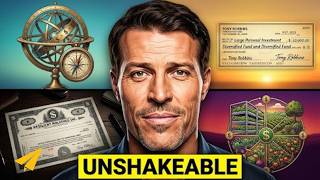
Tony Robbins explains financial unshakeability as a mindset that survives market swings. Corrections of 10-20% happen yearly, bear markets every five years, but historically each crash leads to a strong recovery. The four principles top investors share: obsess over not losing money, seek asymmetrical risk-reward, maximize tax efficiency, and diversify across asset classes and businesses.
Chapters
What's up, Believe Nation? I started the Mentor Me series with the goal to try to learn from people who've done a lot more than us, hang around them a little bit longer, and by being in their environment, hopefully some of their mindsets, their beliefs, their way of thinking seep into us to help us become the best version of ourselves. So today we're gonna learn how to be unshakable with Tony Robbins. Mentor me, Tony. And as always, guys, as you're watching the clip, if you hear something that really, really resonates with you, please leave it down in the comments below and put quotes around it so other people can be inspired. And also, when you write it down, you're much more likely to lock it in for yourself too. Enjoy.
Tony, the idea of being unshakable is clearly more than money, but in this context, what does it truly mean to be unshakable? It's a state of mind. Uh, it relates to money, money, because most people, when they're trying to figure out how to create financial freedom, create more stress for themselves worrying about what's going on. And when you're truly unshakeable, you have the mindset where you understand how the market works. You understand that real estate can go up or down, stocks can go up or down, but your family can still do well. Unshakeable is a bear market can come, a correction can come, and there's no fear in you. Or if there is a little fear, we're all human, you don't stay there. You find a way to break through. You find your center. And when you have that center, you do what's right to be able to take care of yourself and your family. And I was interviewing about a year and a half ago, you know, the former Fed Chair, Alan Greenspan, who for 19 years, the most powerful man in finance in the world under 4 different presidents, spent 5 hours with him, about 3 privately and 2 on stage in front of a group. And one of my final questions to him, and we talked about all this crazy change and all this volatility and how do people get things together? I said, look, if you were back at the Fed today, What would you do? And there was this long pause. He paused, he paused, and he leaned in me and he said, Tony, I'd resign. That did not build much confidence in me or anybody else who'd be watching. And yet in the midst of all that, as you well know, there's a few unicorns in the financial market, very few. These people that have found a way to do well over all the decades in good times and in bad, and they know what it takes to be unshakable. And it isn't just guts or confidence, it's understanding certain facts that when you know them, for you. The metaphor I give people is that, you know, if you go— most of us have heard the old Sufi metaphor of, you know, the man is walking along in the middle of the night and he sees a snake and freaks out, runs away, and he comes in in the morning and what does he see? It was a rope. And so once you know it's a rope, you can be there in the middle of the night and you're not scared again. This book, Unshakeable, is this— it's really a financial freedom playbook for anybody. It's the real essentials about how to go from where you are to where you really want to be, but how to do it with peace of mind, how to do it even when things are volatile, enjoy yourself. I wanted to write a book that would protect people because we all know a crash is coming. And if you're not in the market, you're still going to experience it if you're not prepared for it because it affects the economy as a whole. And every 5 years we have, on average, we have a bear market or a crash. And it lasts a year and it drops 33%. But every single one of those, you don't lose any money unless you sell. It's really important for Americans to understand this because America is unique. In 2 and a half centuries, Every crash is followed immediately by an explosion up in a bull market. So you all remember 2008. You remember the market, you know, dropped almost 50% from peak to trough, if you're aware of it. But from March 9th, what, a day or two from now, was the celebration of it. It went up in the next 12 months 69%, and it's been going up ever since for 250%. So you get really wealthy when those numbers change. So what I want to do is free people from the fear, not by enthusiasm or positive thinking, but by facts. The facts are there's a correction every year. You shouldn't be surprised the market corrects. Last January was the worst opening in the history of the stock market, and we had a record-breaking year. People lost $2.2 trillion if they sold, but if they stayed, they went nowhere. So when you know that every single year there's going to be a correction— now, a correction, by the way, means it drops 10% up to 20% from the peak. A bear market or crash is 20% or more. But every year since 1900, for 116 years, we've had a correction. It's like winter. You're not surprised when winter comes. Some are long, some are short, but you know what's coming.
You've even got a chapter in the book called "Winter Is Coming." Yes, yes.
It's my HBO special. But the reason I say that is if you know it's coming, we want to prepare so you're protected. But also for everyone listening, everyone who's joining us online, think about this. If you're a millennial, for example, and you got all this debt from college, so imbalanced right now, and you think you're never gonna get free, or you're a baby boomer and you never got started, and you think it's too late, believe it or not, the crash, the next crash, is the greatest opportunity in your life to leapfrog from where you are, where you don't wanna be financially, to where you wanna be, 'cause everything goes on sale. Listen, the ladies in this room, if your favorite outfits or shoes are on sale for 50% off, you're pretty damn excited, right? Well, guys, if I said to you, "What's your favorite car?" and you said a Ferrari, and I said, "You can get it for 50% off," guys would be out of their mind. But when the stock market drops 50%, it's on sale, most people freak out. Not Warren Buffett, not people like that. I interviewed a guy named Howard Marks. He was investing a billion dollars a week in 2008 and '09 when the market was through the floor. Now he's worth $100 billion, 'cause he bought everything for pennies. You gotta think of it this way. When things are going really great, what do people want for the price of their home, or the price of their stock, or their business? Its real value, or more? When it's going up like crazy, everybody wants more than it's worth. When it starts crashing, what will people take for their car, for their business, for their stocks? What will they take? Anything they can get. And so those opportunities are the greatest ones in your life. And here's what you gotta know. If you're stressed by worrying about the market or the economy, there's a correction every year. You're gonna be stressed forever. If you're 35 and you live to 85, you got 50 more corrections to go through. And, you know, a bear market comes every 5 years, so you're gonna have 10 more bear markets in your life. Time to stop being stressed. Time to become unshakable, which simply means you have a plan, You know what's going on. You're not fearful because you know how this works long term and you're not going to be taken advantage of. You're going to take advantage of the environment. The goal, if you own a business, and I would assume a lot of your viewers are business owners or getting started in business, no matter how good you are in business, think about this. The one universal rule that idiots in finance know is diversification. It's the only free lunch. You've got to diversify because if you put all your eggs in one basket, no matter how good the basket is, One day that real estate market, that stock market, that bond market, that collectibles market, whatever you invest in, Ray Dalio showed me statistically, it'll drop 50 to 70% on a day. Now, if you're later in life when that happens, it's over for you. So you have to diversify, and yet most people, they know real estate, so they do it, or they know stocks, they do it, or they grew up with their parents flipping things, and it's the wrong thing to do. So you've got to diversify in order for you to be able to truly succeed and That's why when you own a business, yeah, if you put all your money in your business, which is what most of us do naturally, you put all your eggs in one basket and there's things that can happen. I mean, you know, you're— let's say you spent 20 years and you figured out how to put together the ultimate map, you know, and you remember Garmin came out with this thing called the TomTom. I don't know if you remember, used to put on your— are you old enough to remember that? You put on your phone or you put on your dash. Cost $100. It was a breakthrough. They were making like $100 million or something.
They were.
Yeah, yeah. 6 months later, what happened? The iPhone came out with Google Maps. These little bastards, excuse my French, came out with it, put Google Maps, put their own map on here, and it cost how much? Zero. What's that gonna do to your business when someone takes your product or service and gives it away for free? So I always tell people, competition happens, technology happens. What you must do is have a second business with no moving parts, no people, no time. Maybe it takes you 2, 3 days a year for 2 or 3 hours after you've read the book, you put it in place and you measure it 2 or 3 times a year.
That's it.
Go on with your life. Now if there's trouble in your business, you're financially set. I, in my life, have 31 companies now. We have, you know, what do we have, 1,200 employees, 7 different industries, we do $5 billion in sales. I mean, that used to be, you know, me and my seminar business, it's grown geometrically. Wow. But with all those moving parts, the only way I've been able to succeed is because I've taken every one of those businesses and I've diversified my assets so that when things were in trouble, I still have enough economics to take care of myself and keep the business going. So everybody needs to create a money machine that works while you sleep. Mm-hmm. That doesn't have moving parts. And that's what this is really about.
Can you talk about what it means to discuss the market as a game and how that might be a dangerous concept?
Sure, well, first of all, the reason I called the other book, "Money: Master the Game," is that every wealthy person I interviewed called it a game. Every single one. And other people were saying, "That's irresponsible, that's horrible to call it a game, this is the dumbest thing, that's—" But see, that mindset is what's keeping you from investing in the first place. So you can be in a game, it can be a difficult game. Challenging games are usually the ones that we like the most. But this is a game that can reward your family disproportionately to any other game that's out there. Now, some people play games aggressively, some play things more in a secure way. Mm-hmm. Your style is more secure, and what I teach in this book is we wanna have a style that makes you feel good, 'cause you may make a bunch of money, but you're stressed all the time, it's not worth it. There's a way to make money your slave instead of you being the slave to money. But let me explain, it's not put all your money in the market. It's really two things. It's first, you've got to decide the most important financial decision of your life. And that is to become an owner and not just a consumer. If you have a— I see a bunch of iPhones recording this right now. Just watch your foot because there's a glass of water there.
Thank you for catching that.
If you're a, uh, yeah, I'm an active human, so move around with me. But if you got an iPhone and you don't own Apple, or better yet, you don't own the index of the S&P 500, the best 500 companies, you're making a giant mistake because you'll never earn your way to financial fortune. Even people that make Just loads of money. The actors, the actresses, the athletes. Where are they 10 and 15 years later? I mean, 50 Cent made $100 million on Vitaminwater. He got a tip. And he got like a $200 or $300 million net worth, and he's bankrupt. He bought Mike Tyson's house, 25,000 square feet, and Mike Tyson made half a billion dollars and went bankrupt. Right now, I don't know if you saw Johnny Depp. I don't know if it's gonna happen or not, but the papers are saying he may go bankrupt. He made 3/4 of a billion dollars as a movie star, but he spent $30,000 a month on wine. He must be feeling good. And secondly, he took Hunter Thompson, the reporter, he burned his body and paid $3 million to blow his ashes into the sky in a cannon. So no matter how much money you make, you can screw it up, right? But if you will just decide there's a percentage of my income that no matter what, I'm gonna have it automated, I'm not gonna see it, it's gonna go straight to an investment account. And I don't know if it's 10 or 15 or 20, Those numbers sound gigantic to most people. Even if you start with $5,000 and build, that income does not go to anybody else, and then you put that into compounding. So listen to this. There's a young man, true story, Theodore Johnson, 1950s, worked for UPS, never made more than $14,000 in annual income in his entire life, retired with $70 million, and he didn't inherit a dime. He gave away $35 million while he's alive. Now, how is that possible? Because of compound interest. When I interview all these investors and say, "What's the biggest mistake Americans make?" He said that they all said they don't tap into compound interest. They know intellectually a little bit what it means, but they don't do it. They don't do it consistently.
So what do you do? It basically just means that the profits you make go back into the investment.
You keep reinvesting and it keeps growing, but it grows geometrically, right? And so a friend of his came to this man who worked for UPS and said, "I'm gonna make you rich." We're going to put a 20% tax on you. He said, I can't give up 20%. I can't pay my bills if I do that. He said, listen, if the government raised your taxes 20% and you'd claim, you'd scream, you'd cry, you complain and you'd pay it and you get adjusted to it. But he said, this is not from the government. This is going into an account for your future. And that compounding is what made him that much money. In the book, I give you an example of an 18-year-old boy whose father convinces him that he should save $300 a month out of his income. It's not a huge income, it sounds like a lot, but when you automate it, you forget about it, it's perfect, you adjust. Well, he does this from 18 years old to 27, for 8 years. So the total amount of money, $300 a month, about $4,000 a year, that's $28,000 total. He then puts, he leaves it in the market and never adds a dime to it from 28 years old on. At 65, because the market over those 30 years grew 10%, his money has compounded so much that he has $1.8 million. You don't need a lot of money to be wealthy, you need time.
So you're saying that even if I have student debt that I'm struggling to pay off, even if I'm making, say, $1,000 a week, that I should still try to put a percentage or make it a point to put a percentage not just into a savings account, but into an investment account?
Into an investment account. Where to put that money, then we teach you the ways to do that, and it's gotta be diversified. Yeah. You never put all your money in the market.
I want it, okay.
What are the 5 takeaways that somebody can take from this book where they can really put them actually into action?
Well, I'll tell you the 4 things that I interviewed these 50 unbelievable investors had in common. They're all different. You know, I interviewed people that are macro traders. I interviewed people like Warren Buffett, right? Value people. I interviewed people that it's blood in the streets type of people. You buy when the world is going to hell. And they're all different, but they had 4 things in common. Real fast. Number 1, every single one of them was obsessed with not losing money. Guys like you and I tend to say, how do we make money for our companies, for ourselves as an investor? Their entire focus is not losing money because they know if you lose 50%, it takes 100% to get even. Well, it's about becoming comfortable with risk.
Well, it's more than that.
These guys are obsessed with not being comfortable with risk. They don't want to take risk. The second key that they do is they all are focused on asymmetrical risk-reward. Most people think the most successful investors take huge risks to get huge rewards. And in reality, they take the least risk humanly possible to get the largest upside. So their whole focus is, how do I get a 3-to-1 or a 5-to-1? If I risk a dollar, try to make 5, and I'm wrong, I can risk— I can be wrong 4 times and break even. So they have a completely different approach. They're all very focused, thirdly, on tax efficiency, because you only have the money you get to keep. And fourthly, it's all diversification. And those 4 things fundamentally are the frame from which you start to design a portfolio. How did you go from basically not having a hot meal to, you know, basically being a guru, an international guru, and doling out financial advice? Well, it's interesting. I was just— Worth Magazine just named me their Power 100, was 100 most influential people in global finance, along with Carl Icahn, the guys I interviewed. But part of it is I believe in modeling. I believe success leaves clues. If someone has done very well financially for decade after decade, they're not lucky. They're doing something different. If someone is fit and healthy and they've managed it for 20 years, they're like, they got a great relationship, they're not lucky. So I'm really good at deciphering what those things are. So I would go sit down with someone like Jack Bogle, you know, who built, you know, $3 trillion industry, right? You know, and what he's doing there at Vanguard. And I'm supposed to have a 45-minute interview and we go 4 hours and he says he's been in the business 65 years and in the book he says it was the most penetrating, emotional, dr— interview he's ever done in his life. 'Cause I kind of extract it out of their brain and then make it simple so you can apply.
So thank you guys so much for watching. I'd love to know what did you learn from this video? What clips? Spoke to you the most, and what are you going to take from these clips and immediately apply to your life or to your business somehow? Leave it down in the comments below. I'm super curious to find out. Finally, I want to give a quick shout out to Trident Lion. Thank you so much for picking up a copy of my book, Your One Word, and for making that awesome YouTube video on it as well. I really appreciate the support, and I'm glad that you enjoyed the book.
Today, this video is all about your one word.
So thank you guys so much for watching. I believe in you. I hope you continue to believe in yourself and whatever your one word is. Much love. I'll see you soon.
More from Evan


How the Biggest Mistake in History Created A Trillion-Dollar Empire | Sergey Brin



9 Machiavelli Principles That Force People To Respect You | Machiavellian Philosophy



The First 10 Words That Instantly Ruin A Sales Conversation | Vanessa Van Edwards

The Top 1% Mindset Behind The First $5 Trillion Company | Jensen Huang (Nvidia)

