5 Boring Businesses That Will Make You a Millionaire
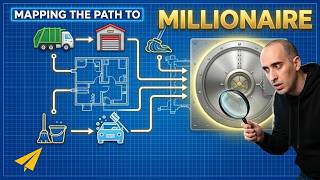
Evan Carmichael breaks down five unglamorous businesses—waste management, self-storage, commercial cleaning, HVAC, car washes—that generate recurring revenue and scale to millions. He shares a $40 million opportunity he missed and argues that execution beats innovation; the real work is marketing, understanding customers, and starting before you're ready.
Chapters
You don't need a totally original idea to become a millionaire today. Steve would translate good ideas, not always his good ideas, but he would translate good ideas into finished product unlike anyone in our industry. You'd have to— I mean, Henry Ford didn't invent the car, but he made it cheap and he made it popular and he made it accessible to the American people. I think there's a misunderstanding that when you start a business that you need to do something that's never been done. There's nothing new in this world. It's a new way to present it. The top companies in Shark Tank history. Socks and a sponge. The most reliable path to financial freedom is to take a boring everyday service and just run it a little bit better than the guy down the street. The biggest ideas are just take something in the world that you've— that's already big and proven, the demand's there, and just say, you know what, I can do it better. Whatever industry you pick, if you outwork everybody, if you try to be a little smarter than everybody, If you try to be a better salesperson than everybody, if you try to be better prepared than everybody, you've got your best chance. A lot of what makes great companies great is the ability to just, like, relentlessly execute and efficiently execute and do that rigorously and just get better and better at it all the time. Uber was Magic Cab 3 years earlier. Uber is not an idea. Uber existed. It was called Magic Cab. But the guys that executed it sucked. So they lost. If you reject proven business models just because they aren't exciting, you're choosing a lifetime of financial stress over the freedom that you deserve. By 2027, the waste management market is expected to grow into a $229 billion industry. By 2020, the self-storage industry in the US had become a $22 billion market. Commercial cleaning services are actually experiencing quite the uptick. With this recent stretch of hot weather, the HVAC repair business is booming. Uh, Wall Street Beat, the US car wash industry is growing like never before thanks to private equity. So Think about Wayne Huizenga. He did not build a tech company or some fancy app. He dropped out of college and bought a single garbage truck in 1962. Every morning at 2:00 AM, he drove the truck himself and hauled trash for $1.25 a wagon. In the afternoon, he showered and knocked on doors to get more customers. He just worked hard and gave good service in an industry that most people thought was dirty and boring. By 1982, he owned the largest waste disposal company in the United States. He turned that single truck into Waste Management, a company worth billions. He proved that the dirtiest jobs can create massive fortunes. Now, right now you're probably thinking, I don't want to spend the rest of my life driving a garbage truck or cleaning up messes. You think that choosing a boring business means you're signing up for a lifetime of hard manual labor, but you have it wrong. You aren't buying yourself a job. You're building an empire. You might start in the truck for a few months to learn the ropes, but your real job is to build systems and hire people to do the heavy lifting for you. You step back and run the business as a true CEO. So if you're ready to stop dreaming and start building, I'm going to show you 5 boring businesses that can make you a millionaire. If you've been here before, drop a hashtag #believe in the comments below so I can feature you here in a future video. And if you're new, welcome to Believe Nation, the only channel that helps you believe in yourself daily, one video at a time. Believe. Waste management. Now, this sounds dirty, but the profits are incredibly clean. The global waste management industry is projected to grow from $1.43 trillion in 2025 to $1.97 trillion by 2030. Why is it so powerful? Every single business and homeowner produces trash. They all need it hauled away on a regular schedule. That means predictable recurring revenue for you. You do not have to drive the truck yourself forever. You can buy an existing local business where the current owner wants to retire. You can look at the real-world data. Small waste businesses sell for incredibly reasonable multiples on their earnings. You step in, keep the current drivers, upgrade the customer service, and run the company from your laptop. You optimize the daily routes to save on fuel costs. You answer the phones when people call. You show up when you promise to show up. It sounds so basic, but is the exact formula for massive wealth. Many people get stuck on overthinking the perfect idea. Your environment has been perfectly designed to keep you where you are. So if you want to break out, you need to build momentum. And the fastest way to build momentum is to take action on a simple, proven concept. Taking action on a trash collection route gets you unstuck. You buy the trucks, you secure the commercial contracts, you let the cash flow in month after month. Now, are you ready to see a business that requires even less manual labor? Self-storage facilities. People buy way too much stuff and they completely refuse to throw it away, right? That creates a massive opportunity for you to build incredible wealth. Self-storage is one of the most resilient business models in the entire world. You buy a piece of land, build simple steel structures and rent out the empty boxes. You do not need to deal with emergency plumbing calls at 2 AM. You do not have to argue with angry tenants complaining about their broken appliances. The self-storage industry operates with incredibly low overhead. You can even automate the entire process with smart security gates and digital cameras and online contracts. A well-run facility can operate with almost zero onsite staff. So when I coach entrepreneurs, I always ask them, what would the boldest version of you do? The boldest version of you would not trade your time for money forever. The boldest version of you builds a hard asset that works while you sleep. Self-storage gives you that exact freedom. You get paid every single month while the steel buildings just sit there on the dirt. You leverage technology to handle the billing and the gate access. You build a machine that prints money without demanding all of your daily energy. So if you want to stop playing small, you have to build systems that scale without your constant involvement. Self-storage is the ultimate scalable system. You put a great SEO strategy in place, you rank high on Google Maps, and customers drive straight to your property. Also, if you want to take real action after this video, I made a free worksheet just for you. It covers the top lessons from today, gives you space to write your biggest takeaways, and helps you build a simple action plan. It's 100% free. Just click the link in the description to go grab it. I'll see you there. Commercial cleaning services. Offices, schools, medical clinics need to be cleaned every single day. The global cleaning services market was valued at $415.93 billion in 2024 and is projected to hit $6 $619, almost $620 billion by 2030. The industry has a massive employee turnover rate. Sometimes employee turnovers reach 200% annually. Most cleaning companies treat their employees terribly. They pay the lowest possible wages and offer zero training or respect. This is your exact competitive advantage. You do not need to scrub the floors or empty the trash cans yourself. Your job as the owner is to build a positive culture where your cleaners actually feel valued. If you treat your team with deep respect, you pay them fairly and give them the the right tools, they will stay. When your cleaners stay, your clients stay. I always teach a specific 3-step process: eliminate, automate, delegate. You eliminate the bad clients who just complain about everything and they refuse to pay you on time. You automate the employee scheduling and the client invoicing using basic software, and you delegate the actual physical cleaning to a highly trained, respected team. You are built to serve. When you serve your employees well, they serve your clients well and your bank account grows rapidly as a direct result. Do not just be a general cleaner. You pick a highly profitable niche like medical clinics or post-construction cleaning and you completely dominate it. Now let me show you an industry where the profit margins are even higher. HVAC services. Heating, ventilation, and air conditioning is literally a goldmine hiding in plain sight. When a homeowner's air conditioning breaks in the middle of a hot summer, they do not care about shopping around for the lowest price. They just want it fixed. When? Right now. You can charge premium prices for emergency weekend repairs. Installing smart thermostats and indoor air quality systems can yield profit margins of 50% or more. You do not need to know how to fix a broken furnace to own a highly profitable HVAC company. You hire licensed technicians to do the complicated technical work. You step back and act as the true CEO of the operation. You run the local marketing, manage the finances, and build the trust in your brand. The secret to massive wealth in HVAC is the recurring seasonal maintenance contract. You inspect the units in the fall and spring, and you find the expensive problems before they happen. The biggest problem holding people back, I think, is just a lack of belief. You think you need to be the smartest technical person in the room to lead a service company. You do not. You just need to be the visionary leader. You set the standard for amazing customer service. You make sure that the phones are answered promptly every single time. You ensure that the technicians, they show up on time and they clean up after themselves. You run a tight Professionalship in an industry full of sloppy operators. That is exactly how you dominate your local market and build your legacy. Now, do you want to know a business that is completely automated and prints cash? Car washes. Every day, millions of people gladly pay for service they could easily do themselves in their own driveway. They pay to get their cars washed. Self-service car washes can achieve massive profit margins of 40 to 50% because they require almost no human labor. You buy the expensive equipment, set up the credit card payment terminals and let the customers do all the physical work themselves. Full-service automatic tunnel car washes also generate massive cash flow through monthly subscription programs. People will gladly pay $30 a month to drive through a Fast Tunnel and wash the car whenever they want. This creates predictable recurring revenue that private equity investors absolutely love to buy. You're giving people back their precious time and they reward you with their hard-earned money. Car washes live and die by daily traffic counts. You You just need to find a busy corner lot with thousands of cars passing by every single day. Your big ideas come to you for a reason. If you feel a spark right now while hearing about these simple, boring businesses, you need to trust that spark. Do not overthink the process. Perfectionism will destroy your dreams before they even begin. So expect to suck at the beginning. Just acquire the land, install the modern wash bays, and start serving your local community. You will learn the hard lessons you need while you are actively building your business. Your time to build. You already have everything inside you required to succeed. So stop waiting for the perfect glamorous idea to rescue you from a life that you hate. Take one of these boring businesses, commit to the hard work, and change your financial future forever. Your potential is completely limitless. And congratulations, you're one video closer to who you're meant to be. Believe. Now let's talk about the AI bubble. AI is a bubble. And that's good news for you as an entrepreneur. Sounds backwards, right? Everybody's either hyping AI as the second coming or dismissing it as a passing fad. But my take is the so-called AI bubble is the biggest opportunity you're about to miss if you're not paying attention. And I don't want that to happen for you. In fact, I'd rather you fail by riding this wave than play it safe and watch it pass by, because one of my core beliefs is I'd rather no one fail than not know at all. Right now you're caught between two extremes. On the one side, people are screaming that AI will change everything overnight. Every app, every business, maybe even replace entrepreneurs entirely. On the other side, you've got folks whispering, it's all a hype. It'll crash and burn. Save yourself. It's like standing in the middle of a gold rush. Some are either racing to stake their claim. Others are too afraid of a bust to even dip their toe. And you, you're just trying to figure out what's true and what's noise. Here's the deal. If you freeze, if you do nothing out of fear, you risk getting left behind when AI reshapes your industry. But if you chase the hype blindly without a strategy, you could waste time and money on something that collapses. Neither of these outcomes are ideal. You have worked too hard to let a wave like this either leave you in the dust or wipe you out. The consequence of getting this wrong isn't just missing a trend. It could mean missing the future of your business. So imagine looking back in 5 or 10 years and saying, I had the chance to jump on the AI revolution, but I was too scared or too stubborn to do it. Regret like that stings, and I know because I felt it, and I don't want you to feel it too. Lessons from the dot-com bubble. To understand why I'm excited about the AI bubble, let's take a quick trip to another bubble, the dot-com bubble of the late 1990s. Now, back then, everyone was throwing money at anything that had a dot-com at the end. Pets.com, a company that sold pet supplies online, raised over $80 million and became a poster child of the dot-com hype. Within 9 months of its IPO, it went bust. Why? It had tons of hype, but no solid business model, no real value for customers. Contrast that with Amazon. Amazon stock got hammered when the dot-com bubble burst. It lost over 90% of its value at one point. People called it Amazon dot bomb. But Jeff Bezos wasn't chasing hype. He was building real value, a strong e-commerce foundation obsessed with customer experience. Amazon survived the crash and eventually thrived, becoming one of the biggest companies in the world. The bubble bursting wiped out the pretenders and cleared the field for the players with real substance. That's the key. In every bubble, whether dot-com or AI, the ones who focus on real value and long-term vision come out on top after the hype settles. So the lesson for you: don't be Pets.com, be Amazon. Use this AI wave to build something that lasts, not just to ride a short-term buzz. When I lost a $40 million opportunity. I want to share one of the biggest lessons I ever learned in my own entrepreneurial journey. A painful lesson about hesitating too long. When I was 22 running my first startup, I nearly lost everything because I was too cautious. I spent an entire summer perfecting our business plan, pages on pages, planning every detail on paper and not actually doing enough. In reality, I was stuck in planning, afraid to launch anything until it was just right. Sound familiar? Well, guess what? While I was polishing paragraphs in the business plan, a giant company entered our industry looking to buy up small startups. It came down to us and one competitor, but when opportunity knocked, we weren't ready. I just had a binder full of plans and that competitor who had launched and taken action got acquired for $40 million. $40 million. And my company, we missed that deal and that really stung. I remember thinking that could have been us. I could have sold my business for $40 million. It was a brutal wake-up call for me, but it taught me something that I need you to embrace. We've got to get out there and test your assumptions. Most of your plan is going to be wrong anyway. I learned that the hard way. From that day, I started calling myself a recovering perfectionist. I realized a half-assed plan you actually execute is better than a perfect plan that you never act on. So when I talk about AI and the opportunities and the hype around it, I'm coming from that lesson. I don't want you to miss your $40 million opportunity or whatever that looks like for your business because you are waiting for perfect or paralyzed by uncertainty. I want you to take action while others are still writing their business plan for the future. Now, maybe you're thinking, okay, that sounds great, Evan, but I'm not a tech person. I don't really get AI. What if I jump in and it all crashes? I can't afford a big mistake. And fair enough. I hear you. A lot of entrepreneurs feel this way right now. Maybe you feel completely out of your depth with new technology, or you're worried that you're going to waste your resources. Maybe you're even thinking, I'll just wait until the hype dies down and the path is clear. But think about this. You don't need to be a tech genius and you don't need to bet the farm on AI to get started. Waiting for clarity sounds safe, but in a fast-moving wave like this, waiting is the riskiest move of all. Every big shift in business, whether it was internet, social media, now AI, looked confusing and risky at the start. But the entrepreneurs who said, I'll figure it out as I go, are the ones who came out ahead. And guess what? You can figure it out. You figured out everything else up to this point. How to run a business, how to solve problems, how to adapt when things got tough. You don't have to know everything about AI. You just have to be willing to learn something about it. I'm going to show you how to approach this in a practical way. So park those doubts at the door for now and let's talk about how you can not only survive this so-called AI bubble, but absolutely thrive because of it. You ready? Let's jump into the real strategies that will take you from feeling doubt to taking action and ultimately to transforming who you are as an entrepreneur in this new era. Step number 1: Shift from fear to curiosity. The first shift is all about mindset. Instead of fearing the AI bubble, get curious about it. Why? Because fear and curiosity can't coexist. When you're in fear, your brain shuts down possibilities. When you're curious, you start finding opportunities. Think about it. Our brains are wired to resist change. It's a survival instinct. New technologies can trigger that fight or flight response. This is unknown. It might be dangerous. Avoid, avoid. Right? That's your lizard brain talking. But as an entrepreneur, You can't afford to let the lizard brain drive. So flip it. Ask questions instead of making assumptions. Instead of AI will replace everything, I'm doomed, or AI is just a scam, ask how could this actually help me? Where could this open a door in my business? When you trade your fear for curiosity, you turn paralysis into exploration. Curiosity is that childlike wonder that makes you lean in instead of back away. And here's a little science for you. There's a principle called Amara's Law that says we tend to overestimate the effect of a technology in the short run and underestimate it in the long run. So yes, the hype right now is probably overblown. AI isn't going to magically fix every problem in your business this quarter, but long term, it's likely going to have more impact than we can even imagine today. Knowing this should fire you up to learn and observe, not panic. Curiosity lets you capitalize on the long run while everyone else is freaking out or getting cynical. So So action item for you: approach AI like a student, not a critic. Spend an evening playing with a free AI tool just to see what it does. Watch what your competitors or industry leaders are doing with AI, not to copy them, but to spark some ideas for you. Replace the thought, "This is scary," with "This is interesting." When you do that, you'll find your fear turning into excitement, and excitement is momentum. It's the momentum you need for the next steps. Step number 2. Focus on real value, not hype. In a bubble environment, it's easy to get caught up chasing all the shiny objects. Don't fall for it. The entrepreneurs who win are the ones who stick to fundamentals: serving customers, solving real problems, delivering genuine value. AI is a powerful tool, but it's just that, a tool. It's not a magical money machine or a substitute for understanding your customers. So ask yourself, where can AI actually create real value in my business or for my clients? Maybe it's automating a tedious task so you can serve customers faster. Maybe it's analyzing data to uncover a trend that helps your clients save money. Whatever it is, tie it to a real pain point or desire. If you use AI to do something meaningful, something people already care about, you're building on solid ground. But if you're doing it to sound trendy in a press release, you're building it on quicksand. Remember the story of Pets.com versus Amazon? Pets.com poured millions into flashy ads. Who remembers the sock puppet dog? They had hype, they had attention, but they didn't have a viable way to deliver value profitably. Amazon, on the other hand, kept refining how to deliver books and then everything to customers better than anyone else. The same is true right now. 90% of AI startups that are just hype will flame out, but the ones who use AI to actually solve a real problem will endure. So be intentional. Don't add AI to your business just so you can say you have AI. Add it because it makes something faster, cheaper, or better for your customer. That's it. Do that and you won't be one of the hype casualties when things shake out. You'll be too busy serving your customers something they truly value. And trust me, Bubble or no bubble, that never goes out of style. Step number 3: Start small, but start now. Opportunities in a bubble is all about timing and action. You've got to take action before the bubble bursts, but you don't have to bet your whole business on it on day one. The key is to start small and iterate quickly. So think big picture, but act tiny steps. If you've been watching this AI trend from the sidelines, I want you to get on the field in a manageable way. Pick one little experiment. For example, can you use an AI tool to handle some customer service emails this week and see how it goes? Can you train an AI on your FAQs and have it help customers 24/7? Or maybe use an AI image generator to mock up marketing materials. Choose something low risk but potentially high reward and just try it. Not next year, not someday when I have time. Right now. Why is this so important? Because action is the antidote to anxiety. When you start doing, you stop doubting as much. You'll learn more from one day of trial and error than a year of thinking and planning. I learned this the hard way with that $40 million miss. I planned for months and got nothing. When I finally started taking action, even small ones, things began to move. Momentum built. You don't need a perfect plan. In fact, remember what I said earlier, a half-assed plan started now is better than a perfect Plan never acted on. That lesson cost me $40 million, and I hope you got it for free just now. So sketch a quick plan for your little AI experiment and go. Maybe it fails. Fine. You'll learn and tweak and try again. Maybe it works and you just unlocked a new level for your business. Either way, you win because you're moving forward while others are still standing still. Step number 4: Adapt and keep learning. This is your identity shift. Taking action once isn't enough. You need to commit to continuous learning and adaptation. This is where the identity shift comes in. It's time to stop seeing yourself as not a tech person or too late to the game or just a traditional entrepreneur. Your new identity is I am an adaptable, always learning entrepreneur. Embrace the idea that part of your job is to keep evolving. Think of companies that failed to adapt. Blockbuster thought they were just in the video rental business. They didn't evolve their identity to being in the entertainment delivery business. And Netflix ate their lunch. Kodak thought they were just a film company. They actually invented the digital camera, but they shelved it because it didn't fit their identity and they got left behind. Don't be like that. Don't cling to what you've always been when the world is changing. Here's the beautiful thing. As an entrepreneur, you are not fixed. You can learn new skills, adopt new tools, and reinvent yourself at any time. In fact, the most successful entrepreneurs constantly reinvent themselves. They're not afraid to say, I don't know how this works. Yet. They get their hands dirty. They take courses. They ask questions. They watch videos. They stay humble and hungry. So ask yourself, what does the next level version of me look like in the age of AI? Maybe you become the entrepreneur who combines your deep industry knowledge with AI superpowers. Make that a potent combo. Maybe you become a leader in your circle, teaching others what you've learned about tech. You solidify your knowledge by teaching. The point is you evolve your identity from someone wary of from someone who struggles with change to someone who thrives on change. And this isn't about learning a tech trick here or there. It's about changing how you see yourself. When you see yourself as an adaptable innovator, you'll find it easier to tackle whatever comes next, AI or otherwise. You won't say, I can't do that. You say, I haven't done that yet, but I can learn. And that mindset shift becomes everything. It moves you from being at the mercy of trends to being the one who leverages them. 5. Don't do it alone. Get support. Finally, remember this: you're not alone on this journey, nor should you try to be. One of the biggest mistakes that entrepreneurs make, and I made this early on too, is trying to figure everything out solo. When I started my first business, I was too embarrassed to ask for help when I was struggling. I thought I had to put on a brave face and do it all myself, and that nearly broke me and my company. I've said it before and I'll say it again: don't do it alone because you'll probably fail. You'll quit along the way because it's too devastatingly lonely. So as you venture into AI or any new domain, build your support system. Find a community of entrepreneurs learning about AI. Trust me, there are groups out there. There are online forums, there's local meetups, there's masterminds where people share what's working and what's not. Seek out a mentor or an advisor who has more experience in technology or AI. This could be as simple as asking a tech-savvy friend to coffee and picking their brain, or hiring a consultant for a short session to get you started in the right direction. Surrounding yourself with people on the same path turns this whole experience from scary into exciting. You get to share wins, swap failures, and bounce ideas around. And more importantly, when you hit a wall— and you will, it is part of learning— you'll have someone to help you climb that wall instead of giving up. Entrepreneurs are a tough breed, but we're not invincible solo warriors. Every great entrepreneur you know had mentors, peers, and a team. So don't isolate yourself. Make this a team effort. Celebrate your AI experiment wins with your friends. If you have business partners or a team, bring them into the learning process too. Let them contribute ideas. The more minds working on this, the faster you'll adapt and the more confidence you'll build. And confidence is key. When you know you've got backup, you approach challenges with a different level of energy. You'll take on bigger challenges because you know that it's not just you against the world, it's you and your allies. You have fellow believers pushing forward together. That's how you make sure you don't just ride the AI wave, but you make your own wave too. From doubt to identity shift. So look at the journey that we've taken here. You started with doubt, you know, is this AI bubble going to burst in my face? Should I do anything? And now you have a roadmap to move into action and actually change who you are in the process. This was never just about AI. It's about you becoming the kind of entrepreneur who can handle any wave. Today is AI. Tomorrow it'll be something else. Another technology, another shift in the market. The specifics will change, but the core principle won't. Bet on yourself to learn and adapt rather than sitting on the sidelines. You are not the person who watches opportunities pass by anymore. You are the person who grabs them, shapes them, and uses them to serve your mission. You're building the skill of belief in yourself and your vision, even when the path forward is uncertain. And that is huge. Most people won't do that, but you are not most people. This is how you future-proof yourself. This is how you win consistently. Now let's learn the marketing lessons every entrepreneur needs to win big. Marketing is the lifeblood of your business. It doesn't matter how great your product or service is. If nobody knows about it, you're not in business. When you avoid marketing, you're essentially writing a death sentence for your dream. And if you keep neglecting it, your ideal customers will never find you and your competition will eat your lunch while you watch your vision wither away. Back in 1984, Steve Jobs bet everything on a single bold marketing move. Apple was about to launch the Macintosh, and Jobs commissioned an outrageous Super Bowl commercial that looked nothing like anyone had seen before. a woman smashing Big Brother on a huge screen to announce the birth of the Mac. Apple's board of directors hated it. One board member even wanted to fire the ad agency that made it. The CEO told the team to sell off the Super Bowl ad slot and cancel the whole thing. But the marketers on Apple's team quietly refused to back down. They ran that ad anyway in the Super Bowl, and it became legendary. The commercial shocked the world, generating massive buzz and reinvented Apple's image. A week later, Apple's once-skeptical board gave a standing ovation, admitting they were wrong about the power of that marketing. Here's the thing: the pressure Steve Jobs felt to prove his vision is the same pressure you feel right now. He bet his company on one gutsy marketing idea when everyone around him doubted him. Now, you might not be launching a Super Bowl ad, but every time you put your message out there, it can feel like you're your reputation and business are on the line. I know how that pressure feels because I lived it. When I was 19, I became a co-owner of a tiny startup. We had a great piece of biotech software, but we had zero clue how to market or sell it. Month after month, very limited sales. Crickets. I felt like a total failure. I was isolated, overwhelmed, and almost gave up entirely, wondering if I was cut out for entrepreneurship or not. But in that dark moment, I decided to dig deeper instead of quitting. I told myself, I'm not the first guy struggle with marketing. So how did others figure it out? I started studying how the great entrepreneurs got known. I learned that Bill Gates built Microsoft by partnering with bigger players. So heart pounding, I started reaching out to companies that had the customers we needed, and I proposed a partnership. I was a nobody. I was 20 years old. I was terrified they'd laugh me off. But you know what? One company said yes, and that one partnership helped expand our business. We went from slowly moving along to landing over 300 customers in 30 countries. We built a global brand because I swallowed my fear and marketed through partnership when it counted. I learned that marketing isn't about slick ads or having a huge budget. It's about courageously putting yourself out there and finding smart ways to reach people. If a shy, non-technical teenager like me could do it, trust me, you can too. Now maybe you're thinking, okay, sure Evan, but I'm not Steve Jobs and I'm not a born marketer. You might even feel in your stomach when you even hear the word marketing. And maybe you're saying to yourself, I'm an introvert, or I don't have any money for ads, or I just don't know where to start. I get it. One of our subscribers, Safari's Company, asked me point blank in a comment, hello Evan, can you help with marketing? And maybe you're asking the same thing. Here's what I need you to understand. Marketing is not some mystical talent reserved for extroverts and madmen. Marketing is a skill. It can be learned like any skill. It can be mastered. And it starts with a decision to stop making excuses and start taking action. You don't need millions of dollars or a fancy ad firm. What you need is the belief that your message matters and the willingness to fight for it. Now, if you've watched this far, you have that spark inside you, and now I'm gonna show you how to turn that spark into a fire. Make marketing non-negotiable. Your business depends on it. If you only take one thing from this video, take this: treat marketing as a must not a maybe. Too many entrepreneurs build a product and just hope people will magically find it. They won't. Without promotion, something terrible happens. Nothing. As master showman P.T. Barnum famously said. And he was right. Look at the stats. 52% of small businesses admit they routinely put off marketing tasks. Why? They feel they're too busy or it's uncomfortable. They think it's not their job. But avoiding marketing is a fatal mistake. I want you to flip a switch in your head starting today. Marketing is your number one job as an entrepreneur. Not an afterthought, not a when I have time activity. It is the activity. You could have the cure for cancer or the next iPhone in your hands, but if you don't actively market it, nobody will care. So schedule it, prioritize it, put it on your daily to-do list. Even if you only have an hour a day, use that hour consistently. More than half of business owners say they have an hour or less per day to spend on marketing. Fine. Make that hour count every single day. Consistency beats intensity. I'd rather you spend one focused hour every day promoting your business than a sporadic blitz once in a while. When you make marketing non-negotiable, you send yourself a clear message: I'm here to play in the big leagues. That mindset shift alone will start producing opportunities for you. And remember, your business's survival depends on people knowing and caring about what you do. So Add fuel to that fire. No more hiding. No more saying, I'll get to it later. Later is already too late. Start today. Post that video, send that email, make that phone call. Fanatically promote your value. The world needs to know about you, and it won't happen by accident. Obsess over understanding your customer. Great marketing isn't about slick tactics. It starts with empathy. If you don't deeply understand who you're serving and what they desperately need, all of your marketing efforts are just a shot in the dark. This is where so many entrepreneurs go wrong. They talk about features and facts that they think are cool instead of speaking to the customer's heart and pain. The result is crickets. In fact, 42% of startups fail because they didn't solve a real market need. They created something that nobody truly wanted. I nearly fell into this trap myself. In my software startup, we once spent months coding a cool feature, and guess what? Not a single customer cared about it. We wasted time because we didn't bother to ask what our customers actually needed. Never again. From then on, I made it my mission to build around what customers really wanted. You need to do the same with your marketing. Get out of your own head and into your customer's head. Who are they? What keeps them up at 2 AM? What problem would they pay almost anything to solve? What language do they use to describe that problem? Do the research. Talk to them. Literally call a few customers or prospects and listen, really listen to their frustrations and their desires. Read the reviews in your industry. Look over forums and social media comments. Look for the complaints. Find the exact words your target audiences use and then mirror those words in your marketing. When your customer feels like, "Wow, they get me," trust is formed in an instant. Also, focus your message on the outcome that you deliver, not just the product. Remember the old marketing truth? People don't buy a quarter-inch drill, they buy a quarter-inch hole. And really they're buying what that hole will do for them. Speak to the result and relief your solution provides. And please ditch the jargon. If you can't explain your value in plain language a 10-year-old would understand, go back to the drawing board and reword it. Research shows investors and customers prefer simple, clear language. The grandmother test, as I like to call it. So boil your message down to the core. Who do you help? What problem do you solve? And why do you do it better? When you truly know your customer and speak their language, marketing stops feeling like selling and it starts feeling like helping. And that is a game changer mentality shift. Suddenly your emails get open, your ads get clicked, your phone starts ringing with referrals because your audience hears their own story in your marketing. That's the foundation everything else rests on. Obsess over your customer and you'll never worry about marketing tricks. You'll be delivering exactly what they're already searching for. Tell your story and share your value. Values. People don't want to be sold a product. They want to buy into a mission and a story. Especially today, people are craving connection and authenticity. So the question then becomes, what is your story? Why did you start this business? What do you stand for? And if you haven't shared that, you're leaving your most powerful marketing weapon on the table. Facts tell, stories sell. It's cliché, but it's true. Research from Stanford shows a story is up to 22 times more memorable than facts alone. Now think about that. You could fire off a bunch of data in your marketing and people will forget almost all of it. But wrap a single fact in a relatable story and it sticks. Why? Stories create emotion, and emotion drives action. So start telling your story. Maybe you created your product because you experienced a problem firsthand and decided enough is enough. Tell us about that turning point when you became the hero of your own story, or Maybe your company exists because you believe in a world that operates differently, right? Share that vision. Bring us in. When I started my business, it wasn't to make a quick buck. It was because I struggled so much as a young entrepreneur and I never wanted other people to feel the same way. I wear the word Believe on my hoodies and t-shirts and hats, not just because it's a slogan. It's my core value. And I share that in my content openly because those who resonate with Believe become my most loyal followers. Likewise, whatever your core values are— integrity, innovation, freedom, family, Wear them on your sleeve. 64% of consumers say shared values are the main reason they have a relationship with a brand, far and away the largest driver according to Harvard Business Review. People want to support businesses that align with their beliefs, so weave your values into your marketing. Don't be afraid to take a stand for what you care about. It could be as simple as saying, uh, we believe in sustainability, so our packaging is 100% recycled, or family is at the heart of our business. Here's the story of how my grandfather inspired this company. Me. These aren't digressions, they're emotional glue that makes customers stick with you. A customer might find you for your product, but they stay because of your purpose. And here's the beautiful part: when you share your story, you not only attract the right people, you also repel the wrong ones. And that's okay. If someone doesn't vibe with your values or your story, they were never your customer anyway. Focus on the ones who do. Build your tribe by being you. In a world full very generic brands. Your personal story and your values are marketing gold. So start infusing them into your website. Put it on your about page. Create YouTube videos, your social media posts, your sales calls, everywhere. Be the entrepreneur who isn't just selling a widget, a tool, but sharing a piece of their soul. That's how you move your marketing from a transactional relationship to a transformational one. That's how you get customers not just buying, but believing. Dare to be different. Stand out or fade out. So let's be honest, we are all drowning in marketing messages every day. If you play it safe and bland, you'll get lost in the noise. The worst fate in marketing isn't that some people dislike you, it's that no one even notices you. And the data backs this up. The number one challenge most small businesses report is simply standing out in a saturated market. 62% of consumers say they struggle to even tell the difference between products from different small businesses. Think about that. If you don't boldly differentiate yourself, customers literally can't see why they should choose you at all. So you must dare to be different. Embrace what makes you unique, your niche, your style, your story, your approach, and amplify it. Businesses that truly consider themselves one of a kind actually find it easier to reach customers. Why? Because when you stand out, you cut through the confusion. So ask yourself, what's something that you can say or do that your competitors are too afraid to? It might be your branding, your tone, or bold guarantee. Maybe it's taking a controversial stance on an industry issue or or using humor where others are really stuffy and boring. One of my favorite examples is the Dollar Shave Club. Here was this unknown startup selling razors, right? Not exactly a new invention, but the founder launched a hilariously bold 90-second YouTube video full of attitude and jokes. It cost about $4,500 to make— peanuts— but it didn't look or sound like any other razor ad. That video went mega viral, pulled in 12,000 orders in the first 48 hours. And essentially put Dollar Shave Club on the map against giant competitors. 4 years later, Unilever bought that company for $1 billion. Why? Because one gutsy piece of marketing cut through decades of Gillette's dominance. He didn't have a big budget, but he had the courage to be different. He even said, great storytelling is why we've been able to grow so fast. So what does that mean for you? It means stop looking at what everyone else is doing in your field and copy copying it. If their marketing all looks beige, make yours bright red. If they're all formulaic, inject your personality. Now you might worry, but what if some people don't like it? Let them go. Your goal is not to appeal to everyone. Your goal is to strongly attract your ideal customers and repel the ones who aren't a fit. Polarize a little. Create fans, not just casual buyers. When you do something noteworthy, run an offbeat campaign, you create a unique niche, you speak in your fresh voice you're going to start to generate buzz. People talk about what's different. Think of marketing like a spotlight. You have to shine it on the quirkiest, most remarkable parts of you and your business. That's what gets people curious to step out of their routine and check you out. As Seth Godin would say, be a purple cow in a field of brown cows. So you can brainstorm right now. What's your purple cow? It could be an unusual origin story, a weird brand mascot, an over-the-top customer service promise, or just your crazy enthusiasm for what you do. Whatever it is, lean into it. In marketing, boring is broke. Different means dollars. Overdeliver value and build trust. At the end of the day, trust is the currency of any successful marketing campaign. You can get attention with hyper creativity, but if you don't back it up with real value and integrity, you'll never earn loyalty. Great marketing isn't about tricking people into a one-time sale. It's about building a relationship so they come back again and again and they bring their friends. So how do you build that trust? Start by overdelivering. Make your product or service so good that it markets itself through word of mouth. Think about it, 73% of consumers say product quality is the number one reason they become repeat customers. Your marketing promise must be met and exceeded by the experience that you then deliver. If it's not, no fancy ad campaign will save view. So ensure you're really proud about what you offer, then actively leverage your social proof. Humans are social creatures. We look to others when making decisions. In fact, the vast majority of people now trust online reviews almost as much as personal recommendations, and over 90% of consumers read reviews before buying anything. That means one of your marketing priorities should be encouraging and showcasing your testimonials, your reviews, any evidence that real people love your business. Don't be shy here. If a customer sends you a thank you email saying that your service completely changed their life, ask for permission to turn that into a public review. Video testimonies are gold because they're hard to fake and highly relatable. Think about featuring some on your website, on your landing page. Next, position yourself as an authority in your space. This isn't about your ego. It's about reassurance. People trust businesses that demonstrate expertise. So share useful tips, publish how-to guides, speak at local events, events, get featured in the media, go on shows. I started sending out a press release every 2 weeks when I launched my website, sharing advice and stories, and it eventually landed me in major media like the New York Times as an expert. That third-party credibility boosted my brand tremendously at the time. You can do similar things on a smaller scale. Write a guest article for an industry blog, collaborate with a respected influencer in your niche, host a free workshop. Show that you're not just selling something, that you're on a mission to help. That builds trust before a potential customer even makes contact. Also, be transparent. If something goes wrong, own it and communicate proactively. If you're new or small, don't pretend to be a giant corporation. Play to your strengths like personal service and speed. Trust is also reinforced by consistency, so show up reliably with your content and messaging. As we've already discussed, every touchpoint— your website, your emails, your videos, your store, your office— they can consistently reflect your values and keep your promises. And over time, what this does is this consistency, it imprints your brand in people's mind as dependable. And one more thing, invite your customers into your community, whether it's a Facebook group, a Discord server, school community, or just an ongoing email conversation. Make your customers feel like they're a part of something. When people feel connected, their trust in you multiplies. They're no longer just buying a product from you. They're joining a tribe, your tribe, and members of a tribe stick around and advocate for the brand that they love. Love. So deliver exceptional value, prove it with social proof, be the expert who genuinely cares, and treat your customers like lifelong partners, not one-off transactions. If you do this, you won't just have customers, you'll have raving fans who do a large part of your marketing for you. Collaborate and partner for exponential growth. You've heard the saying, if you want to go fast, go alone. If you want to go far, go together. This absolutely applies to marketing. One of the biggest force multipliers in getting your business known is partnering up with others. As entrepreneurs, we often think we have to do everything ourselves, but smart partnerships can really excel you years ahead. In fact, studies show that high-growth brands are 3 times more likely to use marketing partnerships as part of their strategy compared to low-growth companies. So the evidence here is clear: collaboration creates leverage. I learned this firsthand in my own startup. We partnered with a larger competitor to co-promote our software, and it opened doors to tons of customers we could have never reached alone. So how can you leverage partnerships? Start by looking at who already has the attention of your target audience. Is there a business with a complementary product or service, not a competitor, but something related that serves the people you want to reach? Team up with them. It could be as simple as a co-hosted webinar where you each introduce your brand to each other's audiences, or a cross-promotion deal. You email your list about their offer and they email theirs about yours. It could be creating a bundle or a special package where you offer your things together. One classic example is a partnership between GoPro cameras and Red Bull. Both target adrenaline-loving audiences, so they often collaborate on content and events, effectively sharing their fan bases and marketing muscle. Now, you don't have to be Red Bull to do this. Even two local businesses can join forces. Maybe a local gym partners with a healthy meal prep service. They promote each other with flyers, referral discounts, combined social media challenges. Both win new customers at very low cost. Also look at influencer partnerships. Are there individuals, YouTubers, Instagram personalities, bloggers, authors that your target audiences follow and trust. If you can build a relationship with those influencers, you tap into a well of credibility and exposure. That might mean offering your product for them to review, or even doing an affiliate deal where they earn a commission for referrals. People are more likely to try something new when someone they trust says it's great. And don't overlook channel partnerships. If you have a product, can you get a big retailer or platform to carry it? If you have a software, can you integrate within a larger software ecosystem so users can can see you. Microsoft built its empire in part by partnering, like having thousands of independent software vendors develop for Windows. Those partners made Windows more valuable, and Microsoft in turn gained a massive distribution network. Again, scale it down to your level. Think about aligning with the players in your space who already reach your ideal clients. Approach partnership conversations with a win-win mindset. It's not about begging for favors, it's about creating mutual value. When you pitch a collaboration, lead with how it helps the other side. Maybe it gives their customers extra value or positions them as offering something new and cool. Be reliable and easy to work with, and you'll find partners opening doors for you too. Remember, the business is not a zero-sum game. By combining forces, 1 1 can equal 3 or 30. So brainstorm a list of potential partners and start reaching out. Even one good alliance can completely change the path of your marketing reach overnight. So don't try to do everything solo. Find your allies and conquer together. Provide value first through content. So we've talked about mindset, understanding storytelling, boldness, trust, and partnerships. Now let's talk strategy. One of the most practical marketing tools at your disposal is content. Not ads, not cold calls. Content that educates, inspires, and entertains your target audience. Why? Because in today's world, people have filters up for traditional advertising. Advertising, but they actively seek out helpful or interesting content. If you become the source of that valuable content, you earn attention and trust before you ever ask for the sale. It's basically marketing on easy mode. Consider this: content marketing generates 3 times as many leads as outbound marketing and costs 62% less. That's backed by data. Educational videos, informative blog posts, insightful podcasts— these draw people in without expensive ad spend by offering real value up up front. And it makes sense. When you freely help someone solve a problem or learn something new, you establish yourself as an authority and an ally. You're not chasing them down, they're coming to you. So what content should you create? Think about the questions that your customers keep asking. Think about the problems that they struggle with. Then start answering those questions through content. If you are a fitness coach, maybe you write a quick— 5 quick home workouts for busy professionals, or you do a video demonstrating them. If you run an accounting firm, maybe you publish a simple checklist, a top 10 tax deductions small businesses overlook. This isn't giving away your secret sauce. It's showcasing your expertise and generosity. And here's the kicker. It attracts more qualified leads. The people consuming your content self-select as interested in what you offer. By the time they reach out to you, they're pre-sold on your knowledge and value. Value. It massively shortens your sales cycles. Content is also the engine of the online ecosystem. Good content gets shared on social media, found on Google, forwarded to friends. One blog post can keep pulling in leads for years. Talk about marketing that works for you 24/7. But no, consistency is crucial. A single blog post or one video is not going to move the needle. So create a schedule that you can maintain, maybe one piece of content a week to start. Over time, you'll build a library of value that becomes an asset in its own right. And don't forget to repurpose your content. Turn that webinar into a series of short videos or a blog post into an infographic. Different people prefer different formats, so spread your knowledge across mediums. Also, remember, storytelling applies here too. Don't just dump information, wrap it in stories or examples so it sticks. Remember the 22 times more memorable stat? Let your personality shine in your content. Tell your story. That's how viewers feel a personal connection with you. There's a reason I've made thousands of YouTube videos highlighting lessons from successful people. It's valuable content that also aligns with my mission to spread belief. That content has brought me an audience of millions of people, many of whom go on to become customers of my other businesses. You can start small, but the principle stands: lead with value. Give, give, give before you ask. It might feel slow at first, but you are planting seeds that will yield a harvest for years to come. Content builds an audience, not just a customer list, and an audience is one of the most powerful assets that you can have because they'll follow you, rally for you, and buy from you repeatedly. So whether it's writing tips on LinkedIn, sharing how-to videos on YouTube, or posting insightful infographics on Instagram, start sharing what you know. Be the teacher, the guide, the entertainer in your niche. It's marketing that doesn't feel like marketing, and that's why it works so well. Keep believing and keep moving forward. So look at you, you made it here. You're absorbing all these strategies and stories that already sets you apart. Most people won't invest this kind of time in leveling up, but you did. So take a moment and just acknowledge that you're not just sitting back wishing your business will grow. You're actively doing the work, and that's huge. Now, knowledge without action means nothing. So I've given you a roadmap, but you have to drive the car. The doubt that you had about marketing, is it a little quieter now? I hope so. So hold on to that belief because you can do this. You can. Every marketing master was once a beginner who just decided to try. The difference is they didn't quit when things got tough. They tweaked the campaign, they learned from the nos, and they kept going. You're gonna do the same. Remember, you're not just an entrepreneur or an inventor or a service provider. You are a marketer. This is part of your identity now. Embrace it, wear it proudly. It's the identity of someone who refuses to let their dream die in obscurity. It's the identity of someone who will find a way to connect, to serve, to shine a light so bright that customers can't help but notice. So you have the tools, you have the heart, you have the vision. Combine those and you become unstoppable. So step into the arena and start implementing. Tweak your mindset to make marketing a must. Go call a customer to update your message. Share that personal story in your next video. Reach out to that potential partner you've been too nervous to approach, create one piece of content this week that provides incredible value to your audience. Do it now while the ideas are fresh and your motivation is high. Marketing is a journey, not a one-time thing. You'll get better with each experiment. Some things will flop, that's fine. Each failure is just data that's guiding you to something that does work. But as long as you keep moving forward, you keep testing, you keep believing in your mission, you will make progress that one months felt impossible. If a teenage kid who started off making $300 a month, me, can build a global business by learning marketing, then you, with all your experiences and passion, can absolutely blow past anything that's holding you back right now. Now go out there and put this into practice. Your business needs you to be its champion, its voice, and you are ready to step into that role. Is there a chance to start all over at age 56? Check the video right there next to me. I think you'll love it. Continue to believe, and I'll see you there. 56 is the perfect age to start your next chapter. Most people think that by 56 your life path is set in stone, and they're wrong. The only thing that gets set in stone is your headstone, and you are far from that.
More from Evan


How the Biggest Mistake in History Created A Trillion-Dollar Empire | Sergey Brin



9 Machiavelli Principles That Force People To Respect You | Machiavellian Philosophy



The First 10 Words That Instantly Ruin A Sales Conversation | Vanessa Van Edwards

The Top 1% Mindset Behind The First $5 Trillion Company | Jensen Huang (Nvidia)

