7 PROVEN Ways to Attract BIG Brand Deals and Sponsors – What COULD Transform Your Business!
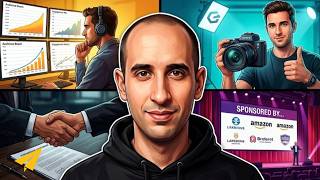
Evan Carmichael shares seven strategies for landing brand sponsorships: make great content consistently, define your mission clearly, know your audience, build credibility through partnerships, use brands you actually believe in, make yourself easy to contact, and stop chasing brands that aren't interested. Negotiate annual deals instead of one-off tests.
Chapters
What's up, Believe Nation? It's Evan. My one word is believe. I believe in you, and I want to see that awesomeness inside you explode out into the world so you can do something crazy special. Now, to help you on your journey today, we're going to talk about how to attract corporate sponsors and brand deals. So a question I get asked by a lot of entrepreneurs, especially ones who are trying to become digital influencers, is how do I attract corporate brands and sponsors? How do I get the brand deals? How do I get the money from the corporations to sponsor my content, sponsor what I'm creating to have a big impact? And so I'm going to share with you today my 7 ways to do it. I've had some success using these and I wanted to share them with you so you can hopefully grow your business too. Number 1 is produce great work. And this is by far the most important one. This is the one that sucks to hear because you want an easier answer. Because this is hard. To produce great work and be consistent at it is really, really, really, really, really hard. And it's grinding and every day making tweaks. But a lot of the biggest brand deals that I've gotten, all the successful brand deals that I've gotten, people have come to me. I've tried outreach to different brands. I've had my agent outreach to different brands. It's never worked out. All the best corporate deals, brand deals that I've had for anything in my business, whether it's my website, whether it's my YouTube channel, or other social media, speaking gigs, it's all been from people finding me. And it's because I produce a lot of consistent, great content, and I'm known in my industry. And so that, that becomes really important. So before you go out and start reaching out to brands, the danger here is you spend so much time trying to reach out to brands that you don't spend enough time actually building your business. It's a danger in funding too. Like, I need startup capital for my company. You spend so much time trying to raise capital that you don't spend enough time actually building the business. And if you build a business, it's easier to attract startup capital, right? And so the more time you spend on actually creating great stuff— and not just for YouTubers. If you look at people who've gotten other brand deals, people who've been sponsored content, people who are asked to join in Adidas commercials or be a spokesperson for a company, it always comes because they've already done a lot of great work. They're a known quantity, right? And so, are you a known quantity? Have you done enough great work that people start finding you? At any of these companies, they have people whose job it is to know who the people are in the industry who are influencers. Any big company that you work with. So any big giant corporation that you're hoping to get sponsoring your content, what you're doing, your business, they have people whose job it is to find influencers like you, to find businesses like you to be able to work with. Are you standing out enough? Are you on their radar enough? Are you producing enough great work to get noticed? And if you do that, you're in a much better position because people are coming to you. So the win is you're spending time on the work that you love, you're making better content, and you have people coming to you, which gives you a huge advantage as opposed to you trying to pitch yourself out to companies when your audience is not as big yet, you're not spending as much time working on your content because you're spending time pitching, and it puts them in the driver's seat because You're coming to them instead of them coming to you. So produce great work consistently. It's the most boring one on this list and the most important as well. Okay, so number 2 is have a clear mission and message. People want to know what you stand for. People want to know who they're buying into. So as an example, I believe in entrepreneurs. It comes out in everything that I create, right? I have my one word of believe. I have I have my message of helping entrepreneurs. And so the brands that come to me are the ones who like my message. They want to help believe in people as well. It's an inspirational, aspirational message. It's clearly defined. Some companies think that's stupid. Great, like, we're not going to work together and get along anyway. And some companies love that. So you need to be able to quickly— if I come to your video, I know what you stand for, I know what you're about. If it's confusing, if I don't know what you're about, then you're just one of many other people that I could potentially sponsor as a company, where I want the people who are clearly aligned with the mission and direction of my business. Number 3 is have a defined target audience. You want to make sure that your audience matches up with the audience of a brand that you're going to work with, right? The brands who want to hire you are going to be the ones who have a similar audience overlay with you. So I help entrepreneurs. If you want to target entrepreneurs, you want to understand entrepreneurs, you want feedback from entrepreneurs, I'm one of the best people in the world to work with. If you want to do anything else, I'm not, right? If you want to sell lipstick or you want to sell this new video game or you want feedback from, you know, a different demographic, it's not going to be me. Don't talk to me. I can't help you. Even if I love your thing and I want to help you, I can't give you as good feedback or reception as somebody else. And that's important. Like, you want to be one of the best in the world at this audience. And so anybody who wants to target that audience will want to come to you first and ignore everybody else. And so you can start really niche and then build your base out. So entrepreneurship is a big base, right? You could go more niche. If you want to target entrepreneurs, I would start with like tech entrepreneurs or fashion entrepreneurs or food entrepreneurs, right? And so whatever you're really passionate about, target that group and then you can build out from there. But there are people who want to target tech entrepreneurs, and there's people who want to target fashion entrepreneurs. And so you want to be the number one person for that niche. And if you're number one, or number two, three, like you're at the top of the list somewhere, you can also charge a much higher rate. Because if they wanted to only target fashion entrepreneurs, sure they can come to me. I'm going to charge them a lot of money because they reach a lot of people, but I can't really help them target only fashion entrepreneurs. That's where you can come in. And so you can make a lot more money even with a smaller audience because it's really niche-focused and targeted. And so it starts with thinking about who do you want to reach, like who do you relate to the most, what combination of interests. So not just entrepreneurship but also fashion, right? Like pick the things that you love, the 2 or 3 things that make you tick, the people who are just— that's your jam, you love these people, you're one of them. And mix those together and that's your new demographic, your new target audience. And then as you build more reputation, more content, more experience, you can slowly build out. And it happens over and over and over and over and over again, right? Facebook started just being in college dorm rooms and then building out to a huge company, right? Tesla started just selling their sports cars and the high-end cars, and now they're coming in to be mass market. You don't start by going wide. Successful companies often start with one little niche audience, making it amazing, and then expanding and expanding. Expanding and expanding and expanding. Way number 4 is work with other brands. What a brand wants to see is that they're not the first brand, like you've done other deals with other corporate sponsors, other brands. And so even if you have to do spec work, demo work, as an example, for a company, free work, just to show what you can do, it may not make you money the first time, but to have a demo to say, "Hey look, here's something that we did with whatever company." we could do something for you, and you charge that company nothing, just be able to use their name, being able to say that you've worked with a brand, especially if they have a bigger name of some sort, it helps you get other deals. So as an example, I even look at Lily, who we have the Unlocking Lily series with, it's an entrepreneur that I'm helping coach her to become a professional speaker. She got her first TED Talk. That was one of the, like, check marks. Like, we want to have you have a TED Talk. She did her first one in Illinois, I believe. And so now we can use that, like Lily's done a TED Talk. It adds credibility. If she's gonna go do a speaking gig somewhere else, she's already done her TED Talk. And so you want the same thing for your business. Find any brand, like maybe, maybe your friend is a banker, and maybe you can work with their small division at Bank of America and create some little tiny campaign for them that hopefully gets some results, and it's free, but you get to use the Bank of America name. Now he said, "I work with Bank of America." Even though it was only this one little chapter, you've worked with Bank of America. Putting that logo, hiding that credibility gives you so much more than the other people in your industry. And you can usually find some small way to get started, some tiny small deal, some branch, some offshoot of the company, but then you can leverage their name to go out and get paid bigger deals. 'Cause nobody wants to be the first. A lot of brands don't want to be the first. They want to know that you've done this before, that you're experienced, that you have a track record. And so having some kind of demo to show them, again, even if you did free work, really makes a difference when you're landing that first deal. Way number 5 is actually be a customer. This is my own personal policy, but I only like doing deals with companies that I use and I support. Like, if I'm telling you to go out and check out this product or use this company, I've used them myself. I vetted them. I would hate to feel like I've recommended a company that then they let you guys down with service. I'm like, well, you know what, they paid me, so it doesn't really matter. Like, I, I really value the relationship with you guys, and I think it's important for you with your audience, the same thing, your customers. You want to recommend products that you actually believe in, not just because they're getting the paycheck. And actually turn away most deals because they just want me to pitch their thing, they're not really bringing value to the audience, and I haven't used their stuff. I And they don't even care if I use their stuff. Like, this is not right, people. And so when I did deals with Sage, right? Sage is one of my clients, and we have a 3-year deal together. And I use Sage in my business as my accounting software company. For here, Toronto Dance Salsa, we use Sage. And I'm a happy customer. And, you know, I did deals with AWeber, and I use AWeber. I've been an AWeber customer for newsletters for 10 years. I can speak about their products. We use it every week in my business. And so if it's a new brand that's coming on board, I had two companies email me this week saying, "Hey, we'd like to do a deal with you." Like, well, step one is I need to actually use your product and see if I'm comfortable using it and using it in my business and would be okay recommending it to other people. Most brands see that as a positive. Most brands want to work with people who actually can talk intelligently about their products and actually use their products and actually care. And it helps separate you from the other creators, from the other, you know, people you're competing against for dollars, because they're not always asking for it. Because they're saying, "Yeah, oh, paycheck, great, I'll take it." Where you actually care about recommending good products. So if you're an actual customer, it makes it way easier to open the relationship. When we're talking with AWeber, as an example, I know AWeber. I know the company. I've been using you guys for 10 years. It just makes it so much easier And so if you're following them on social media, as an example, you could follow them, you could retweet their things, you can get involved with them, you can reply to their snaps, you can comment on their YouTube videos. They check you out, now you're on their radar. You're an actual customer, you use their stuff. Like, you wanna find ways to get on their radar so they know about you, and it's much easier when you're a customer and you can actually talk about it. Number 6 is have clear contact information. You'd be surprised at how difficult it can be sometimes to reach out to people. You know, on your social media profiles, however people are consuming you, on your website, it should be easy to find a way to reach you. Whether it's an email form, whether you're listing your email address, whether you want them to tweet you, like, have an easy way for people to reach out to you. Because so often people will look at the contact page, they don't see anything, or the email address is hidden, or they rely on sending messages. Like, YouTube's really bad at this because you have a "Send YouTube Message" where a lot of people don't see their YouTube messages. They don't turn notifications on. So make sure there's an easy way to reach you, that brands can reach out. If there's a contact person, whether it's you or someone on your team, here's how I can get in touch. Because if it's hard to figure out how to get in touch with you, then they're not gonna get in touch with you. It seems like a really basic thing, but for a lot of people who have sizable audiences who could actually get big brand deals, you don't know how to reach them, and that creates a big problem. Way number 7 is don't try to convince them. I hate trying to convince people of things that they don't want to do. So, a couple examples. I find a lot of brands just want to sell something. They just want to sell their stuff to your audience. And I don't want to convince them that that's the wrong method. They're in direct marketing, which is, "We just want to make sales from your channel." That's not what I'm about. I'm not your sales guy. I'm happy to help transfer some branding and some goodwill and say, "Hey, here's a good company that I use and recommend." But I'm not gonna say, "You guys need to go and buy this thing right now, it's the best thing ever, and I take a 10% commission," right? It's not how I roll. Other people roll like that, and that's fine. I don't wanna try to convince them that what they're doing is wrong, 'cause it's just too much of a battle. Or, even worse, is a brand that's not currently advertising on social media, they're not currently working with influencers, they're not currently sponsoring anybody, to try to convince somebody, like if you're a charity and you're trying to convince a sponsor to give you money and they've never done any charity sponsorship before, it's just so hard. You're gonna get tiny dollars, if anything, because it's just not on their radar. It's way easier to go to a company that's already doing sponsored content and find a way to be better than the other people that they're sponsoring. So if you're a charity, like, how can you be better than the other charities? How can you give that company more value than the other charities currently are? 'Cause they already understand, giving to charities Works. It feeds what we're trying to do. It's part of our business model. So you don't have to do any of that education. It's way better if you're trying to get dollars for your YouTube channel. If people are already paying YouTube influencers, you just have to do a better job than the other YouTube influencers, which isn't honestly that hard to do. Like, most YouTube influencers aren't great at it. So you just have to be better than them. And trying to convince a corporation to get on YouTube in the first place is too much of a battle. And so I hate spending time with customers who don't see the value. It's just too much work. This is business. This isn't just how to get brand deals now and sponsorship. Stop trying to convince customers to work with you if they don't understand the value of working with you. It's like, great, you don't understand, no problem, move on to the next person who gets it. It's much better to spend time with ideal clients who understand your value proposition and love it and wanna work with you than to waste time on trying to convince somebody and slowly Drag them along. It's just a great rule to follow in business. One last bonus tip that I want to share that's coming to mind, tip number 8 or bonus tip, is try to sell an annual program. Too many times brands come in and they want to do a quick deal, like, "Hey, let's do a test deal, let's do one thing as a test," and it's really hard to make that pay off. It's hard because you're introducing a brand to an audience, and especially when you're not doing like a sales pitch, when you're not doing direct marketing, it takes time for them to get used to the this company that you're bringing on board. And so anytime a company comes to me and wants to do like a one-off test, I say I start at annual programs. Here's how I start it, like here's how much it costs at a minimum, and it's for a year. So like one video a month for a year, or a video every two months for a year. It's always an annual program. And some companies don't want to jump on that. It's just too much work. It's too much work to get to know the company, to do the setup, all the admin work of getting in their database system, invoicing, all that stuff. But building a relationship is too much work to then have it— do one video, it doesn't work out as what they expected, they didn't actually get a lot of momentum built up because you're only doing one video, and then you're stuck the next month trying to find another corporate branding partnership. And so I always, always, always, always, always push for doing an annual deal where you are the expert, you're helping guide the process, you know what works for your audience, instead of doing these one-off little tiny small deals. Start and Stop tests. So that's my take on the 7 ways, plus 1 bonus, to attract corporate sponsors and brand deals. I made this video because Margot Escargot asked me to. If there's a topic you'd like me to cover in a future 7 Ways video, check out the link in the description. You can go and cast your vote. I'd also love to know, is there an 8, 9, 10 you want to add to the list? And what was your favorite from the 7 that I listed? Share your thoughts, leave in the comments. I look forward to hearing what you have to say. I also want to give a quick shout out to César Bonilla. César, thank you so much for picking up a copy of my book, Your One Word, taking that picture, posting it to Twitter. I really, really, really appreciate it, and I'm so glad you enjoyed the book. So thank you again for watching. I believe in you. I hope you continue to believe in yourself and whatever your one word is. Much love. I'll see you soon. Let me give you the one word secret to happiness. One word. This is all you need to be happy. It's the most important word. Ever. If you had to think of one word that's most important to you or that sums you up or that would be kind of like a little beacon. Hey, Believe Nation, if you want to know what the most important one word is for Tony Robbins, Gary Vaynerchuk, Oprah Winfrey, will.i.am, and Howard Schultz, I have a very special secret video for you. Check the description for details.
More from Evan


How the Biggest Mistake in History Created A Trillion-Dollar Empire | Sergey Brin



9 Machiavelli Principles That Force People To Respect You | Machiavellian Philosophy



The First 10 Words That Instantly Ruin A Sales Conversation | Vanessa Van Edwards

The Top 1% Mindset Behind The First $5 Trillion Company | Jensen Huang (Nvidia)

