9 Powerful Ways to Earn RESPECT in 25 Minutes | Transform Your Leadership
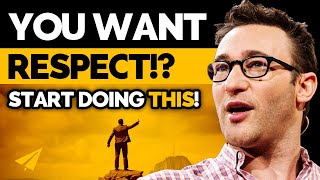
Evan Carmichael presents nine principles for earning respect through clips from Simon Sinek, Will Smith, Eric Thomas, and others. Be the last to speak, laugh at yourself, let your actions speak, say what you mean, see the good in everything, give credit to your team, respect others, always improve, and help when needed.
Chapters
If you want to learn how to listen well, say what you mean, and let your actions speak, then this video is for you.
You will be told your whole life that you need to learn to listen. I would say that you need to learn to be the last to speak.
Write the idea down and shut up. You ain't got to share your idea with 50 people. Write the idea down and boom, get to stepping, baby. Get to the action.
So 40 engineers wasted 3 or 4 years of their life because nobody was willing to tell them the honest truth about what they really thought.
What's up, Believe Nation? It's Evan. My one word is believe, and I believe in you. I believe you have an amazing gift inside you that I want to see explode out onto the world. So to help you on your journey today, we're going to learn 9 ways to make people respect you immediately. Enjoy. Way number 1 is be the last to speak with Simon Sinek.
Nelson Mandela is a particularly special case study in the leadership world because he is universally regarded as a great leader. You can take other personalities and depending on the nation you go to, we have different opinions about other personalities, but Nelson Mandela across the world is universally regarded as a great leader. He was actually the son of a tribal chief and he was asked one day, "How did you learn to be a great leader?" And he responded that he would go with his father to tribal meetings. And he remembers two things when his father would meet with other elders. One, they would always sit in a circle. And two, his father was always the last to speak. You will be told your whole life that you need to learn to listen. I would say that you need to learn to be the last to speak. I see it in boardrooms every day of the week. Even people who consider themselves good leaders, who may actually be decent leaders, will walk into a room and say, "Here's the problem, here's what I think, but I'm interested in your opinion. Let's go around the room." It's too late. The skill to hold your opinions to yourself until everyone has spoken does two things. One, it gives everybody else the feeling that they have been heard. It gives everyone else the ability to feel that they have contributed. And two, you get the benefit of hearing what everybody else has to think before you render your opinion. The skill is really to keep your opinions to yourself. If you agree with somebody, don't nod yes. If you disagree with somebody, don't nod no. Simply sit there, take it all in, and the only thing you're allowed to do is ask questions so that you can understand what they mean and why they have the opinion that they have. You must understand from where they are speaking, why they have the opinion they have, not just what they are saying. And at the end, you will get your turn. It sounds easy, it's not. Practice being the last to speak. That's what Nelson Mandela did.
Way number 2 is be able to laugh at yourself with Will Smith.
I'd gotten probably 2 weeks into my preparation for the film and my father was diagnosed with cancer. So we just started talking about love, time, and death. And we, it was some of the most open and powerful conversations that we, you know, we'd ever had. And they gave him 6 weeks and he actually, he lived for 4 months. So about 3 months, into the 6 weeks, you know, I go to see him one day and he said, "Man, this shit is embarrassing." And I said, "What, Dad?" He said, "Man, you tell everybody you gonna be dead in 6 weeks. 3 months later, you still hanging around." Laughing is the elixir, you know? And that was another thing that my father taught me. He was joking all the way up till the end. Like, laughing, you have to be able to laugh at everything. And for me, the beautiful, The funny part is that's my natural color on the spectrum. I naturally go to comedy, you know? And when I'm looking at something, I'm always trying to find why that's funny. And, you know, it's been really, really helpful in this experience and, you know, even just this point in my life.
Keep—
remember to laugh. Remember to laugh. And spend time with people that make you laugh. Like that is hugely important.
Way number 3 is let your actions speak louder than your words with Eric Thomas.
I need you to transition from the I to the A. Haha. Woo! That's right. I said it. Transition from the I. And what's an I? The I is an idea. That's all it is. It's an idea. So I want us to do more A than I. That's right. I want us to live in the A and not the I. What do I mean by that? Some people, man, they got an idea and all you do is talk, talk, talk. Every time you get an idea, you pick up You pick up the phone, you call your homegirl, you three-way, you get on conference call, and you getting excited about your idea, alright? You telling your mom about it, your daddy about it, and you— there's more life in you when you talk about the idea than you put any action in it. Are you hearing me? So do me a huge favor, write the idea down and then shut up. You heard what I said, write the idea down and shut up. You ain't gotta share your idea with 50 people. Write the idea down and boom, Get to stepping, baby. Get to the action. Because listen to me very closely, your success is not determined on just what you say. Now, I'm not disagreeing with the, you gotta speak stuff into existence. I'm not disagreeing with that. But I'm telling you, you can't talk about it all the time. You gotta be about it. So I want some action. So what does that mean? That means when you wake up in the morning, there's 24 hours in a day after you finish sleeping, right? And I don't know how much sleep you need, right? There's this big debate. ET, how much sleep do I need? I don't have the slightest idea. I know how much I need. You might need 5. You might need 6, you might need 7, you might need 8. I don't know, that's your business. But listen to what I'm telling you. After you have finished sleeping, after you finish eating, and if you just that immature and you need to get your play on every day, you need to play video games, I don't know, you need to play cards, I don't know what you need to do, whatever you need to do after you finish exercising, I'm telling you to spend the rest of that time in action and you gonna separate yourself from everybody. Why? 'Cause most people, all they doing is talk, talk, talk, talk. That's all they doing is talk, talk, talk, talk. And they getting pumped up and they're getting excited from talking. So I'm saying get out of neutral and get it into drive the majority of your day. So on Monday, I want you to have 10— write down a things to do list. And I want you to say at the end of the day, if I wrote down 20 things, what did I get done? And I'm trying to tell you, at the end of Monday, at the end of Tuesday, at the Wednesday, at the end of Thursday, at the end— you get what I'm saying? This ain't rocket science. At the end of your week, if you were supposed to get 60 things done and you got 40 things done, you're going to be average. At the end of the week, if you're supposed to get 60 things done and you got 50 done, you gonna be pretty good. But at the end of the week, if you got 58, 59, 60 things done out of 60, let me tell you something, you gonna separate yourself from everybody else. Are you hearing what I'm saying?
All right, all right, all right.
All I'm trying to tell you is this, don't let your words guide you, let your actions guide you. Are you hearing me? Don't let your words guide you, let your actions guide you. And if you spend the majority of your day writing stuff down and then fulfilling it, you gonna be tight work. So stop, listen to me, stop getting all pumped up about an idea. Everybody has one. Everybody got a dream. Everybody got a goal. Stop dreaming about it. Stop talking about it and get up and do something about it. That A, baby. That action. That action. That grinding. That waking up and grinding.
Way number 4 is say what you mean with Vinod Khosla.
We put this sort of slogan. I prefer brutal honesty to hypocritical politeness. On our website because it's a real disservice to people. You don't have to be offensive to be honest. When I don't like somebody, I can get offensive too, but generally you can be constructive and very honest, and I prefer that brutal honesty because it serves a purpose. The receiver can do something about it if it's a constructive criticism. If you get hypocritical politeness, you might lose a lot. So again, it's about having enough confidence to say the other person will eventually appreciate it. And that slogan came after I was working on a company with another major venture firm, and I didn't believe their plan would work. They had $45, $50 million in the bank account, so everybody was comfortable, too comfortable in my view. I talked to the founders why it wouldn't work, what my concerns were. The other VCs agreed with me. In the board meeting said all these polite things, you know, so 40 engineers wasted 3 or 4 years of their life because nobody was willing to tell them the honest truth about what they really thought. And I swore I would never let anybody waste their life. At least give them the best advice I had to give and tell them I may be wrong, but I'm not going to say something I don't believe in. I just won't. And that's extremely valuable to the other thing. But to be honest, look, there are situations you can— it offends people and I offend people often. Yeah, but it helps them if they're really introspective. That founder, by the way, in that company called me 4 years later after this company— this company got sold for $3 million, 3.5, 4 years later. Sad story. And he called me a year after that, said, I only want to work with you on my next venture. Because I wish somebody had told me.
Way number 5 is see the good in everything and everyone with Kevin Hart.
Life is too short, and I feel like everyone needs to live, love, and laugh and understand, like, you know, you're constantly evolving. Things are constantly changing. Things are constantly putting them— putting people in a position where they can get better and do better. We're doing a lot better, a lot better. You're going to have bumps in the road. You're going to have things that happen. That make you have a hiccup and question, are we doing better? But that's life. That's the course of life. But, you know, I'm a positive person. I'm a realistic and positive person. So I see where we are. I'm happy where we are. And I know where we can be 5 or 10 years from now. It can continue to get better and grow.
Way number 6 is give credit when it's due with LeBron James.
Honestly, you guys seeing me sitting in this chair, and kept looking over at them is because I'd rather be sitting over there with them. I know this is an individual award, but I would much rather be sitting over there in shorts, in a t-shirt, wondering what the hell they joking about, because I want to be a part of that joke. And I hate being out of all the jokes. I want to know what was happening. Okay, guys, I would much rather be with my guys over there because that's what it's all about. Yeah, much rather be with those guys. Without those guys, this trophy is not possible. The Larry O'Brien Trophy last year is not possible. Nothing that I receive individually is impossible without those 14 guys because of what they sacrifice each and every day. You know, the sweat and the blood and the time and everything. I always know that with team success becomes individual prizes, individual accolades, but this really doesn't mean much to me. I'm humbled and I'm happy about it, but I wish it was 15 of these up here because I'm with a great group of guys that allow me to be the MVP each and every night.
Way number 7 is give respect to other people with Floyd Mayweather and Conor McGregor.
Good luck.
Good luck to you too.
Great dance partner to dance with. Conor McGregor, you're a hell of a champion, and to the country of Ireland, we love you guys.
Big round of applause for two classy, classy gentlemen.
¡Bien hecho!
But I give him my hat off. Fair play to him. He's a composed man. You cannot— you can give him nothing but respect. He took the shots early, and he took shots early. He cracked him with the left hand, and I saw him in a bit of panic, but he stayed very, very calm. That's just his years of experience.
He's a tough competitor, and he still has a long career ahead of him.
You know, does he have a career in boxing?
Um, he's, you know, we have to get his condition a little bit better.
On that a little bit and explain what you liked about the boxing business and what you prefer about the MMA business.
You know, the check is all right. The check's not bad.
Very good.
Well, look, great work.
Floyd, congratulations. Terrific career.
Great work.
Great work.
Great work.
Good job.
Come on, thank you, good job.
Ladies and gentlemen, you know, uh, to the podium, I like to call up, uh, the Notorious One, Conor McGregor.
What's up everybody? He had to change his style, and fair play to him, he did. He adjusted, he changed his style, put the hands up more forward. He's composed, he's not that fast, he's not that Powerful, but boy is he composed. I mean, hands up towards your forehead, dipped in, forehead on the chest, and started to fight that kind of fight. I didn't anticipate that. 3 game changers in the fight. That's what a true champion does. Much respect. You came with it, you know what I mean? I gotta give respect to that. It was a hell of a fight.
Was he better than you had expected?
He's a lot better than I thought he was. He used different angles. He was a tough competitor, but I was the better man tonight in there.
So he was making me throw and he was patient with his shots.
I've got to give him a number of respects.
Fair play to him. Great career he's had.
Respect others, okay? The golden rule, you've heard it for years. You've heard it since you've been little. Everybody's like, oh, treat others the way that you want to be treated. It sounds simple, right? But gentlemen, I'm here to tell you, respect is a two-way street. If you don't show others respect and consideration for their views or feelings, don't expect them to respect you. Or yours. The deal is we don't have to agree with people. We don't have to see things eye to eye or on the same level, but the fact is you need to respect where they're coming from and try to understand. You may not, okay? You may come to the conclusion that they're batshit crazy, but at the end of the day, you listened and you tried to understand. And guess what? They're gonna respect you for respecting them. Another aspect of respecting others is don't badmouth people. Don't talk behind somebody's back. If you've got a problem, if you've got an issue, if you've got something you need to say to somebody, Say it. You can do it in a respectful manner that enables communication as opposed to backstabbing gossip.
Way number 8 is always strive to do better with Terry Crews.
You know, how many times have you ever heard the phrase, "You are perfect just as you are"? Have you heard that a lot? "Man, you know what? You are perfect just as you are. You are so perfect just as you are." Well, you know what? You are not. You are not perfect just as you are. You are perfect, but you're not complete. This is the thing, and this is what I mean by this. And a lot of people are gonna go, "Oh, what do you mean? I'm a— What are you trying to say? I gotta change? I gotta change into somebody else?" Yes, yes, you need to change. Everybody, everybody out there needs to change. We are designed for change. Nothing in this world stays the same. You are either getting better or you are getting worse. And let me describe something to you. When I say you are perfect, but you are not complete. Let's say this building I'm in. If I looked at the blueprints for this building, it's— the blueprints for this building before it was built were perfect. Everything was in its right place. Everything was great. But could I walk in it? Could I do anything? Did I have a building? No.
Why?
It wasn't complete. When they framed up this building and put wood and metal and all this stuff, but they didn't do the floor, didn't do the electrical, was it perfect? Yes, it was perfect, but it wasn't complete. You are like this building. You are perfect in every way, but you're just not done. You're not done. And you know what? Anybody who's trying to tell you, "Don't try to change me," You know, now no one should try to change you, but you have to change yourself. You are— you owe it to everyone to change yourself into a better person, into a better human being. That's what you have to do. You are perfect, but you're just not complete. So when you look at yourself, look at yourself like that building, and it's framed up and everything is in its right place, but you're just not done. I want to tell you that. So anybody who's trying to tell you that I'm perfect just the way I am is not trying to change. And guess what? You're not. And it's not working. You're a half-done building. Who wants to live in a building with no roof? Nobody. And I'm just trying to break it down to you that you hear these catchphrases, you hear this stuff all the time, but then everybody just takes it and says, oh yeah, I'm perfect just the way I am, and you don't change. And your life doesn't change and nothing gets better for you and you wonder what's happening and everything is crumbling around you. Hey, I'm guilty. Terry Crews is guilty. Then I realize, wait a minute, wait a minute, I'm not perfect just the way I am. I have to be perfected. I am perfect, but I am not complete.
And way number 9 is help others when they need it and ask for help when you need it.
You know, I'm an ordinary man with an extraordinary job, right? Not the other way around. So it's all gravy for me. You know, when I was younger, I used to coach a lot and nothing made— you coach kids in sports. Nothing made me happier than seeing other people do well. Well, that's sort of my nature. And directing was the perfect job for that because I love seeing others do well. I mean, I'm okay, I did pretty good, I'm good, I've done alright. But to see others do what, you know, what they're capable of gives me great joy.
Today I want to talk about purpose. But I'm not here to give you the standard commencement about finding your purpose. We're millennials, we try to do that instinctively. Instead, I'm here to tell you that finding your purpose isn't enough. The challenge for our generation is to create a world where everyone has a sense of purpose. One of my favorite stories is when JFK went to go visit the NASA Space Center and he saw a janitor holding a broom and he asked him what he was doing and the janitor replied, Mr. President, I'm helping put a man on the moon. Purpose is that feeling that you are a part of something bigger than yourself, that you are needed, and that you have something better ahead to work for. Purpose is what creates true happiness. I remember that night I launched Facebook from that little dorm in Kirkland House. I went to NOX with my friend KX, and I remember telling him clearly that I was excited to help connect the Harvard community, but one day someone would connect the whole world. The thing is, it never even occurred to me that that someone might be us. We were just college kids. We didn't know anything about that. There were all these great big technology companies with all these resources, and I just assumed one of them would do it. But this idea was so clear to us that all people want to connect. So we just kept working on it, day after day after day. And I know that a lot of you are going to have your own stories just like this. A change in the world that seems so clear that you are sure someone else is going to do it. But they're not.
You will.
But it's not enough to have that purpose yourself. You also have to create a sense of purpose for others. Now, maybe you're asking yourself, "Can I really do this?" Well, remember when I told you about that class I taught at the Boys and Girls Club? One day after class, I was talking to my students about going to college, and one of my top students raised his hand and said, that he wasn't sure he could go to college because he's undocumented. He wasn't sure if they'd take him. Last year, I took him out to breakfast for his birthday, and I wanted to get him a gift, so I asked him what he wanted, and he just started talking about struggles that he saw other students in his class facing, and finally he said, "You know, I'd really just like a book on social justice." I was blown away. Here is a young guy who has every reason to be cynical. He wasn't sure if the country he calls home, the only one he's known, was going to deny him his dream of going to college. But he wasn't feeling sorry for himself. He wasn't even thinking of himself. He has a greater sense of purpose, and he's going to bring people along with him. It says something about our situation today that I can't even say his name because I don't want to put him at risk. But if a high school senior who doesn't know what the future holds for him can do his part to move the world forward, then we owe it to the world to do our part too.
What I learned is that I don't have to know all the answers, and if I don't, I don't have to pretend that I do. The opportunity to ask others for help and admit when we don't know things, and even admit when we make mistakes, means that people will rush to our aid and will be there to help us. If we claim we know all the answers, if we hide the mistakes we make, then people will think things are fine, and so they'll leave us alone. And it's not that people don't want to help us, it's that they don't know when they can.
Thank you guys so much for watching. I hope you enjoyed. I'd love to know what did you take from this video that you're going to immediately apply somehow to your life, your business. Leave it down in the comments below. I'm really curious to see what you have to say. I also want to give a quick shout out to Tim Schmoyer from Video Creators. Tim, thank you so much for picking up a copy of my book, Your One Word, for being a quote on the back of it, for posting it to your social media. I really appreciate all the support, man, and I'm so glad you enjoyed the book. So thank you guys again for watching. I believe in you. I hope you continue to believe in yourself and whatever your one word is. Much love.
I'll see you soon.
So let me give you the one word secret to happiness.
One word.
This is all you need to be happy. The most important word ever.
If you had to think of one word that's most important to you or that sums you up or that would be kind of like a little beacon.
Hey, Believe Nation! If you want to know what the most important one word is for Tony Robbins, Gary Vaynerchuk, Oprah Winfrey, will.i.am, and Howard Schultz, I have a very special secret video for you. Check the description for details.
More from Evan


How the Biggest Mistake in History Created A Trillion-Dollar Empire | Sergey Brin



9 Machiavelli Principles That Force People To Respect You | Machiavellian Philosophy



The First 10 Words That Instantly Ruin A Sales Conversation | Vanessa Van Edwards

The Top 1% Mindset Behind The First $5 Trillion Company | Jensen Huang (Nvidia)

