ALL OF BUILDING WEALTH Explained in 3 Hours No BS, No Fluff
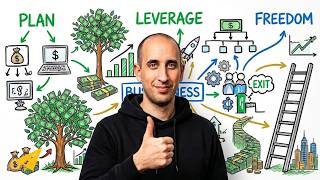
Evan Carmichael breaks down wealth-building across mindset, business models, and systems in three hours. He highlights five boring but scalable service businesses (waste management, self-storage, cleaning, HVAC, car washes) that generate high margins, and outlines a five-pillar framework: self-investment, income generation, asset investing, asset protection, and capital allocation.
Chapters
You will never build real wealth by doing more things. I would definitely advise a small startup company to be as narrow and as focused as is possible to be. Every day you're going to be faced with 100 things that you could potentially go do, and your job is to pick the one thing that actually matters. Living successfully, getting the things we want from life is a matter of solving the problems which stand between where we now are and the point we wish to reach. Every time you split your focus, you slow down the one thing that could actually make you rich. Successful managers are able to focus on the goal and shut all the noise out. Most people, if they focused on one thing for more than 3 seconds, they'd probably set a family record. Most people, their mind's all over the place. One of the most important things and some of the best advice that I ever received was to stay focused, to get really good at saying no. If you keep chasing multiple ideas all at once, you will still be in the same place years from now wondering why nothing worked. I think it's important to realize wherever focus goes, energy flows. It's corny, but it's true. Entrepreneurship is a long-term journey. Stop seeing need as a short-term goal. Stay focused. I think long-term focus is, is a really important part of this. In the next 3 hours, you will understand how to build something that pays you, grows with you, and gives you real freedom. If you've been here before, drop a hashtag #Believe in the comments below so I can feature you here in a future video. And if you're new, welcome to Believe Nation, the only channel that helps you believe in yourself daily, one video at a time. Believe. You don't need multiple streams of income to get rich. 3 wonderful businesses, more than you need in this life to do very well, and 3 of those will be better than 100 average businesses. Splitting your focus across 5 different side hustles guarantees that you fail at all of them. Diversification is a protection against ignorance. The key resource you have to deal with is your time and how you spend time. So, you know, I'm always trying to make sure that I'm only doing the things that are important. Well, focusing is saying yes, no. Focusing is about saying no. If you refuse to go all in on your one true genius, you'll stay stuck in the exact same painful place 10 months from now. Bill Gates and Warren Buffett are two of the richest men in history. One night they were at a dinner party together. Someone asked them both to write down the single most important factor for their massive success on a piece of paper. They did not look at what the other person was writing, but when they turned their papers over, they had both written the exact same word, focus. Focus. So Bill and I, right after we met, had a group of about 20 write down on a sheet of paper one word that they thought accounted for their success. And Bill and I, who may have only met twice, didn't know what the other one was writing down. We both wrote down the same word, which was focus. They did not build their wealth by doing 10 things at once. They picked one thing and poured every ounce of their energy into it. Now, you're probably thinking that focusing on just one thing is way too risky. You want a backup plan, but your backup plan is actually a trap. When you give yourself a Plan B, you almost guarantee that Plan A will fail. Because you don't lack time or resources. You lack the courage to bet on yourself completely. When you finally commit, everything changes. So here are 10 money rules that will force you to focus and skyrocket your net worth. Charge higher prices to fewer people. You think you need thousands of customers paying a tiny amount to get rich. That's completely wrong. Most entrepreneurs are terrified of charging higher prices. You lower your hourly rates because you think it will attract a massive crowd. Instead, you attract people who don't value your time. It is much easier to find 10 customers who will pay you $1,000 than to find 1,000 customers who will pay you $10. If you want to build a half a million dollar business, you need clients who are worth $50,000 a year to you. You don't want to do all the grueling work for clients paying you pennies. You need to upgrade your offers immediately. Harvard Business Review shows that premium pricing actually increases perceived value. Customers respect your service more when they pay significantly more. So if you sell a software product, don't just charge $20 a month and hope they figure it out. Charge $2,000 a month and personally help the client Clients win massive victories. You get vastly better results. Your clients get vastly better results. You build a highly profitable business that doesn't run you into the ground. This specific pricing strategy leads directly into how you fund your daily operations. Fund your business with clients, not investors. People think that raising capital from venture capitalists is the ultimate goal. Raising capital is a trap. If you get an investor to give you $50,000, they will take half your business. You might make $50,000 just by landing 2 high-ticket clients. When you raise money, you buy a boss. You lose your freedom and your control. The Wall Street Journal reported that 3 out of 4 venture-backed startups fail completely. Your clients should fund your growth. When you deliver massive value, they will pay you gladly. You use that exact money to build your website and hire your team. You keep all your equity. You stay the owner of your dream. You don't have to report to a board of directors who only care about fast returns. You get to build the business on your own terms. Keeping your equity matters, but you also have to protect your daily time. Stop overdelivering on low-ticket offers. You are spending way too much time on deals that pay you almost nothing. Now, you might overdeliver and spend 40 hours on a 5-figure deal. You undercut yourself and charge $10,000 instead of $40,000. That burns you out and destroys your profit margins. You bend over backwards for people who demand everything and pay nothing. The Pareto principle proves that 80% of your results come from 20% of your effort. You need to stop doing the work that doesn't scale. Serve your premium clients deeply. Let the low-paying clients go. They complain the most and they pay the least. Free up your schedule so you can focus on high-level strategy. Your time is your most valuable asset. When you stop wasting hours on low-value tasks, you open up space for massive income leaps. And once you control your time, you must control your tracking. Track your money like you track your health. You can't improve what you don't measure accurately. Most people treat their finances like it's some mystery. You avoid looking at your bank account because you're afraid of what you will see. You have to stop hiding from your own numbers. If your physical goal is to drop your weight to 185 pounds and live completely pain-free, you track your sleep and your resting heart rate and your weight. You might wear your Oura Ring like I do to monitor your daily readiness score. You treat your physical health like a serious data project. You need to demand real numbers. You need to do the same thing with your total net worth. You look at your bank accounts daily, you track your daily spending. The American Psychological Association calls this the measurement effect. Simply tracking a specific behavior automatically changes that behavior for the better. When you track every single dollar, you instantly stop wasting your money on things that don't matter. You gain absolute clarity and total control over your future. Tracking gives you the hard data you need to build a real system that scales. Build a machine, not just a job. Now, most entrepreneurs just buy themselves a terrible job, right? If stop working, your income stops entirely. That is not a business. That is a cage. You need to build a machine around your work. So look at your daily systems. You have to ask yourself if your business can generate $20,000 a month if you don't show up to work. Harvard Business Review highlights that process-driven companies scale much faster and survive longer than founder-dependent companies. So document your daily steps. Hire people to do the tedious tasks that you hate doing. Step out of the daily grind so you can focus on the bigger vision. Your job is to replace yourself as fast as possible. Start a business development show to get referrals. Cold calling is completely dead. You need a better way to network with wealthy clients. One of the things we teach inside of our Movie Makers program is to start a simple video show, interview the top 50 people in your specific industry, invite them on your show and tell your story. Nobody asks them for an interview. And when they say yes, that 30-minute conversation turns into a deep relationship. You don't have to be a professional broadcaster. You just have to be curious. LinkedIn data shows that 85% of all jobs and major deals are filled via networking. So don't ask for a sale, ask for the interview. Bring them massive value first. The referrals flow naturally because you build real trust over time. But building that trust requires you to listen more than you speak. Stop giving free advice until they ask. You want to help absolutely everyone. You see a problem and you immediately try to fix it. Giving advice before someone asks creates instant friction. They don't want what they didn't ask for. You push them away when you try to solve a problem they haven't admitted that they have. You need to ask them probing questions instead. Keep asking questions until they finally ask you what you would do in their situation. Psychology Today notes that unsolicited advice is almost always perceived as harsh criticism. So wait patiently for the clear invitation. When they ask you for your help, they are fully ready to pay for your premium solution. You can only guide the people who are truly ready to be guided. This level of patience, though, requires you to narrow your focus completely. Focus on the first 5 clients, not the next 5,000. You're stressing about how to scale the millions of users. You don't even have your perfect 5 clients yet. Stop worrying about massive growth at the very beginning. If you have a high-level program like we have, Movement Makers, figure out how to make it incredibly fun and life-changing for just 5 people. You have to nail the foundation before you build the skyscraper. Kevin Kelly wrote the famous essay 1,000 True Fans. It proves you don't need millions of followers to build massive wealth. If you change 5 lives completely, those people will bring you the next 50 clients. Focus small so you can eventually grow huge. Treat your early clients like royalty. But this type focus requires the right internal motivation. Keep money in your top 5, but never number 1. If money is your only goal, you will quit when the journey gets hard. Money is a powerful tool. It is the fuel for your car. You absolutely need it, but it can't be your destination. Your main mission has to be bigger than your bank account. You have to have a cause that you would work on even if you were not getting paid. The National Institutes of Health published studies showing that intrinsic motivation sustains long-term effort much better than external rewards like cash. Put money as your number 2 or 3 on your priority list. Let your true purpose be number 1. You will actually make far more money this way because you won't burn out, and your deeper purpose usually ties directly back to the people you love. Put your family's future before your ego. You are making terrible financial decisions based on how you look to strangers on the internet. You need to stop caring about digital likes and start caring about your real legacy. Look closely at your family. Look closely at your husband or wife. They do not care about your Daily View count. They care about the secure life you are building for them. You need to focus on what actually moves the needle for your household first. Pew Research Center states that family support is the primary driver of long-term life satisfaction and financial stability. So swallow your pride, do the boring work, send the emails, build the true wealth that changes your family tree forever. Your next move. So you have the exact rules laid out in front of you right now. The only thing missing is your absolute commitment to take action. So stop waiting for the perfect moment and start building your real wealth today. Success this year for you comes down to one thing: your habits. Most entrepreneurs say they want the best year, but then do the same things as last year. If you change nothing, nothing changes. In fact, if you coast through this year, you'll wake up next year with nothing but regrets. Research with dying patients found that many stayed stuck in old patterns and habits out of a false sense of comfort. They pretended they were content where deep down they longed for more. Don't let that be you. Think of the famous story of the elephant and the rope. A massive elephant is held by a tiny rope tied to its leg. It could break free at any time, but it doesn't even try. Why? Because as a baby elephant, that rope was enough to hold it. It tried and failed back then, so now it believes that same rope can still hold it forever. It's not the rope stopping the elephant, it's the belief that the rope is stopping it. I know how that feels. Let me take you back to when I was 22. I was about to graduate university and had a choice: take a 6-figure dream job in banking or join a startup and make $300 a month. Everyone told me, take the money. But I fast-forwarded in my head. I imagined being 40 looking back, and I knew I'd regret not giving the startup a shot. I literally said to myself, when I'm an old man, I'll regret that I didn't keep going. I'd rather know and fail than not know. So I turned down the job and went for the startup. It was risky. It was scary. And it was one of the best decisions of my life. Not because it was easy. It wasn't. But because it taught me to bet on myself instead of playing safe. Maybe you're thinking, that's great for you, Evan, but I'm not sure I can do it. I've tried changing and failed. Maybe I'm just not cut out for this. If that doubt is in your head, I want you to remember that elephant. That doubt is just a tiny rope. It held the old you but it doesn't have to hold the new you. Just because you failed before doesn't mean you'll fail forever. Failure is training, not your verdict. You can break free. You can change your habits starting now. So let's cut that rope and get you moving. All right. No more excuses. Let's get into the 7 habits that will make this year your best year yet. And stick with me, because if you apply these, I promise you will feel the change. Habit number 1: Win your morning, win your day. Stop hitting that snooze button. The first thing you do each What you do each morning sets the tone for your entire day. If you start by snoozing, what are you really doing? You're telling yourself, my goals can wait. The first thing you do every day is tell yourself it's okay to not hit your goals when you hit snooze. Successful people don't start their day procrastinating. They start with intention. So here's what you're going to do. Carve out a powerful morning ritual. It doesn't have to be long. It just has to be intentional. For me, I start every day by feeding my mind with something positive. I watch an inspiring video. YouTube, a lot from this channel to get my belief pumping. Then I create a quick post on my Instagram stories, sharing a message with you guys. Why? Because it fuels me. That sets me up for the day. I want to create something every day that I'd be proud for my grandkids to see. So find what fuels you. Maybe it's reading a chapter of a motivational book, doing a quick workout, journaling your goals, and make it a non-negotiable morning habit. Science backs this up. A solid morning routine can increase your energy, productivity, and positivity and build momentum for the day. When you win the morning, you win the day. Tomorrow morning, Instead of reacting to the alarm with dread, jump out of bed with purpose, even if it's 15 minutes earlier than usual. Use that time to focus on you. No phone, no emails, just something that builds your mindset or skills. And trust me, starting your day with intention rather than reacting will change everything. You'll feel more in control, more confident, and more motivated to crush whatever comes next. Habit number 2: Curate your environment for greatness. You can't plant a seed in toxic soil and expected to grow, right? In the same way, you can achieve big goals while drowning in negativity and distractions. Your environment, the people you hang out with, the content that you consume, the spaces that you work in, is either lifting you up or pulling you down. There's no neutral state here. So it's time to take control of it. Start with what you consume every day. Social media, TV, news. If you scroll Instagram or Twitter and end up feeling like crap, that's a problem. How many times do you go through your phone and spend an hour on Instagram and feel worse about yourself than when you started? Probably too often. The solution: curate your feed. Now I do this myself. I only follow people that inspire me. My YouTube, my Instagram is great. I'm not following people who are out there spreading negativity. As soon as something negative appears, I swipe away. I am trying to engineer my online environment for boldness and belief, not negativity and doubt. You can do the same. Unfollow the haters, the cynics, the drama that doesn't involve you. Follow people who are where you want to be, who are sharing their knowledge, who make you feel energized. And this goes beyond social media. Look at your real life circle. Are the people around you supportive or skeptical about your dreams? Jim Rohn said you are the average of the 5 people you spend the most time with. And he's right. If your friends are complaining and playing victim all day, guess what? You'll start doing the same. But if you're around the go-getters, mentors, Believe Nation members here who lift you higher, you'll rise to their level. It's proven. Even emotions are contagious in groups. One Harvard study showed that seeing positive posts on Facebook actually made people feel more positive and seeing negative posts made them negative. We catch mindsets from each other. So audit your environment ruthlessly, design it for success, clean your workspace if it's cluttered and stressing you out, put up a picture or quote that inspires you when you look at it. Maybe you need to spend less time with that always negative cousin and more time in a mastermind group or with fellow entrepreneurs who push you forward. Remember, you are the gatekeeper of what gets into your head, so protect it. When you surround yourself with positivity, ambition, and solutions, you automatically show up as a better version of you. Habit number 3: Flex your discipline muscle daily. Successful entrepreneurs aren't magically more disciplined. They've just trained that muscle, and you can too by doing one hard thing every day. The goal is to prove to yourself that you're in control not your temptations or your fears. Each day is an opportunity to send yourself a powerful message that I am stronger than my excuses. Now, I have a little weird way of doing this. I literally keep a giant Costco-sized bag of Doritos on my desk. It's right there behind me, right? Sounds a little weird, right? It's there on purpose. Doritos are my kryptonite. I love them. And by all rights, I should throw that bag out just to avoid the temptation. But I do the opposite instead. I have a strategy that's called Damn the Doritos. Just by thinking about it, my mouth is watering as I'm talking. I could eat that whole bag right now. But I'm not. Every day that unopened bag taunts me, and every day I choose to look at it with self-control. My mouth is watering. I want to remind myself that I'm stronger than the Doritos. When I resist it, I get a little bit more confidence. The high you get of self-confidence to know that you're stronger than the Doritos is incredible. It's not about the chips, it's about training willpower. You don't need a bag of Doritos, but you do need a daily willpower workout. Maybe it's taking a cold shower every morning so you're toughening your mind. Maybe it's committing to do that one task that you hate, like a sales call or coding or whatever it is for you, for 30 minutes every day without fail. Pick something that you typically shy away from or is a temptation that you usually cave to and challenge it head-on in a small way. My mouth is still watering from the Doritos. Psychologists have found that willpower is like a muscle. Use it regularly and it grows stronger. Even small, regular tests of self-control can boost your willpower over time. So So give yourself those tests. Now, why is this so important? Because every time you keep a promise to yourself, every time you do the hard thing when you could easily take the easy way out, you reinforce an identity. I am disciplined. I follow through. And that identity is gold. It motivates every other habit. When you know you can count on you, your confidence shoots through the roof. You walk into meetings, into sales calls, investor pitches, whatever, with a quiet strength because you've proven to yourself in private that you have self-control. Starting today, choose your hard thing and flex that muscle daily. It doesn't have to be something extreme, just consistent. Those tiny acts of discipline day after day will compound into an inner strength. Habit number 4: Don't build alone. Get mentors and accountability. Entrepreneurship can be lonely if you let it, but success, it's a team sport. The smartest entrepreneurs actively seek help, feedback, and mentorship. They know that trying to do everything solo is a recipe for burnout and tunnel vision. As the African proverb goes, if you want to go fast, go alone. If you want to go far, go together. Going far is the goal here. I had to learn this one the hard way. When I started out, I was stubborn. I thought I had to have all the answers myself. And when I didn't, I hid it. I was making no money in my first business, eating beans for lunch, struggling to survive. And I was too embarrassed to tell my friends or my family. I would lie and say, oh yeah, everything's good. I'm hustling. I'm living the entrepreneur life. Where inside I felt like a failure. I mean, nobody likes to admit how much they suck, right? But that isolation nearly broke me. I almost quit on my dream because I was trying to do it all alone in silence. I eventually opened up and got guidance, and it saved my business. Don't do it alone because you'll probably fail. You'll quit along the way because it's too devastatingly lonely. That's the advice from my younger self to you. So what does this habit look like? It means building your support system. Find a mentor or a coach if you can, someone who is a few steps ahead of you that can show you the ropes. If you can't get a one-on-one mentor, no problem. You can learn from virtual mentors, books, courses, videos right here. Believe Nation, there's a new video for you every day. Join a mastermind or local entrepreneur group where people hold each other accountable. Even just one accountability buddy can 10x your progress. When you know someone asks you, hey, did you do what you said you were going to do? You show up differently. In fact, entrepreneurs who connect with mentors are proven to perform better. One study found that 70% of small business owners with mentors survived beyond 5 years. Mentors double the survival rate of those who go alone. That's huge. Mentors literally double your chances of success. So if you're starting out and feel like, who would mentor me? Here's a tip. Model first. I'll cover that next. And serve where you can. Offer to help out someone that you admire. Add value to them. Intern or volunteer in their world. You'll learn just by being around them. And don't overlook peer mentors. Someone at your level who is just as hungry can still be a great accountability partner. The point here is to get out of your own head and get feedback and support from others. It will keep you sane, motivated, and on the track when the road gets rough. Every hero has a guide. You're the hero of your story, but you're not meant to do it all alone. Habit number 5: Keep learning. Model the best. Never stop being a student. The moment you think I know enough, you've started dying. Harsh but true. The world is evolving. Your industry is evolving. Growing, you need to evolve too. The quickest way to compress decades of learning into days is to model people who have already done what you want to do. Success leaves clues. Whatever goal you're chasing, someone out there has achieved something similar. So study them, copy the right things, and build on it. When I hit the lowest point in my first business, this habit is what saved me. Remember that startup that I chose? It was not all sunshine. I was making $300 a month. I felt like a total failure. I finally told my business partner I quit. I was done. But the next day I woke up and something clicked. I thought, someone has figured this out. Who has built a software company before? And Bill Gates was my guy. He's the first name that came to mind. I dove into young Bill Gates and how he built Microsoft from zero to one. I didn't care that he became a billionaire. I cared about how he started when he was just another kid with a dream. And I discovered something game-changing. Partnerships. Gates landed a partnership with IBM that exploded Microsoft. But even before that, he grew through smaller partnerships. I thought if partnerships got Microsoft from zero to one, maybe that's the key for us. So I copied it. I hustled to secure a partnership deal for our first startup and boom, we got our first major break, a $13,500 deal with a UK distributor. For me making $300 a month, $13,500 felt like a million bucks. I went from drowning to breathing. Breathing because I modeled success. And I tell the entrepreneurs all the time now, find who solved your problem and learn from them. As I put it back then, Bill Gates had built a software company. I'm going to learn how he did it and apply it. That decision gave me hope and a roadmap. So make this a habit. Always be learning, always be modeling. Read biographies, watch interviews, take courses, watch videos like this. If you have business idols, consume everything you can about how they think and how they operate. Don't just admire Elon Musk or Sara Blakely or whoever Study them, emulate their mindsets and strategies that resonate with you, and read, read, read. There's a reason the average CEO reads around 4 to 5 books per month while the average person barely reads one book a year. Leaders are learners. Every book or article or video is a mentorship session with the author. It's condensed wisdom for a few bucks or for free. Take advantage of that. The key here is consistency. Commit to a learning routine just like you commit to a workout. It could be It could be 30 minutes of reading every day or listening to podcasts during your commute or taking an online class each month. Whatever it is, schedule it. Never be the smartest person in the room. If you are, you find a bigger room. Stay curious, ask questions, seek feedback. The best entrepreneurs are always upgrading their skills and their knowledge. When you adopt this habit, you'll start noticing something pretty cool. You'll make better decisions faster. You'll spot opportunities and red flags that you used to miss. This. Why? Because you have a library of other people's experiences and insights in your head. That's your ultimate competitive advantage. Keep feeding your mind, and there's no limit to how high you can climb. Habit number 6: take action before you're ready. This habit is simple to understand but hard to do. Less thinking, more doing. Planning has its place, learning has its place, but nothing— and I mean nothing— beats taking action. So many aspiring entrepreneurs get stuck in analysis paralysis. They want the perfect plan, the perfect timing, the perfect version of their product or service. Guess what? Perfect doesn't exist, and waiting for it will kill your dreams. You have to start before you're ready. You have to jump and grow wings on the way down. That's how real progress is made. One of my favorite expressions is version 1 is better than version 0. Your first attempt might be ugly, messy, even embarrassing, but at least it exists. You can improve something that isn't there. When I started my YouTube channel, I was not a natural on camera and felt In fact, I was awkward. It took me 350 videos— yes, 350 videos— before I felt slightly comfortable in front of the camera. Can you imagine if I had said, I'll start making videos once I'm good on camera? This wouldn't exist. Believe Nation wouldn't be here. I just had to post and post and post, even when the views were low and my delivery wasn't great. That's how I got better, by doing. After my first year on YouTube, I had 25 subscribers, and my videos frankly kind sucked. 5 years in, I had maybe a few thousand subscribers. Most people would have quit right there. Most people do quit too soon, as we've already talked about. But I kept going, kept improving 1% with each video, and then momentum kicked in. 10 years later, those 25 subscribers turned into millions. The channel grew beyond what I ever imagined, all because I kept taking action instead of overthinking. So I want you to adopt this mantra: progress over perfection. Action Action over analysis. This doesn't mean go be reckless. It means don't let fear of failure or imperfection paralyze you. Failure is not the opposite of success. It's part of success. Each failure is just an iteration. Think of it like software. You're releasing beta versions of yourself and your business and you're getting feedback and you're updating it. Every launch, every attempt, that's version 1, 1.1, 1.2, and so on. But you can't get to version 2.0 without that rough draft of version 1.0. Maybe you haven't started your podcast because you're worried it won't be as good as some top podcasts. Faster. Record it anyway. Maybe you're hesitating to launch your product because it's not as polished as you'd like. Launch it anyway. You can tweak and refine as you go. The market will give you feedback. Your job is to get in the game and adapt. You will learn 10 times more from doing than from thinking about doing. Action creates momentum, and momentum builds confidence and competence. It's a beautiful cycle once you're in it, but you have to break the inertia first. So Whatever you've been putting off, that big idea, that next step. Start now. Today. It won't be perfect. And that's okay. You're going to learn, adjust, and get better. The greatest realizations, opportunities, and yes, even luck tend to come to those who are in motion. So get moving. Habit number 7: Stay consistent and patient. Play the long game. Finally, if you want this year to truly be your best year, you must embrace the power of consistency. Greatness is achieved through daily practice and patience over time, not one-off spurts of effort. In a world obsessed with overnight success, you need to be the tortoise, not the hare. Be willing to put in the work consistently and trust that the results will follow, even if you don't see them immediately. I'll share two visuals that I love, one from nature and one from my own journey. First, nature. The Chinese bamboo tree, right? For the first 4 years, a Chinese bamboo seed sits underground with no visible growth. Growth. You water it, you nurture it, and nothing seems to happen. Year 1, nothing. Year 2, nothing. Year 3, nothing. 4, nothing. Most people would give up, dig up the seed in frustration. But in year 5, boom! This tiny shoot finally breaks through the soil and then grows 80 feet in just 6 weeks. 80 feet! It seems like an overnight explosion, but was it? No, it was years of invisible growth, of roots spreading deep and wide, creating the foundation for that rapid rise up. If at any At any point you stopped watering, that bamboo would have died in the ground. Consistency and patience made the miracle happen. Your journey is the same. You may be putting in tons of work right now with little to show for it, but if you're laying the foundation, the breakout will come. Success is often building quietly underground until one day it shoots up for everyone to see. Now, in my journey, I already told you about my slow start on YouTube— 5 years to crack a few thousand subscribers. Subscribers. It was pretty demoralizing at times, but I kept reminding myself why I started— to help entrepreneurs. And I kept uploading videos every day, even when the growth was slow. Most people quit too soon. All I had going for me was I kept going. I just refused to quit. Eventually, the curve turned upwards. After those first 5 years of grinding, the next 5 years saw exponential growth. We crossed 100,000, then 1 million, now over 4 million subscribers. It looks like a huge from, but it was really the compound effect of consistent effort. One video didn't do it, a thousand videos did. One push-up doesn't get you fit, a hundred push-ups a day over months does. Consistency isn't sexy, I get it. Doing the same small things every day can feel boring when you crave big results, but I promise you, this is exactly how big results are achieved. James Clear says habits are the compound interest of self-improvement. Every small action, every small daily habit is like a penny that's doubling. It might not look like much today, tomorrow, even next week, but give it time and you'll see an astounding transformation. The key is to keep showing up, especially on the days you don't feel like it. Anyone can work hard when they're motivated. Warriors work hard even when they're not. So ask yourself, what's one or two critical things if done consistently that will move the needle most for your business or life? It could be making 5 sales calls every weekday. It could be writing 500 words for your reading your book every morning. It could be posting one piece of content daily to build your brand. Commit to it and stick to it like clockwork. Put on your calendar, track it, make it a non-negotiable. And while you're being consistent, practice patience. Trust the process. Remind yourself of the bamboo tree. Just because you don't see growth yet doesn't mean nothing's happening. So stay patient and keep watering those seeds. Most people will give up in the third inning. You're going to be the one who's still playing strong in the 9th. That's why you'll win. Your future self will thank you a year from now for the habits you start today. These 7 habits are not quick fixes. They are identity shifts for you. They transform you into the kind of person who naturally achieves more, who inspires others, and who lives with purpose and confidence. You've got this. I believe in you. But more importantly, Hopefully you're starting to believe in you too. You showed up here right now today. You've invested in yourself right here today. That's the difference between someone who dreams and someone who does. So keep showing up, keep doing the work, and no matter how tough it gets, remember why you started. Your best year ever is in reach. It's time to grab it. The absolute worst thing you can do for your future right now is listen to the people who tell you to be realistic. Everything around you that you call life was made up by people that were no smarter than you. Being realistic is the most commonly traveled road to mediocrity. Why would you be realistic? What's the point of being realistic? Don't listen to the naysayers. Everything I ever did, the thing that they heard out of people's mouth was, that's impossible. Wealth is only created by the crazy ones who ignore the limits and build products that nobody else thinks are possible. The people who are crazy enough to think they can change the world are the ones who do. If you're going to do anything new or innovative, you have to be willing to be misunderstood. So I think it's important to start now. It's important to do things that you think are crazy. If you let average people talk you out of your wild ideas today, you will spend the rest of your life full of bitter and painful regret. Your time is limited. So don't waste it living someone else's life. Don't let the noise of others' opinions drown out your own inner voice. The biggest poison in us is regret. I want to have minimized the number of regrets I have. And you know, I knew that when I was 80, I was not going to regret having tried this. Think about Steve Jobs. In 1976, he had $0 and was working out of his parents' garage. Garage. His friend Steve Wozniak built a computer circuit board just for fun. Wozniak wanted to give the plans away for free because that was the realistic thing to do, but Jobs was crazy. He told Wozniak they should start a company and sell the boards. They had no money, so Jobs sold his old Volkswagen van just to buy the first parts. Everyone thought they were nuts to take on giant computer companies from a dirty garage, but because Jobs ignored the realistic advice, he built an empire that completely changed the world. Now, you might be thinking that Steve Jobs was a rare genius and you're just an average person with an empty bank account, but Jobs started out returning glass bottles just to buy food. He was not born a billionaire. He just refused to let a lack of cash shrink his vision. You have the exact same potential inside you right now. To unlock that potential, I'm going to walk you through the ultimate $0 playbook inspired by one of the greatest entrepreneurs in history. Top of the rise, not the result. When you look at massive companies You see their shiny corporate headquarters, you see their thousands of employees, their massive advertising budgets. You look at what they are doing right now and you try to copy it. And that is a massive mistake that will keep you broke forever. You have to copy the rise, not the result. So you must look at what your heroes did when they had $0 and zero team. So when Steve Jobs returned to Apple in 1997, the company was an absolute disaster. Disaster. They were 90 days away from total bankruptcy. They had dozens of confusing products. They had different versions of the Macintosh, different printers, and a bunch of random software out there. The customer was completely confused. Jobs did not launch 50 new ideas to save the company. He walked into a meeting, drew a simple grid on a whiteboard with 4 squares, and changed everything. He cut 70% of the products and focused on just 4 things. He made one desktop and one portable computer for for gamers and one desktop and one portable computer for professionals. You need to do the exact same thing in your own life right now. If you're starting with $0, you cannot afford to have your attention split into 10 different directions. You cannot try to launch 5 different companies at the same time. You cannot try to master 10 different social media platforms all at once. You have to say no to almost everything so you can say yes to the one thing that actually matters. Multitasking is completely destroying your future. A major study by the American Psychological Association proves that switching between different tasks causes a 40% drop in your productivity. You need to pick one single problem to solve. Pick one product, pick one platform, go all in on that one thing. Build your momentum step by step. It takes a massive amount of energy to get the train moving, but once you have momentum, you become completely unstoppable. Focus is your greatest weapon when your bank account is empty. Build your empire with free technology. Right now you are living in the greatest time in human history to be an entrepreneur. You do not need a giant bank loan to build your team. You do not need to hire expensive agencies or consultants. You have free access to artificial intelligence that can do the work of 50 people. This year, technology is the ultimate equalizer. Generative artificial intelligence is completely changing the world and is available to you for absolutely nothing. A major report by McKinsey estimates that generative AI will add up to $4.4 trillion to the global economy every single year. What does that actually mean for you? Today, it means you can use free AI tools to write your code, create your marketing plan, design your logos, and build your entire website today. You can build AI agents that handle all of your customer service while you are sleeping. You have to start using these tools immediately. Steve Jobs always believed that a computer was like a bicycle for the human mind. He believed technology should amplify your natural ability. That is exactly what you must do with AI right right now. So stop making excuses about not having money to hire people. Use Gemini, use ChatGPT, use OpenClaw, use NotebookLM, use the free tools that are sitting right in front of you on your laptop. When you leverage technology properly, your $0 budget turns into a billion-dollar advantage. The winners this year will not be the people with the most money. The winners will be the people who use the free tools to execute their crazy ideas ideas faster than anyone else. Design the ultimate customer experience. So you can't just build a product that works. You have to build an experience that people actually love. Steve Jobs was famous for combining technology with the liberal arts. He believed that engineering and math were simply not enough to win. He said it is technology married with the liberal arts, married with the humanities that yields the results that makes your heart sing. So think about the early days of Apple, Steve Jobs dropped out of college, but he dropped in on a calligraphy class just because he thought it was beautiful. Years later, he put those beautiful fonts into the first Mac computer. He cared about how things looked and how they made people feel. You have to focus on the design of your business. How does your customer feel when they interact with your brand? You want your brand to be a powerful emotion. When people watch my content, I want them to feel relief. So think about what you want people to feel. Companies that obsess over design and customer experience completely crush their competition. The Design Management Institute ran a massive study over a 10-year period. They found that design-driven companies outperformed the standard stock market index by 219%. You do not need money to care about your customer. You do not need a massive budget to make your product simple, elegant, and beautiful. Focus entirely on creating an amazing experience that your customers will never forget. The power of quality thought over production value. People get completely stuck because they think they need a massive budget to start making content. You think you need a $5,000 camera and a professional studio to be taken seriously, right? And that's a, a complete lie. All you need is your phone and a really good idea. The quality of your thought will always matter more than the quality of your production. When I look at the most successful videos that I've ever made, they were not always shot in a fancy studio, and it's not because of the quality of the camera that I had. It was me sharing a message that people needed to hear. In fact, people trust you more when you look like a normal human being instead of just a polished, I don't know, television commercial. A major report by Statla found that 86% of consumers say authenticity is is the most important factor when deciding what brands they like and support. So you have to stop worrying about having the perfect lighting or the perfect microphone. Steve Jobs built the first Apple circuit board in a dirty garage, not a billion-dollar laboratory. He focused entirely on the quality of the product, not the fancy environment around him. So you have to take that exact same approach to your business today. Use the free camera in your pocket to talk directly to your your audience. Give them actual value and they will never care about the background of your video. Say no to the good ideas. A lot of people think that getting rich requires having 100 billion ideas. The truth is actually the exact opposite. If you want to build an empire from nothing, you have to learn how to aggressively say no to almost everything. Steve Jobs famously taught that focus is not about saying yes to the thing you have to focus on. He said focus is about saying no to the 100 other good ideas that there are. The biggest threat to your success is not a bad idea. The biggest threat is the good ideas that distract you from your great idea. Good is always the enemy of great. When you have $0, you cannot afford to waste your energy chasing shiny new objects. You have to pick one lane and dominate it completely. A major global study by Startup Genome analyzed thousands of companies and found that losing focus and trying to scale too many things at once is the primary reason that new businesses fail. Because every time you say yes to a new side project, you are stealing time and energy from your main goal. So you have to be incredibly ruthless with your calendar. Say no to the networking events that do not matter. Say no to the extra features that your product does not actually need. Keep your offering as simple and pure as possible. When you strip away all that noise, you are left with a crystal clear vision that your customers can instantly understand and trust. Start a business development show. You do not need a million subscribers to make a million dollars. That is one of the biggest myths in the entire business world right now. You think you need to go viral to be successful, but going viral usually brings you the wrong kind of audience. If you want to make money with $0, you need to start a business development show. This is something we teach teach inside our Movement Makers program. The strategy is simple. You create a podcast or video interview series and you only invite your ideal clients or referral partners to be guests on the show. You're giving them a platform to share their story. Nobody's asking these people for interviews, so they're incredibly flattered and they often say yes. You'll spend an hour with them building a real relationship and showing them exactly how you think. This strategy works because you are delivering massive value to them before you ever even ask for a single dollar. You turn a cold prospect into a warm friend just by shining a spotlight on them. You do not need a giant audience for this to work. If you do an interview with 50 of your deal clients and one of them signs a huge contract with you, your business is instantly transformed. Stop chasing random followers and start building deep connections with the people who actually want to buy what it is that you sell. Expect to suck at the beginning. The biggest reason that you're stuck right now is that you are terrified of looking stupid in front of your friends and family. You're a perfectionist, and your perfectionism is actually killing your greatest dreams. So you have to expect to suck at the beginning. When you try something completely new, you're going to be really bad at it at the start, right? That's just how life works. When I started on YouTube, it took me 350 videos before I was not completely embarrassed by my own content. I hated watching myself on camera camera. My lighting was terrible and my audio was awful, but I kept posting anyway. It took me 700 public videos until I actually inspired myself. Now, most people quit long before they ever reach video 700. Steve Jobs had massive public failures too. You only remember the iPhone and the iPad, but you forget the painful failures that came first. The Apple Lisa computer was a giant disaster that lost the company millions of $1 million and failed in the market. He was even fired from the very company that he created. He started another company called NeXT, which also struggled to sell computers to everyday people. You have to stop hiding behind your lack of money and your fear of judgment. Go make your first piece of content today. Build your first ugly prototype right now. Do the work and expect it to be terrible. The only way you get better is by putting in the repetitions. Your fear of failure fear is not a good enough reason to stop trying. You got to get out of your head and just take the first step. The first step is always the hardest, but it is the only way you will ever build true momentum. Turn your pain into your purpose. So you need a massive reason to wake up every single day and fight for your business. Making money is important and you absolutely need it to survive, but it can't be your number one goal. If money is your only goal, you will quit the second things get really hard. Your true purpose always comes from your deepest pain. Think about the hardest moments in your entire life. Think about the things that you struggled with the most. Now build a business that helps other people survive and get through the exact same struggle. You are built to serve. You want to wake up every day feeling like your life actually matters to somebody else. To do this effectively, you have to put yourself out there. You have to be Become the fearless face of your brand, right? So this year, people do not buy from faceless, boring corporations anymore. They buy from real human beings that they can relate to. A major study by BrainFrog discovered that 82% of people trust a company more when the leader communicates directly on social media. So you have to tell your story, tell people why you started this journey in the first place. Use your empty bank account as a powerful badge of honor. Show your your audience the raw, unfiltered truth of your daily grind. When you share your heart and your struggles, you build deep, meaningful connections that no amount of money could ever buy. So stop waiting for permission and start serving your community. When? Right now. Borrow belief until you have your own. The single biggest problem in the world right now, I think, is that people just do not believe in themselves enough. You have massive, world-changing potential locked inside of you, but your environment is holding you completely back. If you are surrounded by negative people who tell you to be realistic, then you need to cut them out of your life immediately. You must fiercely control what you feed into your mind every single day. Start your morning by listening to people who inspire you to take massive action. I call it the Believe Walk. Wake up, get outside 15 minutes, put on something that inspires you. You can borrow their belief until you have your own. When I'm struggling, I look at the stories of famous entrepreneurs who started with absolutely nothing. I look at Steve Jobs returning glass bottles just to buy a meal. I look at the giants who changed history from a dirty garage. If they can do it, you absolutely can too. You have to protect your mindset like your life depends on it. So stop scrolling through negative news that drains your energy and start consuming content that makes you want to get to work. Build a daily routine. That fills you with belief and courage. You are just one video, one idea, or one brave decision away from completely changing your entire life. You have everything you need right now, even if your bank account is absolutely zero. You just have to decide that you are going to win and take the first step today. Your next step to greatness. Never let anyone tell you that your dreams are too big for your current reality. You have greatness inside of you, and it is finally time time to let it out. So keep taking massive action, keep pushing forward, and never give up on your vision. You do not need a million-dollar tech idea to build massive wealth and finally quit your day job. The fastest shortcut to hitting your financial goals is buying an unsexy business like a laundromat or plumbing company that already makes real money. Ironically, the businesses that don't crash are the ones built on trash. They solve real problems. They get paid. And they last. Something that most people overlook: the less exciting the business, the less competition there is, and the more reliable. Right, so it's, it's a foolproof business. Biggest factor into going into boring businesses is the fact that it's recession-proof, it is not seasonal, and it's something with recurring revenue. If you keep telling yourself you are not ready to be an owner until you invent the next big app, you will completely miss the greatest wealth transfer in history and stay broke. Sometimes you don't need to upgrade the business idea. The boring version already works. You're not just running the boring businesses, you are building a modern empire. Warren Buffett is the greatest investor of all time, but he does not build tech startups. He buys boring companies. He bought a candy company, a furniture store, and a paint business. Look at them. If somebody came in and offered us the entire business. And then we try to think, what is this place going to look like in 5 or 10 years and how sure are we of it? He realized early on that buying a business with a proven track record is the easiest way to guarantee a massive return on your money. You skip the risky startup phase and go straight to collecting the profits. And we go and somebody comes to us with a business that's done phenomenally for 10 or 15 or 20 years or maybe for 50 years. Players, and we've seen how— what their batting average is. We've actually seen they bat at .350 or whatever it may be, and we just make the assumption that we won't screw it up by hiring them, and we buy the business. That's far easier to tell great baseball batters after you've seen a couple seasons of their batting than it is to go to even college baseball teams or high school baseball teams and pick out the superstars. Now, right now you're probably thinking you need millions of dollars to buy a company company. That's exactly what the startup world wants you to believe so you stay stuck working your day job. The truth is retiring owners are desperate to sell and you can buy their profitable business using seller financing or small business loans with almost zero down. I'm going to show you the exact types of boring businesses you can look for right now. The $10 trillion generational wealth transfer. A massive 90% of all startups fail entirely. Many of these startups fail simply because they build a product that absolutely nobody actually wants. Another massive group fails because they just completely run out of cash. You end up spending years of your life draining all of your savings and maxing out your credit cards just trying to prove that your idea works. You stay awake late into the night worrying about how to pay your bills. You pitch to hundreds of investors who just tell you no. You spend your weekends tweaking a pitch deck instead of living your life. You sacrifice your health and your relationships for a dream that has a 90% chance of failing. Now, if that's what you want to do, awesome, go for it. But you do not have to do that. You can skip the hardest part of business. You can skip the long years of making zero profit. You can just buy a business that already works and already prints cash. When you buy an existing business, you start making money on the very first day. You do not need guess if your customers will buy what you sell. You do not have to build a brand from scratch. The customers are already there waiting for you. So right now is a massive shift happening in the global economy. About, uh, 10,000 baby boomers turn 65 every single day. They control about 2.34 million small businesses in the United States alone. These retiring owners hold an estimated $10 trillion in business assets. That is trillions of dollars of wealth wealth that is expected to transfer over the next 10 years. This is the biggest financial opportunity of our lifetime. They run the local hardware store, the neighborhood bakery, and the regional trucking company. These are businesses that have deep roots in your community. They have real customers who pay real money every single week. And when these owners retire, their knowledge leaves with them unless someone steps in to take over. But here's the crazy part that you need to pay attention into right now. More than 58% of these owners have no documented transition plan. Their kids do not want to take over the family plumbing company. The kids want to work in tech or do something completely different. They do not want to fix pipes or manage employees or drive trucks. The owners are tired and burnt out. They just want to sell the company, retire comfortably, and play golf. They are literally waiting for a hungry entrepreneur exactly like you to walk in and take over their life's work. They want to see their legacy continue in good hands. So your first action step is to look around your town and notice how many older owners run the local shops. Make a list of 5 businesses you drive past every day that look like they've been there forever. Skip the struggle with an S.O.W.S. business. Now, you do not want to buy a complicated tech company or a trendy restaurant. Trendy restaurants fail fast when the hype dies down. Tech companies, they require constant updates and massive teams of expensive engineers. Building a brand new software company like I'm doing with Brandlytics, man, it takes a massive amount of intense daily focus. Side note, if you want to split test your thumbnails and grow your YouTube channel, Brandlytics is awesome. Might just be for you. You have to manage developers, fix bugs, and run endless marketing campaigns. But you can buy boring business instead. There's a framework for this called SOW. SOS. It stands for stale, old, weak, and simple. You want a business that is stale, meaning it does not need crazy disruptive technology or viral marketing to survive. People just need the service no matter what year it is. A plumbing business or a roofing company will never go out of style. People will always have leaky pipes and broken shingles. You want it to be old, meaning it has survived for at least 5 years and has a proven track record of making good money. An old business has loyal customers who keep coming back every single month. It has survived bad economies and recessions. You want it to be weak, meaning the current owner has terrible customer service or bad marketing. You can easily step in and beat the local competition just by answering the phone on time and having a clean website. Most of these older owners do not even use email properly. They miss phone calls and lose money every day because they refuse to use any kind of modern tools. And finally, you want it to be simple. You need a business model that is incredibly easy to understand on day one. If it takes you months to figure out how the product works, you should walk away. Unless again, you really love it. You want a business where you can explain exactly how it makes money in one single sentence. Sometimes the simplest strategy is the most effective. A vending machine route is the perfect SOWS business. It is completely simple and totally weak in competition. You pull up, you restock the snacks, and you collect the cash. You do not need to hire a massive marketing team to convince people to buy a bag of chips. You just place the machine in a busy building, you just buy the route, implement some basic inventory software to track your sales, and you instantly increase your profit margins without inventing anything new. You could run special promotions or put card readers on old machines to double your revenue. If the old owner only accepted coins, you'll see a massive spike in sales just by accepting a credit card swiper. So your next action step is to write down 3 unsexy businesses in your neighborhood that fit this exact SOWS model. Go talk to the owners and ask them how long they've been in business. The secret to buying with almost $0 down. Now you're probably sitting there thinking you need a massive bank account or rich parents to buy one of these companies. You might think you need millions of dollars in cash just sitting in a vault, right? You do not. You can literally buy a profitable business using the cash flow of the business itself. The most powerful way to do this is called seller financing. Because these older owners are desperate to retire and nobody else wants to buy their unsexy business, they will actually act as a bank for you. So they will hand over the keys to the business and you pay them a monthly payment out of the profits that the business is already making. You do not need to go to a traditional bank for this part. You avoid all the crazy bank fees and the months of waiting for your loan approvals. You just negotiate the terms directly with the seller. So you can ask for a low interest rate or a longer time to pay them back. You can even structure the deal so you only pay them more if the business grows. It creates a win-win for everybody involved. The seller gets a steady stream of retirement income, and you get a business with almost no money out of your own pocket. Now, if the seller will not finance the whole thing, you can use government-backed bank loans. The SBA 7 loans typically require only a 10% down payment. You can easily raise that small amount from private investors, friends, family. You can use the money you save from your day job. When Nina and I walk around Toronto, we see dozens of small shops that are ripe for this kind of buyout. We see dry cleaners and corner stores and local gyms. You could take over a million $1 million company with almost none of your own money. The business pays the bank loan back for you every single month from its own revenue. You just sit at the top and manage the system. The bank takes on most of the risk because they know the business has a history of making profit instead of just some startup that doesn't have track record yet. So your action step here is to start practicing how to talk to owners about seller financing options. You can search online for local businesses for sale and call One Broker Today just and see how many sellers are open to financing. You will be surprised by how many say yes. The best boring businesses to target right now. You need to target businesses that provide essential services that people need no matter what the economy is doing. You want recession-proof companies that print money in good times and bad times. So take a look at laundromats. 16% of American households do their Laundry at a laundromat. People will always need clean clothes. Even when the economy crashes, people still have to wash their shirts. Laundromats bring in a median annual revenue of $219,878,000. They are essentially self-service. The customers do all the work by loading and unloading their own clothes while you collect the coins and credit card payments. You do not need a huge staff to run them. You can one person to clean the floors and wipe down the machines. You can upgrade the machines to take mobile payments and make even more money. You can add vending machines for soap and snacks to boost your profits. You can even add a wash and fold service where people pay you extra to do the laundry for them. Another incredible option is self-storage facilities. So storage facilities are extremely low maintenance because you do not have to deal with broken toilets or crazy tenant complaints like you do with a apartment buildings that you're renting out. People just leave their stuff in a metal box and they pay you every month. If they stop paying you, you just auction off the box. The self-storage industry has an average profit margin of 36%. You can add automated locks and online booking to make it a completely passive income stream. You do not even need an employee to sit at the front desk. Customers can rent a unit on their phone and get an access code instantly. It's hard to focus on on your health and your family if you're working 100 hours a week for a boss. But when you buy a boring storage facility that practically runs itself, you get your time back. You get your time back to focus on your health, to go salsa dancing, to be with your family, to build your next big thing. You can also look into commercial cleaning services or property management. A property management business can easily bring in between $50,000 and $1 million in average annual revenue. You just oversee the rent collection and handle leases for other property owners who do not have the time to to do it themselves. It's a steady, predictable recurring revenue that hits your bank account every single month. You can hire a few contractors to handle the repairs and maintenance. Also, HVAC companies, plumbing services, landscaping routes are all printing cash right now because they are services that a robot or app simply cannot replace. You cannot download an app to fix a broken air conditioner. A real person has to show up and do the work. So your action step here is to pick one boring industry industry and learn everything you can about how it works. Read books, listen to podcasts, watch interviews of people who already own that type of business. Also explore local service niches you might not have considered yet, like mobile pet grooming or specialized medical transport, which can also yield high returns. Overcome the fear of buying. Many people freeze when they think about buying a business. They think they do have the skills to run a company. They worry that the employees will quit or the customers will leave. That fear is completely normal. Every successful business owner felt the exact same fear before they signed their first deal. The key is to rely on the systems that the old owner has already built. You do not have to reinvent the wheel from scratch. You just have to keep the wheel turning. So you'll spend the first few months just learning how the machine they built works. You'll talk to to the employees, ask them what needs to be fixed. You can listen to the customers and find out what they love about the service. You slowly introduce small changes to make things run smoother. You do not have to make massive changes on day one. You can take your time and learn the ropes. The old owner will usually stay on for a few months as well to train and introduce you to the best clients and the team. They want you to succeed because their name is still attached to the legacy of the shop. Now, if you're worried about making a mistake, you can hire an advisor to look over the financial records before you buy. You can bring in an accountant to verify the revenue and the profit margins. You can talk to a lawyer to make sure the contracts a business had, that they're solid. You do not have to do it all alone. You can build a team of experts to guide you through this process. So your action step now is read one book or watch one video about buying a small business this month. You'll see that the The process is pretty straightforward. Once you understand the basic steps, you realize that ordinary people buy businesses every single day. Adopt the CEO mindset. Now, to pull this off, you have to completely change the way you view entrepreneurship. You have to shift from just being a startup founder mindset to a CEO mindset. Startup founders are obsessed with creating something new totally from zero, and if that's you, awesome. They spend years guessing what the market wants and burning through their cash. They constantly worry about running out of money before they make their first sale. They wear every single hat in the company and they often burn themselves out. But a CEO focuses on running, improving, and scaling a company that already exists and already has customers. A CEO looks at the big picture and finds ways to make this machine run faster. In my Movement Makers program, I teach successful entrepreneurs how to scale their impact by stepping into this exact leadership role. You have to delegate the small tasks so you can focus on the massive growth you have ahead of you. You have to stop acting like the hardest worker in the room, and you have to start acting like the smartest leader in the room. You have to trust your team to do most of the heavy lifting. You have to give them the tools that they need to succeed and then get out of the way and trust them to do their job. You will never scale a business if you insist on making every single decision yourself. You have to build systems that run without you. So when you acquire a business, you get instant infrastructure on day one. You inherit an established customer base, a proven business process, a trained team, and existing cash flow. Your job is not to do all of the daily grunt work. Your job is to lead. Your job is to look at the boring business. You find the bottlenecks and you fix them. Maybe the old owner did everything on paper and kept receipts in a shoebox. You just bring in an IT iPad and some basic scheduling software and suddenly the business is 20% more profitable. You set up a simple digital marketing campaign that the old owner was too afraid to try. You can also hire a great manager to run the day-to-day operations for you so you do not have to be there every single day. You are buying the past performance, but you are building the future. This is how you engineer real generational wealth. You build wealth through ownership, not by grinding away 100 100 hours a week for a boss who does not care about you. So now you have the exact roadmap to buy your freedom instead of suffering through the startup struggle. So your action step is to stop acting like an employee and start making decisions like an owner. Audit your own life and find 3 areas where you can start acting more like a CEO today. The ultimate shift. You are fully capable of running an empire, so stop waiting for permission to become a true leader. It's time to step up, take your brains and trust your ability to learn on the go. No one is coming to hand you your success on a silver platter. You have to go out and be willing to take it. You have to be willing to do the things that other people are too afraid to do. And the only thing standing between you and your freedom is your willingness to take the leap. So take that first step today. Start looking for a business or sale in your area. Contact a broker and start a conversation. You will waste years of your life if you try to learn these learned these business lessons the hard way. I spent years learning these business lessons so you don't have to. If you ignore this advice, you risk wasting years of effort, money, and sanity that you'll never get back. Take my early journey as an example. When I launched my first startup at 19, I was scraping by on $300 a month and felt like a total failure, about to quit. In desperation, I studied how the founder of Microsoft built this company from scratch and copied his partnership strategy. Shortly after I land my first $13,500 deal. That one insight saved me years of struggle. Now maybe you're thinking, I need to make my own mistakes, or my situation is different. And sure, experience is a great teacher, but it doesn't have to be your experience every time. Wise entrepreneurs learn from others' mistakes to avoid common traps. In fact, businesses that get mentoring early on achieve higher growth, and 70% of mentored small businesses survive past 5 years. That's double the survival rate of those without mentors. The evidence is clear. Skip the avoidable mistakes and learn from those who've been there. Now let's dive into 10 hard-won business lessons. Each lesson is practical, proven, and can save you years of pain. Number 1: Believe in yourself and your vision. If you don't believe in your mission, no one else will. Confidence isn't just feel-good fluff. It's a tool for entrepreneurs. One found that entrepreneurs with high self-confidence were 10% more likely to secure funding and 22% more likely to survive the tough early years. Why? Because self-belief gives you the courage to make bold decisions and persist through the setbacks. When doubt creeps in, remember why you started and the value that you do bring. So your action tip: write down your core belief or why and place it where you can see it daily. This keeps you fueled when challenges come up. Trust that you can figure things out. That mindset will carry you when others would quit. Number 2: Start now. Execution beats perfection. Stop waiting for the perfect plan or perfect time. Good enough now is better than perfect never. I learned this early the hard way. Early in my career, I spent so long chasing the flawless business plan that I missed a $40 million deal. And a competitor swooped in while I was polishing my idea. I was trying to be perfect, and it cost me dearly. The lesson: take action and adjust as you go. A great idea means nothing without execution. As one seasoned entrepreneur put it, don't worry about perfection, get started now and learn from your mistakes. Do something, anything, and move forward today. Launch that test product, call that potential client, post the content on YouTube. You'll You learn more from one week of real action than from one year of thinking about it. Remember, you can't steer a parked car, so start driving even if the route isn't fully clear yet. Number 3: Embrace failure and keep going. Failure is not the end. It's feedback. Every entrepreneur faces setbacks, big and small. The difference between those who succeed and those who give up is resilience. Don't beat yourself up when something fails. Ask, what can I learn from this? In fact, failure is normal. One report found that 1 in 4 entrepreneur fails at least once before succeeding, and it takes on average 3 years for a new business to become financially sustainable. Think about that. Even successful founders often went through multiple failed attempts. So wear your failures as badges of learning. If a product launch flops or a client says no, use it to improve your next approach. Every no gets you closer to that yes. As long as you don't quit. You're still in the game, so keep adapting and moving forward. The only true failure is giving up. Number 4: Consistency is key and small wins add up. Success is built day by day. The secret isn't grand gestures, it's the small consistent actions that are repeated over time. Posting one video won't explode your business, probably. Making one sale won't make you a millionaire, probably. But doing something every single Final day will create momentum. Consistency beats intensity. Think of it like compounding. If you improve just 1% each day, in one year you'll be 37 times better by the end of the year. Tiny improvements don't seem like much in the moment, but they stack up in a massive way. Overnight success is a myth. It's the product of regular, boring, uncelebrated work. So whether it's reaching out to one new client daily or refining your product bit by commit to showing up every day. Those small wins will snowball. Be patient with the process and keep the routine even when progress seems slow. And over time, you'll be amazed at how far those daily 1% gains take you. Number 5: Serve first, not just sell. Mission over money. Chasing money for its own sake is a trap. The real path to a lasting business is focusing on service and mission, solving real problems and delivering value. Ironically, that's also how you end up making more money. Purpose-driven companies actually grow 3 times faster on average than their competitors. When you prioritize your mission and customers, profit follows as a byproduct. Too many entrepreneurs get blinded by dollar signs and the vanity metrics, forgetting to build skills and substance. As one entrepreneur warned, don't just work for money and a fancy lifestyle, build your skills and assets first. Ask yourself, how does my business improve my customer's life? And double down on that. Not only will you create loyal customers, you'll have the passion to keep going. Doing work you care about is fuel. Research shows entrepreneurs driven by intrinsic motivation, like a passion for their purpose, are less likely to burn out. So figure out the mission behind your business. Your why, and make serving that mission your North Star. The impact and income will come naturally when you do great work that helps people. Number 6: Build a support network. Don't do it alone. Entrepreneurship can be lonely, but it should not be a solo journey. You are the average of the 5 people you spend the most time with, so surround yourself with winners. Seek out mentors and advisors, peers who have done what you aspire to do. The fastest way to shortcut your learning curve is to tap into someone else's experience. Studies back this up. 70% of small businesses that receive mentoring survived past 5 years. That's double the rate of businesses without mentors. A mentor's advice or friend's feedback can save you from costly mistakes you'd never see coming on your own. Also, build relationships in your industry before before you need them. Your network is leverage for partnerships, for opportunities, and for moral support. If you don't have supportive entrepreneurs around you, start by joining a business group or community, and it can be online or offline, to find your tribe. Remember, even the Lone Ranger had Tonto. Don't let pride or shyness stop you from asking for help. Winning in business is a team sport. Number 7: Work smart, not just hard. Avoid burnout. Yes, hard work is required, but grinding mindlessly 24/7 is a recipe for burnout, not success. I learned that hustle without strategy can become toxic. One entrepreneur confessed, I wasted years grinding 80-hour weeks doing everything myself and being a toxic workaholic. Working yourself into the ground isn't a badge of honor. It's a sign you need to change approach. Burnout is very real. In one survey, 42% of small business owners said they felt burned out in just the past month. If you burn out, your business goes down with you. So work smart. Prioritize high-impact tasks. Delegate or outsource what you're not great at and set boundaries for rest and family. Use systems and technology to leverage your time. Schedule breaks and time off. Actually put them on your calendar so you can recharge charge. Remember, a clear mind and healthy body are entrepreneurial tools just as much as a laptop or a phone. Hustle smart and you'll achieve more in 5 focused hours than in 15 frantic ones. It's not about doing everything. It's about doing what matters most and staying sustainable for the long haul. Number 8: Never stop learning. Invest in yourself. The most valuable asset in your business is You, the entrepreneur. So invest in your own growth relentlessly. Industries change, new skills are needed, and there's always something you don't know. Commit to being a lifelong learner. Read books, listen to podcasts, take courses, seek feedback, watch more YouTube videos. The world's top CEOs reportedly read about 4 to 5 books per month because they know knowledge is a competitive advantage. In fact, people who read and learn regularly tend to earn far more, up to 5 times more than those who don't. That is not a coincidence. Every new piece of knowledge or insight you gain can be applied to make your business better, whether it's a marketing strategy, a leadership skill, or productivity hack. Don't say I'm too busy to learn. Make the time. Even 20 minutes a day reading or an hour a week for a webinar can spark huge improvements. Also, learn from your customers and your employees. Ask questions and really listen. The moment you think I know it all is the moment your growth stops. So stay curious and humble. The more you grow, the more your business will grow too. Number 9: Stay flexible and be ready to pivot. Be stubborn about your goals, but flexible about your methods. The business plan you start with is rarely the one that leads to success. Market conditions change, customers' needs evolve, evolve, and you must adapt. In fact, 75% of venture-backed startups end up pivoting, which is changing the direction of their business model, at least once during their journey. Some of the most successful companies began doing something entirely different than what they ended up doing. Did you know one of the world's biggest video platforms started as a dating site? The point is, don't marry your tactics, marry the mission. If something isn't working, take Give feedback and iterate. Maybe your product needs a tweak, or your target market is off, or strategy isn't clicking. That's okay. Pivoting isn't failure, it's often the road to success. The entrepreneurs who thrive are the ones who can turn on a dime when needed. Keep an eye on the data and be honest with yourself. Ask yourself, what's working, what's not, and what can we do differently? The faster you course correct, the faster you'll find what does work. So Stay flexible and you'll navigate any storm. And number 10: Be patient and persistent. Success takes time. When I first started as an entrepreneur, I thought I'll be successful in a year or two. Reality check: building a business takes time. Persistence is your best friend. Too many people quit right before the inflection point. Remember, overnight success is a myth. Most success stories are years in the making. On On average, it takes about 3 years for a new business to become financially viable, and over a third of entrepreneurs consider quitting during those early years when results are slow. This is where patience and faith in the process matter. Don't compare your chapter 1 to someone else's chapter 20. Every great business was once an awkward, struggling startup. If you're doing the right things, which is providing value, improving consistently, learning and adapting, trust that the growth will will come in time. Keep showing up even when you see little reward. It's like a tree growing roots before you see it sprout. The work is happening just underground. Success might take longer than you want, but it will also be bigger than you thought as long as you persist. As the saying goes, it takes years of work to become an overnight success. So celebrate progress no matter how small and keep going. Your breakthrough is on the way if you stay in the game. You got this. These 10 lessons are your shortcut to avoiding the mistakes that trap so many entrepreneurs. Each principle here was paid for with years of experience, painful failures, and hard-earned wins. So apply them and you'll accelerate your journey. Remember, knowledge alone isn't power. Applied knowledge is. So put these lessons to work in your business starting today. You are sabotaging your own business without even realizing it. Do you Feel like you're working hard but not getting results? It's time to find out if you're making one of the 5 huge mistakes that self-taught entrepreneurs often make. Stick around because fixing even just one of these could change your business forever. Mistake number 1: trying to do it all yourself and not asking for help. You might be thinking self-taught means you have to figure out everything on your own, and this is a huge mistake. No one can do everything alone. When you try to try to be the lone wolf, you miss out on other people's experience and insight. It's hard to see the forest among the trees, as they say. A mentor advisor can often spot the solution to a problem that has you stumped. Even the greatest entrepreneurs have coaches, mentors, support networks. Here's some proof. A survey from the UPS Store found 70% of small businesses that receive mentoring survive more than 5 years, which is double the survival rate of businesses with no mentors. In the same survey, 88% of business of business owners with a mentor said that having one was invaluable. Another study found that one-third of successful entrepreneurs had a mentor or support group versus only 14% of entrepreneurs who failed. So the evidence and all the data, it's clear going it alone is actually hurting you. So what should you do instead? Ask for help. Find someone who's been where you are and learn from them. This could be a mentor, a business coach, or even a peer group of fellow entrepreneurs. You'll make decisions with more confidence and avoid pitfalls other others have already learned from. Remember, being self-taught doesn't mean refusing guidance. It means you take charge of your own learning. The smartest entrepreneurs are always learning from others. As the saying goes, if you're the smartest person in the room, you're in the wrong room. So drop the ego, reach out, and build your dream with others. You'll get further faster with a little help. Mistake number 2: winging it without a clear Plan. Running a business without a plan is like going on a road trip without a map. You might be busy driving, but you have no idea if you're headed in the right direction. Many self-taught entrepreneurs make the mistake of just winging it. They dive into work each day, just reacting to whatever happens without a clear strategy or goals. Figure it out as you go can only take you so far. The result is you waste time and money, you chase shiny objects, or you stall out because you don't know what your next step should be. Here is why a Plan plan matters. Entrepreneurs who plan are far more likely to succeed. Research shows that writing a business plan significantly increases your chances of success. One review found that entrepreneurs with a formal plan were twice as likely to successfully grow their business and secure funding. Another study found that entrepreneurs with business plans are 260% more likely to actually launch their company and 30% more likely to grow it. But despite these benefits, only about a third of business owners ever actually finish business plan. So don't let that be you. Even writing down your goals makes you 42% more likely to achieve them. That's a simple step that pays off in a big way. It doesn't have to be a giant plan. Having a plan doesn't mean you can't adapt or be lean. It means you set clear goals and a basic roadmap for how to reach them. You can always update the plan as you learn, but start with something. Define your target customer, uh, figure out your product or service, your pricing, and how you're gonna actually market market your thing and deliver value. Set milestones for the next 6 months and year. This gives you a sense of direction each day. You'll know what success looks like and how to measure it. Without a plan, anything can distract you. With a plan, you can wake up each morning knowing the top 1 to 2 things you need to focus on today. You become proactive instead of reactive. So take some time to map out your business. It doesn't have to be a 50-page document. Don't stress out, don't overanalyze. Even a 1-page plan or bullet point list of goals is better than nothing. You'll be amazed at how much clarity you get by writing things down. So stop winging it and start planning it. Your future self will thank you when your business stays on track and starts hitting its targets. Mistake number 3: lacking discipline and consistency in your habits. Freedom is one reason you became an entrepreneur, right? No boss, no time clock. But here's the trap: without discipline, that freedom can destroy your business. Self-taught entrepreneurs often treat their treat their business like a hobby instead of a job. They work on it when they feel motivated and slack off when they don't, or they get caught in procrastination and busywork instead of the hard tasks that actually matter. Inconsistent effort leads to inconsistent results. The reality is successful entrepreneurship takes a lot of hard work and consistent habits. It's not a 4-hour workweek fantasy. In fact, most business owners work longer hours employees. One study found 33% of small business owners work over 50 hours per week, and 25% work more than 60 hours. Many even put in the time on weekends and vacations. Why? Because when you're building something of your own, you get out what you put in. If you only put in half-hearted effort, don't be surprised when you get half-hearted results. But it's not just about the raw hours, it's about habits and consistency. Research from Duke University found that over 40% of our our daily actions are governed by habit, not conscious decision. That means nearly half of what you do each day is just on autopilot. If you develop good habits like dedicating 2 hours every morning to high priority work or making those sales calls daily, it will carry you through even when your motivation is low. On the flip side, if you fall into bad habits, sleeping in, scrolling social media, reacting to emails all day, your business will suffer. You won't even realize how much time is slipping away because habits run silently in the background. So to avoid this mistake, treat your business like a serious commitment. Set a schedule for yourself. You don't need a 60-hour grind if that's not realistic for you, but do decide on consistent work times and stick to them. For example, uh, you might commit to working on your business from 8:00 AM to 1:00 PM every weekday before any other activities. Create a routine. Maybe you review your goals each morning, you tackle the hardest task first, right? Eat that frog. You dedicate certain days to specific needs. Mondays are for marketing, Tuesday is for your product development, etc. Also eliminate the distractions when you're working. Turn off your notifications. Let your friends and family know that those hours are secret. Being your own boss means you must boss yourself around. No one else will do it. Consistency beats intensity. It's better to move the ball forward every single day with solid habits than to work in erratic bursts of inspiration. Those small daily actions will compound over time, and that consistency builds trust with your customers and momentum in your growth. So set up habits that make you productive by default. Make success your daily routine. When discipline becomes a habit, your business will start to run like a well-oiled machine, and you will start to reap the rewards. Mistake number 4: ignoring your market and customers, building something no one wants. This mistake is a silent killer— pouring your heart into a product or service without checking if anyone actually needs it. Self-taught entrepreneurs can fall in love with their idea and assume, if I build it, people will come, right? They spend months or years developing a business in a bubble— no market research, no customer feedback— only to launch to the sound of crickets. It's devastating and it's common. Building something nobody wants is one of the top reasons that new businesses fail. So don't just take my word for it. Research by CB Insights found that no market need is the number one reason startups fail. In fact, one report showed that 8 of the top 12 reasons startups fail are related to poor product-market fit— basically making something something that nobody wants. Think about that. The majority of failures happen not because the founders weren't smart or they didn't work hard, but because they didn't solve a real problem for customers. Another analysis found that 34% of startup failures were due to a poor product-market fit, and 22% failed from not having the right marketing plan. If no one wants your product, even the best marketing won't save you. The market is the ultimate judge. If you ignore it, you're running on hope, you're not running on reality. So to avoid this mistake, put your customer at the center from day one. Don't be afraid to get out there and talk to people who might have the problem you're trying to solve. It could be as simple as having conversations with your target audience or doing quick surveys. Ask them about their biggest problems and needs in the area that you want to help them serve. Listen more than you talk. Don't lead the witness by pitching your idea too soon. Just learn what they truly care about. And as you gather these insights, be ready to pivot or to tweak your idea to better solve the real pain points that you discover. This is not meant to be a blow to your ego. It's how you craft something people actually want to buy. Also, try to test your idea early and cheaply. If you have a product concept, creating a rough prototype or even a sketch and get feedback on it. If it's a service, try a small pilot pilot program or consult with a few potential clients. The goal is to validate that your solution resonates with people. Are people saying, 'I need this,' or, 'When can I have it,' or are they lukewarm? Early feedback is gold. It's far better to learn and adjust in the beginning than to spend all your money on a full launch that then flops. Remember, feedback isn't criticism, it's direction. It guides you to shape your business into something that will work. At the end of the day, Your business exists to serve customers, to solve a problem, to bring value. When you align what you offer with what people genuinely need and value, you create that win-win relationship. Customers get something they love and you get a growing profitable business. So fall in love with the customer, not just your product. Do your homework on your market. Stay curious, ask questions, and never assume that you know it all. The more that you listen and adapt, the less likely you are to build something useless. Solve a real problem and you'll never have to worry about finding customers. They will come to you. Mistake number 5: being afraid of failure and giving up too soon. Entrepreneurship is tough and not every attempt will succeed. But the biggest mistake self-taught entrepreneurs make here is taking failure too personally and giving up when things go wrong. You might hit a roadblock, a product launch fails, a client backs out, the revenue isn't coming in as fast as you hope, and you think, I'm just not cut out for this. So you quit. That is the only guaranteed way to fail permanently. The truth is, failure is not the end unless you stop trying. Every successful entrepreneur has faced setbacks. The difference is they learn from them and they keep going. I love the mindset that failure is feedback. In fact, every failure teaches you something valuable. It does. It shows what not to do or how to do it better the next time. Failure is only failure if you don't learn from it. If you treat each failure as a lesson, you actually haven't failed at all. You have grown. It's like getting feedback from the market or from life on how to improve. And guess what? Everybody fails on their path to success. This isn't just a nice saying, it's reality. The road to success is paved with trial and error. The most legendary business leaders, inventors, creators, they all had flops and outright disasters before figuring it out. They succeeded because they didn't quit after those failures. There's a famous quote: I have not failed, I've just found 10,000 ways that won't work. That's Thomas Edison, the inventor of the light bulb, humorously reminding us that every no gets us closer to a yes. Success usually takes longer than we want to believe. Too many people just give up in year 1 or 2, just when things might have started to click if they had persisted a bit more. So how do you embrace failure in a healthy way? First, expect it. This doesn't It doesn't mean you're aiming to fail, but don't be shocked when something doesn't work. It's just part of the process. Adjust your mindset to see failure as a teacher, not as a verdict on your ability and that you suck. When something goes wrong, take a step back and ask, why did this happen? What can I learn from this? How can I adjust and come back better? Maybe your marketing message was off. Maybe you targeted the wrong audience. Maybe you simply need more patience for your strategy to actually play out. Use that insight to pivot and refine your approach, and then you try again. And keep in mind that resilience, it's like a muscle. Every time that you get over some setback, you start to build that muscle. You get a little bit tougher and smarter, and over time you become more and more unstoppable because no failure can break you. You always find a way to adapt. This is crucial for self-taught entrepreneurs because you're learning as you go. Not everything will be perfect on your first try. Give yourself permission to fail and learn in public. It's better to launch imperfectly and then iterate and improve than to hold back because you are afraid. And most importantly, don't quit on your dream just because it's harder than you thought. If you truly believe in what you're doing, then keep pushing. You might be closer to a breakthrough than you think. Remember that every overnight success story has a hidden chapter of years of effort and setback. So keep going even when it's tough. Perseverance is going to be your superpower as an entrepreneur. Use it. The beautiful thing about mistakes is that they don't define you. They educate you. Now we've covered the 5 huge mistakes to avoid. You have the power to course correct. Ask for help when you need it. Plan your path so you're not drifting aimlessly. Build rock-solid habits that drive you forward every day. Obsess over your customers and make sure you're giving providing them real value. And above all, don't let fear of failure stop you. Every entrepreneur's journey is a work in progress. You're gonna have ups and downs, victories and defeats. That is normal. What matters is that you stay in the game and keep going. Learn from every misstep and keep moving. Success is not reserved for only the geniuses or the lucky ones. It's for the ones who keep improving and keep going. So you've chosen a challenging path being an entrepreneur, but also a rewarding one. You have a vision inside you, and the world needs to see it. So take this video as your wake-up call and hopefully your pep talk. It's time to double down on your growth, correct the mistakes if you've been making them, and you'll see the difference in your business and in yourself. You already have everything it takes to win. Now go out there and make it happen. And remember, the only way you truly fail is if you stop trying. You don't need a totally original idea to become a cleaner today. Steve would translate good ideas— not always his good ideas— but he would translate good ideas into finished product unlike anyone in our industry. You'd have to— I mean, Henry Ford didn't invent the car, but he made it cheap and he made it popular and he made it accessible to the American people. I think there's a misunderstanding that when you start a business that you need to do something that's never been done. There's nothing new in this world. It's way to present it. The top companies in Shark Tank history: socks and a sponge. The most reliable path to financial freedom is to take a boring everyday service and just run it a little bit better than the guy down the street. The biggest ideas are just take something in the world that you— that's already big and proven, the demand's there, and just say, you know what, I can do it better. Whatever industry you pick, if you out outwork everybody, if you try to be a little smarter than everybody, if you try to be a better salesperson than everybody, if you try to be better prepared than everybody, you've got your best chance. A lot of what makes great companies great is the ability to just, like, relentlessly execute and efficiently execute and do that rigorously and just get better and better at it all the time. Uber was Magic Cab 3 years earlier. Uber is not an idea. Uber existed. It's called Magic Cab. But the guys that executed sucked, so they lost. If you reject proven business models just because they aren't exciting, you're choosing a lifetime of financial stress over the freedom that you deserve. By 2027, the waste management market is expected to grow into a $229 billion industry. By 2020, the self-storage industry in the US had become a $22 billion market. Commercial cleaning services are actually experiencing quite the uptick. With this recent stretch of hot weather, the HVAC repair business is booming. Wall Street beat: the US car wash industry is growing like never before thanks to private equity. So think about Wayne Huizenga. He did not build a tech company or some fancy app. He dropped out of college and bought a single garbage truck in 1962. Every morning at 2 a.m., he drove the truck himself and hauled trash for $1.25 a week. Wagon. In the afternoon, he showered and knocked on doors to get more customers. He just worked hard and gave good service in an industry that most people thought was dirty and boring. By 1982, he owned the largest waste disposal company in the United States. He turned that single truck into Waste Management, a company worth billions. He proved that the dirtiest jobs can create massive fortunes. Now, right now you're probably thinking, I don't want to spend the rest of my life driving a garbage truck or cleaning up messes. You think that choosing a boring business means you're signing up for a lifetime of hard manual labor, but you have it wrong. You aren't buying yourself a job, you're building an empire. You might start in the truck for a few months to learn the ropes, but your real job is to build systems and hire people to do the heavy lifting for you. You step back and run the business as a true CEO. So if you're ready to stop dreaming and Start building. I'm going to show you 5 boring businesses that can make you a millionaire. Waste management. Now, this sounds dirty, but the profits are incredibly clean. The global waste management industry is projected to grow from $1.43 trillion in 2025 to $1.97 trillion by 2030. Why is it so powerful? Every single business and homeowner produces trash. They all need it hauled away on a regular schedule. Residual. That means predictable recurring revenue for you. You do not have to drive the truck yourself forever. You can buy an existing local business where the current owner wants to retire. You can look at the real-world data. Small waste businesses sell for incredibly reasonable multiples on their earnings. You step in, keep the current drivers, upgrade the customer service, and run the company from your laptop. You optimize the daily routes to save on fuel costs. You answer the phones when people call. You show up when you promise to show up. It sounds so basic, but is the exact formula for massive wealth. Many people get stuck on overthinking the perfect idea. Your environment has been perfectly designed to keep you where you are. So if you want to break out, you need to build momentum. And the fastest way to build momentum is to take action on a simple, proven concept. Taking action on a trash collection route gets you unstuck. You buy the trucks, you secure the commercial contracts, you let the cash flow in month after month. Now you're ready to see a business that requires even less manual labor. Self-storage facilities. People buy way too much stuff and they completely refuse to throw it away, right? That creates a massive opportunity for you to build incredible wealth. Self-storage is one of the most resilient business models in the entire world. You buy a piece of land, build simple steel structures, and rent out the empty boxes. You do not need to deal with emergency plumbing calls at 2 a.m. You do not have to argue with angry tenants complaining complaining about their broken appliances. The self-storage industry operates with incredibly low overhead. You can even automate the entire process with smart security gates and digital cameras and online contracts. A well-run facility can operate with almost zero on-site staff. So when I coach entrepreneurs, I always ask them, what would the boldest version of you do? The boldest version of you would not trade your time for money forever. The boldest version of you builds a hard asset that works while you sleep. Self-storage gives you that exact freedom. You get paid every single month while the steel buildings just sit there on the dirt. You leverage technology to handle the billing and the gate access. You build a machine that prints money without demanding all of your daily energy. So if you want to stop playing small, you have to build systems that scale without your constant involvement. Self-storage is the ultimate scalable system. You put a great SEO strategy in place, you rank high on Google Maps, and customers drive straight to your property. Commercial cleaning services. Offices, schools, medical clinics need to be cleaned every single day. The global cleaning services market was valued at $415.93 billion in 2024 and is projected to hit $619— almost $620 billion by 2030. The industry has a massive employee turnover rate. Sometimes employee turnovers reach 200% annually. Most cleaning companies treat their employees terribly. They pay the lowest possible wages and offer zero training or respect. This is your exact competitive advantage. You do not need to scrub the floors or empty the trash cans yourself. Your job as the owner is to build a positive culture where your cleaners actually feel valued. If you treat your team with deep respect, you pay them fairly and give them the right tools, they will stay stay. When your cleaners stay, your clients stay. I always teach a specific 3-step process: eliminate, automate, delegate. You eliminate the bad clients who just complain about everything and they refuse to pay you on time. You automate the employee scheduling and the client invoicing, use basic software, and you delegate the actual physical cleaning to a highly trained, respected team. You are built to serve. When you serve your employees serve your clients well, and your bank account grows rapidly as a direct result. Do not just be a general cleaner. You pick a highly profitable niche like medical clinics or post-construction cleaning, and you completely dominate it. Now let me show you an industry where the profit margins are even higher. HVAC services. Heating, ventilation, and air conditioning is literally a gold mine hiding in plain sight. When a homeowner's air conditioning breaks in the middle of a hot summer. summer, They do not care about shopping around for the lowest price. They just want it fixed. When? Right now. You can charge premium prices for emergency weekend repairs. Installing smart thermostats and indoor air quality systems can yield profit margins of 50% or more. You do not need to know how to fix a broken furnace to own a highly profitable HVAC company. You hire licensed technicians to do the complicated technical work. You step back and act as the true CEO of the operation. You run the local market marketing, manage the finances, and build the trust in your brand. The secret to massive wealth in HVAC is the recurring seasonal maintenance contract. You inspect the units in the fall and spring, and you find the expensive problems before they happen. The biggest problem holding people back, I think, is just a lack of belief. You think you need to be the smartest technical person in the room to lead a service company. You do not. You just need to be the visionary leader. You set the standard for amazing customer service. You make sure that the phones are answered promptly every single time. You ensure that the technicians, they show up on time and they clean up after themselves. You run a tight professional ship in an industry full of sloppy operators. That is exactly how you dominate your local market and build your legacy. Now, do you want to know a business that is completely automated and prints cash? Car washes. Every day, millions of people gladly pay for service they could easily do themselves in their own driveway. They pay to get their cars washed. Self-service car washes can achieve massive profit margins of 40 to 50% because they require almost no human labor. You buy the expensive equipment, set up the credit card payment terminals, and let the customers do all the physical work themselves. Full-service automatic tunnel car wash Car washes also generate massive cash flow through monthly subscription programs. People will gladly pay $30 a month to drive through a Fast Tunnel and wash the car whenever they want. This creates predictable recurring revenue that private equity investors absolutely love to buy. You're giving people back their precious time and they reward you with their hard-earned money. Car washes live and die by daily traffic counts. You just need to find a busy corner lot with thousands of cars passing by every single day. Your big ideas come to you for a reason. If you feel a spark right now while hearing about these simple, boring businesses, you need to trust that spark. Do not overthink the process. Perfectionism will destroy your dreams before they even begin. So expect to suck at the beginning. Just acquire the land, install the modern wash bays, and start serving your local community. You will learn the hard lessons you need while you are actively building your business. Your time to build. You already have everything inside you required to succeed, so stop waiting for the perfect glamorous idea to rescue you from a life that you hate. Take one of these boring businesses, commit to the hard work, and change your financial future forever. Your potential is completely limitless. AI is a bubble, and that's good news for you as an entrepreneur. It sounds backwards, right? Everybody's either hyping AI as a second coming or dismissing it as a passing bad. But my take is the so-called AI bubble is the biggest opportunity you're about to miss if you're not paying attention. And I don't want that to happen for you. In fact, I'd rather you fail by riding this wave than play it safe and watch it pass by, because one of my core beliefs is I'd rather no one fail than not know at all. Right now you're caught between two extremes. On the one side, people are screaming that AI will change everything overnight, every app, every business, maybe even replace entrepreneurs entirely. On the On the other side, you've got folks whispering, "It's all a hype. It'll crash and burn. Save yourself." It's like standing in the middle of a gold rush. Some are either racing to stake their claim, others are too afraid of a bust to even dip their toe. And you, you're just trying to figure out what's true and what's noise. Here's the deal: if you freeze, if you do nothing out of fear, you risk getting left behind when AI reshapes your industry. But if you chase the hype blindly without a strategy, you could waste time and money on something that collapses. Neither of these outcomes are ideal. You have worked too hard to let a wave like this either leave you in the dust or wipe you out. The consequence of getting this wrong isn't just missing a trend. It could mean missing the future of your business. So imagine looking back in 5 or 10 years and saying, I had the chance to jump on the AI revolution, but I was too scared or too stubborn to do it. Regret like that stings, and I know because I felt it, and I don't I don't want you to feel it too. Lessons from the dot-com bubble. To understand why I'm excited about the AI bubble, let's take a quick trip to another bubble, the dot-com bubble of the late 1990s. Now, back then, everyone was throwing money at anything that had a dot-com at the end. Pets.com, a company that sold pet supplies online, raised over $80 million and became a poster child of the dot-com hype. Within 9 months of its IPO, it went bust. Crashed. Why? It had tons of hype but no solid business model, no real value for customers. Contrast that with Amazon. Amazon stock got hammered when the dot-com bubble burst. It lost over 90% of its value at one point. People called it Amazon dot bomb. But Jeff Bezos wasn't chasing hype. He was building real value, a strong e-commerce foundation obsessed with customer experience. Amazon survived the crash and eventually thrived, becoming one of the biggest companies in the world. The bubble bursting wiped out the pretenders and cleared the field for the players with real substance. That's the key. In every bubble, whether dot-com or AI, the ones who focus on real value and long-term vision come out on top after the hype settles. So the lesson for you, don't be Pets.com, be Amazon. Use this AI wave to build something that lasts, not just to ride a short-term buzz. When I lost a $40 million opportunity. Opportunity. I want to share one of the biggest lessons I ever learned in my own entrepreneurial journey, a painful lesson about hesitating too long. When I was 22 running my first startup, I nearly lost everything because I was too cautious. I spent an entire summer perfecting our business plan, pages on pages, planning every detail on paper and not actually doing enough in reality. I was stuck in planning, afraid to launch anything until it was just right. Sound familiar? Well, guess what? Guess what? While I was polishing paragraphs in the business plan, a giant company entered our industry looking to buy up small startups. It came down to us and one competitor, but when opportunity knocked, we weren't ready. I just had a binder full of plans and that competitor who had launched and taken action got acquired for $40 million. $40 million. And my company, we missed that deal and that really stung. I remember thinking that could have been us. I could have sold my business for $40 million. $1,000. It was a brutal wake-up call for me, but it taught me something that I need you to embrace. We've got to get out there and test your assumptions. Most of your plan is going to be wrong anyway. I learned that the hard way. From that day, I started calling myself a recovering perfectionist. I realized a half-assed plan you actually execute is better than a perfect plan that you never act on. So when I talk about AI and the opportunities and the hype around it, I'm coming from lesson. I don't want you to miss your $40 million opportunity or whatever that looks like for your business because you are waiting for perfect or paralyzed by uncertainty. I want you to take action while others are still writing their business plan for the future. Now, maybe you're thinking, okay, that sounds great, Evan, but I'm not a tech person. I don't really get AI. What if I jump in and it all crashes? I can't afford a big mistake. And fair enough. I hear you. A lot of entrepreneurs feel this way right now. Maybe you feel completely out of your depth with new technology or or you're worried that you're going to waste your resources. Maybe you're even thinking, I'll just wait until the hype dies down and the path is clear. But think about this: you don't need to be a tech genius, and you don't need to bet the farm on AI to get started. Waiting for clarity sounds safe, but in a fast-moving wave like this, waiting is the riskiest move of all. Every big shift in business, whether it was internet, social media, now AI, looked confusing and risky at the start. But the entrepreneurs who said, I'll figure it out as I go, are the ones who came out ahead. And guess what? You can figure it out. You figured out everything else up to this point— how to run a business, how to solve problems, how to adapt when things got tough. You don't have to know everything about AI. You just have to be willing to learn something about it. I'm going to show you how to approach this in a practical way. So park those doubts at the door for now, and let's talk about how you can not only survive this so-called AI bubble but absolutely thrive because of it. You ready? Let's jump into the real strategies that will take you from feeling doubt to taking action and ultimately to transforming who you are as an entrepreneur. Entrepreneur in this new era. Step number 1: shift from fear to curiosity. The first shift is all about mindset. Instead of fearing the AI bubble, get curious about it. Why? Because fear and curiosity can't coexist. When you're in fear, your brain shuts down possibilities. When you're curious, you start finding opportunities. Think about it— our brains are wired to resist change. It's a survival instinct. New technologies can trigger that fight-or-flight response. This is unknown, it might be dangerous, avoid, avoid, right? That's your lizard brain talking. But as an entrepreneur, you can't afford to let the lizard brain drive. So flip it. Ask questions instead of making assumptions. Instead of AI will replace everything, I'm doomed, or AI is just a scam, ask how could this actually help me? Where could this open a door in my business? When you trade your fear for curiosity, you turn paralysis into exploration. Curiosity is that childlike wonder that makes you lean in instead of back away. And here's a little science for you. There's a principle called Amara's Law that says we tend to overestimate the effect of a technology in the short run and underestimate it in the long run. So yes, the hype right now is probably overblown. AI isn't going to magically fix every problem in your business this quarter, but long-term it's likely going to have more impact than we can even imagine today. Knowing this, should fire you up to learn and observe, not panic. Curiosity lets you capitalize on the long run while everyone else is freaking out or getting cynical. So action item for you: approach AI like a student, not a critic. Spend an evening playing with a free AI tool just to see what it does. Watch what your competitors or industry leaders are doing with AI, not to copy them, but to spark some ideas for you. Replace the thought, "This is scary," with, "This is interesting. When you do that, you'll find your fear turning into excitement, and excitement is momentum. It's the momentum you need for the next steps. Step number 2: Focus on real value, not hype. In a bubble environment, it's easy to get caught up chasing all the shiny objects. Don't fall for it. The entrepreneurs who win are the ones who stick to fundamentals: serving customers, solving real Solving real problems, delivering genuine value. AI is a powerful tool, but it's just that, a tool. It's not a magical money machine or a substitute for understanding your customers. So ask yourself, where can AI actually create real value in my business or for my clients? Maybe it's automating a tedious task so you can serve customers faster. Maybe it's analyzing data to uncover a trend that helps your clients save money. Whatever it is, tie it to a real pain point or desire. If you use AI to do something meaningful, something people already care care about, you're building on solid ground. But if you're doing it to sound trendy in a press release, you're building it on quicksand. Remember the story of Pets.com versus Amazon? Pets.com poured millions into flashy ads. Who remembers the sock puppet dog? They had hype, they had attention, but they didn't have a viable way to deliver value profitably. Amazon, on the other hand, kept refining how to deliver books and then everything to customers better than anyone else. The same is true right now. 90% of AI startups that are just hype will flame out, but the ones who use AI to actually solve a real problem will endure. So be intentional. Don't add AI to your business just so you can say you have AI. Add it because it makes something faster, cheaper, or better for your customer. That's it. Do that and you won't be one of the hype casualties when things shake out. You'll be too busy serving your customers something they truly value. And trust me, bubble or no bubble, that never goes out of style. Step number 3: Start small, but start now. Opportunities in a bubble is all about timing and action. You've got to take action before the bubble bursts, but you don't have to bet your whole business on it on day one. The key is to start small and iterate quickly. So think big picture, but act tiny steps. If you've been watching this AI trend from the sidelines, I want you to get on the field in a manageable way. Pick one little experiment. For example, can you use an AI tool to handle some customer service emails this week and see how it goes? Can you train an AI on your FAQs and have it help customers 24/7? 24/7, or maybe use an AI image generator to mock up marketing materials. Choose something low risk but potentially high reward and just try it. Not next year, not someday when I have time. Right now. Why is this so important? Because action is the antidote to anxiety. When you start doing, you stop doubting as much. You'll learn more from one day of trial and error than a year of thinking and planning. I learned this the hard way with that $40 million miss. I planned for months and got nothing. When I finally started taking action, even small ones, things began to move. Momentum built. You don't need a perfect plan. In fact, remember what I said earlier: a half-assed plan started now is better than a perfect plan never acted on. That lesson cost me $40 million, and I hope you got it for free just now. So sketch a quick plan for your little AI experiment and go. Maybe it fails. Fine, you'll learn and tweak and try again. Maybe it works and you just unlocked a new level for your business. Either way, you win because you're moving forward while others are still standing still. Step number 4, adapt and keep learning. This is your identity shift. Taking action once isn't enough. You need to commit to continuous learning and adaptation. This is where the identity shift comes in. It's time to stop seeing yourself as not a tech person or too late to the game or just a traditional entrepreneur. Your new identity is I am an adaptable, always learning entrepreneur. As an entrepreneur. Embrace the idea that part of your job is to keep evolving. Think of companies that failed to adapt. Blockbuster thought they were just in the video rental business. They didn't evolve their identity to being in the entertainment delivery business, and Netflix ate their lunch. Kodak thought they were just a film company. They actually invented the digital camera, but they shelved it because it didn't fit their identity, and they got left behind. Don't be like that. Don't cling to what you've always been when the world is changing. Powerful thing. As an entrepreneur, you are not fixed. You can learn new skills, adopt new tools, and reinvent yourself at any time. In fact, the most successful entrepreneurs constantly reinvent themselves. They're not afraid to say, "I don't know how this works yet." They get their hands dirty, they take courses, they ask questions, they watch videos, they stay humble and hungry. So ask yourself, what does the next level version of me look like in the age of AI? Maybe you become the entrepreneur who combines your deep industry knowledge with AI superpowers hours. Make that a potent combo. Maybe you become a leader in your circle, teaching others what you've learned about tech. You solidify your knowledge by teaching. The point is, you evolve your identity from someone wary of change to someone who thrives on change. And this isn't about learning a tech trick here or there. It's about changing how you see yourself. When you see yourself as an adaptable innovator, you'll find it easier to tackle whatever comes next. AI or otherwise. You won't say, "I can't do that." You say, "I haven't done that yet, but I can learn." And that mindset shift becomes everything. It moves you from being at the mercy of trends to being the one who leverages them. Step number 5: Don't do it alone. Get support. Finally, remember this: you're not alone on this journey, nor should you try to be. One of the biggest mistakes that entrepreneurs make, and I made this early on too, is trying to figure everything out solo. When I started my first business. I was too embarrassed to ask for help when I was struggling. I thought I had to put on a brave face and do it all myself, and that nearly broke me and my company. I've said it before and I'll say it again: don't do it alone because you'll probably fail. You'll quit along the way because it's too devastatingly lonely. So as you venture into AI or any new domain, build your support system. Find a community of entrepreneurs learning about AI. Trust me, there are groups out there. There There are online forums, there's local meetups, there's masterminds where people share what's working and what's not. Seek out a mentor or an advisor who has more experience in technology or AI. This could be as simple as asking a tech-savvy friend to coffee and picking their brain, or hiring a consultant for a short session to get you started in the right direction. Surrounding yourself with people on the same path turns this whole experience from scary into exciting. You get to share wins, swap failures, and bounce ideas around. And more importantly, when you hit a wall— and you will, it is part of learning— you'll have someone to help you climb that wall instead of giving up. Entrepreneurs are a tough breed, but we're not invincible solo warriors. Every great entrepreneur you know had mentors, peers, and a team. So don't isolate yourself. Make this a team effort. Celebrate your AI experiment wins with your friends. If you have business partners or a team, bring them into the learning process too. Let them contribute ideas ideas. The more minds working on this, the faster you'll adapt and the more confidence you'll build. And confidence is key. When you know you've got backup, you approach challenges with a different level of energy. You'll take on bigger challenges because you know that it's not just you against the world, it's you and your allies, your fellow believers, pushing forward together. That's how you make sure you don't just ride the AI wave but you make your own Wave 2. From doubt to identity shift. So look at the journey that we've taken here. You started with doubt, you know, is this AI bubble going to burst in my face? Should I do anything? And now you have a roadmap to move into action and actually change who you are in the process. This was never just about AI. It's about you becoming the kind of entrepreneur who can handle any wave. Today it's AI, tomorrow it'll be something else, another technology, another shift in the market. The specifics will change, but the core principle won't. Bet on yourself to learn and adapt rather than sitting on the sidelines. You are not the person who watches opportunities pass by anymore. You are the person who grabs them, shapes them, and uses them to serve your mission. You're building the skill of belief in yourself and your vision even when the path forward is uncertain. Uncertain. And that is huge. Most people won't do that, but you are not most people. This is how you future-proof yourself. This is how you win consistently. Marketing is the lifeblood of your business. It doesn't matter how great your product or your service is. If nobody knows about it, you're not in business. When you avoid marketing, you're essentially writing a death sentence for your dream. And if you keep neglecting it, your ideal customers will never find you and your competition will eat your lunch while you watch your vision wither away. Back in 1984, Steve Jobs bet everything on a single bold marketing move. Apple was about to launch the Macintosh, and Jobs commissioned an outrageous Super Bowl commercial that looked nothing like anyone had seen before— a woman smashing Big Brother on a huge screen to announce the birth of the Mac. Apple's board of directors hated it. One board member even wanted to fire the agency that made it. The CEO told the team to sell off the Super Bowl ad slot and cancel the whole thing, but the marketers on Apple's team quietly refused to back down. They ran that ad anyway in the Super Bowl, and it became legendary. The commercial shocked the world, generating massive buzz and reinvented Apple's image. A week later, Apple's once-skeptical board gave a standing ovation, admitting they were wrong about the power of that app marketing. Here's the thing: the pressure Steve Jobs felt to prove his vision is the same pressure you feel right now. He bet his company on one gutsy marketing idea when everyone around him doubted him. Now, you might not be launching a Super Bowl ad, but every time you put your message out there, it can feel like your reputation and business are on the line. I know how that pressure feels because I lived it. When I was 19, I became a co-owner of a tiny startup. We had a great piece of biotech software, but we zero clue how to market or sell it. Month after month, very limited sales. Crickets. I felt like a total failure. I was isolated, overwhelmed, and almost gave up entirely, wondering if I was cut out for entrepreneurship or not. But in that dark moment, I decided to dig deeper instead of quitting. I told myself, I'm not the first guy to struggle with marketing, so how did others figure it out? I started studying how the great entrepreneurs got known. I learned that Bill Gates built Microsoft by partnering with bigger players. So heart pounding, I started reaching out to companies that had the customers we needed, and I proposed a partnership. I was a nobody. I was 20 years old. I was terrified they'd laugh me off. But you know what? One company said yes, and that one partnership helped expand our business. We went from slowly moving along to landing over 300 customers in 30 countries. We built a global brand because I swallowed my fear and marketed through a partnership when it counted. I learned that marketing isn't about slick ads or having a huge budget. It's about courageously putting yourself out there and finding smart ways to reach people. If a shy, non-technical teenager like me could do it, trust me, you can too. Now maybe you're thinking, okay, sure, Evan, but I'm not Steve Jobs and I'm not a born marketer. You might even feel a knot in your stomach when you even hear the word marketing. And maybe you're saying to yourself, I'm an introvert, or I don't I don't have any money for ads, or I just don't know where to start. I get it. One of our subscribers, Safari's Company, asked me point blank in a comment, hello Evan, can you help with marketing? And maybe you're asking the same thing. Here's what I need you to understand. Marketing is not some mystical talent reserved for extroverts and madmen. Marketing is a skill. It can be learned like any skill. It can be mastered. And it starts with a decision to stop making excuses and start taking action. You don't need millions of dollars or fancy be ad firm. What you need is the belief that your message matters and the willingness to fight for it. Now, if you've watched this far, you have that spark inside you, and now I'm going to show you how to turn that spark into a fire. Make marketing non-negotiable. Your business depends on it. If you only take one thing from this video, take this: treat marketing as a must, not a maybe. Too many entrepreneurs build a product and just hope people will magically find it. They won't. Without promotion, something terrible happens— nothing, as master showman P.T. Barnum famously said. And he was right. Look at the stats: 52% of small businesses admit they routinely put off marketing tasks. Why? They feel they're too busy, or it's uncomfortable, they think it's not their job. But avoiding marketing is a fatal mistake. I want you to flip a switch in your head starting today. Marketing is your number one job as an entrepreneur, not an afterthought, not a when I have time activity. It is the activity. You could have the cure for cancer or the next iPhone in your hands, but if you don't actively market it, nobody will care. So schedule it, prioritize it, put it on your daily to-do list. Even if you only have an hour a day, use that hour consistently. More than half of business owners say they have an hour or less per day to spend on marketing. Fine, make that hour count every single day. Consistency beats intensity. I'd rather you spend one focused hour every day promoting your business than a sporadic blitz once in a while. When you make marketing non-negotiable, you send yourself a clear message. I'm here to play in the big leagues. That mindset shift alone will start producing opportunities for you. And remember, your business's survival depends on people knowing and caring about what you do. So add fuel to that fire. No more hiding. No more saying, I'll get to it later. Later is already too late. Start today. Post that video, send that email, make that phone call. Fanatically promote your value. The world needs to know about you, and it won't happen by accident. Obsess over understanding your customer. Great marketing isn't about slick tactics. It starts with empathy. If you don't deeply understand who you're serving and what they desperately need, all of your marketing efforts are just a shot in the the dark. This is where so many entrepreneurs go wrong. They talk about features and facts that they think are cool instead of speaking to the customer's heart and pain. The result is crickets. In fact, 42% of startups fail because they didn't solve a real market need. They created something that nobody truly wanted. I nearly fell into this trap myself. In my software startup, we once spent months coding a cool feature, and guess what? Not a single customer cared about it. We wasted time time because we didn't bother to ask what our customers actually needed. Never again. From then on, I made it my mission to build around what customers really wanted. You need to do the same with your marketing. Get out of your own head and into your customer's head. Who are they? What keeps them up at 2 AM? What problem would they pay almost anything to solve? What language do they use to describe that problem? Do the research. Talk to them. Literally call a few customers or Prospects and listen, really listen, to their frustrations and their desires. Read the reviews in your industry, look over forums and social media comments, look for the complaints, find the exact words your target audiences use, and then mirror those words in your marketing. When your customer feels like, wow, they get me, trust is formed in an instant. Also, focus your message on the outcome that you deliver, not just the product. Remember the old marketing in truth, people don't buy a quarter-inch drill, they buy a quarter-inch hole. And really, they're buying what that hole will do for them. Speak to the result and relief your solution provides. And please ditch the jargon. If you can't explain your value in plain language a 10-year-old would understand, go back to the drawing board and reword it. Research shows investors and customers prefer simple, clear language. The grandmother test, as I like to call it. So boil your message down to the core. Who do you help? What problem do you solve? And why do you do it better? When you truly know your customer and speak their language, marketing stops feeling like selling and it starts feeling like helping. And that is a game-changer mentality shift. Suddenly your emails get open, your ads get clicked, your phone starts ringing with referrals because your audience hears their own story in your marketing. That's the foundation everything else rests on. Obsess over your your customer, and you'll never worry about marketing tricks. You'll be delivering exactly what they're already searching for. Tell your story and share your values. People don't want to be sold a product, they want to buy into a mission and a story. Especially today, people are craving connection and authenticity. So the question then becomes, what is your story? Why did you start this business? What do you stand for? And if you haven't shared that, you're leaving your most powerful marketing weapon on the table. Facts tell, stories sell. It's cliché, but it's true. Research from Stanford shows a story is up to 22 times more memorable than facts alone. Now think about that. You could fire off a bunch of data in your marketing and people will forget almost all of it, but wrap a single fact in a relatable story and it sticks. Why? Stories create emotion and emotion drives action. So start telling your story. Maybe you created your product because you experienced a problem firsthand and decided enough is enough. Tell us about that turning point when you became the hero of your own story. Or maybe your company exists because you believe in a world that operates differently, right? Share that vision. Bring us in. When I started my business, it wasn't to make a quick buck. It was because I struggled so much as a young entrepreneur, and I never wanted other people to feel the same way. I wear the word believe on my hoodies and t-shirts and hats, not just because it's a my slogan. It's my core value, and I share that in my content openly because those who resonate with believe become my most loyal followers. Likewise, whatever your core values are— integrity, innovation, freedom, family— wear them on your sleeve. 64% of consumers say shared values are the main reason they have a relationship with a brand, far and away the largest driver according to Harvard Business Review. People want to support businesses that align with their beliefs. So weave your values into your marketing. Don't be afraid to take a for what you care about. It could be as simple as saying, uh, we believe in sustainability, so our packaging is 100% recycled, or family is at the heart of our business, here's the story of how my grandfather inspired this company. These aren't digressions, they're emotional glue that makes customers stick with you. A customer might find you for your product, but they stay because of your purpose. And here's the beautiful part: when you share your story, you not only attract right people, you also repel the wrong ones. And that's okay. If someone doesn't vibe with your values or your story, they were never your customer anyway. Focus on the ones who do. Build your tribe by being you. In a world full of very generic brands, your personal story and your values are marketing gold. So start infusing them into your website. Put it on your about page. Create YouTube videos, your social media posts, your sales calls, everywhere. Be the entrepreneur who isn't just selling a widget, a tool, but sharing a piece of their soul. That's how you move your marketing from a transactional relationship to a transformational one. That's how you get customers not just buying, but believing. Dare to be different. Stand out or fade out. So let's be honest, we are all drowning in marketing messages every day. If you play it safe and bland, you'll get lost in the noise. The worst fate in marketing isn't that some people dislike you, it's that no one even notices you. And the data backs this up. The number one challenge most small businesses report is simply standing out in a saturated market. 62% of consumers say they struggle to even tell the difference between products from different small businesses. Think about that. If you don't boldly differentiate yourself, customers literally can't see why they should choose you at all. So you must dare to be different. Embrace what makes you unique— your niche, your style, your story, your approach— and identify it. Businesses that truly consider themselves one of a kind actually find it easier to reach customers. Why? Because when you stand out, you cut through the confusion. So ask yourself, what's something that you can say or do that your competitors are too afraid to? It might be your branding, your tone, or bold guarantee. Maybe it's taking a controversial stance on an industry issue, or using humor where others are really stuffy and boring. One of my favorite examples is the Dollar Shave Club. Here was this unknown startup selling razors, right? Not exactly a new invention, but the founder launched a hilariously bold 90-second YouTube video full of attitude and jokes. It cost about $4,500 to make— peanuts— but it didn't look or sound like any other razor ad. That video went mega viral, pulled in 12,000 orders in the first 48 hours, and essentially put Dollar Shave Club on the map against giant competitors. 4 years later, Unilever bought that company for $1 billion. Why? Because one gutsy piece of marketing cut through decades of Gillette's dominance. He didn't have a big budget, but he had the courage to be different. He even said, great storytelling is why we've been able to grow so fast. So what does that mean for you? It means stop looking at what everyone else is doing in your field and copying it. If their marketing all looks beige, make yours bright red. If their They're all formulaic. Inject your personality. Now you might worry, but what if some people don't like it? Let them go. Your goal is not to appeal to everyone. Your goal is to strongly attract your ideal customers and repel the ones who aren't a fit. Polarize a little, create fans, not just casual buyers. When you do something noteworthy, run an offbeat campaign, uh, you create a unique niche, you speak in your fresh voice, you're going to start to generate buzz. People talk about what's different. Think of marketing like a spotlight. You have to shine it on the quirkiest, most remarkable parts of you and your business. That's what gets people curious to step out of their routine and check you out. As Seth Godin would say, be a purple cow in a field of brown cows. So you can brainstorm right now. What's your purple cow? It could be an unusual origin story, a weird brand mascot, an over-the-top customer service promise, or just your crazy enthusiasm for what you do. Whatever it is, lean into it. In marketing, boring is broke. Different means dollars. Overdeliver value and build trust. At the end of the day, trust is the currency of any successful marketing campaign. You can get attention with hyper creativity, but if you don't back it up with real value and integrity, you'll never earn loyalty. Great marketing isn't about tricking people into a one-time sale. It's about building a relationship so they come back again and again, and they bring their friends. So how do you build that trust? Start by overdelivering. Make your product or service so good that it markets itself through word of mouth. Think about it— 73% of consumers say product quality is the number one reason they become repeat customers. Your marketing promise must be met and exceeded by the experience that you then deliver. If it's not, no fancy ad campaign will save you. So ensure you're really proud about what you offer. Then actively leverage your social proof. Humans are social creatures. We look to others when making decisions. In fact, the vast majority of people now trust online reviews almost as much as personal recommendations, and over 90% of consumers read reviews before buying anything. That means one of your marketing priorities should be encouraging and showcasing your testimonials, your reviews, any evidence that real people love your business. Don't be shy here. If a customer sends you a thank you email saying that your service completely changed their life, ask for permission to turn that into a public review. Video testimonies are gold because they're hard to fake and highly relatable. Think about featuring some on your website, on your landing page. Next, position yourself as an authority in your space. This isn't about your ego, it's about reassurance. People trust businesses that demonstrate expertise. So share useful tips, uh, publish how-to guides, speak at local events, get featured in the media, Go on shows. I started sending out a press release every 2 weeks when I launched my website, sharing advice and stories, and it eventually landed me in major media like the New York Times as an expert. That third-party credibility boosted my brand tremendously at the time. You can do similar things on a smaller scale. Write a guest article for an industry blog, collaborate with a respected influencer in your niche, host a free workshop. Show that you're not just selling something, that you're on a mission to help. That builds trust before potential before your customer even makes contact. Also be transparent. If something goes wrong, own it and communicate proactively. If you're new or small, don't pretend to be a giant corporation. Play to your strengths like personal service and speed. Trust is also reinforced by consistency. So show up reliably with your content and messaging. As we've already discussed, every touchpoint, your website, your emails, your videos, your store, your office, they can consistently reflect your values and keep your your promises. And over time, what this does is this consistency, it imprints your brand in people's mind as dependable. And one more thing, invite your customers into your community, whether it's a Facebook group, a Discord server, school community, or just an ongoing email conversation. Make your customers feel like they're a part of something. When people feel connected, their trust in you multiplies. They're no longer just buying a product from you, they're joining a tribe, your tribe. And members of a tribe stick around advocate for the brand that they love. So deliver exceptional value, prove it with social proof, be the expert who genuinely cares, and treat your customers like lifelong partners, not one-off transactions. If you do this, you won't just have customers, you'll have raving fans who do a large part of your marketing for you. Collaborate and partner for exponential growth. You've heard the saying, if you want to go fast, go alone; if you want to go far, go together. This absolutely applies to Marketing. One of the biggest force multipliers in getting your business known is partnering up with others. As entrepreneurs, we often think we have to do everything ourselves, but smart partnerships can really excel you years ahead. In fact, studies show that high-growth brands are 3 times more likely to use marketing partnerships as part of their strategy compared to low-growth companies. So the evidence here is clear: collaboration creates leverage. I learned this firsthand in my own startup. We partnered with a larger competitor editor to co-promote our software, and it opened doors to tons of customers we could have never reached alone. So how can you leverage partnerships? Start by looking at who already has the attention of your target audience. Is there a business with a complementary product or service— not a competitor, but something related— that serves the people you want to reach? Team up with them. It could be as simple as a co-hosted webinar where you each introduce your brand to each other's audiences, or a cross-promotion deal. You email your list about their offer and the email there is about about yours. It could be creating a bundle or a special package where you offer your things together. One classic example is a partnership between GoPro cameras and Red Bull. Both target adrenaline-loving audiences, so they often collaborate on content and events, effectively sharing their fan bases and marketing muscle. Now, you don't have to be Red Bull to do this. Even two local businesses can join forces. Maybe a local gym partners with a healthy meal prep service. They promote each other with flyers, referral discounts, uh, combined social media challenges. Both win new customers at very low cost. Also look at influencer partnerships. Are there individuals, YouTubers, Instagram personalities, bloggers, authors that your target audiences follow and trust? If you can build a relationship with those influencers, you tap into a well of credibility and exposure. That might mean offering your product for them to review, or even doing an affiliate deal where they earn a commission for referrals. People are more likely to try something new when someone they trust says it's great. And don't overlook channel partnerships. If you have a product, can you get a big retailer or platform to carry it? If you have a software, can you integrate within a larger software ecosystem so users can see you? Microsoft built its empire in part by partnering, like having thousands of independent software vendors develop for Windows. Those partners made Windows more valuable, and Microsoft in turn gained a massive distribution network. Again, scale it down to your level. Think about a aligning with the players in your space who already reach your ideal clients. Approach partnership conversations with a win-win mindset. It's not about begging for favors, it's about creating mutual value. When you pitch a collaboration, lead with how it helps the other side. Maybe it gives their customers extra value or positions them as offering something new and cool. Be reliable and easy to work with, and you'll find partners opening doors for you too. Remember that business is not a zero-sum game. By Combining forces, 1 1 can equal 3 or 30. So brainstorm a list of potential partners and start reaching out. Even one good alliance can completely change the path of your marketing reach overnight. So don't try to do everything solo. Find your allies and conquer together. Provide value first through content. So we've talked about mindset, understanding storytelling, boldness, trust, and partnerships. Now let's talk strategy. One of the most most practical marketing tools at your disposal is content. Not ads, not cold calls. Content that educates, inspires, and entertains your target audience. Why? Because in today's world, people have filters up for traditional advertising, but they actively seek out helpful or interesting content. If you become the source of that valuable content, you earn attention and trust before you ever ask for the sale. It's basically marketing on easy mode. Consider this: content marketing generates 3 times as many leads as outbound marketing and costs 62% less. That's backed by data. Educational videos, informative blog posts, insightful podcasts— these draw people in without expensive ad spend by offering real value upfront. And it makes sense. When you freely help someone solve a problem or learn something new, you establish yourself as an authority and an ally. You're not chasing them down. They're coming to you. So what content should you create? Think about the questions that your customers keep asking. Think about the problems that they struggle with. Then start answering those questions through content. If you are a fitness coach, maybe you write a quick 5 quick home workouts for busy professionals, or you do a video demonstrating them. If you run an accounting firm, maybe you publish a simple checklist, a top 10 tax deductions small businesses overlook. This isn't giving away your secret sauce. It's showcasing your your expertise and generosity. And here's the kicker: it attracts more qualified leads. The people consuming your content self-select as interested in what you offer. By the time they reach out to you, they're pre-sold on your knowledge and value. It massively shortens your sales cycles. Content is also the engine of the online ecosystem. Good content gets shared on social media, found on Google, forwarded to friends. One blog post can keep pulling in leads for Talk about marketing that works for you 24/7. But no, consistency is crucial. A single blog post or one video is not going to move the needle. So create a schedule that you can maintain, maybe one piece of content a week to start. Over time, you'll build a library of value that becomes an asset in its own right. And don't forget to repurpose your content. Turn that webinar into a series of short videos or a blog post into an infographic. Different people prefer different formats, so spread your knowledge across mediums. Also remember, storytelling applies here too. Don't just dump information, wrap it in stories or examples so it sticks. Remember the 22 times more memorable stat? Let your personality shine in your content. Tell your story. That's how viewers feel a personal connection with you. There's a reason I've made thousands of YouTube videos highlighting lessons from successful people. It's valuable content that also aligns with my mission to spread belief. That content has brought me an audience of millions of people, many of whom go on to become customers of my other businesses. You can start small, but the principle stands: lead with value. Give, give, give before you ask. It might feel slow at first, but you are planting seeds that will yield a harvest for years to come. Content builds an audience, not just a customer list, and an audience is one of the most powerful assets that you can have because they'll follow you, rally for you, and buy from you repeatedly. So whether it's writing tips on LinkedIn, sharing how-to videos on YouTube or posting insightful infographics on Instagram. Start sharing what you know. Be the teacher, the guide, the entertainer in your niche. It's marketing that doesn't feel like marketing, and that's why it works so well. Keep believing and keep moving forward. So look at you, you made it here. You're absorbing all these strategies and stories. That already sets you apart. Most people won't invest this kind of time in leveling up, but you did. So take a moment and just acknowledge that you're not just sitting back wishing your business will grow. You're actively doing the work, and that's huge. Now, knowledge without action means nothing. So I've given you a roadmap, but you have to drive the car. The doubt that you had about marketing, is it a little quieter now? I hope so. So hold on to that belief because you can do this. You can. Every marketing master was once a beginner who just decided to try. The difference is They didn't quit when things got tough. They tweaked the campaign, they learned from the nos, and they kept going. You're gonna do the same. Remember, you're not just an entrepreneur or an inventor or a service provider. You are a marketer. This is part of your identity now. Embrace it, wear it proudly. It's the identity of someone who refuses to let their dream die in obscurity. It's the identity of someone who will find a way to— to connect, to serve, to shine a light so bright that customers can't help but notice. So you have the tools, you have the heart, you have the vision. Combine those and you become unstoppable. So step into the arena and start implementing. Tweak your mindset to make marketing a must. Go call a customer to update your message. Share that personal story in your next video. Reach out to that potential partner you've been too nervous to approach. Create one piece of content this week that that provides incredible value to your audience. Do it now while the ideas are fresh and your motivation is high. Marketing is a journey, not a one-time thing. You'll get better with each experiment. Some things will flop, that's fine. Each failure is just data that's guiding you to something that does work. But as long as you keep moving forward, you keep testing, you keep believing in your mission, you will make progress that once felt impossible. If a teenage kid who started off making $300 a me can build a global business by learning marketing, then you, with all your experiences and passion, can absolutely blow past anything that's holding you back right now. Now go there and put this into practice. Your business needs you to be its champion, its voice, and you are ready to step into that role. Most of what you've been taught about getting rich is a complete lie designed to keep you trapped. I never did it for the money. I think that's part of the problem in our society today is people do it just for the money. Truth be told, I've never ever been motivated by money. Real money is made by creating something that serves others so well that they gladly hand you their cash. The people that are the best at serving others, they are the big winners in life. If you have a vision for how your company could make the world a better place and you use social media to allow people to touch and be evangelized by your your brand, if you're thinking, how can I make a product or a service that actually makes the lives better of the people that work at the company and the people who buy the product? If that's the question that you're asking, man, they will rally around you. You have to realize that money is a byproduct of service. And if you don't learn how to break out of the traditional mindset right now from this video, you will spend the rest of your life building someone else's dream instead of your own. If you want to do it for fame or money, forget it. Stop now. But if you want to do it for the love of it, keep, keep on going. For all of my friends who are successful, all the same age, all went to school together, all had fun, the secret ingredient which everybody's like, "Why are you guys so successful?" We all love movies. We aren't doing it to get rich. We never thought we were ever gonna get rich. There was no one big at gaming, and I didn't know you could make money out of it, so it was never like like a career that I just quit college to pursue. It's just something I just love to do. Think about Walt Disney. In the past, traditional amusement parks, they were dirty, dangerous, and aimed mostly at teenagers. Walt wanted to break that traditional mold. He wanted to build a clean, magical place where you and your family could actually have fun together. Now, the traditional bankers told him that he was completely crazy. They rejected his idea for Disneyland many times, but he refused to stay trapped in their old way of thinking. He focused purely on serving families like yours and bringing them joy. Because he broke the rules and served his audience so well, he built an entertainment empire that changed the world. Now, right now you're probably thinking that Walt Disney was some creative genius and you don't have a billion-dollar idea yet. You might think that serving people sounds great in theory, but it doesn't pay the rent this month. But that is the exact trap that keeps you broke. You do not need a massive theme park to start making money. You just need to solve one specific problem for one specific person. If you can do that, the money will naturally follow. So let me show you exactly how to find that problem and turn it into real cash right now. Stop chasing money and start building leverage. Most people are completely trapped right now because they trade their precious time for money. And if you get paid by the hour, your inputs exactly match your outputs. You work 1 hour, you get paid for 1 hour. You work 10 hours, you get paid for 10 hours. This means you can never earn nonlinearly, and you will never actually get rich by just renting out your time. You only have 24 hours in a day, and you have to sleep, right, for 8 of them. You cannot scale yourself physically. You have to realize that you need a career where your inputs do not match your outputs. You need to disconnect your effort from your reward by building massive leverage. Now, in the past, leverage meant hiring hiring huge teams of people, raising millions of dollars in capital. But having employees is actually the worst form of leverage you can use when you're just starting out. It requires permission, and managing people is incredibly difficult. You spend all your time dealing with personalities instead of actually serving your customers. Today, the most powerful forms of leverage are code and media. This means writing software, recording videos, or creating a YouTube channel or podcast. Products like this have zero marginal cost of reproduction. Production. You can multiply your efforts massively without needing anyone else's permission and without needing some rich investor to give you cash. When you build a piece of software or record a YouTube video, it acts like a tiny army of robots working for you for free. It can work for you 24 hours a day, 7 days a week while you are sound asleep. This is how you actually build real wealth. Wealth is not having a big pile of cash in your checking account. Wealth is having businesses and assets that earn while sleep. Money is just a tool you use to transfer that wealth. So if you want to make the shift, you have to stop looking for a higher hourly wage and start looking for ways to create leverage through the internet. Now, the internet connects every single human on the planet, which means you can reach potentially everyone. Find your specific audience, build something they desperately need, and serve them at a massive scale. When you focus on serving others first, the money naturally follows. But to keep that money, you have to understand the 5 exact pillars of wealth, which I'm going to break down for you right now. Master the 5 pillars of wealth building. So building massive wealth is not random and is definitely not about just getting lucky. It is built on 5 very specific pillars that you absolutely must master. The first pillar is self-investing. You have to invest in your own ideas, your mind, your skills before you can create anything of real value to the world. So this means reading books, taking courses, watching YouTube videos, spending years perfecting your craft, getting good at something. You are your own greatest asset, and if you do not invest in yourself, nobody else will. The second pillar is income generation. So having a great idea is completely useless if you do not actually execute it. You have to use your new skills to create extreme value and generate cash. A lot of people want to jump straight to passive income, but do not try to skip this step. You cannot start investing in huge assets if you do not have a strong active income engine first. You need that cash though to fuel your bigger dreams. The third pillar is asset investing. So once your business is running, you take the cash you generated and you buy things that increase your wealth without your personal labor, your time and effort. This could be buying real estate, investing in private businesses, or putting the money into the stock market. You buy assets that put money back into your pocket every single month. The fourth pillar is asset protection. Protection. So once you finally build wealth, you instantly become a target. One lawsuit or bad deal can wipe out a decade of hard work. So you have to structure your finances carefully to keep your assets completely safe from risks. You need the right legal and financial walls around your empire. And finally, the fifth pillar is capital allocation. This is where you take your massive wealth you've built and move it around to the best opportunities to get the absolute biggest return. You don't just hoard money in your safe. You put your wealth to work to create even more value in the world, build businesses and increase the size of the entire pie for everyone else. Building wealth is— it's a group activity. And when you allocate capital correctly, you generate jobs and have massive impact. But you can only build those businesses if you know how to completely destroy your competition, which is exactly what we'll talk about next. Productize yourself to escape competition. So a huge mistake you make every day is trying to copy someone else's path to success. Success. You look at other entrepreneurs and try to steal their exact blueprint, but you can never win long term by being a cheap copy of another person. You can model the success, yes, but you have to specialize in being exactly who you are. When you build a business that is a true extension of your own identity, absolutely no one can compete with you. You escape competition completely through authenticity. Nobody else can be a better version of you. So how do we do that? You need to figure out what feels like play to you but looks like incredibly hard work to everyone else. That is your specific knowledge. Specific knowledge cannot be trained, outsourced, or automated. You find it by looking back at your life and seeing what you are naturally obsessed with and the problems that you love solving. Often your biggest purpose actually comes to your deepest pain. You are uniquely qualified to help the person you used to be. The struggles that you survived become the exact tools you use to serve and help other people. Once you find that genuine obsession, you combine it with the specific skills you are good at until you are in the top 1% in the world at that unique intersection. Now, you might not be the single best speaker or the absolute best coder, but you can be the best speaking coder in your specific niche. Become the best in the world at what you do and keep redefining exactly what you do until that statement is completely true. Society will gladly pay you a massive amount of money for giving it what it wants but does not yet know how to get it. So when you focus on your unique your genius, you stop fighting for the scraps and you start creating your own massive opportunities. Once you know your specific genius, you can face the biggest decision of your entire career, and getting this wrong can cost you everything. Choose between a product or service business. Okay, let's dive into that massive decision that you have to make right now. You have to decide immediately if you are going to sell a product or service. A product business means that you're selling a tangible physical items, while service means that you're performing a specific task for someone else. They have massive differences that will dictate your entire future, and you have to choose the right one for your exact situation. Product businesses usually require much more money upfront. You have to pay for inventory, massive storage warehouses, expensive equipment. They also have much narrower profit margins because you have to constantly pay the cost of goods sold. But physical product products are much easier to scale because you do not have to directly trade your time to sell more units. The opportunity here is pretty massive as global e-commerce sales are projected to hit over $6 trillion, growing at over 8% annually and taking over a huge share of all retail sales around the world. Service businesses, on the other hand, are the exact opposite. You can often start a service business for $0 today using just a computer you already own and and the skills that are here in your head. Your profit margins are huge upfront, but scaling is incredibly hard. To grow a service business, you have to hire more people, build strict systems to deliver the exact same quality of work every single time. The key number you need to focus on, no matter what business you choose, is your effective hourly rate. If you're working 160 hours a month to make $15,000, then your rate is much lower than if you work only 80 hours to make $10,000. You only have a limited amount of waking hours each day. You must constantly find ways to raise your effective hourly rate so you stop trading your precious time for small amounts of cash and start buying your freedom back. And if you want to escape this trap, you have to systemize your entire service business. You have to document every single step you take so that someone else can do it perfectly like you. When you finally remove yourself from the daily operation, operations, then your service business stops being a job and starts acting like a highly profitable product. But there is one specific path that looks like freedom, but it's actually a massive trap that keeps you completely broke. Don't get trapped in the gig economy. So a lot of aspiring entrepreneurs try to escape their dead-end jobs by immediately joining the gig economy. They start driving for rideshare apps or doing small delivery tasks just to get by. And it feels great at first because you get flexible hours, you get to be outside, you control your own daily schedule. You feel like you're finally your own boss. But task-based gig work is a massive trap if you want to get truly wealthy. You're still trading your time directly for cash, just like your old job. And there's almost no upward mobility at all. You don't get health benefits. Your daily income is totally unpredictable, and you are absolutely not building an asset that you can sell to someone else later. You're just renting out your car and your time to a massive tech company that keeps all of the real profits for themselves. So if you're gonna freelance, you must target high-demand digital skills. Think software development, expert copywriting, high-level virtual assistants. These digital-first gigs can actually scale with you. You start by taking on a few small clients, package your unique services into more premium offerings, and then eventually grow into a full agency or massive consultancy business. The goal is not just to be a struggling freelancer forever. The goal is to use those high-value skills to learn how to sell and learn how to build. If you can build a great product and you can also know exactly how to sell it, you will be completely unstoppable in any industry that you choose. So stop playing small games and start building a real empire. And once your empire starts generating cash, you have to know exactly where to hide it to make it multiply, which is exactly the next step you need. Leverage real estate and the stock market for massive returns. When your business finally starts generating real cash, you can't just let it sit uselessly in a checking account. Inflation will completely eat your purchasing power every single year. So let me explain why this matters so much. If you just keep your cash under your mattress, it loses value every single day because things get more expensive. You have to buy assets that grow faster than inflation. This is the only way to protect your family your family and your future. So you take your profits from your business and you immediately pour them into assets that will take care of you forever. We can look at the data over a 25-year period. Investing in a medium-priced home in a growing market like Phoenix can completely multiply your wealth. If you bought a house for $172,000 with a 20% down payment, that home could easily be worth over $500,000 today. The real magic of real estate is pure leverage and aggressive equity buildup. You are using the bank's money to buy the asset, and your tenant's monthly rent is paying down the entire mortgage for you. So by the end of 25 years, that initial $34,000 down payment turns into over $460,000 in pure equity. On the other hand, putting that exact same down payment amount into an S&P 500 index fund and automatically reinvesting the dividends is just as powerful. A completely passive stock market investment grows steadily without any of the massive headaches of property management, angry tenant issues or expensive broken toilets. Historically, the broad stock market can return around 5% per year in purely real inflation-adjusted terms, turning that same initial investment into over $225,000 of liquid cash that you can access at any time. Both paths work incredibly well to beat inflation, but you have to pick the specific vehicle that matches your lifestyle, your available time, and your personal tolerance for risk. The most important thing is that you put money to work immediately so it can start growing while you sleep. But none of this matters if you make one massive mental mistake that ruins 90% of entrepreneurs. Play long-term games with long-term people. The biggest reason you are not rich yet is simply your massive impatience. You desperately want the huge paycheck tomorrow morning, but all the biggest benefits in your entire life actually come from compound interest. This rule completely applies applies to making money, learning difficult skills, and building powerful relationships. You have to find an industry where you can play long-term games with long-term people. When you constantly try to get rich quick, you end up making terrible, short-sighted decisions that ruin your reputation. Real wealth stacks up just a little bit at a time, month after month, year after year. It's a whole bunch of tiny, unglamorous things piling up until suddenly you hit a massive tipping point. You have to keep doing the hard work consistently over and over again, even when nobody is watching and nobody is clapping for you. And on a long enough scale, you will absolutely get paid. But it can easily take 10 or 20 years to see the crazy life-changing money. You need to have extreme impatience with your daily actions, but extreme patience with your final results. Work in incredibly hard sprints when you are inspired and then rest instead of grinding 80 80 hours a week and completely burning out your brain. But the ultimate purpose of getting wealthy is not to buy fancy sports cars or show off to strangers on the internet, right? The real purpose of massive wealth is absolute freedom. It's the ability to wake up exactly when you want, go to sleep exactly when you want, and never have a boss to tell you what to do ever again. So keep pushing forward because your ultimate freedom is absolutely worth the wait. And speaking of the wait, I have one final message to make sure that you stay on track. Take control of your future. You have everything you need right now to start building the exact life you actually want. So stop waiting for the perfect moment and start serving people with your unique gifts today. Take that first step, stay incredibly patient, and watch how your entire world transforms. You will never become a billionaire or even a millionaire by following the advice of the middle class. Most people think think that extreme wealth comes from luck or inheritance or being in the right place at the right time, but the truth is it comes from having the guts to concentrate your bets when everyone else is diversifying to protect their ignorance. If you keep spreading your focus, your energy, and your money across a dozen different safe options because you are afraid of losing, you will guarantee that you end up with a life of mediocrity and never reach the massive potential that you were built for. In 2008, Elon Musk was facing the worst year of his life. He had made $180 million from selling PayPal, a fortune that would set most people up for life on a private island. But Musk isn't most people. He had poured almost all of that money into two companies that looked like they were about to die— Tesla and SpaceX. SpaceX had three failed rocket launches in a row. Tesla was running out of cash and couldn't make payroll. Musk had about $40 million left. He had a choice. He could put all the money into one company to save it, but that would mean the other would definitely die. Or he could split the money between them to try to keep both alive, but risk running out of cash for both and losing absolutely everything. Most people would have walked away. They would have kept the $40 million and lived like a king. Musk chose the hardest path. He split the money. He went all in on both. He literally had to borrow money from friends to pay his rent because he had zero liquid cash left. On Christmas Eve 2008, at the very last hour, a financing round came through for Tesla. Days later, NASA awarded SpaceX a contract. He risked $180 million to get to zero just to have a shot at changing the world. Today, he's the richest man on the planet. So right now you're probably telling yourself, but Evan, I don't have $180 million $1,000 like Elon Musk. And that's not the point. It's not about the amount of money. It's about the habit of your mind. You're playing small with the $1,000 the same way you'd play small with $10 million. If you cannot bet on yourself when you have nothing to lose, you will never bet on yourself when you have everything to lose. So today we're going to break down the actual blueprint. I analyzed 50 billionaires to find out what they actually have in common and and it's not what you think. The trap of diversification. The first thing you need to understand is that billionaires do not get rich by diversifying. You have been told your whole life, don't put all your eggs in one basket. That is great advice if your goal is to preserve wealth. It's terrible advice if your goal is to create wealth and build an empire. Warren Buffett, one of the greatest investors of all time, calls diversification protection against ignorance. He says it makes very little sense for anyone who knows what they are doing. If you know how to analyze a business, if you know your market, if you know your value, why would you put your money into your 20th best idea instead of your top idea? When you look at the portfolios of the ultra-wealthy, you see extreme concentration. They find one thing they believe in, usually a company they built themselves or an investment they know inside and out, and they push all their chips into the middle of the table. Bill Gates didn't diversify into real estate and gold when he was starting Microsoft. He was 100% Microsoft. Jeff Bezos wasn't buying stocks and other retailers in 1999. He was 100% Amazon. And the data backs this up. There's a study by Acadian Asset Management that looked at concentrated portfolio managers versus diversified ones. They found that the managers who had the courage to bet big on their best ideas, their top 5 to 10 stocks, significantly outperformed the ones who spread their bets thin. The managers who concentrated their portfolios generated higher returns because they were betting on their conviction, not their fear. You are hurting your own growth by trying to do too many things at once. You have a side hustle and a main job, and you're thinking about crypto, and you're trying to start a YouTube channel, and you're learning Spanish. You are diversifying your energy because you are afraid that if you pick just one thing, it might fail. But by doing 5 things at 20% effort, you are guaranteeing that all 5 of them fail. You need to find your wonderful business. Buffett says, "If you can find just 3 wonderful businesses in your life, you will get very rich." You don't need 50, you need one. You need to become an expert in one area. You need to know more about your specific niche than anyone else in the room. When you have that level of knowledge, You don't need to diversify to protect yourself. Your knowledge is your protection. So stop trying to be okay at everything and give yourself permission to be a genius at one thing. Put your eggs in one basket and then watch that basket very closely. Like Andrew Carnegie used to say, the power of disagreeableness. If you want to be a billionaire, you have to stop caring what other people think. I don't mean you should be a jerk. I mean, you must possess a psychological trait known as low agreeableness. Researchers from the Socioeconomic Panel in Germany analyzed the personality traits of millionaires and billionaires. They used the Big Five personality model. They found a consistent pattern. Wealthy people score very high on conscientiousness. They are disciplined and they're organized. They score high in openness. They like new ideas, but they score significantly lower than the average person on agreeableness. Agreeableness. This means they are not afraid of conflict. They are not afraid to swim against the tide. They do not need social harmony to feel good about themselves. When you are building something massive, people are going to tell you that you are crazy. They are going to tell you that it cannot be done. They are going to tell you that you are wrong. If you have high agreeableness, you will listen to them. You will try to fit in. You will compromise your vision to to make everyone feel comfortable. Billionaires don't do that. They are nonconformists. Look at, uh, Steve Jobs. He was famous for his reality distortion field. He would demand things that his engineers said were impossible. He wasn't trying to be their friend. He wasn't trying to be agreeable. He was trying to change the world. He didn't care if people thought that he was difficult. He cared about the vision. You have to be willing to be misunderstood. You have to fight for your idea when no one else sees it. You have to be the one who says yes when the whole world says no. This is why so many billionaires are entrepreneurs. You cannot climb the corporate ladder if you are highly disagreeable. The corporate world rewards people who follow the rules and play nice. The entrepreneurial world rewards people who break the rules and create new realities. So you can ask yourself today, where are you compromising your dream just to avoid an awkward conversation? Where are you saying okay when you want to scream no? Stop trying to please everyone. You are not pizza. You are a leader. Lead. The obsession with speed. Speed is the ultimate weapon. If you look at the daily habits of billionaires, they do not waste time. They understand that time is the only asset that they can never buy back. There is a concept called return on time investment, or ROTI. Billionaires are obsessed with this. They aggressively use leverage— other people's money, other people's time, systems, and technology— to make sure that their personal time is spent only on the highest value tasks. When I analyze successful people on my channel, I see this pattern over and over. They don't just work hard, they work fast. Tom Bilyeu, friend of the channel, has a strict routine. He gets up, he works out to build discipline, he meditates to clear his 9, and then he attacks his most important tasks immediately. He doesn't check email first. He doesn't scroll social media. He calls it thinkitating, using his brain power to solve complex problems before the world can distract him. Most people are moving too slow. You have an idea for a business, you spend 6 months researching a logo. You want to start a podcast and you spend 3 weeks looking for the perfect microphone to buy, right? You're using preparation information as an excuse to hide. If you wait until you feel ready, you will be waiting for the rest of your life. Billionaires act on information immediately. When Elon Musk faced that crisis in 2008, he didn't take a month off to think about it. He was on the phone, flying around the world, negotiating deals, moving money, literally working 20 hours a day to save his companies. The speed of his decisions saved him. You need to shorten the gap between the idea and the Execution. If you have an idea right now, do something about it. In the next 10 minutes, send the email, buy the domain, post a video, call the client. Stop overthinking. Your brain is designed to keep you safe, not to make you rich. Safety is slow. Wealth is fast. The billionaire mindset is about shrinking timelines. If you think a goal will take you 10 years, ask yourself, how can I achieve this in 6 months? Even if you fail, you you will be further ahead than if you stuck to the 10-year plan. So a lot of you are waiting for permission. You're waiting for someone to tell you that you are good enough. You're waiting for the perfect time. There is no perfect time. The perfect time was yesterday. The second best time is right now. The ability to handle crisis. You will never reach the top without facing a moment that threatens to destroy everything that you have built. This is the existential crisis phase. Every single billionaire that I've studied has gone through a moment where it looked like it was all over. We talked about Elon Musk in 2008, but look at Jeff Bezos in the dot-com crash of 2001. Amazon lost 90% of its value. 90%! Imagine looking at your net worth and seeing it drop by 90%. Most CEOs panicked. They folded. They went bankrupt. Bezos didn't panic. He focused on the math. He focused on one single metric, the cash conversion cycle. He realized that if he could get cash from customers customers before he had to pay his suppliers. He could fund his own growth without needing banks or investors. He turned Amazon into a cash-generating machine during the worst crash in the history of the internet. He didn't just survive the crisis, he used the crisis to become stronger. This is what Nassim Taleb calls being antifragile. It's not just about resilience, which is bouncing back to where you were. It's about getting better because of the stress. When you are building your business, you are going to get hit. You are going to lose a big client. Uh, your star employee is going to quit on you. The economy is going to tank. Uh, pandemic is going to shut down the world. If you crumble when things get hard, you are not ready for this level of success. Yet billionaires look at crisis as a puzzle to be solved, not a sign that they need to stop. They maintain an internal locus of control. They believe that no matter how bad the external situation is, they have the power to to fix it. They don't blame the economy. They don't blame the government. They don't blame their team. They take extreme ownership. So when bad things happen to you, do you play the victim or do you become the architect of your own rescue? Your pain is your training ground. The struggles that you are facing right now are not there to stop you. They are there to prepare you for the weight of the success you are asking for. If you can't handle the pressure of a $10,000 problem, life will never trust you with a $10 million problem. So embrace the crisis. It is the fire that forges the steel. They solve the biggest problems. Perhaps the most important thing billionaires have in common is the scale of the problems that they solve. So you are paid in direct proportion to the difficulty of the problems that you solve. If you solve a small problem for a few people, you make a little bit of money. If you solve a massive problem for millions of people, you become a billionaire. So look at the billionaires that we've talked about. Elon Musk is trying to solve the problem of fossil fuels with Tesla and the problem of human extinction with SpaceX. Pretty big problems. Bill Gates solved the problem of putting a computer on every desk in every home. Jeff Bezos solved the problem of getting anything that you want delivered to your door in 2 days. These are not small problems. Most entrepreneurs aim too low. They start a business just to make money. They want to just pay their bills. They want a nice car. And there's nothing wrong with that, but it won't make you a billionaire. You have to fall in love with the problem. And to go to the next level, you have to expand your vision. You have to ask, how can I help more people? How can I serve deeper? You need to find your one word. You need to find the core value that drives you, because when things get hard— and they will get hard— money will not be enough motivation to keep you going. You need mission. If you're just chasing paper, you will burn out. If you are chasing a purpose, you will be unstoppable. So the billionaires I know, the ones I studied, they're not sitting around counting their money. They are working harder than you and me. Why? Because they're obsessed with the problem they are solving. They are built to serve. So if you want to join their ranks, stop asking, how can I make a billion dollars? And start asking, how can I help a billion people? The money is just a byproduct of the value that you create. Focus on the value. Focus on the service. Focus on the impact. You have Michael Jordan-level talent at something. You have a genius inside of you that is waiting to be unlocked, but you are keeping it small because you don't believe in yourself enough to tackle the big problems. The world is waiting for you to step up. The world has huge problems that need your specific genius to solve. So don't deprive us of your contribution because you're afraid to fail. Go bigger. And congratulations, you're one video closer to who you're meant to be. Believe. If you want to level up your life using simple billionaire principles, check the video right there next to me. I think you'll love it. Continue to believe, and I'll see you there. You keep telling yourself you just need more time, more money, more luck, but billionaires started with the same fear you have right now. The difference is they acted when everything looked like it would collapse. I had to make a choice then that, uh,
More from Evan


How the Biggest Mistake in History Created A Trillion-Dollar Empire | Sergey Brin



9 Machiavelli Principles That Force People To Respect You | Machiavellian Philosophy



The First 10 Words That Instantly Ruin A Sales Conversation | Vanessa Van Edwards

The Top 1% Mindset Behind The First $5 Trillion Company | Jensen Huang (Nvidia)

