ALL OF BUSINESS Explained in 58 Minutes (No BS, No Fluff)
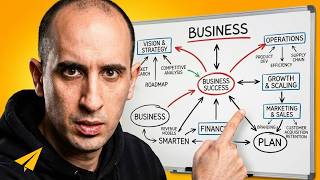
Evan Carmichael breaks down business into five essential elements: value creation, marketing, sales, delivery, and finance. He covers the seven powers framework for competitive advantage, the psychology of entrepreneurship, and five high-income skills for 2024-25 including AI integration, data analytics, and digital marketing.
Chapters
Business is not complicated. It's just solving a problem for someone else. Most people fail because they overthink the plan instead of falling in love with the person that they are serving. If you don't shift your focus from your fears to who you can serve, you'll stay stuck in analysis paralysis forever. Elon Musk didn't build SpaceX by looking at what NASA was doing. He looked at the physics. When he wanted to go to Mars, people said rockets were too expensive. They said a single rocket costs $65 million. That was the industry standard. But Musk didn't accept that. He asked, what is a rocket made of? He broke it down to aerospace-grade aluminum, titanium, copper, and carbon fiber. Then he asked, what is the value of those materials on the commodity market? It turns out the materials were only 2% of the typical price. The rest was inefficiency. By refusing to copy others and reasoning from the ground up, he cut the cost of space travel by a factor of 10. Now, I know this feeling because I lived it when I was 19. I had a clear path to a safe, high-paying job at a bank. It was secure. It's what I thought I wanted. It's what society said was success. But I also had this crazy idea to join a biotech software company. Everyone told me I was insane to turn down the bank job. I didn't have experience. I didn't have funding. But I used what Jeff Bezos calls the regret minimization framework. I projected myself forward to age 80. I asked, will I regret trying this and failing? No. Will I regret never trying at all? Absolutely yes. I didn't want to be an old man wondering what if. So I turned down the bank, went to join the company, and we eventually grew to customers in 30 countries and got acquired. But you might be thinking, okay, Evan, I don't have a genius idea like Elon Musk, and I don't have the tech skills that you might have had at 19. But the truth is, you don't need to be a genius, and you don't need to have a degree or tons of experience. You just need to stop letting your lack of belief hold you back from seeing the simple truth of how business actually works. If you've been here before, type #believe in the comments below so I can feature you here in a future video. And if you're new, welcome to Believe Nation, the only channel that helps you believe in yourself daily, one video at a time. Believe. Part 1: The Foundation. First principles thinking. The biggest mistake you're making is reasoning by analogy. Reasoning by analogy means you look at what your competitors are doing and you try to do it slightly better. You see a coffee shop, so you open up a coffee shop. You see a YouTuber, so So you copy their thumbnails. This can be a trap. When you copy, you are copying their inefficiencies, their fears, and their mistakes. You need to use first principles thinking. This is the physics way of looking at the world and what Elon Musk did. You boil things down to the most fundamental truths and say, what are we sure is true? And then reason up from there. So if you're starting a business, don't ask, how do I make a product like Apple? Ask, what is the fundamental problem that my customer has? So maybe the problem is that they're tired. The analogy solution is coffee. The first principle solution might be a nap pod, a nutritional supplement, or a better mattress. When Elon Musk looked at battery packs, people said they would always be expensive because they cost $600 per kilowatt hour in the past. He broke it down to the molecular level: cobalt, nickel, aluminum, carbon. He realized if you bought those on the London Metal Exchange, it was only $80 per kilowatt hour. The gap between 600 and 80 is where the opportunity lives. Stop looking at your competition. Look at the truth. Part 2: The 5 Elements of Every Business. You don't need an MBA. In fact, most MBAs teach you how to be an employee, not an entrepreneur. According to Josh Kaufman, author of The Personal MBA, every business in the world, from a lemonade stand to Google, is just 5 things. If you are missing one of these, you don't have a business, you have a hobby. So let's go through the 5. Number 1 is value creation. You must discover what people need or want and then create it. This isn't about what you want to make alone. It's about what they need. It needs to satisfy a core human drive, the drive to acquire, to bond, to learn, defend, or feel. If your product doesn't solve a real problem, nothing else matters. Number 2, marketing. If you build it, they will not come. Marketing is the art of changing beliefs. It is attracting attention and building demand for what you have created. You need to move people from unaware to problem aware to solution aware. Number 3, sales. Marketing attracts them, sales gets them to commit. This is the process of turning a prospective customer into a paying customer. Sales is not about tricking people, it's about trust. It's about helping your prospect understand why your offer is worth paying for. Number 4, value delivery. You have to actually give them what you promise. This is where your reputation is built. If you sell the dream and deliver a nightmare, you're done. You need to exceed expectations. And number 5 is finance. You need to bring in enough money to keep going and make it worthwhile. You don't need to be an accountant, but you need to understand that if more money goes out than comes in, you are out of business. That's it. If you're struggling, one of these 5 things is broken. Diagnose it, fix it, move on. Part 3: Strategy. The 7 Powers. So once you have the basics, you need a strategy. Hard work is not enough. If you work 100 hours a week on a bad strategy, you will still lose to someone working 20 hours a week on a great strategy. Strategy is about power. Power is the set of conditions that create the potential for persistent differential results. So what does that mean? Power is what stops your competitors from stealing your profits. Hamilton Helmer identified 7 powers that build an enduring business. You don't need all of them, but you need at least one. So number 1 is scale economies. This is where you get cheaper as you get bigger. So think about Netflix. When they started making original content like House of Cards, they spent $100 million. That sounds like a gamble, but because they had millions of subscribers, the cost per subscriber was pretty tiny. A smaller competitor could not afford to spend $100 million on one show. Their size became their shield. Number 2, network economies. The value of the product goes up as more people use it. So think about Facebook or LinkedIn. If you leave Facebook, you lose your connection to some of your friends. If you start a new social network, it has zero value because there's no one there. This is why it's so hard to kill a network once it takes off. Number 3, Counter-positioning. This is my favorite for new entrepreneurs. This is where you adopt a new business model that your competitor cannot copy because it would hurt their existing business. So example, you can look at Kodak, right? They invented the digital camera in 1975. They knew it was the future, but they made all their money selling film. If they pushed digital, they would kill their own film profits. They were stuck. They couldn't move. Or you can look at Vanguard. They introduced low-cost index funds. The big banks couldn't copy them because the banks made their money on high fees. If the banks lowered their fees to match Vanguard, they would lose all their revenue. So find a way to do business that makes your competitor afraid to copy you. Also, if you want to take real action after this video, I made a free worksheet just for you. It covers the top lessons from today, gives you space to write your biggest takeaways, and helps you build a simple action plan. It's 100% free. Just click the link in the description, go grab it. I'll see you there. Number 4: switching costs. Make it painful for your customer to leave, not by trapping them, but by integrating so deeply into their life that leaving is a hassle. So think about It's like Apple. Once you have an iPhone, a Mac, iPad, iCloud, switching to Android becomes a nightmare. You stay because staying is easier. Number 5, branding. Branding is not just a logo. It is the attribution of higher value to an objectively identical offer. So example, Good Morning America did a test. They bought a diamond ring from Costco for $6,600 and a similar ring from Tiffany for $16,600. An expert appraiser actually said the Costco diamond was better quality, but people still pay $10,000 more for the Tiffany blue box. Why? Because the brand reduces uncertainty. You trust Tiffany. You don't trust Costco for romance. That trust is power. Number 6 is a cornered resource. This is having something no one else can get. It could be a patent, a location, or a team. Pixar had a brain trust of the best storytellers and animators in the world. Disney couldn't replicate it, so they had to buy them. If you have the best of something, you've cornered a resource. And number 7, process power. This is doing something so efficiently that no one can match you. So Toyota developed the Toyota Production System. They were so confident in it that they actually gave tours to their competitors. They showed GM exactly how they built cars, and GM still couldn't copy them. Why? Because the process was embedded in the culture, not just the machines. It was learned by osmosis over decades. Part 4: The psychology, belief, and the who. You can have the first principles, you can know the 5 parts, you now have the 7 powers, but if you don't believe in yourself, none of it matters. Belief is the world's biggest problem. I believe everyone has Michael Jordan-level genius at something, but we don't we don't do it because we're afraid. We're afraid to fail. We're afraid of judgment. We're afraid to be seen starting small, starting over. You have to realize that your purpose comes from your pain. Whatever you struggled with the most is what you are best equipped to help others with right now. I make videos for entrepreneurs because I was the struggling 19-year-old entrepreneur who needed help. I'm serving my younger self. When you focus on serving, the fear goes away. You stop worrying about how you look and you start worrying about how you can help. And stop obsessing about the how. How do I build the website? How do I get the funding? The how will always change. The how is flexible. You need to be stubborn on the why and the who. Who are you serving? Why does it matter? If you know who you're serving and why it matters, the how will present itself. You will figure it out. You will learn. You will partner. And money— money is a tool. It's important. You need oxygen to breathe, but you don't live to breathe. You need money to run your business, but you don't live for money. If money is your number one goal, you quit when it gets hard, and it will get hard. If your goal is service, you'll keep going. You will find a way. Part 5: Execution. Getting started. So where do you start? You start by doing. You start by failing. You have to give yourself permission to produce garbage. My first videos were terrible. I was shy, I was sweating, I looked nervous, but I posted them anyway. If I waited until I was perfect, I would never have started. People say that good is the enemy of great. So if you stay in your comfort zone doing what you're good at, you will never find what you could be great at. You don't need to quit your job today. You don't need to mortgage your house. You can start with 30 minutes a day. You can start by solving one problem for one person. Start small, but start. The only difference between you and the people you look up to is that they started and they kept going when everyone else quit. You have a genius inside of you. You have a problem that you can solve for the world. Don't let the how stop you. Don't let the fear stop you. Use the principles. Build the 5 parts. Find your power. And most importantly, believe. If you're feeling bold, if you're feeling powerful right now, that's a signal. Follow that feeling. Take the next step. And congratulations, you're one video closer to who you're meant to be. Believe. Now let's learn how you can turn your hobby into a career. Keeping your passion as just a hobby is a waste of your potential. Think about it. Most people, they slave away jobs that they hate, suppressing the things they love. No wonder they feel stuck and unhappy. If you never act on your passion, you risk waking up at 80 with nothing but regret. The regret of knowing that you never even tried. Take Walt Disney as an example. Walt started out drawing cartoons for fun, sketching animated figures in his spare time. At 18, he landed a job as a cartoonist, but he wasn't satisfied with just drawing for someone else. He had a bigger vision. He turned his doodles into an empire, starting his own studio and growing it into the Disney we know today. Imagine if Walt had played it safe and kept art as a side gig. We might not have Mickey Mouse, no Disneyland, none of it. His hobby became his legacy because he had the courage to go all in. Now, a personal story from my own life. Years ago, I fell in love with salsa dancing. I started as the tall, awkward guy with two left feet. I didn't speak Spanish. I was a slow learner. But I kept at it week after week. Salsa wasn't my job. I did it because I loved it and it changed my life. I met my wife through salsa. It became a huge part of who I am. Fast forward a few years later, the owner of my salsa studio decided to move on and the community we built was at risk, so I couldn't let that happen. So I bought the studio. Yeah, a guy who started as the worst student in class ended up owning Canada's largest salsa dance studio. Why? Because salsa was more than just a hobby. It was a passion. That I was willing to invest in. And that little hobby now impacts tens of thousands of people, even doubles as my film studio for my videos during the day. I turned my hobby into a business that serves my community and brings me joy every single day. So you might be thinking, okay, that, that's great for you, Evan, but my hobby can't pay the bills, or what if turning it into a job ruins the fun? I hear you. It's scary. That's legitimate. You worry about money, you're about failing, about losing that spark, but What if you never try? What if you keep dragging yourself to a mediocre job and only dabbling in your passions on the weekends? That's a recipe for a mediocre life. Turning your hobby into your career doesn't kill the passion. It doesn't have to. It can amplify it. Yes, it will be work, and not every day will be amazing and sunshine and rainbows, but it's meaningful work fueled by something that you actually care about. And that beats any soul-sucking job any day of the week. And guess what? People are making it happen every day. If someone else with a camera or an oven or paintbrush can turn their passion into a thriving business, why not you? The only difference is they said yes to their dreams while others say no. So are you ready to say yes? Let's talk about how to actually do it and how to transform that hobby of yours into a real career step by step. Here we go. Step number 1, stop calling it just a hobby. Shift your mindset. So you have to believe that your hobby can be your career. Step 1 is an identity shift. Stop treating it like a cute little side interest and start treating it like it matters. If you don't take your passion seriously, nobody else will. Think of Alicia Schaefer, a mom of 3 who loved making boho chic designs. She started out crafting in her kitchen at first and selling on Etsy. At first, it was just a fun side hustle. Then she had a mindset shift. I decided to stop treating it like a hobby and start treating it like a business, she said. The result, she became Etsy's top seller, pulling in as much as $60,000 to $80,000 a month with her handmade products. That happened because she believed her hobby was worth something and committed to it like a professional. I had to learn this myself. Some of you know my story. I started a website in my twenties of sharing lessons from successful entrepreneurs, and that site started to blow up. We had 100,000+ pages of content, and even big names started writing for us. On paper, it was a success. But I woke up one day and realized I no longer loved it. It had turned into a content factory, just chasing ad dollars, not the mission-driven project that I envisioned. Meanwhile, I was getting more excited about making YouTube videos, reaching people more directly, having more fun with it. So I made a bold decision. I just shut down my big website overnight, and I moved my entire focus to YouTube. People thought I was insane. They said, Evan, you walked away from a sure thing to chase a hobby on YouTube? What are you doing? But I didn't see it as crazy. In my mind, it was more risky to stay stuck doing something that I didn't like anymore? Why keep investing in a business that my heart wasn't in just because it made some money? I'd rather take my shot doing what I love. And I told people, walking away from something you don't like towards something you do is the opposite of risky. And you know what? That decision to treat YouTube, my passion for creating video content, as my real business changed my life. The channel that you're watching now only exists because I had the courage to put my passion first. So step 1 for you is internal. Own the identity. You're not just a hobbyist. You're a baker, an artist, a coder, an educator, whatever your hobby is. Start calling yourself that. Carry yourself like it's already your career. This isn't about fake it until you make it. It's about being it so you can become it. And psychology backs us up. When you identify deeply with a role or mission, you behave differently. You show up with purpose. You keep going when others would quit. And the world needs people who are alive with passion. One of my mom's favorite pieces of wisdom for me was, if you have the ability, you have the responsibility. If you can, then you must. And I carried that into my mission. If I can help somebody with something I love, then I have to. Your hobby lights you up for a reason. It's pointing you to your purpose. So embrace it fully. Decide that you're going pro in your passion. That decision alone sets everything else in motion for you. Step number 2, start before you're ready. Overcome perfectionism. So stop waiting for permission or for the perfect plan and just start. This is where so many aspiring entrepreneurs, they fall apart. I know because I stumbled here too. We want everything to be just right. We don't want to launch until the stars align and success is guaranteed, right? Newsflash, that day will never come. Perfect is an illusion and waiting for perfect is a dream killer. So let me share 2 quick stories. First, back in my 20s, my software company almost had a huge exit. This deal would have been $40 million to us. Life-changing money for me at that age. But guess what? We missed it. Why? Because I was obsessing over details and planning instead of taking action. So I spent an entire summer writing and polishing our business plan. Meanwhile, a competitor, they got out there and they built relationships. And when the big opportunity came, they were ready and we weren't. And that competitor got acquired for $40 million, not us. And I'll be honest, that really stung. I remember saying I lost a $40 million deal because I was trying to make things perfect. It was a tough pill to swallow, but also an incredibly valuable lesson. And I'm still a recovering perfectionist, and I realized that a half-assed plan that you act on is better than a perfect plan that you never execute. Most of your precious plan is going to be wrong anyway once it meets reality. You've got to get in the game and adapt on the fly. And my perfectionism cost me a once-in-a-lifetime deal, and I vowed to never let fear of not being perfect slow me down again. Second start, my YouTube channel. So fun fact, I created the channel in 2008, but I was so nervous about getting it right that I didn't upload my first video until April 2009. I sat on it for months. Why? Perfectionism. I told myself I needed a professional videographer, a script, the right suit. And I did all that for my first video. It took me an entire day to record a— I forget how many minutes video because I kept overthinking every line. I was so stiff and unnatural trying to be perfect. And looking back, it's cringy, but but, but I posted it. And you know what? I had 3 comments in the first year— my mom, my older sister, and some random person. But that experience taught me just to press record and post, even if it's ugly. If I hadn't broken through that perfectionism, I'd probably still be sitting here planning my perfect video instead of having 10,000 videos and 4 million subscribers. So I call myself a recovering perfectionist now because that tendency never fully goes away. You just learn to override it with action. So I want you to override your perfectionism Starting today. Start before you feel ready. Launch an Etsy shop, even if your product line isn't 100% polished. Post that video, even if your video could be better. Tell your first 5 clients that you are open for business, even if you're still figuring things out. Yes, you might stumble. It will definitely be messy, but you'll learn more from one real step forward than 6 months of theory crafting in your living room. Psychologists even have a term for getting stuck in planning mode. Analysis paralysis. You think you're being diligent, but really you're just procrastinating because you're scared. So let's call it what it is. Perfectionism is just fear in fancy shoes. You're afraid of being judged or failing, so you dress it up as, I'm not ready yet. So I'm giving you a loving kick forward right now. You are ready enough. You don't need to know everything to begin. You'll figure it out as you go. I promise. Action creates clarity. As you start, you'll refine your strategy in real time. The big company you admire, They started in a garage with a clunky prototype. My first videos were terrible, but you can't get to video number 100 without making a few awkward ones first. So get version 1.0 out there. Embrace the motto, progress over perfection. Your mantra is launch and then adjust. This is how every successful entrepreneur turns a hobby into a career. They start, they launch that Etsy shop, the YouTube channel, the small weekend catering gig. It might flop or it might fly, but either way you learn and you move forward. As the saying goes, you don't have to be great to start, but you have to start to become great. So do it now, do it imperfectly, but do it. Step number 3, share your passion and ask for help. Don't go it alone. Turning your hobby into a business is hard, but doing it alone is almost impossible. You need to build a support network around your passion. So that means sharing your journey. It means connecting with others. It means asking for help when you need it. And this step is both practical and mental, practical because opportunities come through people, mental because it forces you to shed the lone wolf mentality that might be holding you back. And I'll admit, this is a tough one for me. I still have a hard time asking for help. I'm an introvert. Reaching out is not my natural tendency. And especially in the early days of my startup, I was too embarrassed to tell anyone that I was struggling. I was making $300 a month, felt like a complete failure, but I kept it all inside. I thought I have to figure this out on my own. And that was a huge mistake. I've said it before, I'll say it again, don't do it alone because you'll probably fail. You'll quit along the way because it's too devastatingly lonely. And that's the truth. When you're grinding in isolation, every setback hits you harder and every, every doubt becomes louder. I almost quit on my business because I felt so alone in it. The moment that I finally swallowed my pride and I asked for advice from a mentor, things started to turn around. I learned that asking for help is not a weakness. It's actually just a success strategy. So let me give you a quick story to show how important this is. A while back, I was on a flight to Puerto Rico to speak at an event. The guy next to me tried to chat, but I did my usual introvert thing. I put on my headphones and basically sent a leave me alone vibes. Small talk on a plane is like my worst nightmare. I'm thinking, please don't let this stranger talk to me. So we fly in silence. And when we land, I see the same guy checking in at the hotel for the entrepreneur mastermind that I was speaking at. And turns out he was exactly my kind of person, an entrepreneur headed to the same event. And we could have had a great 2-hour conversation on that flight, sharing ideas, maybe forming a friendship or some kind of partnership. Who knows? But I shut the door on that before it even opened. I remember standing there thinking, wow, I literally avoided a golden opportunity because I was too shy to say hello. So lesson learned. Now I try to engage even just a little because you never know who's sitting next to you. Maybe your future business partner, maybe your next investor, or simply a friend who understands your journey. So what does it mean for you? Find your people. If your hobby is baking cupcakes, join a local bakers club or an online forum for baking entrepreneurs. If you love coding, go to hackathons or meetups. If you're a dancer, start hanging around dance studios or in online dance communities. Get yourself in the mix where others share that passion and then Open your mouth, share what you're doing, tell your friends and family that you're starting a business. Yes, that can be vulnerable. You're effectively saying, I'm trying something big and I could fail. But you'll be surprised how many people will cheer you on or introduce you to someone or give you that one idea or client that kicks things off. And please get comfortable asking for help. This is still one of my biggest growth points. Even after I've had some success, I still struggle with asking. But funny story, a few years ago, a friend of the channel, Brendan Burchard, invited me to his mastermind at his house. And I walk in and I'm surrounded by all these legends, people that I look up to, and part of me feels like I didn't belong. And at one point, Brendan noticed that I was being quiet, and he called me out in a kind way, and he said, Evan, you give so much to people, you gotta make sure you come up with an ask. What do you need help with? And he pushed me to receive, not just to give. That was uncomfortable for me, but I did it. And I asked that group for advice on growing my YouTube channel and on my book and dealing with some self-doubts that I had. And guess what? The feedback I got was pure gold. And one idea from that room saved me months of trial and error. And it reinforced for me that entrepreneurship is a team sport. Even if you're a solo entrepreneur, you need mentors, your peers, your cheerleaders along the way. Don't isolate. Communicate. Show your passion to the world. If you keep it hidden, No one else can help you, and you might miss connections. You will miss connections that will change your life. Collaboration and community will carry you further than you can carry yourself. So ask yourself, who can I reach out to this week for support or for feedback? What forum or group can I join? Who out there is doing what I want to do and how can I connect with them? Don't let pride or fear of rejection stop you. Most people love to talk about their shared passions. They'll be happy to help an enthusiastic newbie because it reminds them of why they started too. To. So send that email, attend that meetup, comment on that fellow creator's post. You never know where one hello might lead. Step number 4: Be patient and persist. Play the long game. Turning your hobby into a full-fledged career will take time. There's almost no way around this. The overnight success is a myth. Most overnight successes were grinding in the dark for years. So commit to the long game. That means staying patient and more importantly, staying persistent when your progress is slow. So reality check from my own journey: people see my YouTube channel now with the millions of subscribers, etc., and think I have some sort of magic touch. They don't see that for years I was shouting into what felt like the void. It took me 5 years on YouTube to crack 2,000 subscribers. 5 years of what some would consider a failure of a number. But in another 5 years, I got to a million. But that's a decade of work to get to what creators can potentially get in a year. And in the first few years, my subscriber growth was so slow that I thought I'd be 90 years old before I'd ever get a Gold Play Button. I remember uploading videos, I got 30 views and 50 views, and it's hard not to compare yourself to others when they're blowing past you. But I just had a mindset shift that saved me. I stopped obsessing over the numbers and started celebrating the people. I told myself, okay, 50 people watch this video, but 50 people took the time out of their day to hear my message. Imagine I was giving a speech at a local library and 50 people showed up to listen. I'd be thrilled. And so that perspective changed everything. I started focusing on who I was serving instead of who I wasn't. So instead of feeling like, oh, only a few dozen views, I felt grateful and energized to help those few dozen people. I focused on serving the audience I did have, not the audience that I didn't. And slowly those 50 turned into 100, and then 1,000, and then 1 million. And what kept me going in the dark days was Purpose and love for the process. So I genuinely enjoy making videos and I was on a mission to solve a problem that I struggle with myself, lack of belief and mentorship for entrepreneurs. Even when the external rewards were small, the internal rewards were there. I was growing. I was learning. I was getting better in my, my field, my craft, the videos. You must find that same well of patience and persistence. Expect that the first year or two might be slow. That's normal. It's okay. Do not quit your passion just because it's not printing money immediately or because your Etsy shop only got a few sales in your first month. If you truly love it and you see even a glimmer of impact, keep going. Adjust your approach maybe, but don't give up on the whole game. I'll give you an example from my own persistence. My salsa business partner, Alex. When Alex started as a dance student at my studio, he was awful. I mean it. The guy was the worst student in the class. And we have a system for if you're not ready to move to the next level, you get held back to repeat the level. Now, it's actually pretty rare, like almost nobody gets that. Less than 1% of students ever get held back. But Alex was held back at almost every level. Can you imagine that? Most people would have been so embarrassed they quit after the first time. But Alex loved dancing. He didn't care if he wasn't a natural. He kept showing up. He actually thanked us for holding him back because it meant that he to continue to improve on his fundamentals of dancing. And that mindset at Bloom Area was awesome. Fast forward, after being our most persistently terrible student, Alex eventually improved. He started assisting classes, then teaching, and today Alex is our head instructor who helps run the dance studio. He had a career in sales and he left it to pursue dancing. Talk about turning a hobby into a career. He literally went from the worst in the class to leading the entire school. How? Through grit, through showing up even when it was hard and humbling. That's the power of persistence. And science backs this up too. Psychologists have a term, grit, coined by Angela Duckworth, which is basically the mix of passion and perseverance. Studies have shown that grit, which is just sticking with something that you care about over the long term, is a better predictor of success than talent or IQ. What does that mean? It means that if you're consistent and you keep improving, you can surpass the naturally talented people who just give up early. Consistency beats intensity every time. I take the everyday hustler over the one-week genius any day. So commit to a process. Give yourself time to succeed. I'm not saying quit your job tomorrow and live in your car while you wait for your hobby business to bloom, right? Be smart financially. Build it on the side if you have to. But emotionally, you need to give this endeavor some patience. Set a longer horizon. I'm going to give this my all for 3 years instead of 3 weeks. When setbacks happen, and they will, remember why you're doing this. Well, we'll get to that in the next step. But remind yourself that every master was once a disaster. Every pro was once an amateur. Your slow progress is not a sign of failure. It's an indicator that you're on your journey. As long as you don't stop, you're still in the game. And sometimes slow growth is setting you up for explosive growth later. My channel crawled for years, and then boom, it started to take off. And those early years were absolutely necessary to build my foundation, my skills, my content library. If I'd quit in year 3 or before, you wouldn't be watching this right now. And one more tip: celebrate those small wins. Did you make your first $100 from your art? Awesome! Take a picture of that PayPal notification. Did you get your first client testimonial? Amazing! Frame it on your wall. Treat these little victories as breadcrumbs that lead you forward. Cherish them. They'll, they'll keep you positive and motivated while you wait for the bigger break to come. Step number 5, stay connected to your why. Make it about purpose, not just profit. So as you turn your hobby into a career, there will be a point where it starts to feel like work. Anytime you monetize something, there's pressure. Now there's deadlines, there's customers, there's finances that enter the mix. And the danger is you can get so caught up in the business side that you forget why you loved it in the first place. So to prevent this burnout and truly succeed, you need to anchor in your purpose. Keep it mission-driven, not just money-driven. Don't get me wrong, you absolutely should aim to make money and lots of it. Money is a fantastic servant. It gives you freedom. It validates that you're providing value. But money cannot be the only reason that you're doing this. If it is, the first rough patch, you're going to quit. When the money is lean or the sales aren't coming in, you'll have no reason to continue. But if you have a deeper why, a mission, you'll push through walls to see it happen. For me, that mission was baked into why I started creating content for entrepreneurs. Remember my first company struggle, how much pain I went through trying to build a business as a clueless 19-year-old? I felt so alone and so close to quitting so many times that I eventually survived and sold my startup, but it was brutally hard. And that pain became my purpose. I thought, if I can make it even a little bit easier for the next entrepreneur in my shoes, I should. Your purpose comes from your pain. I like to say that the thing that hurt you, uh, or challenges that you overcame is exactly what you can help others with. So my hobby of consuming entrepreneur stories, tips, strategies, that turned into a mission to share those with the world so others don't have to struggle as much. That's what kept me going in those early years of creating content for basically no one. I wasn't driven by ad revenue or fame. I was driven by the thought that maybe one video could save an aspiring entrepreneur from quitting. That meant something to me. And guess what? That's exactly what ended up happening. I started getting emails and comments from people saying things like, Evan, your video kept me from giving up on my business, or this interview inspired me to finally start my dream. And that became motivation for my soul, right? So connect your hobby to service. Ask yourself, how does doing this passion as a career help others or impact the world positively? Positively. So if you're a musician, maybe your music brings joy or helps people feel seen. If you're making something, your products might bring people comfort or confidence. If you turn your baking hobby into a bakery, you're not just selling cupcakes, you're giving people moments of happiness and celebration. You like tie your work to something that matters. Debbie Fields, who founded Mrs. Fields Cookies, said it perfectly: once you find something you love to do, be the best at doing And she also said, "The greatest failure is to not try." Her deeper purpose was spreading joy through cookies and proving naysayers wrong, and it drove her to build a cookie empire. Another part of purpose is keeping your own passion alive. So protect the love you have for your hobby. Sometimes when it becomes a business, you might start doing aspects you don't enjoy, like paperwork and marketing, et cetera. And that's normal, but always make time to reconnect with the fun, the creative part that made you start in the first place. So I like to tell creators, make sure that you're still creating things for you, not just for the algorithm or the market. So in my case, I still make videos on topics I'm personally curious about or struggling with, not just what I think will get views. I thought this was an important video. We'll see how it does, but I wanted to make it because I thought it was important personally. I make content that I need to hear, and it turns out that a lot of people need to hear it too sometimes. And that keeps me engaged and growing too, personally. It's also okay to evolve your vision as you grow. So maybe your hobby career opens new opportunities. Great. Follow the ones that actually excite you. Just always do check-ins. Does this still align with what you care about? If you ever find yourself feeling like your passion business is becoming soulless, pause, refocus. Remember why you started. Maybe even write down a mission statement or a simple sentence of why you do what you do and put it on your wall. Make it somewhere in front of you. When things get tough or confusing, look at it. That why will help you cut through the noise and reset you on the right path. And one more thing. Acknowledge yourself for the courage it takes to do this. Seriously, most people will never even attempt to turn their hobby into a career. It takes guts. It takes belief. By even trying, by putting yourself out there, you're already in the elite minority of people who are trying to live life on their own terms. And that is actually something to be really proud of, no matter what stage you're at. So use that as positive reinforcement. You're doing what most only daydream about. So keep going. Your hobby can become your career. And when it does, it's one of the most fulfilling feelings in the world. You wake up excited to work, you give it more energy and love, and that translates into better results. And people will feel that energy. Your customers will sense that you genuinely care about what you're doing and they'll support you because of it. And in turn, you're making a living or maybe even a fortune doing what you love. And that's the win-win outcome that we're after. You're happy and you're making others happy or solving their problems too. And you get paid for it along the way. It's a beautiful cycle. And it all starts with the decision to take your hobby seriously and go for it. Now, I've given you a roadmap here. Mindset, action, community, patience, purpose. These 5 steps are not one and done. You'll revisit them often, but if you follow them, you will be miles ahead of where you are now. So remember Walt Disney or Alicia Schaefer or my friend Alex. Their success didn't happen by accident or overnight. It happened because they dared to believe in their little hobbies and stuck with them. You can do the same. Do one thing that moves your dream forward right now. It doesn't matter if it's small. The journey of 1,000 miles, right? One step. You've got this. It's not going to be easy, but it's going to be worth it. And your future self is already smiling back at you saying thank you for starting. Thank you for watching and more importantly, for being the type of person who actually wants to do something with their life. Most people people won't even make it this far into a video like this. But you did, which tells me that you're serious. You're building that belief and that knowledge. And now turn that knowledge into action. Now let's learn the top 5 high-income skills to get you wealthy. Ready to discover the skills that could skyrocket your success this year? These aren't academic theories. They're practical, in-demand abilities that you can learn without a formal degree. Each skill taps into emerging market needs offers entrepreneurial leverage and has scalable impact. Let's dive in and imagine the possibilities each one opens up for your business and income. Skill number 1, AI integration and automation, turning intelligence into income. Okay, so what is it? Here we're gonna leverage AI and automation tools to streamline operations, create smarter products, or even launch AI-driven services. It's using machines to do the heavy thinking or doing for you, from chatbots that handle customer inquiries to AI systems that optimize your marketing or inventory in real time. Here's why it matters this year. The AI revolution isn't coming. It's right here now, and it's rewriting the rules of business. By 2024, 70% of organizations reported using AI in some capacity, up from just 55% the year before. Companies are pouring investments in the AI at record levels, over $109 billion in the US in 2024, with nearly $34 billion globally into generative AI, and they desperately need people who can make it work. The catch? There's a huge talent gap. 94% of business leaders say they face AI-related skill shortages on their teams, with 1 in 3 reporting massive gaps in critical AI roles. What does that mean? Demand is way bigger than supply, and that means opportunities for you. Entrepreneurs who are AI-savvy can step in and command premium prices for their solutions. This isn't just for tech companies. Either. From healthcare to finance, AI is being woven into daily operations. Even the FDA has approved hundreds of AI-enabled medical devices, and self-driving cars are logging thousands of rides right now. The world is racing to adopt AI, and those who can ride that wave stand to reap huge rewards. So how can entrepreneurs profit? Think of AI as a force multiplier for your business. An entrepreneur with AI skills can automate super boring processes, freeing up time to to scale faster. You can make smarter products with better features. You can offer AI consulting and integration services to companies who are willing to pay for help. So for example, a small e-commerce founder might use AI to personalize their shopping experience for each customer automatically, leading to happier customers and higher sales. Or maybe you're launching a micro SaaS tool that uses AI, like an AI scheduling assistant or content generator. Even a one-person business can serve thousands of customers when AI is doing most of the work. The evidence is everywhere. Companies using AI report higher productivity and lower cost, and many have seen AI-driven projects boost their bottom line. One entrepreneur created an AI-powered copywriting service and landed hundreds of clients globally, essentially earning money 24/7 as the AI works for them. The key is that AI is practical accessible and learnable. With countless online courses and tools, you can start applying AI even if you're not a programmer. Many AI platforms are actually plug and play. So this year, knowing how to harness AI is like having a superpower. It's not just about efficiency, it's about unlocking new income streams. From automating your marketing to building the next ChatGPT-like app for a niche industry, AI integration is a skill that can pay off almost immediately. So embrace and you ride the biggest tech wave of our era straight towards profit. Now, AI might be the brains, but data is the backbone. So next, let's look at the skills that turn raw numbers into gold. Skill number 2: data analytics and business intelligence. Profiting from big data. Okay, so what is it? It's the skill of collecting, analyzing, and drawing smart insights from data to drive business decisions. So data analytics is like having x-ray vision for your business. It lets you see the patterns and trends that normal people's eyes would miss. So business intelligence, or BI, goes hand in hand, focusing on those who are using insights to make strategic calls. This skill isn't about math genius. It's about knowing which numbers matter and how to translate them into action. So why it matters right now in this year: we live in a world that has tons of data. Every click, every purchase, every interaction, it can be tracked. But few people know how to turn that ocean of information into actual real value. And that's where you can come in. Companies have realized that gut instinct isn't enough. 81% of businesses now believe data should be at the heart of all decision-making, and they're willing to pay handsomely for those who can deliver results. Why? Because data-driven businesses simply perform better. They're more productive and more profitable on average than their less data-savvy peers. Companies that truly embrace analytics have seen efficiencies boost as high as 60 to 80% in operations. It's not just about giant corporations. Even small startups benefit when they can quickly identify which product feature is a hit, or which marketing channel brings the best ROI. And this is a very clear trend. The global big data analytics market is massive. It's over $270 billion in value and still growing. And there's a shortage of professionals who can wrangle data effectively. Executives are literally hungry for insights. A recent survey found 88% of business leaders rank data analytics as a top priority for upskilling in the organization. So this year, being fluent in data is like having a secret weapon in your market. You base decisions on facts, not guesses, which is a recipe for winning. So how can entrepreneurs use it? Data analytics can make you rich in two ways. First, by applying it to your own business, you can pinpoint your most profitable customers. You can find inefficiencies to cut. You can test pricing strategies with actual hard evidence. For example, Netflix famously used data analytics to save $1 billion a year by recommending exactly what viewers wanted. So imagine bringing that kind of insight into your business decisions. Secondly, you can sell this skill as a service to others. Many companies, especially smaller ones, they drown in data but have no idea what to do with it. You could come in as a freelance analyst or consultant, turn their data into a clear action plan, and charge premium fees for delivering growth or savings. So picture telling your client, I found a way to boost your sales 20% by analyzing your customer behavior. And then actually doing it. There are real case studies of entrepreneurs doing just this. One startup founder used business intelligence tools to optimize her inventory and eliminated over $100,000 in annual waste, directly padding her profits. Another built a consulting agency that helps local businesses set up simple dashboards and KPIs, and within a year, he was booking 5-figure contracts regularly. The bottom line is data analytics is practical and learnable. There's tons of online courses, YouTube videos, tools that are now drag and drop. Master it, and you can either supercharge your own business or become the go-to data guru who turns others' confusion into cash. So in this year, data, it's a new oil, and knowing how to drill for it is an extremely high-income skill. Now, having great data is pointless if you can't attract customers. That's where our next skill comes in. It's time to cash in on the art of getting noticed. Skill number 3: digital marketing and growth hacking. Scaling visibility into wealth. So what is it? Digital marketing is a skill of getting customers for people's businesses online through channels like social media, through search engines, through email, through LLMs, and more. Growth hacking is a trendy way to say creative, fast-paced marketing experimentation, right? So finding clever, low-cost tactics to drive growth or sales for your business or other people. This skill is about making your business impossible to ignore on the internet and turning that attention into revenue. So it covers everything from running targeted ads, optimizing a website to rank on Google or GPT, crafting viral content, analyzing campaign data to tweak for better results, uh, making YouTube videos to spread your message. Why it matters this year is you could have the best product or service in the world, but if nobody knows about it, you don't make a dime. This year, digital marketing remains one of the highest skills for entrepreneurs because online attention is the currency of our kingdom. Just look at the numbers. Global digital ad spending is projected to hit $843 billion. Yes, with a B. Companies large and small are pouring money into Facebook ads, Google searches, TikTok videos, wherever their audience lives online. And they need experts who know how to navigate this landscape. The job outlook also reflects that demand. Marketing roles are expected to grow by 10%. Faster than the average for all careers. And in particular, there's surging demand for people skilled in areas like marketing analytics, content creation, and SEO, SEM, because every business wants to rank number one on Google and decode the algorithms of ChatGPT. The beauty of digital marketing is that it's practical and learnable. No MBA required, just practice, creativity, and keeping up with the trends. We're also seeing new frontiers like AI-driven marketing. Over 50% of businesses are already using generative AI to improve their operations. All this means that entrepreneurial marketers who stay sharp can out-hustle their bigger competitors. So in this year, if you know how to get the right message to the right people at the right time online, you basically have a license to print money. So how can you use it as an entrepreneur? Digital marketing is often the make or break skill that determines if you scale or if you stay stuck. And so if you master it and you can acquire customers on demand, you can enter new markets quickly. You can even build a personal brand that multiplies all of your opportunities. Take, for example, an online fitness coach who leverages social media marketing by mastering YouTube and Instagram. She grows her audience to hundreds of thousands and launches a fitness app that earns 7 figures online. Or think of a small local business owner who uses savvy Google search ads and SEO to dominate local search traffic, right? Their store goes from unknown to the go-to place in town. And these aren't hypotheticals. These things are happening right now, all around us. As an entrepreneur, you can also sell digital marketing expertise. If you're great at, say, SEO or Facebook ads, you can freelance or start an agency. Businesses are eager to pay because they've seen the ROI. For every dollar spent on email marketing can yield $36 in return, as various studies have shown. So a skilled email marketer is worth their weight in gold. Another real-world use case. An entrepreneur growth hacked his startup by creating a referral program that went viral. So think Dropbox's free storage for referral strategy, acquiring millions of users without a massive ad budget. That's growth hacking in action. So digital marketing lets you scale up quickly. An ad campaign can reach millions of people overnight. A piece of content that catches fire can bring in floods of traffic. You're not limited by your local area, your storefront, and with analytics tools, you can measure every penny and double down on what works, like truly data-driven marketing. And the emotional side, it's pretty thrilling to see your business blow up because of a campaign that you created. The control is right here. It's in your hands. With consumer attention shifting every year, today it might be YouTube or LinkedIn newsletters. Tomorrow, who knows? Entrepreneurs who have the skill will ride each wave and outpace their competition. Digital marketing and growth hacking are high-income skills because they directly drive revenue, and mastering them means means you can virtually write your own success story in this digital age. So now you've got the customer's attention. Now we need to convince them to open their wallets. The next skill is all about the art of persuasion, and it's one of the oldest and most profitable tricks in the book. Skill number 4: persuasive communication and storytelling. Selling anything to anyone. So what is it? This is the skill of conveying ideas in a compelling way. So that's through sales pitches and marketing copy, or even everyday networking conversations. It includes sales and negotiation, right? Convincing a customer or partner to say yes. Copywriting, which is writing words that sell from ads to landing pages. And storytelling, crafting a narrative that hooks people in emotionally. It's how to talk or write so people listen, trust you, and feel motivated to act, like clicking the buy now or signing a contract. Why it matters this year is no matter how advanced technology gets, the power of a good story and genuine connection never goes out of style. In fact, as automation rises, those human-centered skills become more valuable. This year's marketplace is hyperstimulated. Consumers see thousands of ads and posts a day, so the ability to cut through that noise with a resonant message is pure gold. 68% of consumers say that a brand's story influences their buying decisions. People remember stories up to 22 times more than than plain facts. That's huge for entrepreneurs trying to build a memorable brand or pitch to investors. And yes, we see evidence that storytelling and communication translate to better results. Marketing campaigns built around a narrative can boost conversion rates by 30% or more. On the sales side, companies are actively looking for leaders with strong social influence and communication skills. Even the World Economic Forum highlighted leadership and social influence as a top skill for the future. Why? Because a person who can rally a team, win over a client, uh, negotiate a profitable deal, they are invaluable. Also, let's talk money. Jobs like sales executives or copywriters are often high paying because they directly bring in revenue. A top performing tech sales rep, for example, can earn a 6-figure base salary plus another 6 figures in commissions. Copywriters who crack the code of persuasion are similarly rewarded. Many freelance copywriters charge $100 plus an hour in business. Businesses happily pay because one killer sales page or email sequence can generate hundreds of thousands in sales. Words are powerful, and this year, those who can wield that power expertly will find that it translates into serious income. So how can you use it as an entrepreneur? You're always selling, not just your products but your vision, your brand, even selling yourself as a trustworthy partner. Persuasive communication turns this into a superpower. Mastering storytelling means you can craft a brand narrative that makes customers feel something and remember you. So for example, instead of just saying, uh, our shoe is comfortable, you share the story of a customer who, thanks to your shoe, ran their first marathon pain-free to honor a loved one, right? Now you're not just selling a shoe, you're selling inspiration, you're selling identity. That's the difference that makes people lifetime fans. On a more practical side, entrepreneurs skilled in communication, they'll just close more deals. So So imagine you're negotiating with a supplier or an investor. If you can clearly articulate your value and persuade them effectively, you'll likely get better terms, maybe tens of thousands saved or gained in one conversation. If you sell services or high-ticket products, strong sales techniques like consultative selling or solutions-based selling is key. Today's customers expect you to understand their needs and tailor your offer. Being able to do that can literally double or triple your closing right? So for example, you can monetize a skill by offering freelance copywriting or sales consulting. Great copywriters are in short supply, even with AI writing tools around, because someone has to give the AI the right emotional direction. Businesses will pay top dollar for emails and ads that actually convert. One excellent sales page can be worth millions to a company. So paying a writer $10,000 a craft, it's a no-brainer for some companies. Skilled copywriters routinely earn over $100,000 $250,000 a year once they built a reputation. And don't forget content creators and influencers. They are essentially storytellers too, turning authentic communication into followers and income from ads and sponsorships or product sales. Emotions drive decisions, and if you can tap into emotions with genuine communication, you can drive decisions in your favor. So this year, mastering persuasive communication and storytelling isn't just a nice-to-have. It's often the difference between a business that just fizzles out and one that actually becomes a phenomenon. We've covered brains, data, marketing, charm. Our final skill might not sound as glamorous, but it's a massive moneymaker in today's world. It's all about protecting the wealth that you're building, and it's an area where demand is exploding. Skill number 5, cybersecurity and data protection. Guarding the digital gold mine. Okay, so what is it? Cybersecurity is the skill of keeping data, software, systems safe from hackers and breaches. It's being the, uh, digital bodyguard for businesses. This includes understanding how to prevent attacks— so think malware, phishing, ransomware— knowing how to plug vulnerabilities in networks or websites, and making sure that companies follow best practices so sensitive information like consumer data is not stolen or compromised. Deeply technical for those who specialize, but at a high level, it's very learn-by-doing, problem-solving field, and you don't need a PhD to get good at it— just solid training and experience and a curious mind. Data protection goes hand in hand, so think dealing with proper handling and compliance, like the laws of the land. So for an entrepreneur, having cybersecurity skills means that you can both protect your own venture but also potentially offer security solutions to other people as a So why does it matter this year? One word: risk. As businesses digitize every aspect of their operations, the risk of cyberattacks have skyrocketed, and so have the costs. The average cost of a single data breach hit an eye-watering $4.9 million globally. So for a small or mid-sized company, that kind of hit can be fatal. That's why firms are desperate for cybersecurity expertise and why it's become a high-income skill, high-demand skill. We're in a situation where there aren't nearly enough cybersecurity pros to go around. The global cybersecurity workforce is millions short. One recent study showed about 4.8 million cybersecurity roles are unfulfilled worldwide. There are millions of openings and not enough people with the skills, a gap that widened by 19% in just one year. So talent shortage is actually the number one obstacle companies face in securing their systems. This kind of supply-demand mismatch is exactly what drives up incomes for those who have the skill. So companies have even started to prioritize this in budgets because they simply cannot afford the alternative. Companies without adequate security staff end up paying on average $1.76 million more per breach due to slower response and damage control. But just beyond like corporate IT departments, every entrepreneur with an online presence needs at least basic cybersecurity savviness. Cyber threats this year are more sophisticated. Yes, hackers are using AI too. So on top of that, customer trust and regulations require more solid data protection. You don't want to be that startup that leaked user data and lost credibility overnight. So from ransomware attacks shutting down hospitals to small businesses getting scammed from phishing, the threat is universal. This urgency is driving a huge market for cybersecurity products and consultants. Global spending on cybersecurity is rising every year, tens of billions of dollars annually. As businesses effectively say, please take our money and keep us safe. If you can step in with the skills to do so, you will be richly rewarded. So as some evidence, top freelance cybersecurity experts report rates of $200 to $300 an hour, and experienced security consultants can make over $500,000 a year by serving multiple clients. So it's no surprise that when the stakes are this high, companies are willing to pay for peace of mind. So how can entrepreneurs use it? If you're building your own company, Cybersecurity skills are like an insurance policy and a selling point. You can save a ton of money by implementing security measures yourself instead of hiring some expensive firms and avoid disaster that could derail your business. But also, being more security-minded from day one can be a competitive advantage. You can use that in your marketing. Customers and partners will feel safer dealing with you. So for example, uh, e-commerce entrepreneur who knows how to secure their payment systems can protect customer data not only avoids costly breaches but can market their store as ultra-secure, which gains more customer trust and extra sales in an era of privacy concerns. On the other side, cybersecurity is also an amazing service and a business opportunity. So given that huge talent gap, you could start a consultancy or freelance as a virtual CISO, as Chief Information Security Officer, for multiple small companies that can't afford one in-house. They get your expertise part-time, you get a hefty paycheck. Some entrepreneurs are launching cybersecurity startups. So whether that's, um, developing a niche security software tool or you're offering specialized training, there's even demand for things like ethical hackers who companies pay to test their defenses. We've seen solo consultants charge retainers in the thousands per month per client just to be on call for security incidents. And with new data privacy laws popping coming up all the time, like Europe's GDPR and others. Businesses are scrambling for guidance, which is another avenue for advisory services you could offer if you're well-versed in compliance. So the key point is this: threats are growing and talent is scarce. If you equip yourself with this skill, you become part of a highly sought-after elite group of people. Not only can you command higher fees because preventing a multi-million dollar breach is essentially worth a high payout, but you also carry the confidence you can protect the empire that you're building too. In a time where a single hack can wipe out years of effort, the entrepreneurs who understand cybersecurity will safeguard their wealth and even turn security into a profitable service for others. It's truly a high-impact, high-income skill for today's age. So each of these 5 skills— AI integration, data analytics, digital marketing, persuasive communication, and cybersecurity— hits the sweet spot of being practical, learnable, and immediately valuable this year. They align with the biggest technology shifts and market needs that we are seeing right now. AI is everywhere, data is the king, online growth is non-negotiable, human connection still seals a deal, and security underpins it all. The best part is you don't need a fancy degree to get started with any of these. There are YouTube videos, boot camps, online courses, communities for each skill that you can start learning right now. Entrepreneurs who invest time in mastering even one or two of these will position themselves to generate wealth in the short term. We're talking within a year or two, not decades. And it's all backed by trends and numbers that I've already cited throughout this entire video. The market is hungry for these abilities. So ask yourself, which of these skills speaks to you right now? The entrepreneurs getting rich this year aren't necessarily the ones with the most funding or the fanciest ideas. Often they're the ones who have the right skills at the right time and execute relentlessly. Now you know 5 of those right skills. It's time to choose, learn, and leap. Here's to your success, because this year might be the year your hard work and high-income skills make you the next great success story. To learn the 20 money laws to get rich, check the video right there next to me. I think you'll love it. Continue to to believe, and I'll see you there. Law number 1: Money follows value. Money isn't random. It's the reward for solving problems. Wealth is built not on what just excites you, but on what you create that serves others. The more value you deliver, the more dollars will chase you.
More from Evan


How the Biggest Mistake in History Created A Trillion-Dollar Empire | Sergey Brin



9 Machiavelli Principles That Force People To Respect You | Machiavellian Philosophy



The First 10 Words That Instantly Ruin A Sales Conversation | Vanessa Van Edwards

The Top 1% Mindset Behind The First $5 Trillion Company | Jensen Huang (Nvidia)

