Arianna Huffington's Top 10 Rules For Success (@ariannahuff)
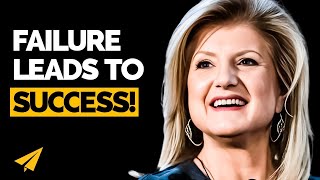
Arianna Huffington lays out ten rules for sustainable success, starting with sleep and disconnecting from technology. She argues that money and power alone don't work, and proposes adding well-being, wisdom, wonder, and giving back. Steve Jobs and Bill Gates used meditation and creative solitude to innovate.
Chapters
A lot of the time we do have good ideas, but we are afraid of failing.
When I'm not joyful, I look at what happened.
We have a dedicated section called Good News Section. It only has good news.
What I'm telling you is to regularly disconnect from technology, to regularly unplug and recharge.
In the end, it's about how we feel inside and what is it that nourishes us.
Socrates said, practice death daily.
It's perfectly okay to be upset and angry and irritated, but how long How long do you stay on it?
Well, first of all, I prioritize sleep. It was when he was in meditation that often a lot of his best ideas for Apple came to him.
Success, the way we've defined it, is no longer sustainable.
She's a Greek-American author, syndicated columnist, and occasional actress. She's a co-founder and editor-in-chief of the Huffington Post. As of 2014, she's listed as the 52nd most powerful woman in the world by Forbes magazine. She's Arianna Huffington, and here are her top 10 rules for success.
A lot of the time we do have good ideas, but we are afraid of failing. I think especially for women, and I see that in my daughters, in my daughters' friends, fear of failure is what stops us more than anything. Yeah, I agree. And I was lucky in that I had a mother who was full of sort of this colloquial wisdom. And she used to say to me, you know, failure is not the opposite of success. It's a stepping stone to success. There is nobody who has not failed along the way. So I think it's very important for young women, especially as they are starting in life, to recognize that. Because otherwise they only see people's successes.
So when I speak, I speak of my failures.
One entry point is— bringing joy back into our everyday lives. Because so many of us— and I speak as a complete culprit, as a certifiable Type A workaholic driven personality who basically felt my job was about getting it all done, getting it done in time, getting it accomplished.
And joy?
Who has time for joy? And now I feel that not at all. That it's like when I'm not joyful, I look at what happened. I don't mean joyful like there are no challenges, problems, et cetera. I mean like when I'm not like, hey, this is great. I'm blessed. I'm doing something I love.
I'm grateful.
When I don't have that feeling, I know I'm off.
I need to course correct.
So joy kind of really— Checking in and seeing, how am I doing? Am I— you don't even have to check in because you know when you are in the flow, in the joy, and when you're not.
What I tell everyone who works with us is that all the stuff that we've learned, we now need to apply to actually bringing people to see how they can live their lives in a better way and make the world better. So these things don't have to be boring. You know, they can actually be really exciting. We have a dedicated section called Good News Section. It only has good news. It's one of our most popular sections. And I think part of it is because of the zeitgeist. You know, I really believe in the zeitgeist. Zeitgeist. I mean, I know it's a terrible German word, but there is such a thing as the zeitgeist, the spirit of the times. The spirit of the times is changing. And you see now many brands want to be part of wellness, for example. I mean, when I decided to launch the Huffington Post, it was an expensive operation. I wanted it to be free. I was absolutely committed to that. I didn't want anybody to have to pay for it because I wanted everybody to be able to access I never thought it would be sponsored. When we announced that we're going to launch it at CES, we had brands competing to sponsor it. It ended up being sponsored by Weight Watchers because of the connection between stress and weight. I really believe that if we set up in the media to do the right thing and do it effectively and do do it smartly and do it in a way that draws people to it, not in a didactic way, the monetization will follow.
If you look around you, you see leaders in positions of power, in politics, in media, in business, all of them with high IQs, great degrees, making terrible decisions. What is missing is not IQ, but wisdom. And today, it's getting harder and harder to tap into our own wisdom because we are all so hyperconnected to our devices, our screens, our social media that we're having a hard time disconnecting from technology and reconnecting with ourselves. Your very own, very wise Smith sophomore Erin McDaniel wrote in the Sophian about her decision to disconnect from all her social media. We have eschewed, she said, real social connections in favor of superficial technology-bridged ones. We have become, in many cases, nearly as socially robotic as our computers. Now, you don't have the head of a digital company telling you to completely disconnect from technology. What I'm telling you is to regularly disconnect from technology to regularly unplug and recharge in order to reconnect with ourselves and our own deepest wisdom.
It was actually at Cambridge when I discovered the Cambridge Union, which was a debating society, and I fell in love with the spectacle of people's minds and hearts being moved by words, and I said, "I want to do that," and I was terrible. When I first stood up to speak, I was literally laughed at, especially with my thick Greek accent, which was even thicker now. I had to read every word, but at every debate I would get up. Often they would call on me at midnight after they had exhausted calling on everyone else. And I was just determined to learn to speak. It's still my favorite thing, even though obviously I spend a lot of time online and running a digital company and have written 14 books, my favorite thing is speaking. In the end, it's about how we feel inside and what is it that nourishes us. And it may not be what our society values. And that's why I love increasingly we see millennials especially turning down the jobs with the big salaries and doing something like becoming a teacher in an inner city school because that's what fuels them in a positive way and that's what touches their heart. So when we dare to do that instead of living someone else's life really, it's dramatic how everything changes.
Socrates said practice death daily. He didn't mean that in a morbid sense. Yeah. He meant that if we really consciously realize and remember every day that we are all going to die, then we live life differently.
Yeah.
Because first of all, we don't sweat the small stuff, and when it comes to death, everything is small stuff.
Yeah.
It's the same thing, you know, that the Romans thought. You know, they would carve on statues and on trees, M.M., Memento Mori, remember death. Again, It's one of the things I am— we actually have now a dedicated reporter on the Huffington Post covering death. Because again, that's again a huge silence in our culture. That the thing that is the absolutely inevitable part of our lives is not being covered by the media. The Columbia Journalism Review, his first name is Jalouid, if you can't remember his last name, he's doing amazing things around death in our religion. Section, which is next to our science section. Because increasingly, we're trying to see how the two are not opposed to each other. Dogmas may be opposed, but the heart of every religion is very connected to the heart of huge scientific discoveries. So my point, to go back to death, is that if we make it part of life, it will make us lead life differently. So when the time comes for us to die, we will be prepared for it.
Yeah, because we practiced it.
Because we'll have practiced it every day. And my advice to everybody is look at a child and see how a child handles being upset or angry. I don't believe in growing a thick skin. I think that stops you from really being permeable and feeling everything to the fullest. But a child, you know, will get really upset and really cry, and then like 5 minutes later, it's as though nothing's happened.
That's what I love. I love, I love to live life like that.
Okay, it's perfectly okay to be upset and angry and irritated, but how long do you stay on it? That's for me the key. It's like, can you say next and move on and not hold grudges?
That's the other key.
Oh my God, holding grudges is the worst.
It's a big part of the the political landscape, did you have to learn to do that, to let go?
Oh yeah, I worked at it.
Really?
And I really believe in it.
I can't tell you, it's the most draining thing we can do in our lives is hold on to something other than upset or anger or judgments, you know. I like what the Bible says, the evil of today is enough, you know, let the dead bury the dead, you know, move on. Like that's my advice to everybody.
Well, first of all, I prioritize sleep. And that means making— that means saying no to things you want to do. It's not easy.
No is hard. I think the hardest thing.
Last night, you know, Sheryl Sandberg interviewed me at the San Francisco Symphony Hall. And then I had to sign books. And I would have loved to go and have dinner with her, but I went to bed. And, you know, because if I had gone, gone out to dinner and hadn't gotten my at least 7 hours sleep that I need and had to get up early to do TV, I would not be enjoying being here with you now. And I'm really enjoying it. And I'm 100% present. I'm not tired. And I hate being tired more than I hate anything.
If you really want to be creative, just go read Steve Jobs' biography by Walter Isaacson. Walter, in which Steve Jobs says how it was when he was in meditation that often a lot of his best ideas for Apple came to him. He calls it being able to listen to the whisperings, that otherwise we are really too busy, there's too much static in our lives to listen to that.
Yeah, beautiful.
And Bill Gates, you know, he would have his what he called think weeks, when he would take a week off without any devices and go to a cabin and think. And again, to go back to another Greek, you know, I always go back to the Greeks, who came up with his eureka moment in the bath. You know, how often don't we have our most creative ideas in the shower or the bath?
At the moment, our society is The notion of success is largely composed of two parts: money and power. In fact, success, money, and power have practically become synonymous. But it's time for a third metric beyond money and power, one founded on well-being, wisdom, our ability to wonder, and to give back. You know, money and power by themselves are like a two-legged stool. You can balance on them for a while, but eventually you're going to topple over. And more and more people, very successful people, are toppling over every day. Basically, success the way we've defined it is not is no longer sustainable. It's not sustainable for human beings. It's not sustainable for the planet.
Thank you so much for watching. I made this video because Alf Ghand asked me to. So if there's a famous entrepreneur that you want me to profile next, leave it in the comments below and I'll see what I can do. I'd also love to know which of Huffington's top 10 rules meant the most to you, had the biggest impact. Leave it in the comments below and I'll join in the discussion. Thank you so much for watching. Continue to believe and I'll see you soon.
More from Evan


How the Biggest Mistake in History Created A Trillion-Dollar Empire | Sergey Brin



9 Machiavelli Principles That Force People To Respect You | Machiavellian Philosophy



The First 10 Words That Instantly Ruin A Sales Conversation | Vanessa Van Edwards

The Top 1% Mindset Behind The First $5 Trillion Company | Jensen Huang (Nvidia)

