Army Vet Builds A $13M YouTube Empire (Without Going Viral)
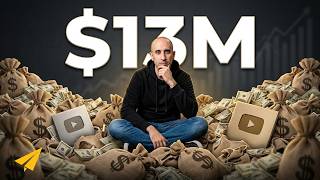
Dr. Marshall Barr, an Army Ranger and physician, built a $13 million YouTube partnership by posting daily long-form videos at 11 AM and focusing on authority over virality. His veteran health channel now generates 100+ qualified leads daily with an 85% conversion rate, proving suggested-video placement beats Shorts and browse traffic.
Chapters
One of our YouTube Mastermind members, Marshall, built a YouTube channel that landed his business a massive $13 million partnership deal.
One of the things I'll talk about is that $13 million deal with one of our partners, Vetcom. You want to turn your YouTube in an asset that can leverage your brand.
He is a former Army Ranger and doctor who helps veterans get their disability benefits. He started posting videos every single day and completely transformed his company.
We've already to date helped over 10,000 veterans get connected to get the treatment they need. Not only are we helping them from a monetary standpoint, they're getting paid benefits monthly, but now they're getting the medical care that they've been denied for decades.
His channel now generates over 100 highly qualified leads a day with an 85% conversion rate. He even pays his vice president of marketing using just his YouTube AdSense revenue alone.
I had no idea that just me with one camera talking off a teleprompter could generate revenue like that just from YouTube. We generate 100+ leads a day with an 85% conversion rate. I didn't think having 23,000 subscribers you could make that much money. But this last month we were able to pay for our VP of marketing salary just from AdSense.
And in this presentation from our mastermind group, he is sharing exactly how he stopped chasing viral views and built real authority instead. Enjoy.
Well, everyone, my name is Marshall. Thank you for asking me to do this. You know, I think when you see metrics up there, initially you look at it from a vanity standpoint, it's like, ah, it's not that many, 23,000 subscribers, ah, 1.5 million views. But, you know, early on, that's what I thought. I thought it was all about vanity metrics, you know, about clicks going by, being viral, virality. And I learned very early on through Evan Carmichael's team that the key was building long-term authority in the space or niche that you're trying to carve out. and then the views will come, and then the leads will generate from it. 'Cause what we wanted to do with YouTube was to use it as a brand asset to generate leads to our company for which we offer services to veterans. So what I'm gonna do is, I think, a little background context on who I am and what the company is so you kinda have a better idea what the YouTube channel is. But a little bit about myself. So I used to be a lot cooler than I am now. Look at that baby-faced killer up there. Yeah, I was in special operations in the Army. I was in the Ranger Regiment. So I went on— oh, thank you. Thank you. So I've been on 5 official combat tours, a couple other unofficial ones, multiple locations around the world. I was a medic, special operations combat medic. So I was involved with not only direct action combat, but a lot of life-saving interventions of friends and local nationals, and so it was an amazing experience. I loved it, and really being in the Rangers and special operations, it's a very Type A community. You have to go through multiple selections to get in there, and so it really was a foundation of my drive and my entrepreneurial mindset, and it really kind of absorbed what we call the, it's called the Ranger Creed. It's kind of the ethos that's driven into all of us Rangers. Never leave a fallen comrade, always complete the mission 100% and then some. And these are all things and ethos that Andrew can tell you have bled out through the company and the values and mission that we incorporate. So with that, I came out of the military. I did about 7 and a half years. Great experience, but no one really ever prepares you for the transition. And I started struggling with some PTSD stuff. I didn't know what it was. I had some ideas, but it started getting worse, you know, hypervigilance. I was always easily startled. I was having nightmares, started having flashbacks. You know, it led to substance abuse, led to, you know, an event where I was thinking about taking my life. And, you know, I was this tough, you know, macho Army Ranger. I can't ask for help because that's weakness, right? That was instilled in me in the training, right? You just drive on, complete the mission, suck it up. And it got to a breaking point for me where I needed help, and I didn't know where to turn. And so the most obvious choice is the VA, the Department of Veterans Affairs. They are designed to take care of veterans. And so I reached out to the VA and said, "Hey, I got— I have PTSD. I need help. I need some treatment. I need therapy. You know, what do I do?" And they're like, "Well, you got to file a claim. You got to get service-connected." The government has to say, "Yeah, the military caused this." and then they'll pay for your treatment and get you the therapy you need. So, all right, I'll do it. I filed. You know, I went to my exam, talked to the doctor. They were crying. They were literally crying based on the stories of loss of friends and everything I was describing. And I left thinking, well, I'm definitely gonna get it. 3 months later, I get a letter in the mail and it said denied because you have no evidence that you saw a psychiatrist in the service. Or that, what they said is I kept marking no on the do you have mental health problems after, deployments. Well, everyone did that because you didn't want to go see the shrink, you didn't want to get pulled off the unit. And so they, they weaponized that against me and I got denied. And so that was a super low point. So I mean, the system that's supposed to help me kind of turned me away, and I— it stuck with me, you know. So what I had to do is I went to the internet and tried to find someone to help me out. And there's these companies of medical providers that can offer these things called medical opinions or nexus letters, and they can offer to make that connection to your service to your claim diagnosis, which for me was PTSD. Problem was, it's very predatorial, very exploitative. They're charging $2,500 for a letter. Now, I was a physician and I was afforded the opportunity to be able to afford that, but most of my peers that are veterans, they can't afford that. It's too much. And so that really, really stuck with me over the years. You know, I won the claim, but you know, that's— it stayed with me. So the military taught me a life of service, right? And I wanted to continue that and eventually decided I I can go on, take that stepping stone of being a medic, become a doctor, you know, so it just felt like that natural extension. I started practicing medicine for several years. You know, it had its great moments, but for the most part, I really became disillusioned with it because it became less about taking care of the patient, spending time, learning, really becoming part of their life, and it became more of this healthcare system where you're managed by Insurance companies, you gotta see 20, 30 people a day, you know, you gotta meet these quotas, got ICD-10 codes, and it really became the administrators telling me what to do and I couldn't really practice medicine the way that I wanted to. And so I really started realizing, I had this epiphany that if I wanna drive impactful change, meaningful change, I've gotta create something meaningful and that is aligned with my passions. And so I know that, I'm a doctor, you know, they taught me a lot about medicine, but I don't know anything about business. I don't know how to start a business or run a business. So I thought, all right, well, I'll just go get my MBA. That'll give me the foundation. So I went back to school, got my MBA, and decided that, you know, I was going to try to incorporate all these things that were passions of mine into a singular mission and a singular company. And so that was when Xterra Health was born. It's a relatively new company. July 2024 is when it started, you know, and it was From my personal experience of, you know, being ripped off and realizing that there's got to be a better way, a faster way, a more efficient way, a more reputable way to help veterans. And so we became, you know, a physician-led organization that produces these services to veterans, these independent medical opinions or these DBQs, which are just standardized forms the VA uses to determine how severe a disability is. We became radically affordable, and that was my goal, is I did not want cost to be a barrier to entry point into these services, and so we set up a sliding scale system based on needs, and so if you couldn't afford it, we were gonna offer it pro bono, and in order to do that, I had to figure out a solution. Well, how do I drastically cut the price down from a competitor's? How do I make it a fifth of the cost of the nearest competitor? Well, AI, right? So this AI bubble's coming, right? I knew at this point No one else is really doing it. How can I leverage AI to make everything faster, right? So we leveraged it for data extraction. How do we take massive amounts of medical records and quickly, in a HIPAA-compliant way, extract that data? How do we generate different portions of the medical opinion so it takes off work administrative burden from providers? So we can take a process that historically would take days, 'cause you gotta manually go through 5,000 records and you gotta write, edit, into down and now into about 30 minutes. So we can do, we can have the providers focus on just speaking with the veterans, right? Getting the story, making that connection. And you know, another thing we implemented was they don't pay until the very end. So we empowered them, right? They're part of the journey and we're just a piece of that pillar that helps them in their journey. And so we became radically different and because of that, it changed the trajectory of the company, right? So we knew immediately that the impact was there. Like, we were making a difference. The people we were seeing, we were helping immediately. We were having— we had immediately, and we continue to have, the highest success rates with our medical opinions. 96% approval rate. You know, we've already to date helped over 10,000 veterans get connected that wouldn't be— we're talking about Vietnam vets, that have been struggling with cancer from Agent Orange for over 40 years, and we finally get them connected to get the treatment they need, right? So not only are we helping them from a monetary standpoint, they're getting paid benefits monthly, but now they're getting the medical care that they've been denied for decades. And so it's really a social impact that we're driving, which has been amazing. And then, you know, one of the things I'll talk about is that $13 million deal with one of our partners, VetCom, and they're generating now, just from them, 2,200 veteran referrals a month. And so we knew that the barrier was not the impact, it was how do we get this known to other people? How do we make our brand more— get awareness out, right? And that's when we tried to figure out, okay, we gotta do this marketing thing. Now doctors are great at medicine, you know, Vikram, right? But we suck at marketing. It takes a lot of edu— you know, Took a lot of education. I didn't know what I was doing, so I did what a lot of people in the beginning do, just kind of throw spaghetti at the wall and hope something sticks. And you know, we started a YouTube channel, a short form, you know, Instagram, TikTok. We started doing paid ad spends. We had no framework what works. Sometimes things would go viral, other times it would not, and then we couldn't reproduce it. We had nothing. We didn't know what we were doing, so I knew that I had to identify an expert. And so me and Andrew kind of went out, started looking around, doing our research. We found a couple different people that we kind of honed in on, and we narrowed it down to two. One of them was Evan Carmichael's team, another one was Daniel Ives. It's this guy that promises like millions of views or something like that. And so we were trying to determine, okay, do we go for short-term gratification, the views, or What Evan was saying is, "Well, no, you don't want to do that. You want to play the long game. You want to turn your YouTube into an asset that can leverage your brand." And that really resonated with me because that's what we wanted to do. And so that's the kind of— I always say that was the day that everything changed for Xterra Health. It was probably the best single investment that we made early on is in Evan's team. Because before, you could see everything we were— we were just doing spray and pray, like we say in the military. We were just shooting in the general direction, hoping we hit the target. Sometimes it worked and sometimes it didn't, right? But there was no system, no strategy, no reproducibility. And so then meeting Evan's team, now he's coaching me, I'm meeting Ida, I'm learning about what it means to build long-term authority, what it means to be a thought leader, 'cause that term I just thought was like Tony Robinson, right? I didn't know what that meant, that you could be a thought leader in your space. And so learning what that means in your niche, right? Learning how you leverage YouTube not just as a marketing platform but as a brand asset. To really leverage and just be your top funnel lead, right? Source generator. And so, and I learned real quickly that all that short-form stuff, people love it for entertainment. They're on the, you know, they're on the toilet, they're scrolling, you know, it's just quick dopamine hits. But they're all coming to YouTube to learn. They wanted the education from me. And so I was— and I learned really early on it was about being consistent, strategic, and also mission-driven in my content. And so I met Ida. I always say she's my spirit animal in this whole journey. She is synonymous or analogous to what I would call a drill sergeant in the military. You know, she's no nonsense. You know, she would, you know, I'd get direct feedback from her. You know, "That's a bad idea. It sucks." You know, she would tell me that. You know, and I needed to hear it. She would give me homework. She knew that I was very driven, you know, with achievement. And if she gave me an assignment, she knew that I would do it. And so she would give me almost like professor-level homework assignments that I would go out and do. If I tried to experiment or go outside the norm, I would get yelled at. You know, "That's a dumb idea." You know, I really learned that she became my sensei and I was her grasshopper. And I learned that if I just listened to what Aya was saying and I just used her mouthpiece and just copied it, the results would follow. And she said, you know, early on, just consistent. It's gonna take time. It's gotta build. It's gotta build. Algorithm's gotta find you. Trust the process. Because, you know, when you start out, nothing really sticks right away. YouTube's gotta learn your content, your style. Algorithm's gotta push it out. But— and I learned really early that what I thought was initially just— was just art was a combination of art and science, right? So, um— and that's what I love about YouTube, really any of these short-form channels, but YouTube specifically, there is that analytics section, and I, you know, being a data scientist and a researcher in my previous life, I love it, right, because now I get to take the subjective portion, the art portion, but really get to dive into the analytics, the objective facts, right? Like Evan pointing out, well, you look here and then all of a sudden you have a dip. You gotta go look at that dip consistently in every video. Why are people leaving? 5% of your people leaving at that point. What are you doing? And then I can go back and review what I'm doing, my behavior, what I'm talking about, and I can change that behavior and that pattern in my scripts. I can see what resonates, the thumbnails, the brand. I mean, Brandlytics is amazing, right? Because now I can actually test things against other things and get the information in real time, and I can let science and objective data change my behaviors and my pattern and my strategy moving forward. And so, and I learned really quick that hooks were important. I learned about storytelling. I learned stories resonate with people, right? People wanna hear who you are, what's your story, why should I trust you? And so it really resonated, and I started involving more and more of that in my content. And I learned early on that I thought that it had to be this production-level event, right? It had to look beautiful, it had to have great, great B-roll, you know, text popping up on the screen. And I learned that my audience doesn't really care. Some of my best videos were just me talking in front of my iPhone, and so I learned really quickly that my audience didn't care about all the frills. They just wanted the content. They wanted to hear from someone who was credible, who cared, who was empathetic, and could deliver content in a way that they understood. It wasn't full of jargon. And so, yeah, it's— so for me, authenticity, it continually beats the production value. You saw one of my latest videos I posted today. It was just me in my office with a bunch of military apparel in the background. I got two cameras— one camera and two lights on me, and I'm talking in a mic. And that's what I do for all my videos, and they perform. So I think I wanted to include this because a lot of people are like— because I put a video out every day, every day, 7 days a week. And I did that early on because Ida challenged me. She said, "Well, Evan puts a video out every day." I said, "All right, well, Evan can do it, I can do it." At one point, I was doing 2 videos a day, and she yelled at me. She's like, "You can't do 2 videos a day. That's too many." It'll compete against each other. So I, I tailored back, but in the beginning I was trying to figure out, do I do a content day where I just shoot all 7 videos and then I post them throughout the week? It was disruptive to my workflow, running, trying to run a company. So I had to try to figure a way to, you know, carve, make a system in my current day-to-day workflow that I could do this. And so the best time was in the morning because I was by myself, you know, before 8 AM when everyone shows up to work. So I get there at 7:00 AM. You know, I, I use Claude to help me with my scripts, and you can create the projects in Claude to really hone into your personality, how you talk, who your target demographic is, how you want to do stories, the format, the hooks. And it does it. Then all you do is put in your topic and it pulls out— you put the length script you want in and it pulls it out. And I just put that into my teleprompter and I just read a teleprompter every day. And so what I'll do, I'll go on that day at YouTube, I'll look at some of my competitors, I'll see what's gone viral, what's, what's a current event that is being talked about. I can just click, you know, summarize the video, put that in Claude, make mine better, more authoritative, and it'll pull it out, it'll pop out a nice script. Or I'll find out topics that are going to be, I think, evergreen and will perform well over time, and I'll create a video like that anxiety one. That's probably not going to get a lot of views up front, but it's an evergreen topic. People are always wanting to They're always going to these exams about anxiety. They want to learn about it. So in 5 years, people are still going to look that up organically and it'll perform well. And so I get up there, I create my script, I set up my teleprompter, I shoot the video, and then I just take it over to Adobe. You know, I'm at the point now where I've read the teleprompter so many times I do it in one take. I just cut the front, cut the back end, and I'm done. And then I upload it into YouTube. And then I put the thumbnail, I tell Claude, you know, you know, give me the title, give me the SEO and CTR optimized description, put that in, and I schedule it for 11 AM every day. If I'm going traveling, I shoot 3 videos before I leave, so that way I have something to put out every day. But that can— that has allowed me to be consistent, it allows me to have a rhythm, it allows me to not interrupt my workflow with running the company. And so it's been something that has worked for me. I'm not saying this is the— I'm not a guru, you know, that's Evan's job.
But I—
this has been the secret sauce for me to be able to do daily content generation, right? I don't know how people are still coming back to the channel because I just keep coming up with ideas and it just— but they resonate. So hopefully I don't run out of ideas. So when I met Evan's team, we were at 100 subscribers, and before our strategy session with Ida, Andrew created 3 accounts just so we could get to 100, so it looked better. And so, yeah, I mean, it was like family and friends, you know. We didn't know what we were doing, right? We were throwing things at the wall, right? And now it's grown. I think we're gonna cross 24,000 today. You know, we're over almost 2 million views. We've got, you know, 200,000 hours of watch time. And you can see on the next slide here— oh yeah, AdSense. I didn't realize you can monetize YouTube. You just click monetize and then it runs ads on your channel and then you get paid for it. And so now, I mean, I didn't think having 23,000 subscribers you could make much money, but We're— this last month we were able to pay for our VP of marketing salary, so it's just from AdSense. And so it's incredible. I had no idea that just me with one camera talking off a teleprompter could generate revenue like that just from YouTube. But you can see some of the analytics here. The arrows there denote when we signed on with Evan's team. You can see it's pretty flat and stale. Some of the spikes before the arrow were our short-form content. So obviously that's always going to get more views. Learned really quickly that that was a bad idea. Don't put short-form stuff with your long-form. Got a lot of yelling at for that. So we ripped that off really quickly, and then we started implementing Ida's strategy, everyday consistency. Started out twice a week, then 3 times a week, and eventually we got 7 days a week. And you can see it was just kind of a slow, a slow burn in the beginning, right? But we started getting traction. And then right around January 2026, things just exploded. You know, the algorithm started to recognize us and started to push us out more and more. But also in that time frame, we started clean— we started to understand. That was right around the time when she started really teaching me about the analytics and how to understand them. And then I started taking that information that Evan was taking and giving. And from the— actually, from that last mastermind, I took a lot and started applying it in December or January, and that's when we started seeing this boom, and it's just been a phenomenal increase over the last 3 months, and not only has it been a phenomenal increase in views and subscribers, it's had a trickle-down effect into the company, right? So now it's become our number one lead generator for all of our services, where we generate 100+ leads a day with an 85% conversion rate. So it's been amazing because the people that are coming to YouTube are buying into it, right? 'Cause they're sitting there watching it. Well, a lot of our guys will spend 3 months watching YouTube channel, the channel, and then they commit 'cause, oh man, you just seem like you know what you're talking about. We had a guy, we have guys flying from Arkansas just to come see me because they believe in what I was saying. You know, and then 23,000 subscribers, they see me and they think I'm a celebrity. They're like, oh my God, You're Dr. Barr. I watch you on my TV every night. And it's this old man with a cane. He's like, oh, I just love watching you, Dr. Barr. And so it's really gratifying that it's making— you get to see that impact in real time. I'm told that this is good, the suggested video. She always says you want to be in suggested. And so that was one thing that she was really targeting on how I made my videos and how I was creating them and making sure that they feed into other recommended videos that maybe competitors are making or past videos I've made. And so I started making my videos target that, and it's been able to flip from— it was initially browse, but now we're predominantly suggested videos. And Evan can talk more about what that means and what that does, but apparently it's good, so we want to try to shoot for that. So I can't explain why, but it's there. It's good. So yeah, I think when we first started here, we were talking about some of the wins, and, you know, he highlighted that we had that $13 million win. At the last Mastermind. And, you know, I don't want— you know, I don't need to get too much in detail. I talked about it a little bit, but when it says Dr. Bar, it really should be Andrew up there, uh, because he was the go-getter to do this. He was the setter and helped kind of close all this. So I want to make sure I give him the recognition of that. But, you know, it was the biz dev thing. You know, we started out, you know, we were doing it and made it— oh yeah, it made sense. Yeah, because we're gonna get referrals. And we started doing it and we get like 100 views on the video, 500 views on the video. I was like, man, this sucks. Like, why are they telling us to do this? No one wants to watch this crap. And then they reframed our mindset that it's not about the views, it's about the relationships. And so then we changed how we approached the potential partner. It was still the same concept: get them in, offer to get them on the podcast, talk about yourself. I mean, this is VA disability. It's not very, you know, it's not very glorifying. You're not going to be on TV talking about it. So if you go to someone and you're like, hey, we got— you want to put you on your channel, talk all about your business how you're helping people. They lit up. Yeah, I would love to do that. And we kind of made a list of some of the whales, and this one company, Vetcom, was a whale. Like, we knew it would be very difficult to land, but we're going to try, be aggressive, DM them, LinkedIn them, get every— just find the CEO and just bother her until she says yes. Took 5 nos until it turned into a yes, but every no they started to recognize us, and eventually it turned to, fine, okay, let me hear what you have to say. And, you know, Andrew pitched it and he did a wonderful job. And it was like, yeah, we want to host you, we want to do this, we want to amplify your brand and your message. Alright, let's do that. And then it turned into, hey, we think we could help you. You don't even know what we could help you with, but we think that we can make you more successful. And so then it turned into, well, let's talk about that. And then it turned into this organic process and relationship, took 3 to 4 months, and it turned into, yeah, let's sign a deal and we're going to refer all our veterans to you to do this service and help us grow more. And that's how we landed this deal. And, you know, that's the biggest deal to date, but there's all these little micro deals of other little mom-and-pop claim reps that do this, other attorneys that do this, and we're doing it moving forward, and we continue to do it. And so we had to pause the biz dev for a period of time because our growth was so exponential, and with this deal, it was— we had to build the infrastructure to support it. You don't want to overpromise and underdeliver. So, but it's been the biz dev. Yeah, don't get sucked into vanity metrics because they will underperform with views all the time, it seems like. But it's not the views that matter, it's the relationships you're building with that potential partner. So you want to target people that could benefit your company. Who, who is— for me, it's veterans, right? What companies out there can give, give me veterans to help? And so we identified early on, it's these representatives, the people that represent them in the process. So if we target them and we offer our services in the back end, it could turn into a nice, beautiful relationship. And that's how a lot of these partnerships have developed organically. Yeah, so I've already touched on it, but yeah, YouTube is for us in the beginning was a social platform. I looked at it like no different than a TikTok or an Instagram or LinkedIn. but it's so much more. Uh, it's everything that Evan had promised in that initial call, right? It's, um, it has really become the tip of the iceberg for our company. Um, it really has become the number one lead engine. It's become a brand asset. It actually brings value on its own now, uh, with the AdSense revenue generation. Um, you know, it, it has positioned me in a position of thought leadership in my space. It's very niche, right? I'm targeting 40-year-old men and women or older, right? Veteran populations who have disabilities. It's a very small demographic, part of the population. Will we ever hit a million subscribers? I don't know. I don't even know if there's enough veterans to support that, but we're gonna try, you know? The goal is 100,000 by the end of the year, and I think we're on track to do that based on our current growth. It's also become this partnership gateway. It's the number one way that we can pitch, we can sell ourselves to a company. Like instead of a cold call, we want to sell our product and want you to use it, it's we want to talk about you. We want you to talk about yourself and we want to amplify your brand. We want to make you more successful. And then it turns into relationship building from there. It's also become what I love, I love helping veterans, right? It has become a free resource and a trusted resource. A lot of, and we try to empower veterans to be able to do this process on their own. And through it, you know, we know that it's difficult and likely if they try it on their own, they're gonna fail. But we wanna try to empower them to do it. But by the time they do fail, if it's in 4, 5, 6 months, they've built trust in us because we've given them all the tools to be successful. They believe in what I'm saying. So then when they fail, they come to us naturally. 'Cause it's already been described in the, I want you to try, but the success rate's very low if you try on your own. If you do fail, we're here for you. And so they will come to us. And so it's— but it gives all that free information, right? And it really has been a brand authority, brand amplifier, right? So it's been the fastest way that we've been able to get our brand out. We do no paid ads anymore. So all of our leads are organic and primarily coming from YouTube. And so it saved us money, saved us overhead, and it's just been phenomenal journey that we've been on with Evan's company and with YouTube. And so, you know, what I would tell anyone starting this journey, and again, this is all anecdotal, it's just my personal experience from what I've experienced, but I just echo it again, authority trumps virality, right? I know it looks good when you get 100,000 views, 200,000 views, 1 million views, But, you know, once I learned I gotta stop chasing likes and just build trust, the clicks follow the credibility, 'cause our conversion rates went higher when they believed in what I was saying, when they thought it was credibility there. I learned that the story's the brand. So what I thought was a weakness for the longest time, my PTSD, my substance abuse, my suicide attempts, I thought, you know, I don't want anyone to know about that. They're gonna think I'm weak, that I don't know what I'm doing, they won't believe in me, they'll think I'm a bad doctor. I learned that to leverage that, right? Because if I don't tell it, then someone else is gonna tell a story for me. And so I wanted to make sure that I told my own story from my version and pass it to the world and leverage it as a power to inspire others, right? To get others to believe in me, 'cause I know if I'm struggling with this as a doctor, how many other veterans are struggling with it that are not doctors, that aren't educated, work blue-collar jobs, because that's a lot of, that's a lot of the veteran population. So I'm going to tell my story. If I can suffer and I'm this person, then I'm here to help you. I can hear you, right? And so turning that story into credibility. Systems beat willpower, right? So trying to develop a system that works for you. For me, it's just that 45-minute daily kind of workflow system where I go in my office, I set my camera up, my mic up, my cam, you know, do the script, put I put it in, read it, put it up, and I'm done the rest of the day. I don't think about it, right? I just have to worry about the next day's content. But I just get in there, and for me it was way better than just a block out a whole day for a creative session. 4, get a coach that will tell you the truth, right? Whether it's good or bad, right? You need to know, you need to be able to handle constructive criticism because You're here for a reason, right? 'Cause you probably all sucked eventually in the beginning, and you identified that as a barrier, and you knew you needed some coaching or someone who's an expert in this, right? So buy into the coaching, right? I mean, whoever your strategist is, right? Whether it's Mary, Ida, whoever else, but they are the subject matter experts. They have learned from Evan, and so who else not— I would rather have them tell me I'm dumb or stupid or it's a bad idea because they are saying it from a place of love and care because they want to see success too, right? Because it's their brand. They have to be successful, so they want to see you be successful. So just listen to them, commit. And then consistency, right? And I don't really understand the algorithm. I can't pretend I know it today. It seems like it changes every month. But one thing that seems true is consistency. If you For me, posting every day, it seemed like that was the key to kind of getting that boom. And so, you know, just every day, just put— try to put something out every Monday, every Tuesday. I mean, start somewhere, right? For me, it was once a week, and then it became more and more until I found a flow that worked for me. You know, I think that the channel does reward reliability above all else. You know, for me, it's just 11 AM every day. If I post at 11:30, I know that the following Tuesday she's gonna yell at me, "Why did you post at 11:30? It's supposed to be every 24 hours." She denies it, but it's true. I think last one, uh, is just kinda to summarize everything up. Uh, for me and for us and for our company and the channel, YouTube is now a very integral part of our infrastructure. Uh, if it were to disappear tomorrow, we would have a pretty big significant drop-off in our company. We would— there would be a crash. And so I think if you start viewing YouTube as a brand asset and not just a marketing tool, not just as a way to speak your thoughts, if you can really think about how do I leverage YouTube to benefit what I'm actually trying to do, right? Because everyone has a channel with something in the background, right? Like I want a service to sell, real estate to do, you know, a product that you're doing. You're trying to get people's eyeballs on it so then you can direct them to what you're really doing. And so if you can start to look at YouTube as that asset, then it will change how you interact with it, how you create that content. It'll make you more interested in doing the content and being more reliable with posting consistently, 'cause it's not just a typical social media account. That's my story. You know, I wanted to give you some context on why we do what we do. Kind of a little background on what the channel is. It really is just me, a doctor who's a former veteran, got injured overseas, you know, telling my story and trying to equip other veterans with the knowledge in a level that they can comprehend, that they can trust me, and then eventually, hopefully, that turns into them wanting to trust me, the services that we provide. But, you know, I gotta I got to thank you, Evan, and I got to thank Ida, give them shoutouts, because none of this would have been possible probably at the current rate that we're doing without them. Could we have gotten here? Probably, but it would have taken probably 5 more years. Now we've done it in a very, very truncated time. And it's created a unique set of problems, but I would rather have these problems than the problem of not having enough people. So thank you guys. That's great.
Hey, thank you.
Yeah.
Question? Yeah.
You have a relatively narrow product. How do you come up with content every day? Medicine. You gotta go to 4 years of medical school just to learn the fundamentals of medicine. Well, I thought you had to take medicine to continue. Yeah, no, no, no, no, no.
Oh, yeah, I do.
I also, yes, I am heavily medicated as well.
Fuck medicine. Yes, yes.
The drug conversation we had in December. I'm sorry. Yeah, yeah, no. When you're talking about VA disabilities, you're talking about every possible medical condition under the sun, right? And so that is a very deep pool of content that you create, all the way from a specific kind of prostate cancer all the way to COPD, right? And these are all different topics. Some are more high-click, right? People with sleep apnea or anxiety or PTSD, that affects a larger population of the veterans. But there is always going to be a small— smaller subset within that that is interested in some of those more niche ones that are applicable to them. Like asbestos exposure for old Vietnam vets that were in submarines, right? And so, well, there is not a, there has not been, I have not exhausted the content creation yet because medicine is just such a— And you can double down. Yeah, and then you find the videos that perform well, oh sleep, they're really interested in sleep apnea. Now I can do top 5 causes of sleep apnea. Oh, they're like that, I can do top 5 conditions caused by sleep apnea. I can, you know, it just kind of compounds off itself. How do you do the script? Is it an AI tool that— Claude. Yeah, Claude. Yeah. And finally, what was the equipment that you used for the teleprompter? Elgato. Yeah, it's an Elgato teleprompter. Yeah. Yeah, it just, the camera sits right behind it. You plug it in your computer and then it rolls the script.
Okay, clarifying your system. So you wake up, you write the script at 7 AM, you film it, you edit it, and you post it all in the same day?
Yeah, 45 minutes.
And you do this?
Yeah.
You don't have a VA or anybody else that helps you do it?
No.
You edit your own stuff?
Yeah, but the editing is just the front end and the back end, right? Because I'm doing it all typically in one take, and I'm not putting any B-roll in, I'm not putting any bells or whistles in it, because I learned that my Viewers didn't really care about that.
So how many different types of content did you try to create before you figured that out?
It was probably like 3 or 4 months. Even when I had Ida, I was still doing it, and she kept saying, "Yeah, you don't need to do that, you don't need to do that," and I was like, "Well, I don't want to give that up 'cause it looks pretty, you know, people, I bet people do like that." Do what? Do what? Like B-roll, like, you know, like those stupid—
Yeah, I mean, we had a studio, we were in a studio.
We were paying someone that, produced it for us, you know, paying $1,000 a video, you know, because I thought early on that, you know, it's got to look high quality or people aren't going to buy into it.
So, Linnea, just to answer a little bit more on that, um, when he started, I think you guys were only doing the podcast.
Yeah, just the podcast.
And then the very first thing I got them doing, and I think all your growth strategies tell you the same thing, via breakthrough videos, what are the questions your clients are asking you, right? We came up the same day, they came up with like a list of maybe 50 more. I said I needed 20 to 40, like they put so much more. I'm like, okay, let's make these videos, right? So they really just started with the bio breakthrough videos, which is specifically the questions their clients are asking them. And then from there, it's just doubling down on like, oh, sleep apnea and VA disability, there's so much more there, like let's do so many more, right? So the easiest place to start is the bio breakthrough videos. What are your clients asking you? Let's create content around that, and then you continue to go from there, right?
And I found pretty early on is the, log into a competitor, someone that is doing it, what you wanna do better than you right now. And find their top, the videos that outperform their subscribership, right? And then you just literally rip that video off. I mean, that sounds cruddy, but you're doing it in your style, right? And you're presenting it how you would present it. And so you can really make it yours, but you know, They've already done the market research. You know it's out, it's performing well, so why spend hours and hours trying to find something that people are gonna like when you know people already like that? It just makes it easier for you. Let your competitors do all the market research for you.
I think you answered one of my questions, which was like, when did you get started being consistent like that?
And I think you said 3 to 4 months and then it started taking off. Yeah, right around, I would say, November was like every day.
You were doing one video every single week from the very beginning? From the time he started, it was one every week, right? And then it went to two a week, and then three a week, then like seven. But consistency was, he was always consistent, but just adding the cadence more frequently, that changed, yeah.
Okay, question two.
Who's your competitor?
Like who, what were you looking at to be like, okay, so I'm gonna take their videos and change it?
Like do you have a competitor? Yeah, there's one, she's a nurse practitioner, and she's trying to do this, but I think she's just herself. And she had no competition at that point, so she was kind of dominating the market. And then there are several channels of veterans who have gone through the process, and they're just giving their opinion piece, right? But they're talking about medical things when they have no authority to talk about medical. So they can't really actually dive into the whys and the context that the veterans actually want. And so I identified early on that that was my differentiator, right? Is I— that's how I can be different than all these other people doing it.
Hey Nina, you think there's a book deal with him?
I need to look at your content, but I would think that you already have a book within all the content he has on YouTube, but also your story too. So hello, I mean, you know, your personal story.
We'll talk.
All right, that's next.
Nicole, I think I heard you say this, so I just want to ask, make sure I understood. So it seems like you're just doing this content by looking at your competitors, taking their existing video that already did very well, you're plugging it into Claude and saying, how— by your— you're downloading the script, plugging that script into Claude and saying, how do I essentially use my authority and expertise to do it better?
Yeah, yeah. So I will take their video, I click the summarize button, right? And it gives you kind of bullet points what the video is about. And I say, all right, this is the competitor's video. That I want you to create a script for. You're gonna do it better, a better hook, better storytelling, use my— everything that I've told you before about my voice, who my target audience is. It needs to be delivered in 8th grade comprehension so my audience can understand it. And then it creates it.
And then you're essentially— that's how you flip the script to becoming— we have the same flip. We're trying to get more in the suggested, but we primarily— what is it called? Traffic source, yes, thank you. But we're doing better with suggested. I think we've almost doubled it. So I think we've gone from like 4.5, 5 to like 9 or something. Not consistently. But I guess we're sort of struggling with doing everything. And so I guess that's my second question is, are you still doing the interviews with people in your field on top of this?
No, we paused that. Yeah, because we had to like, we couldn't take any more growth. Right, right.
Yeah.
Yeah, and I think our battle is like supporting the products that we carry, right? Because people wait on those. And then also doing the videos with the, whatever, the people that influence our market. Biz Dev.
Biz Dev, yeah.
And people hearing from him. So you had to just make a choice.
Yeah, yeah, and I think for that suggested— and correct me if I'm wrong, but I went into that feature where you can see other videos that are being— where your videos get suggested. I found either one of my previous videos and I make a script that complements it, or I find a competitor and I just make a script that complements their video because the thought is, is that's performing well, so then hopefully my video starts getting suggested at the end of their video.
Because we have a lot of people in our space Well, this is what we've learned and seen over the last 5 years. Everybody makes headphone review videos. Everybody. Like, everybody on YouTube. There's like so many people. But there's a lot of people who have really large channels that also do them that really don't have the authority and expertise that we do. And so I'm going to use that idea to flip the script. I think that's a great idea. I think that's a great takeaway. So thank you.
Veterans that call our call center, and they will use the exact words I use in the video. I am an actual doctor. They're like, "Well, I wanna see you guys 'cause Dr. Barr is an actual doctor." Right? Not like, they're just literally repeating what I'm saying in the video in the beginning portions. All right guys, thank you so much for letting me talk.
That's great. Can we give Andrew a mic here? I'd love to hear your quick perspective on everything that's happened and what he said.
Yes, thank you, Ida and Evan. Thank you, seriously. It's been a crazy whirlwind of the past several months here. But I joke because he does do that. He will— if we know that Ida is going to yell at us or give us more homework, he will say, hey, you're going to jump on that meeting on Tuesday, right?
Yeah, got it, buddy.
Then we started throwing it on our executive assistant Brittany to then— because we didn't want to get yelled at.
So—
but as you know, we are taking on your homework and using that constructive criticism to build upon that. So we can't thank you enough for that. You know, building that authority, and that's what we wanted to do. That was the whole purpose of YouTube, right? Was to get out in the market and to show veterans that there is a company out there that cares. There is a company that's led by a physician who is going to help you through this process. So YouTube has helped that. It has set the base for that. And I mean, the rest is just, you know, we haven't reached our ceiling yet. We are continuing to grow each and every month, hitting new records every month. And honestly, it's a huge part of that is YouTube. So thank you for everything you guys have done for us.
Cool. Awesome. Okay, so this is Marshall's backend. I pulled the past year of data. And there's a couple of fun things to look at here. So the orange line is Shorts. The blue line is Suggested. The green line is Browse, right? So you can see this is funny. I think of Anna when I look at this. So Anna here, she has this graph that she used to share where it's like, I met Evan and then almost quit and then like actually listened to what he said and then like started to take off. Right? And so it's like, you look at the Shorts and how— look, like, when you're getting, you know, 20,000 views on your Shorts, it's hard to turn that off when nothing else is working, right? Like, a little bit from search here, but then like nothing. Everything is dead. It's like, you're asking me to quit on this thing that's like the best thing on my channel. It's really hard to do, right? And so I don't know when, when Ida told you kind of to stop doing that, but like the Shorts were—
July 29th.
What?
July 29th.
That's when you told him?
Yep.
So like kudos to you for like just listening.
Yeah.
Because that's hard to do, right?
Yeah.
The only thing that's worked at all on this channel is Shorts up to this point. Wow. Ida tells you to turn it off and you like, you do and like stop posting and you probably unlisted everything too that was on there, right? 'Cause like it's dead afterwards, right?
Evan Carmichael.
Yeah.
Do you see that there's a flat spot towards the end of the blue and green right there? He had the flu for 5 days and didn't post consistently every day here.
This.
Yep.
So when we talk about like just doing the work and she told us like 2 months ahead of time, hey, build up, build up your videos, like, you know, make sure if you're going to stay consistent with it, you know, make sure you build up this this backend stuff, right? Well, that's what happened. 5 days, he got sick, we didn't have any backup stuff, so we couldn't shoot any content. So it's like, just listen to him. You guys know what you're doing. I mean, seriously. So I don't know, I just think that's interesting when you're looking at that.
Yeah, I mean, and to give you guys credit, most people don't just listen and just do it. Right, just like, You know, part of any coach is also like the human psychology of trying to coach the person, not even just the advice. Like, all of you guys are coaches too, right? If people just listened, they'd all get results. The problem is they don't listen. So like, this is really hard to do. I thought you were going to say it was like back here somewhere, and then you kind of held on for a little bit and finally agreed. Like, no, I just shut it off. But then you look at when the channel just started to grow, like, he shuts it off and then it starts growing. Now, not, not in the same numbers yet, but it starts to really take off, right? And so the next two things that I really love was one, you said, hey, I just went to Mastermind in December and then I applied the things that you said and I just started rolling with it. And like December, I don't know, it was like here, right? This is somewhere here and he applies and then boom, right? So like all the stuff we talked about earlier this morning with the thumbnails and the tests, like just Go and do that and you can start to win. Evan, what's wrong with the shorts? Oh, here. Like, why did you stop the shorts? Shorts? I love shorts, just not on the same channel. The problem with shorts is it brings in the wrong audience. And so the people who watch the short form don't watch the long form. And you can see that in your own— I don't know how much Ida, like, if you wanted to see the data, because you can see it in the analytics, or if he's just like, "Okay, you're gonna tell me, I just trust you and go." Some people need more convincing than others. But that's the biggest challenge is you do a lot of Shorts, you bring in the wrong people, you can see who's coming in. If we looked at his analytics from back here, it's probably all sorts of like random traffic sources coming in in terms of like when you're going to suggested. He's not showing up in suggested 'cause he's showing up against completely random videos. Because Shorts is bringing in the wrong audience. But Shorts is valuable to do just on a different channel.
So I don't think Shorts is more entertainment.
Well, in general, short-form content is entertainment or inspiration. It can be inspiration and depends on how— like, I'm not an entertaining person most of the time, right? Like, I'm not— people don't watch me because I'm funny, right? You're not here because I'm that funny. I might be a little inspiring. But hopefully there's education that you're learning from, otherwise I don't know why you're here. But like most of us, we're not in the comedy business. Like, the people aren't watching Marshall's channel because he's really funny, right? I mean, I'm sure he's funny in life, whatever, but like that's not the purpose of the channel. So short form is, is, um, entertainment or inspiration. And inspiration is more this world probably than entertainment, but education is where you start making the sales. And like, you can't, you can't teach in a 45-second video, right? So that plus it's just a different audience. Now I think everybody should be doing short-form content and you make your short form and that can live on TikTok and YouTube Shorts and Instagram Reels and Facebook. Like, that's awesome. You should do that, especially if you're making long form. You can just clip it and put it to short form and be on every other platform. Just make your YouTube Shorts a different channel. So, you know, do you guys have a Shorts channel? Did you just completely kill it?
Yeah, we have a Shorts channel.
You have a Shorts channel and it's just— what's the name of it?
Dr. Marshall R. Shorts.
Perfect. Dr. Marshall Shorts.
So what length are these videos? Are they 10-minute videos? 15 to 25 minutes. 15 to 25. Average around 20 minutes.
The biggest takeaway for me was there's no editing because we definitely do too much of that.
Yeah, I mean, his is just literally beginning, intro, cut, post.
Yeah.
Evan even said it, that's a pretty boring background.
It works.
Yeah, but I mean, you have your military stuff in the background. There's like, I don't know what they mean, but it's obviously you're from the military, which is helpful. And it's authentic. Yeah, for sure. The teleprompter thing, like, I think that's a great idea.
I was told that you have to be more authentic and just say it because it doesn't look—
you don't want to be reading. But I think it makes it where you're guaranteed consistency.
Is that correct?
Yeah, you can prompt Claude, include natural pauses and breaks. Use crutch words occasionally, right? And so you can insert your inflections. And if you control the scroll speed, you can pause it and you can go ad-lib all you want, right? If there's something that you felt like it didn't give enough context to, you have a joke you want to put out there. But even when I'm doing the teleprompter, if I stumble, I just keep going because it's just, it looks natural, right? I'm just like, oh, what I actually meant to say was, so I don't go back and re-edit it because I think it adds to —of the credibility.
It doesn't take long to get very good at it.
And in fact, you can go off script, the script will stop, and you can talk about something else, and then go back to the script, and it starts moving. I mean, after about doing it 10 times, it's like second nature, and it doesn't even look like you're reading the script. If Donald Trump can do it, I can do it.
Is that the benchmark?
What's the tech you use? It's Elgato Prompter.
Is that the same?
So Elgato is the brand, and then I think it's called Prompter.
You can go even simpler than that. You can get one for your iPad. And we use an iPad. But we do have a camera setup, and so it does an inverse view of a mirror for the iPad. But the iPad's really easy to use, because then you can edit it right there. If you make a mistake, you can edit the iPad, put it back on there, and redo that little piece. Yeah.
Yeah. If you're using a teleprompter, the most important thing is that you have emotion for your first— like, nail the intro. Because it almost doesn't matter in most thought leadership, like, what happens after the minute, as long as you're giving good information. But you have to hook the attention. So if you're gonna read something, even if they can tell that you're reading, the first minute has to be powerful. So, like, do the first minute a couple times. You might even just do the first minute and then go back and do it again, and then do it again, and then continue. It only takes you 3 minutes. Right, you're not doing like a 20-minute video 3 times. Because you can say the right words with not the best energy, and then it doesn't land. The energy can fade over, not that I'm recommending the energy fades, but it doesn't have to be as good later on if the first minute really captures their attention. 'Cause by now they're hooked, they wanna watch. Now you have to screw up for them to leave. But that's where people will make mistake with the prompter is like the— it feels like you're reading the whole thing and then you just lose it. Look, you can look at your retention curve, it'll often tank. So, uh, just practice it so that you got it. Like whenever you're memorizing something or reading something or going— the first versions you could say the perfect words but doesn't have the feeling, and then you work to get the feeling in. The feeling actually matters more than the words.
So when it comes to teleprompting, one of the things I used to do is I try to land the hook. I use a different prompter called an Ikan, A-K-A-N-N. So the teleprompter actually is an LCD screen, so whatever you put in front of it, you just connect your computer to it and it just mirrors your screen. And you can just put up in a Google document and then you can completely control the speed. So you stop, say your piece, ready to go on, move it up a little bit, say your piece. I always center the text as well, so it doesn't look like my eyes are going left to right or right to left. So I just centered the text. So it breaks where it says "and," like, you know, "da da da da and." I always put "and" on the next line, right? And these are just like super, like, really quick. And then I riff in between personally because I'm better that way. I want to make sure I land the hook. I want to make sure I land the bullet point statement. I want them to, like, I want to stick in their head. And then I kind of give them the data or the content that fills it. So I use a bit more of an outline kind of mentality, and I That allows me to riff and just kind of like be more me. Hand gestures, whatever. And to his point, like, if you don't like what you say, I'll just do it again. You know, the camera doesn't know the difference. You're going to edit it anyway.
So anyway. Yep, cool. Garrett?
Okay, this is a question for Marshall and Evan both. So obviously everyone only has so much time in the day, especially for tracking metrics and that sort of thing. So when you guys have the Shorts channel set up, I know the majority of the time is going to go to really focusing in on the content for the long form, but how much of the time do you spend then also checking Shorts and how those are performing? If you were to do a percentage comparison, what time are you spending analyzing those analytics?
I spend all my time with the long form. We have a social media manager that handles the Shorts and all short-form content. We farm that out to her and she manages that. Okay. Because it's what we're posting on YouTube Shorts. It's the same stuff we're posting on TikTok and Instagram. And so, you know, we're just seeing where, which one, what platform it resonates most with. And it's, it's, it's hit or miss.
Okay. Do you guys like suggest prioritizing that quite a bit more? Like, or like, if you're spending like—
So it depends on what we're trying to accomplish, right? Like long form will help get you a lot more if you're talking about authority and deals and partnerships and the long form is, they're not even close to being equal. And so if you're going to do 80/20, cool. But like, you could go like, not all work is created equal. So that's the challenge of like, you're spending time on something is almost a hobby versus like what actually matters. And so if you have extra time, then cool. I mean, we have— I love short form content too. Like, don't get me wrong, we have 1.5 million on TikTok. I'm not anti-short form. I think it's great. It just doesn't yield a lot of business results. And a lot of people who are pitching short-form content, they just don't have long-form content channels, so they don't know the difference. They're just saying like, "Yeah, short, short, short, short, great." But you look at their long-form content, they have like 4,000 subscribers. So they don't even know what it can generate if you actually do long-form really well. So it just depends on the goals. Like limited time, limited resources, I would almost always advocate for just go— if you have extra time, make another piece of content. Like longer. You have extra time, like Jim's doing how many? Twice a week? Great, like do 3 times a week. If you had extra time—
But what's interesting, those are podcasts and Mary, you won't have to argue with me anymore on the Insight videos because your production capability, you're thinking about what can be done, the scripting, which has been a challenge to build. I know how to build script comes like quick, like we turn around 4 days, but getting at least to once a week is gonna be a big deal. And then the podcast be almost the sub-subject matter.
Yeah, anything that involves somebody else is always a lot harder, especially if you're doing like a coaching show, you can book and get people in batch to come to you. If you're doing it about biz dev interview or you're gonna have Kevin O'Leary on or Who was the other one you just had, Vanessa? Tom Peters. Tom Peters, but who's the, Jennifer Hudson you just had on, right? That is not, you're not able to do that every week. But you sitting in front of a camera and filming, like you could do that every week. And so that's the most controllable thing. You filming your solo content is the most controllable thing. And so if you had shorts versus long, I'd much rather you be doing that Now Garrett, you're saying, but I have extra time. What should I do with my extra time? Well, that first I'd say, okay, split test your thumbnails and titles and like try to increase the, that's gonna be the most important thing. You, you still have extra time after that. Cool. How do we clip the content for YouTube Shorts, Reels, everything else? 'Cause it all helps with the brand and, and the virality numbers still help with the brand. Like your Shorts channel should grow a lot faster Marshall was getting— here he had more views than he's even getting now from any traffic source, right? Which, if you're doing a brand deal or you're trying to make a pitch to MasterCard or whatever, to say I have a long-form channel like this and I have a Shorts channel that's also this, much bigger, you can include that as part of the deal. Because vanity metrics still matter to people. It's not going to convert to sales or people— like, he was getting 2,200 leads a month or whatever. Like you're not getting that from Shorts. So it just depends on the business goal we're trying to achieve. I think it's valuable for your case. I just, it's not in our top 3 priorities. And then it's something that like you could take on instead of Jim. But if it's Jim's making dedicated Shorts content, I'd much rather he spend that time doing the long form. If you're pulling clips from it, cool, then that's extra time for you. But I'd still rather you be doing thumbnails Even just the one that you showed me that you pulled up, the guy's getting 3 to 5 times more views on a video because he has a better thumbnail title. That's way more impact and leverage for the business than you spending time on Shorts. It's so mechanical for me now.
Like, it doesn't take me very long to build the Shorts. I just was wondering, like, how much more time should go into making sure that they are the most efficient or like they're staying on top of the trends versus spending more time Yeah, it's like a solid B-minus strategy, right?
It doesn't suck, but it's not great. So there are times where you spend time on B-minus stuff because you run out of A-plus stuff to work on, right? So the other interesting thing was like December Mastermind, Marshall comes and he says, "Hey, I really started to kick it in hard drive or overdrive after we learned from you in December." And like wherever that is, Here, right, is like awesome, like great. The best thing about Marshall, I think, is he just does it. Like, okay, you tell us what to do, we're gonna do it. I listen to my spirit animal, Ida, and we just go. And like, even here you're already doing better than you were back here, right? Like, whatever this number is compared to this, you're already like 10x more than what you used to be. And so if we stop the curve here, it would look like you're growing like crazy. But then we zoom out and it's like, oh my God, then it really took off, right? So that's awesome. And then the suggested traffic source, why it's so important. The thing that YouTube cares the most about is what? Is watch time, right? Like YouTube's goal is keep people on YouTube all day long. The more you give them watch time, the more they reward your videos. Why suggested is so valuable, and again, it's like we have enough data over people's channels, but I always love looking at your actual channel to make sure that it's still the same thing. You look at the average view duration. How long are people staying on the video? Suggested is the blue one and it's 9.5 minutes. Browse is the green one, it's 5 minutes. So they're literally spending twice as long on the videos when it comes from suggested versus browse. And again, browse is the homepage and suggested is what gets recommended. You're on a video, it tells you what to watch next, that's suggested. So you get Marshall's basically double the view time when they come from suggested versus browse. When they're watching longer, YouTube rewards you more, but these are the guys who also buy more. So browse is just showing up on the homepage. If you go to your YouTube.com right now, you'll see a whole bunch of different random things. It might be music, it might be headphones, it might be some meditation. It's like all over the place. When you start getting recommended— if somebody's on a VA video and they get recommended another VA video, which is Marshall, they're in the VA disability, like they're in the mindset of I want to figure out a solution to this. So they're watching longer, but they're also the clients. I'm going down the rabbit hole right now. I want to solve this problem right now. I might have been a vet from 40 years ago from Vietnam, but like right now I'm trying to solve this problem. That's when we want to catch them because they're looking for a solution and we are the solution. So not only does YouTube love it because we're giving them more watch time, our client— like, those are where your clients are coming from. So if you're selling a program, product, service, these are your best clients, more than somebody just hitting the homepage, and definitely more than Shorts, right? Like, our Shorts average was 23 seconds versus 5 minutes versus 9.5 minutes. If you're doubling your suggested, that's awesome. Now, 9% is still not where we want to be, but those What's that? Only on some videos, but yeah, we're getting there. You'll see more sales coming from it too, because those are the people who are really trying to learn about that product that you're reviewing or talking about.
That's really interesting because I think one thing that I talked to Jim about is, uh, with respect to his Shorts.
So, and keeping Shorts on the channel, taking Shorts off the channel, and I think this sort of validates for me that your viewers that are coming from Shorts are only watching 23 seconds, which means these are not really your viewers.
These are not the people that want to be watching your long form.
Hence, the Shorts are targeting the wrong people for your content.
Yeah, and this is worth pulling up for any client. Like, some people might just listen. Great. Like, again, I don't know if Ida had to show this to Marshall before he listened and just like July 29th or whatever, just like, oh, threatening. Oh, perfect. Okay, well, Just as long as I don't get an FTC violation or something, you know, problem there.
Marshall, you play too much. I don't threaten him. Never. But we looked at it together on the call and literally it's like I gave recommendations. He's like, "Okay, let's do it." So we did it on the call and nothing came on it again. So we took it all off on the call.
Yeah, it's like any time you guys have been— you guys are all coaches, right? Like you guys all have clients, you coach them on different different things, you tell them what to do, the more people just do the thing, the more they get results and faster they get results. The more you have to explain it, cool, you sit there and explain it, they're slower to get the results, and the more they fight you with it, cool, I'll fight you on it too, and then we'll eventually get there, right? So, for the growth strategist side of things, it's always, sometimes I tell this to people and they just do it. Great, that's the best. Like, we can move so much faster. Sometimes though you need to, like, let's pull up your actual data and let's take a look together and see what's going on. Right? And then you can prove the case hopefully. And then some people just still, like, this is hard. Like, to credit to Marshall, to give that up is really hard. It's the only thing that's working on the channel. He had one day with like 500 views from search or whatever you want to call that. And then the rest is completely dead. And you want me to stop doing that 'Cause it's some hope that it's gonna turn out, right? So that's why I like Austin from Marshall Company share the story because it shows that, hey, if you actually stick with it, like, great things can happen. To watch another amazing YouTube success story, check the video right there next to me. I think you'll love it. Continue to believe, and I'll see you there. Dr. John struggled for years with a podcast before he finally cracked the YouTube code. So I had already had a quote unquote podcast that was on YouTube for 2 and a half years. And the show just limped along for 2 and a half years. And the reason is
More from Evan


How the Biggest Mistake in History Created A Trillion-Dollar Empire | Sergey Brin



9 Machiavelli Principles That Force People To Respect You | Machiavellian Philosophy



The First 10 Words That Instantly Ruin A Sales Conversation | Vanessa Van Edwards

The Top 1% Mindset Behind The First $5 Trillion Company | Jensen Huang (Nvidia)

