Barbara Corcoran's Top 10 Rules for Success
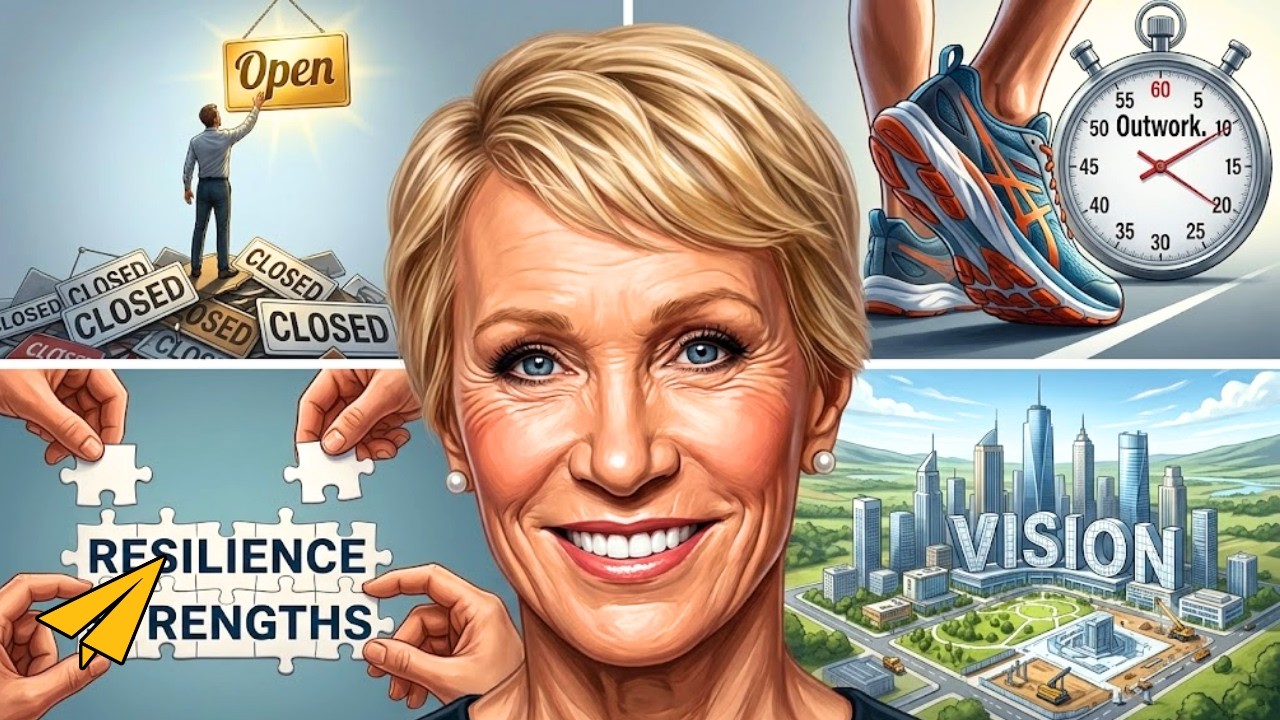
Barbara Corcoran shares her ten rules for success, from getting good at failure and outworking everyone to believing you belong in any room. She built her real estate company from scratch and sold it for millions, and credits perseverance and self-belief as the core of her success.
Chapters
Barbara Corcoran didn't build a billion-dollar business by having all the answers. She built it by taking chances, working harder than everyone else, and learning something from every failure.
The bigger the failure I had, the bigger the upside.
She learned to embrace failure instead of fearing it.
By the way, about failing at stuff, which I find just stops a lot of people. They just didn't hang around long enough to see the flip side of failure.
She outworked everyone around her.
What did build my confidence and made it rock solid is I knew I could outwork and out-try anyone.
She Trusted her own instincts.
I succeeded because I did things my own way.
She focused on her natural strengths.
I spent those 22 jobs most importantly learning what I was good and what I was bad at.
She ignored advice that didn't fit her.
The problem with going to friends, families, even your mother, is they will always give you advice, uh, whatever the advice is best for not hurting you. It's always conservative advice. They've always got your back if they love you. And so you get the wrong advice.
She stayed authentic.
I think if you could be yourself in all that it is, what typically happens is people like you because they can sense it's a real deal.
And she never waited for the perfect moment.
The best time to start your own business is as quick as you can.
Today we're breaking down the top 10 rules for success from Barbara Corcoran. If you want to build confidence, overcome failure, and create success on your own terms, this video is for you. Need motivation?
Watch the top 10 with Believe Nation.
If you've been here before, drop a hashtag #believe in the below so I can feature you here in a future video. And if you're new, welcome to Believe Nation, the only channel that helps you believe in yourself daily, one video at a time. Okay, let's kick it off with rule number 1: Get good at trying.
It's never too late. Obviously, you know that, I know that, but I think you just have to pause and realize— I have always done a simple exercise. I've counted the years I have left and think of how many more me's can I get in those years. So when I was 46 and sold my business, I thought I sold the golden goose, and I thought I would never I thought I had sold my best business. Not that I didn't want to, I wanted to. But then I realized I was the golden goose. You can create exactly what you want. I mean, I laid eggs again and again, and I reinvented myself over and over again. But I think the key there really is to believe that you really have to get good at trying. 'Cause the minute you try, an opportunity is right there and you go, "Whoa, I didn't think of that." But it's when you're in that still position, or at least for me, when I'm in a still position, I could sit at my desk and try to invent an idea for Gayle. Get it. It's about moving on something, anything. Just get yourself moving, and then the idea becomes itself. And by the way, about failing at stuff, which I find just stops a lot of people, they feel they've had 2 or 3 failures and, "Oh, I'm not gonna do it." I just don't believe in that. I think they just didn't hang around long enough to see the flip side of failure. Because all my good stuff happened after a big failure. It almost seemed like, for me, the bigger the failure I had, the bigger the upside. But I was— dogged enough to just stay there and see, there's gotta be something here, there's gotta be something. And I think just waiting around for the something to find it and believing there's something there, I don't think you're ever wrong. I think there's always something there and you could get something started again.
Rule number 2, be competitive.
I think being competitive helps you in business, but I don't believe people are naturally competitive, nor do I feel if people aren't competitive by nature, they learn to be. I work with a lot of entrepreneurs. I invest in 150 businesses to date. I generally find that the competitive entrepreneurs are the ones that win. They make me money. So I'm always like trying to figure out if the person standing pitching in front of me makes great sense, makes great common sense. Are they really competitive? Because I really need to see that trait if I wanna partner with them. 'Cause if they're not, they just don't succeed. I'm competitive to a sick degree. I probably need to shrink because I would compete for things in real estate. If I knew my competitor wanted them. Had nothing to do with what I wanted. I would just see it that they wanted and I would outdo them. That's sick, really. I really needed some help. But that's the way I am. Like, if I ski today, if I'm going down a slope, even if it's an easy slope, someone goes by me, I'm angry. So I race them down the mountain. They don't know they're in a race, but I know they're in a race, you know? I have to beat them down the mountain.
Well, number 3, outwork everyone.
I have all my confidence from one thing only, and I don't think people appreciate it. They think if you're successful at what you attempt, even in a particular chapter in your life or a day in your life, you grab from that your confidence and you have more confidence for the next time. It's never worked for me that way. I've tried everything. I've failed, you know, most things, but most things in my real estate business were flops. But when I had a success, I found my confidence wasn't built. But what did build my confidence and made it rock solid is I knew I could outwork and outtry anyone. And I knew I'd be back. If I failed, I just knew in my heart I was gonna stand right back up I know you always stand back up and try again. You're confident. You, you look confident because you are confident. You might not win again, you might fail again, but the next one will be a win. So I just keep trying, trying, trying, trying. I try so much today. Anything that's new out in the social space, I try it. That's where I get my confidence from.
Rule number 4, do things your way.
I succeeded because I did things my own way. I, everything I succeeded in and pushed myself ahead was outside the norm. Thank God. And the old boys weren't doing it. And for that, they thought I was crazy and they weren't even watching me until it was too late to watch me or stop me, you know? But no, I did everything opposite to the marketplace because I found that for my sense of what's common sense, it seemed right. And I would be, at least have the confidence to follow my instinct and go down that path. And not everything worked out, but a lot worked out, you know? And you just need a few things to work out.
Also, if you wanna take real action after this video, I made a free worksheet just for you. It covers the top lessons from today, gives you space to write your biggest takeaways, and helps you build a simple action plan action plan. It's 100% free. Just click the link in the description below to go grab it. I'll see you there. Rule number 5: Learn what you're good at.
The early jobs are invaluable. And you know, today people think they should know what they want to be when they grow up and they get right into that track. I think it's such a terrible mistake. I spent those 22 jobs most importantly learning what I was good and what I was bad at. So I was a great waitress. I at times had 3 waitress jobs at once, but I could charm anybody. I could serve them faster than anybody. Get that coffee there. Call the guy hands I couldn't remember his name from the day before. And it helped me tremendously. I was a nurse's aide, and I had to post temperature charts, and I got the numbers mixed up. I knew I didn't belong in a business with numbers at all. I learned that I could sell more hot dogs at a hot dog stand than the next kid 'cause I had the gift of gab. I learned exactly what I should be at, and I learned, really, most importantly, I was great at sales. And that's what I wound up being. When I went into the real estate business, I knew nothing about real estate and never really learned anything about real estate. But I knew how to make friends. Make people happy with their real estate and talk them into things they really loved and were afraid to make the choice about.
Rule number 6: Filter advice.
The problem with going to friends, families, even your mother, is they will always give you advice, uh, whatever the advice is best for not hurting you. It's always conservative advice. They've always got your back if they love you, and so you get the wrong advice. When I was working at the diner, my mother gave me such good advice my whole life. She was my supporter, especially with the learning differences I had. When I was at the diner and Ramon Simone offered me the $1,000 to go out and start a real estate business, my mother said it was the worst idea. She said I hopped around jobs so often, I should really build up my resume and wait a few years. The worst advice. But you have to realize where it was coming from. She loved me. She'd want to see me hurt. And it was more secure working at the diner than going to to New York City and starting a business with a stranger. So from her viewpoint, it was good advice. From my viewpoint, it was not good. But fortunately, I didn't listen to her. I was young enough where you don't listen to your mother at that age.
Rule number 7 is be yourself.
The upside when you're getting much older, and I've gotten stronger and stronger in this way as I— by the year, by the minute. Okay. And I wish I knew it earlier. It's to be yourself. Be yourself. Because people, even if you're weird, a weirdo is often the most loved person in a team. I think if you could be yourself in all that it is, what typically happens is people like you because they can sense it's the real deal. It's the airs, the phoniness, the trying to impress, the insecurity, all the stuff that we all strive so hard for when we're young that gets in the way. You know, there was actually a 2-year period where I had my hair poofed up and didn't wash it all week to try to fit in with the society ladies, you know? But my scalp itched like crazy. I had to get rid of that haircut, you know, that poof thing once a week. Hello?
The bouffant.
All right? Yeah, yeah. And the only time my business ever fell behind was when I was so busy watching my competition. I analyzed everything. I had the listings on a chart by category, by size, who had what, who was my target, da-da-da. I was like a genius at my field. It was the only year of my whole career I never pushed the business. Business ahead. I was so busy watching the next guy, wasn't watching me, right? So being yourself, I would say, would be the most important thing.
Rule number 8: Start early.
The best time to start your own business is as quick as you can, and I'm going to give you 2 reasons why. When you're young, you're too stupid to know any better. You've never jumped off a cliff and fallen flat on your face, so you have courage. Once life gets a hold of you, you learn exactly what to be afraid of, what you might not succeed at. Everything gets nipped in. So I think the best time to start a business, quite frankly, is while you're in college. What do you have in college? Why is that the perfect time? You're open to the universe, you have a tremendous support system of professors with all different backgrounds ready to help you, and you have colleagues with different strengths around you, the fellow students. And you're hungry. You're hungry to prove something. So in short, the best time The prime is the earliest time you can possibly do before you have the wife, the kids, the husband, and the mortgage. And the most fertile time is right when you're in school, even before you get out. That's what I believe.
Rule number 9 is believe.
When I was a kid and was such a stupid kid in school, I was made to feel stupid and I learned shame in the classroom reading out loud. What a wonderful background to be an entrepreneur. You know what I learned by the time I got out of that goddamn schoolhouse? Which I called jail. Hmm, you know what, I have the right to make place for myself. And so for the next so many years of my life, I just thought, I have the right to be here. That was my attitude. I have the right to be here. So if I walked into a room filled with men's suits and they ignored me and I introduced myself and they kept talking, I stood there and said the same thing to myself again and again. You know what, I have the right to be here. I have the right to be here. It was a self-pumping up. But you wanna know, the idea that I had the right to be anywhere. It got me into the elevator, it got me publishing a bad report on Donald Trump, which got me invited into his huge desk where he looked down at me, got me in more hot water because I got in the habit of going through the door. And you wanna know what I have learned about myself and what I have learned about every great salesman or entrepreneur I've ever worked with? If you can get in the habit of going through the door without the answer, and our education system tends to make you wanna have the answer, if you walk through that door People are amazingly smart. Once you're in there in the hot water, you discover the answer. Every time I could discover the answer on my feet that I didn't have outside the door. I don't know if you heard, a couple years back there was a maintenance guy who rescued a boy off a track of a subway train ready to run them over. He jumped in and rescued the kid, and when he was interviewed for the whole week and given the key to the city, you know what he said? I didn't know I was a hero. He was a hero, right? I have found walking through every door, believing that I'm gonna go through the door, jump out the window, I'm gonna learn how to fly on the way down. And you wanna know, I have always had my best successes. And so I wholeheartedly believe in the belief that all of us have the right to be there. Ask for what we want. We all can be rich. We could all put our dagger in the sand, or whatever that thing is called, and say, that's me, I'm going for it. Going for it, what the heck. And I don't think it's a reserved right for anybody. And that attitude has been more responsible for building my business and my career than any other thing.
And number 10, the last one before a very special bonus clip, is have a vision.
Tom and Chi— when I met Tom and Chi, they were— had just come out of selling their grilled cheese on donuts out of a tent in Cincinnati, right? What was so interesting about them, however, they weren't talking about a tent, they were talking about a franchise of hundreds of franchise selling cheese on donuts. Okay, right? What do you think happened? They told me about they're gonna have an amusement park one day, a Tom and Chee amusement park. I'm like, okay, they're definitely on dope, these people. All right, but I don't think so anymore. I can't wait to go to the amusement park. They have 171 franchise across America. Exactly what they envisioned, they got. Exactly the picture in great detail where they were gonna do it, how they're gonna go to the other side of the river in Cincinnati which is another state, I forget which one it is, how they're gonna come cross back, ba ba ba ba. I'm like, okay, well guess what, I should have believed them, okay. They have big pictures in their head. And every entrepreneur might not have a business plan with everything, in fact none of them really do, I think they're grossly overrated, but they sure have a movie in their head of who they're gonna be when they grow up, all right. And when they can't express that movie on Shark Tank, I'm always out. If they don't see it, how am I gonna see it and believe it? Ray loaned me $1,000 to start my business. He took 51% of the stock. After all, he was the financial partner, he explained, and I was the working partner, and I took 49%. And I started a small rental brokerage company in New York City, and that was the beginning of Corcoran Simone, my first business. That business I built for 7 years with Ramon, and it was going so well. We had 14 salespeople. I had moved in with him by then, much to my parents' dismay. I was disowned from the family. They're very religious and very proper in every way. And then his children moved in with me right after I moved. I didn't even know he had children for 2 years. So I was the mom of 3, which was comfortable. I was used to minding kids, certainly. And that's when Ramon Simon came home almost 7 years to the day, and announced to me that he was going to marry my secretary. I just couldn't believe it. I thought it was some idea of a bad joke. Only the day before, I loved Tina, the secretary, who was really secretary of both of us. And within that split second, I hated her like I had never hated anyone before. He told me to take my time moving out. I took about a minute, grabbed a toothbrush, was out of that house. And I moved in with my best friend in New York City onto her sofa. And that was the beginning of, I think for me, probably a depression because I had a very hard time getting up in the morning. And why I took it so hard, I think, was because I was in love with Ray. I couldn't believe that my secretary had been sleeping with him. It seemed mind-boggling to me. And I had loved his children. I had done their homework, cooked their dinners. They were my family by this point. And I just knew I knew that anything I had become was totally a result of what Ray had seen in me. He had found me in my little town, took me right out of the diner, loaned me the money to start the business, and I couldn't imagine living life without him. And so we continued the business for probably 2 years, every day dragging myself into that office. I wanted to fire Tina because it was so impossible, I felt, to work with her. But of course I couldn't because he was the majority partner. And so I continued that for 2 years until one day, I can't even remember what woke me up. I just woke up one morning and thought, I don't want to do this anymore. And so I puffed up my chest and marched right in and told him, we're going to end this partnership and this is how we're going to do it. And I divided the business just like a football draw. He picked the first person, I picked the second. We had 14, we cut them in half. And I moved out of that office late that afternoon with half my money, which was about $12,000. We had $24,000 together. And I marched my salespeople out of that office on a Friday afternoon. And by Monday, I had found another office. In those days, you could rent a phone and actually have them delivered the next day. And then all I had to do is go downtown and buy some cheap metal desks, get them in the space, and we were back in business. That was the beginning of the Corcoran Group, which became the business that made me very rich. And right before I left the office, and leaving Ray and Tina, and I remember it was like being in a movie, like slow motion, like, I'm out of here. And Ray said, you know, Barbara, you'll never succeed without me. And thank God he said that to me, because I knew he had just handed me an insurance policy to succeed for the rest of my life. Because every time I thought of failing, every time my back was against the of the world, every single real estate recession where I was out of money, out of luck, and thinking I was going down, I would just think of those words and a miracle would happen. I would think of one more idea to try to stay in business. And without those words, I think I would have given up many, many times. And that's what kept me on the straight and narrow, pushing ahead, pushing ahead, because I couldn't stand the thought that he would watch me fail. Well, amazing how these negative things really play out in life, but that's how it played out for me.
And congratulations, you're one video closer to who you're meant to be.
Believe.
To see our top 10 rules from Kevin O'Leary, check the video right there next to me. I think you'll love it. Continue to believe, and I'll see you there.
There are a couple of things that you must achieve to be successful, and let me explain what they would be. And this is not some academic study. This is real data from real situations of real CEOs I've worked with
More from Evan


How the Biggest Mistake in History Created A Trillion-Dollar Empire | Sergey Brin



9 Machiavelli Principles That Force People To Respect You | Machiavellian Philosophy



The First 10 Words That Instantly Ruin A Sales Conversation | Vanessa Van Edwards

The Top 1% Mindset Behind The First $5 Trillion Company | Jensen Huang (Nvidia)

