Boost Your Productivity with These Hacks! | Peter Voogd Interview
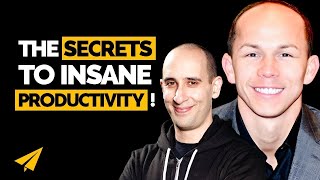
Peter Voogd, author of 6 Months to 6 Figures, defines productivity as purposeful use of time and energy toward meaningful goals, not just doing more. He outlines five core principles: simplicity, strategic scheduling, seizing each day, intentionality, and a success-focused environment. His one-page productivity plan covers ideal outcomes, core values, top five goals, and one key habit to master.
Chapters
And we're live. Welcome everybody to another YouTube Hangout. Excited to be back with an old friend who's been on before, crushed it, you guys loved him, Peter Voughe. He is the best-selling author talking about how to make 6 figures in 6 months. That was the topic of our last Hangout about a year ago. And today we're going to talk about an important problem that a lot of entrepreneurs face about how to master the art of productivity. I'm wearing his shirt because I loved it so much last time he shipped me one. So become legendary. Peter, welcome back, man.
Thank you. The shirt looks amazing. I complimented it. It fits well, so I'm glad you like it. And we're all trying to become legendary. So thanks for the support, man.
I love it. So for people who aren't familiar, this may be their first exposure to you, just give like a quick intro on who Peter Voug is all about.
Yeah. I mean, I'm honestly someone that's really dedicated to serving and helping entrepreneurs. I started my first business when I was 15 doing eBay. And was able to build a team that way and, and take advantage of buying and selling and the internet and leverage technology. And once I saw a piece of that, even at a young age, and saw that I could make money on my terms, I really didn't want to get a normal job. I tried it, I couldn't stand it, and I never got a normal job after that. Was able to get into sales and got into an international wholesale company, was able to work my way up there. I was able to train almost 6,000 sales reps and to be a manager, and I wanted to build my own organization. And that's where the failure came in, where I thought because I had succeeded, it was easy to motivate others. Succeeding yourself and then motivating others is two different ballgames. So I had to go through a lot of failure because I wasn't a good leader. I was trying to develop myself. So I went dead broke. All my savings went out the window. I didn't have enough money to go through the drive-through, and I had to build from scratch. So when I was 21, 22, I, uh, was literally frustrated, discouraged, and overwhelmed. And I finally turned my mindset around. I got a mentor, I invested in myself, and through a framework that I talked on the other video, I was able to get to that 6-figure mark. And I left the 6-figure job making close to $300 grand as a 22-year-old with a very comfortable— I had the team delegated, I had a lot of free time, but my mission was growing. So then I started Game Changers Academy. I started, um, Game Changers Incorporated, and I had my books come out, and everything I've done since has just been focused on helping entrepreneurs thrive because I see so much BS out there. I wanted to give people a very proven tactical real-world blueprint on how to be successful. So now I've done 6 figures in 6 months in 7 different industries. I've been able to travel the world speaking. I was just in Dubai speaking. So I just love what I do, man, but I've literally failed my way to success. I want people to know that. I've had a lot of failures as well.
There's that patented Peter Vuk energy. I love it, man.
I'm always fired up.
Let's go. Let's talk about the subject, productivity. I mean, entrepreneurs are doing everything. We're the CEO to the janitor. We're, you know, there's no free time. What are your thoughts? What are your suggestions? How do we master the art?
Yeah, so here's the deal. I was the worst at time management and productivity at the beginning, which is why I am good at it now because I was so bad. I would work 40, 50 hours a week and I wasn't getting the results I wanted. I felt like I was always busy and people say, well, if you're not getting the results, work more. So I worked up to 80 hours a week and still was not getting results. So I had to figure out why I wasn't getting results. So I read every time management book I could. I hired literally a time management— someone just for helping me with time management. And slowly but surely, I was able to figure out a system and like a proven program that I coined in the last couple years on how to help me be more productive. And I felt like I was working all the time. I felt like my business was running me. I felt like my to-do list was always growing. I was overwhelmed with information. And I felt like no matter what I was doing, I was just maintaining my business. So I think the importance of productivity I mean, it's astronomical, and I think people need to understand that they have to be disciplined and strategic instead of working all the time. So, you have to ask yourself these questions that I ask myself, and then we can dive into the tactics, and I'd love to hear you as well kind of vibing with me because you're amazing at productivity. You're getting a lot of big things done, but you also have an exceptional lifestyle too. So, how can we improve productivity when we're already working at max capacity? That was my problem. I wanted to improve my productivity and time management, but I was maxed out. So I was thinking, how can I improve when I have no free time? But that's the reason why I needed to focus on time management. How can we take more time off to get energy and creativity when we have so much to do, right? How do we deal with all these distractions? How do we systemize productivity and create result rituals? To help with the most important goals? And how do you figure out your highest value, highest leverage activities? And these are the questions I asked. So I created a framework and a blueprint that I've done. We can dive into that, but I think there's different definitions of productivity. I mean, I think there's— if you talk to 10 entrepreneurs, there's probably going to be 10 different definitions, right? I think productivity is a couple things. One, It's a productive life that's focused on and committed to producing and progressing towards your ideal vision. And I also think it's the use of your time, energy, intelligence, and resources in a manner calculated to move you closer to meaningful goals. And productivity isn't just results and getting things done. It's about creating free time for your family, doing what you want, and having 100% control over your future. I don't think it's about doing more faster. It's about doing the right things deliberately. So, the importance is amazing, man, and I just wanted to talk about it because I get this all the time. How do I be more productive? I feel like I'm capped out. And I see a lot of CEOs and a lot of entrepreneurs that are crushing it in the business world, but they don't know their kids. And I don't think that's a game changer at all. Like, if you don't know your family, and you're so busy you can't do things you love. Because when you get to the end of your life, you're not going to look back and wish you had more transactions. You're going to wish that you spent more time with those you cared about, built meaningful relationships, and you maximize life's experiences. So I'm fired up, man. I'm ready. We could dive in, or what are your thoughts on how important productivity is?
Yeah, I think, I mean, it's, it's getting your work done. You have a big goal, you have a dream, you want to have an impact. You got to make sure that every day, as much as possible, you're grinding it out. And And yes, part of that is having the family life and everybody, everybody's, everybody's balance is a little bit different, but the key is not to have regret that you're not looking back and say, I wish I did that differently.
Exactly. And I mean, for sure. And that's what I've tried to do because I felt like I was missing every family event. And the weird thing was, here's what was triggering me to be, to be able to ask these questions. I saw people with more responsibility than me getting more done. And getting better results, and they had more free time. So I'm like, there's a problem here. Something's going on if they're getting way more done and I have worse results, but I'm busy all the time. So the first thing that I had to do is I had to really figure out what was killing my momentum and what was stopping my productivity. What were the distractions that were killing my momentum in my getting in the zone time? So the first question I'd ask is, what are your biggest productivity killers? Like, what are the things that have killed your productivity in the past? Because if you don't become aware, we have to start with the ground level here. If you don't become aware of where you're wasting time, that will always come up month after month, year after year. So it can be distractions as far as social media. It can be internet sometimes. It could be sleeping in. It could be people interrupting you all the time, right? It can be— lack of planning, maybe it's your environment. But I challenge people, what are 3 to 5 productivity killers that have been hurting you in the last, let's say, 6 months? And I think when you do that, I think multitasking is one, I think notifications on the phone is one, but I challenge people, what 3 are costing you the most? Like for me, I had to put my phone away and whenever I was writing or creating or producing, I, a lot of times, I create a technology-free zone, Evan, where I don't have internet. You ever had that where you're working on something and all of a sudden you're on the internet and you're like, what am I watching these cat videos for, right? Or whatever people watch. But I was getting so distracted. So now I had to figure out, okay, what 2 or 3 of these are costing me the most? Another big game changer for me was I have zero notifications on my phone. Like my phone's never on loud, it's always on silent. Because I answer the phone on my terms, right? I have no, like, a lot of people get their dopamine fixed by, oh, pop notification, oh my gosh, that's amazing, we have, Twitter just gave you a message, right? Oh my gosh, you got a message on Snapchat, oh my gosh, you got an email, and people are always adapting and adjusting versus taking full control of their schedule. So that's the first thing, and then I would create a prevention plan for each productivity killer, right? So whatever is hurting your productivity, put a prevention plan in place because if you don't have a plan to interrupt your interruptions, your plans will always be interrupted. So that's the first key as well. And do you want to just— I have like 4 or 5 keys that are simplified that I can go through. Um, whatever you feel like you want to do. Do you want to have a conversation about it or me just dive in? Because I could go all day.
I want to do both. Like, the chat is blowing up. We got questions coming out of everywhere, but I want to hear the— before we get into those, like, let's do the 5 and then we'll hit up the chat.
Perfect. Now, how many— do we have 6 hours today, right, together?
I'm just kidding.
But yeah, my energy is sky high. I'm excited. I have my coffee. So the first thing, I'm going to go through 5 and I'm going to deep dive. Simplicity. Once you simplify your business and your life, you have massive clarity and endless motivation. When you have fuzzy thinking, it's so hard to take big action. And complexity is the enemy of real execution. The more complex you make something, the less likely you are to take action, right? That's number 1. Number 2, strategically scheduling everything in your schedule. Your schedule is a reflection of your integrity and priorities. When I see people flying by the cuff of their pants, not strategically thinking things through, I just think their business is going to eventually shut down because you can only do that so far. You have to really be intentional. Number 3 is seizing and maximizing each day. If you don't make the most of your days, you'll never have amazing weeks and months. But if you make the most of your days, the weeks and months take care of themselves, right? Fourth, staying intentional. Those who are outcome-focused and result-focused and are intentional produce results like nobody else. And lastly, for me, this was a big one, your success environment and success orientation. Most people are controlled by everything external and they're never fully in control of exactly where they want to go. But the Achievers are always focused on being in control of their agenda and not letting other people interrupt their productivity, their mindset, their standards, and where they're going. So that's the 5. So we can definitely dive in. So the first thing is absolute clarity. We talked a little on the last episode that we did on absolute clarity, but I want to dive a little bit deeper. You have to learn how to master yourself and know how to spark your own fire. The more you have to count on someone else to motivate you, the less money you'll make and the less effective you'll be. So learn how to master yourself, how to spark your own fire. And how I did that was I put my plan, I put my vision, I put my values and my reasons and my goals on one page. Whoo! This— and I like literally, Evan, I have— this is from 2015.
Page?
Yeah, but I have like 5 or 6 of them and I redo every couple months, but it's like I've done this since 2012. I had it in the shower, above the shower. That's a weird thing.
It's laminated, I love it.
It's laminated, but let me tell you what's on that page because it's such a game changer for me. First is your ideal outcome. A lot of people don't even know their ideal outcome of what they want to accomplish in the next 6 months. Like if I ask 100 entrepreneurs, hey, what is the ideal outcome for you and your business? Like how many hours are you working? How much money are you bringing in? What's your subscribers look like? How involved are you in the business? Right? How big is your team? What exactly are your marketing tactics? They're like, I have no idea. 99 out of 100 don't know. So what's your ideal outcome? And don't base this off your past or limitations. Base this off what's possible and your potential. Right? So just a simple paragraph. What's your ideal outcome? I don't really like to say vision statement because that's over, over talked about, overplayed, but I like to tell people. It's your ideal outcome. So once you have that on top, then this is big, your core values. Like, what are most important to you in life and business? Because you want to build a business around your values, not settle for a business that doesn't match your values, because then you're living incongruently, right? And people do this all the time. But in the new economy in 2017, there's no reason why you can't create and design your ideal lifestyle or be picky and choosy with your business because you're becoming so valuable. So values, for me, it's family, freedom, autonomy, and then legacy and impact, even before income. People always say, well, what about income? It's like, yeah, that's very important to me, but I have leverage where I don't need income. So what's cool for me is my values are intact to where I can say yes and no to any opportunity that comes to me based on my values. Like, I've turned down speeches, Evan, for close to $10,000. One was in Chicago in January. That's enough to turn anything down in Chicago because it's freezing. Sorry to all the Chicago people. You probably agree. But anyways, I turned down speeches that are well-paid and have done free speeches in the inner city in LA for underprivileged kids. Now, if my values were number one money, I'd probably turn down the free speeches and do all the paid ones. But my value is impacting, giving back. So you got to define what your values are. After that, it's your top 5 goals. So what are the big 5 for the next 6 months? And I'll kind of run through this kind of quick. But what are the 5 things that you want to accomplish and get done in the next 6 months? And then underneath that, it's your most powerful reasons. What are the reasons that drive you? What are your top 5 most compelling reasons? Because this is the fuel that gets you to take action on the top 5, right? So what are your 5 biggest reasons? You might have to write down like 20 or 30 and simplify to get to the ones that mean something. But if you don't have, if you're not waking up at 4 or 5 in the morning fired up and excited, your reasons aren't strong enough. I'm serious. So get some strong reasons of why you want to do what you do. And lastly, what's your one key skill or one key habit that's most relevant to your 6-month vision that you're going to focus on for the next month or two until it's mastered? You see, one big part of productivity, Evan, is focusing on mastery versus overload. There's so much information. There's all this technology, there's podcasts, YouTube, audios, videos, books, training seminars, and a lot of entrepreneurs use it as a cop-out to where they're like, "Oh, I want to keep learning and growing," and instead of executing on what they already know, they want to learn more and say, "Well, I'm still studying." No, no, no. You need to execute and get addicted to outcomes, not just information. So now you measure everything you're studying against this one-page productivity plan And if you do that, it gives you so much clarity. Now the goal is to let your vision guide you, not your current circumstances, right? So that's the first thing is just simplifying. Do you have any questions or do you want me to answer any of the subscribers' or fans' questions? I'd be happy to.
Yeah, let's do it. First off, loved all the value, man. It's great. You're just firing it out. I love it. I'm trying to keep track of all the comments. It's nuts with all the questions coming in.
Give me the weirdest one.
The weirdest one? Hmm, the weirdest one.
No, it's gonna be way too weird.
You know what, actually people wanna know exactly what time we wake up.
Ooh, good question. So here's the, I used to be obsessed with like the exact time. When you're in a successful state of mind, I've been around, I've been very fortunate to be around a lot of 7, 8, 9 figure earners, like very, very successful people. I was with Ryan Blair at his house 2 days ago. Do you know Ryan? I think you did. Yeah. And he sold the company for $782 million. I mean, I can't conceptualize that, selling a company and getting that much. But I noticed, and I noticed from a lot of people, it's not about exactly when you wake up. It's about what you do when you're awake and how productive you are. So for me, it's different. If I'm traveling and speaking, I'll wake up at different times. But in my sacrifice stages, like when I was in my early, early 20s, I wouldn't get much sleep. I'd get 5, 5.5, 6 hours because I'd be hustling and grinding, sacrificing. Now that I've built the foundation, I like to get 7 to 8 hours. You ask me 5, 6 years ago, I would say, you don't need 8 hours.
You're a hustler.
You need 4 hours. Forget sleep. That's just not smart because productivity, you need to have the right sleep. But it depends on what stage you're at. And to be honest, figure out when you're in the zone and when you're most creative and when you have the most willpower. I know people, Evan, that go to bed at 2 or 3. Like one of my friends who's a recording artist, he is the most productive from like 11 to 3 in the morning. And then he'll get up at 10 or 11. I know some people who conk out and go to bed at 9 or 10, and they're productive from 4 to 8. So it really, it's not about exactly what time you wake up. It's about when you're most effective and productive and delegating all your highest value, most profit-producing activities to that time. So don't get on the subject of what time, get on the subject of what you're doing and is that your most productive hours? Good question though. And that's changed. That would have been a different answer years ago.
Yeah, and parenthood changes that too as well.
Exactly. I don't want to know about that yet.
For me, usually I'm in, I start to get ready for bed around 11, and then I'll read in bed and hang out with the wife, and then kind of sleep by midnight, and then awake at 7-something typically.
Let me ask you this. Let me ask you this. When do you feel like, out of the 24 hours in a day, when do you feel like your most productive 3 or 4 hours are, where you're like super in the zone and hyper-focused? Is it like morning, evening, what do you think?
My default would be evening. Wow. But after my morning routine, and I know I love what you, what did you say last time, you had like a champion's routine or something, what did you call it?
Prize fighter routine.
Prize fighter routine, that was great, I like that. After I go through my morning routine, like I'm set. So after I do all that stuff, then I'm set for like whatever I'm gonna do next.
That's my productive time too, is right after my morning routine. I have like the most adrenaline, the most energy. I'm in the right state of mind. So that's where I place my highest value activities is that first 60 minutes after my morning routine. So I love it. We're pretty similar in that sense.
So let's see what's— oh, go ahead. Yeah. No, let's see what's next. It's like the question— the questions are coming in and we answered one, Peter. So we got to— we got to— I'll probably help a lot.
I'll probably answer a lot of them in the next couple tips, but we can keep answering.
Yeah, a lot of them you've already covered in the tips as well, but I think it could go a little deeper with some of them. Okay, cool. Um, people— well, okay, so one is— one person's asking, how do you get in the zone so you can be the Michael Jordan of productivity? What do you do to get in the zone?
Okay, we're going to talk about that. It's a good question. Um, but I mean, I can dive in, but let me wait for the— I think it's a third tip, but it's very— it's a very good question and it's very important to get yourself in the zone because when you're in the zone, you're 3 times more productive, right? So the second part of this question or the second part of the, my 5 tips dives into how this happens. So number 2 is strategically scheduling everything. When you get everything out of your head and you put it on paper and you delegate and sell yourself on what you're doing and what you shouldn't do, that's when you start getting more motivation to follow through. So you have to have a 7-day review. You have to think about in the last 7 days how your week was, what, what you did well, what you didn't do well, right? When were you in the zone? When were you distracted? When were you at your best, right? I always, every single week of every year in the last, I'd say 3 years, I plan my weeks. It's a non-negotiable for me. So because think about it, guys. If you invest your past mistakes into your future preparation, you'll never have 2 bad weeks. Here's a crazy fact that you, you brought up Michael Jordan. Michael Jordan averaged around 30 points a game his whole career. And he, whenever he had a game that was less than 20 points, that's not that good for Michael Jordan, like 13, 14 points. Whenever he had a game less than 20 points, his next game, he averaged over 40. Now let me tell you what this means productivity-wise. Michael Jordan never had 2 bad games in his entire career. Never. Not once. OK? Why? Because when he had a bad game, what do you think he did? You think he went out and drank beer? No, he studied the game. He studied the film. He asked himself what he did different. He watched the videos. He was tough on himself. He went back to the gym. He worked out more. He focused on his weaknesses to turn them into strengths. Most entrepreneurs have a bad week. Ah, whatever. It shouldn't happen again. And it happens again and again. That's why I don't understand how people have bad years and then another bad year. How is that humanly possible if you don't invest your time into your mistakes and make them better for the future? So that's why I get so passionate because you got to review your weeks. Now, here's what you put in your schedule first. Everything you can't change. Whatever you can't change, like business meetings, like calls with your team. Maybe if you're at a 9 to 5 now, you obviously can't change that, right? Then you put in what are you 100% committed to making happen no matter what. Whether— if you're in a stage where you're not making much money, it needs to be profit-producing activities. So what are your top 3 profit-producing activities that are proven to make you money? Put that in your schedule first. You would not believe, Evan, how many entrepreneurs I talk to at events and at places where they're telling— they're walking me through everything they're doing for the week and they have like 1,000 things on their agenda. But none of them make money. Then they're like, how do I make money? Well, you should probably do things that make money because everything you're doing is not making money. It's the busy work. It's the easy stuff. A lot of people don't want to do the 1 or 2 things that will actually help them. So for me, I also add in my schedule, who am I going to reach out to, right? Who am I going to connect with that can cut my learning curve in half, that can help me get to my goals quicker? So put in your schedule what you're committed to making happen. Put in your schedule your non-negotiables, something you're committed to, whether it's your health, Maybe it's working out 4 days a week. Maybe it's, uh, alone time with you and your wife or husband or significant other. Um, maybe it's getting a massage once a week to work on your peace of mind. I don't know, but you got to strategically put it in your schedule because the trick to productivity and to get in the zone is deciding what you're going to work on at some point other than in the moment, and then practicing the high-value work over and over until it's habitual. And automatic. So, as far as number 3, and I'm gonna answer that question, how to get in the zone, here's exactly how I get in the zone. And Evan already hit on it. It's the prize fighter routine, but it's understanding about how to seize each day. You only get each day. Like, maximize your 24 hours, and the rest of your life will take care of itself if you understand this. So, the first thing is you have to get clear on what morning routine is most effective for you. You don't need to have like 10 steps to a morning routine. You don't need that. You just want to focus on the outcome. What's the purpose of a morning routine? There's two things. One, confidence, like make sure you're in a confident and a courageous state of mind. So, whatever you have to do to get in the right state of mind, whether it's working out, reading a book, writing in your journal, meditating, I mean, there's a thousand things you could do in the morning. And if you talk to 10 entrepreneurs, All their routines are different. Mine's different than Evan's, but the reality is it both— it gets us in the zone when we start our day, so they're both correct. So the first thing is get yourself in a better state of mind. And the second thing is having intention and making sure you know exactly what you're doing that day and you put your activities in order, highest value first. Okay? That's the purpose of a morning routine. Next, I visualize and I define my perfect day. This sounded corny when I first heard it, just being honest. I was like, I'm not going to visualize my perfect day. That sounds horrible. That's a waste of time. But then I actually did it. It's one thing to say something's a waste of time. It's another thing to actually do it. I visualized. I think about my ideal outcome, how I'm going to feel at the end of the day, what my ideal day looks like. And man, it gets me so focused and excited to complete that day. And then I ask myself 3 questions. And this is all, guys, 30 to 45 minutes. What am I most excited about for the day? And if you don't have anything that you're excited about, create something. What am I extremely grateful for? It's impossible to be frustrated when you're grateful, by the way. So I always get grateful so I'm not frustrated or discouraged. And then what am I 100% committed to make happen? And once I do that, I finally have clarity for my day. And then it's the 60-20-60 where it's 60 minutes, no interruptions, no distractions, straight focus on my highest value activity, whether it's writing in my book, creating something for my mixtape, for one of my programs, whatever it is. Straight focus for 60 minutes. Then I take a 15-20 minute break. I either go walk around the block, shoot some hoops down the street, I watch a YouTube video. You got to do something unrelated. But the reality is here, you ought to kind of get out of that state of mind. And then when you're back for the next 60-minute block, now you want to make sure you're fully focused again in a new state of mind and then sell yourself on the activity that you're doing. Sell yourself on whatever you have planned. If you're not sold on the activity at hand, that's when people procrastinate. You will never procrastinate if you fully sell yourself on why you're doing what you're doing. If you don't feel like doing something, Evan, maybe this video or whatever, I almost guarantee it, you think about why you're doing it. You don't care how you feel in the moment because you're doing it for you, for your legacy, for your family to have freedom, for income, peace of mind. So if it's sold, you're like, it doesn't matter how I feel, I'm doing it. But a lot of people don't sell themselves on what they're doing. And they're like, they're not really sold on it. They're kind of doing it half-ass. So that's when they procrastinate and procrastinate. So if you want to get in the zone, you got to sell yourself on everything you're doing and you need to make sure you get in the right state of mind before you take something on. And how you get in the zone is you work straight for 20 to 23 minutes. That's how you get in the zone. Most people, before they even get to 20 minutes, they're distracted. And it takes 20 minutes to get back in the zone. So they're never actually in the zone because they're always distracted. They're going from distraction to distraction versus from in the zone to in the zone. So hopefully that answers some of the questions. But this is something you can tell I'm very passionate about because I see people wasting their lives because they're not taking the time to be disciplined. Instead, they're working all the time. So I could go on for a long time.
Any other questions? Any other? Dude, it's blowing up. It's crazy. Any other questions?
I appreciate you guys, by the way.
It's off the page, man. I had to pick which ones come up. Okay, let's get— this is interesting. Esther. Esther is saying, how do you— execution. How do you lose the fear slash insecurity so you can go and execute?
Yeah, a couple of things. One, you have to be around, and I've gone through this. You have to be around. The reason people don't execute sometimes, Evan, is they don't, they don't have certainty that it's going to work. That's why a lot of people love the 9 to 5 because there's certainty. I'm going to get paid. It's certain, right? In entrepreneurship, there's no certainty. So you have to increase your certainty by a couple of things. When your certainty is increased, like if I told you, Evan, when you started, hey, when you do this YouTube thing, you will get 2,000 subscribers a day. You're going to have a million subscribers in exactly this time. You're going to have this, this, this, this is the money coming in. You'd be like, oh my God, that's easier. But when you first started, did you— you didn't have that certainty, right? You had to create the certainty by getting the results. So here's a couple of things that you can do to increase your certainty, which then increases your chances of execution. One, do your due diligence. Okay? Do the research on what industry you're in or what you're working on to make sure you have the best information to follow. Two, get around other people that are executors. A lot of people that aren't executing, every single person— and this is done with a lot of study and me just dealing with a lot of entrepreneurs in person. A lot of people that aren't executing, the 5 people that are around the most, they don't execute either. So if you're around other executors, other people taking big action, other people thinking bigger, it's a lot easier for you to execute. Right? And then 3, like I just said, you might have already got the answer. Sell yourself before you start taking that action. So if it's like, okay, you want to— for me, I'll tell you, my book, 6 Months to 6 Figures. I'm so blessed it sold close to 200,000 copies. It's going crazy, right? I can't believe— I didn't expect that. When I was writing the book, it was hell. A, you don't get paid for writing a book until way later. B, it's hard. C, I'm like Type A. I'm freaking out. I'm jumping. I did like 30 push-ups before this interview. To get fired up. But the reality is I had to sell myself 1,000 times. That's the only reason I got it done and executed. I said, you know, I just got to visualize how it's going to feel to get this book done, to get this book in someone's hands. And I just kept thinking about people saying, you know, your book changed my life. Because of your book, I did not give up. I didn't commit suicide. All these things that drove me. And I couldn't stop the book when I thought about that. But most people think about what they have to do versus what they want. So don't think about all you have to do. Think about what you want and your ideal outcome. And it's just little bits and pieces. Take a little more action than the day before. Take a little more action the next day than today. Take a little more action in 2 days than tomorrow. And if you can do that mixed with doing your due diligence, getting around higher-level people, and making the tougher decisions in the moment, it's going to give you the confidence to be able to take bigger action. But sometimes people that don't take action, they're just too— there's too much noise in their head. So try and simplify on what you're doing and why. And hopefully that helps because that's helped me. Good question. Really good question.
I love it. Marcus is asking, do you guys have an accountability person? How do you keep yourselves accountable?
Yeah, so starting out I did, um, but I think when you reach a certain level you don't really need one because your habits take over. People think inspiration is what they need. Inspiration is very short-lived and short-term, and eventually, like when you go to a seminar, Evan— not you in general, but when people go to seminars, after they pay $5,000 to go to the seminar, after the seminar, and like they're fired up and excited, they're motivated, 2 weeks later, they're back to their old habits and they wasted that money. So that's why you have to put habits in place versus just inspiration. So I definitely recommend having an accountability partner, but it has to be someone that challenges you, that makes you think bigger, that has the results you want, that won't let you off the hook. Because there's 2 types of people, those who make you think bigger and those who let you off the hook. And most people are hanging out with people who let them off the hook to make them feel better in the moment. but you want to start doing things now that your future self will thank you for, right? So I, I strongly agree. I don't have one. I have— so here's the difference. I have a lot of friends right now that are doing amazing things, like my boy Gerard Adams. Some of you guys may know he just sold Elite Daily for $50 million, right? He's a little older than me, so I'm around a lot of people that are doing big things. That's enough accountability for me, is just being around game changers, right? So either be around high-level people or find someone in an accountability group. That challenges you, that makes you think bigger, that you know will hold you to high standards. Good question.
Yeah, I mean, I agree. I think I've never— I've never— I don't— I have a mastermind group. I don't use it for accountability, mostly because my own standards are higher than anybody's on me. And that's the thing, right? Like, you get to the point— I think that's the bigger work, is having such high standards for yourself that I'm not going to do it because Joey is going to tell me to do it. I'm going to do it because I'm pissed at myself if I don't do it. Like, my expectations for myself are way higher than what Joey thinks I'm going to do. And I think that's the bigger work. I think, yeah, at the beginning, maybe having people to push each other. And to Peter's point about being around people who are doing great things, that can rub off on you as well. Or watching videos. That's why I make my channel, have all those famous entrepreneurs. Like, I watch Elon Musk hitting it hard, I feel like I gotta do a little more, I gotta push a little harder. But yeah, I think that's really the bigger game, guys. If you can have your standards be higher.
And exactly what I meant by that, when you level up, you don't need other people to tell you to go to work, to take action. You don't need permission. It's all on you, right? But for you, Evan, how many people, obviously you haven't counted, How many people have said in the comments, "You changed my life"?
Oh, yeah, every day. It's every day.
So that keeps you going. When you have a vision bigger than yourself, when you're impacting the world, I mean, look at the people behind you. They all impacted the world. They were not on themselves. It's called being on purpose and off yourself. For me, I don't care how I feel anymore. I don't care if it's 5:00 and I'm tired. I'm not doing it for me. I'm doing it for all the people that I inspire and impact. That's why I do what I do. So at a certain level, I don't need accountability because it's not about me. It's about those I inspire because I want to make a mark in this generation and impact people and shift our culture. And like you're doing as well, impacting hundreds of thousands of people, you don't need accountability. So yes, you want something at the beginning, but you want to be so driven and so focused and have such high standards, you really don't need that. Good point.
Peter, Peter, we're already in the tens of millions of people, bro. Tens of millions of people.
Tens of millions, my bad. I forgot how much of a savage you are.
So this is an interesting one now about mindset. Omar is asking, how do you stay optimistic all the time?
That's just my DNA. It's just, I mean, so I've tried both. I've tried being a pessimist and an optimist, and optimism just works way better. It takes the same energy to be negative or positive, so I'm just positive. I just expect, so here's the key. These questions are bringing out some excitement in me. I haven't got asked some of these in a long time. Here's the key. When you're expecting— I expect the best, but I don't get addicted to the result because if you get addicted to the result you want, it's never going to happen the way you want it. So, I'm just focused on doing everything I can, focusing on the process and the journey. I focus on doing what I'm supposed to do and what I say I'm going to do every day. I focus on the process and the results take care of themselves. So, I'm expecting the best. If the best doesn't come, I adapt and adjust and keep going. So why I'm optimistic versus pessimistic is because every single successful person I'm around every day is optimistic. Every person that's broke and frustrated and talking shit online or being a negative hater— like, it's going to be funny. We should look below after this, see if there's any little haters. I don't think Peter's telling the truth. I don't think Evan's the real deal. It'd be funny to see if there's any haters hating from their mom's basement. But the reality is I've actually never met someone that's not successful that is negative, right? So everyone that's successful that I meet is optimistic. So I've just kind of copied and been around those people, and I've seen it work. And I've seen most people that are negative and pessimistic not have the results. So I just chose to be positive. It's just a choice that I made, and that's really it. It's just a choice based on what I've seen.
Yeah, I think doing the work that you love, like, to to enjoy the process, not be addicted to the outcome. You gotta actually enjoy the process, right? Like doing work that you love. If you're doing work that you love, and not every day is amazing as an entrepreneur, you're gonna have a lot of down days, you know, life's gonna hit you in the face really hard a lot of times, but net-net, like, you like doing the work that you're doing. You're not doing it just trying to make money or get somebody's approval. You're doing it because you enjoy doing the work. I've done like 4,000-something YouTube videos because I love making them. I like it, I love making the videos, I love doing these interviews, you know, I love doing it whether it's having Peter on and he's crushing it or it's on my other channel where it's, you know, a brand new person who's just getting started. You know, I like the process and I think if you enjoy the work that you're doing, you're gonna naturally be more optimistic.
100%. Quick recovery, short celebrations, guys. When something doesn't happen your way, recover quick. If something happens amazing, get excited for a second and keep pushing forward. Don't get too excited about the positives and don't get too down about the negatives. Keep an even keel when you're going through entrepreneurship.
But let me ask you this, because I don't celebrate. It's like, it's like 5 seconds and then we're moving on. How much do you celebrate?
Yeah, same thing. It's a trait of an achiever. I'm not doing it for celebrations. I'm doing it for the long-term game. So I'm the same. To be honest, my wife and some of my friends, I'm pretty tough on myself, actually a lot. Like, my standards are so high, they have to tell me, Peter, chill out. Like, you just did a great job. You just did this speech that was in front of 3,000 people. It was amazing. Yeah, I know, but I got to do this and this and this. You just did this course. 11,000 people checked it out. So I don't celebrate a lot because I'm focused on what's next. So I think I do need to take a step back, take a deep breath, and be proud a little bit. But yeah, I think that's an achiever thing, man, because I'm the same way as you. Did anyone tell you you got to like, like appreciate where you've came from and enjoy it, or?
Well, so I have a ton of gratitude for where I'm at, right? Like if it all went away, I'm so appreciative for what I have, but I don't celebrate enough, and it's come up, it's something that's on my mind, not so much for myself but for the team. So I hit half a million subscribers, my wife's like, you gotta go celebrate. And I'm like, no, I just tell her, sorry.
Why is she always so positive?
Yeah, I went, I went to, I went, like I took 20 minutes and walked to the local went to a donut shop and bought a donut and came back and ate it and we're like, okay.
That is not really your celebration.
That was, man, but it's like, that's not enough, man. Like, I gotta, I wanna work. I was like, 20 minutes, that's wasted time, man. But you know, I did it because my wife suggested it and I'm open to like, I'll try something once, I'll try it. Maybe I need to do something bigger, I don't know, but it just felt like a waste of time. And so for me, I don't need to celebrate, but I feel like it actually hurts the team. I feel like the team likes a celebration and that I would be a better leader if I celebrated more or like let them celebrate more so we can hit the next thing. I don't know, I feel like it's a little piece missing. I don't need it personally, but for the team it's important.
Yeah, I agree. I think making your team feel exceptional and making sure that you let them know, hey guys, I'm focused on the long-term vision for us, but I really need your help to make sure we continue hitting these goals. I want to go through like every week, maybe going through the goals they hit or the goals that you guys are are achieving and making them feel amazing. I think that's huge. But yeah, I mean, I've done it. I've ran a pretty big sales team and I think a lot of the legendary entrepreneurs, if you stop and celebrate and you rest on your laurels, I think it's harder to create the next thing or build more success. Because I mean, when Steve Jobs made an iPhone, he wasn't like, oh my God, this is it. I have the iPhone. What's next? What's next? What's next? What's next? Let's continue changing lives. Let's continue impacting the world. So I commend you because I know you're an achiever and I can relate. But yes, my celebrations too, Evan. I travel like 3 weeks out of the month. I travel quite a bit across the world. So that's kind of— I work sometimes while I travel, which is why I became an entrepreneur. But that's kind of my celebration is traveling and seeing new cultures and experiences and stuff like that. But I love working, man. I'm addicted to the grind.
He's saying— I turn down most speaking things because if it's a week away, that's so much opportunity cost lost of what I'm going to do here. I did a thing in Madrid last year where I was helping librarians. It was like all the heads of the librarians of the libraries in the world came together for this event and they wanted to know how to stay relevant. So I'm speaking to them about how to stay relevant. That's actually a cool— It's a cool cause, I'm willing to go. But when I'm in Madrid, I'm not touring. It's like, I don't want to do sightseeing. I want to deliver mad value to these librarians and crush it, and then make videos for my channel and catch up on work and maybe meet some local fans. But I'm not out sightseeing and trying restaurants and I don't know.
But you got to realize that's why you're living a life on your terms. And that's why people respect and look up to you, why you have 500,000 100,000 subscribers. Most people are the opposite. They want to speak real quick, then they want to go enjoy everything. And most people are trying to enjoy all these experiences before they really deserve it or put the grind in. So, I mean, you already know that, but that's why you're doing what you're doing and why you're crushing it. You know what I mean? Because you're addicted to giving value. Most people are addicted to instant pleasure versus giving value. So people need to switch their priorities and get in check.
I like it.
I love our conversations. We could talk for hours, man. You want to try an all-day marathon?
All-day marathon, dude. That'll be massive productivity for everybody here.
Not us, but everyone else.
Man, tons of questions. Let me see. What's one that we haven't kind of gone over? Okay, so Joshua is writing, I struggle to wake up every day. And what advice do we have? His work's being affected. He feels like he's lazy. Somebody who like, like they watch this, right? Like everything's on fire. I love Peter, man. Dude blew my mind. I'm going to go crazy tonight. And they're, they're insanely productive. And then tomorrow morning, I don't want to get out of bed. Yep.
I got to stop. It's funny. Every single question I'm getting, I've actually personally been through that, been in ruts, been in struggles. So a couple thoughts. One, it's okay. Be okay with that, but then realize that you're one decision away from changing it. And whatever you're doing now is 10 times worse in the future. If someone is lazy now, they're 10 times lazier in the future. If someone cuts corners now, they're 10 times worse. If someone lies or exaggerates now, in the future. That's why you got to be super aware of your habits and subconscious who you're becoming. First thought, most people go to bed tired. If you go to bed tired, you will wake up tired 100% of the time. Flip that. For me, I go to bed fired up and excited. That's hard to believe, right, Evan? I go to bed fired up and excited. So when I go to bed, I'm very grateful. I say, "Thank you, whatever higher power you believe in, for this 6 hours of sleep I'm getting." When I wake up, I'm going to be energized, juiced, fired up and excited. And I go to bed grateful and I go to bed happy, right? Now, it's a mind game you play. In the morning when I wake up, I still aren't always excited, but I have a game. Most people sleep in. I'm not most people. Most people make excuses. I'm not most people. You have this one-on-one conversation with your head and then you go from 0 to 10. So when you first wake up, you're a 0. You have to do little things that gets you from a 1 to a 3 to a 5. And this has worked for me 100% of the time. So first, my alarm is out away from my bed. So when I'm dead tired, my alarm is so annoying, it's so loud, I have to get up to actually get it, turn it off. So now I'm a 0, now I'm like a 2, right? And then I go brush my teeth or I drink a ton of water. Now I'm from a 2 to a 3 or 4, right? And then for me, I'll do push-ups. I'll listen to my favorite song. It's a habit now, so I don't need to do this. But when I was struggling, I would do something that got me from a 3 to a 5. So do something in the morning right when you wake up that gets you a little bit more awake and then do something else. Maybe it's do 10 push-ups and then look at some statements or some quotes that fire you up and then drink a ton of water, brush your teeth, maybe walk downstairs. And start working out or go to the gym, and then you're going to be a 7 or 8, and then you're not going back to bed. So, I would sell yourself on why you do want to get up early. I would tell yourself the night before that you're going to be fired up, and then I would also, right when you wake up, have some rituals in place that get you from a 0 to a 2 to a 5 to a 7, and do that for 7 to 14 days, then your habits will take over your mind and you'll be good. So, that's my thoughts, and it's worked for me many times.
Yeah, I've never had a problem sleeping in. I've never, I never press the snooze button. I think it's not even this. I think it's like if you wait, if you're doing work that you want to do, that you're excited to get up and do, you want to— like for me, at night I have to shut my brain off because I'm so like, here are like 10 of the things I want to do tomorrow. And then, and then I don't sleep. And then I got to get up and start working on them. And then it's like 4 in the morning and I got to like haul my butt to bed because I'm not going to get a lot of sleep.
Yeah, but subconsciously you're excited about it though. You have all these things like innovations, you're planning on how to add value. So even if you can't sleep, you're fired up to get up. A lot of times when I have the most excitement and ideas, you're the same way. I get up at 4 or 5 and I can't go back to bed. I can't because I'm fired up. So that's funny you said that. So you don't have an issue ever? Getting up?
I don't know if it's getting up, but I don't wake up in peak state either. I'll get up, but it's not, I may start at a 5 instead of being at a 10, but I'm not at a 1, I'm not like lying in bed and like snooze, snooze, snooze. I think that if you don't look forward to what you're doing, like on a Saturday, I'm not sleeping in and snooze buttoning, or Sunday, you know, it's just, I wanna enjoy life and do stuff. It's true, if you've been sleep deprived or you're not looking forward to your day, then the tendency is to be super lazy. But in terms of getting from a 5 to a 6, 7, 8, 9, 10, I find music first thing, like I wake up, I'll go to the bathroom, and then I'll put on a song. And whatever the song is that gets you—
Pumps your energy.
Grinding, moving, shaking, like my playlist you may not enjoy, it doesn't matter. Whatever the song is for you.
Give me some artists.
Changes your state. All over the place.
AC/DC? Rolling Stones?
None of those guys, man.
I just named a lot of people. None of them?
I don't think any of them are on the list.
Pearl Jam?
More like, I like some gamer music. Like, got some good beats to it, or some remixes.
You like Kygo?
I don't know Kygo.
It's like house music, but it's pretty good.
Dude, like honestly though, I know a lot about a little bit.
That's good.
Okay, like you want to talk entrepreneurship, you want to talk baseball, maybe some League of Legends, some salsa dancing, we can go deep. You want to talk like pop culture and music and movies?
Yeah, that's a good thing though. You've focused on your strengths.
No idea.
That's a wise move, my man. That's funny.
Anyway, so like starting with music, starting the day with some music that gets you excited And then into, I think if you're consistent with the routine and you're like every day is how you do your thing, then you just fall into it. Instead of, to what Peter said like way back, you're not just starting the day like, what do I do today? Right, then you're super lazy. Where if you have your plan, this is happening, you've like written it down, you're scheduled to it, then you're much more likely to follow through.
And think about how short life is. Like you wanna make sure if you fast forward 10, 20 years, You've maximized life out. I want to look in the mirror, Evan, when I'm 70, 80, look in the mirror and say, you know, I did it my way. I maximized life. I have zero regrets. And if you can pinpoint what you do today to your future self thanking you for it, that's a skill that a lot of people cannot conceptualize because they're so addicted to instant pleasure. I've been addicted to doing things now, doing things today that January 1st, 2018, I'm super proud of. And if you could think like that, that's the first step.
I think too, having a keystone habit, like whatever that first thing is, if you do it, you're more likely to do everything else. And if you—
yeah, yeah, momentum, right?
Like if you miss your— like if you have 5 goals and you want to eat healthy, you want to work out, blah blah blah, you know, if you eat a chocolate bar, then you're likely to give up on the rest of this. You know what, I'm not gonna work out, and that, you know, I'm gonna junk out the rest of the day, you miss all your other goals. So make that first thing in your routine easy, and then you stick to that, you're much more likely to stick to the other things. So whether that's make your bed or brush your teeth or put on a song, whatever it is, that first thing is super easy, and then the harder ones are later, but you've built up momentum to go through.
100%. I fully agree. I love it, man. Um, I mean, how much time do we have? I could finish like the last tip and then we can do maybe one or two more questions, or we could just do questions and I can finish with some final thoughts. Whatever you feel, you're the man.
Yeah, yeah, well initially I had us in half an hour, we're almost at the hour mark. I know we both got other things to do, but let me circle back, like I stopped paying attention to the questions because it's just flying through. I want to circle back to talk again about your, you know, you got your book, 6 Months to 6 Figures, you've got a masterclass coming up that's launching in about a month. In February. Talk to us about that journey, making the book, making this masterclass, what's happening, what everything's about.
Yeah. So when I was broke and frustrated, I didn't know how to get out of it. And finally, there were specific things I did when I look back on how I went from broke to 6 figures in actually 5, 5 and a half months. And people kept asking about how I did it. So I was helping a lot of people and I saw it worked for them. And on my journey up, Evan, I read a lot of books and there was few that were tactical that really gave like the actual scripts that were done for you that really helped me get to that next level. So there wasn't any books out there for young entrepreneurs. So I wanted to create one. So I put the framework in the book, the 6 Steps to 6 Figures on exactly. And we've had hundreds, if not thousands of people say they've actually used it and made 6 figures. So this is not like, I hope it works. So the book is just a tactical way. It's proven strategies on what I use to go from zero to six figures and from six to seven. So that's what the book is. And I've got some amazing feedback. It's, it's been all over the world and I'm super proud of it. But I also give a lot of my scripts, like how I reached out to high-level achievers like the Vaynerchuks and Ariana Huffingtons and those kind of people, the Mark Cubans. I give my exact script on what I did. I give a couple other things that I've personally— I put it pretty much, put everything in that book. So we got so much feedback, we got so many people reaching out, hey, I want more, I want more. So we decided, we spent a year and a half, me and a business partner, creating like a master class on deep diving on each step. If you don't have an idea and you want an idea, anyone that's hungry, we give them the exact strategies and steps on how to get to their first 6 figures in entrepreneurship. And if you're at 6, it's pretty much how to create the best 6 months you've ever had with accountability, with, uh, strategies, with tactics. And we have a community around it where there's a lot of people in there helping and stuff like that. So that's really what it is. It's the most tactical, comprehensive, and I feel relevant training out for entrepreneurs where they get step-by-step system and a proven roadmap on how to, uh, not only create a product how to sell it, how to go from frustrated to crushing it. And that's what it is, man. It's just, it's a, it's a roadmap for entrepreneurs that want to go to the next level this year. So yeah, we don't launch it much. It's coming out, I think, the end of February. Um, I'm excited about it.
And if people want to either find out about the course or find out about you, you do YouTube videos as well, everything you're up to.
Yeah, by the way, if you guys say you're from Evan's channel, I'd love to connect. We get a lot of people reaching out, but I really— I've seen the comments. You guys are very hungry and dedicated. So much respect to you. We actually— I pride myself, Evan, in giving better free content than most pay thousands for. I know your content is better than a lot of people that actually charge money for what they're saying, right? So at 6m6f.com, I created like a blueprint that mixes this productivity stuff with the 6 Months to 6 Figures framework. So, I give you all that value in a blueprint. I think it's like a 10 or 12-page blueprint you get for free, and that's at 6m6f.com. And if they want to connect on social media, I have Instagram. My Snapchat is Ambition23, pretty active on there. And then my Instagram is Peter J. Voughe. And then if they want to learn more about, we kind of have an exclusive academy as well. It's gamechangersmovement.com. That's an invite only. That's pretty exclusive, but they can check that out at gamechangersmovement.com. But yeah, man, I love to give value. I love to help entrepreneurs that are hungry, that need guidance because I've been there as well. So yeah, let's connect. Add me on all social medias. Let's talk some business. I love it.
All right, now this is it, Peter. The final message of the day that Peter's gonna give us to sum everything up and leave us on a high. What you got, Peter?
So the number one thing that holds most people back, I don't know what I'm gonna say as I'm saying this. It always just comes from the heart or gut. The number one thing I've seen that hold people back is they never tell themselves now matters. They're always living on someday aisle. Someday I'll be successful. Someday I'll invest in myself. Someday I'll quit my job and start a business. And someday never comes. So I challenge each and every one of you right after this video, what are you going to do now to improve your chances of success? You got to figure out exactly what you want and figure out what you're willing to give up to get what you want. And if you can tell yourself now matters, and you stop comparing yourself to everybody else and you only compare yourself to who you were yesterday, that's where you're going to change the game. And that's when you're going to create a legacy that outlasts you. So I'm here to help. Evan's here to help. Thanks so much for your time. But that's it, man. Like I said earlier, you want to look yourself in the mirror when you're 70 or 80 because 95% of people when they're 70 or 80 have massive regrets. I'd rather have you guys have massive excitement and massive results than regret. So look yourself in the mirror when you're older and tell yourself, I have no regrets. I did it my way. I maximized life. But it starts with right now. That's it.
I love it. Peter Voughe, ladies and gentlemen, brings the fire every time. Peter, man, thank you so much for spending the time spreading some love. Thank you guys so much for watching. I'm sorry I didn't get to all the questions. It's just, you know, you guys, you see the chat. You guys are going crazy.
I'll try and get in there and answer them too. I mean, I can't answer all, but I'll try and get up in there and answer them too.
There's like 100 questions plus that were not asked, so be careful what you commit to there, Peter.
Oh, that's funny.
But thank you guys for watching. I believe in you. Continue to believe in yourself, and we'll see you soon.
See you guys. Thanks, Evan.
More from Evan


How the Biggest Mistake in History Created A Trillion-Dollar Empire | Sergey Brin



9 Machiavelli Principles That Force People To Respect You | Machiavellian Philosophy



The First 10 Words That Instantly Ruin A Sales Conversation | Vanessa Van Edwards

The Top 1% Mindset Behind The First $5 Trillion Company | Jensen Huang (Nvidia)

