Breaking Down YouTube Success | 51 Minutes of Expert Advice for Your Business
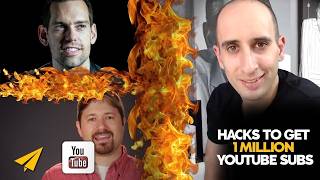
Evan Carmichael breaks down why Impact Theory, Video Creators, and Vox succeed on YouTube, pinpointing consistent visual branding and daily uploads as key drivers. He shows how he split-tests video formats with paid ads and Kissmetrics data, then cuts underperforming series. Watch time and subscriber conversion matter more than views.
Chapters
What's up, Believe Nation? It's Evan, and I'm making my last video probably in my How to Get to 1 Million Subscriber series. I started this series to document my journey to getting my first million subscribers on YouTube and giving you advice along the way, things you can learn, things that I have experimented with and had some success with that you can apply to your channel if that's your goal, to build a successful YouTube business, and I am closing in on getting a million. So if I look at my Social Blade, let's see how we're doing. We are currently at 967,700, and so by this time next month, I will be hitting my million subscribers, which I'm pretty pumped about, and therefore we'll end this series. But before doing that, I have some goodies to share with you. I think what I want to share in my last video in this series, I'm going to be looking at 3 channels that I subscribe to: Tom Bilyeu, Tim Schmoyer's Video Creators, and Vox, and breaking down what I like about them and where I think they can improve, and I'm also going to share at the end a tip that I'm using to really do effective split testing on my videos that I haven't seen anybody else do that's really leveraging growth for my channel, and hopefully will help you too, and then I'm going to answer your questions, and that's it. Let's kick it off. So up first is Tom Bilyeu. If you haven't heard of this guy, I highly recommend checking him out. If you are a fan of my content, you will probably be a fan of his. He built a billion-dollar brand called Quest. They had the nutritional bars, um, they're delicious. But he's transitioned to inspiring and helping entrepreneurs and wants to build a studio bigger than Disney that's geared towards inspiring and motivating people. And I had him on the channel, we featured him a couple times. What is up, Believe Nation? Again, a channel you should absolutely go check out and watch because he's bringing some really, really great content and I'm excited to see where he takes his channel. Looking at the channel at the start, he's got, what, 127,000 subscribers as of recording this video. One of the things that, uh, is great about Tom is he's posting a lot of content. So if you look at his content here, he has 3 hours ago, 1 day ago, 4 days ago, 5 days ago. You know, I've been pounding and pounding and pounding on you guys importance of doing daily videos, and if you can't do that yet, then at least make that your goal that you want to get there. Tom is not quite there, you know, he's posted 4 videos in the past week, which is better than what most people are doing. I would still love to see Tom go daily. If he does that, he'll get much more traction on his channel and eventually think about it going twice a day. Really, you'll see another big jump in your subscribers and your growth, but at least for now, doing 4 videos a week is a fantastic start. One of the things that I found confusing about Tom and the branding was he has Impact Theory, that's what the IT stands for, and you kind of see it in the background here, and you see it on the big logos here, but the difference between what Tom is about and what Impact Theory is about, because a lot of the videos don't have the branding, and it's hard to know that these are his videos. So theory is a part of some of his other brands, relationship theory is here, but this one doesn't have it, and so just understanding which videos are Tom's and which aren't, and being able to clearly identify them while you're searching becomes really, really, really important. You know, if I love the Relationship Theory series as an example, I would know that this is Relationship Theory because most of the videos that people watch are not going to be from going to your channel homepage. It's going to be down the right side. And so if I look down at Tom's videos, one of the things that's really hard to tell is, is this next video that I'm going to watch one of Tom's videos? So the way to do that, I've talked about it in other videos too, is the consistency. So if Tom is in the picture, it's great. I know that that's Tom's video, but like this one, I don't know that that's Tom's video. This one, I don't know that Tom's— that is Tom's video. Some of them have the logo, some of them have Tom, some of them don't. They all have different colors, different fonts, different slogans. And this is a challenge. If you want to grow your YouTube channel, the number one source of traffic that you're going to get is from related videos. It's from when somebody looks at a video like this down here, down the side. That's the number one source of traffic that you're going to get. So you need to make sure that as people are watching your video, they know that the next video is going to be yours. And so here's an example from one of Tom's videos, Immediate Action, Extreme Results. It's great. Tom's dishing out a ton of wisdom. Look at what's showing up down the side. Everything that shows up down the side that is from Tom's channel has the branding. This one has the branding. This one has the branding. This one is a playlist that's from him. This one has the branding. This one has the branding. This one has a branding, this one has a branding, and all the other ones that are showing up are from other people's channels. Lewis Howes, Tom Bilyeu Classics, Lewis Howes, Chase Jarvis, right? So the only ones that are showing up are the ones that are clearly identified as Tom's videos, where it makes sense. Like if I'm watching this video that I know is Tom, right? It's got the Impact Theory logo, and then this thing shows up on the right side, I'm not going to click on it because I don't know that it's Tom's video. And his hardcore fans and subscribers will watch it because they've clicked the bell and they get notifications, and so they'll watch it. But that's not enough. That's not how you grow your channel, right? You need to be attracting new people constantly to build up your audience, and you need to lose the bleed. So he's bleeding people out, meaning they're watching a video and then they're not going to go see his other videos because they don't know that they're his, right? I'm watching this video, I'm going to click on the ones that I know are Tom's and the other ones that are Tom's that still may be great aren't showing up because the branding is inconsistent. And so I'd be really looking hard at having a consistent brand across, whether it's Tom in the picture, having him in it is great, whether it's the logo somewhere, the recent relationship theory, where is that one? If I go back to his main page here, this, right? Like I'm assuming that's Tom, but I don't know that that's Tom, right? I only think that that's Tom because I'm on Tom's channel, but if I just saw that down the side, I wouldn't recognize Tom. You want pictures where it's easy. That's him, that's him, right? That's him, that's him, that's him. I can easily see it. And I'd be looking at putting the logo on every single video. And this is where the branding becomes a little confusing. Is it Impact Theory? Is it Tom Bilyeu? Uh, he has a bunch of sub-brands, right? You see his name on this one, then he has After Impact. And so it's just hard to track from one video to the next if it's going to be his content. And that's why he's losing a ton of views down this related sidebar and the people are only going to be clicking on the one in in that series. So Tom, if you're watching, put the branding, make it consistent. Another quick example, you look at this one. So, you know, here he has all caps and they're on in italics and whatever font that is. Here it's all text, but it's all caps, but it's yellow. Here he's using red, here it's using orange. Here's a challenge. You look at a video like this, look at this thumbnail, right? You see Lewis Howes, definition of a real man. Great. This matches none of his other videos apart from the fact that there's a big face and some text. Here's another channel that is in our space that is related, that has some interesting videos, it's motivational. And what do you see? You see a big face and you see yellow and white text, right? Big face, yellow and white text. If I saw this in my sidebar, right? I'm watching the video, I'm watching a video and I see that thumbnail, I see this thumbnail, I'm gonna think it's not Tom's channel, it's the Be Inspired channel. That's the challenge. Now, maybe I love the Be Inspired channel and he's doing it intentionally to try to seep some of their traffic over to his, but I don't think this is Tom's channel. Sure, it says Tom Bilyeu here, but I'm not going to read that. Most people don't read that. They barely read the title. They're looking at the thumbnail first. And so it has to be clearly identified that this video that I'm watching is Tom, and I know which ones just down the side is Tom's right away. So that consistent branding will make a huge, huge, huge, huge, huge, huge impact. And then figuring out how to show your sub-brands. So Relationship Theory has its own logo. I would still have the Impact Theory or the Tom Bilyeu logo somewhere. That's the decision Tom has to make. What's the core brand? What's the big brand? And what are the sub-brands underneath and showing each one on each video. Next, one thing I want to look at, I've hated a lot on short videos in a bunch of my videos in this series. Just for the reason that YouTube doesn't like short videos. You have to have just such an insanely great short video. And by short, I'm talking like 5 minutes under, 6 minutes under. You want to be in the 10 to 12 minute content range, at least for your videos, if you want to win in this current evolution of YouTube's algorithm. And so Tom has a bunch of these short motivational ones. So he's got this one, Think Different, Invest in Yourself, Go Big. These are what, 3 minutes, 2:40, 3:23. What else? 211. I clicked on a few of them and one, it's, it's hard because again, they're not branded him. You can't tell that that's a Tom Bilyeu video, but two, they're so short. And so look what happens if I click on these videos. Invest in yourself, 240. Do something today, 227. Focus your thoughts, 210. Okay. One of the most important things that you want to pay attention to as you're building your channel out is for each individual series that you're doing, you look at are they generating traffic and are they generating subscribers for your video. So as Tom's going through his channel, he's got a whole bunch of these different series. Actually, on this here, you see Impact Quotes, Full Episodes of Impact Theory, Relationship Theory, Ask Tom Bilyeu. I'd be looking through each of these series, take the last 10 of them, and then go look at the stats to see how they're doing. Reason being, this series here, this Impact Quotes, is not really serving Tom that well, likely because they're short and likely because the branding is so poor. Look, Invest in yourself, 3 subscriptions driven, 20 days watch time. Do something today, 2 subscriptions driven, 23 days watch time. Focus your thoughts, 1 subscription driven, 16 days watch time. And it may be appealing to say, wow, look, it's getting 13,000 views. The views don't matter. It's such a tiny video. It's not leading to new people. The only people watching this are Tom's current subscriber base, which is great to support them, But if a video does not do well in YouTube's eyes, if this video comes out, has poor watch time with 16 days, 1 subscription driven, what's going to happen is YouTube will not promote that video widely. It'll go to your hardcore audience, but nobody else is going to see it. That becomes a real problem if you want to grow a brand, right? To help Tom get to the point where his channel is bigger, his studio is bigger than Disney, YouTube can be a big role in that, and you need to be making content that people are paying attention to. And so what I'd be looking at this series, this series is not working for Tom. Right now. It's not generating watch time, it's not generating subscribers for his channel. This series is failing. So how do we fix it, right? This series is not working. We can fix the branding, right? We can make them longer or maybe we cut them. Unless a series is serving a strategic advantage, unless, as an example, you have a sales video. If Tom's coming up with some new content or if he's promoting an event or he's launching his first, you know, e-course, whatever it is that he's trying to promote, You expect poor watch time, you expect not to gain subscribers from it. But unless that video serves a strategic advantage, you're cutting that series or you're really trying to work to improve it. So I'd be looking through each of these series and you'd be— you'd find that a good chunk of them are generating good subscribers and good views and good watch time and a good chunk of them aren't. And so something like this, I would cut or massively retool so that it's actually helping me grow my channel because it's only going to the hardcore subscribers. YouTube is downgrading the next video that comes out out because these videos don't perform well. But net, like, that's just some strategies. Tom's content is awesome. It's fire. I highly recommend you guys checking it out. And if he, if he takes these approaches, he'll be at a million subscribers in no time as well. And I look forward to it because I think we need more quality content in the entrepreneur space. Okay, let's move on. Let's go to Tim Schmoyer's channel. So Tim Schmoyer runs a great channel called Video Creators. It helped me a ton when I was first starting my YouTube channel, giving me advice on how to build and grow my channel. And so super appreciate gratitude to Tim for all of his help and advice. His videos are awesome. Let's look at the difference here now. Tim, on the frequency side, could be posting a little bit more, right? He used to be, I think, 3 times a week, and it looks like he's still around that. 3 hours ago, 5 days ago, 1 week ago. So 2 in that week, 2 in that week, 2 in that week. So he's pretty consistent, 2 a week. And again, if Tim really wants to explode this channel, I'd be saying he needs to go daily. Find a way to do it, whether you're mashing up old content, whether you're doing more off-the-cuff stuff, just finding ways to produce quality content on a daily basis, building up your team, bringing on guests, whatever it is, so that you can drive growth faster. But the thing that I love about Tim is look at his thumbnails. Tim always has pretty interesting thumbnails, right? It makes me want to watch. I'm always curious by the design of Tim's thumbnails. He always has a face, so he's in it. So like, unlike Tom, where in a lot of his videos he's in it, but a lot of them he's not. Tim is in pretty much every single video thumbnail, so it's easy for me to recognize that this is his video. There's always some interesting artwork going on. We have money, we have exit signs, we have views, and especially when it's bigger, it looks, it looks really clean. So this is really important, having captivating thumbnails that people want to click on. One of the things that I noticed he changed recently, every video used to have this Video Creators TV branding down the side. So it's easy to tell that that's a Tim Schmoyer video, just like we were talking about Impact Theory. You can see the logo. He's recently switched it to this, so it still has the, the video, and now it has this little red line down here. This is not as visible, and what I recommend is making sure that this part of the video is always super clear. So you can see, like, he's done a little bit of black around here, a little shadowing to make it stand out a little bit. Here's a little bit more shadowing compared to the rest of the video. But it's not as recognizable. You need more contrast. Either make this red bigger, make that black bigger, put something inside the video camera, something so that that pops out a little bit more. It's great seeing Tim on the thumbnail of every video, but that branding does not shout out as being super noticeable, especially when it's smaller, because again, this is not the actual size you're seeing it at. This is the size, right? That's the size. So it's going to be even smaller. And yes, he's in the picture of all of them, but you want to have consistent branding. That is easy to see. This, I don't know why he dropped it. Maybe it was too big, maybe it's taking up too much of the space, but anytime I saw a left thumbnail, you know, it's easy to know that this is Tim Schmoyer's video and I need to pay attention. Again, what you want to worry about is after they finish watching one video, you want them to watch another and another and another and another and know that it's yours. Finally, I want to take a quick look at Vox. Vox is another channel subscribed to. They have over 3 million subscribers. They post pretty frequently, 1 day, 4 days, 6 days, 1 week, 1 week, 1 week, 1 week. So like here they post 6 in a week, so 4 to 6 per week. Again, if they could move daily, it'd be amazing. They'd grow even faster than they are. One of the things I wanted to highlight here though is their branding is on every video. So if you look, it says Vox, Vox, Vox, Vox Borders, Vox, Vox Pop Earworm, Vox, Vox, Vox. They are personality-driven a little bit. This is one of their hosts. But their hosts aren't in most of the videos. They try to use something that people will resonate with, so, you know, you see, you see Trump, you know who he is, you know what it's about. They try to have captivating thumbnails that make it interesting for people to click onto as opposed to making it personality-driven. And so again, if this, if this didn't have Vox and I just finished this video, I wouldn't know that this is a Vox video, and so I may not click on it even though I love Vox content. And so having that there on the thumbnail makes me want to click on it more. What's interesting here is what they did with their sub-series. So just like we're talking about Tom, if I back up to Tom's channel here, he has all these different series, right? Whatever this one is, After Impact, the AMA series, Impact Theory series, he's got a whole bunch, but the branding isn't consistent. One of the things that Vox does is they have their logo and then they have the series logo with it. Now, I think the logo is a little bit too small. It's hard to see that Vox. And again, remember that this is going to be even smaller on the thumbnails that show up down the side. Here it's even harder. It's yellow, it's Vox Pop, it's not the same font or same uppercase and then into the lowercase. I'd have a hard time knowing that that is a Vox video unless I really understood them and I love the Earworm series or I love the Border series. Here again, it's hard to read that that says Vox Pop. You have to really, really pay attention. And so I love the fact that they're trying to mix the branding. So they have a main brand, which is Vox, and then they're showing the subseries as well. I would just say to make the main branding a little bit bigger so you can see what it's all about. As an example of their evolution, this is what Borders looks like now. This is what it used to look like. So Borders is personality-driven. It's this guy. He's in all the Borders videos, and it used to show him and then what he was talking about in the videos, and it says Vox Borders. Now they took him out and they just show a big thumbnail. Uh, here's another one. They took him out, borders, and they show a big thumbnail where they used to have him on all the thumbnails. And so it's interesting, like maybe him being on the thumbnail, people didn't resonate with as much. And this is one of the things that you want to keep testing. You test the thumbnails, you test the titles, you test, you test, you test, and see what is resonating and what is not. For anybody who's running multiple series on the same channel, I highly recommend that you visually show on the series on the thumbnail that this is from your channel so you don't lose viewers. Let me show you mine. This is one of the ways that I've done it. I have a bunch of different series, right? I have the Top 10 series, I have the Antspresso series, I have the Unlocking Lily series, I have my vlog, you know, I have a whole bunch of different series. Pretty much all of them have the consistent airplane branding, right? Unless it's a livestream like this one, everything else has at least the airplane. Some of them have a secondary logo and that represents their series. So the coffee cup is Enspresso and you'll see that here and you'll see that here and you'll see that here. You know, the trees is Believe Life and the 10 is the Top 10. If it's Volume 2, you see a little 2, but Top 10, Top 10, Top 10, Enspresso, One Rule. You know, we have a series logo as well as the company logo. In general, it's pretty easy to see that these are my videos. We have a consistent font. Same color, same orange, same white, usually a picture on the side. We shake it up a little bit. You know, this is, this is the biggest departure from our usual branding is the Entvibe series, because it's also the biggest departure from our typical content where this is music, this productivity music to help you in your business, but it's still our color, it's still our font, it's still our airplane, and it's still a customized logo for that series. Something like this is another example that's a little different, but still is not that far off. From what we're typically doing. A bunch of faces, a big font, white, orange. It doesn't have the secondary font because this is a test video. It's not part of a series yet. It's something that we're thinking about adding in. And so one of the reasons why I get so much views and so many subscribers to my channel, apart from posting lots of content, right? Like, we did 3 videos in the past 19 hours, and then 3 videos the day before, right? And then So every day we're posting pretty much 3 videos. That helps, but it's also easy for people to know that once they watch this video, that this is also my video, and this is also my video, and this is also my video, and this is also my video. People go from one to the next to the next to the next to the next, and so I don't lose as many people as other channels will. So that's my quick suggestions. I want to give you a bonus tip that I've never talked about on this channel and haven't really shared with anybody else yet. That's really helping me split test my videos, and I think it'd be super valuable for you. Since this is my last video in this series, this is it— split testing. So last month I talked about split testing. I talked about TubeBuddy, a great tool to be able to use to split test your thumbnails and your titles to see which format works better. One of the things I'm experimenting with though is how can we split test the actual format of the video. So you guys may have noticed in my top 10, we changed the format and we changed the template. The sidebar used to be white and now it's black and it has a bunch of motion on it. And so we're testing, like, does that work? Does that work or not? And one of the best ways to do it is to create 3 or multiple unlisted videos and then run ads against them to compare watch time. So here's what I did. We made 3 different versions of, of Simon Sinek. So one of them would be the white background. That's what we had typically. That's what most of our historical top 10s look like. One of them was a black background with the countdown with a little video inside it of what's coming up next. And one of them was the black background with a still picture instead of the video picture. And we're basically testing the formatting. Like, do people like the black background? Do people like the variety and the changing? Or people want it simple and clean? It's hard to guess, and it's hard to make decisions just based off of comments, because a lot of times you'll get a vocal minority of people who say they love something or they hate something, but it doesn't reflect what people actually like. And so what I did was I ran an ad campaign against all 3 videos and I spent money to drive, what, 60,000 views plus to those 3 videos and see how they did. And what ended up working out was the black side background, this video, black side background with a still picture performed the best. And so that's going to be our new template going forward until we find a better one that outperforms. They all had about the same traffic. 22,000 views, 21,500, 21,000 views, and then looking at the watch time. So I'm just basically seeing— so basically looking at seeing when I send people to this video, how long are they staying? And what I divided them into was hours. So 237,000 minutes is how many watch hours. You can't just look at data here. This is where a lot of people make a mistake. You don't have enough data to make a decision. You can't just say, well, this performed better, so I'm going to go with this one. The data has to be statistically significant. So there's a free tool here off Kissmetrics. If you look up Kissmetrics and A/B significance test, what it allows you to do is put in your two metrics. So this is how many visitors we had and this is number of watch hours. Same thing, visitors and watch hours on the two variations. And it'll say that one performed better than the other. It'll calculate conversion rate, but then this is what you want to pay attention to. Version A converted 5% better than variation B, We're 99% certain that the changes in variation A will improve your conversion rate. Your A/B test here is statistically significant. Now it's only 5% better, right? 5% is not a huge amount, which is why I had to spend so much to get lots of views. If this was a big difference, I might only have to have 5,000 views instead of 22,000 views on each video. But you need to make sure that you have the right data because, as an example, this video, which is second best, was leading at the beginning. This was in the first test the best video, but there wasn't enough data to say that it was statistically significant. And so we had to keep running it. And now we found out that, oh, this is the best one, and it's 5% better, and it's 99% certain the test is statistically significant. So 5% may not seem a lot, but it is. You do 5% across all your videos, that makes a huge difference. If I get 5% more subscribers off of a million, that makes a big difference. You know, if I'm getting How many more, you know, if I'm getting— what is this— 15,000 more watch minutes because of just changing the template, that's, that's a difference. And now this becomes my new standard, and then I want to try to beat that and try to beat that. And so what the public sees, what you guys see as subscribers, is always the best version, the winning version. And then I run an ad campaign against unlisted videos that nobody sees to see which one generates the most watch time, so we can pick those templates. And we're always trying to beat our best template to get the best results. YouTube unfortunately doesn't provide great ways to split test results, and so that's why you have to rely on something like TubeBuddy to be able to test your thumbnails and test your titles. And again, you know, one of my biggest beefs with TubeBuddy is they don't tell you if the data is statistically significant. Like, one might get 100 views, the other might get 103 views, and they'll say version A is better, but maybe you didn't get enough traffic to actually make a difference, right? And you could be picking the wrong thing, right? The data lies when it's small, right? If you only flip a coin once, you say it's heads, it's heads, heads is the winner, but really it's just a 50/50. So you have to make sure that you're using the right tools and that you're testing for significance, and you can use that Kissmetrics tool. So you can use TubeBuddy to find your titles and thumbnails, and you can use AdWords to run campaigns against unlisted videos to then see which template you use is having a better result. That's my suggestions for this month and for this series. I want to get to your questions. Let's see what you guys asked from the last video. First up, Valuetainment. Evan, thanks for the feedback, extremely helpful. Looking forward to seeing you cross 1 million. So last month I featured Valuetainment and it's great, it's great that he— love the comment. Patrick's an awesome entrepreneur. He put his channel on hold. Hopefully it's temporary because Patrick's got an amazing channel, tons of content to help entrepreneurs, and it'd be sad to see Valuetainment go away. And, you know, I want to see more entrepreneur content. It just helps everybody get better. So hopefully Patrick will be back. Go to Patrick's channel, Valuetainment, leave him a comment, say, Patrick, come back, we need you, we love you, we want your content. But that's great that he left a comment here. What else do we have? The Habit Guy. Couple of questions. First off, how are you getting 9 million views a month? I'm generally interested because when I look at your channel, most of your videos look like they average between 5,000 and 7,000. And a bigger question, you gave advice on how to get your videos noticed in suggested videos, but how do you actually position them on suggested videos? That's the downfall I'm having. Thanks, mate, you're great. Like anything else, it's an 80/20 rule. If you look at your content, you'll find that most of your subscribers and most of your views come from a select few videos. So while most of my videos might have whatever, 1,000 views on them, I have that 20%, or even if you look at YouTube, it's really like 5% or 2% of videos that just really crush it and outperform. And so that's what you're always trying to build, right? That's what you're always trying to get to. It's what you're always trying to create. But you don't know which one's necessarily going to take off and hit it and crush it and hit a home run for you. And so that's how I'm able to do it. You know, I think if you look at— if you just look at views per video, you're looking at the wrong metric. If you are so attached— and this is something that I debate with, with fellow YouTubers— they're so concerned about how many views they get per video. It's the wrong metric. If we go back to Tom's channel and look at his short motivational 2-minute clips, they may get more views than his other videos, but it's the wrong metric to follow because they're not leading to watch time and they're not leading to subscribers for his channel, which ultimately he wants to make an impact. And the impact doesn't come from the views. It comes from being able to keep people on the channel, consuming your message, and then going off and making an impact in their lives. So looking at views per video is the wrong metric. Pay attention to watch time, pay attention to subscribers, because that's what YouTube cares about. YouTube cares about watch time. So pay attention to that. If that changes, if it goes to something else, then switch. But right now, that's what you want to pay attention to, and that's how I do it. In terms of getting your videos on suggested, it's what I talked a lot about in this video. You want to make it easy for somebody to go from one of your videos to another video to another video. And so all of that is done via YouTube's algorithm, right? There's nobody manually looking at it and saying, oh, this looks, looks like another The Habit Guy's channel, and so I'm gonna I'm going to show that there. You can't choose what's there. It's from the algorithm, and the algorithm is based on what people's viewing habits are. And so if somebody is historically watching your kind of content and they're historically watching those kinds of topics, then it'll show up. And YouTube's always running these little tests, and so they'll show another video that may be a little bit off topic, and they see, does this person click through? And if they do, then they'll keep showing more of those videos, and if they don't, then they'll drop it from the algorithm. And this is what happens. So as an example, if you go back to Tom's channel, and we look at that, that short clip that has "Go big" or "Dream" or whatever, when it first comes out on a select few of Tom's subscribers, it'll show that video down the right side. Nobody's going to click on it because they don't know that that's Tom's video. And then that video is going to get downranked. They're not going to show it anymore because YouTube knows nobody who watches this video then wants to go off and watch that select video. Right, so it's constantly these tests, and so you want to make it as easy as possible for the viewer to finish one of your videos and then want to click to the next. So consistent branding, great thumbnails, good titles, and again, easy to know that this coming video, the next one up, is yours. Next, Simland, this month 1 million subscribers. Thank you for the love. Probably not, we're probably looking early December. My goal was end of the year, so we beat that. I'm still thinking about the next goal. It's going to be 10, but It's far away, so I gotta ramp up to 10 million a lot faster than what my current growth rate is at, which is exciting and challenging at the same time. What else? Anthony. Love these breakdowns of the bigger channels, very helpful. Thanks, Evan. I'm glad you appreciate it, Anthony. It's a little sad that this is the end of the series. You know, it's good in that— listen, this series takes me a lot of time to do. It's, of all my series, the most that I personally invest. Into a video, and that's a lot of free time that now I have to build my channel and do other things for you guys. And honestly, if I look at the advice I gave to Tom, pay attention to each series and are they helping you grow? Is it leading to watch time and subscribers for you? This series is just okay. It's just okay compared to my other videos. This is not one of my best performing series. I do it for the love. But ending it will not hurt my channel. If I replace it with something else, it'll actually help grow my channel. And so, yes, you do things out of a hobby, yes, you do things out of love, but the love has to match up with what the audience wants as well. And so it's sad to lose this series, but I've lost a lot of series, and I'm doing it because I'm going to replace it with something better. The ROI isn't worth it compared to the other things that I'm working on. João Victor da Rosa— I hope I pronounced that okay— "If there were subtitles in other languages, your videos would be able to reach more people and consequently get more subscribers." That's an interesting test. Maybe. The answer is maybe. I, for the longest time, had English subtitles on my videos. I use a service called Rev.com. They charge $1 per minute to do English subtitles and they upload it automatically to the videos, so there's no work for you apart from ordering the transcript. It wasn't working. I couldn't prove an ROI. It's a best practice. If you look at most YouTube experts, they'll tell you you need to put captions and transcribe your videos. I couldn't prove it. I couldn't prove the ROI. Now, it's not a ton of money that was going out, but still, you know, you're investing money in something you want to prove the ROI. I did multiple tests to take some of my videos and translate them into different languages. And I took the popular ones. I took the ones I felt would play well to a certain demographic. And I could not prove the ROI. Long story short, I just could not prove the ROI. Maybe I was doing something wrong. Maybe it works well for other people and just not for me, but I could not prove the ROI to make it worthwhile, and so I haven't done it. And I think it's important for, for your channel and for your business to test. You're testing, you're testing, you're testing. I'm testing my thumbnails. You guys may love them, you may hate them. I'm going with the winners. I'm testing my templates and my sidebars. You may love them, you may hate them. I will lose some people because of the test, and I'll gain some other people because of the test, but net I win because you're picking the ones that have the best results. And so I couldn't justify the expense of transcribing into English and then translating into another language. I couldn't justify either expense, so I'm not doing it, and I use those resources to make better videos and more videos for you guys. Now, this means the test ends. Maybe YouTube changes their algorithm, maybe multi-language is more important, maybe transcriptions really become the thing, and I go back to it. Just because you did a test doesn't mean you can't do another one in the future, but at least for now, from my data, from my experience, transcriptions and translations are not worth it. That kind of sucks. Next, Eddie. What would be your advice for all the YouTube competitors? I know all YouTube competition has their own problems, who YouTube outcompetes on. But apart from that, what else could these competitors do to outcompete YouTube? Its services and its community. Why would I jump to you to another service that goes YouTube? Because they're doing something that's better, or because they have a big community that I can jump onto. Uh, just today as an example, I was looking to get Lily more experience in jumping in on conversations with people, and it made me think back to Blab, if you guys were ever involved in Blab. You could join in on Hangouts and be a part of conversations. And I was looking for a competitor because Blab shut down and there was nothing. And so there was no solution, there's no answer. Like, here's a problem, nobody solved it. So if somebody could come in and solve that problem— for all the people who whine and complain about YouTube, there's no better place to be, in my view, if you want content that lives forever. I think if you're posting videos to Facebook, it's— you get a quick, immediate hit. It can convert potentially, but I want content that's going to last. You know, my views, my videos, I've made 5,000+ of them. In 10 years, hopefully people are still watching them, right? I still get views on my videos from 6 years ago. That doesn't happen in a Facebook environment, and so it's not interesting for me. But if that changed and YouTube became just short-term stuff and Facebook or some other new app came out that allowed me to have my content live forever and there was an audience, I would go. I'm not attached to YouTube. I mean, I love YouTube, I love all you guys, but if you guys are all somewhere else, I'm not going to stick on YouTube. I'll go there. So you need to have better features and you need to have a community, and right now nobody's even close in my opinion. So I'm not even close to switching. Amanda, make the channel growth the goal. Love this video, thanks for the tips. Yeah, I think it's important that you have a goal for your channel. I think it has to support your business and your mission and what you're trying to do. I think every video— back to looking at Tom's channel— every video needs to support the growth of your channel or needs to have another strategic goal. So for my channel, my Life with Evan series, as an example, is my vlog series. It's my least performing series. It's the worst performing series on my channel. People don't want to see me vlog. You guys, you kill me. You don't want to see my life. So sad. Uh, but that's okay. I'm okay with being my least— my worst performing series. One, for personal reasons, like I have this great archive of, of my life that I can look back on. And I actually have a TV in my kitchen that plays the videos from Life with Evan randomly. And so I'm in the kitchen and then this video from 3 years ago shows up like, oh yeah, we did that. It's like a picture frame that's constantly bringing back old memories. And two, because the people who do watch it are really hardcore supporters. I think you need to have a certain percentage, I'd say around 10% of your content, be personal, be about you, so that the people who really love you can learn more about you, and the people who are starting to like you can now actually love you and really appreciate your content. Because at the end of the day, the people who are going to buy from you, the people you're going to have take action to whatever it is that you want them to do, are going to be your hardcore fans. You know, I'm coming to my new book, right? I just submitted it today, although when this goes live it won't be today, but I submitted my book today to Amazon. It's The Top 10 Rules of Success, different cover than this. Who's going to buy it? The people who are going to buy it are not the casual, yeah, I watched one video and I learned something from it and every month I come in. It's not going to be that person for the most part. It's going to be the people who are hardcore, who love my content, who are obsessed with it, who have it as part of their daily routine. And the Life with Evan vlog series brings us closer together. It's shocking how much people feel they know me and like me and trust me and I have no idea who you are, I have no idea who they are when I'm meeting them, but they feel like they know me. I had a guy come and clean my air filter today, and he's like, "I'm a fan of your channel, man." I was like, "Oh, that's great. Clean my air filter." So having a certain percentage of your content be personal I think is important because those will be the people who you make super fans and they'll take the action you want them to take. But otherwise, If a series isn't doing well, cut it. Like this series. This series is not one of my best performing series. It takes up a lot of time, so we're gonna cut it. We hit our goal, we're gonna hit a million, unless it just takes me another 6 months to hit a million for some reason. That would be very sad. Then this series is gone and I'm gonna replace it with something else that I can get higher leverage out of, right? This doesn't serve a huge need or strategic advantage for me compared to doing other content. Other forms of content. So it has to serve— every series has to serve the growth of your channel or another strategic advantage, like you're selling a course, like you're getting people in your newsletter, like you're getting them to take action somehow. One of those two. There has to be a reason for this video to exist. Otherwise, kill it. Try to your trade. Thanks for answering my questions about SEO and posting on videos, YouTube versus Facebook. I have a follow-up. You mentioned it's better to convert within the platform that you're on. And that you wouldn't try to convert a YouTube audience into being a subscriber on a website. I'm a little confused by what you're then trying to convert on YouTube. Are you talking about converting a sale or something on YouTube, converting people into subscribers on your channel or something else? Ultimately, with YouTube, we're building a brand, right? And we're trying to get people to do something in their life, right? We're getting them to buy a product, getting them to take action, and that may be moving people to a website to sign up for your course or sending out a message to meet me up in Atlanta or whatever it is. My point in making that comment was if your goal is to grow the YouTube channel and YouTube is your platform, the best way to do it is within YouTube, not Facebook. If you're— if your goal is to grow on Facebook, use Facebook. Don't use YouTube to try to grow Facebook. Don't use Facebook to try to grow YouTube, right? Yes, I promote my videos and all my platforms whenever a new video comes live. YouTube's my main source, if I look at my social media presence, is YouTube, then Facebook, and then Twitter, and then Instagram. When I launch a video, it goes everywhere, but the best leverage that I get is for a YouTube video is on YouTube. I'll post a link on Facebook, I'll post a link on Twitter, and it sends some people, but the most leverage I get is from YouTube. And if you look at your own stats, go to your analytics, go to your analytics on your channel, look at where your views are coming from. It's coming from related search down the right side, and it's coming from homepage. It's coming from subscriptions. Uh, you might get some from search, and then usually 4th or 5th or 6th is going to be external websites. So that's Facebook, that's Twitter, that's your newsletter, that's everything else that you're sending people to. Now, if you're a super tiny channel, your numbers might be a little skewed, but if you look at all the big channels, that's where it comes from. The number one source of traffic for big channels, which I want you guys to get to, 'Cause if you, if you tweak the algorithm, like if you tweak your videos to fit the algorithm, you win. You start getting tons more traffic and views and subscribers coming in to help you achieve your goals. The point of that comment was don't try to go to Facebook or to YouTube or to Tumblr or to any other website to try to drive traffic to your YouTube videos. Spend that time on YouTube. If you want to convert people to subscribers on YouTube, your best source is people from YouTube by optimizing for the sidebar, not trying to promote from people coming outside. Next, Alexander: Does he play League of Legends? By looking at his subscription, lol. I was first curious during his book video when he called his dog Teemo. Yes, I play League of Legends. Not a ton. I am bronze. I've been silver. I play Teemo. I'm a Teemo main with a Heimerdinger backup when I can't get him. I usually get S's in my game, but yeah, I like League of Legends. We'll see how the new patch comes out. I play it on my spare time. I usually play when I can't sleep. This is what I do at night if I'm thinking about an idea. I've got this great idea or I'm thinking about how to grow my channel or I'm thinking about TDS or I'm thinking about something and I can't sleep and I'm tossing and turning. I wrote down my ideas but I still can't sleep. I get up, I play a game of League and I'm so focused on that game that I forget about whatever I was thinking about before and then the game is over and then I don't have to think about it anymore. I don't get tilted, I don't get stressed out about the game. It just allows me to forget about what I was thinking about. The game is over, I'm in it. I'm so focused on playing that I lose focus of everything else. And then once the game is done, my brain is empty. I can relax and I can go to sleep. So that's typically— if you're playing with me, you can look me up, Believe Team, on the North American server. It's usually at night, sometimes other times. When I'm trying to get distracted. 65 Drums, "This is my absolute favorite series you have. You're the only guy consistently here promoting the daily upload strategy. I'm working on it currently at 15 videos a month." I love this is your favorite series. I'm sorry that it's going to disappear after this one. A lot of people talk about going daily or at least being more consistent with the content. You know, I think it's hard for a lot of the YouTube consultants and experts to really push going daily, one, because they're not doing it themselves. You know, if you look back on Tim's channel, he's doing like a couple a week, so it's hard for him to say go daily. And a lot of the people who they work with aren't going daily too, so they may not have the data, right? If Tim's working with other YouTube clients and they're not going daily, he may not have the data to say like, here's what really happens. Everything I talk about is based off of my own data. Now, I don't have clients, I don't have I'm not looking at lots of different YouTubers. Sometimes the YouTubers that I connect with will compare kind of high-level data, but I share with you what's working for me. And so I know that going daily really impacted my channel more than almost anything else. And then going twice a day— again, twice a day, go twice a day, it'll make a huge impact. From once to twice a day is a huge jump. And again, from 2 to 3 a day, not that big a jump. And so that's where I'm at. I'm at I'm at 3 a day. And so I try to share the things that I have data on that I know that work, even if it goes against traditional wisdom, like get your videos captioned and get your videos translated into different languages. I tried it. It doesn't work for me. It may work for you. You could try it. It doesn't work for me. So there are people talking about it. I just don't think it's anywhere close to industry standard yet. And this is great. Like, this is your opportunity. People are not doing this yet. They will. And when the big companies come in and they start going daily, you're going to get crushed. So this is your chance now. You have this window now where nobody is going daily. This is how you can win with inferior content. You are not as good, but you can still do better than the people who are better than you because you understand the algorithm better. And then by going daily, you get better. Like, you have to get better. If you're making a video every day, your skills will get better, your comfort level will get better, your confidence will get better, and you'll make better better videos, right? The quantity leads to the quality. And so anybody who's watching this who wants to build a YouTube channel, you have such an amazing time ahead of you now before people really get into it, that if you can find a way to go daily, or at least up your content and make that your goal within the next year to go daily, that's a minimum, guys. Like, I, I want you guys going twice a day. And when I say that, people freak out because already once a day is is just too crazy. Just people have, um, people have low standards what they expected themselves. They feel like they can only do so much and they're thinking in a really small way. Like, you're not going to be able to do everything yourself the whole time. You have to figure out ways to build your business, bring on a team, and take it seriously. This is not a solo thing forever. You want to have an impact, you got to build a team. You got to build things bigger. I make 3 videos a day because I have 8 people who work on my team. But when I started I had one person, me. That's it. I never invested anything. I didn't invest a single cent into my YouTube channel that I wasn't already making back. I invested my time, my energy, my hustle into my channel. I started making some money. I invested that back into the business growth. But if you have a goal to do something, then you start working towards it. If you just see it as impossible, I can never make a video a day, I can never make 2 videos a day, you're crazy. Well, then you'll never get there. Congratulations. Because you don't believe you can. But if you set that as your goal, even if you can't do it today, right, you could start with a 30-day challenge. Start with a 30-day challenge, you're going to make 1 video a day for 30 days. Just do that, just prove to yourself that you can do it. Start getting some results, start seeing some traffic, and then expand. Bring on a team, even part-time, and build this thing up. If you want to take it seriously, you want to have an impact, that's what you got to do. Mai Mohammed, my question is, when is the perfect time to upload videos? I mean, in the morning, morning, evening, how do you know when the perfect time is? I don't pay a whole lot of attention to that, to be honest. I think mostly because my traffic is all over the place. It's mostly US, but with, you know, 3 different time zones or 4 different time zones, 3 different time zones. How many time zones? 4 different time zones. Should know my US geography. So, you know, I put my espresso videos out first. The idea was that is a shot of espresso in the morning. It's a morning video and that comes out, I think it's 7:00 AM Eastern. So it's coming out at 4 AM on the West Coast. So I don't expect people to be up at 4 AM watching it. There are some videos you can watch, some people who've done analytics on it. Tubular Labs, I think, has a tool that tells you the time of day that your videos are most popular. I haven't played with it. I don't know. I feel it's low leverage. I might be— it just might be a blind spot for me. I haven't— I don't have any data to tell you. I haven't done any experiments beyond just I try to post at different times based on East Coast. So espresso's in the morning, my next video is around lunchtime, and then the last video is at 8 o'clock. So that's typically our schedule. I think it's 7 AM, noon, 8 PM Eastern. Yeah, maybe there's leverage in switching that up. It's like, how do you test that? There's no good way to test it. There's no good way to split test it. So that's probably why I haven't done it and it feels a little leverage, but again, it could be a blind spot for me. Go and try it. Alexandra, it would be amazing if we got to know the whole Believe Team when you hit a million subscribers. Yeah, I still don't really have my plan for what's going to happen at a million, and it's pretty close. Mostly because I don't really want to do anything. That's the honest answer. I don't want to do anything, and so I haven't planned anything. I don't really enjoy celebrating, so I don't know. It's a good ping. I got to figure something out. Yeah, thank you. Thank you for the kick to the butt. We'll see. Feel Good Within, thank you so much. So many great tips in one video. I hope Believe Team reaches 2 million soon. 2 million is great. 10 million is better. That's the next goal. Next up, Gudmundur. I watched your video, Evan, until your Q&A. I was amazed to see how clear the different results work concerning comparisons with different variations you used by choosing a better option 3 times concerning a smiling face in place of text and quoted subject. One can easily realize how you could easily increase reactions by those that watch videos. Yeah, that's, I mean, that's the idea of split testing. Split testing is common in marketing. Split testing is in every traditional industry. It's just not, not super common in YouTube yet. It's because it's such a new industry. The idea of not split testing is crazy. Like Amazon, all these big companies split test everything, every little minutia they're split testing. And it's harder because YouTube doesn't give you the tools to be able to do it, but most people aren't even thinking about it. And that again gives you an advantage. This last split test that I showed you in this video It's a 5% increase. Great. If you keep making 5% increases every time, that's a small improvement for me, but if I then make another tweak and another tweak and you look back and every week or every month you're making a new 5% increase, that's huge growth. Huge growth because you're testing and other people aren't. And so you need to always be running lots and lots and lots of tests. Not all of them work out. Be prepared. That's fine. Most things probably won't work out. And you get hit with a winner. You know, the winner of this last test surprised my team. They weren't expecting that to be the winner, but it's the winner and it's 5% better, 99% certain, statistically significant. So that's what we're running with, and then we're going to try to beat that with something else, right? That constant improvement makes a big difference. Maddie Waters, new friendly rival, Charisma on Command. Maybe. Charlie's a great guy. I spoke to him last week. He's, uh, he's having some awesome channel growth. He's planning his next phase. Maybe it could be a new rival. We'll see. Gary Vee is also picking up. He's still behind me, but he's picking up steam, so he might pass me again, and I have a new goal to chase. We'll see. I should still beat him to a million, but yeah, we'll see. We'll see. I'm still— I'm getting more and more excited about the 10 million goal, and I got to think, what do I need to change in my current process? Because I am I'll hit 10 million eventually doing what I'm doing, but I need to make some radical changes to hit 10 million faster. Makes you think on a bigger level. So stay tuned. If you have ideas or thoughts or suggestions for me hitting 10 million, leave those below. I'm super curious. Alright, we're going to end it there. Thank you guys. I have to go pick up Nina from the subway and do husbandly things. I appreciate the support and the love, and it was a really fun journey making this series for you guys. I got to share some of the knowledge that I normally only share to big YouTubers one-on-one when I'm meeting with them, and so it was great to be able to bring that to you. Hopefully you can use it. Look back in the other videos. All that advice is still relevant. Use that to grow your channel. Use that to spread a message that means something to you. Have an impact. Build your business. Build your audience. Again, you have an opportunity here that if you follow those things, those, those bits of wisdom across this entire series, you will be able to do better than your competition who has more skills, more resources, more talent than you because you understand the algorithm better and you have a window of opportunity that you need to go in and jump through. It's going to close and you might look back and kick yourself to say, "I should have gone harder when I had the chance." Now's your chance. You got the chance. Do it. Stop wasting time. Stop coming with excuses. Stop telling yourself why you can't do something. Stop looking for the nos and instead just find the one reason why it will work out and why you can do it. Get some momentum building. Build it up. I want to see some amazing Believe Nation YouTube channels conquering the world, having a huge impact. That's why I made these videos. So show me that they count and that they mean something. That would mean the world to me. Thank you guys again. You know what I'm going to say. I believe in you. I hope you continue to believe in yourself and whatever your one word is. Much love, guys. I'll see you soon. Let me give you the one word secret to happiness. One word. This is all you What do you need to be happy? The most important word ever. If you had to think of one word that's most important to you or that sums you up or that would be kind of like a little beacon. Hey, Believe Nation! If you want to know what the most important one word is for Tony Robbins, Gary Vaynerchuk, Oprah Winfrey, will.i.am, and Howard Schultz, I have a very special secret video for you. Check the description for details.
More from Evan


How the Biggest Mistake in History Created A Trillion-Dollar Empire | Sergey Brin



9 Machiavelli Principles That Force People To Respect You | Machiavellian Philosophy



The First 10 Words That Instantly Ruin A Sales Conversation | Vanessa Van Edwards

The Top 1% Mindset Behind The First $5 Trillion Company | Jensen Huang (Nvidia)

