Breaking the Cycle: Progress, Mindset, and Happiness | 22 Minutes to Change
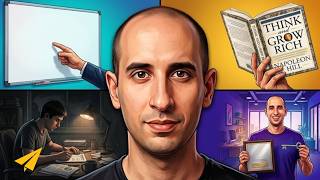
Evan Carmichael presents five approaches to lasting happiness: Tony Robbins says it comes from progress, not stuff. Shawn Achor recommends gratitude for the past, presence now, and anticipation of the future. Sadhguru and Gary Vaynerchuk argue happiness is a skill you control internally. Brian Tracy and Ryan Holiday tie it to living by your values.
Chapters
Good morning, Believe Nation! Today we're going to talk about 5 ways that you can achieve happiness. Way number 1 is my personal favorite. And make sure to stick around all the way to the end for my thoughts and some bonus clips as well. And as always, if you hear something that really, really resonates with you, please leave it in the comments below and put quotes around it so other people can be inspired as well.
Things, getting things is not gonna make you happy. That's good news in a tough economy. It's a good reminder. You know, it doesn't matter what you get. Doesn't matter whether it be money or opportunity. All those things might excite you for the moment. You know, even a relationship, as magnificent as it may be, might be exciting for a while, but if you don't keep growing, that relationship isn't gonna stay exciting. So the secret to real happiness is progress. Progress equals happiness, and if we can make progress on a regular basis, we feel alive, and that's why at the beginning of the year we get this thing like, "Okay, I can have this fresh start. I could really do what my soul desires. I could expand, I could grow, I could improve, I could change, or maybe better than change, I could progress." See, think about that. Progress has an aliveness to it, doesn't it? You don't have to work at changing. People say all the time now, "Well, I'm working on changing." Don't worry about it. You don't have to work on changing. Change is automatic. Your body's gonna change whether you want it or not as the years go by. No matter how hard you work, there's gonna be some changes going on there. The economy's gonna change no matter what you want it to do. The weather's gonna change. Relationships are gonna change. Everything in life is always changing. We don't have to work on change. Change is automatic, but progress is not. So if you wanna make real progress, then you really gotta look at your life in a different way. You gotta say, "I gotta take control of this process and not just hope it's gonna work out like," people do who make a resolution.
Happiness is one of the most studied areas of human endeavor in the history of the world. I mean, when you look at psychology and you look at philosophy, this is all they've been talking about for literally centuries. It's unbelievable. So we figured out the basics of happiness. It's that sometimes common sense isn't common practice. So people struggle for no reason. I mean, look at what we know about happiness. You know, we know basically happiness usually comes from an orientation towards the world in which we look at the past, the present, and the future in specific ways. We often tend to look at the past with gratitude and with fond recollection, even if there were struggles, challenges, suffering, turmoil. We find our places in the past and we feel a sense of acceptance about the past.
It happened.
It's good. All things were as they were, and today they are as they shall be. And it's being okay with whatever the past is, finding a peace and acceptance and a gratitude there allows us to be a little more free in the present. And being in the present, what makes us happy? Being engaged in whatever we are really doing. I mean, really engaged in it, mentally engaged in what we are doing each day. You know, where we're challenging ourselves just a little bit. You know, where we're finding something we're passionate about, interested in, and challenging ourselves to bring our full conscious presence to the moment, to develop awareness, right? Almost all spiritual sort of texts and teachers and trainers are always trying to help people become just more present in the moment, more accepting of the world as it is, but here, you know? The power of now stuff, right? It's like, get here, be here, be engaged, be present with the moment. And then with the future, It's all about anticipating with excitement what's to come in the future. Even if the future is scary, even if you know there's still gonna be hardship, because there will be, even if you know there's gonna be struggle, yep, there will be too. But finding your marks, what are you excited about for tomorrow? And if you can't find anything to be excited about tomorrow, that has nothing to do with the reality of tomorrow, it has to do with your mindset. You've poisoned yourself in pools of pessimism for so long that you've drowned yourself of hope, that you've forgotten that there is magic to life, that there is something tomorrow, you could find something. Even if tomorrow you're just gonna say, you know what, tomorrow I'm gonna get up, I'm gonna feel better, just 'cause I'm gonna decide to be. Be excited about that. You know, tomorrow I'm gonna go do something nice for somebody. Tomorrow I'm gonna get focused into this one project I've been waiting to do. Tomorrow I'm gonna make the damn bed. You know, whatever it is, find something to be excited about for tomorrow. That's the basics of everything we know about your emotional world and your mental world of happiness. So simple, right? Be accepting and at peace with the past, be present and engaged here in the present, and be excited, anticipate something for the future.
Being happy is not difficult, but unfortunately most people don't manage it because they think it's going to happen to them. When you are 5 years of age, you are quite happy, isn't it? Yes or no? I want you to go home and see one of your pictures when you were 5, it was like this. 'Now it's becoming like this.' When you're 5 years of age, if you're so happy, by the time you're 30, you should have been ecstatic, if you had grown, I mean. But by the time they are 30, most people are— messed themselves up in so many different ways. This is not because there is some difficulty with life or happiness, it is just that As I told you, they gave you a sharp knife. You don't have a steady enough hand. If you had a steady hand, the sharp knife would be a wonderful instrument. If you don't have a steady hand, you keep cutting yourself and now being happy when a knife is constantly cutting into you is not— is very difficult for sure. Yes? How many times has it happened to you in the last 25 years? That it so happened somebody put a knife into you? Not happened for most of you. If it happened to one or two people, I'm sorry. Even nobody even put a pin into you, isn't it? Yes or no? I'm asking how many times it so happened from external sources suffering came to you? No, you're mostly on self-help. Yes or no? You are in self-help, isn't it? You don't need anybody's help, you are such an expert. Sometimes when I see people, I think they are training to get employment in hell or something, they are practicing here. Because they are so good at self-torture, they may be good at torturing other people. So happiness is neither easy nor difficult because there is no states like this— this is happiness, this is unhappiness. You are slipping between this and that any moment, isn't it? Yes or no? It's not like there is a capsule of happiness and a capsule of unhappiness and they are separate. No, it is all intermingling, one moment like this, one moment like that, in the same situation, one moment joyful, one moment miserable, another moment some other way, is it not happening? So it— these are not anything, this is just this. You are a volatile being right now. Not stable enough. I told you this evolutionary problem. Your intellect and your awareness evolved ahead of your physiology. You're only 1.23% away from a chimpanzee, but in intelligence you are big away. Now your own intelligence turning against you. One simple way of being happy is you go for a lobotomy, you know what that is? Remove half of your brain. You will always be like that. So it's easy. It's not easy, it's not difficult. Should it be managed? You don't have to manage happiness, you must learn to manage your faculties. You— the only thing is just this, people are suffering two most important faculties, faculties of your mind, your memory and your imagination, which sets you apart from every other creature. What happened 50 years ago, you can still remember, which no other creature on this planet can probably, distinctly. And you can project into what may happen in the next 100 years. These memory and imagination are two basic faculties which makes us human and on top of the evolutionary pile. This is what people are suffering. What happened 10 years ago, they're still suffering. What may happen day after tomorrow, they're already suffering. This is not that they're suffering life, they're just suffering their memory and their imagination. So happiness— don't aim at happiness, just look at yourself. How what you call as myself is being conducted. If you conduct it— if you know how to conduct it the way you want it, you will be blissed out.
Yes?
It is not being conducted. So happiness and misery is happening by accident. Somebody else can cause happiness to you, somebody else can cause misery to you. People ask me, "Sadhguru, have you— we have been with you for 25 years, we've never seen you angry. Do you ever get angry?" You want it? Do I look like somebody who is incapable of something like that? If you want, I'll give you. It's just that I have not given this privilege to anybody, that somebody can make me angry, somebody can make me unhappy, somebody can make me happy. No, I kept these things to myself. You must keep it to yourself too. It must be— the best hands are you, isn't it? Yes? Your joy and misery must be in your hands, isn't it? If you choose to be miserable, be. I'm not against it. But what you want should be happening within you, not otherwise, isn't it?
Most people are anticipating the day they'll be happy. "Oh, if I do this, that, and the other thing." It's a horrible habit. Horrible. Focus on, are you momentary happiness? Now there's two types of happiness. This is a long conversation. You don't only want momentary happiness. You sometimes have to postpone present pleasure as an investor to get something back later. I understand that. But there's also the other end of the spectrum that if you're not liking most of your life, make some big changes. If you like most of your life but there's a few little things, then you make little changes. People always ask me, how do you know?
Simple.
If everything's fucked, then you have to make huge changes. Usually. There's exceptions. If everything's pretty good, just one thing gets on your nerves, you probably just gotta change one, maybe two things. But get to that place where depression's diminishing, even if you have to do something dramatic, even if you have to quit a job, even if you have to move out from somebody you're living with, even if you have to spend less time with a family member, You can't sacrifice your happiness overall unless you're investing. So let's say, for example, you go to the gym and you're not that happy to be lifting weights because it hurts. Well, that's temporary pleasure that has a payoff very quickly and, you know, your body gets healthier. That kind of pain you can keep around because there's a gain to it. There's the pain and then the gain. But a lot of us, and I've done this before, you get to a place where there's pain but there's no gain. It's just pure pain.
The fifth one is about mindset. And the mindset shift is to appreciation. Because the truth is, oftentimes, everything while we're trying to get, get, get, we're focused on what we don't have. And if you can shift your mindset simply from not focusing on what I lack but what I have, and shift it from not focusing on the bottom of that ladder, the stuff, but to the connection and the growth, that is the shift that will lead to the most lasting happiness. We have access to this at all times of our life. Even in the annoying moments when we're standing in line and it's 20 minutes to get out of the food store, you can focus on the fact that you're 20 minutes late, what you don't have is your time, or you can focus on the fact that you have food surrounding you from all kinds of the world and you live literally better than kings did 100 years ago because they couldn't get grapes, right? They were on the other side of the planet. So depending on what you compare yourself to, if you're alive today, if you're watching YouTube, if you're on the internet, you literally live better than kings did not very long ago. You are in the top 0.1% of lucky people who have ever lived. So no matter what's going on in your life, I know that there will be things that knock you down, things that suck, reasons to be unhappy, but there's always a reason to bounce back if you shift your focus to what you have compared to what you don't. So I hope you find that helpful. I hope that you can focus on what you appreciate. And if you take one thing from this right now, write down or say in your head one thing that is common to your life that is little, that maybe you don't notice all the time, that you appreciate right now, and I think that that'll make you have a much better day, and if you can keep it up, that habit will give you a much happier life.
So I often get asked on the livestream and also in life how I stay so positive and how I seem so happy. And today might be a hard day because I'm, I'm feeling really sick, but I am, I am still super happy. And it comes down to two things for me. On the one hand, it's being grateful for everything that I have, and on the other hand, it's wanting more and doing work that I love. And so on the one side, you know, being really grateful for what I have, I think it's important that you think and reflect on the things that you do have in your life and how fortunate you are. Just the fact that you're watching this video, you know, you have access to the internet, you probably are eating food regularly, you probably live in a country that, you know, again, all of these things combined are way better than what most of the world has. And so just reflecting on that daily, I think, is important. I've been doing the daily gratitude practice for some time now, and I've brought it to YouTube. If you join me on my other channel, the live channel, we do it every weekday where we share for 10 minutes at 9 AM Eastern 3 things that we're grateful for, I think it really makes a big, big difference, a big impact, because it's easy to just think about what you don't have, and that's always a path to unhappiness. We're just reflecting on what you do have can really have a big impact on your happiness. At least it has for me. And on the other side, I want to do more. I want to have a bigger impact. I want to help more entrepreneurs out. I want to make more videos. I want to write more books. I want to do more speeches. I think doing work that you love and that you really are connected to, that you look forward to going to do every day, is important for your happiness. Not that every day is always amazing, and you know, there's always going to be battles and bumps that you have to go through, but on the whole, the work that I do is enjoyable. I like it. Like, I'm making these videos even though I'm sick because I like it. It makes me happy. It fuels me to know that I'm doing meaningful work. And so I think those two things combined. I think being really grateful for what you have and recognizing all of the amazing things that you have, that if everything went away, if it all ended tomorrow, I couldn't make any more videos, I couldn't help any more entrepreneurs, I would still be grateful for the impact that I've had and everything that I have created already. And then I also want to go and do more. And they seem like opposite forces, but for me they balance each other out and help me be happy on a daily consistent basis. So I hope that helps you guys. Now I made this episode of Believe Life because Mason Larson asked me to. So if there's a topic you'd like me to cover in a future Believe Life, please leave it down in the comments below and we'll see what we can do. I'm also curious to figure out what did you guys like from this video? What clip inspired you the most? What did you learn that you're gonna apply to your life or your business somehow? Please leave it down in the comments below. I'm gonna join in the discussion. So thank you guys again for watching. I hope you have an amazing day. I believe in you. I hope you continue to believe in yourself and whatever your one word is. Much love. I'll see you soon.
So start off by striving to become a good person. In his time, Aristotle examined the human condition and came to a remarkable conclusion. He said, "Only the good can be happy, and only the virtuous can be good." Now, this is one of the major breakthrough ideas in philosophy. Imagine, you can only be happy if you're a good person, and you can only be a good person if you practice the virtues that are associated with goodness. What this means simply is that If you want to have a wonderful life, you must continually strive to become a good person. Any deviation from this course will lead you to lower levels of happiness and dissatisfaction. Every single time you act consistently with the highest values and virtues that you know, you feel happy and strong inside. Your self-confidence and self-esteem go up, and you become more effective in your relationships, and in your work. That's why they say virtue is its own reward. It pays for itself in the inner feeling of pleasure and contentment you have when you live consistent with the best you know. Now let's talk about developing a moral character. In order to achieve happiness and become a good person, you must know that character is the greatest success factor of all. If you want to change your outer world, you must go to work like a computer programmer at a keyboard to reprogram your subconscious mind, your world of values and beliefs and inner convictions, so that the person you are on the inside is exactly the mental equivalent of the life you want to enjoy on the outside. Now, in our world, your reputation is your greatest asset. Your reputation can be defined as how people think about you and talk about you when you're not there. As you know from your own experience, when people talk about you in either positive or negative terms and you find out about it, it has a major impact on your thinking and on your emotions, either positive or negative. Because of the Law of Attraction, as you develop a moral character and live more and more by the highest and best virtues that you know, you will become a happy and good person. So you must always strive to exercise this success factor and develop a high moral character. You must compare everything you have to do and say, is this the right thing to do? And the rule is always do the right thing. And you always know inside what the right thing is.
What Seneca is saying is he's not— and all the Stoics are not saying, like, you can't be wealthy, you can't be successful, you can't go out and do things. What they're saying is that you can't be dependent on these things. Like, he's saying wealth is nice if you have it, but if you make your personal happiness the dependent on having this money, that's bad because it's not in your control, right? The economy could melt down at any moment, or your house could burn down, or you could lose your job. And if you have equated wealth with personal happiness, now your personal happiness is outside of your control. And so Stoicism is about control in that sense. How do you, how do you make the distinction between externals and internals? And focus most of your energy on internals. Having externals is nice, but sort of what they would say is that understand that they are yours in trust, which means that they could leave you at any moment. And a lot of the Stoic exercises are sort of about practicing not having those things. So Seneca was famous, he, one day a month, he would practice being poor. So he would wear like crappy clothes, and he would like not eat at his house, and he would sleep outside, and he would just, I mean, it's, I think, more now like a metaphor than anything else, but the idea is like, we're so afraid of these things, so we don't think about them, and therefore we're not prepared for them, and then it makes them much scarier, and we dread them that much more, even though if you looked at it really objectively, it's really not that bad. But she's worried about the rent, okay?
She's a single mother, she's worried about her kid.
Yeah, don't worry about the rent shit. You know, nothing you can do about the rent. Worrying about it. That ain't gonna get you no rent. Presence and happiness get you rent. Money can't make you happy, but happy can make you money. So be happy. Go out in the world. Look, the story of the guy in the shanty house, he rolls over in the morning, meditates, goes out into the world. It's like, damn, I'm gonna have to get some bread and water before the whole shit go down, before I get back in that bed. But in the meantime, be nice to all my neighbors. In the shanty village. Everybody is suffering in what everyone else calls extreme poverty, but he's happy. He doesn't have a poverty mindset, nor is he worried about that bread and water. "They gonna give me some motherfuckin' bread. I ain't gonna worry about that shit 'cause I'm that dude." He walks out smiling, confident, comfortable. He gets what he needs. He says, Yogananda would say, "God will provide." But really, you're God. You're working to get and it will Nigga shows up, he gets his bread and water, he makes everybody happy, everybody makes him happy, lays in the bed. Next nigga, he wakes up, he's got, you know, $36 billion in the bank. He gets up, the stock market goes up, he says, "Oh shit!" He gets some coke, gets some alcohol, he gets happy, he's all excited, "I'm exploding, I'm making more money, more money, more money." "Oh shit, it crashed, oh shit!" More cocaine, more alcohol, "Oh shit, I'm fucked up, I'm fucked up." His heart goes up and down. And he dies at 40. The shanty house guy lives to 100. If he had the other guy's diet, not the diet the other guy took, but the other guy's opportunity for a greater diet, the guy in the shanty house would have made 120. But, you know, made 100. This guy died at 40. That's the reality of our, you know, our happiness is up to us. You know, our relationship with the world is up to us. Our anxiety is controlled or given to us by us.
More from Evan


How the Biggest Mistake in History Created A Trillion-Dollar Empire | Sergey Brin



9 Machiavelli Principles That Force People To Respect You | Machiavellian Philosophy



The First 10 Words That Instantly Ruin A Sales Conversation | Vanessa Van Edwards

The Top 1% Mindset Behind The First $5 Trillion Company | Jensen Huang (Nvidia)

