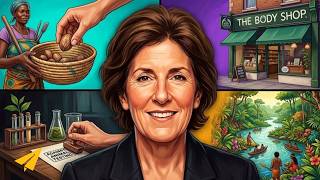
In this episode of Modeling the Masters, Evan Carmichael narrates the entrepreneurial journey of Anita Roddick, founder of The Body Shop, highlighting how she turned a survival necessity into a globally trusted ethical brand. After her husband left to travel, Roddick, with no formal training, started a small cosmetics shop in her garage, using recycled bottles and offering multiple product sizes to stretch limited inventory. The business rapidly expanded, reaching nearly 2,000 stores and a $973 million sale to L'Oréal. Carmichael distills three actionable lessons from Roddick’s story: (1) Get past survival – secure enough cash flow to cover basic needs before pursuing larger ambitions; (2) Use your business to do good – leverage scale to create social and environmental impact, turning ethical values into a competitive advantage; (3) Learn by doing – acquire entrepreneurial skills through hands‑on experience rather than formal education, embracing obsession and outsider thinking. The video also shares quirky franchising practices (no fees, personal interview questions) and memorable Roddick quotes about the beauty industry’s moral failures. The overall tone is motivational and narrative, encouraging viewers to model Roddick’s principles in their own ventures.
Chapters
Hi, I'm Evan Carmichael, and welcome to another edition of Modeling the Masters. I believe that the fastest and most effective way to grow your business is to model the strategies of people who've already done what you're trying to do. So today we're going to look at how a mother of two was forced to start her own business after her husband left her to travel across America Having no formal training, her survival instinct kicked in and she was able to go from nothing to building one of the most trusted brands in the world. This is a story of Body Shop founder Anita Roddick and the top 3 lessons that you can learn from her success.
Anita Roddick was a British businesswoman, human rights activist, and environmental campaigner best known as the founder of The Body Shop, a cosmetics company producing and retailing beauty products that shaped ethical consumerism. She was born into a hardworking immigrant family, and her mother ran a successful café which kept the young Roddick occupied for most of her childhood. In addition to a strong work ethic, her mother also taught her the concept of recycling and how valuable it could be for businesses. After graduating school, she took a trip around the world and eventually wound up in Johannesburg, South Africa, where she disobeyed the laws of apartheid by attending a jazz club on Black Night and was sent back to England. Upon arriving back home, she met Gordon Roddick and felt she had an instant bond with him. The two married and opened up a restaurant and hotel together. After 3 years of running the two businesses, Gordon decided that he wanted to fulfill his lifelong dream of riding a horse from Buenos Aires, Argentina to New York City. They sold the restaurant business and Anita stayed home with their two children. While Gordon was away on his adventure, she decided to create her own cosmetic store that would sell natural and environmentally conscious products. She started off selling 15 cosmetics products that she made in her garage and packaged in recycled bottles to reduce the cost. She soon opened a second location, and by the time her husband had returned from his trip, people were already asking about franchising rights. By 2004, The Body Shop had almost 2,000 stores and served over 77 million customers around the world. It was also considered one of the most trusted brands in the world. On March 17, 2006, L'Oréal bought The Body Shop for $973 million. With the sale, Roddick became more involved in charity work and began giving away her money to causes she believed in. When she died in 2007, she left her estate to charities. Action Item #1: Get past survival. We all have big dreams for what we want ourselves and our companies to become, but in order to make those dreams a reality, You need to first get past the survival point with your business. You need to know that your company will be able to give you enough money to put food on the table and pay your bills. This is one of the most important first steps you need to accomplish as you start your business. Once you have enough money coming in, you can focus on shooting for your bigger goals. When Anita Roddick first started the Body Shop, it wasn't because she wanted to create social and environmental change. With her husband gone, she had to find a way to make money to support herself and her two children. The main reason behind opening the Body Shop was so that her family could survive. As an example, she couldn't afford more than 700 empty bottles, so she took the unusual step of offering 5 sizes of every product. Even though she had very few products initially, when you entered her 370-square-foot store, it would give the illusion she carried over 120 products. According to Roddick, nobody was stupid enough to offer 5 sizes of one product. It simply didn't make sense. We turned it around into a survivor's option. Customers pick up the size they want and come back every week for a refill. Recycling had nothing to do with being environmentally conscious at that point. My goal was livelihood. At the forefront of my mind at the time, there was really only one thought: survival. I started The Body Shop in 1976 simply to create a livelihood for myself and my two daughters while my husband Gordon was trucking across the Americas. I had no training or experience, and my only business acumen was Gordon's advice to take sales of £300 a week. Nobody talks of entrepreneurship as survival, but that's exactly what it is and what nurtures creative thinking. Action Item #2: Use your business to do good. The most successful businesses seem to be the ones who don't just focus on making money, but instead try to be a force for good in their industry. Entrepreneurs are also now leading the way to help others beyond their customers. They're using their companies to support the communities around them and give back, not just because they can, but because it also makes good business sense. Anita Roddick's social and ecological conscience initially stemmed from a lack of money. She had to recycle bottles because she couldn't afford to buy new ones. The store was painted green because she wanted to hide the damp stains on the walls. However, as the Body Shop grew to become a powerful player in the cosmetics business, Roddick began to use her newfound influence to try to have a positive impact on the world around her. According to Roddick, "I hate the beauty business. It's a monster industry selling unattainable dreams. It lies, it cheats, it exploits women. I want to work for a company that contributes to and is part of the community. I want something not just to invest in, I want something to believe in. If I can't do something for the public good, what the hell am I doing?" Action Item Number 3: Learn by Doing. It's hard to learn how to be an entrepreneur from a book. You can read to get inspired or to get new ideas, but nothing is really going to happen until you start to apply those ideas into your business. You can use books and courses to supplement your knowledge and give you the guidance, but you have to actually apply what you're learning if you really want to understand and retain the information. Anita Roddick never learned about being an entrepreneur at school. Instead, she learned from her mother, who she saw work tirelessly to make her café successful. While other cafés kept regular 9-to-5 hours, her mother opened at dawn for the local fishermen and didn't close until the last customer had left. Roddick had never read a book on economic theory in her life, and while her naysayers believed this would be her downfall, Roddick saw it as one of her competitive advantages. According to Roddick, I often get asked to talk about entrepreneurship. Even by hallowed institutions like Harvard and Stanford. But I'm not at all convinced it's a subject you can teach. How do you teach obsession? Because more often than not, it's obsession that drives an entrepreneur's vision. Why would you march to a different drumbeat if you were instinctively part of the crowd? They will not teach you the most crucial thing of all: how to be an entrepreneur. They might also sap what entrepreneurial flair you have as they force you into a template called an MBA. If I had learned more about business ahead of time, I would have been shaped into believing that it was only about finances and quality management. By not knowing any of that, I had an amazing freedom. Potential entrepreneurs are outsiders. They're people who imagine things as they might be, not as they are, and have the drive to change the world around them. Those are skills that business schools do not teach.
So remember, get past survival, Use your business to do good. Learn by doing. To finish up this video, I wanted to share one of my favorite true stories about Anita Roddick and some of her best quotes.
Anita Roddick's first location was next to a funeral parlor, giving a whole new meaning to the "Body Shop" name. When she began franchising, she had little experience and decided not to charge startup or royalty fees. However, Before she would accept franchisees, they would have to interview with her. Roddick asked off-the-wall questions like, "What is your favorite flower?" and "How would you like to die?" to get to know her candidates on a more personal level.
Thank you for joining me for another dish at Modern to Masters. If you like the video and you want to see more, please give it a thumbs up below. I'd also love to hear your thoughts if you want to leave a comment under the video, and stay tuned for the next episode.