Business Ideas - 3 Success Lessons from Jim Henson (The Muppets)
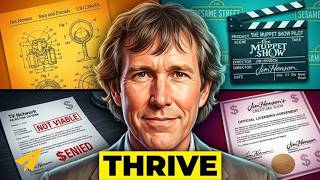
Jim Henson created the Muppets after experimenting with puppetry on a university TV show called Salmon Friends. His three lessons for entrepreneurs: stay faithful to your vision despite setbacks, maintain optimism through rejection, and differentiate yourself by taking unconventional paths.
Chapters
Hi, I'm Evan Carmichael. Welcome to another edition of Modeling the Masters. I believe that the fastest and most effective way to grow your business is to model the strategies of people who've already done what you're trying to do. So today we're going to look at how a young man who loved the theater started doing puppet shows on a local TV station and turned it into one of the most beloved puppet franchises in the world. This is the story of Muppets founder Jim Henson and the top 3 lessons that you can learn from his success. Jim Henson was the son of a stay-at-home mom and a father that was working for the Department of Agriculture. His mother spent hours entertaining him and his siblings by making up stories and allowing them to use their imagination. His childhood was a happy one as he spent countless hours exploring the shorelines of Deer Creek. One of his most significant relationships early on was with a young friend, Kermit, who would later inspire one of his most celebrated Muppets. Henson developed a close relationship with his maternal grandmother, who was an artist herself and occupied her time painting, quilting, and doing needlework. She was the main motivating force behind Henson's efforts, constantly cheering on his artistic talents and encouraging him to put his creative imagination to use. As a freshman at the University of Maryland, he was given a chance to perform puppets on a twice-daily 5-minute show on WRC-TV. He created Salmon Friends with fellow student Jane Nebel, whom he later married in 1959. The show ran for 6 years while Henson continued to pursue his degree in arts and theater design. Salmon Friends was a testing ground for numerous Muppet characters that would later become instantaneously recognizable, including Henson's signature character Kermit the Frog. It also allowed him to experiment with new techniques that would allow for the puppets to appear more lifelike. Such as using special framing to allow the puppeteer to work off camera. Henson was no exception in the world of entrepreneurship. He too experienced the disappointment of failure and faced the challenge of staying motivated. But he knew that he had talent, and through the highs and lows of his career, Henson all the while remained unwilling to give up on his goals. Drawing strength and guidance from a higher power, Henson doggedly continued to chase his dreams. The hard work and faith paid off because the Muppets have become some of the most beloved characters on television today entertaining millions of children from around the world. By tapping into his creativity and by experimenting with new ideas, Jim Henson was able to turn a small-time puppet show on TV into an internationally recognized brand. To help you tap into your creativity, here are 3 action items you can learn from Jim Henson. Action item number 1: Remain faithful to yourself. As long as you believe in yourself, you have hope. It's possible. You can get to where you want to go. Your business will likely change multiple times from when you started it. No matter how great an idea you have, it's going to change as you start talking to customers. If you believe that what you're doing is right and is helping people, keep going. Don't give up. Do something every day to move your business forward and remain faithful to yourself, or you'll regret it for the rest of your life. Despite being rebuffed on countless occasions and underestimated as a provider of simple and fluffy children's entertainment, Henson was resolute in his capacity to blaze his own path and make his mark in the industry as a serious artist. He knew he had strengths both in puppetry and television production, and sought to find a unique way to combine the two. His confidence allowed him to be willing to take chances and try new routes. Puppeteering was not a popular profession. And there were few role models to whom Henson could look for inspiration. But Henson knew where his talents lay, and he did not anticipate the scope of his own success. He always knew he could make a positive contribution, and in a different way than most. By having faith in himself, Henson was able to reinvent the world of puppetry and enrich imaginations around the world. According to Henson, "The show's not dead as long as I believe in it." I think if you study, if you learn too much of what others have done, you may tend to take the same direction as everyone else. It's just a matter of figuring out how to receive the ideas or information that are waiting to be heard. I find that it really helps me to start the day with a good frame of reference. As part of my prayers, I thank whoever is helping me. I'm sure that somebody or something is. Action Item #2: Remain positive about your goals. As entrepreneurs, we want things to happen immediately. Unfortunately, the world often makes us wait. Hold on to your goals and know that they are possible. As long as you have hope, you think of ways to make things work out. Set goals that motivate you and that provide value to others, and don't let them go until you reach them. When you believe in them, others around you will as well. An eternal optimist, Henson took a uniquely spiritual approach to his work. He believed that he was on the Earth to achieve something that would contribute back to others. As long as he tried to create a positive message through his work, the results would be positive in return. It was this optimism that allowed Henson to succeed even in the face of rejection and doubt. Despite the often negative response that Henson got to his ideas, he looked upon everything as a learning experience and a growth opportunity. Henson recognized that there would always be a certain amount of negativity and suffering, not only in his own life, but also throughout the world. However, he saw little point in wasting his energies focusing on that. Instead, he directed his energies towards more constructive efforts. According to Hanson, "I believe in taking a positive attitude toward the world, toward people, toward my work. I believe that we form our own lives, that we create our own reality, and that everything works out for the best." I think this is why we're here—to work our way through all this and hopefully come out a bit wiser. I'm better for having gone through it all. I know I drive some people crazy with what seems to be ridiculous optimism, but it has always worked out for me. Action Item #3: Take the road less traveled. You've got to do something different to stand out. Doing the same thing as everyone else is not a recipe for success. Find out what's unique about you as an individual and your business. Leverage your uniqueness and show people how you're different. Don't try to market to everyone. Find your niche, provide overwhelming value, and then expand your customer base. Henson not only revolutionized children's television around the world, but with his pioneering technology, he also brought puppetry to a higher level. His success came from being able to devise a new way to approach an ancient form. Henson set what would become the new standard in the industry with his imaginative ability to think outside the box. It was Henson's innovative and pioneering spirit that served as major drivers of his success. He refused to settle for the status quo and insisted on creating something new, fresh, and fun. It was a risk, but one that eventually paid off. The Muppets have leaped off the television screens and become part of families around the world. According to Henson, "You know that my feeling about puppetry relates to stylization, simplicity, Boiling down to, "It's a wonderful form and I really love it." Nobody creates a fad, it just happens. People love going along with the idea of a beautiful pig. It's like a conspiracy. Life's like a movie, write your own ending. Keep believing, keep pretending, simple is good. So remember, remain faithful to yourself, remain positive about your goals, and take the road less traveled. To finish up this video, I wanted to share one of my favorite true stories about Jim Henson and some of his best quotes. Kermit was not always the best-known character Jim Henson created. In fact, the most popular character originally was Rolf the Dog. Henson created this Muppet for Purina Dog Chow, and it became an instant hit in 1962, long before Kermit was known to most people. Not only was Rolf the Dog more popular, The character was a regular on The Jimmy Dean Show throughout 1965, a full decade before The Muppet Show ever aired for the first time on PBS. Thank you for joining me for another edition of Modern Masters. If you like the video and you want to see more, please give it a thumbs up below. I'd also love to hear from you if you want to leave a comment under the video. I always try to respond to all of them that I see, so please leave a comment under the video. And thank you, and we'll see you on the next episode.
More from Evan


How the Biggest Mistake in History Created A Trillion-Dollar Empire | Sergey Brin



9 Machiavelli Principles That Force People To Respect You | Machiavellian Philosophy



The First 10 Words That Instantly Ruin A Sales Conversation | Vanessa Van Edwards

The Top 1% Mindset Behind The First $5 Trillion Company | Jensen Huang (Nvidia)

