Chase Excellence & Success Will Follow! | Aamir Khan (@aamir_khan) | Top 10 Rules
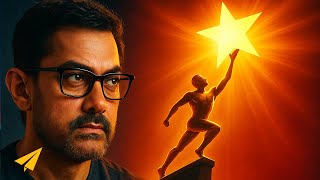
Aamir Khan tells Evan Carmichael that chasing excellence, not success, is the path forward. He refuses to compromise on his dreams, learns from failures, and uses storytelling to change society. Health discipline and trusting your instincts matter more than formal education or outside advice.
Chapters
I've always believed in following my dreams. I like to go instinctively. If I love something, I want to do it. Hello, Believe Nation.
My name is Evan Carmichael. My one word is believe, and I believe that entrepreneurs will solve all of the world's major problems. So to help you on your journey today, we're going to learn from Indian actor, director, and producer Aamir Khan and my take on his top 10 rules of success. Rule number 2 is my personal favorite. Favorite, and I'd love to know which one you guys like the best. And as always, as you're watching, if you hear something that really resonates with you, please leave it in the comments below. Put quotes around it so other people can be inspired. You might win a prize as well. And also, when you write it down, it's much more likely to stick for yourself as well. Enjoy!
And I think each one of us, you know, finds our own path. So what has been important to me, uh, which I'd like to share with you, is that I have always believed in following my dreams. And, uh, I don't know how that happened. I'm not quite sure how that happened, but I think it was— it also happened because I'm very, uh, passionate about whatever I do, whether it's my work, which is films, whether it's playing a sport, whether it's, you know, hanging out with my friends, whether it's having an argument, whether it's, you know, laughing about something. I'm very passionate about everything, and I give my entire attention and full, uh, everything about me is in that one thing that I'm doing at that time. So, uh, I think that what has been very important for me is that I I don't want to compromise with what I want to do. What is my dream? I don't mind compromising to achieve my dream, but I don't want to compromise the dream itself. So that is something that I've always believed in. I think that what Gandhiji said is so true, that be the change that you want to see. And I think that each one of us can at least change yourself, and that itself is such a big force in changing the world. You know, you wake up in the morning, you read the papers, and you read about injustice, you read about poverty, you read about people who are less privileged than you, and you want to really do something about it. I think most of us feel that way, and we don't know what to do. And I felt that for a number of years, and then I've realized that I should do I know best, and which is storytelling. And I should use the strength of storytelling to try and change minds and try and enrich perhaps the discussion on certain issues that we face as a society. And I saw that no one's really doing it on that kind of a scale on a public platform. And I thought if I combine the strength of TV with the goodwill that I've earned and, you know, we try and actually combine journalism, investigative journalism and storytelling. So we really research each topic and then bring it to the country of India and share what we have learnt with the people and hope that we can transform minds, hearts. You know, I always felt that there are two ways of bringing about change. One is is top-down, when you make laws and you tell people to follow them, or you make policies and you expect people to follow them. And the other way— and sometimes it works, but sometimes, a lot of times it doesn't. I think the other way is a longer route, but I think that is what we have chosen to do, and that is to reach out to people's hearts, not with anger, but with love, and, you know, try and transform minds at a young age. What is the funder of your success? Uh, I don't know actually. I'm not quite aware of why I've been successful so far. Um, you know, I don't, I don't think so much about that. What I'd like to do is enjoy my work. So I do work which excites me, and often it's work which on the face of it is not considered very, uh, you know, doesn't have the potential to be a big blockbuster, or, you know, I've picked very unusual kind of stories. So even I didn't expect them to be so successful. Do you feel pressure because you've had this very long run? Not really, because I feel that, you know, I'm not even thinking about that. I'm not even thinking about that. I just want to enjoy my work, and I want to surprise myself, challenge myself, and surprise my audience, and, you know, give them something new each time. So I like doing that. I like doing different stuff. When I look back today after 25 years of being a professional, I feel that that's one thing that I feel happy about, that I lived on my terms. See, today I'm successful. I may not have been successful. I may not have been successful. I didn't know I was going to be successful, but I'm happy that I lived on my terms, and I'm happy that I never compromised. Whenever I was offered something I was not happy with, I didn't do it. Do you think you are the kind of person or individuality that follows his heart? I do follow my heart. I don't think too much. I like to go instinctively. If I love something, I want to do it. I don't think after that. So in this film, I had to play an older man who's fat, who's got gray hair, and who's aging, and he's got 4 daughters. If I think logically, then I should not do a role like this. For some time. But I love this film, so I'm an actor, I play different roles. So I like to go with my heart. But I have to say that a lot of people are also successful when those who go with their mind. There are no rules, I think. Each one makes their own path. But I like to follow my heart. It's not just the emotion of wanting to do something for somebody else, which is in itself a good emotion that you want to do something for someone. But if you feel that your life is incomplete if you don't, Right. So you are doing it for yourself really. Right. Of course you are doing it for someone else. And I think that's what is important. And it's something that happens to you if you feel like. It doesn't have to happen to you. But I think in me what grew was that this feeling that I needed to, for myself, do something where I felt better about myself. When I felt I was, you know, I feel I am so privileged in so many ways. And I feel that, I really feel that when I see around me people who are not as privileged I can't just sit by and be comfortable with that. There's a need in me to, you know, reach out and perhaps help if I can. And in a way, you're lucky to have a position where people will listen. And I'd like to use it to the best of my abilities. So I guess that's why I've moved into the space that I have. It's for my own emotional or mental, you know, peace of mind and satisfaction. I don't do too much to look after myself, but what I do for sure is I follow a very strict diet. And I think that has made a huge difference to the way I feel and to the way I look. So it has made me realize that we are what we eat. Absolutely. So I follow a very healthy, balanced diet. I drink a lot of water. Yeah, we've seen that. So I think I drink, I drink at least 3 liters a day, sometimes 4. So I think what has happened is that because of my healthy diet, I sleep 8 hours. And I think success, like, you know, Funsuk Wangdu says that don't chase success, chase excellence and success will come with it. So I hope that I'm trying to do that. At least I'm trying to do that. I don't know whether I achieve that, but I'm trying to do that. Yep. This is a fascinating thing. Right through my life, every important decision of mine, all the people who are important to me and who are close to me have always told me you're making a mistake, don't do this. I've always been told, so that's a good benchmark. No, I appreciate the fact that people who are close to me are concerned about me. I appreciate the fact that they care for me and they're worried for me. But what I've always been happy about myself is that I've always done what I believed in. So I'll give you 2-3 examples. When I was in the 12th, that's when I decided that I want to learn about filmmaking and cinema. So I told my family, my friends, everyone around me that, you know, I'm going to start working as an assistant director and start learning about filmmaking. Everybody I knew at that time— my parents, of course, freaked out. You know, I want to be a graduate, you're going to leave your studies. It was— and my uncles and aunts, and they were all like, you know, you can't do this. My cousins, people my age who I thought would understand me, my friends said, yeah, graduation. Do what you want. You want to be an actor, you want to be a filmmaker, do what you want, but at least be a graduate. It didn't make sense to me. I was like, why? If I want to be a doctor, do I study commerce? No, I study medicine. If I want to be an engineer, I study engineering. If I want to be a filmmaker, I want to study filmmaking. Why on earth should I waste time studying something else when I'm very clear that this is my goal? So, no, no, because you need a paper which says you're a graduate. That's what was told to me. I said, no, I don't need a paper. I don't need someone to tell me what I know. I know what I know. And if I need to know something, I'll learn about it. So I was very clear that this is what I want to do. So I didn't listen to anyone. I didn't listen to my friends, I didn't listen to my family. I just did what I wanted to do. Because I feel that if I'm clear about what I want to do and I'm honest about it and I'm sincere about it, and the reasons why I'm doing it is clear to me, then I must follow my instinct. Because I'd rather, even if I have to go wrong tomorrow, I'd rather go wrong on my instincts. I don't want to go wrong on somebody else's advice. If I've taken a wrong step, I'll deal with it, I'll learn, it'll be a learning experience for me. Old kajjo portion hai woh karoon. So, jaa film complete hogi, uswaag mein mota raunga. Or kui vajeni hogi mere liye, wazan kam karna hai ki. So putting on the weight was fun. I could eat and drink whatever I wanted and have a great time. And I had a ball. I have to say I had a ball. But it was also most uncomfortable. Even my wrestling training was affected because I was carrying so much weight that I couldn't really move fast enough. You know, your breathing changes when you put on weight. Whole body language changes. The way you walk, the way you sit, the way you try to stand up, everything changes. One day at a time, one step at a time. 9.67. 9.67. Yes! 9.67. I need it. You hit the target, sir.
Thank you guys so much for watching. I hope you enjoyed. To cast your vote on who you want to see in the next top 10, check out the link in the description and go vote for the person that you want me to profile next. I also want to give a quick shout out to Dev Godby. Dev, thank you so much for picking up a copy of my book, Year One Word, doing the review on your channel, interviewing me and Lily on your channel. It's been awesome to have your support, and I'm so glad that you enjoyed my book. We have Evan Carmichael today joining us. Thank you guys so much for watching. I believe in you. I hope you continue to believe in yourself and whatever your one word is.
Much love. I'll see you soon. In fact, I have learned the maximum from my failures. My failures have taught me the most, and so I really value my failures. Whatever I am today is because— not only because of my successes, but also because of my failures. Whatever I've learned, you know, through my failures. And so I have always done what I believed in, and I continue to do that. I strongly feel that creative exchange, creative people have no boundaries. Jackie Chan is so popular all over the world, it doesn't matter that he's belonging to one country. Over time, he belongs to the whole world and he entertains everyone. So I think that for creative people, there are no boundaries, and it is the creative people who try and bring cultures together, people together.
More from Evan


How the Biggest Mistake in History Created A Trillion-Dollar Empire | Sergey Brin



9 Machiavelli Principles That Force People To Respect You | Machiavellian Philosophy



The First 10 Words That Instantly Ruin A Sales Conversation | Vanessa Van Edwards

The Top 1% Mindset Behind The First $5 Trillion Company | Jensen Huang (Nvidia)

