Comfort Zone: The Biggest Mistake People Make About Comfort Zones!
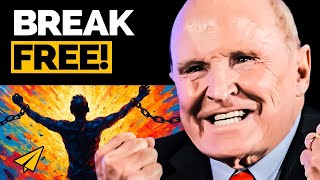
Brian Tracy, Eric Thomas, Bob Proctor, Matthew McConaughey, and Brendon Burchard explain why comfort zones kill potential. Proctor calls it the "terror barrier" that fear keeps you trapped behind. Burchard argues a "charged life" of purposeful discomfort beats a comfortable but stagnant one.
Chapters
Good morning, Believe Nation. Today we're going to talk about how you can leave your comfort zone. And as always, guys, as you're listening, if you hear something that really, really resonates with you, please leave it in the comments below and put quotes around it so other people can be inspired. And also, as you write things down, you're much more likely to keep it in here as well. Enjoy.
If you're sitting there comfortable in what you're doing, you can be sure with your nice awards of number one here, number one here, number one, the Bézéguet, and number one this one, number one that one. Somebody's out there waiting to pluck you, and you can't get comfortable. And at that rate of change, if you start seeing stuff, you gotta move.
If you're going to get in the zone, if you're gonna do fourth quarter living, you gotta be comfortable with hitting the wall. If I got any runners out there, any fighters out there, any athletes out there, anybody that's ever stretched the limits, you know that in order to get to the zone, you gotta hit that wall first. You gotta hit that brick wall first. What does that mean? You gotta get to a place in your life where all your strength is gone and you're no longer operating on strength, but now you begin to operate on will. You get— listen to me, you get to a place where you're not— it's not this no more. It's not your strength. It's not your natural strength. You are for will. And many of you, I declare right now, many of you have never gotten the will. You've never operated on will. And so you gotta hit the wall. And what I mean by hitting the wall is if I run for 30 minutes, right? If I run for 30 minutes, I gotta say to myself, every time you run, Eric, you gotta get to 35 now. You gotta go 5 more. Once I get to 30, my body say, yo, E.T., let's stop. Because the last 5 days we 30, we did 30, Eric, it's time to stop. We did 30 minutes. And what I gotta do is I gotta push it to the limits. I gotta push it to the limit. I gotta be willing to hit the wall. I've gotta be willing to get past crying. I gotta be willing to get past homegirl. I gotta get past self-defeat saying you can't do it. I gotta be willing to get past a lot low self-esteem and say, "I deserve it. If anybody else deserves it, I deserve it. It's mine." Listen to me, you gotta be willing to hit that wall. And for most of you, when you get to that wall, you give up, you quit. You gotta get to the place where you can hit the wall. You have to get to a place where you become comfortable with being uncomfortable. I'mma show you again. Oh, I gotta show you again. I gotta show you again. You gotta squeeze it. You gotta squeeze it. My aunt said, "Put the contraption on and squeeze it, boy." Why? Because I need you to get every single thing you can get out of it. And I discovered that when I cut that thing open the way my aunt does it, it's little or no toothpaste left. But when I did it the way we used to do it, it's a whole bunch of stuff. And I'm leaving you saying this. It's a lot of y'all, if you keep going the rate you going right now, when you die, you gonna have a whole bunch left. You gonna die with a whole lot of ideas left. You gonna die with a whole lot of energy left. But man, when I'm running, there are times when I run and I get to the end of my run, I know I ain't done nothing.
Why?
Because when I finish, I got too much energy left. I got too much strength left. I'm still, I'm still breathing normally. I know I hadn't put my all into it. I'm asking you to know what your limits are, all right? Because you gotta be able to measure where you are, 'cause you can't get to where you going if you don't know where you are. You have to be able to measure where you are. But once you measure it, we gotta hit that wall. Once we measure it, we gotta start squeezing so we can get more out of it. And then once we hit that wall, we don't quit, we don't give up. We push a switch called will and we start using our willpower. We go into will. Yes, we tired. Yes, we're hungry. Yes, the mind is saying give up. Yes, it's saying quit. But we cannot quit because we realize we have not reached the goal yet. This is not the goal. This is not what I dreamed about. This is not what I said I was gonna do. This is what I talked about. This is not what it looks like. I gotta squeeze. And then once we get past that place, once we get past that 30 minutes, or that 35, or that 40, or that 45, or that 50, and once we get into that hour with our will, we become comfortable with being uncomfortable. We no longer thrive to be in the comfort zone. We no longer place ourselves in positions that make us feel good. We no longer put ourselves in positions that make us comfortable. That gives us that warm fuzzy feeling. Because listen here, boo, some of what you want, some of what you trying to get ain't in the comfort zone. And so what you want is not in the comfort zone, you got to come out of the comfort zone to get what you want.
The comfort zone is one of the greatest enemies of human potential and of your potential. When people get into a comfort zone, they strive to stay in that comfort zone even if they're unhappy with their situation. Often their whole lives pass them by while they're furnishing and reinforcing their little rut of medium performance. You need the courage to continually move yourself in the direction of your biggest goals and ambitions. You need to be willing to face discomfort in order for you to grow. You need the courage to launch in faith with no guarantees of success. Someone once wrote, 'If every obstacle must first be overcome, nothing will ever get done.' Courageous people are those who have a dream and set a goal. They make a plan and they take the first step with no assurances and no guarantees that their efforts will result in success. However, if you look upon every step forward as a learning experience, and every setback is a valuable lesson that has been sent to you to make you stronger and better, you will not be afraid to launch in faith into the unknown. You need the courage to risk failure. You need the courage to endure constant setbacks and disappointments and temporary defeats. You need to learn to deal with failure by realizing that failure is an indispensable prerequisite for success. You can't succeed without failing, and failing lots of times. Remember that wonderful quote from Thomas J. Watson Sr., the founder of IBM? He said, "If you want to be successful faster, you must double your rate of failure." He said success lies on the far side of failure.
See this line? That's called the terror barrier. Yeah, jumping at you, isn't it? And on the other side of the terror barrier is something we call freedom. And you know, very few people get through that terror barrier. It's rather sad. Freedom is available to everyone. There isn't anyone that cannot live the way they want to live.
See?
Why don't they? Why don't they? They don't know. And they don't even know they don't know. Now I'm going to show you why people experience buyer's remorse when they buy something they really want, and then they back away, or they go to move and they don't, they go to change jobs and they don't, they go to move to another city and they don't.
Why?
Fear causes them to stay where they are. There's the individual, the X represents The unknown factor, the paradigm. Now there's a power flowing into this individual's mind, and they can make anything out of it they want. Remember we said we had the ability to choose? What do they choose? They choose thoughts that are in harmony with the paradigm. Now here's an important point: the paradigm controls the vibration of this thing we call our body. Our body is a molecular instrument. That's really what it is. It's a mass of molecules and a very high speed of vibration. The vibration that the body's in on a conscious level we call feeling. When a person says they feel this way or they feel that way, what they're really doing is describing the vibration they're in. Now, they choose thoughts that harmonize with the vibration they're in so they feel comfortable. They may not like the results, but they're comfortable. Now let's move ahead. Let's take a look here. Those people are getting X-type results and they don't like it. Do you know what the problem with them? They're in bondage. These people are locked up. Do you know, paradigm is like keeping a person in a prison, only there's no locks on the door. They can open the prison and walk out into freedom anytime they want, and they don't. They keep getting the same results over and over and over again. They're in bondage. Now let's go ahead. Here's the same person, X-type conditioning, X-type vibration. The power is flowing into them, and for some strange reason, from left field, boom, in comes a Y-type idea. What is a Y-type idea? The Y-type idea represents anything that you might want to do that you're not doing. It might be move to another city, change jobs, sell the house, buy the farm, Whatever it may be— ask the little girl for the date, ask the guy to go to lunch, go make the sale, buy what you want, go where you want to go— that's the why idea. But as long as the why idea is just in the conscious mind, it's just going to be an intellectual exercise. It's never going to happen. So how do we make it happen? Well, that's when everything goes haywire. Here we are here, same person, okay, the power flows in, and what do they do? They got the Y-type idea. Now, for some strange reason, they know that they've got to get emotionally involved if they're going to act on that idea. They don't understand what's going to happen, but clearly understand this: your central nervous system is the most complex electrical system in the universe. The central nervous system is mind-boggling. It would make the electrical system in a supercomputer look like a toy. Now, the second you take the idea from your intellect and impress it upon the subject of mind, that's when all hell breaks loose, because the body moves in to an extra XY vibration. It's not in the X vibration, not the one that we're comfortable with. May not like the results, but we're comfortable. No, on a conscious level, everything's going crazy. On a conscious level, we experience doubt. The doubt turns into an emotion called fear, and that fear is expressed through the body as anxiety. See, that person is getting emotionally involved to move ahead. Do you know what happens? They hit that terror barrier and they bounce off it and right back into bondage, and they're so relieved to get back there. They're back where they're comfortable. They've canceled the sale. They've decided not to move. They're going to stay in the job that they don't like. At least they're comfortable. Now that's not a very good way to live. And you know something? That's something everybody experiences if they're going to grow. You're going to hit that terror barrier. See, the terror barrier is going beyond where you're at. Going to a new level. I'm going to tell you something. When I set a goal, if, if it doesn't scare and excite me at the same time, I know I'm going in the wrong direction. Now I also understand that my paradigm is going to try and get me to bounce back to where I was. It doesn't want me to move ahead. I don't want to live there. I lived there for the first 26 years of my life. And for the last 50, I've had a phenomenal life, and it just keeps getting better. And I want you to do the same thing. Understand what I've just said. I'm going to back this up. They got emotionally involved in the Y idea that moved their body into a different vibration. On a conscious level, they're experiencing some crazy stuff. They start to doubt their ability, will never be able to pay for it. They experience fear. The fear expresses itself as anxiety. And bang! You bounce off that terror barrier and you're right back. Oh, I might not be earning much here, but I know what it is. I would love to move there, but I'm comfortable here. I think I'll just stay here. These people are acting like they have a contract to live forever, and they don't. Do you know what to do? Say, I'm going to get rid of all that. I understand it's there, but I don't want any part of it, and I'm going to go crashing right through that terror barrier. Now, does that get rid of the X energy?
No.
The X energy is still there, you see, but at least you're over into freedom. You made the move. You did it. And if you continue to feed the right information into your mind, keep feeding that Y idea, keep getting emotionally involved in the Y idea, you're there, you're on the road. Keep doing that, you're going to find that the paradigm is going to change and it'll just all go away. And you know where you're living? In freedom. You're living where you want to live. Buyer's remorse is when you cancel the sale. Buyer's remorse is when you stop just before you buy what you really want, before you go for the thing that's going to change your life and you know it. It's not moving to the other city. It's not starting the business of your dreams. It's not stepping out and betting on yourself. That's a terror barrier that's causing that. And if you don't learn to go through the terror barrier, I'm going to tell you something, you're going to stay right where you are for the rest of your days. That's not a good place to be. What did Joseph Campbell say? So true. The cave you fear to enter holds the treasure you seek.
Starting with Lincoln Lawyer was a time when I said I wanted to recalibrate my relationship with my career. I remember saying that. I remember thinking, my career's— I'm enjoying it. I love what it's given me. I like going to work. I like the things I've been doing. But everything I started reading, I felt like, oh, it's another version of something I've done, or I feel like I could do it next week. And I remember going, well, wait a minute. Before you get mad at thinking you you could do something next week. That's a valid feeling. Don't just say no to something because you feel like you can naturally do it. But then I said, okay, fair, I'll shake with you on that, Makana, eh? But let me find something that I don't know how, what to do with that next week or the week after. Let me find something that I really like, but I'm going, ooh, I'm not sure. That scares me, that shakes my floor. I was fortunate enough, because that Schedule F check I got in Angels in the Outfield, to know that my rent was paid. I was fortunate enough to know my kids were going to eat. I was just shepherding my first son into the world. So I had that to take care of my time. And I said, it's a great time to go into the shadows and be a father and sit back and see if something turns you on from the inside or if something finds you, if you're the target that can draw the arrow. We're OK. Rent's paid. Kids are going to eat. We can take some time off. I know what he was thinking about, like, oh, I'm done. But I didn't know how long the dry spell was going to go. So I said no to some of the things that were similar to what I had been doing before. And it took a while. I had to sit down with my agent and say, hey, I'm really going to do this. And I need your help with my commitment to this. Because after 8 months, if the same thing comes in with a big $10 million paycheck, it starts to read better and funnier. I promise you. The same words. All of a sudden, it's kind of— I think this thing's great. I think I can find an angle. No, I can make it a different experience for me. So I said, I'm going to need your help bunkering down here and saying no to some things. And so I'm going to need you to be a gatekeeper, one, to keep them from getting to me.
Two, let's be real clear.
I'm looking for some different things to do. He hold up, he handled that. My wife, we said, we don't know how long it's gonna be dry. Then after they quit sending those, then it did get dry, then nothing came for about a year. There was nothing. And I didn't have any sleepless nights or oh my gosh, I was like, no, I'll find something, I'll write. I was writing a lot. I was turning myself on creatively and as I said, I had my first son to shepherd into the world. And then the funny thing happened, the beautiful thing happened. Magical thing happened that somehow the target drew the arrow. And I think my opinion is I became a new good idea by removing myself. I became— William Friedkin calls for the first time. Steven Soderbergh calls for the first time. Somehow in that 2 years, I became a fresh new idea that I don't think I was 2, 3 years prior. How that works, I'm not sure because I didn't send a memo out. But it did happen.
The people who've been living a cage life, after a period of time of watching enough people go by who are succeeding, if maturity lands on them, it lands on them with an impulse to say, "I've got to take control over the direction of my life. I've got to break free from these bars because I've set them up." At some point, we've come to realize, I think, in maturity that we set our own cages, we build our own bars, and that there was always a door over door here that we could get out of, but we never made the choice to. And when we finally decide to change our life, we're more likely to go out that door. But we always have to remember, you know, never forget that when you knock on the door of opportunity, that it is work who answers. You know, it's going to take a lot of work to change your life, to break free from the bars, to get going again. But I think that's the great opportunity. And when people finally break through that cage and they get out in the open have more freedom in their life, that kind of life has a quality too. It feels incredibly different. That, that kind of life feels more free. And that kind of life over a period of time is incredible because you have more freedom to direct yourself, more freedom to do things. And what ends up is people end up with deeper skills. They end up, you know, chasing their passions more often. That often, as they get on a roll, they start becoming more successful. As they become more successful, the things they think that they wanted in their lives come into their lives. You know, it's— they got the two-car garage, the white picket fence, the house, the kids, the friends, the dinner parties, you know, enough to get by and maybe a little bit more. And soon after a period of time, that excitement of that breaking free and getting into that new kind of life, that kind of life, it feels more comfortable. So we call it the comfortable life. And in that comfortable life, we do feel that way. We feel a sense satisfaction, a greater sense of confidence about who we are, about what life is really about, about where we're going in life. We feel heightened degrees of competency, knowledge, skills, abilities. We feel like we kind of got our life under control. Things are, things are good. But over a period of time in the comfortable life, something also rattles within and stirs within, maybe not a frustration, but maybe somewhat of a sense of a restlessness. And that restlessness Restlessness is this feeling and this sense that maybe there is something more. And people who have a comfortable life, they also have a communication pattern. They also say something on a recurring basis that you can tell they're in a comfortable life. Because what ends up happening is one day someone says to you, "So, hey, how's everything going?" And even though you have all the reason in the world to say life is amazing, you find yourself and hear yourself starting saying, when people ask how your life is going, you say, "Well, it's fine." And the "it's fine" is the tell of the comfortable life. It's the tell that there must be something more. There must be another quality, another kind of life. And that reveals to us that there is this other thing called the charged life. And the charged life has a different quality and feel to it as well. There's heightened levels of, first and foremost, energy there. People are more passionate when they're living the charged life, and because they are more passionate, they feel more of the charge. It's not a one-time spark. It's not once in a while I feel good. It's an enduring state of passion and happiness and satisfaction, but it's an enduring state that is triggered not by comfort, but rather by challenge. That when we challenge ourselves to go just a little beyond our current competencies, our knowledge, skills, and abilities, when we're able to push ourselves just a little bit further, that's when we start to feel charged. Because so much of what we know by neuroscience of what actually charges our brains, of what actually enlivens us in our brains, what we can see by oxygenation, blood flow to specific parts of our brain, to the hormonal releases we can measure in the back of our brain from whether it's dopamine, vasopressin, oxytocin, serotonin, these things often happen because we're highly engaged with something that's challenging us just a little beyond our current level. Like Mihaly Csikszentmihalyi often talks about it in psychology as this concept of flow, of doing something where we're so engaged with it and you're so engaged with it because it's just a little bit harder than usual. So you're not quite comfortable, just a little bit out of comfort zone, not totally out of comfort zone and completely overwhelmed, but appropriately challenged to stretch yourself. And the qualities that the charged life basically have are there's a heightened and sustained level of energy and engagement, but also enthusiasm. And that's the magic. You know, if you want to have a fully charged life, you have to start looking forward to things again. You have to get excited about tomorrow again. You have to see your life developing again. You have to set yourself, see yourself on a path where you're step by step progressing every single day so you know tomorrow's gonna be better than it was today. That you know tomorrow you can become more of who you know you can become. That you know tomorrow by your simple choices, by your simple sets of disciplines and habits, that you're going to evolve into your highest self. And that is the path of the charged life. This constant engagement with the best within us, of pushing ourselves, but with that purpose and that progress of hoping to become our highest selves. And when you live in that place and you sense that every single day, that's the magic. That's what life should feel like. That's what I think we all deserve. And maybe we ought to start aiming and challenge ourselves just a little bit more to get there.
My take is the best way to leave your comfort zone is to recognize that you're playing inside it. I think this is the biggest challenge of leaving your comfort zone, is we're so used to playing inside our comfort zone that we don't want to step outside it. We don't even have the awareness that we're playing small. I had this t-shirt that I like to wear. I haven't worn it a while on the channel, but maybe we can find an old video where there's this thing of one circle that says your comfort zone, and there's another circle outside of this that says where the magic happens. It's like you want to stop playing here. You want to play out here where the magic happens. And I think having the awareness to understand that you are playing small right now is super, super, super, super, super duper important. Because what happens is we like to play safe, we like to be comfortable, we like to stay in the world that we know of. It's comfortable, it's warm, we've done it before, it's easy to stay there. You don't want to go out into the unknown, into the scary, into the cold, into the who knows what's gonna happen, into the the risky zone. And so that, that's a lot of fear out there. That's a lot of fear living way out here. And what really happens is we find practical reasons to stay inside our box. We find practical reasons like, oh, you know, well, we don't have the money to, to go out there. I didn't have the education to go out there. Or like, I don't, you know, I don't have the time to go out and do that thing. Or I'm not really interested in doing that. We find these reasons and we convince ourselves that these reasons are true. And really all they are are are mechanisms to keep you inside your safe box, inside your comfort zone, where that happens so subconsciously. And the trick comes to understanding that all of those reasons aren't really true. It's just fear. It's not that you're not interested in it. It's not that you don't have the time to do it. You're just afraid. You're afraid it's not going to work. You're afraid you're going to lose money. You're afraid of embarrassing yourself. You're afraid of the un— you're afraid. And once you recognize that it's fear that's holding you back instead of a logical real practical reason? Having that awareness, when you figure that out, then you can more easily make the switch to get outside your comfort zone. But as long as you've convinced yourself that it's a smart decision to stay where you are, then guess what? You're gonna stay where you are and you're never gonna leave your comfort zone. So having the awareness is the most important part. And once you have the awareness, then it's having the courage to push through the fear to achieve your goals and step outside your comfort zone. Comfort zone. Thank you guys so much for watching. I made this video because Syed Wajahat asked me to. So if there's a topic you'd like me to cover in the next edition of Believe Life, please leave it down in the comments below and I'll see what I can do. I'd also love to know your thoughts in this video. What was your favorite clip? What is going to inspire you to leave your comfort zone? Do you have any thoughts, suggestions, tips that you'd like to add from your own experience as well? Please leave it down in the comments below. I'm excited to see what you have to say. Finally, I want to give a quick shout out to Julio Vélez. Julio, thank you so much for picking up a copy of my book, Your One Word, and making that fun YouTube video on it as well. I really, really, really appreciate the support, and I'm glad you enjoyed the book. So thank you guys again for watching. I believe in you. I hope you continue to believe in yourself and whatever your one word is. Much love, have an amazing day, and I'll see you soon.
More from Evan


How the Biggest Mistake in History Created A Trillion-Dollar Empire | Sergey Brin



9 Machiavelli Principles That Force People To Respect You | Machiavellian Philosophy



The First 10 Words That Instantly Ruin A Sales Conversation | Vanessa Van Edwards

The Top 1% Mindset Behind The First $5 Trillion Company | Jensen Huang (Nvidia)

