David Beckham's Top 10 Rules For Success
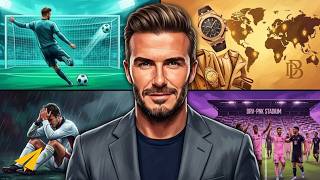
David Beckham shares the principles behind his football career: playing for love of the game, relentless practice to perfect his ball-curling technique, and hands-on parenting that balanced work and family. He recounts rebuilding after his 1998 red card, when he faced death threats, and how the Greece qualifying goal restored his confidence.
Chapters
I'd still be playing this game even if I wasn't being paid for it. Not that I don't want to be paid for it. I don't think I would change anything because I think it's important to go through life without any regrets. I just want people to see me as a hard-working footballer, someone that's passionate about the game. It was probably the toughest moment in my career. I was having death threats. I never felt safe for 3 and a half years.
He's an English former professional football player. In 2004, he was named to the FIFA 100 list of the greatest living players. He is consistently ranked among the highest earners in football. He's David Beckham, and here is my take on his top 10 rules for success. Rule number 1 is my personal favorite, and I'm curious to figure out which one you guys like the best. And as always, if David says something that really, really resonates with you, please leave it in the comments below and put quotes around it so other people can be inspired as well.
Enjoy! I've always been driven, you know, even at a young age. All I ever wanted to do was become a footballer, a soccer star, and that was my only ambition, you know. I know it's different these days with kids, you know, there's obviously this fame, this fortune, and it might be easy for me to say that because obviously I've done very well out of the game, but, you know, I'd still be playing this game even if I wasn't being paid for it. Not that I don't want to be paid for it, but I still would be playing this sport. When I sit with kids and they turn around and say, you know, how can we be professional footballers? The one thing I always say to them is, A, you have to enjoy yourself. You have to have fun playing football. If you want to be a professional footballer, then you have to have fun. But more importantly, you have to be dedicated. You have to make sacrifices. And I think sacrifices was probably one of the most important things for me because, you know, I was a young kid living in London, friends, you know, going out on a Friday night, but I made a sacrifice of staying in watching Match of the Day on a Saturday evening, and I had a game on the Sunday, so I was in bed early. And, you know, those, those kind of things, you know, for young kids are important. I don't think I would change anything because I I think it's important to go through life without any regrets. People have said to me, "Would you change '98? Would you change the red card against Argentina?" Do I wish it hadn't have happened? Of course. But if it hadn't have happened, would I have been the player that I am today? Would I have been the strong person on the field and off the field that I am today? So there's nothing, nothing I regret. People have asked me that over the years, you know, how do I curl the ball, how do I bend the ball, and it's something that just happened. It's not something that I thought, okay, I want to bend the ball better than anyone else, so I'm going to kick the ball in this certain way. I just worked on my striking of the ball. I just practiced every day. It's something that I've done from a very young age. Even after every training session, I'd take balls on my own and just curl and kick and try and find new ways of getting the ball in the net without anyone touching it. I've been lucky enough to have done that over the years with the way I kick the ball. I know that it's a unique style, and I know it's a unique style just because my back hurts a little bit more than it did when I was 15 years old. But no, you know, it's something that I practice, of course. You know, it's one thing I tell kids, and unless you practice, you're never gonna, you know, get better at something. People measure success with— obviously in my field, by trophies, by medals, by the success that I have had over my career. Personally, I measure success on have I had a good time, have I had fun, have I reached the goals that I wanted to reach when I was 8 or 9 years old. I wanted to captain my country. I wanted to represent my country in a World Cup. I wanted to win the FA Cup, you know, and luckily I achieved all those dreams.
How do you want to be remembered? As a football player, as a person over these last 22 years and everything that you've achieved, as someone who did what, achieved what, what's most important to you?
I just want people to see me as a, as a hard-working footballer, someone that's passionate about the game, and someone that every time I stepped on the pitch, um, I've given everything that I have, um, because that's a— that's how I feel going into games at the end of my career. That's how I look back on it and hope people see me, because I think over the years it's been, you know, my life and my career. People have obviously looked at certain other things that have gone on throughout my career, and I think sometimes that's overshadowed what I've done on the pitch or what I've achieved on the pitch. And that's— as much as I say that that doesn't hurt me, of course it does. You know, I'm at the end of the day, I'm a footballer that has played for some of the biggest clubs in the world, played with some of the best players in the world, played for under some of the, the biggest and best managers, uh, and, and achieved almost everything in football. Um, and I think of course it hurts when people not question it but think about other things. And to come to the end of my career now and look back and say You know, I've achieved everything with every club that I've played for. Played for my country 115 times. Been runner-up twice, World Player of the Year, to two amazing footballers. I'm very proud of that. How do you keep the balance between work and family? Obviously you've got a hectic life around the world. What's that like? I mean, obviously as a family we're very busy. As a couple, we're very busy. Victoria's got a collection that is obviously doing unbelievably well, but there's a lot of pressure that comes with that, obviously. You know, and I'm working every day, I play and train every day, so it's difficult. But like I said before, you know, our number one priority is our children and our family. Nothing else gets in the way of that. You know, when I'm away, Victoria's at home with the boys and Harper. When she's away, vice versa. So, you know, we're very hands-on parents. You know, I take the kids to school every day, pick them up every day. We go taekwondo, we go soccer, we go— you know, there's so many things that we do with the kids. And like I said, we're very hands-on parents. So, you know, it doesn't— our lives, our busy lives, don't affect, you know, the children in any way, but the children understand that we work very hard as well. So, you know, we've got a very good balance there. I just feel that I've been so lucky throughout my career. I just feel that, you know, the fact that I've played for the clubs that I've played for, the players I've played with, won the trophies that I've won, You know, playing in the MLS last year, winning the championship there, and then coming to PSG and winning the French League here, I think it's, you know, it's a good way to go out.
You've always gone out on a high at every club, at United winning the league, Madrid, MLS LA Galaxy last year. Is that important to you, what's happened in the last few weeks with PSG, that you've gone out as a winner?
I think it's every athlete's dream, every footballer's dream to go out on the top, you know, on top form or winning a trophy. You know, it doesn't happen that often, but, you know, I've been lucky. Obviously, when I left United, we won the league. When I left Madrid, we won the league. Like you said, leaving the Galaxy, you know, doing 2 years of winning the championship there, and then obviously coming here and winning the league. It's nice to go out like that. I think people look back and, you know, it's written. It's simple. You're leaving as a champion, and I think that's why I think that it's the right time. Do you ever visualize you winning or anything in your head? Always. I always dreamt of winning the World Cup, but it's not happened yet. I still look back to '98. After the red card that I got against Argentina, what went on in my life and in my family's life after that, I think was very tough. It was probably the toughest moment in my career. I was having death threats. I never felt safe for 3 and a half years. People used to turn around and they're saying that you've let your country down and you've let your family down, so how does that feel? I don't think I'd ever felt as alone as that as a person and as a footballer. It can knock a person down so much that they just go under. Outside pubs in London, there was effigies hung of me, and this was on the front of the newspaper. It's just something that sticks in my mind from that time. I'm trying to think what was said about me at the time. There was a headline of "10 Lions, 1 stupid little boy." Still emotional, isn't it? Still raw. Yeah. This is a saying that I use all the time, and it's true. It is a round world. '98 was just before the World Cup, I was at the top, and then after the World Cup, I was at the bottom. And then you work yourself back up. The upside for me was the Greece game. Once the game started, it was the start of an incredible day for me. It was either going to the World Cup that day or it was going into qualifying games, which none of us wanted to do because the expectations of us. I remember Teddy Sheringham getting a free kick on the edge of the box, and I remember putting the ball down, and I remember looking up at the clock and thinking, this is it, you know, this is the only chance I'm gonna get now. The only thing I could hear was the man and his drum around about here, I think. And then I stepped back, took the deep breaths, run up, and as soon as it left my foot, I knew it was in. It was the loudest I think I've ever heard the fans. It was such a huge moment for everyone. I remember just running off and being that excited, just jumping up in the air. You know, I could have touched the top of the stadium if I wanted to because I felt that high. The whole canvas is the idea of the goal. There's the boy in the corner. My celebration and the words "belief, strength, and family" is what I needed and what I had to get through after '98. Finishes it off. Being in front of a blank piece of paper with experts around you as well, I think that is much more daunting than stepping out in front of 90,000 people playing football. Beckham could raise the roof here with a goal. I don't believe it! David Beckham scores the goal to take England all the way to the World Cup final!
Thank you guys so much for watching. I made this video because Pagla Bai asked me to. So if there's a famous entrepreneur that you want me to profile next, leave it down in the comments below and I'll see what I can do. I'd also love to know, what did you learn from David today? What was the most inspiring inspiring thing or most interesting thing that you pulled from this video, leave it in the comments below and I'm gonna join in the discussion. Finally, I want to give a quick shout out to John D. Webster. John, thank you so much for picking up a copy of my book and tweeting it. I really, really appreciate it. So thank you guys again for watching. I believe in you. I hope you continue to believe in yourself and whatever your one word is. Much love. I'll see you soon.
More from Evan


How the Biggest Mistake in History Created A Trillion-Dollar Empire | Sergey Brin



9 Machiavelli Principles That Force People To Respect You | Machiavellian Philosophy



The First 10 Words That Instantly Ruin A Sales Conversation | Vanessa Van Edwards

The Top 1% Mindset Behind The First $5 Trillion Company | Jensen Huang (Nvidia)

