Discover Jordan Peterson's Unbeatable Strategy for Sky-high Productivity and Ending Procrastination
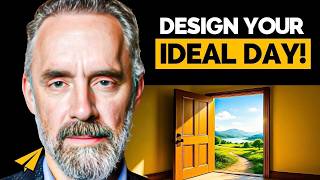
Jordan Peterson explains how an hour-by-hour calendar, paired with vivid visions of your best and worst possible futures, beats procrastination. He breaks goals into micro-tasks, uses room-cleaning as practice for handling chaos, and argues that doing something badly beats paralysis.
Chapters
If you're a fan of Jordan Peterson and you're looking for ways to have a vision, schedule the life you want, and not make excuses, then this video is for you.
I plan each hour and I probably plan each minute. And yes, it leads to way higher productivity.
You need a vision of what your life would be like if it was just the way it should be, if it was best for you, and if you were taking care of yourself.
Like, there's no excuse whatsoever for not getting at what it is that you should be doing.
What's up, Believe Nation? It's Evan. My one word is believe, and I believe in you. I believe you have an amazing gift and talent inside you that I want to see explode out onto the world. I started the Mentor Me series to try to hang around people who've done a lot more than us, and hopefully by spending a little more time with them, some of their beliefs, their mindset, their way of thinking seeps into us to help us become the best version of ourselves. So today we're gonna learn from one of the best, Jordan Peterson, and some of his best advice on how to stop procrastinating. Mentor me, Jordan.
Do you plan your day much, or your time generally? Does this lead to higher productivity? Yes, I plan my day obsessively. My calendar is always absolutely full and often weeks in advance. And I plan in the morning, especially when I'm on top of things. And I plan each hour, and I probably plan each minute. And yes, it leads to way higher productivity. You know, you, you decide what your goals are going to be, you place them in the calendar, use the calendar as your friend, eh? Because what you want to do with the calendar is design a day that you want to have, or a day that would be good for you. And a day that would be good for you is one that you're that you're, you know, when you end the day, you feel that you've moved, moved yourself ahead towards your valued goals and that you've kept chaos under control. And that enables you to sleep soundly and with a good conscience and to know that the next day is going to be at least not worse than that day. Planning is unbelievably useful. And again, you know, I don't want to sound like a broken record with regards to the Future Authoring program, but it really is useful, you know. You need to figure out what it is that you're aiming at and why, and then you need to figure out how you're going to break that down over the months and the weeks and the days. But I would approach your calendar like it's your best friend. You think, okay, I'm going to design a week, man, that I really want to have. And that means you can schedule in leisure and all the things that you want to do, which, which you absolutely should do. And it's also quite fun to give yourself minimal time to do something complicated because it's quite challenging to see if you can do far more than you thought in far less time. And so that's a fun game. And the other thing you can do is like if you're avoiding something, you could schedule in 5 minutes of it. Say, well, like if you're avoiding looking at some bills because you're afraid of them, you know, your first step might be to schedule in 5 minutes where you just look at the bill. You don't do anything else. And you know, you might be able to entice yourself into doing that. So, but I would say Learning to plan is unbelievably useful to schedule your time because that's your life, you know. But schedule the life you want. That means you have to schedule your responsibilities off, obviously, because responsibilities are those things that ruin your life if you don't fulfill them.
One of the things that can help you stop procrastinating— well, let's say two things. I referred to them at the end of my talk. One is to have a really nicely developed vision of heaven. It's like, okay, here's what you need to know. How would your life be? What would it be like if it was really good? And I don't get primitive about that. It's not like naked supermodels on a yacht. They're too skinny anyways. Anyways, you know what I mean. It's like, "Yeah, yeah, I get it, but it's not agape," say. So it's not sophisticated enough to be self-sustaining. It's a stupid vision, and if you pursue it, you're just gonna be on a sinking yacht with anorexics or something like that. So you need a vision of what you're what your life would be like if it was just the way it should be, if it was best for you, and if you were taking care of yourself with this thing that you kind of described as parental love. It's a really good way of thinking about it because it's nice and concrete. So what would be best for you 3 to 5 years down the road if you were really taking care of yourself like you were someone that you thought should be around? And people are very ambivalent about whether they should be around, so this is a lot harder than you think. So you need that vision. And then what you also need is a vision of what your life would be like if you let yourself deteriorate in precisely the foolish ways that you know that you would deteriorate if you let yourself go. And that's contemplation too. It's like, "Okay, if I let myself go, where would I end up?" And first of all, this is kind of a shadow realization from a Jungian perspective. It's like, first of all, you could let yourself go. Second of all, you already know exactly how you'd do it if you did do it. And third, with a little imagination, you can conjure up exactly what that would be like, not only for you, but for your family and for the broader social community, and that would be the whole bloody catastrophe, including all the malevolence that would go along with your deterioration and so on. And so then you've got these stark choices before you. One is a gap A-oriented equilibration, for lack of a better technical phrase, and the other is something that more closely approximates hell than people even think. Because if you sink low enough, not only do you sink that low, but you are absolutely motivated to drag people down there with you. And it's a nasty, nasty state of affairs. And so if you're really terrified If you're terrified of that, like you should be, because you've drawn the causal connections, and you're really attracted by the other, then when you sit down and you don't do what you're doing, what you're supposed to be doing, you don't get to say, "Well, it doesn't matter." And that's the salience landscape issue. It's like, "No, no, no." The little voice in the back of your head that says it matters, it sees those outcomes down into the future, and it's telling you that it matters. Would like the positive outcome over the negative outcome, which is, like I said, your constant choice. You bloody well better sit down and do what you're supposed to. And so that's really helpful. I think, what is it? Fear of God is the beginning of wisdom. It's like, yes, that's absolutely right. And the role of things like anxiety and terror in promoting proper development, well, are often under-addressed, because we think of those things as our enemies. It's like, they're your enemies if they're working against you, but they're pretty powerful monsters on your side if you've You've got them oriented properly.
I know you stated in the last lecture that the importance for setting aims in life and to kind of have goals to work towards, right? So my question was, how do you do that if you don't know where you want to go? Because that's kind of where I got stuck on your future authoring program because—
Okay, that's a good That's a really good question. So there's this notion in the Old Testament that morality is following a sequence of prohibitions. There's a bunch of bad things you shouldn't do, and then basically you're good enough. And I think there's wisdom in that. I think that's kind of where children start, right?
You—
I mean, I love children and all that, but they're crazy little creatures, and they need to be, you know, civilized. And partly what you do is you You lay prohibitions on them, and mostly what you're trying to do is lay prohibitions on them for the behaviors that, if they manifested, would make their life miserable. So this is why this thing that I've said to people has become this crazy internet meme, but that's to clean up your room. And— which is a lot better and more useful than people think. It's a lot harder too, but the thing— the first thing you do, I think, and I learned this in part from Solzhenitsyn, when he was trying to iron out his soul when he was in the Gulag, because he was trying to figure out how he got there, how he contributed to how he got there. You know, not Stalin and Hitler, even though they were kind of to blame, you know, but there wasn't much he could do about that. I think what you have to do, and this is part of humility, is you have to look around you within your sphere of influence, like the direct sphere of influence, and fix the things that announce themselves as in need of repair. And those are often small things, you know, and they can be like your room. Put it in order. Because the thing is, it isn't exactly so important that your room is in order, although it is. What's important is that you learn how to distinguish between chaos and order, and to be able to act in a manner that produces order. And I think you can do something as simple as just sit on your bed and think, okay, there's probably like 5 things I could do today so that Tomorrow morning is slightly better than this morning was. At least I'm not falling behind. And those will usually be— it's like having to eat a toad in the morning, right? It's not going to be something you want to do. There'll be things you're trying to avoid. They're snakes, essentially. But if you ask yourself, like you're asking someone, which I think is a form of prayer, if you ask yourself instead of telling yourself, you know, "What is it that I could do to set things more right today?" that I would actually do— it's usually some small thing, because you're not that disciplined, you know— then you can go do it. And then you put the world together a little more when you do that, and that spreads out. But you also put your— you also construct yourself into something that's better able to call order forth from chaos. And that makes you just incrementally stronger. And then the next day, you can maybe take on a slightly larger task. And, like, you get the benefit of compound interest if you do that. It's a tremendously powerful technique. And I think if you do that, at some point, instead of just having to fix things up that are not good, you'll start to get a glimmer of the positive things that you could do. You know, the positive things that you could do that would actually constitute a vision. And that's what I would recommend. No one can live without a routine. You just forget that. If you guys don't have a routine, I would recommend, like, you get one going, because you cannot be mentally healthy without a routine. You need to pick a time to get up. Whatever time you want, but pick one and stick to it, 'cause otherwise you dysregulate your circadian rhythms, and they regulate your mood. And eat something in the morning! I had lots of clients who've had anxiety disorders. I had one client who was literally starving. Very smart girl. She— there's very little that she liked. She kinda tried to subsist on like half a cup of rice a day. She came to me and said, "I have no energy. I come home, all I wanna do is watch the same movie over and over. What— like, is that weird?" And I thought, "Well, it depends on how hard you work. You know, it's a little weird, but whatever." It's familiar, you're looking for comfort. So, I did an analysis of her diet, it's like— 3/4 of a cup of rice. It's like, you're starving! Eat something! You know? You'll feel better! So— she modified her diet, and all her anxiety went away, and she had some energy. It's like, yeah! You gotta eat! So, a schedule. That's a good thing, man. Your brain will thank you for it. It will stabilize your nervous system. With a bit of a plan, that's a good thing. Okay, so imagine that something glimmers before you. It's an interest that's dawning. And you decide— well, first of all, you're paralyzed. You think, "Well, how do I know if I should pursue that? It's probably a stupid idea." And the proper response to that is, "You're right, it probably is a stupid idea." Because almost all ideas are stupid. And so, the probability that as you move forward on your adventure, that you're going to get it right the first time is zero. It's just not going to happen. And so then you might think, well, maybe I'll just wait around until I get the right idea. And which people do, right? So they're like 40-year-old 13-year-olds, which is not a good idea. So they wait around until— it's waiting for Godot, until They finally got it right. But the problem is you're too stupid to know when you've got it right. So waiting around isn't going to help. Because even if the perfect opportunity manifested itself to you, in your incomplete form, the probability that you would recognize it as the perfect opportunity is zero. You might even think it's the worst possible idea that you've ever heard of anywhere. Highly likely. Highly likely. So, so you have— there's— Nietzsche called that a will to stupidity, which I really liked. So, because he thought of stupidity as being it, you know, it's— you have to take it into account fundamentally and work with it. And so you can take these tentative steps on your pathway to destiny, and you can assume that you're going to do it badly. And that's really useful because you don't have to beat yourself up. It's pretty easy to do it badly. But the thing is, it's way better to do it badly than not to do it at all. When people are beset with a catastrophe, like let's say the death of their father, that they are prone to use that as an excuse for not going about the business that they should be going about. Because they can say to themselves, "Well, I would, except..." And except, there's always good reasons. I mean, believe me, there's always good reasons for not doing what you should. That's for sure. The reasons pile up day after day to not do what you should. Especially because you're aiming at things in the future, you can put them off indefinitely, right? Because of the demands of the day. Like, there's no excuse whatsoever for not getting at what it is that you should be doing. It's absolutely reprehensible to justify your inaction with a catastrophe that extracts mercy from other people, right? There's a tricky, tricky game that's going on. Well, of course I can't do that. Look at the terrible thing that's just happened to me. It's, yeah, okay, I understand. You're absolved of any necessity to move forward. Forward because of your current catastrophe. It's like, well, actually you're not, and it's rather rude of you to use it as an excuse, and it's certainly counterproductive.
Thank you guys so much for watching. I hope you enjoyed. I'd love to know what was the single biggest takeaway that you took from this video that you're going to immediately apply somehow to your life, to your business, to your goals. Let me know, leave it down in the comments below. When you write it down, it's more like to stick with yourself as well. So I'm looking forward to hearing from you. I also want to give a quick shout out to OJ from Coach.Life. Thank you so much for picking up a copy of my book, Your One Word, and doing the review on your YouTube channel. I really, really appreciate the support, and I'm so glad you enjoyed the book.
I highly recommend you read this book called Your One Word by Evan Carmichael.
So thank you guys so much for watching. I believe in you. I hope you continue to believe in yourself and whatever Your one word is much love. I'll see you soon.
So let me give you the one word secret to happiness.
One word.
This is all you need to be happy. The most important word ever. If you had to think of one word that's most important to you or that sums you up or that would be kind of like a little beacon.
Hey, Believe Nation, if you want to know what the most important one word is for Tony Robbins, Gary Vaynerchuk, Oprah Winfrey, will.i.am, and Howard Schultz, I have a very special secret video for you. Check the description for details.
More from Evan


How the Biggest Mistake in History Created A Trillion-Dollar Empire | Sergey Brin



9 Machiavelli Principles That Force People To Respect You | Machiavellian Philosophy



The First 10 Words That Instantly Ruin A Sales Conversation | Vanessa Van Edwards

The Top 1% Mindset Behind The First $5 Trillion Company | Jensen Huang (Nvidia)

