Discover Your Creative Mindset with JJ Abrams | Top Rules
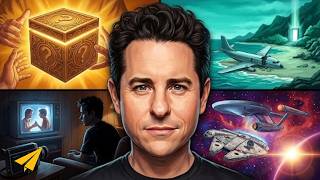
J.J. Abrams shares his approach to creativity and storytelling, including his famous mystery box concept. He discusses collaboration, career lessons from Star Wars and Lost, and advice for aspiring filmmakers.
Chapters
The only reason I could deal with the pressure on Star Wars is because I fucking loved making that movie. And if it didn't work, of course I would have been crushed, but I wasn't doing it because it was a job. But most people talk about writing screenplays but don't actually write them. The people who write them, you're already like in, you know, the top 10% because you actually have written it. 10 years ago, if we wanted to do that, we'd have to kill a stuntman. We'd actually—
Hello, Believe Nation, it's Evan. My one word is believe, and I believe in people more than they believe in themselves. And my sincere hope is that if you see in yourself what I see in you, you'll be able to change the planet. So to help you on your journey today, we're gonna learn from film director and producer J.J. Abrams and my take on his top 10 rules for success. Rule number 6 is my personal favorite, and I'd love to know which one you guys like the best. Also, as you're watching, if you hear something that really resonates with you, please leave it down in the comments below and put quotes around it so other people can be inspired by it as well. And if you leave it within the first couple hours of this video going live, you have a chance to win one of two daily prizes.
Given all the opportunities that are there, uh, in, in the world, to try and figure out the thing that actually makes you want to get up in the morning, the thing that you actually love. I just, I just know that if I weren't lucky enough to have been given the opportunity to write a movie or a show or direct anything or produce anything, I would still go home from whatever that day job is and I would try to do it because I love it, not because I really want to make a certain amount of money. It's great to be comfortable, It can be dangerous to be comfortable, but it's great to be comfortable. But I just feel like if you can figure out the thing that makes you tick, find that thing. And the other thing I would say, I guess, is a lot of young people, I find, are under such pressure. There's a kind of sense of it's all or nothing, which I think is really unfair. Meaning, I don't know if it's the media and the way things are presented, or if it's because there's so much success that is celebrated in society. But there is a sense I've heard enough that I feel like— I haven't thought of this till now— that it is a kind of theme that young people feel like if they don't know what they're born to do, that they're somehow broken. And I think that it needs to be looked at differently, which is that it means if you don't know that thing, it means that every door is there's the possibility. That's a beautiful thing. So I just feel like I would say, don't stress yourself out. The only reason I could deal with the pressure on Star Wars is because I fucking loved making that movie. And if it didn't work, of course I would have been crushed. But I wasn't doing it because it was a job. And if you can find that thing and deal with the pressure of maybe not making the amount of money that you would like to yet, or not getting to the company you'd like to yet, or not having success with your startup yet, These are all things that I think you can swallow if the thing you're doing speaks to you. Because the resources have been so limited for so long, there are a lot of people who would say, "God, if I only had access to a camera, I would make a movie." There's a lot of talk about it. I remember when I was in college, I spent most of my time in my room writing screenplays. Really bad screenplays, but I was in my room doing that. When I probably should have been studying or something. There were a lot of people I remember at parties who would talk about writing and that they wanted to be a writer, but I would always notice that they were out every time I would happen to go out. They would always be out, and they— I just know that there are people who talk about what they would do if, but they're not actually doing the thing. And so it's a lot easier to actually write a screenplay than you think it is. It might not be good, but most people talk about writing screenplays but don't actually write them. The people who write them you're already like in, you know, the top 10% 'cause you actually have written it. A, I love the movie Star Wars so much. I love the original trilogy. I was 11 years old when I saw the first one. It had a profound impact on me. And so the idea of getting so close to something kind of scared me a little bit. And also I've been working on a bunch of things and Katie, my wife and I had, you know, plans with a family to go away for a little while. Really? Yeah. And then Kathleen Kennedy calls, she's like, do you wanna direct Star Wars? And it was a real, I was like, I said no thank you. But then she said, "Can we talk in person?" I said, "Of course." And she came in and we met. And all we had to do was start talking about it. And I just felt myself like—
You got carried away with yourself.
Yeah, the idea that if I had— Katie said afterwards, the meeting I talked about, and she said, "If you pass this up, you'll probably regret it for the rest of your life. You should really consider it." A lot of times writers will say, "I'm working on this thing, but I don't know if anyone's gonna like it. It feels sort of like this boring thing that I love." You know, and it's amazing how often that boring thing that you love becomes a sensation. And I think the key is to do that. Once you start working on something saying, "Oh, they'll like this. This'll be cool for them." I mean, literally, we were working on this book, you know, and we were like, "This is insane. And it's never gonna, you know, happen. And we'll see." And, you know, to approach something with a kind of excitement that is shared in this weird way where you just know it makes you happy. And then to see it on the, you know, New York Times bestseller list, we're like, "Oh my God." Like, that's nuts. We never would have dreamed it. It's really a result of, you know, having an idea that stayed with me and that I love, but that Lindsay felt like, "Oh, this could be something." Finding Doug, who took it and said, "Oh my God, what about this?" And it was like, at each stage, we were sort of, you know, just turned on by what it could be, but never thinking, "Oh, this is gonna work really well." Because actually, we were thinking, "Oh my God, no publisher's ever gonna be able to pull this off." You know, which Little Brown and Mohawk Books totally did. You know, and even if they do, who's gonna want it? And it's been nice to have it received warmly and very unexpected, frankly. But the answer is just to work on things that you actually care about wherever you can. And to not try and think too hard about what it's gonna be like when it goes out into the cold, hard reality of the world. You know when you're watching a movie and you hear a line and it feels like, "Oh, they thought that was gonna be a line in the trailer." Like, you just know that on the set someone was like, "Ah, that's a trailer moment." Because it doesn't feel real necessarily in life, but it just feels like, "Ah, that's a great soundbite, it's a great thing." There's a visual equivalent of that, and you gotta be really careful, 'cause sometimes I'll think, "Oh, this is like one of those moments," and then you end up doing it, and the truth is it ends up feeling posed. It just doesn't feel authentic. I try for those sometimes, they never seem to work. I think that the key for any of this stuff, and whether we've accomplished it or not is up to the audience, but I think that the key to any movie working, certainly a movie called Star Trek, which could, be seen as campy, is finding authenticity. And it's— whether it's in a little nuance, a little moment, a character exchange, a look, a glance, or a huge plot point, there's something for me that is— if I don't really understand what's going on, if I can't really get into or under the skin of these characters, none of the spectacle is going to matter. It's a very strange thing. I was— at a baseball game recently with Stephen King. And he was telling me about this idea he has for this story he wants to write. And he was talking about it in a way— and yes, what he was telling me was terrifying. But it was the way he was telling it that was so incredible to me. Because he was saying it like this. He was like, Well, I know— I'm not going to say what the story was because he would then kill me. But he said, I know that there's this person who— and he started talking about it. And I know that there— and listening to the way he was saying what he knew, because he hadn't worked on it. He hadn't sat down and outlined it. There was no strategy to it. But it was like he was just— his intuition of what it should be, And he knew enough to know he's got something to take that leap of faith. And any creation, any act of creation is a leap of faith. And I just think that it's part of the fun of it is knowing that it may work. And he, you know, and then the other thing I just want to say, which is years ago, I was working with James L. Brooks who, you know, did some of my favorite movies and TV shows. And this is 20-some years ago, but I remember I was reading a book about how he wrote Broadcast News, and how he structured it, and how at a certain point in Act 2, there was this transition. And then the end of Act 2 to Act 3, he'd done this, and all this stuff. And I said to him one day, I was like, Jim, so I just want to ask you something about Broadcast News. When you did that transition from the second act to the third act, did you know that Jane was going to do this? And he's like, what are you talking about? And I said, well, that thing— he's like, what transition? And what I realized was, because it was all bullshit, was that the writer of this book on how to write screenplays had deconstructed what James L. Brooks had written and had written about how he had done it. But he hadn't done it that way. He just wrote and told the story that he believed in, and he found it. But you can always deconstruct, as companies do left and right, what you make. And they can go, oh, this is what they did, and this is why they did it. And they can deconstruct it and then try and— but they're already starting from a place of artifice, of duplication, as opposed to a place that I know you and I know how you do it, of authenticity. And I feel this thing that should exist, and you take that leap of faith that it may work. The thing that I think is— it was— it's not as much advice that I was given per se, but what I kind of learned early on is that your voice is as important as anyone else's. Now, you may not always be right, and you shouldn't be cocky about it, but that there's a kind of— I felt like I needed to learn that the ideas that I had were as good as anyone else's ideas. You know, certainly not, not better. And, and I love the collaboration, so it wasn't like I felt like, uh, it was a battle. But it was— it's one of those things I think that, that it's, it's good to be reminded, or if you don't know it at all, be told that that thing that you feel, if, if you really feel it, other people do too. And, and that's something that is, uh, to be, you know, mined and to be to be celebrated. The truth is that if the master you're serving is the project, is the idea, is the book in this case, being territorial or, you know, if I were to, you know, not be willing to share this idea, I'd be nowhere near this room right now and I would not be talking to you. The whole point of it is if there's an idea that's worth doing. And if you think you can do it yourself, great, you know, you should do it. But no movie gets made with one person. No television show does. And while a lot of books do, I knew this book wouldn't, just myself. And the collaboration was really something that was born out of a discussion with Lindsay Weber. And in talking about it with her, the idea of like, "Well, let's find someone that we can collaborate on this thing." And so, you know, my name is on the book. I'm already getting too much credit as it is. The truth is that, you know, Doug is the author of record of this book. And my involvement, yes, I had the original idea and they probably felt that it was easier to go out and sort of sell the book if I was part of that. But the experience of doing it was such a wonderful experience. The collaboration was so great. And anytime, I'm sure you've felt this if you've ever collaborated with people in this way, when someone is better than you are at something and they inspire you, your ideas get better. And then you're suddenly saying, "Well, wait a minute. How about this? I never would have thought of it, but what about this?" You know, I will say I'm working right now with Lawrence Kasdan, you know, on a script. And working with him has been such a joy because he will throw out ideas that in a million years I would never have thought of that are patently better than any idea I would have had that day. And all of a sudden, he ups my game because he is so good. And I felt the same exact thing working with Doug. He brought to me and to Lindsay a world that took a notion that could have gone any direction and I think just elevated it completely. So I embrace the collaboration. I don't care who has the best idea when we're working on a movie. I always tell the crew, whoever has the idea, if there's a moment that you think will make this moment better, more authentic, funnier, scarier, more interesting, please share it. When I talked to the kind rep from TED, and I said, "Listen, you know, what should I talk about?" He said, "Don't worry about it, just be profound." And I took enormous comfort in that, so thank you if you're here. I was trying to think, what do I talk about? It's a good question. Why do I do so much stuff that involves mystery? And I started trying to figure it out. And I started thinking about, why do I do any of what I do? And I started thinking about my grandfather. I loved my grandfather. My grandfather. Harry Kelvin was his name, my mother's father. He died in 1986. He was an amazing guy. And one of the reasons he was amazing, after World War II, he began an electronics company. He started selling surplus parts, kits to schools and stuff. So he had this incredible curiosity. As a kid, I saw him come over to me with radios and telephones and all sorts of things, and he'd open them up, he'd unscrew them and reveal the inner workings, which, many of us, I'm sure, take for granted, but it's an amazing gift to give a kid, to open up this thing and show how it works and why it works and what it is. He was the ultimate deconstructor in many ways. And my grandfather was the kind of guy who would not only take things apart, but he got me interested in all sorts of different odd crafts, like, you know, printing, like the letterpress. I'm obsessed with printing. I'm obsessed with silk screening and bookbinding and box making. And when I was a kid, I was always taking apart boxes and stuff. And last night in the hotel, I took apart the Kleenex box. I was just looking at it. And I'm telling you, this— it's a beautiful thing. I swear to God. I mean, when you look at the box and you sort of see how it works— Reeves is here, and I met him years ago at a book fair. He does pop-up books. And I'm obsessed with engineering of paper. But the scoring of it, the printing of it, where the thing gets glued, you know, the registration marks for the ink. I just love boxes. My grandfather was sort of the guy who, you know, kind of got me into all sorts of these things. He would also supply me with tools. He was this amazing encourager, this patron, sort of, to make stuff. And he got me a Super 8 camera when I was 10 years old. And in 1976, that was sort of an anomaly, to be a 10-year-old kid that had access to a camera. And, you know, he was so generous. I couldn't believe it. He wasn't doing it entirely without some manipulation. I mean, I would call him and I'd be like, listen, Grandpa, I really need this camera. You don't understand. This is like, I really, you know, I want to make movies. I'll get invited to TED one day. This is like— and, you know, and my grandmother was the greatest because she'd be like, you know, she'd get on the phone, she'd be like, Harry, it's better than the drugs. He should be doing this. She was fantastic. So I found myself getting this stuff and thanks to her assist, and suddenly, you know, I had a synthesizer when I was 14 years old, this kind of stuff. And it let me make things, which to me was sort of the dream. He sort of humored my obsessions with other things too, like magic. The thing is, we'd go to this magic store in New York City called Lou Tannen's Magic. It was this great magic store. It was a crappy little building in Midtown, but you'd be in the elevator, the elevator would open, there'd be this little small magic store, you'd be in the magic store, and it was a magical place. I got all these sort of magic tricks. Oh, here, I'll show you. This kind of thing. So it would be like, you know, right? Which is good, but now I can't move. Now I have to do the rest of the thing. I'm like this. I'm like, "Oh, wow, look at my computer over there." Anyway, so one of the things that I bought at the magic store was this: Tannen's Mystery Magic Box. The premise behind the Mystery Magic Box was the following: $15, buys you $50 worth of magic, which is a savings. Now, I bought this decades ago, and I'm not kidding. If you look at this, you'll see it's never been opened, but I've had this forever. Now, I was looking at this— it was in my office, as it always is, on the shelf— and I was thinking, why have I not opened this? And why have I kept it? Because I'm not a packrat, I don't keep everything, but for some reason I haven't opened this. I felt like there was a key to this somehow, in talking about something at TED that I haven't discussed before and bored people elsewhere. So I thought, maybe there's something with this. I started thinking about it, and there was this giant question mark— I love the design, for what it's worth, of this thing— and I started thinking, why haven't I opened it? And I realized that I haven't opened it because it represents something important to me. It represents my grandfather. Am I allowed to cry at TED? No, I'm not going to go there. But the thing is that it represents infinite possibility. It represents hope. It represents potential. And what I love about this box, and what I realize I sort of do in whatever it is that I do, is I find myself drawn to the that sense of potential. And I realized that mystery is the catalyst for imagination. Now, it's not the most groundbreaking idea, but when I started to think that maybe there are times when mystery is more important than knowledge, I started getting interested in this. And so I started thinking about "Lost" and stuff that we do, and I realized, oh my God, mystery boxes are everywhere in what I do. Somehow, in the creation of "Lost," Damon Lindelof and I, who created the show with me, we were— basically tasked with creating this series that we had very little time to do. We had 11.5 weeks to write it, cast it, crew it, shoot it, cut it, post it, turn it into a 2-hour pilot. So it was not a lot of time. And that sense of possibility— what could this thing be? There was no time to develop it. I'm sure you're all familiar with those people who tell you what you can't do, what you should change. And there was no time for that, which is kind of amazing. And so we did the show. And for those of you who, you know, haven't seen it or don't know, I'm going to show you this One little clip from the pilot just to show you some stuff that we did. Help! Please help! Help me! Help me! All right, get him out of here. Get him away from the engine. Get him out of here. I'm having contractions. How many months pregnant are you? I'm nearly 8 months. How far apart are they coming? I don't know. I think it just happened. Now, 10 years ago, if we wanted to do that, we'd have to kill a stuntman. We'd actually— it would be harder. Take 2 would be a bitch. So the amazing thing was we were able to do this thing, and part of that was the amazing availability of technology, knowing we could do anything. I mean, we could never have done that. We might have been able to write it. We wouldn't have been able to depict it like we did. And so part of the amazing thing for me is, in the creative process, technology is mind-blowingly inspiring to me. I realize that that blank page is a magic box. It needs to be filled with something fantastic. I used to have the Ordinary People script that I'd flip through it. The romance of the script was amazing to me. It would inspire me. I wanted to try and fill pages with the same kind of spirit and thought and emotion that that script did. I love Apple computers, I'm obsessed. So the Apple computer, like those, the PowerBook, this computer, right, like it challenges me. It basically says, you know, "What are you going to write worthy of me?" Like I feel this, I'm compelled. And I often am like, you know, "Dude, today I'm out. I got nothing." So there's that. In terms of the content of it, you look at stories, you think, well, what are stories but mystery boxes? There's a fundamental question. In TV, the first act is called the teaser. It's literally the teaser. It's the big question. So you're drawn into it, then of course there's another question, and it goes on and on and on. I mean, look at like Star Wars. You got the droids, they meet the mysterious woman. Who's that? We don't know. Mystery box, you know. Then you meet Luke Skywalker, he gets the droid, you see the holographic image, you learn, oh, it's a message, you know, she wants to, you know, find Obi-Wan Kenobi. He's her only hope. But who the hell's Obi-Wan Kenobi? Mystery box. So then you go and he meets Ben Kenobi. Ben Kenobi's uncle is Obi-Wan Kenobi. Holy shit, you know. So it keeps— have you guys not seen that? It's huge. What do you think of Stephen King? I mean, honestly. He is— We'll edit this out. No, he's the greatest. No, he's scary, right? He's frightening. Well, he's got a very— you know, he's obviously one of the most brilliant minds of all time. Has he murdered anyone? Well, it's funny. I met him many, many years ago. We were doing this show Lost, and Damon Lindelof and Carlton Cuse and I went to Maine to have a meeting with him for this magazine. Oh, no. Well, to interview him. We all survived. We all lived. No, it was good. To interview him, and he interviewed us for this magazine. It was all good.
Behind glass?
No, no, it was in the same room. And by the end of the interview, he said, you guys want to go see a movie? We're like, sure. So I've told the story before, but we go to see a movie, and it was a horror movie.
Yeah, it's a film of you guys getting cut up in pieces.
No, no, no. And it was called The Descent, a very scary, well-made movie. And we go to see this movie. Movie, and I'm in this theater in Maine with Stephen King, sitting next to Stephen King, watching a horror movie, which is like a dream in life, right? So you're watching, and every time someone was really horribly killed, he would go, that's awesome. He loved it. He was so— That makes so much sense. He loved it. It was everything. It makes a lot of sense. He's one in a million.
He's Stephen King.
I know he wanted it. It was everything going to a horror movie with Stephen King should be. It was fantastic.
Thank you guys so much for watching. I made this video because the TF Nerd asked me to. If there's someone you'd like me to profile in a future top 10, please check out the link down in the description below and you can cast your vote on who we should do next. I also want to give a quick shout out to Terry Whalen. Terry, thank you so much for picking up a copy of my book, Your One Word, and giving it that 5-star feedback on Amazon. I'm humbled and I really, really I really appreciate your support. Thank you guys again for watching. I believe in you. I hope you continue to believe in yourself and whatever your one word is. Much love. I'll see you soon.
Do you think there will be a time when you'll be able to, you know, create your own idea for the big screen, write your own script instead of working on a franchise? I never expected that the first thing I would direct would be based on a television series. It would be a sequel to a series of films based on a TV show. When Tom Cruise gave me the opportunity to direct that movie, it was the most surreal, amazing— literally to this moment, I cannot believe he asked me to direct that film. It doesn't make sense to me. This still, to me, is like, what? How did he let me do that movie? So I got to direct a movie that was of a genre I adore, starred someone who is the biggest actor in the world and the nicest guy ever. I got to work with the greatest crew ever. It was like the dream situation. So I did that movie for many, many, many reasons, not necessarily because it was based on a TV show. And I thought, wow, I'd gotten that chance. I was so grateful. And now I'll find some original thing to do. And I was working on Star Trek as a producer. And I was never a fan of Star Trek to begin with. But when I finally read the script that we'd been developing, I thought, oh my god, this movie's got great characters, amazing action. It's incredibly emotional. It's got the great optimism I was referring to. It's got spectacle and intimacy. All the things I love, and I thought, well, this is nuts. If I don't do this movie, I'm going to regret it. All right, JJ, I need to know, what's the deal with the smoke monster? JJ, will you finally bring back Jar Jar Binks? We are developing a Netflix series called Binks and I. JJ, what does it feel like to be you? Awesome. JJ, what happened to Darth Vader's grandchildren? Oh, George, this is great. Uh, you tell me, man. You made all this shit up.
My question is, do you think that we're all alone in the universe or not?
This just got very grim. No, I don't think we're alone in the universe. I don't. I don't. I don't. But let's see what this is. I have a question for you. I want to know why you didn't cast me as Chewbacca. I'm a little offended. I think you know my reputation of my ability to transform. And not only can I grow hair, I can grow hair all over my body. Next question. A little disappointed. I'm disappointed, but I'd love to know the answer to that. Um, and why you haven't returned my calls. Uh, he was already cast. This is— I had nothing to do with it.
More from Evan


How the Biggest Mistake in History Created A Trillion-Dollar Empire | Sergey Brin



9 Machiavelli Principles That Force People To Respect You | Machiavellian Philosophy



The First 10 Words That Instantly Ruin A Sales Conversation | Vanessa Van Edwards

The Top 1% Mindset Behind The First $5 Trillion Company | Jensen Huang (Nvidia)

