Don't accept BS answers - #EvansBook ep. 46
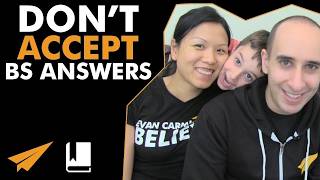
Evan Carmichael calls out surface-level BS answers and digs into real reasons behind problems. He covers delegating without full-time hires, building remote teams on Upwork, job-search strategy, and why authentic self-presentation beats polished resumes.
Chapters
Don't accept BS answers. So I'm recording this video again. I did this video initially as a Blab, but Blab stopped sending me recordings and it didn't actually record what I wrote, which is super frustrating. And I'm a big believer in making videos when I'm in the moment, when I'm excited or frustrated about something, and I try to do it on book day so I can give you something that's relevant and contextual. Uh, so we actually missed the book video last weekend because it didn't come out properly. The message that I was talking about was not accepting BS answers, and I'll do my best to kind of get back into my frustrated state of mind that I was in before. But I think what happens a lot of times is people at first glance don't want to give you the real answer. People don't want to tell you the real problem, uh, behind why something is not happening. And this was happening in my book where They didn't want to put logos and pictures in the book, as an example. And they were telling me that, "Well, book buyers don't want to buy it if there's pictures in it." And first of all, how many books have a picture in it? And second of all, you know, because there's a logo on page 43, that means a book buyer is not going to want to buy the book? Come on, that's a BS answer. And so somebody tied to the, you know, to the publishing company that I'm working with was talking about this, and I had to call them out. I was like, that's a BS answer. You know, that's not the real reason why you don't want the pictures in there. Often what you have to do is dig deeper when you're having conversations to find out the real reason behind the reason. I think people will often try to cover things up, and it happens in a lot of different situations. I'm thinking about one of the entrepreneurs that I'm mentoring right now and how he's trying to grow and build himself up, and I have to call him on a lot of the BS that he tells himself too, right? Like, "I can't do this because of XYZ." Like, that's just BS. You're just afraid. And having to dig deeper to why he's afraid to then help him get over that hurdle and solve the problem. And so I think very, very, very often if you're dealing with a customer or supplier or investor or media or employees or anybody who relates to your business, very, very often the default answer that people give you is not the truth, is covering something up, mostly because they may not want to hurt you, or because they have some deep fear that they don't want to acknowledge or share, or they don't want to get into a long, deep conversation. Think about how often you just say, when somebody asks you, "Hey, how you feeling today?" You just say, "Yeah, yeah, I'm good, I'm good." But meanwhile, you're not. Like, there's a ton of crap happening, but you just don't want to go deeper into it because it's not worth that time for you. And so your job as the entrepreneur to go deeper is to make that person feel comfortable to explain themselves, to want to go and have a bigger conversation, and sometimes to call them out on their BS and say, "Listen, tell me the real reason." Because if you want to get something done and it's not happening, you got to get to the core reason and not just accept other people's BS. I kind of got a little excited. I was much more upset when I first recorded it, but I feel like I still gave you something there. Cool, let's get to the questions, which I already answered as well, but I'm feeling it and want to give you guys some value. 2help4guys, "Hey Evan, we love the content. You're putting out a book around this. It's building our anticipation. We can't wait until you put it out." Thank you for that, I appreciate it. "Do you have any tips for delegation when you don't have employees, maybe virtual assistants, outsourcing of some kind?" Yeah, I think one of the biggest mistakes that people make is feeling like they have to hire somebody full-time right away. Don't hire somebody full-time right away, especially if you've never managed anybody before. You want to work your way into it. You're gonna make a lot of mistakes. It's gonna suck up way more time than you think it will. You're probably gonna hire the wrong person to start with. And so, uh, don't go hiring somebody full-time. It's also a lot more expensive. The first person I hired was for 1 hour a day. That's it. 1 hour a day to do database work for me. That freed up more than an hour of my time a day because he was better at it than I was. And that's how you start. Right now I hire most of my new people through Upwork. Uh, it's a system designed for getting people remotely. I built a great team. I love the people that I'm working with now. Some people work full-time, some people work part-time. Overall on my team, we're up to 19 people, working on my 20th hire right now. And I recommend it. I mean, you need people to help you build this thing up. You can't do everything yourself. And I know it's frustrating, and I know finding the right people can, can suck a lot of times, just the process sucks, but when you find that right person, man, it makes a world of difference and it's definitely worth it. Next, Mira Choi, "Hello, I'm a new subscriber to your channel. It's been great to see everything you've informed me for the past 2 months." Welcome to Believe Nation, Mira. "I was wondering if you had a chance to create a video in the near future about resumes, interviews, prioritizing, changing a career. This comment has nothing to do with this video, but as I'm going through that change, it'd be good if I had some resources." You know, you're right, I don't really talk much about resumes and interviews. I think the job hiring process is broken, and I've done some videos on how I hire. And this actually ties well to the last question. I think the most important thing, if you are looking at becoming, uh, you're taking on a job, is that you're going to learn, right? You take a job to learn. Whether your eventual path is to be an entrepreneur or you want to stay a career employee, you want to be in a place where you feel like you're learning. Every day. I think a lot of people are in jobs where they're not learning anymore, and that's when they get frustrated. That's when they give up. That's when they're living for the weekends and the evenings. The challenge for you is to identify when you're going through the job process, is this a company that I can learn at? Usually the biggest factor is, is this a boss that I can learn from? You look at job satisfaction, you look at growth, it's mostly coming from your immediate boss. Do they look out for you? Do they support you? Do they try to teach you new things? And if you feel like you're learning and growing from them, then that's high on job satisfaction. And if you feel like they don't care about you, then it usually leads to a lot of dissatisfaction in your job. This may sound corny, but I would challenge you to try to be yourself. Take a little bit more risk, show a little bit more personality. I think people are just living the Photoshop versions of themselves. Everybody is friendly, everybody has, you these fake resumes, you go through the job interview process and you're on your best behavior, and you don't really get to know the people in more detail. You don't get to show your personality enough. And so I would rather that somebody loves me or hates me because eventually I'm going to have to work with that person and I want them to know me. And I don't want to be surprised later on, right? It's like It's like you're getting married to somebody without really knowing who they are, and then you hope that it works out. If it were me applying for a job, I would be bold, I would take risks on my resume, I would say things that reflect my true personality that make me stand out, that people look at that resume and say, "That's nuts," or, "That's nuts," right? I want people to get excited or hate it. And the same thing when I do a job interview, I would be myself, I would have bold opinions, I would do my research on the company, I would have suggestions for where they could grow, I would be upfront and honest in what I expected and what I wanted to try to do and build there. If you really value the team aspect, then I would make that front and foremost. If you really value having an impact, I would make that front and foremost. If you really value learning and growing, I would make that front and foremost, so that they know. 'Cause if they're an organization, and like if you're someone who really values teamwork, this is Nina, this is my wife, she loves teamwork, she loves the team, it's super important to her. If you're someone who really values teamwork and you go in leading with teamwork and how like this is the biggest thing for you, and you're applying to a company where they don't really care too much about teamwork, by you putting that front and center, then you won't get brought back. Right? Because you're not a fit with what they're trying to do. And that's awesome! Like, I would hate to go through 3 stages of interviews only to find out later that I'm not a fit, or even worse, get hired into the company and then feel like, "Man, I chose the wrong company because, again, I was just a Photoshop version of myself and I didn't say what I was really about." And so I think people look too much at just the skills and the experience and the paper and the credentials and the background, and not enough about the values and the goals. Most employers do a terrible job of communicating that too. You look at most job descriptions and they're boring and corporate and terrible and just, they look like everything else. If it were me, again, I would have radical self-expression and I would want in every interaction from my resume to my cover letter to my every job interview that I go through with that company to be fully myself and have them either love me or hate me. You think I didn't— I might not have a lot to say, but I kind of went on a rant there. Next, Shaba: I'll be buying tons of your book when it's out, so well done. You've come a long way while I'm at the beginning of my journey. Shaba, first of all, thank you for that. I appreciate the love and support on the book. Everybody's on their journey. That's cool, right? I mean, I think what a lot of people do too often is compare their beginning to somebody else's middle. Like, don't look at me and get depressed about how you're not where I am yet. You're at the start. That's awesome. If you can use that as motivation, like, I want to get there, that's great. But I think too many people get discouraged too much by looking at where somebody else is at and feel like they should be there, where you're just at the start and they've already been doing this for years, sometimes decades. So I appreciate the support. I'm excited for your journey and look forward to the updates. Peter, how can one drive traffic to their free download? In my case, it's an Excel file, but it could be an ebook as well. I created a file to help students in high school understand taxes better. In the future, I want to create files for teachers. As it's free, I don't have any marketing money. I'd love to hear your thoughts on this subject. Peter, thanks for the question. This is a tough one. Not in the execution, just like you're dealing with a topic that most people don't care about. You want to talk to students about taxes? That's something that most students just don't care about. You need to create the demand by showing why they should care, and I would try to tie it into something that they do care about. Like if they really love Beyoncé, then tie something Beyoncé's going through about taxes or tie her opinions on taxes, something she said. You know, I just came back from Madrid and helping librarians try to connect with the younger generation about reading. And one of the things I talked about was Will Smith, who got up and won an award and said the secret to life is running and reading and why he loves reading so much. You know, for a lot of youth who don't care about reading, but may look up to Will Smith, that's a great message to use to be able to reach them. And so you have to start trying to create the demand by tying it into something that is more important to them. I would still also challenge you to think, is there a better message that you can have? Something that they might care more about? I don't know why you chose taxes. If that's something like insanely dear to your heart, I don't know the backstory behind this, you're facing an uphill battle. In general though, if you're trying to get people to download your white paper, your Excel file, your ebook, you want to create compelling content around it, right? You know, I have a newsletter attached to my YouTube channel that's in the description and it's on the end card of most of the videos so you can learn about me and sign up for whatever, you know, programs I'm promoting through the newsletter. So you can create YouTube videos if you're great on camera. You can create a blog post with bonus material if you're great at writing. You You can use Facebook and Twitter and Instagram if you're great at creating short content. I would be leveraging points that people do care about, provide some value, not just, "Hey, sign up for my free whatever," but you have to provide some value first to build trust so they know you, like you, trust you, they appreciate you, they want to make time for you, because getting somebody's email is a personal thing. You've started a relationship, so you have to give me a reason to do that. I need to trust you first because there's too many scammers. Then if you're looking at trying to connect the teachers, I love that idea, and I'd be trying to look at, are there, uh, what associations or unions or organizations can I be a part of, uh, learn from, connect with, so that instead of me trying to connect with one teacher at a time, I'm connecting with one person, an organization, and they're helping me connect to thousands of teachers at a time. Dave Lolito, 480p. He's referencing that to my old video was 480p. Yeah, sorry, bro. I love the rising standards. I love that you, you care about the quality of the videos. I just found it easy to do it via Blab, and Blab records, I guess, in 480p, and I just uploaded that to my channel. Although it didn't work last week, so here I am recording on my home camera, and it's hopefully higher quality than 480p. Chris Taps Degas: I love your channel because every day there's something new to watch. Thank you for that, I appreciate the love. I'm a pyramid craftsman and seller on eBay, Etsy, Amazon. I feel great in days when I have 5 or more orders, but I feel down on my luck in days when I have 0 to 4 orders and I start to compare myself to others. From my point, looks like everybody is doing more than me. Question: what to do in those days when I have no orders and how to get out of comparing mindset? Please let me know. Video is the answer. Thank you very much for all the hard work you're doing. So this is a tough one. And I don't— one, I don't know that it's that bad a thing if you can use it to motivate you. I think having a goal, having a number, like I want to hit 5 sales a day, is motivating in that it makes you want to go out and get those 5 sales a day, right? If you don't have a goal and say, oh, I'm going to do whatever, I'm just going to try to make some sales, then you're more likely to underperform. That's typically how goals work. They work when they're measurable, they're specific, and they motivate you to keep going. I think what I would add to that though is not have that be the only goal that you're doing. I would try to look at what are the inputs that lead there. What's the work that you do to get those sales? Maybe you're making YouTube videos. Maybe you're creating your newsletter, maybe you're reaching out to the media, maybe you're trying to form partnerships, and you have goals around those as well. So, you know, I want to make one YouTube video per week, I want to reach out to 5 potential partners per week, and then you can start checking off those things so you feel good about them too, so that even if you don't necessarily hit your 5 sales a day, you're doing all the things that you need to do to be successful, and that if you keep doing those, you'll, you'll be successful and hit those goals consistently. And then that 5 sales a day might go to 10 sales a day, 20 sales a day, and upwards and onwards. The other thing I would say about that is I would try to create an environment for greatness. I would try to look at what my routines are, my habits are, what's around me, uh, things that make me want to think bigger, things that motivate me. You know, it can be really hard, you know, as an entrepreneur, you know, I don't know your status, but as a solo entrepreneur, maybe working from home, doesn't have an entrepreneurial environment around them, you know, The only thing that makes you feel good is hitting those 5 sales a day. I would love to see you have something that builds you up every single morning, whether it's watching the Top 10 videos, whether it's watching the Espresso series, whether it's reading a book from an entrepreneur you look up to and respect, because I feel too many entrepreneurs don't have a great environment. They don't have people around them who are encouraging them and supporting them. The only thing that you attach your value to your self-worth as a human being is getting those 5 sales a day. And so you take it personally, it's rough on you when you don't hit those 5. Whereas if you were to create rituals and habits and consume things every single day that made you believe in yourself and made you confident, then you're much more likely to, one, set bigger goals and have bigger stakes and believe in yourself more. And two, by learning from these famous entrepreneurs and their past failures and their setbacks early on, it gives you, at least it gave me, the motivation to keep going even when times look, you know, it was all darkness around you and times like it looks like you're gonna fail. Those stories really motivated me. So I hope you can apply some of that to your daily routine too. Gel, how do I create a business helping other businesses survive and expand while I haven't run a company before? This is something I like doing because we have to do it at business school. The short answer is go out and run a company. You gotta understand that making money is about providing value, and providing value is about having the experience to know what is valuable or not. And so you could learn a lot from your business school, and I'm sure it's helping some entrepreneurs, but you wanna get more experience really quickly, right? If your end goal is to work with companies or acquire companies and turn them around and build businesses, then you need to know all the different scenarios. I had my biggest education in looking at a lot of different kinds of businesses after I sold my first company and I joined the venture capital firm, because all I was doing was seeing another business plan, another business plan, another business plan. And then the companies came in and I learned how these VCs broke down the businesses in like a second because they've seen it so many times. And these guys were all in their 60s or 70s, and here I was having only built and sold one business in one industry, and now I had a breadth of knowledge from them having done this for so many years and seen all these businesses come in, that that really catapulted my knowledge base forward. That combined with reading up about successful entrepreneurs, famous entrepreneurs, trying to model them constantly every day, looking at new videos and reading new books, trying to get new information and wisdom. You need to be able to provide more value, and that comes from getting experience. What I would honestly do if I were you is try to find a company that you look up to, that you want to be like in a few years, 10 employees or less, go work for them, try to get your hands in as many projects as possible, learn, learn, learn, learn, learn while you're getting paid to learn and make mistakes, and on the side, start your own business helping companies. Maybe you don't charge at the beginning. Maybe because you can't provide enough value, maybe because you don't know what to tell them. As you get more experience and you provide more value, you'll be able to start charging. You'll be able to start building up your repertoire. When you get to the point where you have enough income coming in from your part-time business to support yourself and you've stopped learning at the other company, then you quit and you go full-time. It may not be the answer that you want to hear, but you need to be able to get the experience and the knowledge to provide the value so you can go help these businesses out. Kathy, love all your work. Thank you, Kathy. I'm wondering if you do motivational speaking as well. I do a fair amount of speaking. I don't try to promote it too much because from a lifestyle point of view, I don't like being away from home that much. My wife misses me too much. And I miss her too. It's hard on us when I'm away too much. And so I don't, I try not to be away too much. I don't consider what I do motivational speaking, I guess it is, but I don't label myself as a motivational speaker. And I also try to pick projects where I feel like I can have an impact. I want to understand the cause and I want to play an important part in it. And I put a lot of pressure on myself because if I'm spending, you know, I just went to Madrid and did the speaking to help the librarians. If I'm spending a week away and they're paying me for it, right? I get paid to go and they pay nicely. But still, I'm spending a week away from all the stuff that I'm doing here, right? A week away from helping entrepreneurs in my city, a week away from my normal daily activities, I better make it count. Like, it better change those librarians' lives because otherwise I've wasted my time. And I don't care that I got paid for it. My biggest metric of success is feeling like I'm having an impact. Those two things combined of putting insane pressure on myself to do a really good job and help them with I'm trying not to be away too much. Means that I don't do too much speaking, but I'm open to it for the right causes. Cornelia, absolutely, I'm excited to buy the book, Evan, you're doing an awesome job. I get blessed all the time. Thank you, Cornelia, I really appreciate that. I'm really feeling the love. Murphy, great advice as always. Go Jays, go, we're gonna win it this year. I'm a big Blue Jays fan. When I did the original recording, I had my Blue Jays hat on and it was really timely. I forgot to put my hat on 'cause I forgot this comment was in here. Murphy, thank you for that. I agree. I don't know if the Jays are going to win it all. I hope they are, they will. It's looking not that great early in the season, but it's still early. And I appreciate the love on the channel. Pete, working with that passion, I love it. A fun question: would you ever go out of your comfort zone to learn beep ball? Beep ball is baseball blindfolded, not hitting the ball with your eyes but with your ears. Can you do it? Would love to see this. Have a great day. Interesting question, and I'm going to give you maybe a different take on it. I love doing things that push my comfort zone. I think that's where you learn. I think that's where the fun is. I think that's where if you can push yourself out of what you're afraid of doing, then you learn and grow and you bring more to the world and you just feel more awesome. I don't know. When I'm afraid of something, I try to look at why, if I can think about it, and then I try to do it. I'm not afraid. I'm not afraid of doing beatball. It's also just not a goal of mine, you know. If somebody came up that was local and said, hey, do you want to do beatball today? You got to hit the ball with your ears. Then I would say, sure, let's give it a shot and see how it goes. But it's also not on my to-do list. I think there's other things that I'm actually afraid of that would stretch me a little bit more that I'm going to try. And so I think it's an important— I think as entrepreneurs, we tend to do that in a lot of ways and push ourselves to learn more, to, to dig deeper. But we all have limiting beliefs and we all have fears. And when you can conquer some of those, that's when you really start to see growth in your business, but also in your life as a human being. Fun with Wesley. Hi, Evan and Nina. Our family is trying to start our own business and home-based income streams, and whenever we get discouraged, I usually look for something encouraging on your channel. You have so much great and encouraging content. Thanks for all you do. Nina, hi! Come, come join. There she is. Hey, there's Nina. We got joined in too. It's the whole family's here. Thank you for the support. Thank you for the support. Thank you for the support. And, and, and honestly, like, you guys, your comments, uh, your love is what keeps us going too. It keeps me going. Nina spends a lot of time in the comments too. It's, it's just amazing to wake up every day and see more great comments. For me, impact is what motivates and drives me, and so knowing that it's having an impact on your lives— for all of you, all of you are leaving great comments— means the world to me and to all of us. So, uh, I'm gonna wrap it up there. It's chaos here. Thank you guys for watching. I'd love to know your thoughts on the topic. Topic at the start was don't accept BS answers. Let me know what you think. If you have a question too about the book, my book, the book writing process that I can help you with, leave in the comments below. I'll join the discussion. Thank you guys again. Continue to believe. And I'm hungry too. And we'll see you soon. You're silly, mister. You are a silly monkey. Did you know that? Did you know that? You're a silly monkey.
More from Evan


How the Biggest Mistake in History Created A Trillion-Dollar Empire | Sergey Brin



9 Machiavelli Principles That Force People To Respect You | Machiavellian Philosophy



The First 10 Words That Instantly Ruin A Sales Conversation | Vanessa Van Edwards

The Top 1% Mindset Behind The First $5 Trillion Company | Jensen Huang (Nvidia)

