Don’t FEAR Failure | The BIGGEST Secret Entrepreneurs Forget
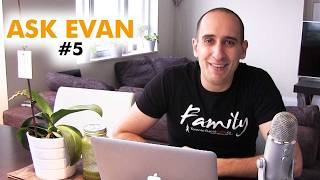
Evan Carmichael answers viewer questions on passion versus coursework, trust-based management, YouTube tutorial strategy, and handling failure. He advocates for small failures through rapid experimentation and low-cost testing, using his own early video-making attempts as an example of learning through iteration.
Chapters
Welcome to the Ask Evan Show, episode number 5, where I answer your business questions. So let's get to it. First question from Dairia. Dairia, I hope I pronounced that properly. Evan, can you make a video about how to go about it when you just want to help people at a professional level? Is going into HR okay? I am in a community college right now and I don't like the mandatory subjects and therefore my GPA is going down. What should I do? I don't know, I get asked a lot about advice for college students, where they should go, what they should do. I guess same thing with entrepreneurs, where they should go, what you should do. With all big topics, okay, any important big decision that you have to make for yourself, you always have to listen to your heart. You have to make all important decisions with your heart and then the smaller decisions with your head, okay? So your GPA is going down, you're in a course that you don't like, you're taking all of these mandatory subjects that you don't like, So what are you going to do about it? You got to move towards something that you do like, right? It's great that you have this anger towards something that you don't like. Now you know what you don't want to do. That's awesome. That's great. That's education. That's learning. Now it's taking that and moving to something that you do love to do. What gets you excited? If you're going around your campus, okay, you open up the book of all the different courses, which one do you read in there that you love, that gets you excited? It's like, ah, I really want to try that one. That's where you should go. And not worry about following into what specific bucket and where that's going to line you up in the future because you don't know how the dots are going to connect looking forward. You only know how they can connect looking backwards. So you have to follow your passion, right? Follow your curiosity. Get lost in something. So when you're looking at your next courses, pick the ones that excite you, that invigorate you, that make you want to learn, that make you want to show up to class. You're going to probably get great grades in that, and that's going to open up huge opportunities for you going forward. So if that's HR, great! Go into HR. Kill it in HR. If it's not HR, if that's just something that you think is a good thing to do, then don't do it. Go do something else. You have to follow what excites you. Follow your flow. Do things that make you come alive. Okay, next question comes from MJIT Berlin. Hi Evan, very good video. Thank you. This is another YouTube viewer. One question: How do you track people's actual work time? Thanks. This is going to come down to what your philosophy as an entrepreneur is and what your management style is, okay? I am not a micromanager. I hate having to micromanage people. I hate having to track their time and say, "Well, you work X number of hours." It drives me nuts. I hate being micromanaged myself, and so I try not to impose that on other people. And if my business relied on me having to be a micromanager to be successful, I would fail. It wouldn't work out. And so I, instead of managing people's time, I instead hire people who I trust to be good at managing their own time. And I give them projects and I give them assignments and we have deadlines. Some things have to get done by a certain date. And I trust that they're doing a good job for me. And as soon as I lose that trust, as soon as I start thinking, "Ah, I think this person's ripping me off. I think this person's not doing their job." then it's not going to work out, right? If you don't have trust between yourself and your employees, it's over in my view. Other people, they thrive on that. They have to track every single thing. They, you know, have punch cards or whatever it is. And, you know, it's just not for me. A lot of people who I hire on oDesk, I have a number of people on my full-time team from oDesk. oDesk actually allows you to track people's hours and time, and it's built into their system. So on the backend, it tracks when somebody logs in to start to work for you, right? They say, okay, I'm going to work for MJIT Berlin here, and they have to log in, they click record, it starts recording their screen, it starts recording their keystrokes, right? And they know this is happening. This is Big Brother, but they know that it's happening. So they're not in the dark about this. And anytime you want, you can go in and look at what they're doing on their computer. You can look at how active they are with their keyboard, right? And their mouse to see if they're just on the same screen or are they actually doing work and moving it around. So at any time with Otis, you can do that. But again, for me, if I have to go into everybody's profile and make sure that they're doing what they're supposed to be doing, I feel like I've done a bad job in hiring. I feel like that person is not really committed if I have to use that as a way to make sure they're doing the right thing. So you can do it if you want. oDesk gives you the tools, but from my view, I think you got to hire better. Okay, next up, Petrus from my newsletter list writes in to say, "Hi, how are you?" I am fine, Petrus. Thank you for asking. "Give me ideas on how to create YouTube tutorials in mathematics, statistics, and economics." This is awesome. So I recently actually launched a video on Tim Schmoyer's channel. He's got a channel that supports people who are trying to create YouTube videos. I wrote about 10 ideas, 10 creative ways to come up with ideas for your YouTube channel. And I need to have a lot of content. I'm making 2 videos every single day on my channel. What I would start with though for you, so you're interested in mathematics, statistics, economics. Find one thing that is a big problem in that market. What's a big problem in mathematics or in statistics or in economics? What's something that you really struggled with as a student? What's something that you see a lot of students struggling with and a quick way that you can overcome it, right? How do you solve that big problem? Take a stance on something, have an opinion on something. Don't just give me a boring mathematics lesson. Make it personal, right? Tell me about how you struggled to solve this. Tell me a story about how one of the people who you've tutored had to go through this and how you helped solve it. Make it, make it mean something because most of these videos that cover this kind of stuff is going to be really boring, really dry, not much personality. So this is your chance to stand out, okay? And I'd use their feedback and suggestions, right? Every time you're meeting with a mathematics student and you're helping them solve a big problem, that could be a new video for you, right? If you have a weekly video that's coming out helping solve the problems of your students that are coming to you, then eventually you'll get feedback on your channel, right? At the end of every video, you can ask, "Hey, do you guys have any questions? Leave a comment below. I'd be happy to make a video response for you." That's what I do, right? Most of my channel, that's how it started, was answering questions from you guys. People would ask me business questions, how to start their business, anything related to entrepreneurship, and I would write these long detailed emails back. I thought, "This is crazy. Like, I'm spending way too much time on this." and I'm only helping that one person where I thought now, hey, if I could do YouTube videos, then I could help that person in a much more visual way, a lot faster, but also help reach a wider audience of other people who also have that same problem. And so this whole show, right, the Ask Evan Show, is all about your questions coming in. So you could eventually do an Ask Petrus Show all about mathematics and statistics and economics, but start by making videos that you feel passionate about that are big problems that are coming to you from students that you're coaching, and then at the end of every video, ask for feedback from your audience. And, and as you get comments, then you make videos to help your community out. That's how you start. I'm excited. And send me the channel. I'm curious to see this mathematics, statistics, and economics channel. So when you see this video, pop a comment and drop the link to your channel. Next up, Jacob is a loyal YouTube audience subscriber, commenter, always posts great questions. He wrote in to say, "Hey Evan, I have a question. Do you watch Dragon's Den? Do you think these types of shows are good to watch when pitching for an investment today or are they unrealistic? Any favorite pitches in particular and what can we learn from it? Thanks." I love Dragon's Den. One of my favorite shows. I've watched pretty much every single episode. When they were coming to Canada, they actually— CBC asked me to be involved in the launch to help promote it to Canadians as a new TV show. I think there's not enough quality programming for entrepreneurs. You think about how many people want to be entrepreneurs, right? How many people want to start their own business at every level? In school, in university, in the workforce. How many people want to start their own business? There's tons. And then how much content actually reflects that in the mainstream media, right? If you want to start your own business, there's no There's no entrepreneur channel, there's no entrepreneur network on TV that you can go and watch. And so I think shows like Dragon's Den and that evolved to Shark Tank in the US and Marcus Lemonis has a show called The Profit. Huge fan of all those shows, highly recommend it. One, to get some ideas. So you're looking at an investment today, yeah, you'll get some ideas of what investors look at. I mean, these are angel investors and they have their own set of criteria, right? There's 5 angels. On the Dragon's Den. And it'll be slightly different than going to a venture capitalist or going to other angel investors. But it's still, it's a good start. So it gives you a little bit of an education. It gives you a sense of the types of questions people will ask, right? Think about every question that's been asked to someone who's pitched. A lot of the questions are repeat questions. You should be able to answer all those questions for your company, right? Imagine, you know, you go through the last year of Dragon's Den and you got Kevin O'Leary, grilling those entrepreneurs. Imagine he asked you every one of those questions. Would you be able to answer them? If you can, then you'll probably do a great job going into the investment pitch. If you can't, then you probably have some homework to do. In terms of my favorite episode, I actually— I do have one favorite pitch. I posted it on my website. I posted it on my YouTube channel. It's with Arlene Dickinson. Invested in the company and then brought his product across the country selling it and brought him up for reveal and was crying and had an impact on me and reminded me that the entrepreneurship again is not just about making money but also having an impact and creating positive change. So check out that episode. It's had a lot of views and a lot of comments and, you know, give it a like and a thumbs up and a comment. But also check out Dragon's Den and Shark Tank and The Profit. Next up, a Facebook fan, Nicholas, thank you for leaving a comment, wrote in to say, "I'm trying to recognize my mistakes, you know, what I did wrong and try to move on. What I recently do to find the positive side because there is something positive in every situation. What do you do, Evan? How do you face failure? Have a great weekend." Failure is a part of success and failure is a part of being an entrepreneur and this is something a lot of people don't understand, especially when they're getting started. You will fail. That's okay. You will know failure on your path to success. Entrepreneurs fail their way to success. The key is to not let a failure get you down. And I know it can be hard if you had a big failure and you struggled and you kind of put everything you had into this one idea, and if it didn't work out, then you feel like life is over, right? That maybe this isn't meant for you and you're not quite sure what to do next, and it can cause a lot of despair and anger and uncertainty. What I try to do is I try to fail small. So I'll try a whole bunch of different things, things that I'm interested in, things I'm curious about, things I want to explore, and I see, one, do I enjoy it? Am I getting something from it? Am I feeling like I'm contributing to the world by doing this, right? You can have an idea, but until you start trying it, you don't know what's going to happen, right? So am I getting energy from this? Am I liking it? And 2, is it working? Right? Am I seeing results? Am I getting traction from this? And a great example is making these videos. When I first started the channel, I didn't know if I would be committed to making a channel or not. You know, I had 5 different marketing ideas. Making YouTube videos was one of them. And I started trying all of them to see what stuck. And eventually the YouTube one stuck, right? I'm still here, still doing more videos, increasing the views and the subscribers, and more and more videos keep coming out. And I didn't spend all the money and all the time at the start. You know, I didn't invest in the best gear and camera. I just started with what I had, right? I could start with this. I could start with my laptop right here. I could start just with this, right? That's all you need to start. So if I failed, if it didn't work out, then it'd be a small failure, right? I'd invest some time, but no real dollars. And if it worked out, then I can continue to invest more and more into it. So one, don't be so afraid of failure, right? Failure will happen. Everybody has it. Everybody goes through it. It's not something that you fail, you're the only one in the world, you feel lonely, and you suck, right? Everybody goes through it. And two, just try to make sure that the failures are small failures. Try something, try something, try something, try something. Small starts, small starts, and see if you like it, see if you're getting results, and it's okay. it's okay to shut them down. I think if you're failing a lot, like I fail tons. I fail all the time. This Ask Evan show, that could have been a failure, right? The first episode— we're on episode 5 now— the first episode I put out, I said to someone, I don't know if I'm gonna— I don't know if this is a good format. What do you guys think? Are you enjoying this? And I sit down and think, you know what, I have a good time. I like doing the Ask Evan show. I'm having a good time doing this. You guys seem to like it. You're leaving comments, and so I keep doing it. But I could have done the one episode. I've done other videos that I've tried and didn't work. You know, and I didn't really have a good result, good experience with it, and so I stopped it. So it's okay. Like, I fail more than I succeed. I fail all the time, and that's okay. You should be okay with failure. Try not to fail big. You know, minimize the downside of your failure and move on to something else. The more you fail, the more comfortable you get with it, and the closer you get to your next success. That's it, another #AskEvan in the books. Let me know what you guys think. Leave a comment, ask a question below. You like this video, you want to see more, like it, subscribe to the channel. Keep believing. Thank you so much. I'll see you soon. Christian, are we going to pop the video right here as I'm talking? Can we put it like how I'm positioned? Put it in— oh, this way. Let me see, I'm trying to put it in my hands. Can we put it right here? Here's the video. The lead playlist, Here Comes the Sun. It's alright. Okay, let's pause this up, let's get this show on the road. Don't forget to sign up for my free newsletter. It's energy in your inbox every single week. Hi, I'm Jason J. Ros Fonseca of RosOnline.com, and I want to say Evan Carmichael's newsletter is consistent, fun, inspiring, and it's the only newsletter I prioritize and look forward to. Period.
More from Evan


How the Biggest Mistake in History Created A Trillion-Dollar Empire | Sergey Brin



9 Machiavelli Principles That Force People To Respect You | Machiavellian Philosophy



The First 10 Words That Instantly Ruin A Sales Conversation | Vanessa Van Edwards

The Top 1% Mindset Behind The First $5 Trillion Company | Jensen Huang (Nvidia)

