Don't Let Anyone Stop You From Being Creative! | Tom Cruise | Top 10 Rules
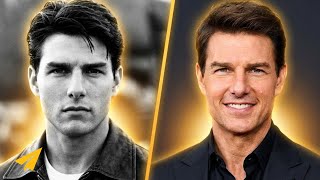
Tom Cruise explains how he builds his craft: watch great actors' rushes, listen to everyone on set, treat failure as data, and stay emotionally available through imagination rather than reliving pain. He says your voice emerges through action and repeated practice, not permission.
Chapters
You have a voice as an artist. It's just getting your own confidence. I love showing up on the set and working with the writers and the directors and the other actors. I like to look at things and say, "God, you know, I mean, if it didn't work, I want to know why didn't it work." I want the perf— What I want in a performance is I want it to be spontaneous. I want it to be now. I allow and want to hear someone's opinion. I like a challenge. I really enjoy a challenge. I've created it. I am the character, and I'm there in the moment, and whatever happens, happens. To be able to watch Newman develop a character, Hoffman, Nicholson, you know, Hackman, Duvall, and be able to see them work and then watch their rushes on things. All I can do is do my best. All I can do is give it everything that I have. I don't go, "It sucks. I'm fucking blowing it," you know?
He's an American actor and filmmaker. He's been nominated for 3 Academy Awards and has won 3 Golden Globe Awards. He's considered one of the biggest movie stars in Hollywood. He's Tom Cruise, and here are his top 10 rules for success.
You have a voice as an artist. It's just getting your own confidence, uh, and you find it just by doing it. By doing it. And when you're playing that character, that is your character, and your instincts on the character are your instincts on that character. We're constantly looking at life. What is it? What is it? Where are we? You know, look how interesting. Look at different cultures, different beliefs, you know, how do they come to that? How do I feel about that? How do, you know, what do I think? It is a daily adventure. You have your voice. It's there. Just do it, do it, do it, do it, create, you know. Don't let anyone stop you from being creative. You do it and that confidence will come. That's why I say, you know, people, there is no right way to do it. You know, there's no right way. You do have your voice. It's there, and it's a matter of you just finding that confidence. You know? Yeah, you bet. I love what I do. I love showing up on the set and working with the writers and the directors and the other actors. And there's a thrill and an exhilaration of working, you know, an 18-hour day and knowing you've done good work and you feel very proud of yourself for that. And it's not something that's ever— I never feel a— I can feel a sense of completion on that particular project. Sometimes I look back, I look back and, you know, where did I get off going to New York to say that I'm gonna be an actor? You know, I mean, where— but I think the thing that's really helped me is to, you know, a lot of people, when they treat failure as a personal kind of horrendous defeat and really let life kick them pretty hard, And I like to look at things and say, God, you know, I mean, if it didn't work, I want to know why didn't it work. You know, why didn't it work? And really, you know, try to lift myself up and have the courage to really evaluate it and learn from it and say, you know, what happened? Okay, let's go. —What I want in a performance is I want it to be spontaneous. I want it to be now. Not, you know, not happening in the past. I understand. We try to work towards getting rid of the mechanics of the technique. Let's find the spontaneity. And that with the power of my own imagination or my own ability to believe or my own creative idea of what I've created here, it just happens. It just and whatever is there, I don't judge it. And there's times where, as an actor, when I'm working, where I feel nothing. And I don't panic and go, "Oh my God, I feel nothing." It's— I always take it from the point of view of, "Okay, well, that's, you know, all— that's interesting. I feel nothing." As the character, I feel nothing at this moment. I don't invalidate. And when I'm on— when I'm— once I'm there at that moment I don't fight what's going to happen. I don't try to create what's going to happen. I've done my work. It gets inside of you, uh, so that it's just— it's there. It's— you're in the character, and what happens happens. And you want to fly, you want to play jazz, you want it to be spontaneous and, and let it rip. Are you good with conflict? What do you mean? Conflict? Can I handle conflict? Are you good with it? I have no problems with conflict. How are you with conflict? Depends on who I'm fighting. It depends on who I'm fighting. I'm not worried about conflict. No, I don't mean us, although— No, no. We still have time. Let's go. I'll get into it. I prefer not to have conflict. Let's resolve things. Well, that's entirely up to each other. Okay, that's good. But if you worked with a director and where it's not gone well, where there's been a lot of this, and I'm sure you've been making films for so long, and it's a business filled with egos and artists that it might be Yeah, I guess I've never had that though. I've had— I allow and want to hear someone's opinion, so I use writers, directors, actors where it's, you know, I find myself— I just listen, you know, I want to listen and download. And so I've actually never had conflict with anyone on the set, with directors, actors, never. You know, it depends my definition of taking chances. I mean, I like a challenge. I really enjoy a challenge. and kind of based my work on that, my life. And by a challenge I mean, you know, an obstacle that, you know, that I feel I can overcome, but, you know, with a little excitement, you know. And I like adventure. I really like adventure. How much of your personal experiences do you use in your craft? I, you know, I create a character and it's all about the story of that character and creating almost an umbilical cord from myself to that piece of material. There's times, you know, I am who I am. I'm constantly looking at life every day and people, so it is my point of view, but from that character. I'm discovering this character. How does he feel about things? It's my instincts, but I don't personally kind of restimulate painful experiences. I have found personally that it's made it difficult for me to not be there in the moment for myself. That the availability of emotion is greater for me when it's— I've created it. I am the character and I'm there in the moment and whatever happens happens. It's more available every take after take after take, you know, and that's what works for me, the power of my own imagination and my own ability to, to believe. And I create everything to get myself to the point where I am that character and I don't invalidate whatever choice or impulse that I have on the scene, whatever it is. Do you learn something from every director you work with? Every director, every actor that I work with, every director has has their own taste and style. And every actor, I mean, especially early on, is when you hear about this is how what acting is. And for me, to be able to watch Newman develop a character, Hoffman, Nicholson, you know, Hackman, Duvall, and be able to see them work and then watch their rushes on things, going to rushes. You all know what rushes are, right? You know, you go in the next day and look at the scenes and then, and then how they cut together and editing it That was very helpful because I started to see how these actors work and that they all have their own way of working and their own technique that they have developed that works for them. It's not just the end result, you know. I find that it is very much the journey of creating, and there are no absolutes. There is no perfect way to do it. And I remember back on Taps, I had I'm just— all I can— what can I do as a manager? All I can do is do my best. All I can do is give it everything that I have. And I thought, if I can do that, if I get the opportunity to do something that I love for the rest of my life, I remember thinking, that's what I'm going to do. I'm never going to take this for granted. And I'm going to work hard. Now let me see if I get this right, Seth. Because I want to— Are you saying that at the end of the day where it's not happening or it's not going, where do I go to the well? Yeah. That— when I get to that place, you know, where it's just not happening, I go for a walk first of all and I look around. And then I just take it from the point of view of the character. I say, "It ain't happening." You know? So from that I go, "Well, that's interesting." And then I kind of explore that. That's not happening. You know? I feel whatever. You know, there's moments you just go, "Man, it just— it's numb." I don't go, "It sucks. I'm fucking blowing it." You know? "I'm gonna blow it. I'm gonna cry. You know, this scene's not gonna work." I actually do the opposite. I try to get more extroverted and step out and think of, okay, well, I'm feeling this right now. And then I'll go— I'll actually do takes like that. I'll do a scene like that. It's the 15th hour. I'm tired. My character's tired. I just— I take it from that point of view of I'm tired. Okay, well, that's interesting. Well, I never thought I— you know, it's kind of this thing. I've never thought of this point of view, but I'm gonna just go with it and see what happens. And then from that comes energy from that because you're creating it. You are— you're still creating. You're not giving up. You're not using effort to try to fulfill your preconceived idea of, you know, which we all do. We all come up with, you know, different ways of what we think the scene should be or what we want. And then I don't invalidate those feelings of me being tired. I sit back and I go, okay, I'm tired. The character's tired. I'm tired. you know, or I feel empty. I'll just play the scene I'm empty. Whatever the scene is, I'll just take it there for a take. And then from that, I know the worst thing that I can do is kind of vapor lock. You know, lock down on it and go— you know, try to push it somewhere else. I just explore that. And then from that, it brings me to where the scene is supposed to be, or the character. Or from that is the scene. And everyone kind of goes, wow, I never thought I was going to go there. Because now it's not just me. I'm working with other actors or the director, and that's, that's what I do.
Thank you so much for watching. I made this video because Omar Daoud asked me to. So if there's a famous entrepreneur that you want me to profile next, leave it in the comments below and I'll see what I can do. I'd also love to know which of Tom Cruise's top 10 rules resonated most with you. Leave it in the comments and I'll join in the discussion. And my personal goal on the channel is to get to 1 million subscribers, so anything you can do to share the video, spread the message, add it to playlists, tweet it out, I'd really appreciate it. Thank you so much for watching. Continue to believe, and I'll see you soon.
More from Evan


How the Biggest Mistake in History Created A Trillion-Dollar Empire | Sergey Brin



9 Machiavelli Principles That Force People To Respect You | Machiavellian Philosophy



The First 10 Words That Instantly Ruin A Sales Conversation | Vanessa Van Edwards

The Top 1% Mindset Behind The First $5 Trillion Company | Jensen Huang (Nvidia)

