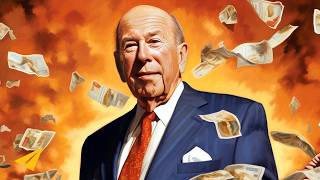
George Shultz warns that nations consuming more than they produce face unsustainable debt. Evan Carmichael delayed buying lighting equipment for six years until his YouTube channel earned revenue, showing how bootstrapping with time instead of money pays off.
Chapters
Good morning, Believe Nation! Today's message is: Don't spend more than you earn.
Over to you, George Schultz.
We seem to have gotten into the habit of consuming more than we produce. And you can't keep doing that. It means that you import. It's not a question of whether some other country is doing something or that's just a matter of arithmetic. And if we keep spending more than we earn, we have to borrow. And we're borrowing ourselves crazy. Furthermore, going back to my concerns about my grandchildren and great-grandchildren, We're accumulating a debt that has to be serviced. And in the end, it's so large, it's going to have to get paid down in some way. And that's the future people are going to have to contend with that. We're not doing them a favor. So I think we have to get better control of ourselves.
So what do you think?
Yeah, I think this is really wise. Another message you really believe a lot, which is, you know, don't spend it till you make it and keep making it and then spend it as you make it, right? Invest in yourself and really make sure you can earn the money first before you spend too much.
Yeah, it's a message that I preach often. I don't think we've done it too many times from famous entrepreneurs adding their two cents on it.
Two cents, I like that.
Nice. Yeah, I'm a big believer in not spending money until you're making money, right? That's how I put it. Invest your hustle, your energy, your heart, your soul, but not dollars until you're making money coming out. Just before filming this, we were talking about lighting. And when I first started my videos, I didn't invest money into lighting. I didn't have money for lighting. I mean, I could have. I had money in my business. I had a successful practice, but I didn't want to spend money on my YouTube channel until I was making money on my YouTube channel. So for the longest time on my channel, you go back for years, I use no lighting. I just faced the window and I had natural light on me, and that's what I filmed at. And that might be a no-no in the, you know, lighting photography world. Even how we're lit now, maybe we're too red. Like, maybe the film producers out there are freaking out of how we've lit this set. There's no external lighting here. We went to a room. We're in a hotel here. We've got overhead lighting. We've got fire behind us to look cool. We've got champagne. We're making espressos for you guys. And so I didn't invest in lighting for my videos until late last year. And so I went, I don't know, 6 years with no real lighting. I had some bulbs I bought from IKEA, some cheap lamps from IKEA at some point, and used that, or used natural I just, I hate spending money until you're making money. Anybody can spend money. I learned this lesson in the venture capital business because you see people bringing in business plans and just how they're gonna spend and spend and spend and spend. It's like, how are you actually gonna make a return? Are you gonna get some money back? And if I give you a million dollars, you can find a million different ways to spend it. So anybody can spend money, not everybody can make it. And so prove to yourself that you can make it before you start putting money into it. And if you can get to that point, then it makes sense to invest, and then that just rapidly grows. My channel has exploded, it's taken off. Maybe in part due to the lighting, I don't know.
It must be that lighting. It must be that lighting.
If only I did it sooner, you know, if only I went into debt to go buy lighting. Yeah, but just as a general rule, the challenge is a lot of people don't have enough runway to survive. You know, you spend the money you have, you invest your savings, and your business goes under because you don't give it enough time to continue. But if you're not spending money, you're investing your hustle, you give yourself more runway, you give yourself more time to make your business successful. And you need that time at the start because it always takes longer than you think it's gonna take.
I love this too because I think it really helps you kind of test yourself and your own passions about what you're doing. I think if you really, really love it, then you're willing to spend the hustle instead of the money. And I think a lot of people think they love something, so they're willing to put a lot of money into something, and they realize they really didn't. Whereas if they had spent their hustle first, then they probably could have determined faster, they could have saved themselves money, not just because they didn't spend it, because it's not really what they wanted to do.
Love it. So thank you guys for watching.
Watching, the question of the day today is: Tell us something that you are going to spend your time on instead of your money.
I like it. Leave it in the comments below. You know, I would add on to that, if you need help trying to figure out a way to bootstrap something, to invest hustle but not money, if you're sitting here thinking, man, I need money to do this, you can't figure out a way to spend the time on it to achieve your objective, leave that in the comments too, and hopefully the other members of Believe Nation will rise up to come and help you solve that problem. So either, either War.
I love it.
I got into it. Yeah, leave in the comments below.
Challenge for Evan and, and the viewers. Yes.
Thank you guys for watching. Have an amazing day. Continue to believe, and we'll see you again tomorrow morning for another shot of espresso.